Buying Guide
The Best Flooring for a Lake Tahoe Cabin
How to choose warm, durable flooring for a Tahoe or Truckee cabin — engineered white oak, radiant-heat compatibility, and honest tradeoffs at altitude.
Buying Guide · 8 min read
Published July 16, 2026 · Updated July 28, 2026
A cabin near Lake Tahoe asks more of its floors than a home in the valley ever will. Between bone-dry winters, humid summers, wide temperature swings, and the snow and grit that follow everyone in from the driveway, the right floor has to look warm and inviting while quietly shrugging off conditions that would ruin the wrong one.
Most guides to this question stop at "engineered white oak" and call it done. That's the right answer for the great room and roughly half the house. This is a guide to the other half — which material belongs in each room of a cabin, and how to make four of them look like one deliberate plan.
Start With How the Cabin Is Actually Used
Before material, occupancy. A cabin that's a full-time residence with the heat running and someone home is close to a normal house, and almost any material works. A second home that sits closed and cool for three weeks at a stretch swings much further in temperature and humidity, and that swing is what dictates the material list. A place that hosts eight people and their gear over a holiday weekend is a third case again, where sheer traffic volume outranks everything.
Be honest about which one you have, because it changes the answer more than the architecture does. A cabin used four weekends a year and a cabin lived in from November through April are different buildings from a flooring standpoint, whatever the floor plan says. Our Lake Tahoe service page covers the region and the range of homes we work in.
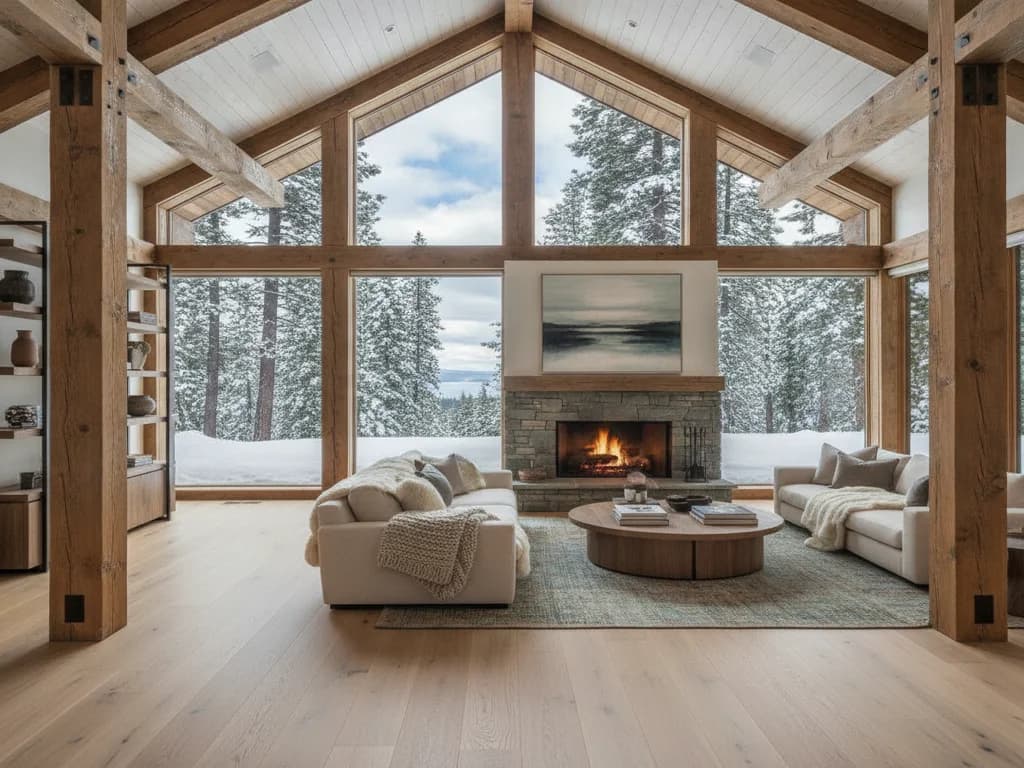
The Great Room: Real Wood, Engineered
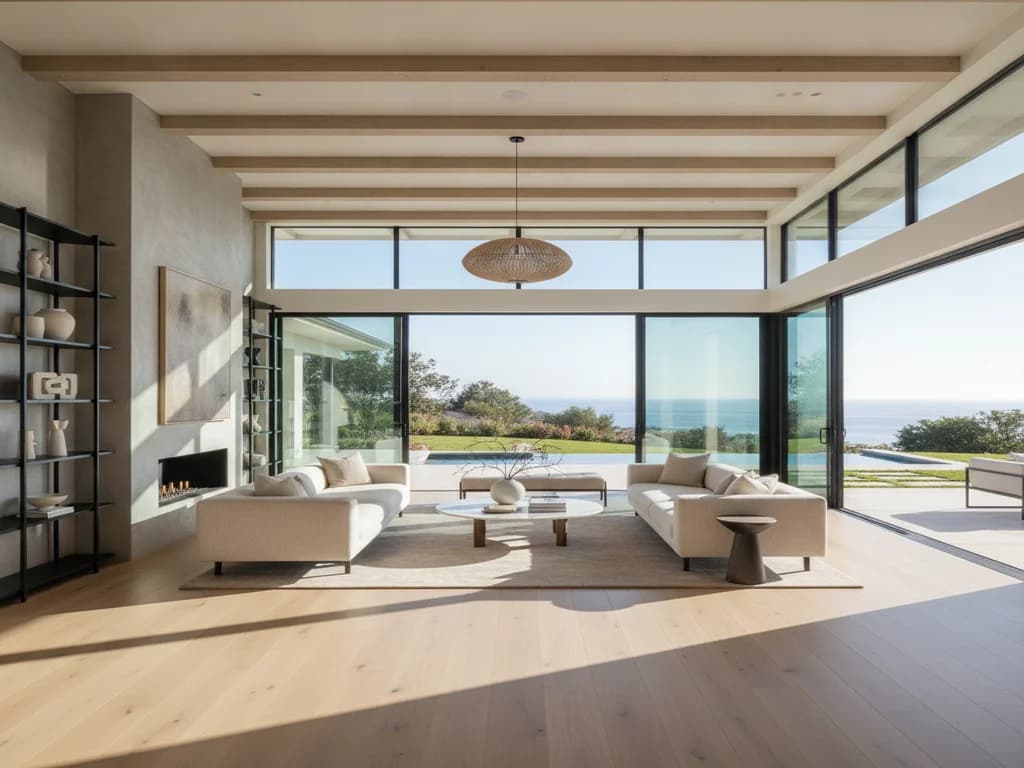
This is where the cabin's character lives, and it should be real wood. The consensus recommendation up here is engineered construction rather than solid, because a cross-laminated core moves far less through the seasonal humidity swing than a single piece of wood does — the reasoning is worth understanding in full before you spec anything, and our engineered versus solid comparison lays it out.
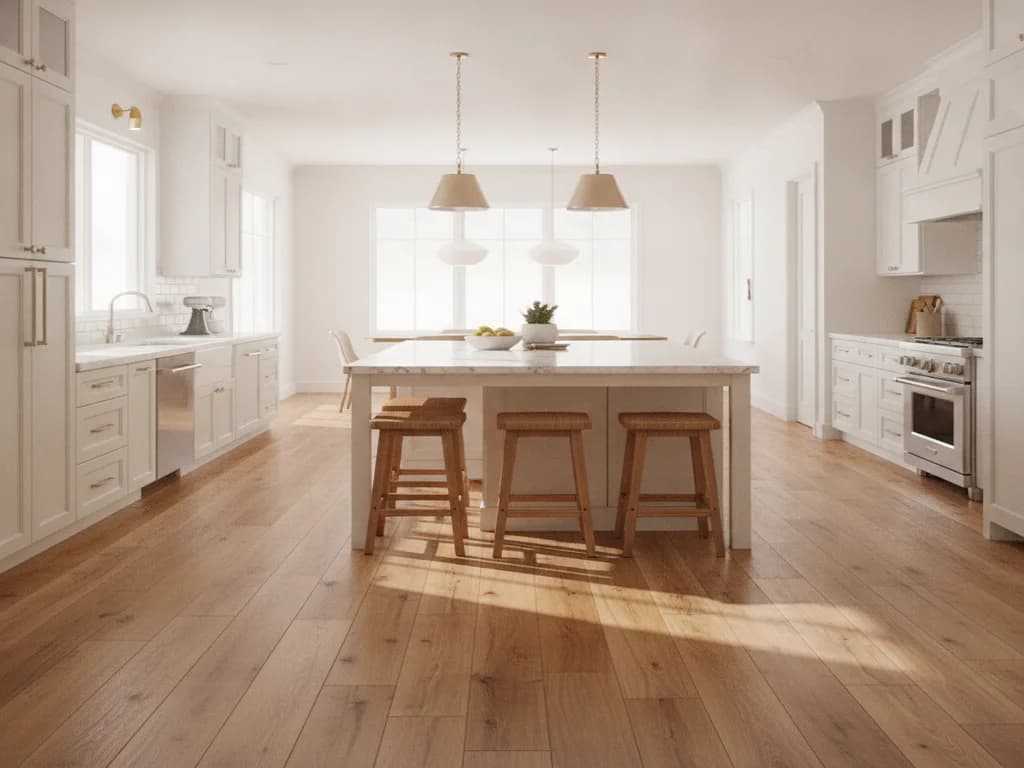
White oak in a wide plank is the default for good reason: it's hard enough for real traffic, its closed grain resists moisture, and the broad calm boards suit the scale of a room with a tall ceiling and big glass. Where cabin owners often go wrong is grade. A clear, uniform grade in a house that gets used hard shows every mark, because there's nothing else on the floor to look at. A character grade with knots and color variation absorbs a decade of wear and generally costs less.
Entries, Mudrooms, and Ski Storage
Nowhere else in the house sees standing water on a regular schedule. Snow falls off boots and gear and melts into a puddle, and that puddle sits there for an hour. No wood floor is the right answer for that, engineered or otherwise.
Two materials belong here. Porcelain tile is essentially impervious and the most durable option, and in a mudroom the cold underfoot that people dislike elsewhere is irrelevant — or solvable with radiant beneath it. Luxury vinyl plank with a rigid waterproof core is the other, and it's warmer and softer underfoot, easier to install over an imperfect substrate, and repairable one plank at a time. Rigid-core lines like COREtec, Shaw Floorté, and Mannington's ADURA are built for exactly this duty.
If the entry is genuinely a ski-boot room, size it generously and choose the material to be washable rather than merely water-resistant. This room is doing a job for the whole house.
Kitchens in a Cabin That Cooks Hard
Cabin kitchens work harder than their square footage suggests, because everyone ends up in them. The realistic options are the same engineered wood as the great room, or tile.
Running the wood straight through from the great room is what most people want and it's a defensible choice — kitchens are a middle case rather than a hard no for wood, and an open plan looks far better uninterrupted. What you're accepting is that a dishwasher or ice-maker leak is a genuine risk to the floor, and in a house nobody visits for weeks, a slow leak has all the time in the world. If that risk keeps you up at night, tile in the kitchen with a clean transition at the room line is the conservative answer. Leak sensors under the sink and behind the dishwasher cost very little and are worth more here than in a primary residence.
Bathrooms and Laundry
These are straightforward: tile, natural stone, or waterproof vinyl, and not wood. A cabin bathroom sees wet feet from a hot tub or shower on a schedule no primary residence matches, and the laundry room houses a machine full of water in a building that spends weeks unattended.
Tile is the long-life answer and the one that handles a floor drain and in-floor heat best. Sheet vinyl deserves more credit than it gets in a utility laundry room, since a seamless surface has nowhere for water to get under. Where budget allows, heated tile in a cabin bathroom is one of the highest-value comfort upgrades in the building — the floor most people step onto barefoot on the coldest morning of the year.
Bunk Rooms, Lofts, and Where Carpet Still Wins
Hard surface everywhere is a modern default that doesn't always serve a cabin. Bunk rooms, loft sleeping areas, and kids' spaces are quieter, warmer, and safer with carpet, and a loft where people walk above a great room is the single best place in the house to stop transmitting footsteps.
The argument against carpet in a mountain house is moisture and cleanability, and it's a fair one — carpet in an entry or a bathroom is a mistake, and carpet anywhere in a house that floods once is a replacement rather than a repair. In a dry upstairs bedroom, none of that applies.
Stairs, Landings, and the Loft Ladder
Cabins are vertical buildings, and stairs are where flooring decisions get expensive and where they matter most for safety. A bare wood tread in wool socks is genuinely slippery, and a cabin stair is often steep, open-riser, or both.
Two things to plan for. First, the nosing: stair treads need a matching nosing profile milled from the same material as the floor, and with engineered flooring that's a specific part you order alongside the field material rather than something fabricated on site. Ordering it late is a common way to stall a project. Second, traction — a stair runner adds grip, cuts noise dramatically in a house with hard surfaces and tall ceilings, and protects the treads that take the most concentrated wear in the building. Stairs cost meaningfully more per square foot than open floor either way, so it's worth pricing them separately rather than discovering them in the total.
Radiant Heat and Warm Floors
Many Tahoe cabins run radiant floor heating, and it changes the material conversation in every room. Under wood, engineered is the compatible choice and surface temperatures stay in a conservative range of around 80°F (27°C). Under tile it's essentially ideal, since tile conducts heat well and has no moisture sensitivity of its own. Under vinyl and carpet, check the specific product — many vinyl products have a maximum surface temperature, and heavy carpet and pad insulate the room from the system you paid for.
Plan the zones around how the cabin gets used rather than by room type. The rooms that benefit most are the ones people occupy barefoot and the ones that stay coldest between visits. Our radiant heat flooring page covers system design and commissioning in more depth.
Making Several Materials Look Like One Plan
This is where multi-material cabins succeed or look chaotic, and it comes down to three details.
Height. Tile, engineered wood, LVP, and carpet all finish at different thicknesses, and the substrate under each may differ too. Planning finished heights before anything is ordered is what produces flush transitions instead of a lip at every doorway — and a lip is both a trip hazard and the thing that makes a house feel pieced together.
Placement. Change material at a doorway, a step, or a genuine architectural break, never in the middle of an open sightline. A material change that lands under a closed door reads as deliberate; the same change floating across an open great room reads as running out of money.
Tone. Materials don't need to match, but their undertones should agree. A cool gray tile against a warm honey oak fights; the same tile against a cooler white oak reads as one palette.
Where to Spend and Where to Save
Cabin budgets are finite, and not every square foot deserves the same dollar. Spend on the great room, because it's what the house is for and what everyone sees; on the stairs, because they take the most wear and are the most disruptive to redo; and on the entry, because that room protects everything downstream of it.
Save in bunk rooms and utility spaces, where a mid-grade carpet or a solid mid-tier LVP does the job indefinitely. And be careful about the one place saving costs the most: subfloor preparation and acclimation are invisible on the invoice and are exactly what fails first.
Installation Is Half the Answer
Even the right material fails if it's rushed in. Every board reacts to the moisture it's stored in, so we acclimate flooring to the cabin's actual conditions and moisture-test both the wood and the subfloor before a single plank goes down — the step that most often separates a floor that stays flat from one that moves. In a cabin the sequencing is harder than in a primary residence, because the house has to be running at real living conditions during the work, and a second home usually isn't.
That's a scheduling problem worth solving rather than skipping. In a home that will see dry winters and humid summers, patient prep matters more than the brand on the box.
If you're planning floors for a cabin on the California side of the Tahoe or Truckee region, Renaissance Floors would be glad to walk your space and give you a straight recommendation. Call Alex at (916) 749-0272 for a free, no-pressure estimate from a licensed CSLB C-15 flooring contractor serving the California side of the lake.
This article is part of our guide to how to choose a floor, which covers the order the decisions actually come in, and which constraints are real rather than preference.
Good to Know
Frequently Asked Questions
What flooring is best for a Lake Tahoe cabin?
Engineered wide-plank white oak for the main living spaces, in most cases — it gives the look people want with far more dimensional stability than solid wood at altitude. Luxury vinyl or tile is the better answer in entries, mudrooms, and wet rooms where snowmelt and standing water arrive routinely.
Is solid hardwood a bad idea at Tahoe?
Not bad, but less forgiving. Solid wood moves more with the seasonal humidity swing, and mountain homes have a wider swing than valley homes, particularly if the house sits unconditioned between visits. Where the home is occupied year-round and humidity is managed, solid hardwood is workable.
Should I use the same flooring throughout a cabin?
Rarely. Entries and bathrooms see standing water that wood cannot tolerate, and lofts and bunk rooms benefit from carpet for warmth and sound. A well-planned cabin usually runs three or four materials, changing at doorways and architectural breaks so the transitions read as deliberate.
Can I put hardwood in a cabin kitchen?
Yes, and running it through from the great room usually looks best in an open plan. The risk you accept is a dishwasher or ice-maker leak in a house nobody visits for weeks, so leak sensors are worth more here than in a primary residence. Tile is the conservative alternative.
Does a vacation home need different flooring?
It needs a floor that tolerates being left alone. A house that sits cold and unheated for weeks swings further in temperature and humidity than an occupied one, which is exactly the condition wood handles worst — and the main reason engineered construction is the usual recommendation.
Can I have wood floors with radiant heat in a cabin?
Yes, with engineered construction and careful commissioning. Radiant heat asks the floor to sit above a warm surface, which is a stability question, so the product must be rated for it and the system brought up to temperature gradually according to the manufacturer's instructions.
Is carpet a mistake in a mountain cabin?
Not in the right rooms. Carpet in an entry or bathroom is a mistake because it holds water, but in a loft or bunk room it adds warmth underfoot and cuts the footstep noise that carries badly in a house with tall ceilings and hard surfaces below.
What flooring handles snow and ski boots best?
In the entry, tile or luxury vinyl — both tolerate standing snowmelt and grit without complaint. The bigger factor is the transition zone: a properly sized mudroom with mats that actually capture water keeps the rest of the floor out of trouble.
How do you handle transitions between different flooring materials?
By planning finished heights before ordering anything, since tile, wood, vinyl, and carpet all finish at different thicknesses over different substrates. Getting that right produces flush transitions at doorways instead of a lip, which is both a trip hazard and what makes a house look pieced together.
Do cabin stairs need special flooring?
They need matching nosings milled from the same material as the floor, ordered alongside it rather than fabricated on site, and they benefit from a runner for traction and noise. Stairs also cost meaningfully more per square foot than open floor, so price them separately when budgeting.
Written by
Owner & Lead Installer, Renaissance Floors
15+ years of hands-on flooring experience across Greater Sacramento & Northern California. Works on hardwood and engineered installation, refinishing, subfloor preparation, and moisture testing — and writes these guides from what the jobs actually teach.
CSLB C-15 licence #1060673
Related
Keep Reading
Related pages: Engineered vs. Solid Hardwood, Hardwood vs. Tile, European White Oak, and French Oak.
Ready for Floors You'll Love?
Ready to talk through your project? Free estimates throughout Greater Sacramento & Northern California.