Services
Floor Refinishing in Northern California
Hardwood refinishing — dustless sanding, custom stain, and durable finish coats that bring worn floors back to life without a full replacement.
Overview
Careful, Reliable Floor Refinishing
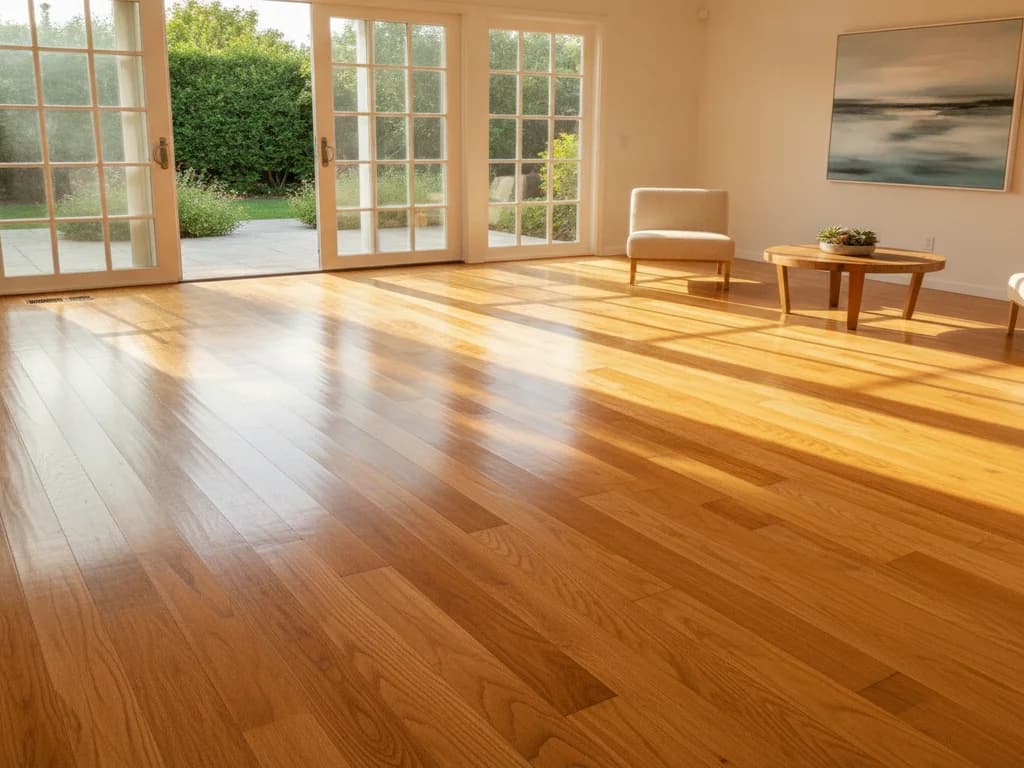
Hardwood floor refinishing — dust-contained sanding, stain or color change, and a durable finish coat — that brings worn, scratched, or dated floors back to life without the cost and disruption of full replacement. Done right, refinishing can add years of life to hardwood you already own.
Weighing your options? Compare matte vs. satin, water-based vs. oil-based poly, and screen-and-recoat vs. full refinish.
Get a Free EstimateWhy It Works
Why Homeowners Choose Our Floor Refinishing
Dust-contained sanding
We use containment practices and dust-collection sanding equipment to keep the process from coating the rest of your home in fine wood dust — a real difference compared to older sanding methods.
One accountable crew, start to finish
The same crew that sands your floors applies the stain and finish coats, so there's no gap in judgment between prep and finish — the two steps that most determine the final look.
Color-matched to your home
Whether you want to keep your existing stain color or change it entirely, we test samples on your actual floor before committing, so there are no surprises once the finish cures.
Backed by a workmanship warranty
Our refinishing work is backed by a workmanship warranty, and we'll walk you through realistic maintenance expectations for the finish you choose so it holds up.
Options & Styles
Floor Refinishing Options We Install
We help you choose the right product for your rooms, your budget, and how you live.
Dust-Containment Sanding
Full sanding down to bare wood using dust-collection equipment and containment barriers, removing old finish, scratches, and surface damage to prepare the floor for stain and finish.
Stain & Color Change
Changing the stain color of existing hardwood — lightening, darkening, or shifting undertone — tested on your actual floor before the full application so you can see the real result first.
Recoat vs. Full Sand
A recoat (screen-and-recoat) adds a fresh finish layer without removing the existing stain, appropriate for floors with surface wear but no deep scratches or discoloration; a full sand is needed when the wood itself is damaged or the color is changing.
Oil-Based Polyurethane
A traditional finish with a warm amber tone that deepens over time, longer working and cure times, and a look many owners of older or higher-end hardwood prefer.
Water-Based Polyurethane
A clearer, faster-curing finish that keeps the wood's natural color true, with lower odor during application — a common choice for occupied homes and lighter stain colors.
Sheen Options
Matte, satin, semi-gloss, and gloss sheens, each showing scratches and dust differently — we'll talk through which sheen fits your traffic level and how the room is used.
Good to Know
Before You Choose
- Refinishing works when the wood itself is structurally sound; if boards are cupped, deeply damaged, or have been sanded too many times already, replacement may be the more honest recommendation.
- Solid hardwood can typically be sanded and refinished multiple times over its life; engineered hardwood has a thinner wear layer and can usually only be lightly refinished once or twice, if at all — worth confirming before committing to a full sand.
- Dust containment reduces but doesn't eliminate the mess of sanding — expect to clear the work area and plan around some disruption during the sanding phase specifically.
- Occupancy during the project is possible, but finish coats need cure time before furniture goes back and before the floor sees regular foot traffic — rushing this step is a common cause of finish damage.
- Recoating is faster and less expensive than a full sand, but it isn't the right fix for deep scratches, pet stains, or a color change — those need the wood exposed first.
- Finish choice is regulated by your air district, not just by taste. The Sacramento Metropolitan, Placer County, El Dorado County, Yolo-Solano, and Bay Area air districts all cap the "wood coatings" category — clear floor finishes including varnishes, lacquers, sanding sealers, and penetrating oils — at 275 grams of VOC per liter, and wood stains at 250 g/L. The limit attaches to the product, so the VOC content printed on the can is what to check.
Our Services
Everything We Install
A full range of flooring installation and finishing services.
Hardwood Flooring
Solid oak, maple, and walkable heirloom-grade hardwood, precisely installed.
Learn moreEngineered Hardwood
Real-wood wear layers built for California's climate swings.
Learn moreLuxury Vinyl Plank
Waterproof, wood-look LVP for kitchens, baths, and busy households.
Learn moreLaminate Flooring
Durable, high-style laminate at a friendly price point.
Learn moreSheet Vinyl
Seamless, water-resistant sheet vinyl for utility spaces.
Learn moreTile Flooring
Porcelain and ceramic tile set dead-level with crisp grout lines.
Learn moreNatural Stone
Travertine, marble, and slate installed with a craftsman's eye.
Learn moreCarpet Installation
Plush, tight-stretched carpet for bedrooms and stairs.
Learn moreFloor Installation
Full-service installation from subfloor prep to final baseboard.
Learn moreFloor Refinishing
Sand, stain, and reseal tired hardwood back to new.
Learn moreFloor Repair
Board swaps, water damage, squeaks, and seamless patch-ins.
Learn moreStairs & Treads
Hardwood treads, risers, and runners with crisp detailing.
Learn moreEpoxy Garage Floors
Tough, easy-clean epoxy coatings for garages and shops.
Learn moreWhere We Work
Floor Refinishing Across Northern California
Good to Know
Frequently Asked Questions
What happens during a screen-and-recoat visit?
The floor is cleaned, the existing finish is abraded with a fine screen or pad so a new coat can bond to it, the dust is removed, and a fresh coat of finish goes on — no wood is sanded away. It only works over a finish that is intact and free of wax or silicone-based polish residue, which stops the new coat from adhering, so that gets checked before anything is applied. Whether a floor needs a recoat or a full sand at all is a separate decision, covered in our screen-and-recoat vs. full refinish comparison.
Do you refinish engineered hardwood floors?
Sometimes — it depends on the thickness of the top wear layer. Thicker engineered products can often handle one light sanding; thinner wear layers may not tolerate a full sand at all. We'll check this before recommending refinishing over replacement.
How long do I need to stay off the floors after refinishing?
Light foot traffic is usually possible within a day or two, but full cure time for the finish to reach its final hardness takes longer, and furniture placement should wait until the finish has fully cured. We'll give you specific timing based on the finish you choose.
Is dust-containment sanding actually dust-free?
No system is completely dust-free, but dust-collection equipment and containment barriers dramatically reduce what escapes into the rest of the home compared to older sanding methods. We still recommend covering nearby furniture and closing off adjacent rooms.
Should I change my stain color while refinishing?
That's entirely your call — refinishing is a good opportunity to change color if you want a different look, since the wood is already being sanded to bare wood anyway. We test stain samples on your floor first so you can see the real result before we commit to the whole room.
Can you refinish just one room or does it have to be the whole house?
Room-by-room refinishing is common, though matching stain color and sheen between an already-finished area and a newly refinished one takes some care at the transition point. We'll talk through how to handle that seam during your estimate — call (916) 749-0272.
What VOC limits apply to floor finishes in Northern California?
It depends on the air district, and the category matters as much as the number. Sacramento Metropolitan AQMD Rule 442, Placer County APCD Rule 218, El Dorado County AQMD Rule 215, Yolo-Solano AQMD Rule 2.14, and Bay Area AQMD Regulation 8, Rule 3 all set 275 grams of VOC per liter for wood coatings — the category that covers clear floor finishes — and 250 g/L for stains. Those rules also list "floor coatings" at 100 g/L, but that category is defined as opaque, so it applies to floor paint rather than to a clear polyurethane. Two areas differ: Healdsburg's Northern Sonoma County APCD Rule 485, adopted in 2002, still sets limits by product type (350 g/L for varnishes, 550 g/L for lacquers), and Nevada County's Northern Sierra district adopted a coatings rule in 2023 written to take effect only after a specific EPA ozone finding. The rules govern what is sold and applied in the district; the practical check is the VOC figure on the product label.
Ready for Floors You'll Love?
Free estimates on floor refinishing throughout Greater Sacramento & Northern California.