Flooring
Natural Stone in Northern California
Natural stone flooring — travertine, marble, limestone, and slate — installed and sealed to bring lasting, timeless character to your home.
Overview
Beautiful, Lasting Natural Stone
Natural stone flooring — travertine, marble, limestone, and slate — brings a depth of color and character that manufactured tile can't fully replicate, since no two pieces are identical. It's also more demanding to install and maintain than porcelain or ceramic, and our job as your licensed C-15 flooring contractor is to set it correctly, seal it properly, and be honest with you about where it fits your home and lifestyle.
Get a Free EstimateWhy It Works
Why Homeowners Choose Our Natural Stone
Substrate Prep Built for Heavier, Less Forgiving Material
Natural stone is heavier and often less consistent in thickness than porcelain, so we confirm subfloor rigidity and use back-buttering and appropriate mortar to bed each piece fully and avoid hollow spots or cracking.
Layout That Respects Natural Variation
Because stone varies piece to piece in veining, color, and tone, we dry-lay and blend material from multiple boxes before setting, so the finished floor doesn't have jarring patches of mismatched stone in one corner.
Sealing Done Right, Not Skipped
Natural stone is porous and needs to be sealed before grouting and again after installation — we don't treat sealing as an upsell or an afterthought, it's part of doing the job correctly the first time.
Finish and Edge Detail
From honed to polished finishes and clean edge and transition details at thresholds, showers, and hearths, we take the time on the details that make a stone floor look intentional rather than assembled.
Options & Styles
Natural Stone Options We Install
We help you choose the right product for your rooms, your budget, and how you live.
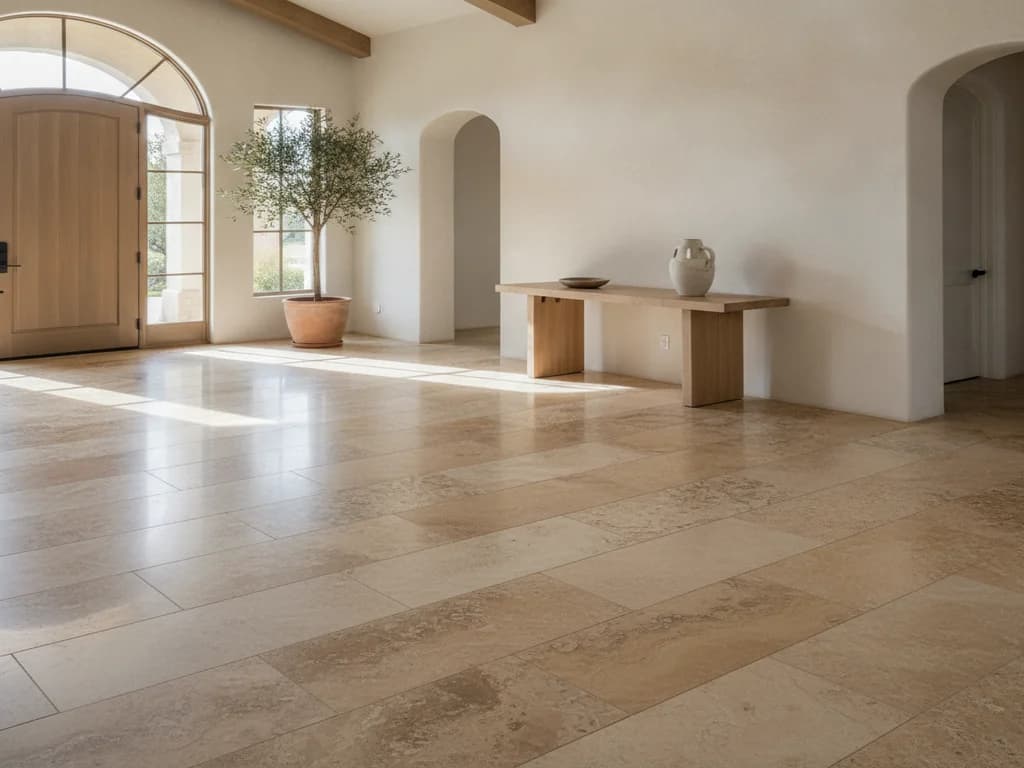
Travertine
A warm, earthy stone with natural pitting and texture, commonly used in entries, patios-adjacent spaces, and Mediterranean or transitional-style homes. Often filled and honed for a smoother, more consistent surface indoors.
Marble
Prized for dramatic veining and a classic, upscale look. Marble is softer and more prone to etching from acidic substances than granite or porcelain, so it suits lower-traffic, lower-spill areas better than busy kitchens unless properly sealed and maintained.
Limestone
A softer sedimentary stone with a subtle, matte, natural look. Good for a quieter, more understated aesthetic, but it's porous and benefits from diligent sealing, especially in kitchens and entries.
Slate
Durable and naturally slip-resistant with a rustic, textured surface — a strong choice for entries, mudrooms, and outdoor-adjacent transition spaces where texture underfoot is an asset rather than a drawback.
Honed Finish
A matte, low-sheen surface that hides scratches and wear better than polished stone and offers more slip resistance — often the more practical choice for floors versus polished stone for walls or lower-traffic accents.
Polished Finish
A glossy, reflective surface that shows off veining and color most dramatically, but shows scratches, etching, and wear more readily underfoot over time.
Good to Know
Before You Choose
- All natural stone is porous to some degree and needs sealing before grout and periodically after installation — this isn't optional maintenance, it's what keeps stains and moisture out.
- Marble and limestone can etch (dull or discolor) when exposed to acidic spills like citrus, wine, or some cleaners — worth weighing honestly for kitchens versus lower-traffic rooms.
- Natural variation in color, veining, and pitting is a feature of real stone, not a defect — if you want perfect uniformity, a stone-look porcelain may serve you better.
- Stone is heavier than most tile and needs roughly twice the floor stiffness — industry standards call for deflection no worse than span-over-720 for natural stone versus span-over-360 for ceramic — so subfloor and framing suitability should be confirmed before installation, especially over wood-framed floors.
- Cost is driven by stone type, finish, slab or tile format, and the amount of substrate prep and sealing required — we'll give you real numbers after seeing the space.
Our Services
Everything We Install
A full range of flooring installation and finishing services.
Hardwood Flooring
Solid oak, maple, and walkable heirloom-grade hardwood, precisely installed.
Learn moreEngineered Hardwood
Real-wood wear layers built for California's climate swings.
Learn moreLuxury Vinyl Plank
Waterproof, wood-look LVP for kitchens, baths, and busy households.
Learn moreLaminate Flooring
Durable, high-style laminate at a friendly price point.
Learn moreSheet Vinyl
Seamless, water-resistant sheet vinyl for utility spaces.
Learn moreTile Flooring
Porcelain and ceramic tile set dead-level with crisp grout lines.
Learn moreNatural Stone
Travertine, marble, and slate installed with a craftsman's eye.
Learn moreCarpet Installation
Plush, tight-stretched carpet for bedrooms and stairs.
Learn moreFloor Installation
Full-service installation from subfloor prep to final baseboard.
Learn moreFloor Refinishing
Sand, stain, and reseal tired hardwood back to new.
Learn moreFloor Repair
Board swaps, water damage, squeaks, and seamless patch-ins.
Learn moreStairs & Treads
Hardwood treads, risers, and runners with crisp detailing.
Learn moreEpoxy Garage Floors
Tough, easy-clean epoxy coatings for garages and shops.
Learn moreWhere We Work
Natural Stone Across Northern California
Good to Know
Frequently Asked Questions
Is natural stone flooring hard to maintain compared to tile?
It takes more upkeep than porcelain — periodic resealing and a bit more care around acidic spills, especially with marble and limestone. Travertine and slate tend to be more forgiving. We'll walk you through what maintenance actually looks like for the specific stone you're considering.
Can I install marble or limestone in my kitchen?
You can, and many homeowners do for the look, but both are softer and more prone to etching from acidic spills than granite-look porcelain. With proper sealing and reasonable care it holds up well — we'll give you an honest picture of the tradeoffs before you commit.
What's the difference between honed and polished stone?
Honed stone has a matte, low-sheen finish that hides scratches and offers better slip resistance underfoot. Polished stone is glossy and shows off color and veining more dramatically, but scratches and wear show up more visibly over time. For floors, honed is often the more practical choice.
Do you seal natural stone floors as part of installation?
Yes — sealing before grouting and again after installation is standard practice on our stone jobs, not an optional add-on. Porous stone left unsealed will absorb stains and moisture far more readily.
Will my stone floor look uniform, or will there be color variation?
Natural stone varies piece to piece — that's part of its character, not a flaw. We blend material from multiple boxes during layout to avoid obvious patches of mismatched stone, but some natural variation in tone and veining should be expected and is normal.
How do I get a price for a natural stone flooring project?
Cost depends on the stone type, finish, format (tile or slab), and how much substrate prep and sealing the space needs. We offer free in-home estimates — call (916) 749-0272 and we'll assess your space and give you real numbers.
Related
Keep Reading
Related pages: Epoxy Garage Floors, Carpet vs. Hard Surface in Bedrooms, Chevron vs. Herringbone, and European White Oak.
Ready for Floors You'll Love?
Free estimates on natural stone throughout Greater Sacramento & Northern California.