Service Area
Flooring in Fair Oaks
Renaissance Floors installs and refinishes hardwood, luxury vinyl, tile, and more for homeowners throughout Fair Oaks and the surrounding Sacramento County area.
CSLB #1060673
Licensed & Insured
Est. 2019
Family-Owned
15+ Years
Hands-On Experience
5.0★ Rated
22 Reviews on Thumbtack
Local, Licensed, Accountable
Flooring Contractor Serving Fair Oaks
Fair Oaks is part of Sacramento County, and it's one of the communities Renaissance Floors regularly works in. We're based in Roseville, CA and serve homeowners across Greater Sacramento & Northern California— from small refinishing jobs to full home installs. Every project starts with an honest look at your subfloor and your goals, followed by a clear, no-pressure estimate. There's no dispatched sales team and no guesswork: you work directly with the crew doing the installation, backed by our CSLB C-15 license and a workmanship warranty on every job.
Sacramento-area homes see hot, dry summers and mild winters, so solid wood can move seasonally if it isn't acclimated and sealed properly. We prep and acclimate every install for the local climate — and luxury vinyl plank is a popular, worry-free choice for busy valley households.
Fair Oaks began as a sales pitch. In 1895, the Howard & Wilson Publishing Company of Chicago secured the rights to market a tract of river-bluff land that Sacramento investors Cox and Clarke had held since 1873, christened it Fair Oaks — the federal record says after a Civil War battlefield in Virginia — and sold it as one of their 'Sunset Colonies,' promising, in the words of the National Register nomination that preserves the story, 'a place with no frosts, perpetually blooming flowers, temperatures rarely above ninety degrees,' plus an invented Spanish don to give the land a pedigree the nomination calls 'romantic, yet false.' Three hundred settlers had come by 1897 — largely Pullman Company executives and professionals with no farming experience, buying five-to-twenty-acre citrus tracts at thirty dollars an acre. The promoters withdrew in 1898, taking their unbuilt bridge, water system, and railroad with them. The settlers stayed, and their orchards shipped 150 carloads of oranges a year until the freezes of 1932 and 1934 killed commercial citrus for good.
What the community built for itself is the better story. When the private ditch company raised water rates in 1915, Fair Oaks organized a Water Takers Association and voted — 184 to 16, in March 1917 — to form its own irrigation district, which began by delivering untreated river water to four thousand acres by horse-drawn tank wagon and lives on today as the Fair Oaks Water District, serving roughly 37,000 people in and around the community. And when the promoters' promised bridge never came, residents lobbied the Sacramento Chamber of Commerce into financing one: the crossing at the foot of the bluff, first built in 1901, washed out, replaced temporarily, then rebuilt permanently in 1907 as the steel Pennsylvania Petit through-truss that still stands — 483 feet, the second-oldest of only ten of its kind in California, listed on the National Register in 2006, the sole crossing of the lower American River for nearly fifty years, and since 1967 a beloved footbridge onto the Parkway.
The land itself is what most separates Fair Oaks from its neighbors: this is the steep one. Sampled elevations across the community run from 63 feet at the bridge landing to 276 on the eastern uplands — some 213 feet of relief — and nearly half the CDP sits in soil units whose mapped slope class starts at eight percent or better. Sacramento County's operative zoning for the Village says it plainly: the terrain 'is hilly and tree-covered,' grading that would 'significantly alter the topography' is prohibited, and 'development proposed for a steep hillside shall use the slope as a design feature.' The bluff at the Village's foot — called, in the bridge's federal nomination, 'the last piece of scenic bluff accessible to the public along the American River Parkway' and 'The Crown Jewel of the American River Parkway' — is also a regulatory line: everything above it maps to FEMA's minimal-hazard Zone X, while the river bottom at Sailor Bar and the bridge landing is designated floodway, which is why it's parkland.
The Village core is governed by one of Sacramento County's more distinctive instruments: the Fair Oaks Village Special Planning Area, adopted in 1979 and still current law, whose findings declare that the Village's 'combination of environmental, historic, and architectural features... create a unique ambience' that no other zoning could protect. Its design review reaches changes of use, exterior alterations, signs, and reconstructions exceeding half a building's value — not interior finishes — and the Fair Oaks Community Planning Advisory Council is written into the ordinance text itself, still meeting the first Wednesday of each month at the library. The Village is also home to the community's most famous residents: the free-roaming chickens, which the park district officially disclaims all oversight of, the county has repeatedly declined to regulate away, and the Recreation & Park District celebrates with an annual Chicken Festival at Fair Oaks Park.
The housing profile is the affluent, owner-occupied inverse of its western neighbor. Fair Oaks' biggest building cohort is the 1970s and 80s — 47% of the stock, against 34% countywide — over a genuine pre-1950 Village-era core of about six percent, the oldest of the river-terrace communities. It is 71.2% owner-occupied with a median home value of $683,000 and the highest household income of the three colonies, and the census records exactly zero mobile homes. Underfoot, the soil mosaic splits by slope: Fiddyment hardpan about 28 to 30 inches down across the hillsides, deep fast-draining Orangevale sand on the terraces, San Joaquin ground with a clay-rich layer that perches winter water over cemented pan — and along the river, twelve percent of the community is mapped as the tailings of gold dredging, the Parkway's gravel bones. Same community, three different grounds; moisture behavior is read lot by lot here, not by ZIP code.
Renaissance Floors is a licensed CSLB C-15 flooring contractor (license #1060673), family-owned and based in Roseville, twenty minutes up the road. Fair Oaks work spans the community's whole arc: refinishing century-old floors in Village-era houses grandfathered by the SPA; reviving forty-to-fifty-year-old original oak in the owner-occupied 1970s stock that defines the community; and new engineered wood and LVP in hillside homes whose split-level floors follow the slope the county ordinance told their builders to honor. Permits for structural work run through Sacramento County's Building Permits and Inspection Services — the 2025 California code cycle applies to submittals from January 2026 — and the climate is the honest version of what the 1895 brochures lied about: under the 1991–2020 normals at the nearest long-term station, July averages 94.4°F with zero inches of rain, against wet winters that deliver four-fifths of the year's water between November and March. That swing, not the advertising, is what your floor lives inside.
Local Coverage
Neighborhoods We Serve in Fair Oaks
From Fair Oaks Village to Rollingwood, Renaissance Floors installs and refinishes floors across Fair Oaks.
Recent Work
A Sample of Our Craftsmanship
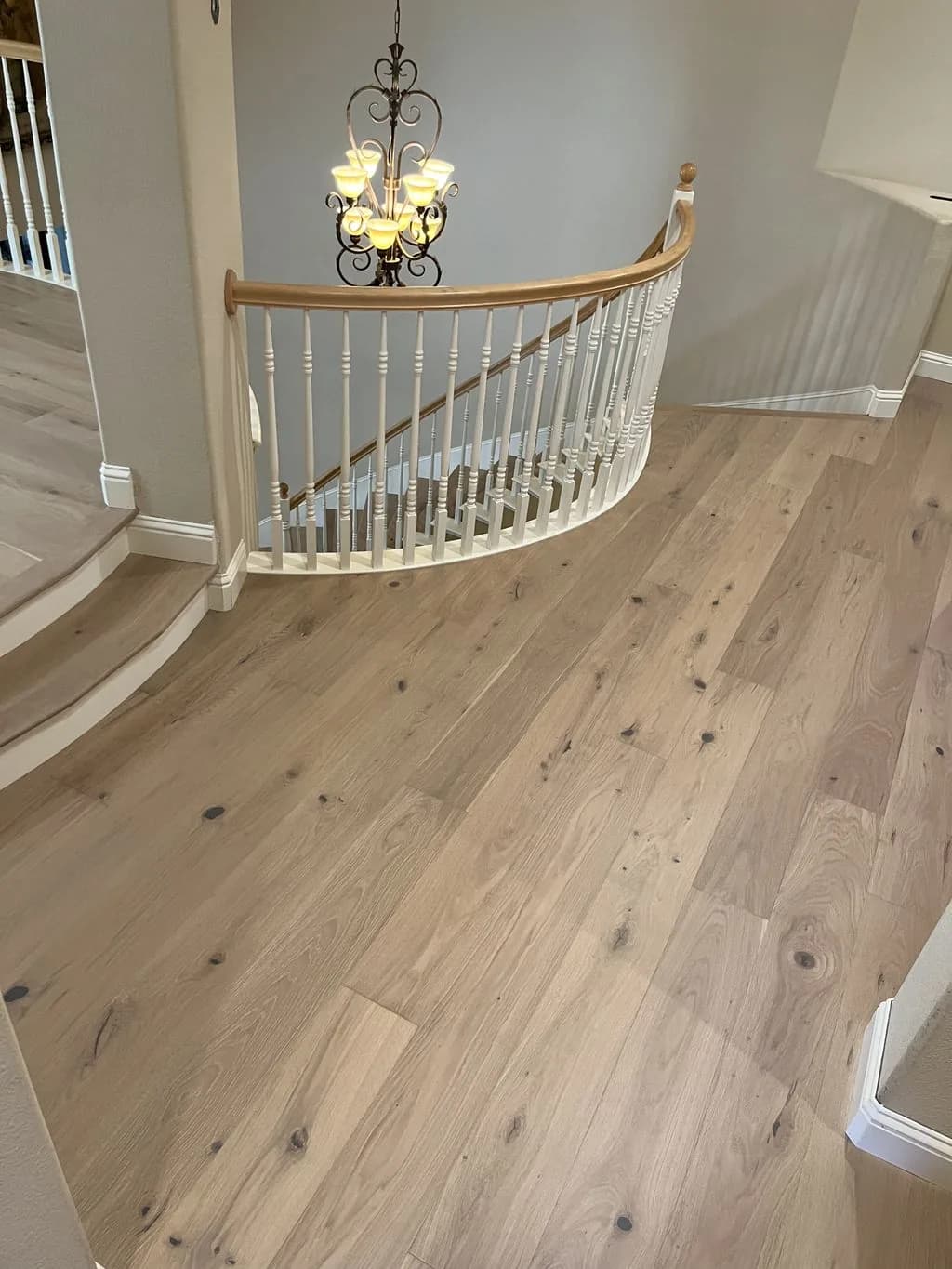
White Oak Hardwood
Great Room & Landing
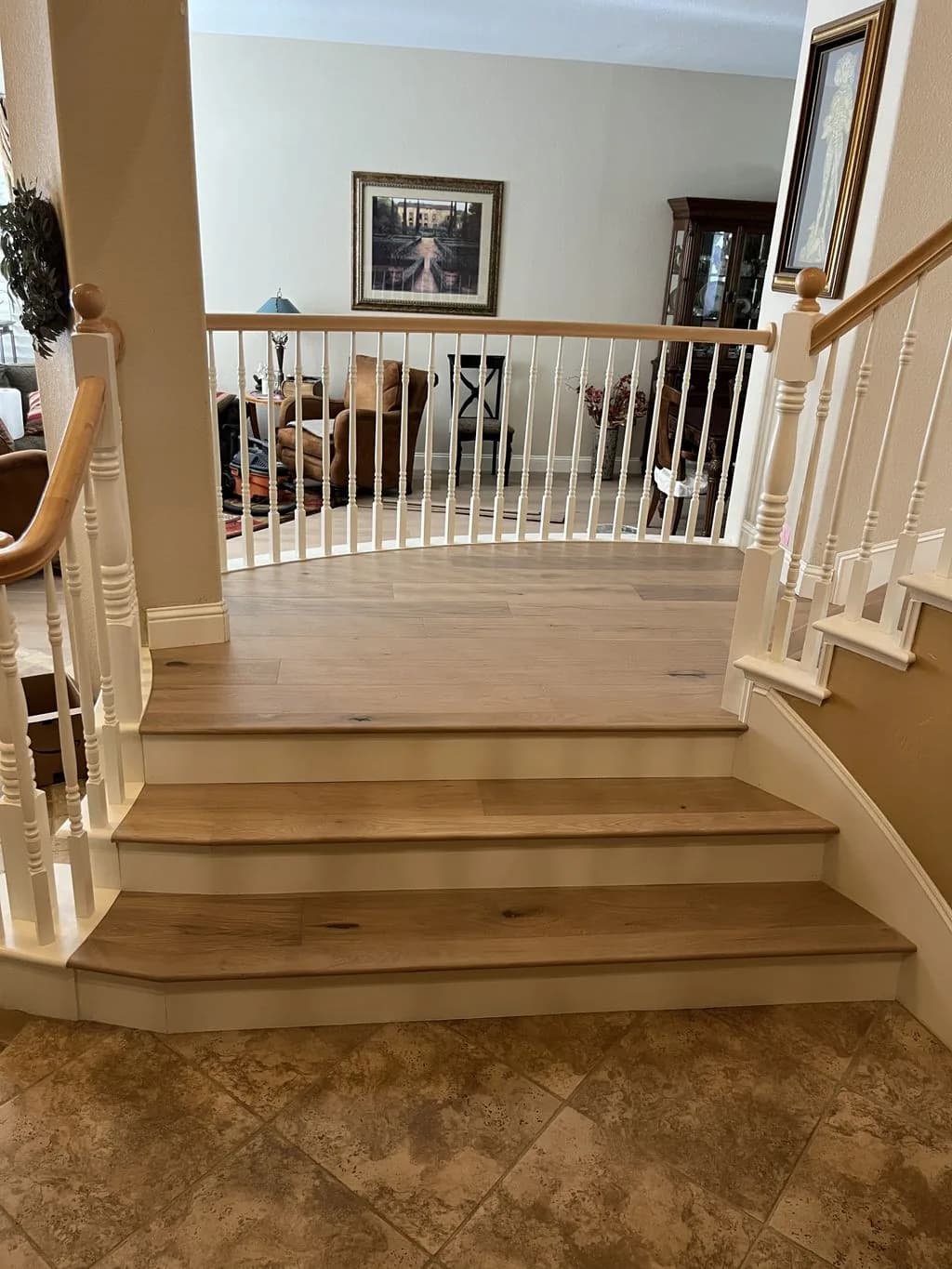
White Oak Hardwood
Staircase & Landing
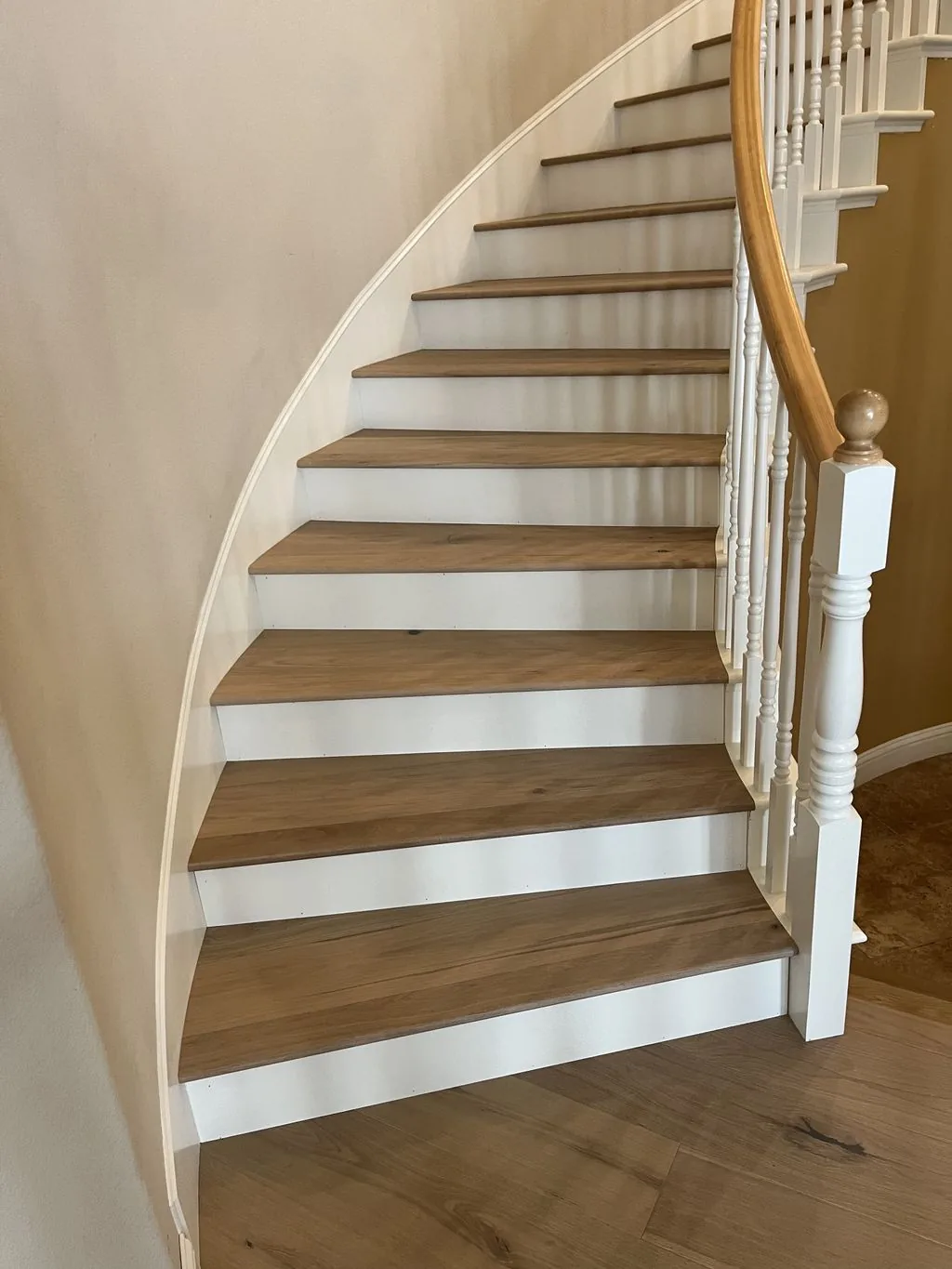
White Oak Hardwood
Curved Staircase
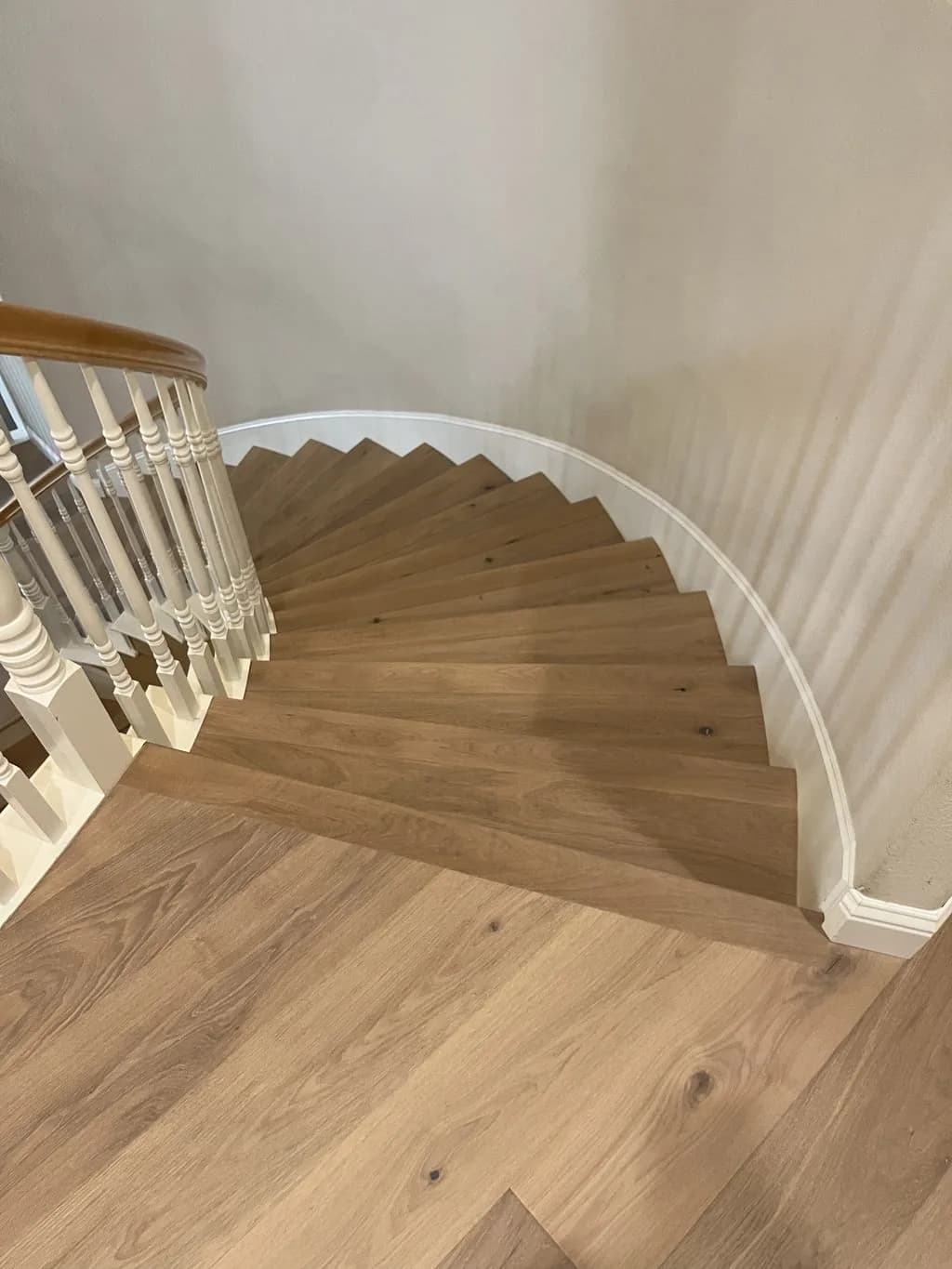
White Oak Hardwood
Stair Treads
Our Services
Flooring Services in Fair Oaks
From hardwood to luxury vinyl, here's how we help Fair Oaks homeowners upgrade their floors.
Hardwood Flooring
Solid oak, maple, and walkable heirloom-grade hardwood, precisely installed.
Hardwood Flooring in Fair OaksEngineered Hardwood
Real-wood wear layers built for California's climate swings.
Engineered Hardwood in Fair OaksLuxury Vinyl Plank
Waterproof, wood-look LVP for kitchens, baths, and busy households.
Luxury Vinyl Plank in Fair OaksLaminate Flooring
Durable, high-style laminate at a friendly price point.
Laminate Flooring in Fair OaksTile Flooring
Porcelain and ceramic tile set dead-level with crisp grout lines.
Tile Flooring in Fair OaksFloor Installation
Full-service installation from subfloor prep to final baseboard.
Floor Installation in Fair OaksFloor Refinishing
Sand, stain, and reseal tired hardwood back to new.
Floor Refinishing in Fair OaksFloor Repair
Board swaps, water damage, squeaks, and seamless patch-ins.
Floor Repair in Fair OaksLocal Considerations
What Fair Oaks Homes Need From a Floor
Climate, home age, and foundation type all shape the right flooring choice in Fair Oaks — here's what we account for.
A 1970s–80s owner's market with floors coming due
Nearly half of Fair Oaks was built between 1970 and 1989, and unlike renter-heavy neighbors this stock is 71.2% owner-occupied with the area's highest home values — homes whose original oak, parquet, and first-generation floors are forty to fifty years old and whose owners tend to fix them properly rather than cheaply. Refinishing original hardwood found under carpet is a staple here; where replacement wins, owners step up to quality engineered wood or rigid-core LVP rather than builder-grade patches.
Hillside houses that follow the slope
Fair Oaks is genuinely hilly — 213 feet of sampled relief, with nearly half the community in soil units mapped at eight-percent slopes or steeper, and a county ordinance that told Village-area builders to 'use the slope as a design feature.' The result is split-levels, stepped foundations, daylight basements, and cantilevered floors, where each level can sit on different structure with different moisture behavior. We evaluate hillside homes level by level — crawlspace here, slab there — rather than assuming one condition describes the house.
Three grounds in one community
Area-weighted soil mapping splits Fair Oaks three ways: Fiddyment hardpan at roughly 28 to 30 inches under much of the hillside ground, where winter water perches and moves sideways; deep, fast-draining Orangevale sand on the terraces with no restrictive layer at all; and San Joaquin ground carrying a clay-rich layer over cemented pan that holds seasonal moisture. A moisture reading on one street tells you little about the next — which is exactly why we test slabs (ASTM F2170) and probe crawlspaces on the lot in question before recommending anything rigid.
Village-era houses and the SPA's real scope
About six percent of Fair Oaks predates 1950, concentrated around the Village — the oldest core on this stretch of the river, protected by a Special Planning Area whose design review covers exterior changes, signs, changes of use, and reconstructions over half a building's value. Interior flooring sits outside that review, so refinishing a Village bungalow's original fir or oak needs no county design approval — just old-house craft: board subfloors, out-of-level framing, and pre-1980 resilient layers treated as test-first materials.
The bluff line: Zone X above, floodway below
FEMA's maps draw Fair Oaks' flood story along its bluff: the Village at 190 feet, Rollingwood, Phoenix Park, and the upland neighborhoods all sit in Zone X, minimal flood hazard, while the mapped regulatory floodway is the river bottom — Sailor Bar and the old bridge landing — which is parkland precisely because it floods. For homeowners the practical translation is reassuring: Fair Oaks houses sit on the high ground, and the moisture questions that matter are seasonal soil and crawlspace behavior, not river flooding.
Dry-summer, wet-winter movement — the brochure's lie, quantified
The 1895 promoters sold 'temperatures rarely above ninety'; the 1991–2020 normals at the nearest long-term station put July at 94.4°F with 0.00 inches of rain, while November through March delivers about 81% of the year's precipitation. That wide, entirely predictable annual swing is the main driver of wood-floor movement here — handled with real on-site acclimation, correct expansion gaps, and vapor protection appropriate to each foundation, under Fair Oaks' heavier-than-average tree canopy that keeps summer interiors a touch gentler than open-valley streets.
Dredge-tailings river edge and Parkway grit
Twelve percent of Fair Oaks is mapped as gold-dredge tailings — the cobbled spoils of the dredging era, now the ground under Sailor Bar and the Parkway corridor. No one builds living rooms on it, but everyone tracks it home: Parkway users, river dogs, and bluff-trail walkers bring coarse, abrasive grit to entries year-round. Walk-off mats, harder wear layers, and matte finishes that hide micro-scratching are honest specifications in river-adjacent homes here.
Local Resources & References
Helpful Fair Oaks Resources
Authoritative local and industry references for permits, planning, and flooring standards.
- National Register nomination, Old Fair Oaks Bridge (ref. 06000913, listed 2006) — the 1907 Pennsylvania Petit truss, and the federally reviewed history of the 1895 Fair Oaks colony, its promoters, and the 1932/1934 freezesNational Park Service
- Fair Oaks Village Special Planning Area (ordinance 79-SPA-1, adopted 1979, amended 2012) — 'hilly and tree-covered' terrain, the steep-hillside grading standard, and the scope of Village design reviewSacramento County
- Our History — the 1915 rate dispute, the Water Takers Association, the 184–16 vote of March 1917 creating the district, and the 1979 renamingFair Oaks Water District
- Fair Oaks Chicken Festival — the district as organizer, at Fair Oaks Park; and the district's FAQ disclaiming oversight of the Village's free-roaming chickensFair Oaks Recreation & Park District
- Fair Oaks history and the 1897 Howard & Wilson 'Heart of California' advertising map showing the Fair Oaks and Orangevale coloniesFair Oaks Historical Society
- ACS 2020–2024 5-year estimates, Fair Oaks CDP — year built (47% from 1970–1989), tenure (71.2% owner-occupied), value, income, structure types (via Census Reporter)US Census Bureau
- SSURGO / Soil Data Access, area-weighted against the CDP boundary — Fiddyment duripan complexes on 8–15% slopes, Orangevale and San Joaquin series, and the dredge-tailings river corridorUSDA NRCS
- National Flood Hazard Layer — Fair Oaks' residential uplands mapped Zone X (minimal hazard); the river bottom at Sailor Bar and the bridge landing mapped Zone AE floodwayFEMA
- Building Permits and Inspection Services — permit authority for unincorporated Fair Oaks; 2025 California Building Standards Code effective for submittals on/after January 1, 2026Sacramento County
External links are provided for reference. Always confirm current requirements with the issuing agency.
Explore Flooring Services in Fair Oaks
Nearby
Nearby Cities We Serve in Greater Sacramento
Serving the Region
Flooring Across Our Core Service Areas
We install and refinish floors across our core Northern California service areas — from the Sacramento region and the foothills to the Bay Area and wine country.
Good to Know
Frequently Asked Questions
Does Renaissance Floors serve Fair Oaks?
Yes. We install and refinish flooring throughout Fair Oaks and the surrounding Sacramento County area. Call (916) 749-0272 for a free estimate.
What flooring services do you offer in Fair Oaks?
We install hardwood, engineered wood, luxury vinyl plank, laminate, tile, and more in Fair Oaks, plus floor refinishing, repair, and full-service installation. See the full list below.
Are you licensed to work in Fair Oaks?
Yes. We hold CSLB C-15 license #1060673 (C-15 Flooring & Floor Covering) and carry insurance. We're based in Roseville, CA and serve Fair Oaks and all of Greater Sacramento & Northern California.
How do I get a free flooring estimate in Fair Oaks?
Call (916) 749-0272 or request an estimate online. We'll schedule a convenient in-home visit in Fair Oaks, measure your space, and give you an honest, no-pressure quote.
Do I need a permit to replace flooring in Fair Oaks?
Like-for-like floor covering is generally finish work rather than permitted construction; structural subfloor repair, or flooring inside a larger remodel, can require a permit — and because Fair Oaks is unincorporated, that permit comes from Sacramento County's Building Permits and Inspection Services, not any city. Note the code cycle: projects submitted from January 1, 2026 fall under the 2025 California Building Standards Code. We make the permit determination as part of any job that touches structure.
My house is near Fair Oaks Village — does the Village's special zoning affect new floors?
No. The Fair Oaks Village Special Planning Area's design review applies to changes of use, exterior alterations, signs, and reconstructions exceeding half a building's value — interior finish work like flooring isn't within its scope. The ordinance even declares every building existing as of 1976 a conforming use, which is part of why the Village's older fabric survives. Where flooring rides inside a major Village remodel approaching that 50%-of-value threshold, sequencing with the county review becomes a real planning question, and we flag it early.
Can original hardwood in an older Fair Oaks home be refinished?
Very often — and Fair Oaks rewards it more than most communities. About six percent of the stock predates 1950 around the Village, and the dominant 1970s–80s cohort regularly hides original oak under later carpet with plenty of wear layer left. We evaluate at an exposed edge, check the structure below (hillside homes can be split-level with different conditions per level), and treat pre-1980 resilient layers and adhesives as test-first materials before any tear-out.
How does Fair Oaks' hillside terrain affect flooring work?
More than people expect. The community carries over 200 feet of relief, with much of it on mapped slopes of eight percent or steeper — the county's own Village ordinance requires steep-hillside development to 'use the slope as a design feature' — so split-levels, stepped slabs, and daylight basements are everywhere. Each level can sit over different structure and moisture conditions, so we assess floor by floor: crawlspace humidity on one, slab RH testing on another, flatness across transitions between them.
Is flooding a concern for Fair Oaks homes near the river?
For the homes themselves, generally no — FEMA maps the residential community above the bluff as Zone X, minimal flood hazard, while the regulatory floodway is confined to the river bottom at Sailor Bar and the old bridge landing, which is parkland for exactly that reason. The bluff is the line. What river adjacency does bring is Parkway grit tracked to entries and, on some bluff-edge lots, drainage questions worth a look during the estimate.
What flooring holds up best in Fair Oaks' climate?
The real climate — not the one the 1895 brochures advertised — is a 94°F rainless July against wet winters carrying about 81% of the year's precipitation. Engineered hardwood and rigid-core LVP handle that swing most predictably; solid hardwood does beautifully with genuine on-site acclimation and correct expansion detailing, especially under Fair Oaks' mature tree canopy, which moderates summer interiors. Foundation-appropriate moisture protection — crawlspace or slab — comes first either way.
Are the Fair Oaks chickens really a thing?
Genuinely. Fair Oaks Village's free-roaming flock is the community's signature — officially un-administered (the park district's own FAQ disclaims oversight of them), repeatedly spared by county supervisors who declined to regulate them away, and celebrated at the Recreation & Park District's annual Chicken Festival at Fair Oaks Park. For our purposes they're simply good company on Village job sites — though we'll admit no other service area requires closing the van doors quite so promptly.
Does Renaissance Floors offer free estimates in Fair Oaks?
Yes — free, no-obligation in-home estimates, financing options, and a workmanship warranty. We're a licensed CSLB C-15 flooring contractor (license #1060673) based in Roseville, about twenty minutes away. Call (916) 749-0272 to schedule.
Ready for Floors You'll Love?
Free, no-pressure flooring estimates throughout Fair Oaks and Sacramento County.