Service Area
Flooring in Roseville
Renaissance Floors installs and refinishes hardwood, luxury vinyl, tile, and more for homeowners throughout Roseville and the surrounding Placer County area.
CSLB #1060673
Licensed & Insured
Est. 2019
Family-Owned
15+ Years
Hands-On Experience
5.0★ Rated
22 Reviews on Thumbtack
Local, Licensed, Accountable
Flooring Contractor Serving Roseville
Roseville is part of Placer County, and it's one of the communities Renaissance Floors regularly works in. We're based in Roseville, CA and serve homeowners across Greater Sacramento & Northern California— from small refinishing jobs to full home installs. Every project starts with an honest look at your subfloor and your goals, followed by a clear, no-pressure estimate. There's no dispatched sales team and no guesswork: you work directly with the crew doing the installation, backed by our CSLB C-15 license and a workmanship warranty on every job.
Placer County mixes newer master-planned communities in Roseville and Rocklin with established and foothill homes toward Auburn. We work over both slab and raised foundations, matching the right product and prep to each home.
Roseville is where Renaissance Floors lives — our home city, and Placer County's largest at roughly 156,000 people by current Census estimates, spread across 44 square miles of the alluvial plain at about 164 feet. It is also the region's great statistical outlier: the median Roseville home was built in 1998, more than two-thirds of all housing here went up after 1990, and nearly half is newer than 2000 — the exact inverse of the pre-war foothill towns up the hill. Yet about 1,400 Roseville homes predate 1940, clustered around the old core near Vernon Street. Those two facts describe two completely different flooring jobs, and this page is honest about both.
The city exists because of the railroad — specifically, because in 1906 Southern Pacific began moving its division point down from Rocklin, bringing the shops in 1907 and setting off the boom that incorporated the city in April 1909. The yard never stopped growing: Union Pacific describes today's J.R. Davis Yard as 'a 6-mile, 950-acre facility' and 'the largest rail yard west of the Rockies,' through which, in UP's words, 98 percent of the region's rail traffic flows. The Pacific Fruit Express plant here was described in its day as the largest block-ice facility in the world, icing refrigerator cars around the clock through the 1920s and operating into the mid-1970s. And the yard wrote itself into housing history the hard way: the April 1973 munitions-train explosion injured hundreds — remarkably, killed no one — and damaged some 5,500 homes, which means a share of Roseville's mid-century stock carries repairs older than most of its owners.
What makes Roseville genuinely unusual is how much of itself it runs. It is a charter city that established its own municipal water system in 1909, its own electric utility — Roseville Electric, serving the city since 1912, today with some 64,000 residential customers and 86% of its lines underground — a Carnegie-funded library opened in 1912, and a hometown telephone company founded in 1914. Building permits run through the city's own Development Services at 311 Vernon Street, submitted digitally, and the municipal code requires a city business license of any contractor working inside city limits — including contractors based elsewhere. The modern economic arc completes the story: the city built by the railroad is now anchored by health care, with Kaiser, Sutter, and Adventist leading its employer list.
Under the new subdivisions lies the page's most useful engineering fact. Roseville sits on Sierra alluvium, and the city's own Downtown environmental report describes the dominant Cometa soil as a claypan with 'very slow permeability, the potential for shrink-swell, and a limited ability to support a load' — with hardpan or claypan running 18 to 40 inches down across the western Placer plain. The same report adds the professional reassurance: dwelling construction 'can be designed to offset the shrink-swell potential.' That is the anti-granite story — the foothill pages sit on rock; Roseville sits on clay that engineers design around — and it is why slab moisture testing on slow-permeability ground is standard practice here rather than caution theater.
Water shaped the old core as surely as rail did. Dry Creek runs about 50 feet below the surrounding downtown grade, and on January 10, 1995 it flooded — the city still maintains physical high-water-mark markers, including one at Riverside Avenue recording 132.74 feet above sea level, and some homes along Linda and Cirby creeks took several feet of water. The city's response became a national showcase: culvert removal that took more than 150 homes out of the floodplain, a home-elevation program, 233 more homes removed along Linda Creek — and FEMA's top Community Rating System class, Class 1, which the City says earns residents flood-insurance discounts of up to 45%. For flooring, that history is practical: the older creekside neighborhoods are exactly where moisture assessment earns its keep.
The two Rosevilles meet in our daily work. West of Fiddyment Road, the West Roseville Specific Plan (2004) and Sierra Vista Specific Plan (2010) — the real plans behind WestPark and Fiddyment Farm — authorized over 17,000 homes now aging out of their builder-grade floors; around Vernon Street and Royer Park, pre-war bungalows hold original wood worth assessing before anyone quotes replacement. Renaissance Floors is a licensed CSLB C-15 contractor (license #1060673) headquartered here, and Roseville work comes with home-field logistics: short response times, easy walkthroughs, and a crew that drives these streets every day. Free in-home estimates and a workmanship warranty, in our own town.
Local Coverage
Neighborhoods We Serve in Roseville
From West Roseville to Fiddyment Farm, Renaissance Floors installs and refinishes floors across Roseville.
Recent Work
A Sample of Our Craftsmanship
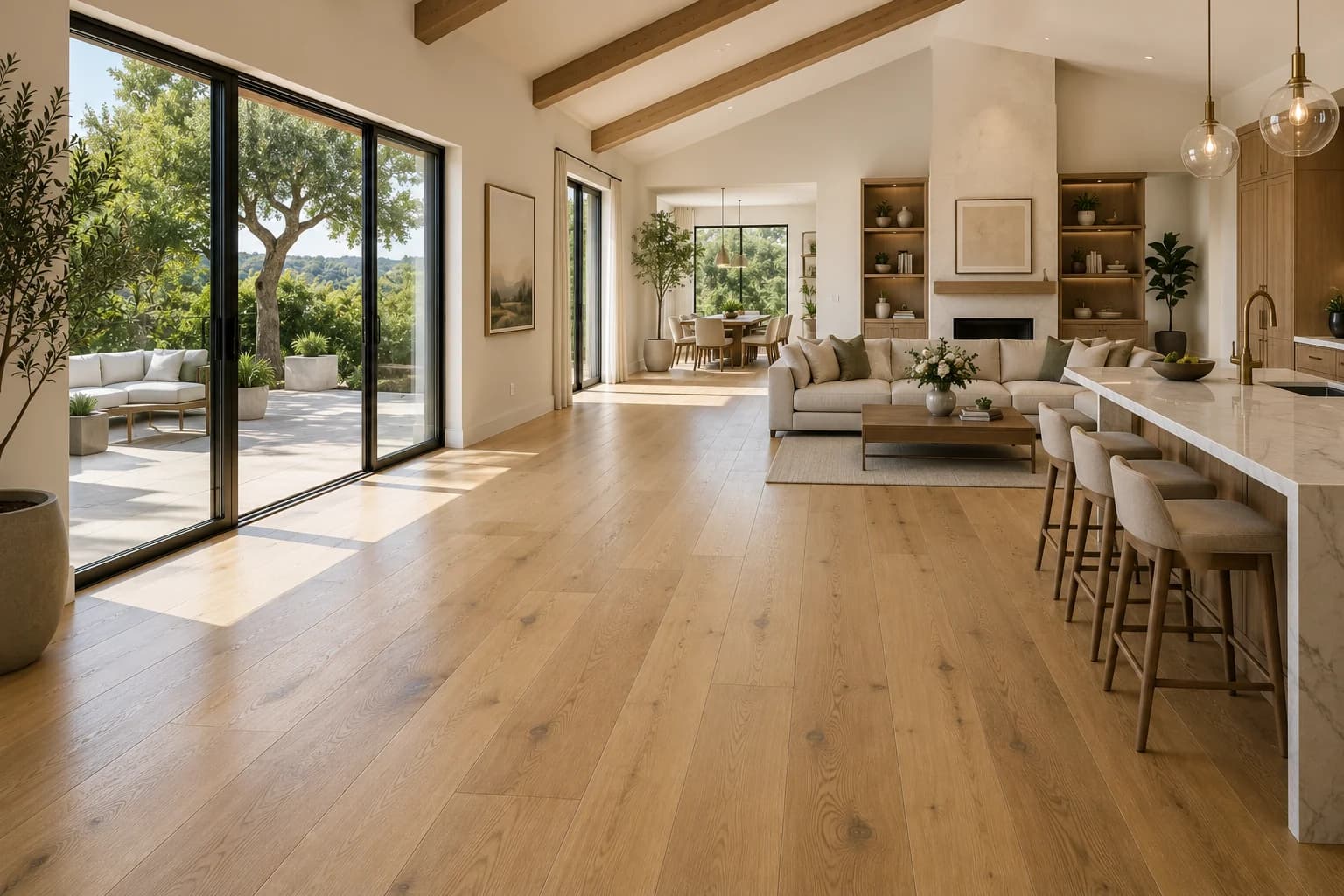
White Oak Hardwood
Great Room & Landing
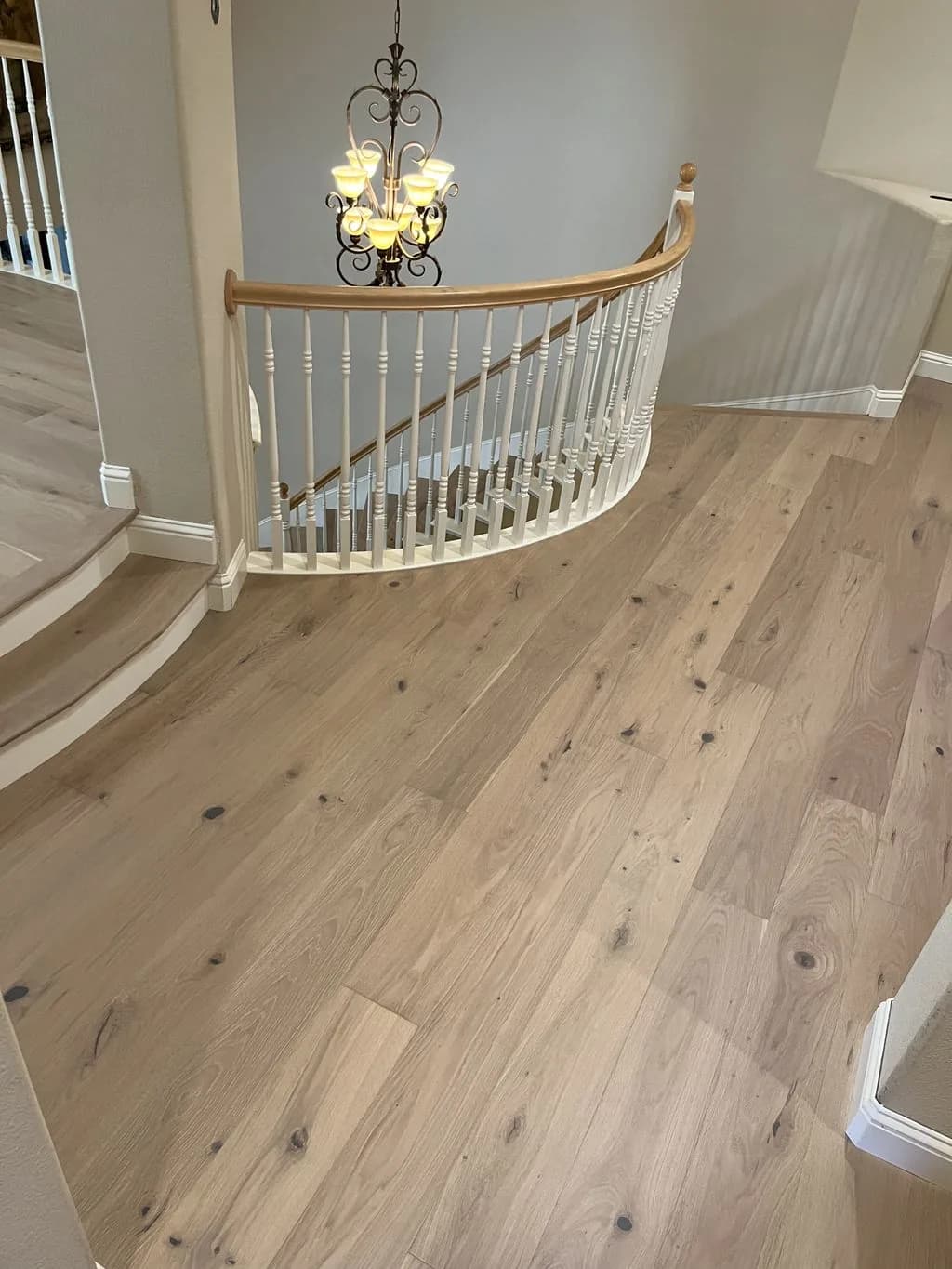
White Oak Hardwood
Staircase & Landing
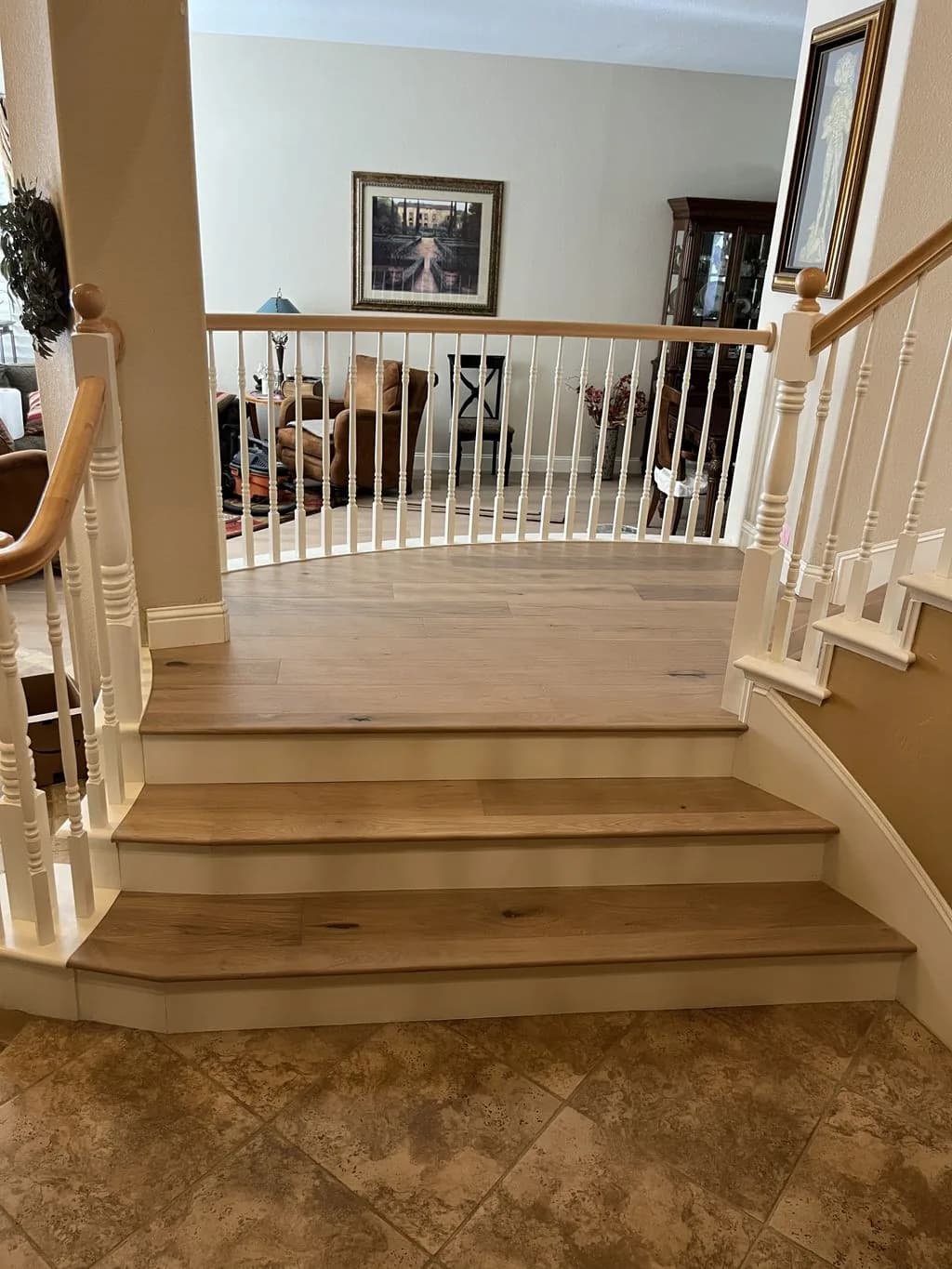
White Oak Hardwood
Curved Staircase
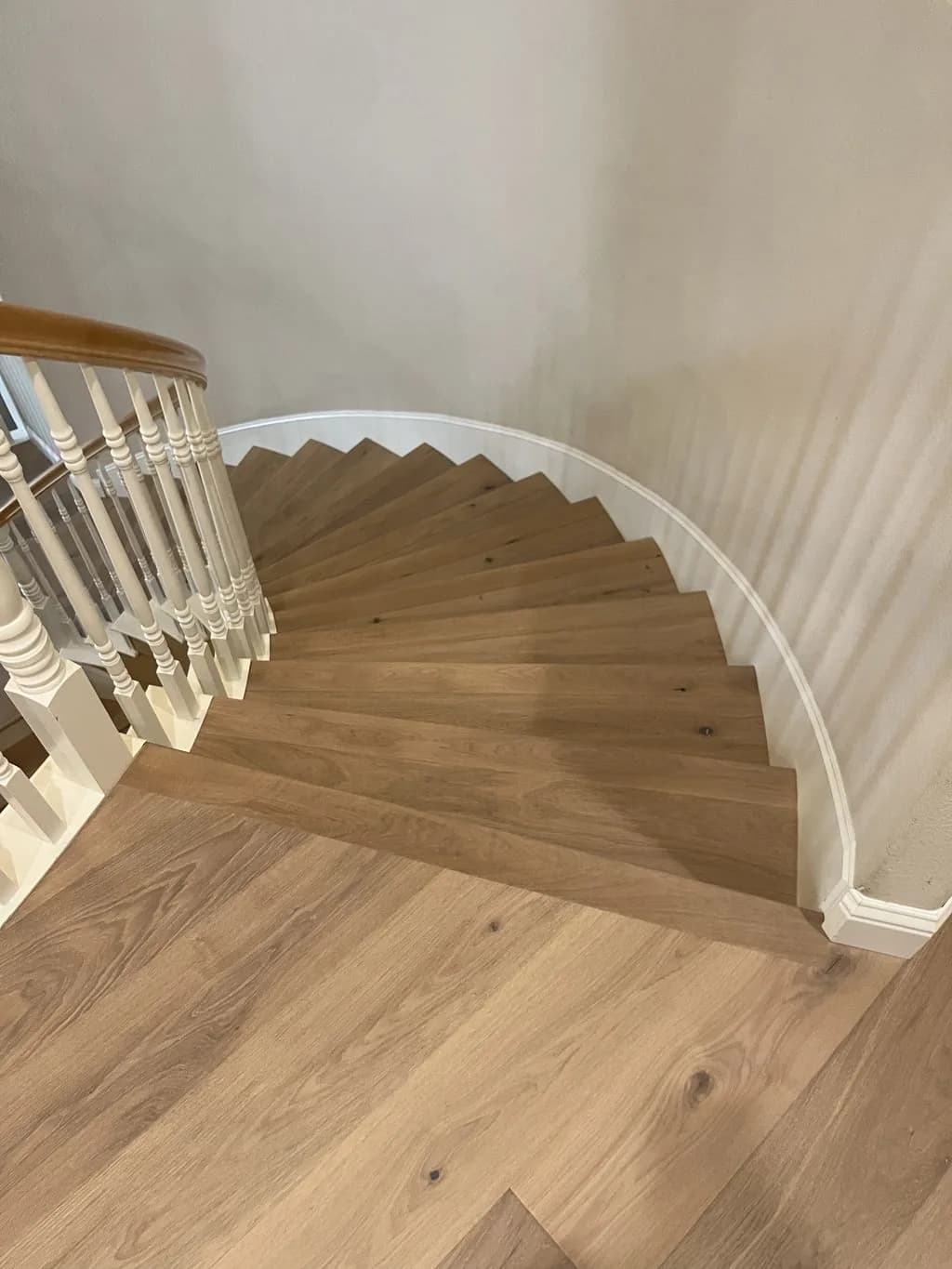
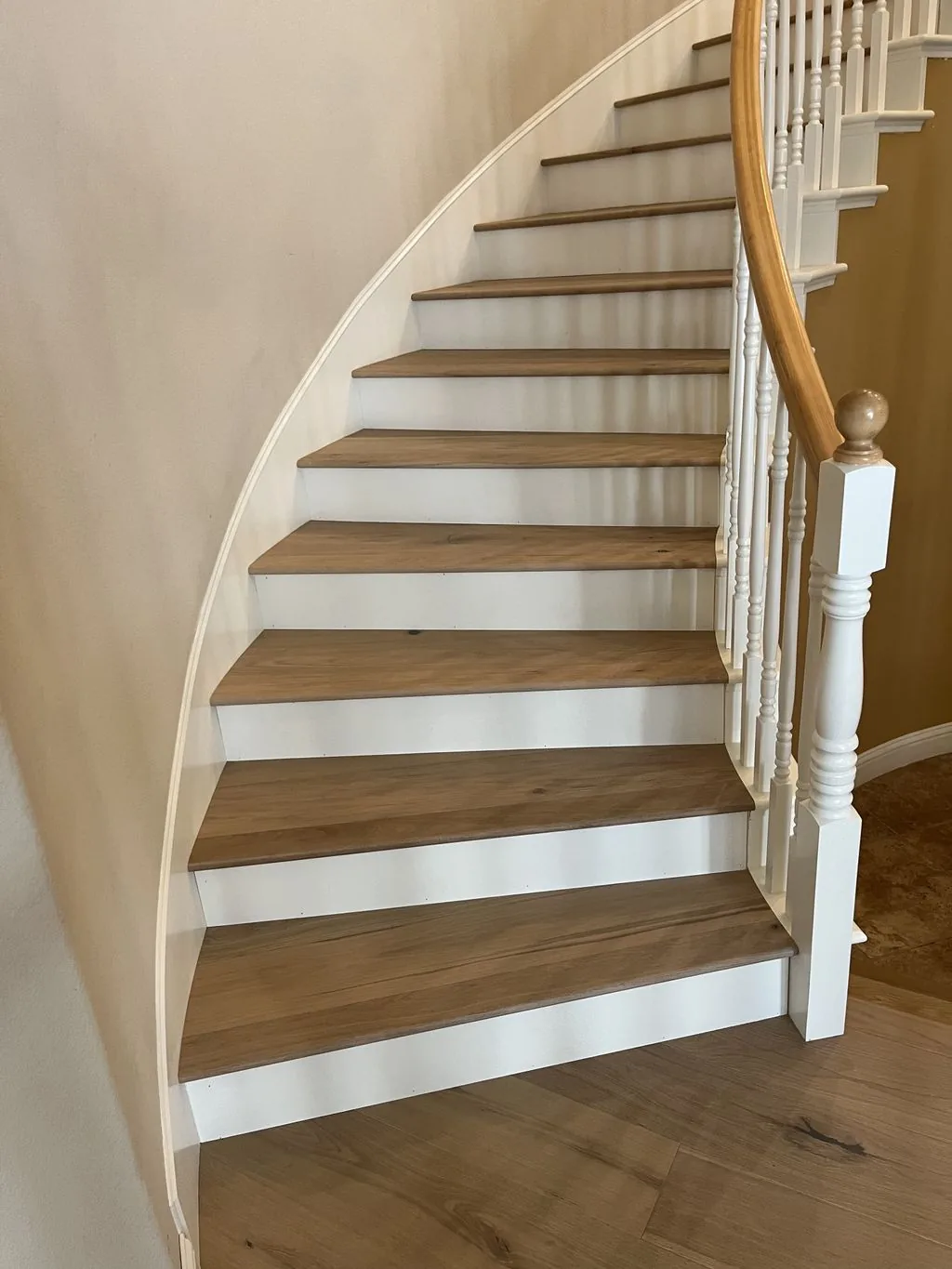
White Oak Hardwood
Stair Treads
Our Services
Flooring Services in Roseville
From hardwood to luxury vinyl, here's how we help Roseville homeowners upgrade their floors.
Hardwood Flooring
Solid oak, maple, and walkable heirloom-grade hardwood, precisely installed.
Hardwood Flooring in RosevilleEngineered Hardwood
Real-wood wear layers built for California's climate swings.
Engineered Hardwood in RosevilleLuxury Vinyl Plank
Waterproof, wood-look LVP for kitchens, baths, and busy households.
Luxury Vinyl Plank in RosevilleLaminate Flooring
Durable, high-style laminate at a friendly price point.
Laminate Flooring in RosevilleTile Flooring
Porcelain and ceramic tile set dead-level with crisp grout lines.
Tile Flooring in RosevilleFloor Installation
Full-service installation from subfloor prep to final baseboard.
Floor Installation in RosevilleFloor Refinishing
Sand, stain, and reseal tired hardwood back to new.
Floor Refinishing in RosevilleFloor Repair
Board swaps, water damage, squeaks, and seamless patch-ins.
Floor Repair in RosevilleLocal Considerations
What Roseville Homes Need From a Floor
Climate, home age, and foundation type all shape the right flooring choice in Roseville — here's what we account for.
A city two-thirds newer than 1990 — the warranty-era floor market
With a median build year of 1998 and 45.5% of housing newer than 2000, Roseville's dominant flooring job is the first full replacement: builder-grade carpet, early laminate, and thin engineered products from the 2000s boom reaching end of life together across WestPark, Fiddyment Farm, and the 1990s neighborhoods. These are slab-on-grade, centrally conditioned houses — stable interiors that suit engineered wood and quality vinyl well — and the upgrade from builder-grade to specified product is usually the biggest quality jump a home here will ever feel underfoot.
The pre-war seed around Vernon Street
About 1,400 Roseville homes predate 1940 — the railroad town's original stock near Old Town, the Carnegie library, and Royer Park. That work is restoration-minded: original fir and oak judged at an exposed edge, board subfloors and settled framing read before decisions, and honest restore-or-replace answers. It is a small share of the city and a large share of its character, and we treat it with the same discipline as the foothill historic towns.
Claypan ground, documented by the city itself
The city's Downtown EIR names the dominant Cometa soil a claypan with 'very slow permeability, the potential for shrink-swell, and a limited ability to support a load' — and notes construction 'can be designed to offset' it. Across western Roseville the surveys put hardpan or claypan 18 to 40 inches down. For floors the translation is specific: water moves slowly through this ground, so slab moisture testing (ASTM F2170), attention to perimeter drainage, and vapor-appropriate underlayments are the local prep standards — reasoned practice on clay, not boilerplate.
A flood-literate city, and what that means for older floors
Roseville earned FEMA's top flood rating the hard way — the 1995 Dry Creek flood put feet of water into creekside homes before two decades of engineering removed hundreds from the floodplain. The legacy for flooring: in the older neighborhoods along Dry, Cirby, and Linda creeks, subfloor and moisture assessment is genuinely important before new floors go down, and water-damage response — drying, subfloor repair, honest replace-vs-restore calls — is a service the local housing stock actually needs.
Roseville's own rain gauge tells its own story
The city's NOAA station records 25.52 inches of annual precipitation — six to seven inches more than the Sacramento stations fifteen to twenty miles southwest — with just 0.39 inches falling across June, July, and August combined. No Roseville temperature normal exists (the station measures only precipitation), so we don't invent one; what the rainfall record proves is the swing: a genuinely wet winter against a bone-dry summer, which is the sourced argument for acclimating wood in the house and setting expansion detail for the real seasonal range.
Permits and licenses in a self-run city
Roseville's Building Division sits inside city Development Services at 311 Vernon Street, with all applications submitted digitally. Ordinary floor replacement is typically finish-level work; structural subfloor repairs or flooring inside a larger remodel may require a permit, and we confirm scope with the city as part of planning. Worth knowing as a consumer: the municipal code requires a city business license of any contractor working inside city limits — even those based elsewhere — a rule that quietly filters the fly-by-night end of the trade.
Home-field service, literally
This is our town. Estimates fit your schedule because nobody is driving in from somewhere else; material questions get answered with a visit rather than a phone guess; and follow-up after installation is a short trip, not a scheduling event. We know the builder-grade products in the west-side tracts because we replace them weekly, and we know the old core's quirks because we work there too. The home-city advantage isn't a slogan — it's logistics.
Local Resources & References
Helpful Roseville Resources
Authoritative local and industry references for permits, planning, and flooring standards.
- History of Roseville — the 1906-09 railroad move and incorporationCity of Roseville
- Roseville Electric — community-owned utility serving the city since 1912City of Roseville
- Downtown Specific Plan Draft EIR §4.4 — Geology and Soils (the Cometa claypan findings)City of Roseville
- High Water Mark program — the January 10, 1995 flood elevations and mitigation outcomesCity of Roseville
- FEMA Community Rating System Class 1 — the City's flood-protection recognitionCity of Roseville
- West Roseville Specific Plan (2004) — the plan behind WestPark and Fiddyment FarmCity of Roseville
- J.R. Davis Yard — UP's own description: 'the largest rail yard west of the Rockies'Union Pacific
- Roseville 2.4 SE station — 1991-2020 precipitation normals (25.52 in; the city's own gauge)NOAA NCEI
- City of Roseville — ACS profile (population, income, home values, year built)US Census
External links are provided for reference. Always confirm current requirements with the issuing agency.
Explore Flooring Services in Roseville
Serving the Region
Flooring Across Our Core Service Areas
We install and refinish floors across our core Northern California service areas — from the Sacramento region and the foothills to the Bay Area and wine country.
Good to Know
Frequently Asked Questions
Does Renaissance Floors serve Roseville?
Yes. We install and refinish flooring throughout Roseville and the surrounding Placer County area. Call (916) 749-0272 for a free estimate.
What flooring services do you offer in Roseville?
We install hardwood, engineered wood, luxury vinyl plank, laminate, tile, and more in Roseville, plus floor refinishing, repair, and full-service installation. See the full list below.
Are you licensed to work in Roseville?
Yes. We hold CSLB C-15 license #1060673 (C-15 Flooring & Floor Covering) and carry insurance. We're based in Roseville, CA and serve Roseville and all of Greater Sacramento & Northern California.
How do I get a free flooring estimate in Roseville?
Call (916) 749-0272 or request an estimate online. We'll schedule a convenient in-home visit in Roseville, measure your space, and give you an honest, no-pressure quote.
Do I need a permit to install flooring in Roseville?
Ordinary floor replacement and refinishing is typically finish-level work that doesn't need a permit on its own. Structural subfloor repairs, or flooring inside a larger remodel, may require one through the city's Building Division at 311 Vernon Street — Roseville handles its own permitting, digitally. We confirm scope with the city as part of planning, and as a Roseville-based contractor we do it often.
Our 2000s WestPark home still has its builder-grade floors. What's the move?
You're the classic Roseville project — nearly half the city was built after 2000, and those original floors are aging out together. The usual path: replace builder carpet and early laminate with specified product (quality waterproof plank or engineered wood chosen for your actual traffic), after verifying what the slab is doing with a moisture test. The jump from builder-grade to properly specified flooring is usually the biggest feel-and-durability upgrade the house will ever get.
We're in one of the old neighborhoods near Vernon Street. Is our original floor worth saving?
Quite possibly — Roseville's pre-war core holds about 1,400 homes older than 1940, and original fir and oak from that era was milled thick. We judge remaining material at an exposed edge, read the board subfloor and framing underneath, and give a straight restore-or-replace answer. Restoration usually costs less than comparable new hardwood and keeps material you can't buy anymore.
Is Roseville's clay soil a problem for floors?
It's a design input, not a crisis. The city's own environmental reporting describes the dominant claypan as slow-draining with shrink-swell potential and limited bearing — and notes construction is designed to offset it, which local building has done for decades. For flooring, the practical consequences are ours to handle: in-situ slab moisture testing, attention to drainage at the perimeter, and the right vapor strategy under rigid floors. Done routinely, the clay is a non-event.
We're near Dry Creek — should we worry about moisture?
Respect it rather than worry. The 1995 flood is real history and the city's mitigation since is nationally recognized, but the durable lesson for flooring is simply that creekside blocks deserve genuine moisture assessment — subfloor readings, crawlspace checks in older homes — before new floors go in. And if water ever does reach your floors, fast drying and honest repair-versus-replace decisions matter more than any product choice made afterward.
How does Roseville's climate affect wood flooring?
The city's own rain gauge tells it: about 25.5 inches of rain a year — meaningfully wetter than Sacramento — with roughly a third of an inch falling all summer. That winter-wet, summer-parched swing moves indoor humidity, so wood acclimates in your house at its real conditions and expansion detailing is set for the actual range. No Roseville temperature record exists, so we work from the rainfall reality rather than inventing numbers.
You're actually based in Roseville?
Yes — this is home. Renaissance Floors is headquartered in Roseville, which means estimates and follow-ups are neighborhood trips, not travel events, and we know both Rosevilles firsthand: the west-side tracts whose builder floors we replace weekly, and the old core whose original wood we'd rather restore than replace. The city also requires every contractor working inside city limits to hold a Roseville business license — a consumer protection worth asking any bidder about.
Are you licensed, and do you offer financing?
Yes on both. Renaissance Floors holds California CSLB license #1060673 (C-15 flooring), verifiable through the CSLB license lookup, and we offer financing options along with free in-home estimates — with home-city scheduling, since Roseville is where we live and work.
Related
Keep Reading
Related pages: Floor Installation in Colfax, Floor Refinishing in Colfax, Hardwood Flooring in Roseville, and Engineered Hardwood in Roseville.
Ready for Floors You'll Love?
Free, no-pressure flooring estimates throughout Roseville and Placer County.