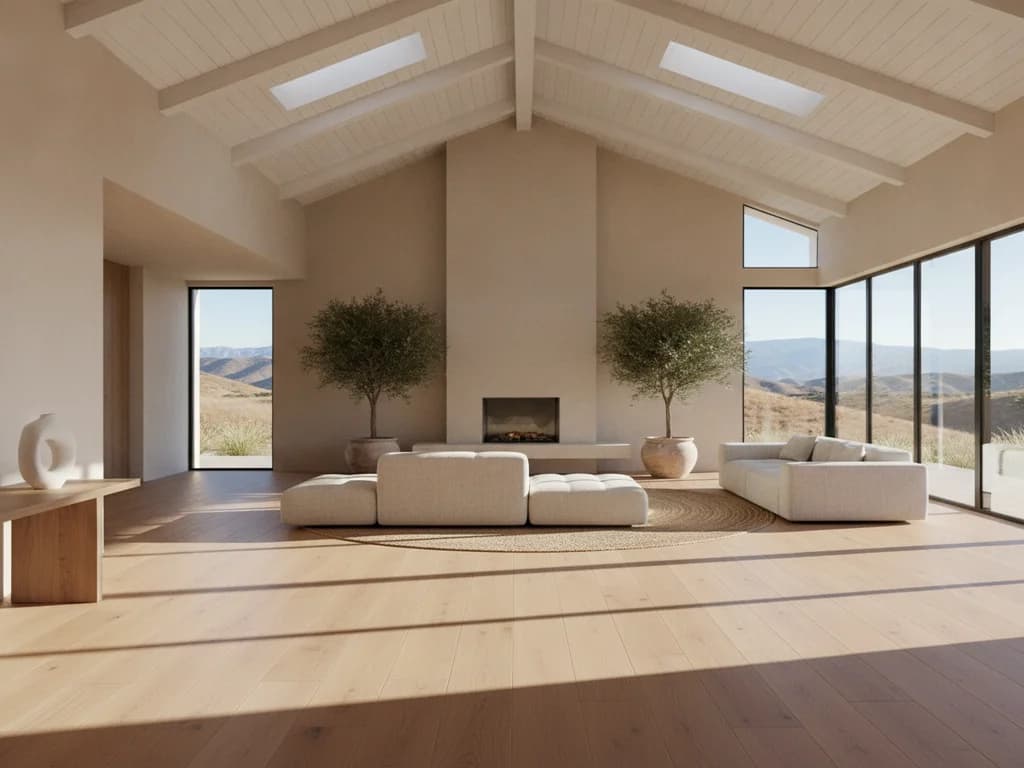
Flooring
Engineered Hardwood in Northern California
Engineered European oak and wide-plank hardwood — a genuine hardwood surface over a dimensionally stable core that handles humidity and heat.
Overview
Beautiful, Lasting Engineered Hardwood
We install engineered hardwood flooring — a genuine hardwood wear layer bonded over a cross-layered plywood or composite core — using glue-down, click/floating, or staple-down methods matched to your subfloor. The engineered construction resists the expansion and contraction that limits solid hardwood, opening up rooms and levels where solid wood isn't a good fit, including over concrete slabs and in homes with more humidity swings.
Weighing your options? Compare engineered vs. solid hardwood, nail vs. glue vs. float, and wide plank vs. standard width.
Get a Free EstimateWhy It Works
Why Homeowners Choose Our Engineered Hardwood
Dimensional Stability
The cross-layered core resists the expansion and contraction that solid wood experiences with humidity changes, making engineered hardwood a better fit over concrete slabs, radiant heat, and in rooms prone to seasonal swings.
Install Method Matched to Subfloor
We glue engineered planks directly to concrete slabs for a solid, quiet feel, float them with a click-lock system over an underlayment for faster installs, or staple/nail over wood subfloors — whichever suits your subfloor and budget.
Real Wood Look Where Solid Can't Go
Because it's more stable than solid hardwood, engineered wood lets us bring an authentic hardwood surface into basements, over slab foundations, and onto lower levels where solid hardwood carries real moisture risk.
Wear Layer Matched to Your Plans
We help you choose a wear layer thickness suited to how you'll use the floor — thicker veneers allow for a sand-and-refinish down the road, while thinner veneers keep upfront cost down for lower-traffic rooms.
Options & Styles
Engineered Hardwood Options We Install
We help you choose the right product for your rooms, your budget, and how you live.
European Oak
A popular engineered species with a wire-brushed or hand-scraped surface and wide format — a go-to for a modern, textured, European-style plank look. Mills in the Mirage, Lauzon, and Hallmark Floors tier publish the wear-layer and core specs that make products genuinely comparable.
Wide-Plank Formats
Engineered construction handles wide planks (6"–9"+) with far less risk of cupping than solid hardwood at the same width, giving you the wide-plank look without the stability trade-off.
Wear Layer Thickness
Wear layers commonly range from roughly 1mm-2mm up to 4mm-6mm on higher-end products — thicker veneers can be sanded and refinished at least once or twice, while thinner veneers are meant to be replaced rather than refinished.
Click-Lock Floating Floors
A tongue-and-groove click system that floats over an underlayment pad — faster to install, forgiving over slightly imperfect subfloors, and easier to remove or replace a damaged plank.
Glue-Down Installation
Full-spread adhesive bonds planks directly to a concrete or wood subfloor for a solid, minimal-hollow feel underfoot — our preferred method for slab installations and larger rooms.
Hand-Scraped & Wire-Brushed Textures
Surface textures that add grain depth and better hide everyday scuffs, dents, and foot traffic compared to a smooth, glossy finish.
Good to Know
Before You Choose
- Engineered hardwood handles humidity better than solid hardwood, but it's still real wood veneer — it's not recommended for full bathrooms or areas with standing water, even though it's a strong option for kitchens and basements.
- Not all engineered floors can be refinished — that depends entirely on wear layer thickness. We'll tell you honestly whether your chosen product can be sanded down the road or is designed to be replaced when worn.
- Subfloor flatness matters for a quiet, solid-feeling floor whether you float or glue it down — we check and correct high/low spots before installation rather than installing over an uneven base.
- Engineered wood is a strong fit basement-level, over concrete slabs, over radiant heat (with the right product), and anywhere solid hardwood's moisture sensitivity is a concern.
- Cost is driven by wood species, wear layer thickness, plank width, and installation method (glue-down generally costs more in labor than a floating floor) — we'll break all of this down in your estimate.
Our Services
Everything We Install
A full range of flooring installation and finishing services.
Hardwood Flooring
Solid oak, maple, and walkable heirloom-grade hardwood, precisely installed.
Learn moreEngineered Hardwood
Real-wood wear layers built for California's climate swings.
Learn moreLuxury Vinyl Plank
Waterproof, wood-look LVP for kitchens, baths, and busy households.
Learn moreLaminate Flooring
Durable, high-style laminate at a friendly price point.
Learn moreSheet Vinyl
Seamless, water-resistant sheet vinyl for utility spaces.
Learn moreTile Flooring
Porcelain and ceramic tile set dead-level with crisp grout lines.
Learn moreNatural Stone
Travertine, marble, and slate installed with a craftsman's eye.
Learn moreCarpet Installation
Plush, tight-stretched carpet for bedrooms and stairs.
Learn moreFloor Installation
Full-service installation from subfloor prep to final baseboard.
Learn moreFloor Refinishing
Sand, stain, and reseal tired hardwood back to new.
Learn moreFloor Repair
Board swaps, water damage, squeaks, and seamless patch-ins.
Learn moreStairs & Treads
Hardwood treads, risers, and runners with crisp detailing.
Learn moreEpoxy Garage Floors
Tough, easy-clean epoxy coatings for garages and shops.
Learn moreWhere We Work
Engineered Hardwood Across Northern California
Good to Know
Frequently Asked Questions
Is engineered hardwood as durable as solid hardwood?
The wear surface is genuine hardwood, so day-to-day durability is similar to solid wood of the same species. The difference is refinishing life — a thicker wear layer can be sanded down more than once, while a thinner veneer is built to be replaced rather than refinished. We'll help you pick a wear layer that matches how long you want the floor to last.
Can engineered wood flooring be installed over concrete?
Yes — this is one of the main reasons people choose engineered hardwood. We typically glue it directly to the slab after testing its moisture with in-slab relative humidity probes (the ASTM F2170 method) rather than a surface check, which is a common installation method that solid hardwood generally can't handle reliably.
Can engineered hardwood be refinished if it gets scratched?
It depends on the wear layer thickness of your specific product — some can be lightly sanded and refinished once or twice, others are too thin to sand at all. We'll tell you honestly what your floor can handle before you buy, and can usually spot-repair minor scratches without a full refinish.
What's the difference between engineered hardwood and laminate?
Engineered hardwood has a real hardwood surface, so it looks, feels, and ages like actual wood. Laminate uses a photographic image layer under a clear wear layer over a composite core — it can mimic wood convincingly but isn't real wood. We install both and can walk you through the honest trade-offs for your budget and rooms.
How much does engineered hardwood flooring cost?
Cost depends on the wood species, wear layer thickness, plank width, and whether we glue-down or float the floor — we don't price it off square footage alone. Call (916) 749-0272 or request a free estimate and we'll give you an honest, itemized number after seeing your space.
Can engineered hardwood go over radiant floor heating?
Usually yes, and it is the wood construction most radiant manufacturers approve, because the cross-layered core tolerates the gentle heating-and-drying cycle far better than solid wood. The product has to be rated for radiant service, the floor surface is kept at a moderate temperature — around 80°F is the usual ceiling — and the system comes up gradually rather than all at once. We confirm compatibility against the specific product before anything is ordered.
Is engineered wood a good choice for a kitchen?
Yes, engineered hardwood is a common and reasonable choice for kitchens because of its improved stability over solid wood, though no wood-veneer floor is fully waterproof — standing water and major spills left unattended can still cause damage. If waterproofing is your top priority, we'll also walk you through luxury vinyl plank as an alternative.
Ready for Floors You'll Love?
Free estimates on engineered hardwood throughout Greater Sacramento & Northern California.