Service Area
Flooring in Rocklin
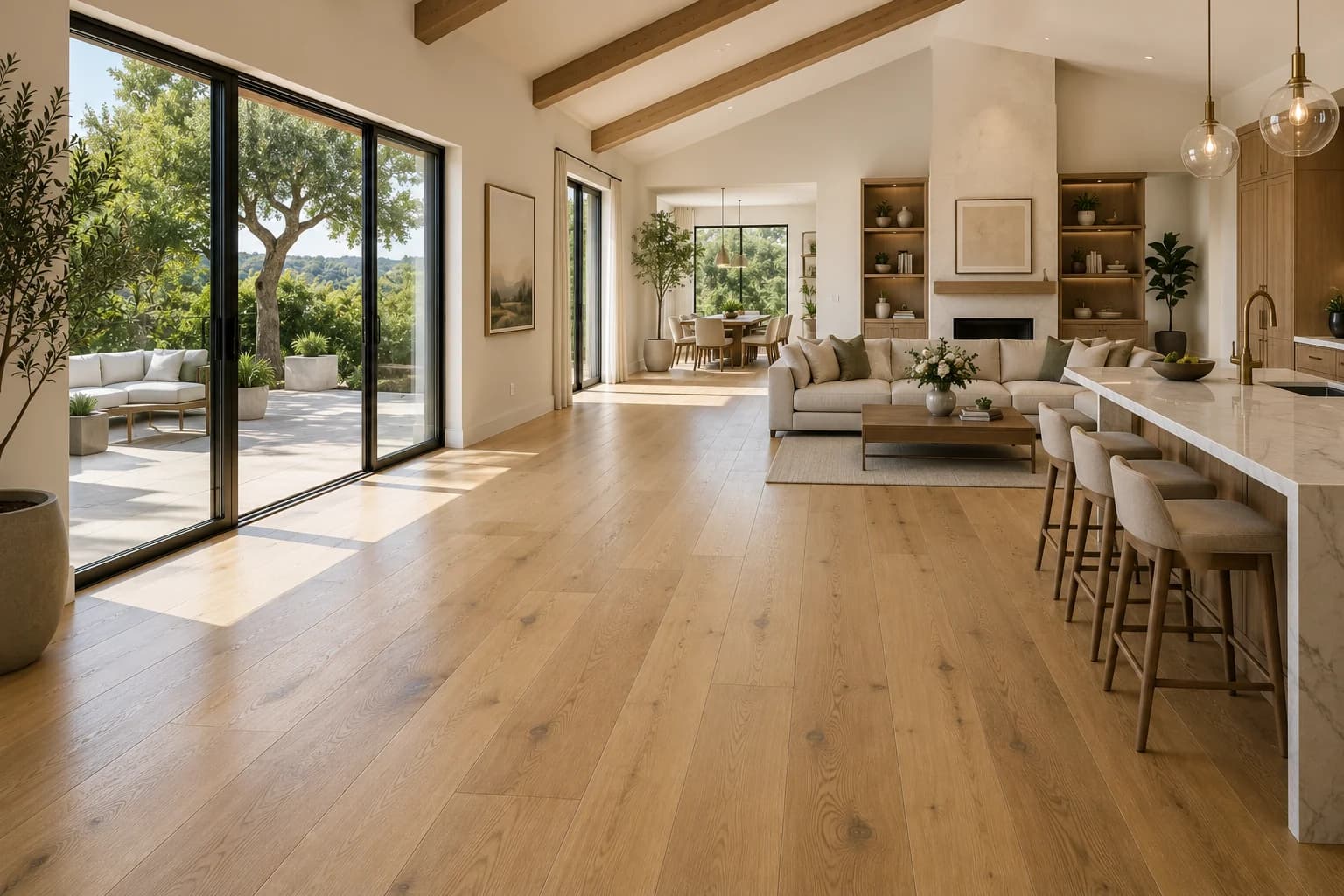
Renaissance Floors installs and refinishes hardwood, luxury vinyl, tile, and more for homeowners throughout Rocklin and the surrounding Placer County area.
CSLB #1060673
Licensed & Insured
Est. 2019
Family-Owned
15+ Years
Hands-On Experience
5.0★ Rated
22 Reviews on Thumbtack
Local, Licensed, Accountable
Flooring Contractor Serving Rocklin
Rocklin is part of Placer County, and it's one of the communities Renaissance Floors regularly works in. We're based in Roseville, CA and serve homeowners across Greater Sacramento & Northern California— from small refinishing jobs to full home installs. Every project starts with an honest look at your subfloor and your goals, followed by a clear, no-pressure estimate. There's no dispatched sales team and no guesswork: you work directly with the crew doing the installation, backed by our CSLB C-15 license and a workmanship warranty on every job.
Placer County mixes newer master-planned communities in Roseville and Rocklin with established and foothill homes toward Auburn. We work over both slab and raised foundations, matching the right product and prep to each home.
Rocklin is the town built on rock — the name itself was attached by the Central Pacific Railroad in 1864, after the granite quarry beside its new refueling stop. Over the city's life, sixty-two quarries worked this ground; twenty-two were running at once by 1910, and the last — the Capitol Quarry, known as the Big Gun — didn't close until 2005. The stone went into the state's most important building: the California State Capitol Museum's own account records that 'the Capitol contains darker granite, shipped from Folsom, as well as lighter stone, which came from the Rocklin quarries.' Today the Big Gun's pit holds a privately run aerial adventure park beside the city's Quarry Park amphitheater, and the quarry town's civic bones are still granite: City Hall is the 1912 granite company store that quarry owner Adolf Pernu built for his workers, purchased by the city in 1941 and never left.
The railroad chapter belongs to Rocklin in a particular way: it's the story of a loss. The roundhouse that opened here in May 1867 — twenty-eight engine stalls and a turntable, servicing the helper engines that trains needed for the ninety-mile climb to the Sierra summit — employed three hundred people at its peak. In 1908 the railroad moved the entire operation to Roseville, where more land was available, and the Rocklin facility closed permanently. Local legend says the town's population collapsed by eighty percent; the census says otherwise — Rocklin held nearly steady from 1900 to 1910 — and the city's own historians note why: the quarries were busy shipping curbstone and block to rebuild San Francisco after 1906. The town the railroad left, the granite kept.
The quarry workforce gave Rocklin a heritage few California suburbs can claim: a Finnish community, drawn to the granite from the 1870s. Its landmark survives — the Finnish Temperance Hall at Rocklin Road and South Grove, built in 1905 by families worried about hard-drinking quarrymen, its steps and foundation laid with granite blocks donated by Finnish quarry owners; one memoirist recalled that her father and his friends 'could name the source of every block and whose team of horses delivered it.' The Ruhkala family ran Rocklin's largest quarry from 1933 to 1977, and a street by the cemetery still carries the Finnish surname Kannasto. North of town, the Whitney family's Spring Valley Ranch — roughly 20,000 acres, founded 1855 — left its own lineage: Whitney Ranch, Whitney Oaks, and Stanford Ranch, the master-planned communities that define modern Rocklin, are named for the ranch land they replaced, and Joel Parker Whitney's pyramid-shaped granite mausoleum still stands near the eleventh green at Whitney Oaks.
Modern Rocklin happened fast and late. The city — incorporated February 24, 1893, at the height of the quarry era — was still a town of 3,039 people in 1970. It is roughly 75,000 today, a twenty-five-fold rise in fifty-five years, with the biggest single leap in the 1990s. The housing data is the cleanest in the county because of it: the median Rocklin home was built in 2000, about 74% of the stock is 1990-or-newer, fewer than one percent of homes predate 1940, and almost nothing was built in the 1940s or 50s — Rocklin skipped the postwar boom entirely, because in those decades it was a declining quarry town. These are big houses, too: more than a third have four or more bedrooms, two-thirds run piped utility gas, and the great majority sit on slab-on-grade foundations poured into master-planned pads.
Those pads are where the granite story becomes a flooring story. Soil mapping across Rocklin shows not uniform decomposed granite but a mosaic: genuine granitic Andregg soils on the east side toward Sierra College, and — under Whitney Ranch, Whitney Oaks, Stanford Ranch, and Sunset West — shallow volcanic-derived soils with hard bedrock eleven to thirteen inches down and mapped rock outcrop, ground so unyielding that the soil survey literally maps 'cut and fill areas' as their own unit. Nearly all of it is low shrink-swell, which means Rocklin slabs mostly escape the seasonal clay heave that works valley floors; pads cut into rock and rebuilt with engineered fill are stiff and stable. The variable that actually decides whether a wide-plank floor lies right across a 2,500-square-foot open plan is flatness — cut side meeting fill side — plus surface drainage, since shallow soil over rock sheds water sideways rather than soaking it in. The one mapped exception: a Cometa claypan under the oldest downtown blocks, exactly where the pre-1940 homes and raised foundations are.
Renaissance Floors is a licensed CSLB C-15 flooring contractor (license #1060673), family-owned and based next door in Roseville — Rocklin jobs are minutes from our shop. The market here is a replacement wave: the enormous 1990s and 2000s cohorts are hitting the age where original builder carpet and first-generation floors give out together, and open-concept plans reward doing it right — flatness checks, slab moisture testing (ASTM F2170), and continuous installs that read cleanly from kitchen through great room. Permits, when structural work needs one, run through Rocklin's own Building Division at 3970 Rocklin Road via the eTRAKiT portal — with a notably specific local detail: over-the-counter simple permits are handled in a 45-minute daily window, 8:00 to 8:45 a.m. And one honest sentence on fire: under the city's June 2025 ordinance about a quarter of Rocklin carries a Moderate or High fire-hazard designation with no Very High zones — context for exterior choices, not a constraint on your floors.
Local Coverage
Neighborhoods We Serve in Rocklin
From Whitney Ranch to Historic Rocklin (Quarry District), Renaissance Floors installs and refinishes floors across Rocklin.
Recent Work
A Sample of Our Craftsmanship
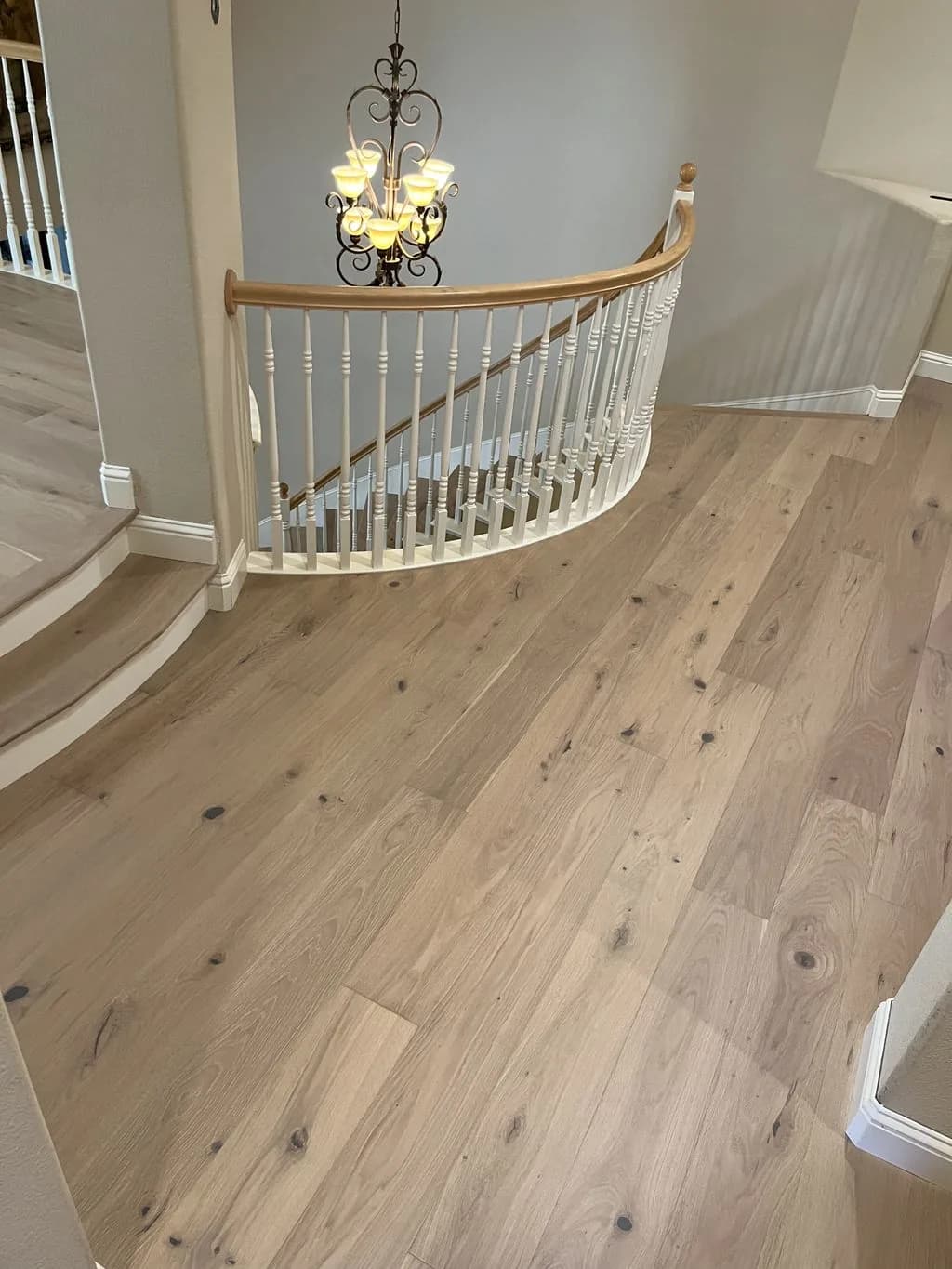
White Oak Hardwood
Great Room & Landing
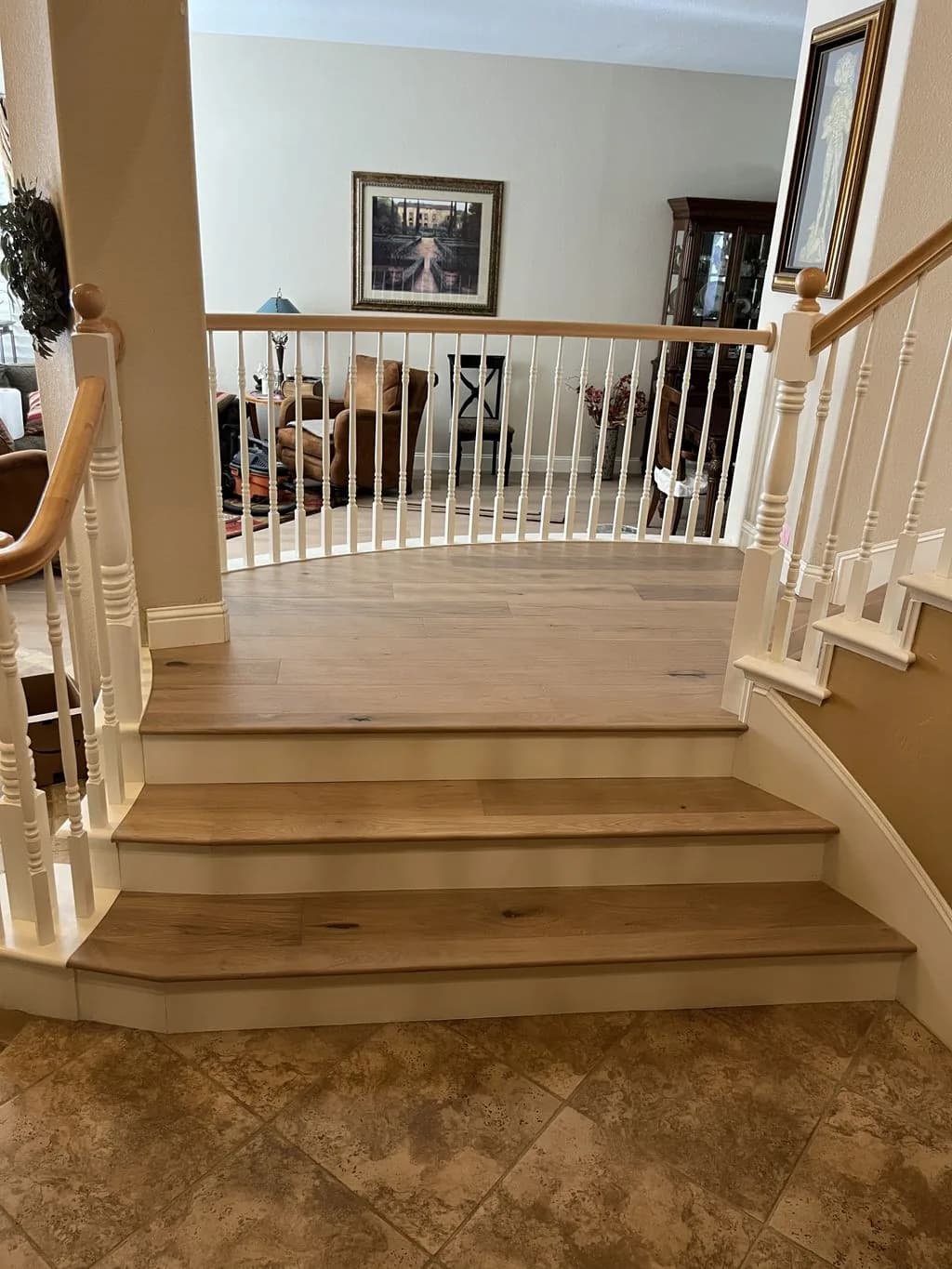
White Oak Hardwood
Staircase & Landing
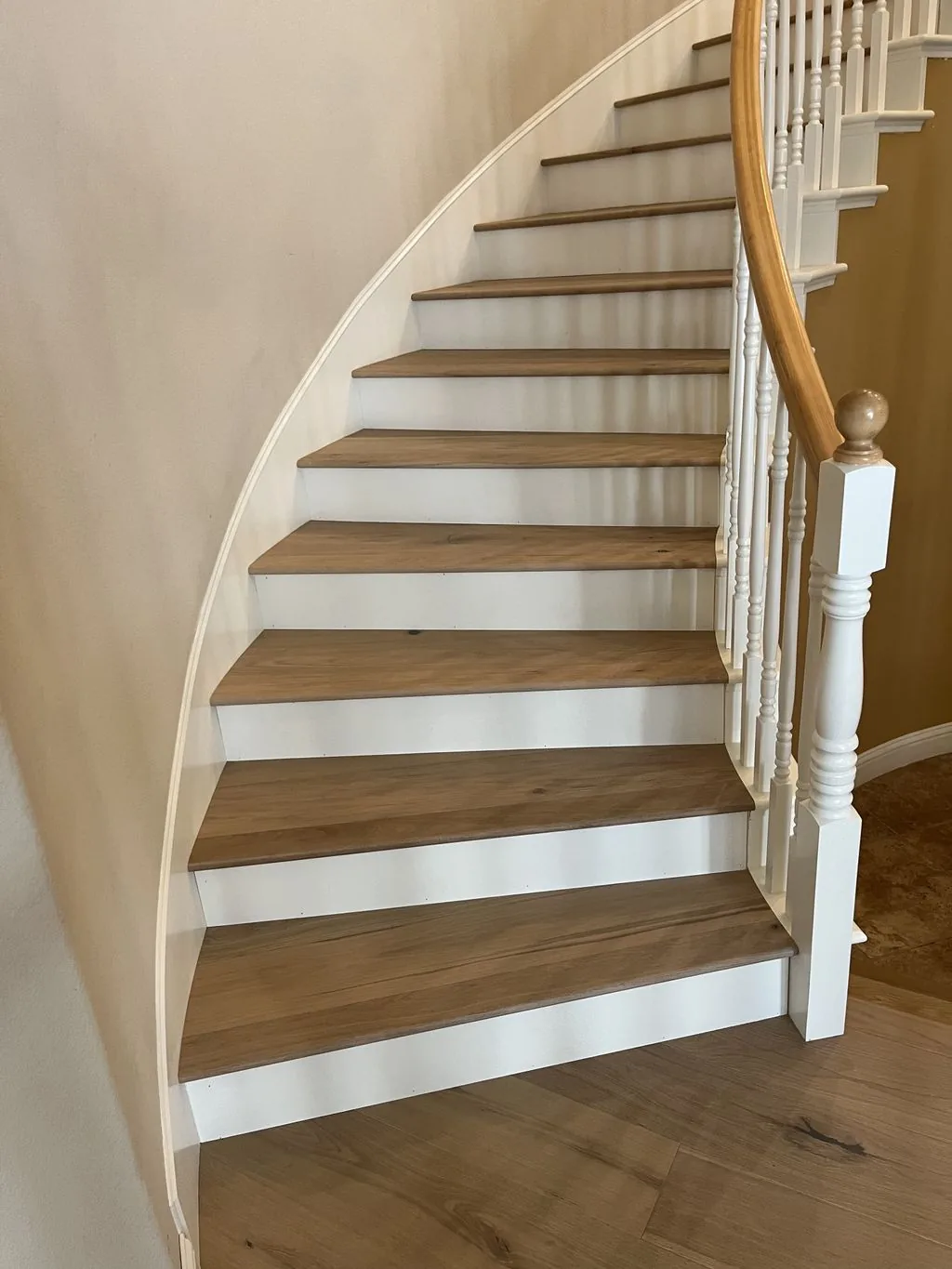
White Oak Hardwood
Curved Staircase
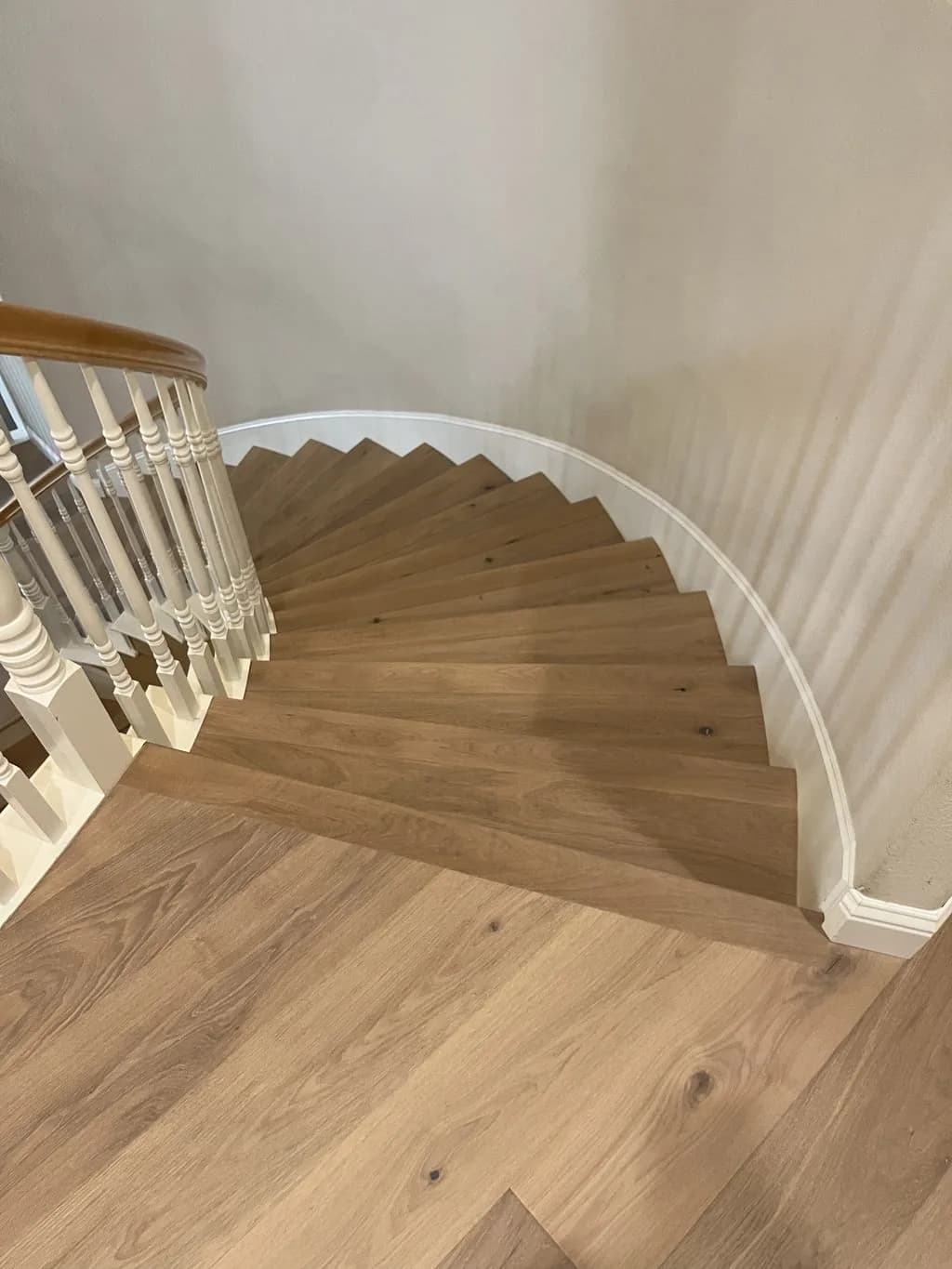
White Oak Hardwood
Stair Treads
Our Services
Flooring Services in Rocklin
From hardwood to luxury vinyl, here's how we help Rocklin homeowners upgrade their floors.
Hardwood Flooring
Solid oak, maple, and walkable heirloom-grade hardwood, precisely installed.
Hardwood Flooring in RocklinEngineered Hardwood
Real-wood wear layers built for California's climate swings.
Engineered Hardwood in RocklinLuxury Vinyl Plank
Waterproof, wood-look LVP for kitchens, baths, and busy households.
Luxury Vinyl Plank in RocklinLaminate Flooring
Durable, high-style laminate at a friendly price point.
Laminate Flooring in RocklinTile Flooring
Porcelain and ceramic tile set dead-level with crisp grout lines.
Tile Flooring in RocklinFloor Installation
Full-service installation from subfloor prep to final baseboard.
Floor Installation in RocklinFloor Refinishing
Sand, stain, and reseal tired hardwood back to new.
Floor Refinishing in RocklinFloor Repair
Board swaps, water damage, squeaks, and seamless patch-ins.
Floor Repair in RocklinLocal Considerations
What Rocklin Homes Need From a Floor
Climate, home age, and foundation type all shape the right flooring choice in Rocklin — here's what we account for.
The replacement wave: floors from 1995–2010 aging out together
With 74% of Rocklin built since 1990 and the single biggest cohort (28.5%) from 2000–2009, the city's original builder-grade floors — carpet, early laminate, first-generation hardwood — are reaching end of life in a wave. That's most of our Rocklin work: whole-house replacements upgrading to rigid-core LVP or quality engineered wood, planned around occupied family homes. Because the stock is so era-consistent, our estimates here are unusually precise; we've worked these exact floor plans across Stanford Ranch and Whitney Ranch many times.
Flatness, not clay heave, decides Rocklin slabs
Soil mapping shows Rocklin's master-planned neighborhoods sit on shallow soil over hard rock — bedrock at eleven to thirteen inches under much of Whitney Ranch, Whitney Oaks, and Stanford Ranch, with the survey mapping 'cut and fill areas' outright. Low shrink-swell ground means little of the seasonal heave that torments valley slabs; what matters instead is flatness where cut pad meets engineered fill, especially across big open plans where a wide plank telegraphs every hollow. We check flatness with a straightedge and moisture with in-slab RH testing (ASTM F2170) before any rigid floor goes down.
Downtown is the exception that proves the rule
Rocklin's oldest housing — fewer than one percent of the stock predates 1940 — clusters around downtown and the Quarry District, and it sits over the city's one mapped claypan (a Cometa subsoil with real expansion potential at 18 to 29 inches), often on raised foundations. This small pocket is where Rocklin's refinishing work lives: original wood floors near the 1912 granite City Hall and the 1905 Barudoni Building, evaluated for wear layer and moisture the old-house way, crawlspace first.
Gas-heated, rainless-summer interiors
Two-thirds of Rocklin homes heat with piped utility gas and almost none with wood — this is forced-air suburbia, with dry, stable winter interiors. The climate does the rest: July precipitation at the bracketing NOAA stations is effectively zero, against winters that deliver nearly all the year's rain. That wet-winter-to-rainless-summer cycle is the real driver of wood movement here, and it's handled with standard rigor — on-site acclimation, correct expansion gaps, and vapor protection over slab — rather than mountain-grade measures.
Big houses, long sightlines
More than a third of Rocklin homes have four or more bedrooms, and the 1990s–2000s plans run to open great rooms with continuous flooring sightlines from entry to kitchen to living space. That scale changes the work: more square footage per job, flatness tolerances that matter more because hollows telegraph across long runs, and layout decisions — plank direction, transitions, expansion breaks hidden at doorways — that we plan on paper before the first box is opened.
A city permit counter with a 45-minute window
Rocklin is its own permit authority — the Building Division inside the Community Development Department at 3970 Rocklin Road, with permits processed through the eTRAKiT online portal and inspections booked by phone. The endearing local specific: over-the-counter simple permits are handled 8:00–8:45 a.m., Monday through Friday — a 45-minute daily window. Finish flooring itself is generally treated as finish work; where subfloor structure or other trades get involved, we confirm requirements with the Division and handle the paperwork.
Granite everywhere but in the soil survey
The lighter granite in the State Capitol came from Rocklin's quarries; the town's civic buildings are granite; and genuine decomposed-granite Andregg soils underlie the east side toward Sierra College. For floors, the legacy is mostly indirect — stable rock-cut pads, plus grit: decomposed granite is abrasive underfoot, and homes near DG landscaping and east-side outcrop country track it in constantly. Entry mats, harder wear layers, and matte finishes that hide fine scratching earn their keep here.
Local Resources & References
Helpful Rocklin Resources
Authoritative local and industry references for permits, planning, and flooring standards.
- Historic Sites — the Capitol/Big Gun Quarry (opened September 1864), Brigham and Hawes Quarry (1861), the roundhouse (opened May 1867, moved to Roseville 1908), Finn Hall (1905), the Whitney ranch sites, and the 1912 granite City HallCity of Rocklin
- History of Rocklin — first recognized as a destination on the transcontinental railroad in 1864; 22 quarries operating by 1910; incorporation 1893; the granite industry's arcCity of Rocklin
- Capitol Construction — 'darker granite, shipped from Folsom, as well as lighter stone, which came from the Rocklin quarries'; construction 1860–1874California State Capitol Museum
- City of Rocklin — incorporated February 24, 1893Placer LAFCO
- ACS 2024 estimates, City of Rocklin — year built (median 2000, ~74% post-1990), structure types, tenure, bedrooms, heating fuel (via Census Reporter)US Census Bureau
- SSURGO / Soil Data Access — Rocklin's soil mosaic: Exchequer and Inks complexes (bedrock at 11–13 in, rock outcrop) under the western master plans; granitic Andregg to the east; Cometa claypan downtown; mapped cut-and-fill unitsUSDA NRCS
- 1991–2020 climate normals bracketing Rocklin — Sacramento 5 ESE (38 ft): July high 94.4°F, 19.20 in annual precipitation, July 0.00 in; Auburn (1,292 ft): 92.7°F, 36.12 inNOAA NCEI
- Building Division — 3970 Rocklin Road; eTRAKiT online permitting; over-the-counter plan check 8:00–8:45 a.m. weekdaysCity of Rocklin
- Fire Hazard Severity Zones — the city's designations, effective no later than June 10, 2025City of Rocklin
- June 10, 2025 City Council recap (archived) — ordinance adopted under AB 211: 1,421 acres Moderate and 1,623 acres High FHSZ, no areas designated Very HighCity of Rocklin
External links are provided for reference. Always confirm current requirements with the issuing agency.
Explore Flooring Services in Rocklin
Serving the Region
Flooring Across Our Core Service Areas
We install and refinish floors across our core Northern California service areas — from the Sacramento region and the foothills to the Bay Area and wine country.
Good to Know
Frequently Asked Questions
Does Renaissance Floors serve Rocklin?
Yes. We install and refinish flooring throughout Rocklin and the surrounding Placer County area. Call (916) 749-0272 for a free estimate.
What flooring services do you offer in Rocklin?
We install hardwood, engineered wood, luxury vinyl plank, laminate, tile, and more in Rocklin, plus floor refinishing, repair, and full-service installation. See the full list below.
Are you licensed to work in Rocklin?
Yes. We hold CSLB C-15 license #1060673 (C-15 Flooring & Floor Covering) and carry insurance. We're based in Roseville, CA and serve Rocklin and all of Greater Sacramento & Northern California.
How do I get a free flooring estimate in Rocklin?
Call (916) 749-0272 or request an estimate online. We'll schedule a convenient in-home visit in Rocklin, measure your space, and give you an honest, no-pressure quote.
Do I need a permit to replace flooring in Rocklin?
Floor-covering replacement is generally treated as finish work under California building practice rather than permitted construction, but Rocklin is its own permit authority and the call belongs to the City's Building Division — structural subfloor repair, or flooring done inside a larger remodel, can require a permit through the eTRAKiT portal. We confirm requirements with the Division as part of any job that touches structure. (Local color: simple over-the-counter permits are handled in a daily 45-minute window, 8:00–8:45 a.m.)
Is my Rocklin home on a slab foundation?
Very likely — about 74% of Rocklin's housing was built after 1990, an era when slab-on-grade was the overwhelming default for California production homes, and the master-planned neighborhoods were graded as engineered pads. The exception is the small pre-war pocket around downtown and the Quarry District, where raised foundations with crawlspaces are common. Either way we verify on site, because the foundation determines the moisture testing and prep that come before any floor.
Does Rocklin's granite actually affect flooring work?
Indirectly, and in a good way. Much of the city sits on shallow soil over hard rock — the soil survey maps bedrock at eleven to thirteen inches under the big western master plans — so pads are stiff and stable, with far less of the long-term settlement and clay heave that crack slabs in deep valley soils. The working consequences are flatness (cut-and-fill pads can vary across a big open plan, and wide planks show it) and surface drainage, both of which we check during the estimate. East-side decomposed granite adds one more: abrasive grit at entries.
What flooring holds up best in Rocklin's climate?
Rocklin summers are hot and effectively rainless — the bracketing NOAA stations record essentially zero July precipitation against wet winters — and most homes run dry forced-air gas heat. Engineered hardwood and rigid-core LVP handle that seasonal swing most predictably; solid hardwood performs well with genuine on-site acclimation and correct expansion detailing. Over slab, moisture testing and a proper vapor layer come first regardless of product.
My builder-grade floors from the 2000s are worn out — what do people replace them with?
That's the classic Rocklin job: the 2000–2009 cohort is the city's biggest, and its original carpet and early laminate are aging out together. Most owners step up to rigid-core luxury vinyl plank (waterproof, kid-and-dog-proof, excellent over slab) or quality engineered hardwood for the main living levels, with carpet retained in bedrooms if at all. Open-concept plans reward doing the whole level at once — one continuous, flat, properly detailed installation instead of patchwork transitions.
Can original wood floors in old downtown Rocklin homes be refinished?
Often, yes — though the pocket is small. Fewer than one percent of Rocklin's homes predate 1940, clustered near downtown and the Quarry District, and those that survive frequently hold refinishable original wood over board subfloors and crawlspaces. We evaluate wear layer at an exposed edge and check crawlspace moisture first — this is also the one part of Rocklin with a mapped claypan subsoil, so the old-house rules apply: moisture before finish.
Does Rocklin have historic-district rules that affect remodeling?
We've found no city historic-preservation overlay governing interior work — the 'Quarry District' is a place identity, and the city's historic-sites register is a heritage tour rather than a regulatory list. Interior flooring isn't the kind of work such programs review in any case. If your project touches the exterior of one of the city's recognized historic buildings, we'd confirm current requirements with the Community Development Department first.
Does Renaissance Floors offer free estimates in Rocklin?
Yes — free, no-obligation in-home estimates, financing options, and a workmanship warranty, from our home base in neighboring Roseville. We're a licensed CSLB C-15 flooring contractor (license #1060673). Call (916) 749-0272 to schedule.
Related
Keep Reading
Related pages: Floor Installation in Colfax, Floor Refinishing in Colfax, Hardwood Flooring in Rocklin, and Engineered Hardwood in Rocklin.
Ready for Floors You'll Love?
Free, no-pressure flooring estimates throughout Rocklin and Placer County.