Service Area
Flooring in Sacramento
Renaissance Floors installs and refinishes hardwood, luxury vinyl, tile, and more for homeowners throughout Sacramento and the surrounding Sacramento County area.
CSLB #1060673
Licensed & Insured
Est. 2019
Family-Owned
15+ Years
Hands-On Experience
5.0★ Rated
22 Reviews on Thumbtack
Local, Licensed, Accountable
Flooring Contractor Serving Sacramento
Sacramento is part of Sacramento County, and it's one of the communities Renaissance Floors regularly works in. We're based in Roseville, CA and serve homeowners across Greater Sacramento & Northern California— from small refinishing jobs to full home installs. Every project starts with an honest look at your subfloor and your goals, followed by a clear, no-pressure estimate. There's no dispatched sales team and no guesswork: you work directly with the crew doing the installation, backed by our CSLB C-15 license and a workmanship warranty on every job.
Sacramento-area homes see hot, dry summers and mild winters, so solid wood can move seasonally if it isn't acclimated and sealed properly. We prep and acclimate every install for the local climate — and luxury vinyl plank is a popular, worry-free choice for busy valley households.
Sacramento is the capital, the region's first city, and — by the numbers — four housing markets wearing one name. The city holds about 536,000 people by the latest Census estimate, and its neighborhoods span a 63-year spread in median construction date: the 95818 area around Land Park and Curtis Park centers on 1942, with 47% of its homes built before 1940, while North Natomas' 95835 centers on 2005, with 86% of its homes built since 2000. No other city in our service area contains that range, and no single flooring playbook covers it — which is why this page treats Sacramento as what it is: a pre-war city, a mid-century city, a late-suburban city, and a brand-new city, sharing a levee system.
The founding story explains the city's relationship with water. After the great flood of 1861-62 — the one that put the new capital under water and sent Leland Stanford to his inauguration by rowboat — Sacramento did something no other California city has done: it raised itself. In California State Parks' words, the city spent the 1860s and 70s 'physically raising the streets of its business district over 20 feet above the flood plain,' making Sacramento 'the only city in California to raise its streets, and one of only a handful to do so in the entire nation.' The evidence is still there: the Sacramento History Museum's underground tours walk the buried sidewalks beneath Old Sacramento, today a National Historic Landmark district. The raising was the business district, not the neighborhoods — those came decades later — but it set the city's character: this is a town that engineers its way through water rather than pretending it isn't there.
That tradition is current, not historical. The Sacramento Area Flood Control Agency states plainly that this is 'the most at-risk city in the country from riverine flooding, with more than half a million people in the flood-plain and more than $70 billion in damageable property' — and its answer is a multi-billion-dollar program built to a 200-year urban protection standard: Folsom Dam's auxiliary spillway completed in 2017, a dam raise, and forty-two miles of Natomas levee work. Natomas itself carries the era's sharpest date-stamp: a federal flood-zone building moratorium froze construction there for seven years, ending June 16, 2015 — a fact you can read directly in the neighborhood's housing data.
The old city, meanwhile, is genuinely old. Citywide, 11.1% of Sacramento's housing predates 1940 — about two and a half times the county's share — concentrated in the streetcar-era neighborhoods: Boulevard Park, platted in 1905 on the old fairgrounds and listed on the National Register in 2011; East Sacramento, growing from the 1890s and annexed in 1911, with the grand homes of the Fabulous Forties — the numbered avenues in the 40s between J Street and Folsom Boulevard — rising in the 1920s and 30s; McKinley Park, developed in 1871 by the Sacramento Street Railway Company to sell rides on its own line; and the 1955-56 Eichler cluster in South Land Park Hills. The city recognizes thirty official historic districts, Oak Park and Boulevard Park among them — and its 'City of Trees' nickname, in use since 1855, is now civic policy, with an adopted plan to grow the canopy from 19% today to 35% by 2045.
Under those four eras lie four different grounds, and USDA soil mapping names them: the state's official soil itself — the San Joaquin series, a hardpan formation 20 to 40 inches down — under East Sacramento and Oak Park; fast-draining Tinnin sand under Land Park; Egbert delta soil under the Pocket, a series whose official description notes that levees and drains are required to manage its water; and Clear Lake clay under Natomas — a true smectitic Vertisol, the textbook expansive, shrink-swell clay, sitting under the city's newest housing. Same city, opposite soil physics four miles apart. These are map-unit facts rather than lot inspections, which is exactly why slab moisture testing and site-level assessment do the deciding on any given project.
Renaissance Floors is a licensed CSLB C-15 flooring contractor (license #1060673) based in Roseville, and Sacramento's four markets are all in our working rotation: restoring pre-war oak and fir in the streetcar neighborhoods — where, usefully, the City's own preservation code states that interior alterations of private residences are not reviewed under historic-district design standards — refinishing mid-century floors, replacing late-suburban originals, and specifying first-replacement floors for Natomas homes coming off their builder-grade era. Free in-home estimates, honest recommendations, and a workmanship warranty.
Local Coverage
Neighborhoods We Serve in Sacramento
From East Sacramento to Pocket-Greenhaven, Renaissance Floors installs and refinishes floors across Sacramento.
Recent Work
A Sample of Our Craftsmanship
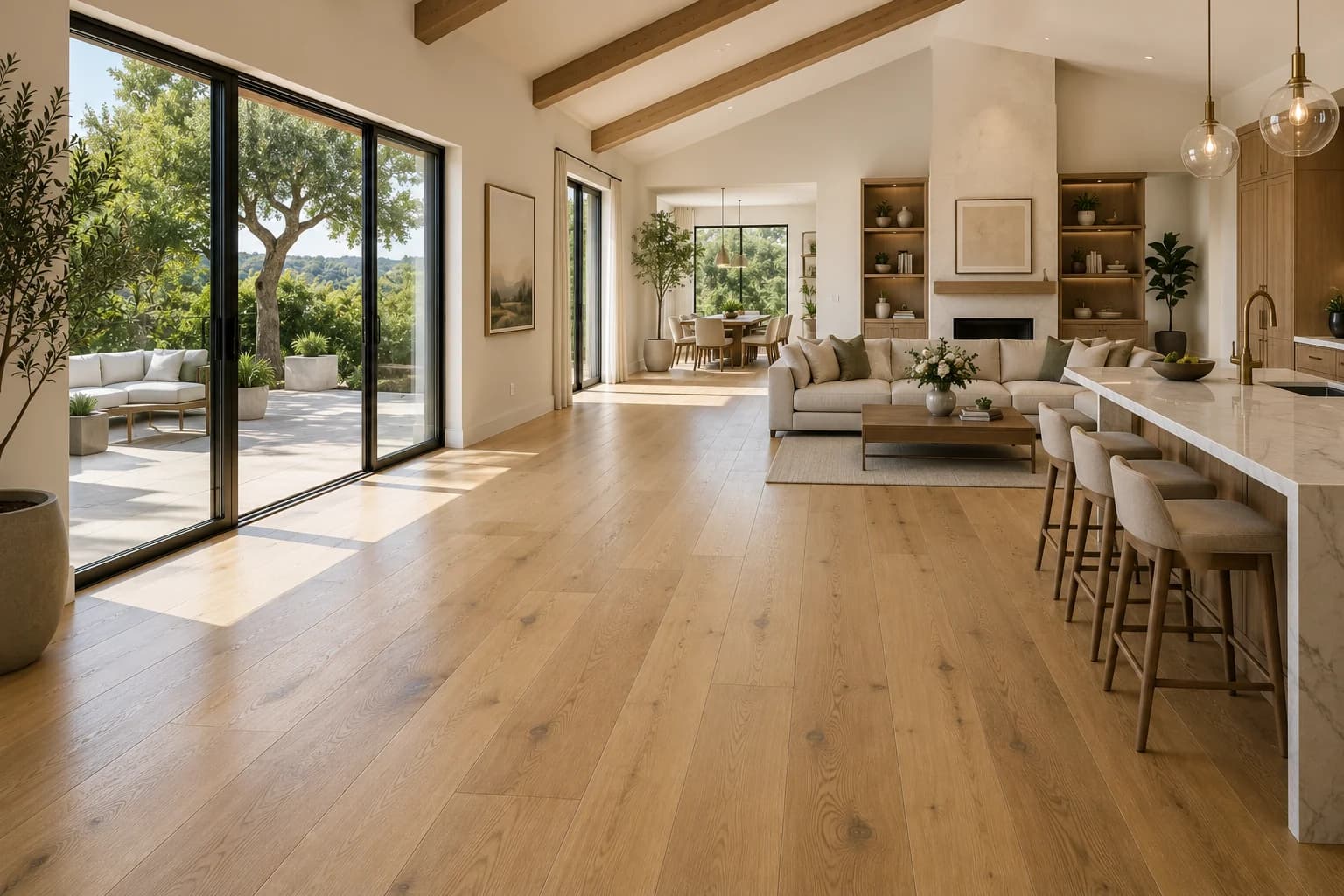
White Oak Hardwood
Great Room & Landing
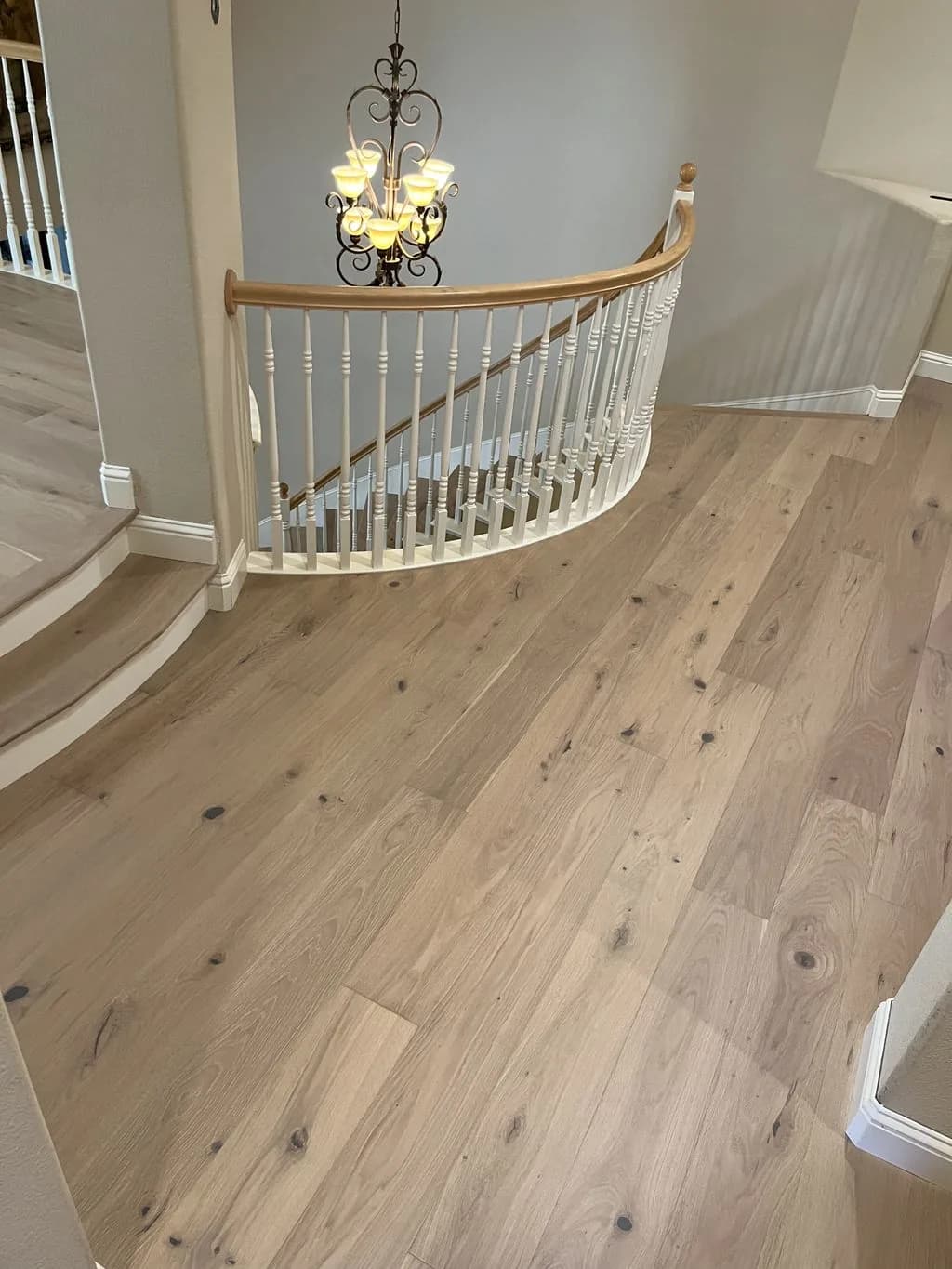
White Oak Hardwood
Staircase & Landing
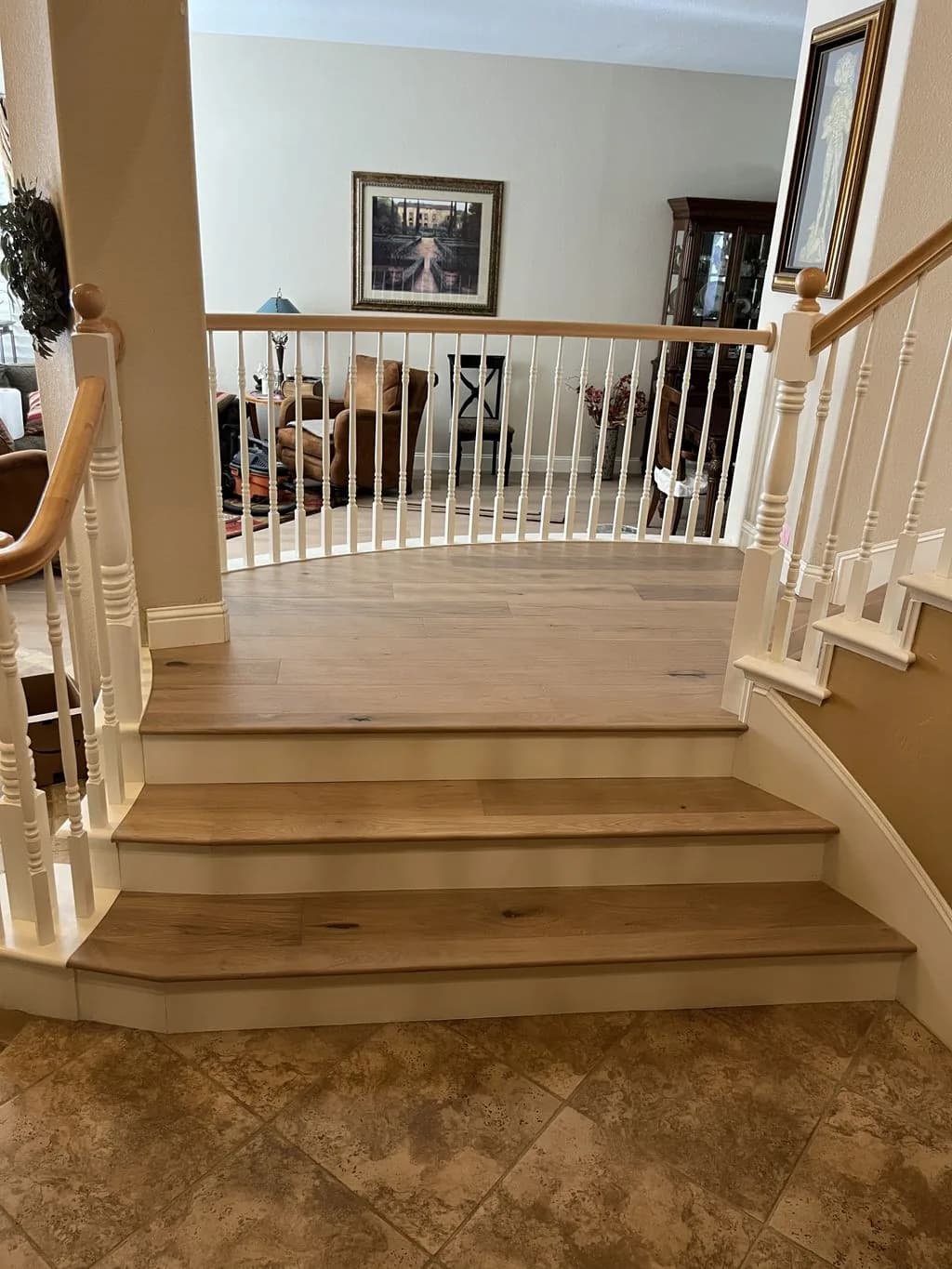
White Oak Hardwood
Curved Staircase
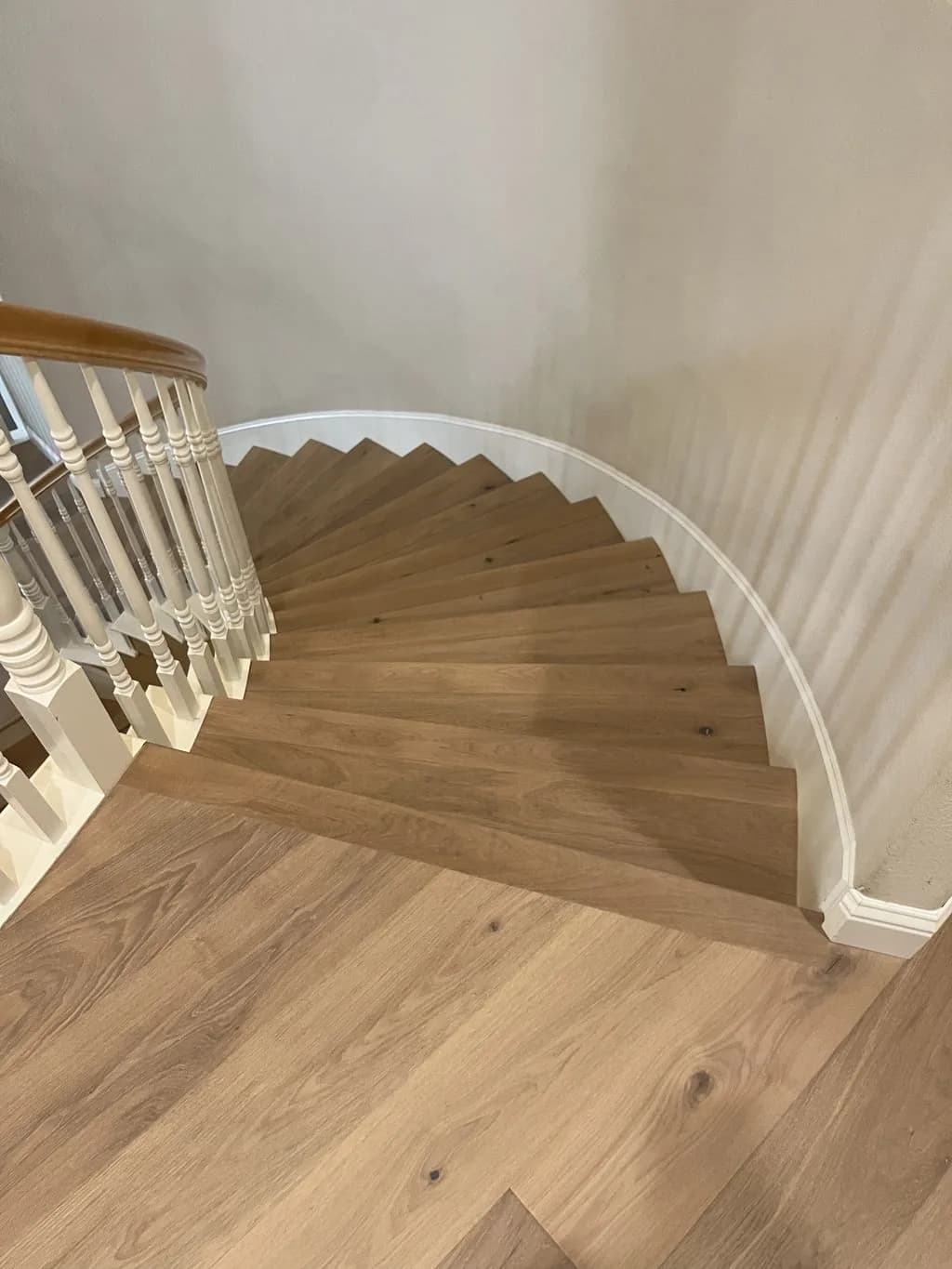
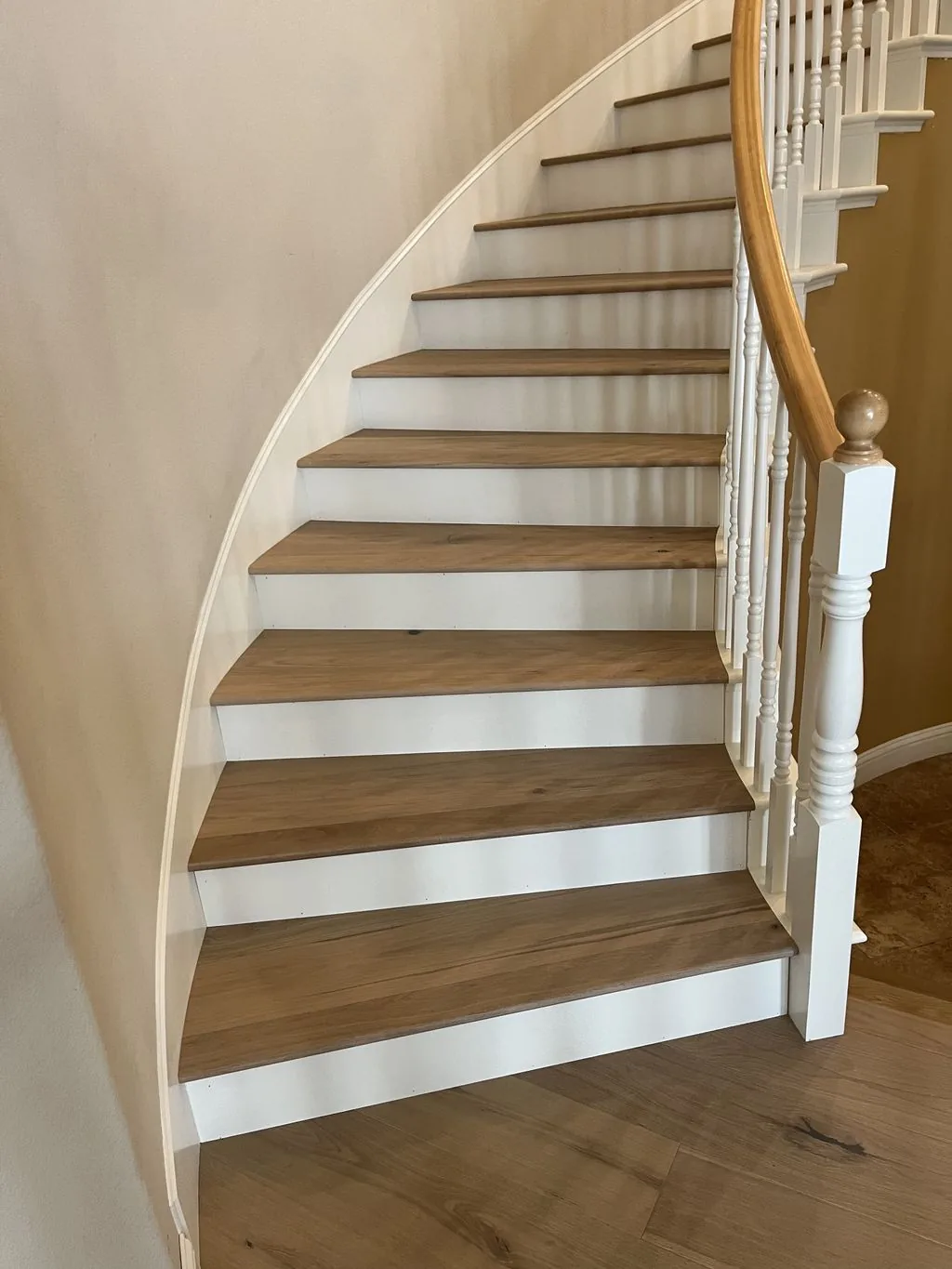
White Oak Hardwood
Stair Treads
Our Services
Flooring Services in Sacramento
From hardwood to luxury vinyl, here's how we help Sacramento homeowners upgrade their floors.
Hardwood Flooring
Solid oak, maple, and walkable heirloom-grade hardwood, precisely installed.
Hardwood Flooring in SacramentoEngineered Hardwood
Real-wood wear layers built for California's climate swings.
Engineered Hardwood in SacramentoLuxury Vinyl Plank
Waterproof, wood-look LVP for kitchens, baths, and busy households.
Luxury Vinyl Plank in SacramentoLaminate Flooring
Durable, high-style laminate at a friendly price point.
Laminate Flooring in SacramentoTile Flooring
Porcelain and ceramic tile set dead-level with crisp grout lines.
Tile Flooring in SacramentoFloor Installation
Full-service installation from subfloor prep to final baseboard.
Floor Installation in SacramentoFloor Refinishing
Sand, stain, and reseal tired hardwood back to new.
Floor Refinishing in SacramentoFloor Repair
Board swaps, water damage, squeaks, and seamless patch-ins.
Floor Repair in SacramentoLocal Considerations
What Sacramento Homes Need From a Floor
Climate, home age, and foundation type all shape the right flooring choice in Sacramento — here's what we account for.
Four housing eras, four different flooring jobs
The Census draws Sacramento's map for us: the 95818 and 95816 areas center on 1942-1949 construction with nearly half their homes pre-war — restoration territory, where original wood gets assessed at an exposed edge before anyone quotes replacement. The mid-century band through Tahoe Park and South Land Park centers on the late 1950s — prime refinishing stock. The Pocket and South Natomas center on the 1980s — first-replacement age. And North Natomas centers on 2005, where builder-grade floors are aging out together. Knowing which Sacramento you're in is half the estimate.
The ground changes neighborhood by neighborhood
USDA mapping puts genuinely different soils under the city's residential areas: the San Joaquin hardpan series — California's official state soil — beneath East Sacramento and Oak Park; rapid-draining Tinnin sand beneath Land Park; the Egbert delta series beneath the Pocket; and Clear Lake clay, a true expansive Vertisol, beneath Natomas. The flooring translation is specific: expansive-clay caution belongs to Natomas, not to the whole city, and hardpan's slow drainage is a moisture-management fact, not a heave fact. We read the lot with a moisture test rather than assuming from the map — but the map explains why two Sacramento slabs can behave completely differently.
Historic districts don't reach your floors — the city says so
Sacramento maintains thirty official historic districts, and its adopted district plans state the scope plainly: 'Interior alterations of private residences… are not considered development projects' and 'are thus not reviewed under the design standards.' So replacing flooring in a Boulevard Park Victorian or an Oak Park bungalow involves no preservation review — the design rules govern the public realm, the front facade and streetscape. Structural subfloor work can still be a building-permit question, which we confirm with the City as part of planning.
The one place the climate record needs no apology
Every foothill page in our service area borrows Sacramento's weather station; here it's simply local — inside the city, with records reaching back to 1877. The normals say July delivers literally 0.00 inches of rain against 94°F average highs, and the NWS's Sacramento climate summary records July relative humidity averaging 78% at 4 a.m. and 30% at 4 p.m. — a 48-point swing inside a single summer day. Wood lives on that swing, which is why acclimation to the house's real conditions and disciplined expansion detailing are the local fundamentals.
Water-literate flooring in a levee city
SAFCA's own framing — the most riverine-flood-exposed city in the country, defended to a 200-year standard by a multi-billion-dollar program — sets the tone: respect, not alarm. For floors it means the older neighborhoods' crawlspaces get genuine moisture assessment before installation, slab-era homes get in-situ RH testing, and when water does find a floor — a supply line, an appliance, a rare event — fast drying and honest repair-versus-replace decisions are the local craft. The city engineered its way to safety; floors here get the same treatment.
Half the city rents
Sacramento splits almost evenly between owners and renters — 50.8% owner-occupied — with a large multifamily and duplex stock across the central city. Rental flooring is its own discipline: durable wear layers specified for tenants who didn't choose the floor, waterproof cores that forgive late-reported spills, plank formats that repair unit by unit, and turn-schedule installation. We run that playbook across the city's fourplexes, flats, and small multifamily buildings alongside the owner-occupied work.
A 'Sacramento' address isn't always the City of Sacramento
Arden-Arcade, Carmichael, Orangevale, North Highlands, Rosemont, and Florin all carry Sacramento-adjacent addresses but are unincorporated county territory — different permit authority, different pages on this site. Inside city limits, permits run through the City's Community Development Department; unincorporated addresses go to Sacramento County. Flooring itself is typically finish-level work, but where a project needs a permit, we confirm which government owns your address before scheduling — a two-minute check that prevents a two-week delay.
Local Resources & References
Helpful Sacramento Resources
Authoritative local and industry references for permits, planning, and flooring standards.
- Old Sacramento SHP — the street raising: 'the only city in California to raise its streets'California State Parks
- Old Sacramento Underground Tours — walking the raised city's buried sidewalksSacramento History Museum
- Adopted Historic District Plans — the 30 districts, and the interior-alterations exemptionCity of Sacramento
- Sacramento Area Flood Control Agency — projects and the riverine-risk statementSAFCA
- Community Development — building permits for addresses inside city limitsCity of Sacramento
- Urban Forest Plan (adopted 2025) — canopy 19% today, 35% goal by 2045City of Sacramento
- Sacramento 5 ESE (USW00023271) — 1991-2020 normals; the in-city stationNOAA NCEI
- Climate of Sacramento (CLISAC, rev. 2010) — the July 78%/30% humidity tableNWS Sacramento
- San Joaquin series — California's state soil, mapped under East Sacramento and Oak ParkUSDA-NRCS
External links are provided for reference. Always confirm current requirements with the issuing agency.
Explore Flooring Services in Sacramento
Nearby
Nearby Cities We Serve in Greater Sacramento
Serving the Region
Flooring Across Our Core Service Areas
We install and refinish floors across our core Northern California service areas — from the Sacramento region and the foothills to the Bay Area and wine country.
Good to Know
Frequently Asked Questions
Does Renaissance Floors serve Sacramento?
Yes. We install and refinish flooring throughout Sacramento and the surrounding Sacramento County area. Call (916) 749-0272 for a free estimate.
What flooring services do you offer in Sacramento?
We install hardwood, engineered wood, luxury vinyl plank, laminate, tile, and more in Sacramento, plus floor refinishing, repair, and full-service installation. See the full list below.
Are you licensed to work in Sacramento?
Yes. We hold CSLB C-15 license #1060673 (C-15 Flooring & Floor Covering) and carry insurance. We're based in Roseville, CA and serve Sacramento and all of Greater Sacramento & Northern California.
How do I get a free flooring estimate in Sacramento?
Call (916) 749-0272 or request an estimate online. We'll schedule a convenient in-home visit in Sacramento, measure your space, and give you an honest, no-pressure quote.
Do I need a permit to replace flooring in Sacramento?
Flooring replacement is typically finish-level work; structural or subfloor repairs may require a permit, and the authority depends on your address — the City of Sacramento's Community Development Department inside city limits, Sacramento County for unincorporated communities like Arden-Arcade or Rosemont that carry Sacramento addresses. We confirm the jurisdiction and any permit question as part of planning rather than guessing either way.
We're in a historic district — can we change our floors?
Yes, freely. The City's adopted historic district plans state that interior alterations of private residences are not reviewed under the district design standards — preservation review governs the public realm, your facade and streetscape, not your floors. The better question in a Boulevard Park or Oak Park home is whether the original flooring deserves restoration: pre-war material judged at an exposed edge is often worth saving over replacing.
Our Land Park-area home is from the 1930s. What should we know?
You're in the city's deepest concentration of pre-war housing — the 95818 area centers on 1942 construction with nearly half its homes older than 1940 — so the classic questions apply: how much original wood remains above the tongue, what the board subfloor and framing are doing, and whether restoration beats replacement (it often does). Your ground, usefully, is mapped as fast-draining sand, the gentlest soil in the city; the moisture questions live in the crawlspace, and we read it before floors go down.
Is Natomas' clay a problem for our slab and floors?
It's a design input worth respecting. USDA maps Natomas over Clear Lake clay — a genuine expansive, shrink-swell series — which makes in-situ slab moisture testing and attention to drainage non-negotiable before rigid flooring goes down. Modern construction there was engineered for the ground, and most Natomas homes are now simply reaching first-replacement age on their builder-grade floors; the clay changes our prep, not your options.
How does Sacramento's climate affect wood floors?
This is the one city where the answer comes from a station in town: July normals of 94°F with literally zero rainfall, and the NWS's own tables showing July humidity swinging from 78% at dawn to 30% by late afternoon — a 48-point daily swing. Wood tracks that cycle, so material acclimates in your house at its real conditions, and expansion detailing is set for the actual seasonal and daily range rather than a brochure's assumptions.
Do you work on rentals and small multifamily buildings?
Constantly — half of Sacramento rents, and the central city's duplexes, fourplexes, and flats are core work for us. We spec for tenant reality: thick-wear-layer waterproof plank, formats that repair one unit at a time, and installation scheduled around turnovers. For owners with multiple units we'll standardize a product so future repairs stay simple across the portfolio.
Our home flooded once — can the floors be saved?
Sometimes, and honesty matters more than optimism. If water was contained and the structure dried quickly, individual boards can be replaced and blended; where water sat, reached the subfloor, or wicked into walls, replacement of the affected area is usually the sound answer — after the source is fixed and the structure has genuinely dried. In a levee-defended city, we treat any water event as a subfloor investigation first and a flooring decision second.
Are you licensed, and do you offer financing?
Yes on both. Renaissance Floors holds California CSLB license #1060673 (C-15 flooring), verifiable through the CSLB license lookup, and we offer financing options along with free in-home estimates across all four of Sacramento's housing generations — from streetcar-era bungalows to Natomas new-builds.

Ready for Floors You'll Love?
Free, no-pressure flooring estimates throughout Sacramento and Sacramento County.