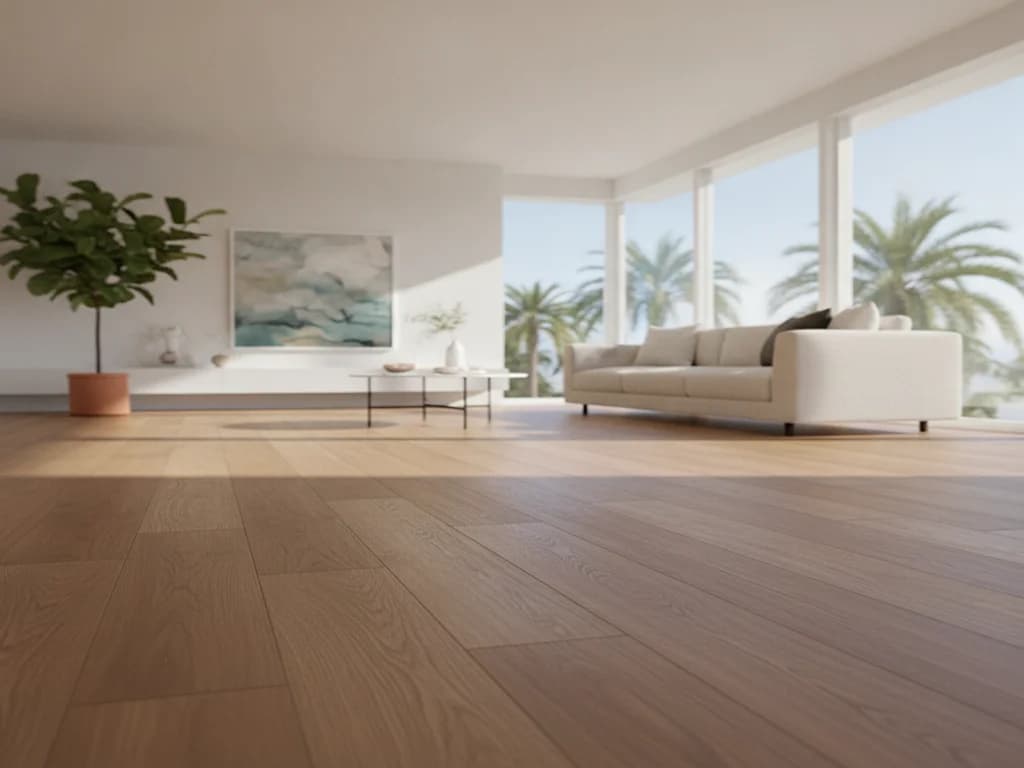
Flooring
Laminate Flooring in Northern California
Modern laminate with realistic wood and stone visuals and a tough wear layer — a smart, budget-conscious upgrade installed to exacting standards.
Overview
Beautiful, Lasting Laminate Flooring
We install laminate flooring across Greater Sacramento and Northern California as a floating click-lock floor: the subfloor is checked for moisture and flatness, a vapor barrier and underlayment go down where the product calls for them, and expansion space is left at every wall. Laminate gives a wood or stone look with a hard wear layer over a wood-fiber core, so we match the product's rating and water resistance to the room. Call (916) 749-0272 for a free in-home estimate.
Weighing your options? Compare lvp vs. laminate, laminate vs. hardwood, and nail vs. glue vs. float.
Get a Free EstimateFree Estimate
Get a free laminate flooring estimate in Northern California
Tell Alex about the laminate flooring you have in mind for your Northern California home and he comes out to measure the rooms, check the subfloor, and write a quote for the exact product — no planning ranges, no sales visit.
- 5.0 on Thumbtack from clients across Northern California
- Laminate flooring in Northern California by a licensed California contractor, CSLB #1060673(verify ↗)
- Workmanship warranty on laminate flooring in Northern California, or call (916) 749-0272
The Short Answers
What Homeowners Ask First
What does NALFA certification actually test on laminate?
The ANSI/NALFA LF 01-2026 standard tests laminate at four usage levels, from residential to heavy commercial. At the residential level a product must reach at least AC3 for abrasion and swell no more than 18% in thickness after 24 hours fully under water, and every level requires third-party proof of formaldehyde compliance. Static load, impact, stain, and flatness are tested too.
Can laminate be installed over a concrete slab?
Yes, if the slab is ready. NALFA says the concrete should be fully cured, at least 90 days old, with a 6-mil vapor barrier and underlayment. Manufacturers also require a recorded moisture test first. One current instruction sheet sets limits of 80% relative humidity by ASTM F2170 probe or 5 pounds per 1,000 square feet per 24 hours by ASTM F1869.
Can laminate go over my existing floor?
Often, but not always. NALFA lists flat, sound ceramic or porcelain tile, sheet vinyl, stable hardwood, and LVT with old adhesive removed as suitable bases. It lists carpet, existing laminate or bamboo, brick, and Saltillo tile as unsuitable, so those come out first. Whatever stays has to be flat, with no loose or cracked pieces.
Why does laminate need a gap at the walls?
Laminate floats. It is not nailed or glued down, and it grows and shrinks with temperature and humidity, so it needs room at every wall and fixed object. Manufacturer instructions set the space; the ones we reviewed call for 5/16 to 3/8 inch. Large rooms and some doorways also need T-moldings, and nothing should pin the floor in place.
Which Fix Do You Need?
Read the Floor Before Choosing the Fix
Not every tired floor needs laminate flooring. Match what you see to the route that actually fixes it.
| What you see | Likely route | Why |
|---|---|---|
| A seam tents up in a ridge, but the planks themselves look smooth and undamaged | Free the floor and restore the expansion space | Peaking usually means the floor has hit a wall or is pinned by trim, a transition, or a heavy fixture. Pressing the joint down will not hold until the floor has room to move again. |
| Plank edges look puffy or rough near a dishwasher, sink, pet bowl, or door | Stop the water, dry the area, replace the damaged planks | Swelling means water reached the wood-fiber core at the joints. The EPA advises drying wet materials within 24 to 48 hours to prevent mold, and many click systems let single planks be swapped. |
| A full bathroom, laundry room, or any room with a floor drain or sump pump | Choose a waterproof floor instead, usually LVP | NALFA says laminate is not suited to areas with excessive moisture unless the maker specifies it as waterproof, and current instructions rule out rooms with a floor drain. |
| The room has carpet now, or an old laminate or bamboo floor | Tear out down to the subfloor first | NALFA lists all carpet and existing laminate or bamboo as unsuitable bases. Carpet, pad, and staples all come up so the new floor sits on a flat, solid surface. |
| Deciding between laminate and a nailed or glued floor for the space | Compare installation methods before choosing the product | The laminate instructions we reviewed are floating-only and say not to nail or glue the floor down. If the room calls for a glued or nailed installation, that points to a different product rather than a different way of laying laminate. |
Why It Works
Why Homeowners Choose Our Laminate Flooring
AC-Rated Durability Matched to the Room
Laminate is rated by AC (Abrasion Class), and under ANSI/NALFA LF 01-2026 AC3 is the floor for residential and light-commercial use, with AC4 rated for general commercial and AC5 for heavy commercial traffic — we help you pick a rating matched to how the room actually gets used.
Water-Resistant Core Options
Many current laminate products use a water-resistant HDF core designed to resist swelling from spills and everyday moisture — a real improvement over older laminate, though it's still not a fully waterproof product like LVP.
Realistic Textures & Embossing
Embossed-in-register textures align the surface texture with the printed wood grain pattern, and beveled edges add shadow lines between planks, so the finished floor reads far more like real wood than older glossy laminates did.
Tight Click-Lock Installation
We float laminate over a proper underlayment with tight, straight seams and correct expansion gaps at the walls — the detail that keeps a laminate floor from peaking, gapping, or sounding hollow over time.
Options & Styles
Laminate Flooring Options We Install
We help you choose the right product for your rooms, your budget, and how you live.
AC3 Rating
The lowest class ANSI/NALFA LF 01-2026 certifies (at least 2,000 abrasion cycles), rated for residential and light-commercial use — the right class for most rooms in a home.
AC4 / AC5 Rating
AC4 (at least 4,000 cycles) is rated for general commercial use and AC5 (at least 6,000) for heavy commercial — worth it at home for entries, long hallways and rentals where wear concentrates.
Water-Resistant Core Laminate
A modern HDF core treated or engineered to resist swelling from spills and humidity — the tier occupied by lines like Mohawk RevWood and AquaGuard — a better fit for kitchens and mudrooms than legacy laminate, though standing water should still be wiped up promptly.
Wood-Look Visuals
High-resolution photographic layers replicating oak, hickory, walnut, and other species — with embossed textures that follow the wood grain for a realistic look and feel underfoot.
Stone & Tile-Look Visuals
Laminate can also replicate stone and tile patterns for a cohesive look with adjacent rooms, at a lower material and install cost than actual tile or stone.
Wide-Plank & Long-Board Formats
Longer, wider plank formats that reduce the number of seams in a room and give a more current, high-end look than traditional narrow laminate strips.
Good to Know
Before You Choose
- Laminate is not real wood — it's a printed image layer under a clear wear layer, so it can't be sanded or refinished the way hardwood can; damaged planks are typically replaced rather than restored.
- Even water-resistant laminate cores aren't fully waterproof like SPC/WPC-core LVP — standing water or repeated flooding can still cause swelling or damage at the seams over time.
- Laminate works well in bedrooms, living rooms, home offices, and other moderate-traffic dry areas; for kitchens, bathrooms, or basements where water exposure is frequent, we typically recommend LVP instead and will tell you so honestly.
- AC rating, core water-resistance, and plank thickness all affect price and performance — a higher AC rating or water-resistant core costs more upfront but often pays off in a busy household.
- Subfloor flatness still matters for a quiet, tight-seamed laminate floor — we level and prep the subfloor before installation rather than floating planks over an uneven base.
How It Works
Our Laminate Flooring Process, Step by Step
- Step 1
Test the subfloor for moisture
Concrete gets a recorded moisture test before anything is installed: an in-place relative-humidity probe (ASTM F2170) or a calcium chloride test (ASTM F1869), checked against the product's limits. Wood subfloors are read with a moisture meter. If the readings are out of range, installation waits.
- Step 2
Prep and flatten the base
Old carpet, pad, and staples come out. The subfloor is checked with a straightedge against the product's flatness limit, commonly no more than 3/16 inch over 10 feet: low spots are filled with leveling compound and high spots taken down. Door casings are undercut so the floor can slide beneath them.
- Step 3
Condition the planks
We follow the manufacturer's acclimation rule for the product. One current instruction sheet requires 48 hours in the room at 60–85°F and 35–65% relative humidity, unless the flooring arrives already at normal living conditions. Those conditions then need to hold for the life of the floor.
- Step 4
Lay the vapor barrier and underlayment
Over concrete, a 6-mil polyethylene vapor barrier goes down with overlapped seams, even under planks with a pad already attached. Where the product has no attached pad, a separate underlayment goes on top to support the locking joints and quiet the floor.
- Step 5
Float the floor with room to move
Planks are clicked together with staggered end joints and spacers at every wall and fixed object to hold the expansion space. T-moldings go where the instructions call for them, such as narrow doorways and long runs, and nothing is glued, nailed, or screwed through the floor.
- Step 6
Trim, transitions, and care
Spacers come out, then baseboard or quarter-round and transitions are fitted so they cover the gap without pinning the floor. We walk you through care: dry dust-mopping, a well-wrung mop instead of a wet one, and never pouring liquid onto the floor.
Pricing
What Drives the Cost of Laminate Flooring
Every price comes from a free in-home estimate, because these factors vary floor to floor. For installed-flooring ranges, see our cost guide.
Subfloor flatness
A subfloor already within the flatness limit is ready to go. Humps that need grinding and dips that need leveling compound add labor and material before the first plank goes down.
Concrete moisture and vapor barrier
Slab installs add moisture testing and a vapor barrier. If readings come back high, the slab has to dry or be addressed before laminate can go in.
What comes out first
Carpet, pad, and staples, or an old laminate or bamboo floor, all have to be removed and hauled away. A flat, sound tile or vinyl floor that can stay saves that step.
Product tier
Certification level, abrasion class, plank thickness, attached pad, and water-resistant cores and joints all move the material cost.
Layout, doorways, and transitions
Open rectangles go quickly. Closets, hallways, many doorways, undercut casings, and the T-moldings that large rooms and narrow doorways require add cutting and fitting time.
Trim and stairs
New baseboard or quarter-round, and stair treads and nosings, are separate pieces of work on top of the flat floor.
Laminate Flooring by city
The same laminate flooring job reads differently from town to town, so each city has its own page covering what the floor has to contend with locally, how to plan around it, who has permit jurisdiction, and where those local details come from. Start with laminate flooring in Auburn, laminate flooring in Folsom, laminate flooring in Roseville, laminate flooring in Santa Rosa, laminate flooring in Sacramento, laminate flooring in Oakland, laminate flooring in San Rafael, or laminate flooring in San Jose. More cities are listed under Where We Work below.
Our Services
Everything We Install
A full range of flooring installation and finishing services.
Hardwood Flooring
Solid oak, maple, and walkable heirloom-grade hardwood, precisely installed.
Learn moreEngineered Hardwood
Real-wood wear layers built for California's climate swings.
Learn moreLuxury Vinyl Plank
Waterproof, wood-look LVP for kitchens, baths, and busy households.
Learn moreLaminate Flooring
Durable, high-style laminate at a friendly price point.
Learn moreSheet Vinyl
Seamless, water-resistant sheet vinyl for utility spaces.
Learn moreTile Flooring
Porcelain and ceramic tile set dead-level with crisp grout lines.
Learn moreNatural Stone
Travertine, marble, and slate installed with a craftsman's eye.
Learn moreCarpet Installation
Plush, tight-stretched carpet for bedrooms and stairs.
Learn moreFloor Installation
Full-service installation from subfloor prep to final baseboard.
Learn moreHardwood Floor Refinishing
Sand, stain, and reseal tired hardwood back to new.
Learn moreFloor Repair
Board swaps, water damage, squeaks, and seamless patch-ins.
Learn moreStairs & Treads
Hardwood treads, risers, and runners with crisp detailing.
Learn moreEpoxy Garage Floors
Tough, easy-clean epoxy coatings for garages and shops.
Learn moreWhere We Work
Laminate Flooring Across Northern California
Good to Know
Frequently Asked Questions
What does the AC rating on laminate flooring mean?
AC (Abrasion Class) rates how well the wear layer resists scratches, dents, and everyday abrasion, from AC3 (residential and light commercial, the lowest class ANSI/NALFA LF 01-2026 certifies) up to AC5 (heavy commercial). We'll recommend an AC rating based on the room's actual traffic — no need to overspend on a rating higher than you'll use.
Is laminate flooring waterproof?
Most laminate is water-resistant rather than fully waterproof — modern cores resist swelling from spills and everyday moisture, but standing water left too long can still damage the core at the seams. If a room sees frequent water exposure, like a full bathroom, we'll usually recommend LVP instead and explain why honestly.
Can laminate flooring be refinished if it gets scratched?
No — laminate's surface is a printed image layer, not real wood, so it can't be sanded and refinished. Damaged planks are typically replaced individually, which is one reason we install with care around seams and keep leftover planks on hand when possible.
How does laminate compare to LVP for durability and cost?
Laminate generally costs less in materials and has a very hard, scratch-resistant wear layer, but it's less water-tolerant than LVP's stone/wood-composite core. LVP costs a bit more but handles water and moisture-prone rooms with more confidence. We'll walk you through both honestly based on the specific room.
How long does laminate flooring take to install?
Laminate's click-lock floating installation is typically one of the faster flooring installs, especially over a subfloor that's already flat and in good condition — we'll give you a firm timeline once we've measured your space and checked the subfloor.
Do I need underlayment under laminate flooring?
Yes, unless the product ships with a pad already attached. Laminate is a hard surface floating over a hard subfloor, and the underlayment is what stops it sounding sharp and hollow underfoot — a dense felt or fiber pad in the QuietWalk class also evens out minor subfloor variation. Over concrete, a vapor barrier layer is required as well, because the HDF core is a wood-fiber product that cannot take moisture from below.
How much does laminate flooring cost to install?
Cost depends on AC rating, plank thickness, whether the core is water-resistant, and subfloor prep needed — it's not a flat rate across all laminate products. Call (916) 749-0272 or request a free estimate and we'll give you an honest, itemized number after seeing your space.
Sources
Where These Specifics Come From
Industry guidelines, manufacturer instructions, and regulations cited on this page.
- ANSI/NALFA LF 01-2026 — Laminate Flooring Specifications and Test Methods (usage levels, AC class, thickness swell)North American Laminate Flooring Association
- Laminate Flooring FAQs — suitable and unsuitable subfloors, slab cure and vapor barrierNorth American Laminate Flooring Association
- What Is Laminate? — layer construction and plank replacementNorth American Laminate Flooring Association
- ASTM F2170 — Relative Humidity in Concrete Floor Slabs Using in situ ProbesASTM International
- ASTM F1869 — Moisture Vapor Emission Rate of Concrete Subfloor Using Anhydrous Calcium ChlorideASTM International
- A Brief Guide to Mold, Moisture and Your Home — dry within 24–48 hoursU.S. Environmental Protection Agency
- Laminate installation instructions 0289_2026 — moisture limits, flatness, acclimation, expansion spacePergo (Unilin North America)
- Laminate Flooring Installation Guide — expansion space, T-moldings, joint staggerTrafficMASTER

Ready for Floors You'll Love?
Free estimates on laminate flooring throughout Greater Sacramento & Northern California.