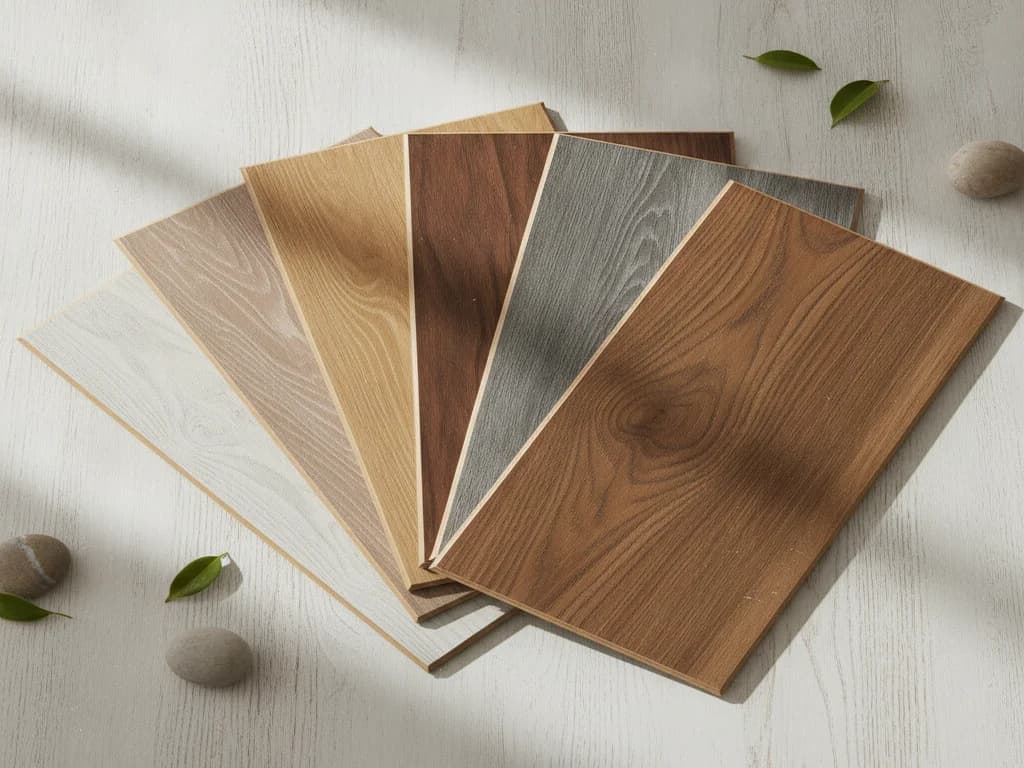
Buying Guide
How to Choose Luxury Vinyl Plank: A Buyer's Guide
Not all LVP is built the same. Wear layer, core type, and thickness matter more than the pattern on the box — here's how to read the spec sheet.
Buying Guide · 9 min read
Published July 14, 2026 · Updated September 12, 2026
Luxury vinyl plank has gotten so good visually that most people can't tell it apart from real wood at a glance — which means the showroom sample tells you almost nothing about how it will actually perform. The real differences between a great LVP and a mediocre one are in the spec sheet, not the surface pattern. Two floors that look identical on a display board can be built from completely different materials, carry warranties that mean completely different things, and reach the end of their lives a decade apart. Here's what to actually look at.
Wear Layer Thickness
The wear layer is the clear protective layer on top of the printed design, and it's the single biggest factor in how well a floor resists scratches, scuffs, and wear over the years. It is measured in mils — thousandths of an inch — and the number is not interchangeable with the plank's overall thickness, which is quoted in millimeters. A 5mm plank with a thin wear layer and a 5mm plank with a thick one are the same floor to look at and different floors to live on.
Light residential products sit at the bottom of the range and are genuinely fine in a guest bedroom or a lightly used room. Mid-range residential products handle a normal household. Heavier products marketed for light commercial use carry the thickest wear layers and are what we would specify for an entry, a hallway, a kitchen, or anything a dog runs on. If you only check one spec before buying, this is it: ask for the wear layer thickness in mils and compare it against how the room will actually be used, not against how much you like the color.
One caution about the number: a thick wear layer resists abrasion, not gouging. Grit dragged under a shoe is what a wear layer is designed to survive. A dragged appliance leg is not, on any product.
Core Type: SPC vs. WPC vs. Traditional
Most quality LVP today is built on either a stone-plastic composite (SPC) or wood-plastic composite (WPC) core, and each has real tradeoffs. SPC cores are denser and more dimensionally stable, which makes them better at resisting dents from furniture and standing up to temperature swings — a solid choice for kitchens, entries, and rooms with underfloor heating. WPC cores have more give underfoot and can feel warmer and quieter to walk on, at some cost to dent resistance. Older flexible vinyl planks without a rigid core still exist, install glued directly to the subfloor, and conform to the surface underneath rather than bridging it, which is a different set of tradeoffs entirely.
Neither rigid core is universally better — it depends on the room and your priorities between comfort and toughness. Our SPC vs. WPC breakdown puts the two side by side in more detail, including how they behave under point loads and how they sound.
Waterproof vs. Water-Resistant
These terms get used loosely in marketing, so it's worth asking directly. A genuinely waterproof core can handle standing water for a reasonable period without warping or delaminating, which matters in bathrooms, laundry rooms, and entries. Water-resistant products tolerate spills if cleaned up promptly but aren't built for standing moisture — fine for most living areas, but not the right call for a room with real water exposure.
The distinction that matters more, and that almost no box explains, is between a waterproof plank and a waterproof floor. Rigid vinyl does not absorb water; the seams between planks are mechanical joints, not seals. Water from an overflowing tub or a failed supply line runs through those joints, spreads across the subfloor, and then has no way to dry upward through a vapor-resistant floor. The plank survives. The subfloor may not. That is not a reason to avoid vinyl — it is a reason to treat a leak as urgent even when the floor looks perfectly fine. This is also where vinyl and laminate genuinely part ways, which we cover in the LVP vs. laminate comparison.
Overall Thickness and Attached Underlayment
Total plank thickness affects both underfoot feel and how well the floor bridges minor subfloor imperfections — thicker planks generally feel more substantial and perform better over slightly uneven subfloors. Many quality products come with an attached underlayment pad, which helps with sound dampening and comfort without needing a separate layer.
Read that spec before buying a separate underlayment. Adding a second pad under a plank that already has one makes the floor feel spongy, puts the locking joints under flexing loads they were not designed for, and in many cases voids the warranty outright. Where there is no attached pad, a purpose-made acoustic underlayment (QuietWalk is a common spec) changes how the floor sounds noticeably, and in a second-story room or a shared-wall home it matters as much to the people below as to you.
Subfloor Flatness Is Half the Product Decision
Rigid-core vinyl is unforgiving of an uneven subfloor in a way most buyers do not anticipate. A rigid plank spans a low spot rather than settling into it, so dips show up as movement underfoot and as stress at the seams, and high spots become the pivot points that eventually work a joint apart. Manufacturers publish a flatness tolerance — commonly expressed as a maximum deviation over a given span — and it is a real specification, not boilerplate.
This is worth knowing before you shop, because it can change what you buy. Over a wavy old subfloor, a thicker plank with a dense core and a well-engineered joint tolerates more than a thin budget product will, though neither substitutes for grinding down the high spots and filling the low ones first. If a floor you already own has started to separate at the seams, the subfloor underneath is the first thing we look at, not the planks.
How the Visual Layer Is Made
Two products can share a wear layer spec and a core and still look nothing alike after installation, because the printed film and the embossing vary enormously. Three things separate a convincing floor from an obvious one.
The first is embossing in register, where the surface texture lines up with the printed grain so the pores and saw marks you feel match the ones you see. Cheaper products emboss a generic texture over whatever image happens to be underneath, and the mismatch is what makes a floor read as plastic in raking light.
The second is pattern repeat: how many unique plank faces the product includes before the images start cycling. A floor with few unique faces will show the same knot four times in one room, and once you notice it you cannot stop noticing it. Premium lines like Karndean or Mannington's ADURA typically carry more unique faces, and it is a fair question to ask about any product.
The third is the finish itself — matte surfaces disguise dust, footprints, and fine scratching; higher-gloss surfaces show every one of them under a window or a row of kitchen downlights.
Plank Size, Bevels, and How the Floor Reads
Wider and longer planks make a room feel larger and mean fewer seams, but they also demand a flatter subfloor, because a long rigid plank has more span in which to reveal a dip. Narrower planks are more tolerant and read as more traditional.
Bevels matter more than people expect. A painted micro-bevel gives each plank a defined edge and looks convincingly like individual boards, but the groove collects dust and needs a vacuum rather than a dry mop. A square edge reads as a more continuous surface and cleans faster, at the cost of hiding less at the joints. Neither is better; they simply move where the maintenance goes, and our luxury vinyl care guide covers what each type of surface actually needs.
Locking System and Installation Quality
Most modern LVP uses a click-lock floating installation, and the quality of that locking mechanism affects how tight and gap-free the seams stay over time, especially with temperature changes. Angle-tap and drop-lock systems assemble differently, and a well-milled joint goes together with hand pressure rather than persuasion.
A well-engineered locking system paired with correct installation — proper expansion gaps at every vertical surface, a flat subfloor, transitions at the right places, and undercut door casings — matters just as much as the product itself. Even an excellent floor underperforms when it is installed tight to the walls, and no product warranty covers that.
Heat, Sunlight, and Where Rigid Vinyl Has Limits
Vinyl is indifferent to humidity and sensitive to temperature, which is the opposite of wood and catches people out. A rigid plank expands as it warms, so a run of floor in front of a west-facing slider on a valley summer afternoon moves more than the same floor in a shaded hallway. That movement is exactly what the perimeter expansion gap exists to absorb.
Most manufacturers publish a maximum service temperature and specific guidance for rooms with heavy direct sun, and some restrict warranty coverage in sunrooms altogether. Radiant heat is usually fine with SPC products but comes with a temperature ceiling at the subfloor surface that the system needs to be set up to respect. In the sunniest rooms, window film and shades protect a vinyl floor for the same reason they protect a wood one — color shift is possible in both.
What the Warranty Actually Covers
Warranty length is a marketing number; warranty scope is the useful one. Read for three things: what is excluded (sun exposure, commercial use, bathrooms, pets are all common carve-outs), what is required of the installation for coverage to remain valid, and whether the remedy is material only or material and labor. A twenty-five year warranty that supplies replacement planks and nothing else means something quite different from one that pays to install them.
Also check whether coverage depends on the floor having been installed by a licensed contractor and on documented subfloor moisture testing. Those conditions are common, they are enforceable, and a DIY installation can quietly forfeit the entire warranty on an otherwise excellent floor.
Take the Sample Home Before You Commit
Showroom lighting is designed to flatter. Take a full plank home, lay it in the actual room, and look at it in morning light, in the evening with the lamps on, and next to the cabinets, counters, and trim it will have to live with. Walk on it barefoot. Drag a chair across it. Set a glass of water on it and leave it for an hour.
Look at it beside anything else in the house that is staying, especially existing wood, because undertone mismatches are far more visible at home than under showroom spotlights. A cool gray plank that looked neutral in the store can read distinctly blue against warm oak cabinets.
Reading Past the Marketing
Terms like luxury and premium aren't standardized, so they don't tell you much on their own. Ask for the actual wear layer thickness in mils, the core type, the flatness tolerance, and the warranty exclusions, and compare those numbers directly across the options you're considering rather than relying on the name on the box or how the sample looks under showroom lighting. A shortlist of three products compared on those four specs will tell you more than an afternoon of browsing displays. If you want to see how the category breaks down before you shop, our luxury vinyl plank overview is the place to start.
If you'd like help comparing real LVP options for your specific rooms and traffic patterns, Renaissance Floors offers free estimates and can walk you through which specs actually matter for your home. Call (916) 749-0272.
This article is part of our guide to how to choose a floor, which covers the order the decisions actually come in, and which constraints are real rather than preference.
Explore related
Good to Know
Frequently Asked Questions
What wear layer thickness should I look for in luxury vinyl?
The wear layer is measured in mils and it is the single most useful spec on the box. A thicker wear layer resists scratching and traffic wear for longer, which is why residential and commercial products with the same appearance can perform very differently. Ask for the mil figure rather than the overall plank thickness.
What is the difference between SPC and WPC core?
SPC is a stone-polymer composite — denser, more rigid, and more resistant to denting and to telegraphing subfloor imperfections. WPC is a wood-polymer composite, which is lighter, warmer, and softer underfoot. Both are waterproof at the core; the choice is about feel and impact resistance.
Is all luxury vinyl plank waterproof?
The rigid-core products are waterproof at the plank, but that is not the same as a waterproof floor. Grout-free seams mean water can still reach the subfloor during prolonged or extreme flooding, and a product marketed as merely water-resistant is a different and weaker claim.
Does luxury vinyl need underlayment?
Many products ship with an attached pad, in which case adding another can void the warranty and make the floor feel spongy. Where there is no attached pad, underlayment affects sound and comfort. This is a case where the manufacturer's instruction governs rather than general practice.
Why does my luxury vinyl show every bump in the floor?
Because rigid cores telegraph. Unlike cushioned sheet vinyl, a rigid plank bridges a low spot rather than conforming to it, so high and low areas show at the seams and underfoot. Correcting subfloor flatness before installation is what prevents it, and it is not optional work.
How thick should luxury vinyl plank be?
Overall thickness affects feel and how well the floor spans minor subfloor imperfections, but it does not predict durability the way the wear layer does. A thicker plank with a rigid core is more tolerant of an imperfect subfloor and generally sounds more solid underfoot than a thin flexible product.
What is embossed in register and does it matter?
It means the surface texture is aligned with the printed grain, so the pores and saw marks you feel match the ones you see. Products without it emboss a generic texture over any image, and that mismatch is the main reason a vinyl floor reads as plastic in low-angle light.
Can luxury vinyl plank go in a sunroom or a room with big windows?
Often yes, but check the manufacturer's guidance first. Rigid vinyl expands with heat, so a floor in strong direct sun needs its expansion gaps respected, and some warranties exclude sunrooms or restrict coverage in areas of prolonged direct exposure. Window film and shades reduce both heat gain and color shift.
Is luxury vinyl plank suitable over radiant heat?
SPC products generally are, subject to the manufacturer's maximum subfloor surface temperature, which the heating system must be configured to respect. Temperature changes should be made gradually rather than in large jumps. Always confirm the specific product's radiant-heat approval before ordering.
What questions should I ask before buying luxury vinyl plank?
Ask four things: the wear layer thickness in mils, the core type, the required subfloor flatness tolerance, and what the warranty excludes. Those four answers separate products more meaningfully than price or brand, and any supplier who cannot produce them is worth being cautious about.
Written by
Owner & Lead Installer, Renaissance Floors
15+ years of hands-on flooring experience across Greater Sacramento & Northern California. Works on hardwood and engineered installation, refinishing, subfloor preparation, and moisture testing — and writes these guides from what the jobs actually teach.
CSLB C-15 licence #1060673


Related
Keep Reading
Related pages: Wide Plank vs. Standard Width, Choosing a Floor, European White Oak, and French Oak.

Ready for Floors You'll Love?
Ready to talk through your project? Free estimates throughout Greater Sacramento & Northern California.