Services
Epoxy Garage Floors in Northern California
Epoxy and polyaspartic garage floor coatings — a hard, chemical-resistant, easy-to-clean surface applied over properly prepped concrete.
Overview
Careful, Reliable Epoxy Garage Floors
A garage floor coating is only as good as the concrete prep underneath it — epoxy applied over a slab that hasn't been ground, tested for moisture, and profiled correctly will peel and delaminate no matter how good the topcoat is. We grind and prep the concrete first, test for moisture where conditions call for it, then apply solid-color, metallic, or flake broadcast epoxy systems with a polyaspartic topcoat for UV stability and chemical resistance.
Get a Free EstimateWhy It Works
Why Homeowners Choose Our Epoxy Garage Floors
Concrete Prep Comes First
Most epoxy failures trace back to prep, not the coating itself — oil, sealers, and laitance left on the slab keep epoxy from bonding. We mechanically grind or shot-blast the concrete to open the pores and create a surface profile the coating can actually key into, rather than relying on an acid-etch shortcut.
Moisture Testing Where It Matters
Concrete that's still off-gassing moisture from below will push a coating apart from underneath, even if the surface looked dry on install day. On slabs where moisture is a reasonable concern — older garages, slab-on-grade with no vapor barrier, or homes near grade with drainage issues — we test before committing to a system, and recommend a moisture-mitigating primer when the numbers call for it.
Polyaspartic Topcoats for Real Durability
A polyaspartic topcoat cures fast, resists UV yellowing far better than straight epoxy, and stands up to hot tire pickup, oil, and chemicals — the actual conditions a garage floor lives in. We use it as the final wear layer over epoxy base coats and flake systems rather than leaving epoxy as the exposed top surface.
Backed by Warranty
Coating systems are only as reliable as the surface prep behind them, which is exactly why we don't skip it. Our installation is backed by a workmanship warranty, and we'll walk you through which system fits your garage's condition and how you actually use the space.
Options & Styles
Epoxy Garage Floors Options We Install
We help you choose the right product for your rooms, your budget, and how you live.
Solid-Color Epoxy
A single-color epoxy base coat — the most straightforward, budget-conscious coating option. Good for garages where a clean, uniform look matters more than hiding tire marks or debris between cleanings.
Metallic Epoxy
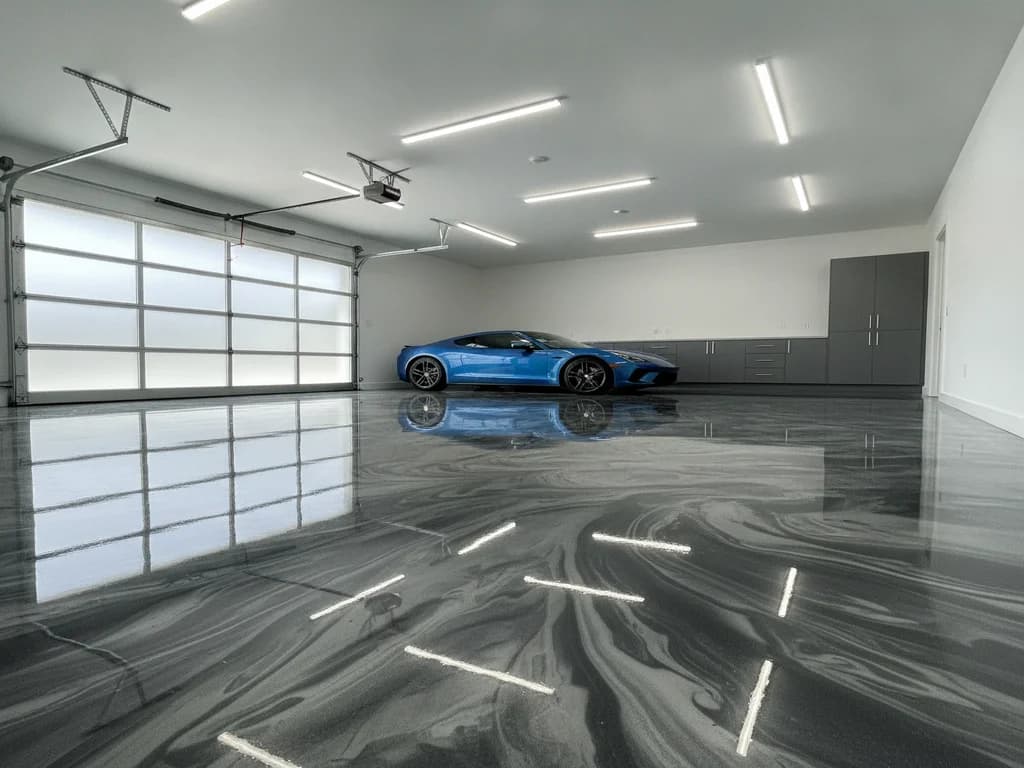
Metallic pigments suspended in epoxy create a marbled, three-dimensional look with depth and movement that solid color can't replicate. It's a higher-end aesthetic finish, typically chosen for showcase garages, finished basements, or spaces meant to be shown off rather than just parked in.
Flake / Chip Broadcast Systems
Colored vinyl flakes are broadcast into a wet epoxy base coat, then sealed under a clear topcoat. Flake systems hide dirt, minor imperfections, and tire marks better than a solid color, and they're one of the more popular choices for daily-use garages for that reason.
Polyaspartic Topcoat
Applied as the final clear coat over epoxy base or flake systems, polyaspartic cures faster than epoxy alone, resists UV yellowing, and holds up better against hot tires and chemical exposure over time. We use it as a topcoat rather than a full standalone system in most residential garages.
Concrete Grinding & Surface Prep
Mechanical diamond grinding removes sealers, laitance, and surface contaminants and opens the concrete's pores for proper adhesion. This step is not optional in a system that's meant to last — it's the difference between a coating that bonds and one that peels within a year or two.
Moisture Testing
Where slab moisture is a reasonable concern, we test before applying any coating and recommend a moisture-mitigating primer if levels warrant it. Skipping this step on a suspect slab is one of the most common causes of coating failure we see.
Good to Know
Before You Choose
- Concrete needs to be properly cured, cleaned, and ground before coating — new pours generally need adequate cure time, and coating over an under-cured or contaminated slab is the single biggest cause of early failure.
- Temperature and humidity at the time of application matter: epoxy and polyaspartic products have workable temperature ranges, and applying outside them affects cure quality and final durability. We plan install timing around real conditions, not just your calendar.
- Existing cracks, pitting, or oil staining in the slab should be addressed during prep — a coating will telegraph what's underneath it rather than hide serious concrete problems.
- Cost is driven by square footage, the condition of the existing concrete (how much grinding and repair it needs), and which system you choose — flake and metallic finishes involve more material and labor than solid color. We don't publish flat rates because slab condition varies too much house to house.
- A coated garage floor still needs basic care — sweeping grit before it scratches the surface and cleaning up chemical spills promptly — to get the full life out of the system, even with a durable polyaspartic topcoat.
Our Services
Everything We Install
A full range of flooring installation and finishing services.
Hardwood Flooring
Solid oak, maple, and walkable heirloom-grade hardwood, precisely installed.
Learn moreEngineered Hardwood
Real-wood wear layers built for California's climate swings.
Learn moreLuxury Vinyl Plank
Waterproof, wood-look LVP for kitchens, baths, and busy households.
Learn moreLaminate Flooring
Durable, high-style laminate at a friendly price point.
Learn moreSheet Vinyl
Seamless, water-resistant sheet vinyl for utility spaces.
Learn moreTile Flooring
Porcelain and ceramic tile set dead-level with crisp grout lines.
Learn moreNatural Stone
Travertine, marble, and slate installed with a craftsman's eye.
Learn moreCarpet Installation
Plush, tight-stretched carpet for bedrooms and stairs.
Learn moreFloor Installation
Full-service installation from subfloor prep to final baseboard.
Learn moreFloor Refinishing
Sand, stain, and reseal tired hardwood back to new.
Learn moreFloor Repair
Board swaps, water damage, squeaks, and seamless patch-ins.
Learn moreStairs & Treads
Hardwood treads, risers, and runners with crisp detailing.
Learn moreEpoxy Garage Floors
Tough, easy-clean epoxy coatings for garages and shops.
Learn moreWhere We Work
Epoxy Garage Floors Across Northern California
Good to Know
Frequently Asked Questions
Why does concrete prep matter so much for epoxy garage floors?
Epoxy bonds to concrete mechanically, not just chemically — it needs a properly profiled surface to key into. Oil, old sealers, and smooth trowel finish on the slab all block that bond. We grind the concrete rather than relying on an acid-etch shortcut, because grinding is what actually gives the coating something to hold onto long-term.
Do you test for moisture before coating a garage floor?
On slabs where it's a reasonable concern — older garages, slabs near grade, or homes with known drainage issues — yes. Moisture pushing up from below a slab can delaminate a coating from underneath even when the surface looks perfectly dry on install day, so we test rather than guess on any floor where that's a real risk.
What's the difference between epoxy and polyaspartic coatings?
Epoxy is typically used as the base or color coat and offers strong adhesion and build. Polyaspartic cures much faster and holds up better against UV yellowing, hot tire pickup, and chemical exposure, which is why we use it as the clear topcoat over epoxy or flake systems rather than leaving epoxy as the exposed final layer.
Can you coat over cracks or stains in our existing garage floor?
We can address minor cracks and surface staining as part of the prep process, but a coating won't hide or fix structural cracks — it will actually show them more clearly over time. If we see anything beyond cosmetic during our walkthrough, we'll tell you what needs attention before applying any coating.
How long before we can park in the garage after the coating is installed?
Cure times depend on the specific system used, ambient temperature, and humidity at the time of application. Because those conditions vary job to job, we'll give you a realistic timeline for foot traffic and vehicle traffic based on the actual system and conditions for your project, not a generic number.
How much does an epoxy or polyaspartic garage floor cost?
It depends on square footage, how much grinding and repair the existing concrete needs, and which system you choose — solid color, flake, or metallic. Because slab condition varies so much from garage to garage, we don't quote sight-unseen. Call us at (916) 749-0272 or request a free estimate and we'll assess your concrete and give you an accurate number.
Related
Keep Reading
Related pages: Flooring Services, Cost Calculator, Floor Installation in Orangevale, and Floor Refinishing in Orangevale.
Ready for Floors You'll Love?
Free estimates on epoxy garage floors throughout Greater Sacramento & Northern California.