Buying Guide
The Best Flooring for California Homes
Sun exposure, dry heat, wildfire smoke, and indoor-outdoor living all shape what actually holds up here. Here's what performs.
Buying Guide · 8 min read
Published July 14, 2026 · Updated September 12, 2026
California homes deal with a different set of conditions than a lot of the country — strong year-round sun, hot dry summers, wide indoor-outdoor living areas, and in many regions, periods of wildfire smoke and ash that make their way indoors. None of that means you need exotic materials, but it does mean a few practical factors deserve more weight here than they might in a more temperate, humid climate. Most flooring advice online is written for a national audience, which means it is calibrated for a climate that swings the other way — humid summers and heated dry winters. Here the pattern is close to inverted, and it changes what we specify.
Sun Exposure and UV Fading
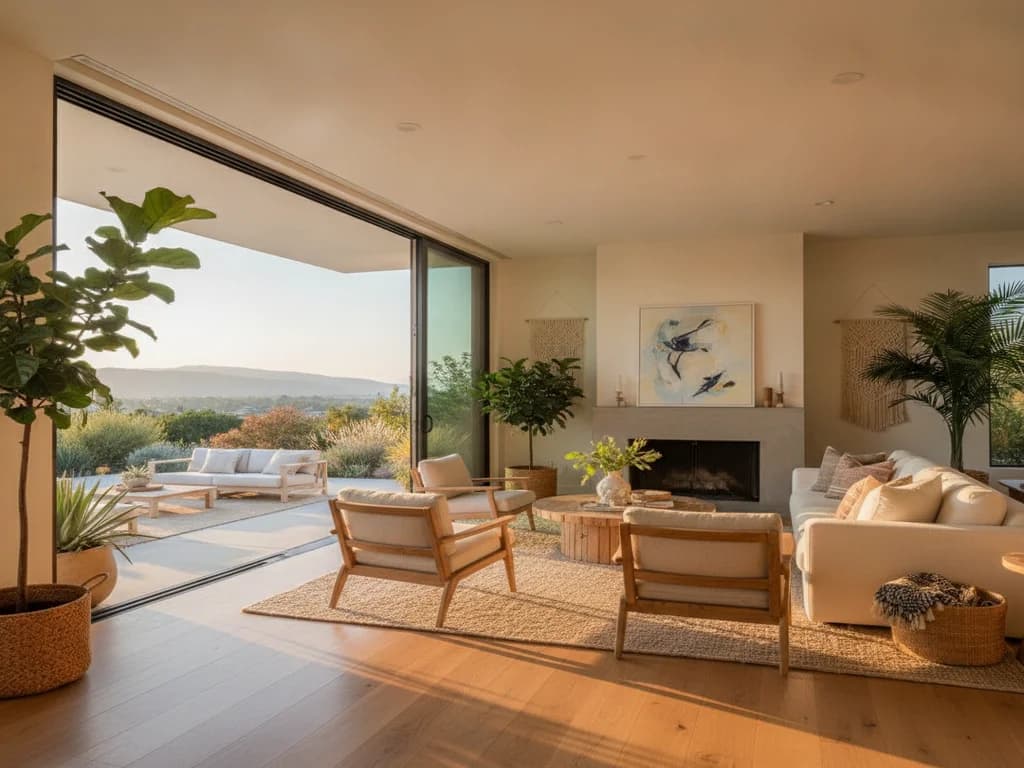
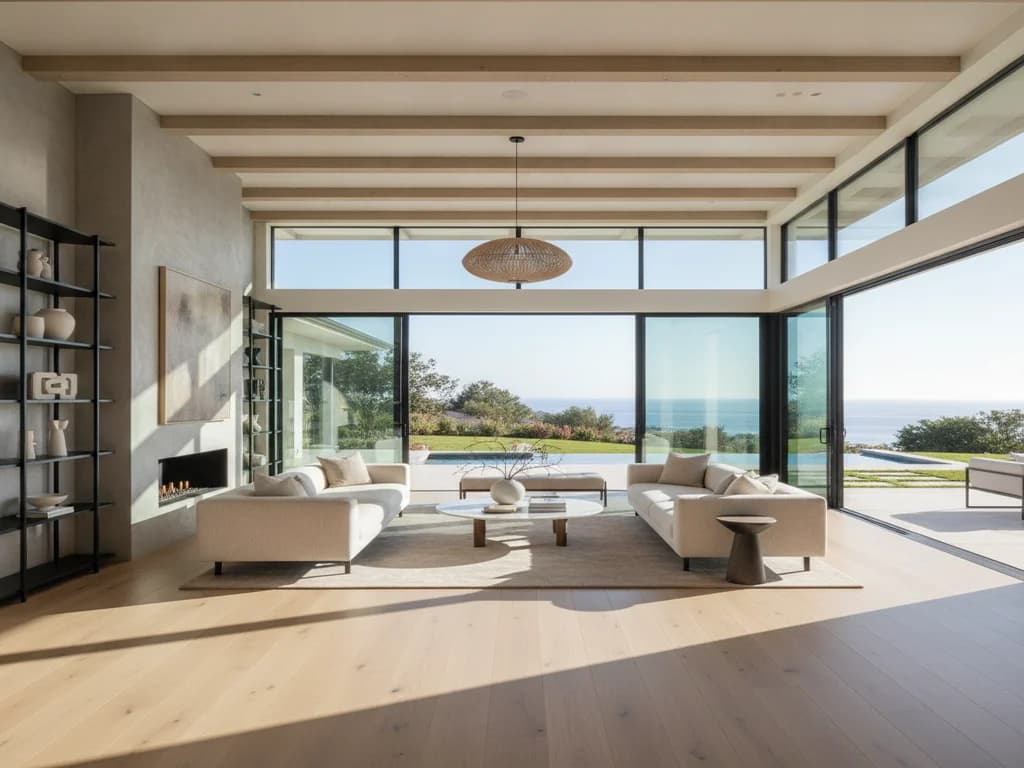
Big windows, sliding glass doors, and open floor plans are a California staple — and they mean more direct sunlight hitting your floors for more hours of the year than in most other climates. UV exposure can fade or shift the tone of wood floors over time, and it can also affect vinyl and laminate finishes to varying degrees depending on the product's UV protection.
What makes it noticeable is that it happens unevenly. The floor under a rug, a sofa, or a dog bed changes more slowly than the exposed floor around it, so nothing looks wrong until the day you move the furniture and find a rectangle in a different color. Species differ in how they respond: American cherry and Brazilian species darken dramatically, walnut tends to lighten and lose some of its depth, and white oak shifts more slowly than most. Stains and finishes fade too, and a dark stain in a sun-drenched room will not stay uniformly dark.
Quality finishes with UV inhibitors help. So does UV-filtering window film, which is the single most effective intervention and does not change how the room looks. Beyond that, the simple habits do most of the work — rotating rugs a couple of times a year, closing blinds in the worst hours during the worst months, and moving furniture slightly rather than leaving it in the same footprint for a decade. Our guide to sun fading goes deeper into what can be reversed and what cannot.
The Long Dry Summer and Air-Conditioned Air
Much of California runs dry for large stretches of the year, with real temperature swings between day and night and between seasons. The part that matters for flooring is not the outdoor weather but the indoor air. Wood is hygroscopic: it takes on moisture from humid air and gives it up to dry air, and it changes dimension when it does. The NWFA's working range for wood floors is roughly 30 to 50 percent indoor relative humidity, and a home running air conditioning through a long rainless summer can sit at or below the bottom of that band for months.
The practical result is seasonal movement. Boards shrink slightly through the dry months and open fine seasonal gaps, then swell again as winter rain and lower cooling loads bring humidity back up. Within limits this is normal behavior in a wood floor, not a defect, and it is one reason narrower boards and engineered construction get specified more readily here than in a humid climate.
Solid hardwood, being a single piece of natural wood, reacts more to those swings than engineered hardwood, which is built with a cross-layered core specifically to resist expansion and contraction. In homes without tight, consistent climate control — vacation properties, houses shut up for weeks at a time, homes where the thermostat swings wide between seasons — engineered hardwood or a quality luxury vinyl plank generally perform more predictably over the years than solid wood.
Raised Floors, Slabs, and What Each Allows
A large share of California homes, especially newer construction, are built on concrete slab foundations rather than raised wood subfloors with a crawlspace. That single fact rules out traditional nail-down solid hardwood in a lot of homes and points toward engineered hardwood, glue-down installations, or luxury vinyl plank, all of which install well directly over concrete with the right underlayment and moisture barrier.
Older neighborhoods are a different picture. Raised-foundation homes with wood subfloors over a crawlspace accept nail-down solid hardwood, which is why so many of them still have their original oak floors. They also come with their own moisture consideration: a damp, poorly ventilated crawlspace pushes moisture up into the underside of the floor year-round, and a floor that cups every winter in an older home often has a crawlspace problem rather than a flooring problem. A ground vapor retarder and adequate ventilation below are part of a floor's performance whether anyone thinks of them that way or not.
Testing a Slab Before Anything Goes Down
Concrete never fully stops giving up moisture, and a slab that looks and feels bone dry can still be driving vapor upward. Anything installed over it — engineered wood, glue-down plank, rigid vinyl — sits on top of that drive.
The test that matters is the in-situ relative humidity method described in ASTM F2170, where probes are drilled into the slab and read after equilibrating, because it measures conditions inside the slab rather than at the surface. The older calcium chloride and plastic-sheet tests measure surface emission and can read reassuringly low over a slab that is genuinely wet deeper down. Surface preparation has its own standard in ASTM F710, which covers flatness, cleanliness, and the removal of curing compounds and old adhesive that would otherwise compromise a glue bond.
This step gets skipped more often than any other, and it is behind a large share of the moisture problems under flooring we get called out to look at. Pros measure with pin or pinless meters from makers like Wagner and Lignomat for the wood itself, and with in-slab probes for concrete. Both readings go in the file before a single plank comes off the truck.
Indoor-Outdoor Living and the Grit It Brings In
Sliding doors, patio access, and pool areas are common features here, which means more foot traffic moving between indoor floors and outdoor surfaces — more grit, more moisture, more sunscreen and chlorine residue tracked in. Durable, water-resistant surfaces near these transition points matter more in California homes than in houses without that kind of indoor-outdoor flow.
Grit is the underrated one. Fine sand and decomposed granite tracked in from patios and paths behave like abrasive under a shoe, and a finish does not wear evenly — it wears along the paths people actually walk, which is why the traffic lane from the slider to the kitchen dulls years before the rest of the room. Deep walk-off matting at every exterior door is the cheapest floor protection available. Vinyl and tile both perform well in these zones, while hardwood is better reserved for rooms set back from constant outdoor traffic.
Pool areas add chlorinated water and sunscreen, both of which are harder on a finish than plain water. A wet foot from a pool deck is not a crisis; a wet towel left on a wood floor for an afternoon is a real risk.
Smoke Season and What Ash Does to a Finish
During wildfire season, homes in many parts of the state deal with smoke and fine ash finding their way indoors even with windows closed. That grit acts like sandpaper underfoot over time, which makes durable, easy-to-clean surfaces — and consistent walk-off mats at exterior doors — genuinely useful rather than optional during those months.
The routine that helps is unglamorous. Vacuum more often than usual with a hard-floor head rather than a beater bar, dry-mop before wet-mopping so you are not grinding ash into the finish with a damp pad, and change entry mats more frequently. Running an air filter reduces what settles in the first place. Smoke residue can also leave a faint film on a floor that ordinary sweeping misses, which shows up as dullness rather than dirt; a proper wood-safe cleaner rather than water alone is what removes it.
One State, Several Climates
There's no single California flooring, because the state is not one climate. A Sacramento Valley home deals with extended dry heat and long air-conditioning seasons. A foothill home sees wider day-to-night swings and often sits further from tight municipal climate control. A Delta or coastal property sees higher baseline humidity and the opposite problem — wood taking on moisture rather than losing it. And a mountain property is a different specification again, which is why we treat mountain home flooring separately.
What travels across all of them is the same discipline: measure the actual conditions in the actual house, acclimate the material to those conditions, and pick a construction that tolerates the swing the house will really see rather than the one the brochure assumes.
Finishes and Species That Take California Light
Strong, prolonged daylight rewards some choices over others. Matte and satin finishes disguise dust and fine scratching that a gloss finish highlights, and in a room with a wall of glass, low-angle afternoon sun makes gloss look like a spotlight on every imperfection. Water-based finishes — Bona Traffic HD is the one most often specified — stay clearer over time than traditional oil-modified polyurethane, which ambers as it ages: a real consideration if you have chosen a pale floor and want it to stay pale. A hardwax oil such as Rubio Monocoat sits in the wood rather than on it, which makes spot repair of a worn traffic lane possible without refinishing a whole room, at the cost of a more attentive maintenance routine.
On species, white oak has become the regional default for good reason: it is hard enough for daily use, its tighter grain is more closed than red oak's, and it shifts color comparatively slowly in strong light. Hickory offers more hardness and more dramatic grain variation; walnut is beautiful and softer, and it lightens in sun, which is worth knowing before putting it in a room with south-facing glass.
Putting It Together
A hillside home in the foothills, a coastal property, and a Central Valley slab home each have somewhat different needs. But across most of the state, engineered hardwood and quality LVP tend to handle the sun, dry heat, indoor-outdoor traffic, and slab foundations better than solid hardwood does everywhere except the most climate-controlled interior rooms. Solid wood is not off the table — it is simply a choice that asks more of the house around it.
If you want a recommendation based on your actual home's sun exposure, foundation type, and floor plan, Renaissance Floors offers free estimates and can tell you plainly what will hold up best where you live. You can also narrow the field yourself first with our floor finder. Call (916) 749-0272 to get started.
This article is part of our guide to how to choose a floor, which covers the order the decisions actually come in, and which constraints are real rather than preference.
Explore related
Good to Know
Frequently Asked Questions
What flooring works best on a California slab foundation?
Engineered hardwood, luxury vinyl plank, and tile all handle a slab comfortably. Solid hardwood is the one to be careful with, since it cannot be nailed into concrete and responds sharply to vapor drive from below. Whatever goes down, the slab should be moisture-tested with an in-situ relative-humidity probe first.
Does California sun really fade wood floors?
Yes, and unevenly, which is what makes it noticeable. The floor under a rug or a sofa changes more slowly than the exposed floor around it, so the difference only becomes obvious when something is moved. No finish prevents it entirely; UV-filtering window film and rotating rugs help.
How does the dry summer affect a wood floor here?
Wood is hygroscopic — it gives up moisture to dry air and shrinks, which is what opens seasonal gaps between boards. The valley's long rainless summers against a wet winter produce a real annual swing, and acclimating the material to the house before installation is what keeps that movement within tolerance.
Is wildfire ash a problem for flooring?
Mainly as abrasive grit. Fine ash tracked indoors behaves like the sand that normally wears a finish, so during smoke season the ordinary defenses matter more: mats at every entry, more frequent sweeping, and shoes off where practical. Dry-mop before wet-mopping so ash is not ground into the finish.
Should I use one flooring material throughout a California home?
You can, and engineered hardwood or luxury vinyl make it workable over a slab. But rooms genuinely differ — a mudroom off a patio and a primary bedroom have different demands — and running two materials with a well-planned transition is a reasonable answer rather than a compromise.
Do I need a moisture barrier under flooring on a concrete slab?
Almost always, and the specifics depend on what the slab tests at. Concrete continues releasing moisture for its entire life, so engineered wood, glue-down plank, and rigid vinyl all need an appropriate vapor retarder or a moisture-mitigating adhesive selected against the measured relative humidity in the slab.
Which wood species holds its color best in strong sunlight?
White oak shifts comparatively slowly, which is part of why it has become the regional default. American cherry and many Brazilian species darken markedly, and walnut tends to lighten and lose depth. No species is immune, so UV-filtering window film matters more than species selection in a very sunny room.
Can solid hardwood work in a Sacramento-area home?
Yes, in a raised-foundation home with reasonably consistent climate control. It needs proper acclimation to the house before installation, a dry and well-ventilated crawlspace beneath it, and an owner who accepts fine seasonal gapping through the dry months as normal rather than as a defect.
Why does my floor gap in summer and close up in winter?
That is seasonal movement, and in a wood floor it is expected behavior rather than a failure. Boards give up moisture to dry air-conditioned air and shrink, then take it back on when indoor humidity rises. Keeping indoor relative humidity in the 30 to 50 percent range keeps the swing modest.
Is luxury vinyl a good choice for a California home with lots of glass?
Generally yes, with one caveat: rigid vinyl expands with heat rather than humidity, so perimeter expansion gaps must be respected in rooms with strong direct sun, and some warranties limit coverage in sunrooms. Window film reduces both the heat gain and the risk of color shift.
Written by
Owner & Lead Installer, Renaissance Floors
15+ years of hands-on flooring experience across Greater Sacramento & Northern California. Works on hardwood and engineered installation, refinishing, subfloor preparation, and moisture testing — and writes these guides from what the jobs actually teach.
CSLB C-15 licence #1060673
Related
Keep Reading
Related pages: Luxury Vinyl Plank vs. Hardwood, Luxury Vinyl Plank vs. Laminate, European White Oak, and French Oak.
Ready for Floors You'll Love?
Ready to talk through your project? Free estimates throughout Greater Sacramento & Northern California.