Services
Stairs & Treads in Northern California
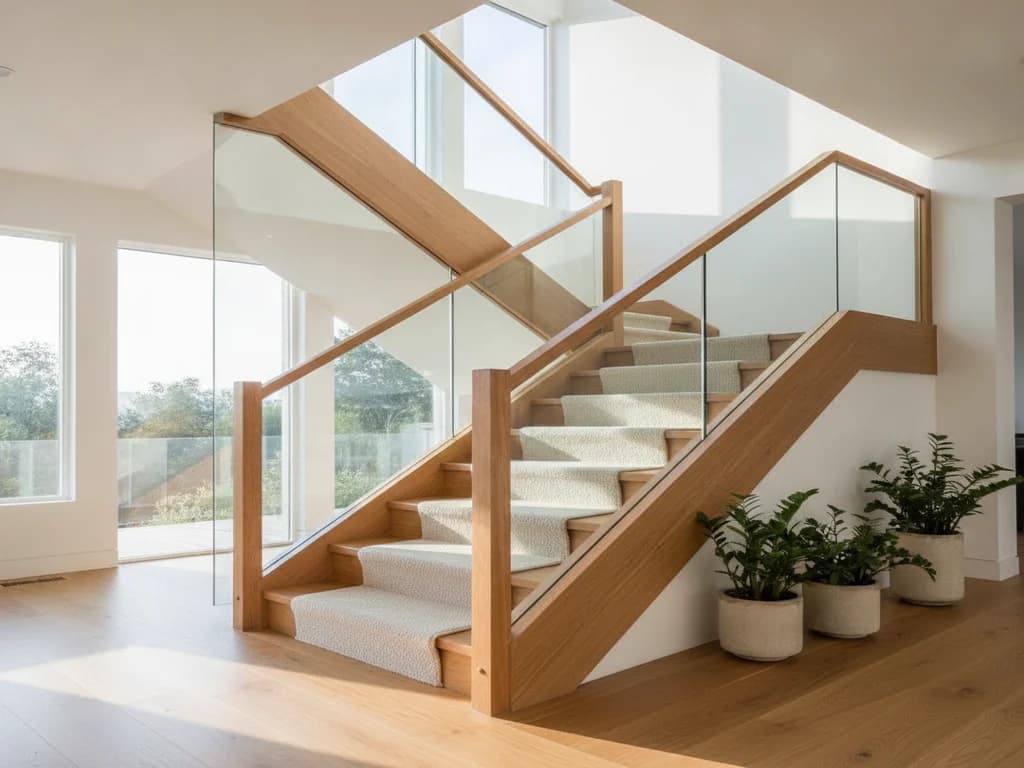
Staircase flooring — solid hardwood treads and risers, capped nosings, and runners installed with the tight, precise detailing stairs demand.
Overview
Careful, Reliable Stairs & Treads
Stairs take more abuse than any other floor in the house, and they're the hardest to get right — every tread, riser, and nosing has to be measured and fit individually, not rolled out like a floor. We install hardwood treads and risers, capped retrofit treads over existing stairs, and stair runners, matched to your main floor so the transition from room to stairway looks like it was always meant to be there.
Get a Free EstimateWhy It Works
Why Homeowners Choose Our Stairs & Treads
Individually Fit, Not Templated
No two staircases are perfectly square. We template and cut each tread and riser to its actual opening, so nosings sit even, gaps stay tight, and the stringers and skirt boards get a clean scribe instead of a caulk line covering a gap.
Matched to Your Main Floor
When we're capping or replacing treads to run alongside existing hardwood, we work to match species, stain color, and sheen as closely as the products allow, so the stairs read as a continuation of the floor rather than an obvious add-on.
Built for Foot Traffic and Grip
Stairs get more direct impact and wear than open floor, especially at the nosing edge. We size nosing overhang and profile for durability and safer footing, and we'll flag where a runner or non-slip finish makes sense over bare wood.
Backed by Warranty
Stair work is precision labor — fasteners, adhesive, and finish all have to perform under repeated flex and impact. Our installation is backed by a workmanship warranty, and we'll tell you plainly if your stairs need structural attention before cosmetic work begins.
Options & Styles
Stairs & Treads Options We Install
We help you choose the right product for your rooms, your budget, and how you live.
Hardwood Treads & Risers
Solid or engineered hardwood treads paired with matching or painted risers — the standard for stairs adjoining hardwood floors. Treads are typically a harder-wearing profile than field flooring since they take more direct impact per square foot.
Capped / Retrofit Treads Over Existing Stairs
Rather than tearing out carpeted or worn stairs down to the stringers, we can cap the existing structure with new tread and riser material. This is often faster and less disruptive than a full rebuild, provided the underlying stairs are structurally sound — we check that first.
Stair Runners (Carpet)
A carpet runner installed down the center of hardwood or capped treads, secured with proper stair rods or a tucked/stapled install. Runners add cushioning and quiet footsteps while leaving an exposed hardwood border on either side.
Matching to Your Main Floor
For stairs connecting to existing hardwood or engineered wood, we source tread and riser stock to get species, plank width, and finish as close a match as the current market allows — flagging up front where an exact match isn't realistic due to discontinued products or sun-aging on the existing floor.
Nosing Detail
The nosing — the rounded front edge of each tread — is where stairs take the most wear and where sloppy work shows first. We fit nosing profiles to sit flush and consistent from top to bottom of the run, which is largely what separates a stair job that looks professional from one that doesn't.
Iron & Wood Baluster Coordination
When tread work overlaps with iron or wood baluster and railing systems, we coordinate the sequence so newel posts, balusters, and skirting are handled cleanly around the new treads rather than as an afterthought. We don't fabricate railings ourselves, but we plan the flooring work around your railing contractor or existing hardware.
Good to Know
Before You Choose
- Stair work is priced by the piece, not the square foot — a staircase with landings and winders takes meaningfully more labor per unit of material than an equivalent open floor, and estimates reflect that.
- We check stringers, treads, and risers for structural soundness (squeaks, give, rot near exterior entries) before any cosmetic install — capping over a compromised structure just hides a problem instead of fixing it.
- Matching new stair treads to an older existing hardwood floor has real limits: wood ages and lightens with sun exposure over time, and some species and stain combinations are no longer milled the way they were originally. We'll show you samples against your actual floor before you commit.
- Carpet runners require attention to how they're secured at each tread edge — a poorly tensioned runner is one of the more common trip hazards in older homes, so proper installation matters as much as the material choice.
- Timelines for stair jobs depend heavily on whether we're capping existing stairs versus a full tear-out and rebuild; we'll walk your staircase in person to give you an accurate range rather than guessing from a phone description.
Our Services
Everything We Install
A full range of flooring installation and finishing services.
Hardwood Flooring
Solid oak, maple, and walkable heirloom-grade hardwood, precisely installed.
Learn moreEngineered Hardwood
Real-wood wear layers built for California's climate swings.
Learn moreLuxury Vinyl Plank
Waterproof, wood-look LVP for kitchens, baths, and busy households.
Learn moreLaminate Flooring
Durable, high-style laminate at a friendly price point.
Learn moreSheet Vinyl
Seamless, water-resistant sheet vinyl for utility spaces.
Learn moreTile Flooring
Porcelain and ceramic tile set dead-level with crisp grout lines.
Learn moreNatural Stone
Travertine, marble, and slate installed with a craftsman's eye.
Learn moreCarpet Installation
Plush, tight-stretched carpet for bedrooms and stairs.
Learn moreFloor Installation
Full-service installation from subfloor prep to final baseboard.
Learn moreFloor Refinishing
Sand, stain, and reseal tired hardwood back to new.
Learn moreFloor Repair
Board swaps, water damage, squeaks, and seamless patch-ins.
Learn moreStairs & Treads
Hardwood treads, risers, and runners with crisp detailing.
Learn moreEpoxy Garage Floors
Tough, easy-clean epoxy coatings for garages and shops.
Learn moreWhere We Work
Stairs & Treads Across Northern California
Good to Know
Frequently Asked Questions
Can you match new stair treads to our existing hardwood floors?
In most cases, yes — we source tread and riser stock in matching species and finish it to match your floor's stain and sheen. Older floors that have aged or faded from sun exposure are harder to match exactly, and we'll be upfront about that during your free estimate rather than promise a perfect blend we can't deliver.
Do you have to tear out our existing stairs to install new treads?
Not always. If the underlying stringers and structure are sound, we can often cap the existing stairs with new tread and riser material, which is faster and less disruptive than a full rebuild. If we find rot, excessive flex, or structural issues during our walkthrough, we'll tell you and recommend the right fix before covering anything up.
Are hardwood stairs safe, or should we use a runner?
Bare hardwood stairs can be more slippery than carpet, especially in socks or with pets in the house. A lot of clients choose a runner down the center for grip and noise reduction while keeping an exposed wood border on the sides. We'll talk through the tradeoffs based on your household during the estimate.
How long does a typical stair tread and riser project take?
It depends on the number of steps, whether there are landings or winders, and whether we're capping existing stairs or doing a full replacement. Because stair work is fit piece-by-piece rather than rolled out like a floor, it takes longer per square foot than an equivalent room. We'll give you a real timeline after seeing your staircase in person.
Do you install iron or wood balusters and railings too?
We focus on the tread, riser, and nosing flooring work and coordinate closely with baluster and railing installers so the sequencing works cleanly — we don't fabricate railing systems ourselves. If you need a referral, we're happy to point you to trades we've worked alongside before.
How much does stair tread and runner work cost?
It varies by the number of steps, whether treads are capped or fully replaced, the material (solid hardwood, engineered, or runner), and any structural repair the stairs need. Because every staircase is a little different, we don't quote stair work sight-unseen — call us at (916) 749-0272 or request a free estimate and we'll walk your stairs and give you a real number.
Related
Keep Reading
Related pages: Flooring Services, Cost Calculator, Floor Installation in Orangevale, and Floor Refinishing in Orangevale.
Ready for Floors You'll Love?
Free estimates on stairs & treads throughout Greater Sacramento & Northern California.