
Buying Guide
Hardwood vs. Luxury Vinyl Plank: How to Choose
Both are beautiful — but they behave very differently with water, pets, and resale. Here's how to pick the right one for your home.
Buying Guide · 9 min read
Published July 14, 2026 · Updated September 12, 2026
Choosing between hardwood and luxury vinyl plank is one of the first big decisions in almost any flooring project, and it's worth getting right before you fall in love with a particular color or plank style. Both materials can look beautiful in the right space — the real differences show up in day-to-day durability, moisture tolerance, and long-term value. What follows is the comparison we actually walk through with homeowners standing in their own rooms, rather than the version printed on the back of a sample board.
What Hardwood Does Best
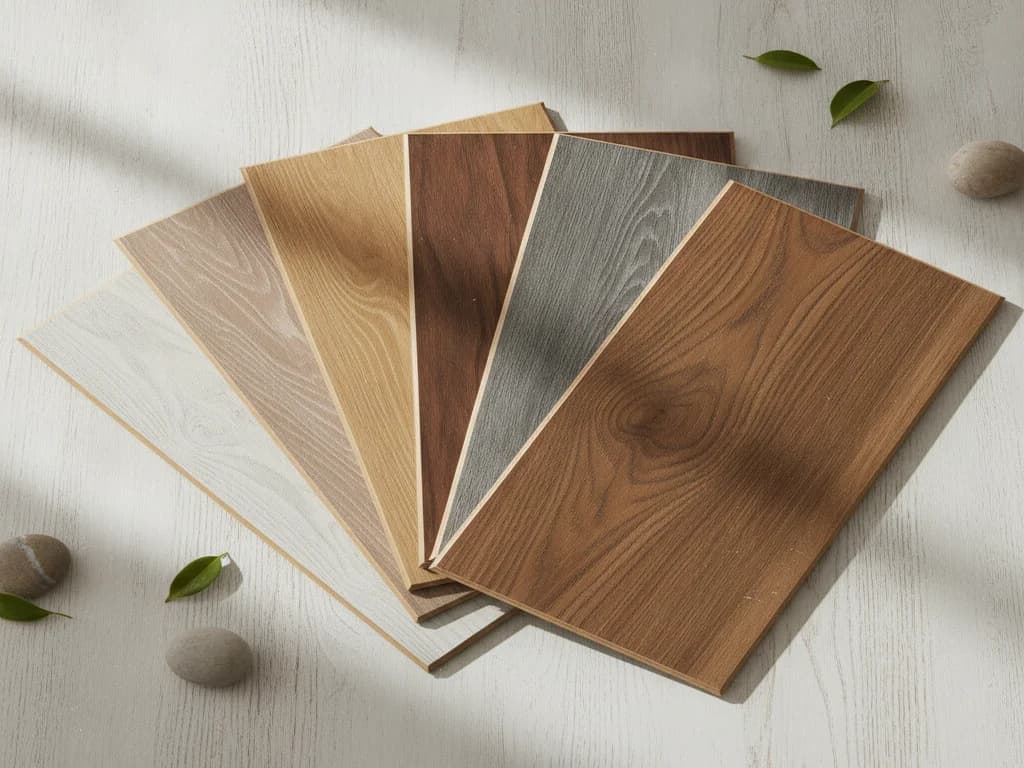
Solid and engineered hardwood bring a warmth and depth that's hard to fully replicate — natural grain variation, the way it ages and patinas over decades, and the fact that it can typically be sanded and refinished multiple times instead of torn out and replaced. Hardwood also tends to be viewed favorably by buyers when it comes time to sell, especially in living rooms, dining rooms, and bedrooms. It takes stain and finish, which means the same white oak floor can read pale and Scandinavian or deep and traditional depending on what goes on top of it, and it can be changed later without replacing a board. The tradeoff is that wood is a natural material: it expands and contracts with humidity, it can scratch or dent under heavy furniture or pet claws, and it's not a good match for bathrooms, laundry rooms, or other areas with real water exposure. If you want to see the range of what real wood can look like before comparing it to anything else, our hardwood flooring overview lays out the species and finish choices side by side.
What Luxury Vinyl Plank Does Best
LVP has come a long way from the vinyl flooring of decades past. Modern luxury vinyl plank uses high-resolution printed layers and embossed textures that convincingly mimic wood grain, built on a waterproof or highly water-resistant core — which makes it a strong choice for kitchens, entries, bathrooms, mudrooms, and basements. It's generally more forgiving of temperature and humidity swings, more resistant to dents and scratches from pets and daily traffic, and easier to install over a wider range of subfloor conditions. Rigid-core lines like COREtec and Shaw Floorté install as floating floors over concrete without the moisture-barrier gymnastics that wood over a slab requires. The tradeoff is that LVP is a manufactured product: it can't be refinished the way hardwood can, so once the wear layer degrades, the floor gets replaced rather than restored.
The Ownership Model Is the Real Difference
Almost every other difference between these two materials follows from one structural fact: hardwood is restorable and vinyl is replaceable. A hardwood floor that looks tired after fifteen years is a candidate for a screen and recoat or a full sand and refinish, and it comes back looking new for a fraction of what a new floor costs. That cycle can repeat several times over the life of a solid floor, and once or twice on an engineered floor with a thick enough wear layer. A vinyl floor that looks tired after fifteen years is at the end of its life; there is nothing to sand, because the wood you are looking at is a printed image under a clear wear layer.
The flip side is what happens to small damage. A gouged hardwood board is a repair that either gets patched and blended or waits for the next refinish. A gouged vinyl plank, in a floating floor, can be lifted and swapped for a matching plank out of the leftover carton. Neither model is better in the abstract. One rewards patience and periodic investment; the other rewards keeping spare material in the garage. Our LVP vs. hardwood comparison goes further into how that plays out over a full ownership cycle.
How Each Handles Water
The blunt version: vinyl wins, but not as completely as the marketing suggests. A rigid-core plank will sit in standing water without swelling, and that alone rules wood out of full bathrooms and laundry rooms. But a floating vinyl floor is waterproof at the plank, not at the floor. The seams are mechanical, not sealed, so water from a burst supply line travels through them, spreads across the subfloor, and stays there — under a material that will not let it dry upward. Pull up an intact-looking vinyl floor after a slow leak and what's underneath can be a soaked, mold-stained subfloor that never got the chance to announce itself.
Wood fails differently, and more visibly. Water that sits on a finished hardwood floor works into the seams, the boards absorb it from the edges and the underside, and the floor cups — the board edges rise higher than the centers. Cupping announces the problem, often early enough to find the leak. That is a genuine and underrated advantage: wood tells you. Either way, water damage is a subfloor problem before it is a flooring problem, and the response is the same for both materials — find the source, dry the structure, then decide about the floor.
Scratches, Dents, and What Actually Shows
These are two different failure modes and people conflate them constantly. A scratch is damage to the surface layer. A dent is deformation of what's underneath.
Wood dents. Species hardness is measured on the Janka scale, and the spread among common floors is wide: walnut sits around 1010, red oak around 1290, white oak around 1360, hard maple around 1450, and hickory around 1820. A dropped cast-iron pan will leave a mark in walnut that hickory would shrug off. Wood also scratches, though a matte or wire-brushed surface with real grain texture hides fine scratching far better than a smooth gloss finish, which is why a high-gloss floor in a busy house looks worn years before a matte one that has taken the same abuse.
Vinyl resists scratching better than most wood finishes — that thin clear wear layer is engineered for exactly this — but a rigid core over a slab can still show point-load dimples under a refrigerator wheel or a furniture leg with no protector on it. And a scratch through a vinyl wear layer exposes printed film that cannot be repaired or refinished, only replaced. If scratches and dents are the thing driving your decision, the honest framing is that vinyl gets marked less often and wood recovers better when it does.
Sound and Feel Underfoot
Hardwood nailed down over a wood subfloor is the most solid-feeling floor you can walk on, and it sounds like it — a low, dense note rather than a click. A floating floor of any material sits on a pad rather than being fastened to the structure, and that gap is what people are hearing when they say vinyl sounds hollow. It is not a defect; it is the installation method.
Two things close most of that gap: a thicker, denser plank, and the right underlayment. Where a product doesn't ship with an attached pad, an acoustic underlayment — QuietWalk is the familiar name here — noticeably changes the sound of a floating floor, and in a second-story room or a condo it matters as much to the people below you as to you. Wood is also the warmer surface barefoot in January, though quality vinyl is warmer than tile and warmer than most people expect.
How Each Behaves in a Dry Valley Summer
Around Sacramento the indoor climate is the real variable, not the outdoor one. Wood is hygroscopic: it takes on moisture from humid air and gives it up to dry air, and it changes dimension when it does. The NWFA's working range for a wood floor is roughly 30 to 50 percent relative humidity indoors, and a valley home running air conditioning through a long rainless summer can sit at the bottom of that band or below it for months. That is what opens seasonal gaps between boards in August that close again in February. It is normal, it is manageable with acclimation and a humidifier in the driest months, and it is a reason wide planks and solid wood get specified more carefully here than in a humid climate.
Vinyl is indifferent to humidity and sensitive to temperature instead. A rigid plank expands and contracts with heat, which is why a floating vinyl floor in a room with a west-facing slider needs its expansion gap respected at every wall and why leaving one out shows up later as buckling or separated seams. Different material, different failure, same lesson: the installation detail is what keeps the floor flat.
Site Conditions Often Make the Decision for You
A large share of newer housing stock in this region is slab-on-grade. You cannot nail solid hardwood into concrete, so a slab home is choosing among engineered wood, glue-down installation, or vinyl before aesthetics enter the conversation at all. Either way the slab gets moisture-tested first — the in-situ relative humidity method described in ASTM F2170, with probes drilled into the slab rather than a plastic sheet taped down overnight — and prepped to the flatness the product requires under ASTM F710. Rigid vinyl is less forgiving of a wavy slab than people assume, because a rigid plank bridges a low spot instead of conforming to it and the seams telegraph what's underneath.
There are also simple physical constraints that decide projects: the height under a dishwasher, the clearance at an exterior door, whether the existing floor comes out or the new one goes over it. We would rather raise those in a walkthrough than discover them on installation day.
Resale, Appraisers, and Buyer Expectations
Real wood in the main living areas still reads as an upgrade to most buyers, and the fact that it can be refinished by the next owner is part of why. Vinyl in kitchens, baths, mudrooms, and basements reads as normal and correct — nobody views a waterproof floor in a laundry room as a compromise. Where vinyl does get noticed unfavorably is when it replaces existing hardwood in a formal room, or when a whole house is done in a thin, low-wear-layer product that looks flat under daylight. Buy the better version of whichever material you choose, and the resale question mostly takes care of itself.
Running Both in One House
Most of the homes we work in end up mixing the two, and that is a considered answer rather than a fallback. Hardwood through the entry, living, dining, and bedrooms; vinyl in the laundry room, the full baths, and sometimes the kitchen. What makes it look intentional instead of accidental is planning the transitions in advance — where the change happens, what threshold covers it, and whether the two floors finish at the same height. A change of material at a doorway looks deliberate. A change of material three feet into an open room does not.
The tone matters more than the exact species match. Two mid-brown floors with similar undertones read as one house even at different sheens; a cool gray vinyl beside a warm amber wood reads as two projects.
How to Decide
Think room by room rather than picking one material for the whole house. In areas with real moisture risk, or in busy family zones that take a beating, LVP's water resistance and toughness usually wins out. In formal living spaces, bedrooms, and anywhere you want the long-term character and resale appeal of real wood, hardwood is usually worth the investment. If you want a structured way to work through it, our floor finder asks the same questions we would ask in your living room and narrows the field before anyone measures anything.
There's no universally better choice between hardwood and LVP — only the better choice for your specific rooms, household, and how you actually live in the space. If you're weighing the two and want a straight answer for your home, Renaissance Floors offers free, no-pressure estimates and can walk your space with you to recommend what will genuinely hold up. Reach us at (916) 749-0272.
This article is part of our guide to how to choose a floor, which covers the order the decisions actually come in, and which constraints are real rather than preference.
Explore related
Good to Know
Frequently Asked Questions
Is hardwood or luxury vinyl better for resale?
Hardwood is generally viewed favorably by buyers in living rooms, dining rooms, and bedrooms, and the fact that it can be refinished rather than replaced is part of why. Luxury vinyl is well accepted in kitchens, baths, and basements where water makes wood the wrong choice, so the honest answer depends on which rooms you are flooring rather than on the material alone.
Can luxury vinyl plank be refinished like hardwood?
No. Luxury vinyl has a wear layer over a printed film, not solid wood, so it cannot be sanded. When it wears or is damaged, individual planks are replaced instead — which is often faster and less disruptive than refinishing an entire room, but it is a different model of ownership.
Does luxury vinyl look convincing next to real wood?
Modern printing and embossing are good enough that most people cannot tell at a glance, particularly in wider planks with texture. Side by side in daylight the difference is usually visible in how the surface catches light, since real wood grain varies board to board while a printed pattern repeats on a cycle.
Which is warmer and quieter underfoot?
Wood is warmer and has a more solid sound underfoot, especially when nailed down over a wood subfloor. Luxury vinyl over a slab can feel cooler and sound slightly hollower, though a quality underlayment and a thicker rigid core close much of that gap.
Can I use hardwood in a kitchen?
Yes, with realistic expectations. Kitchens are a middle case rather than a hard no: spills need wiping promptly, and a dishwasher leak is a genuine risk to a wood floor. Engineered hardwood handles a kitchen better than solid, and luxury vinyl handles it better than either.
Which scratches more easily, hardwood or luxury vinyl?
Luxury vinyl generally resists surface scratching better, because its clear wear layer is engineered for abrasion. Wood scratches sooner but hides it better in a matte or wire-brushed finish, and a scratched wood floor can be recoated or refinished, while a scratched vinyl plank can only be replaced.
Does luxury vinyl work over a concrete slab better than hardwood?
It installs more simply, yes. Solid hardwood cannot be nailed into concrete at all, so a slab means engineered wood glued or floated, or vinyl. Either way the slab should be moisture-tested first using in-situ relative humidity probes as described in ASTM F2170, because vapor drive from below damages both materials.
Can I mix hardwood and luxury vinyl in the same house?
Yes, and most homes we work in do. Wood in the living areas and bedrooms, vinyl in laundry rooms and full baths, is a normal plan. What makes it look intentional is deciding transitions at doorways rather than mid-room, and keeping the two colors in the same tonal family.
How long does each floor actually last?
A hardwood floor is effectively a long-term asset because it can be refinished several times over its life rather than replaced. A luxury vinyl floor has a defined service life set by its wear layer, after which it is torn out. Traffic, grit at entries, and maintenance habits change both numbers more than the product label does.
Do wood floors gap in Sacramento's dry summers?
Some seasonal movement is normal. Air conditioning through a long rainless summer pulls indoor humidity toward the low end of the 30 to 50 percent range the NWFA recommends for wood floors, and boards shrink slightly as they dry. Proper acclimation before installation is what keeps that movement within tolerance.
Written by
Owner & Lead Installer, Renaissance Floors
15+ years of hands-on flooring experience across Greater Sacramento & Northern California. Works on hardwood and engineered installation, refinishing, subfloor preparation, and moisture testing — and writes these guides from what the jobs actually teach.
CSLB C-15 licence #1060673
Related
Keep Reading
Related pages: White Oak vs. Red Oak, Wide Plank vs. Standard Width, European White Oak, and French Oak.
Ready for Floors You'll Love?
Ready to talk through your project? Free estimates throughout Greater Sacramento & Northern California.