Buying Guide
Do Hardwood Floors Really Work in Snow Country?
Can real hardwood survive Tahoe and Sierra winters? Yes — with the right construction, acclimation, and moisture management. Here's the honest answer.
Buying Guide · 7 min read
Published July 16, 2026 · Updated July 28, 2026
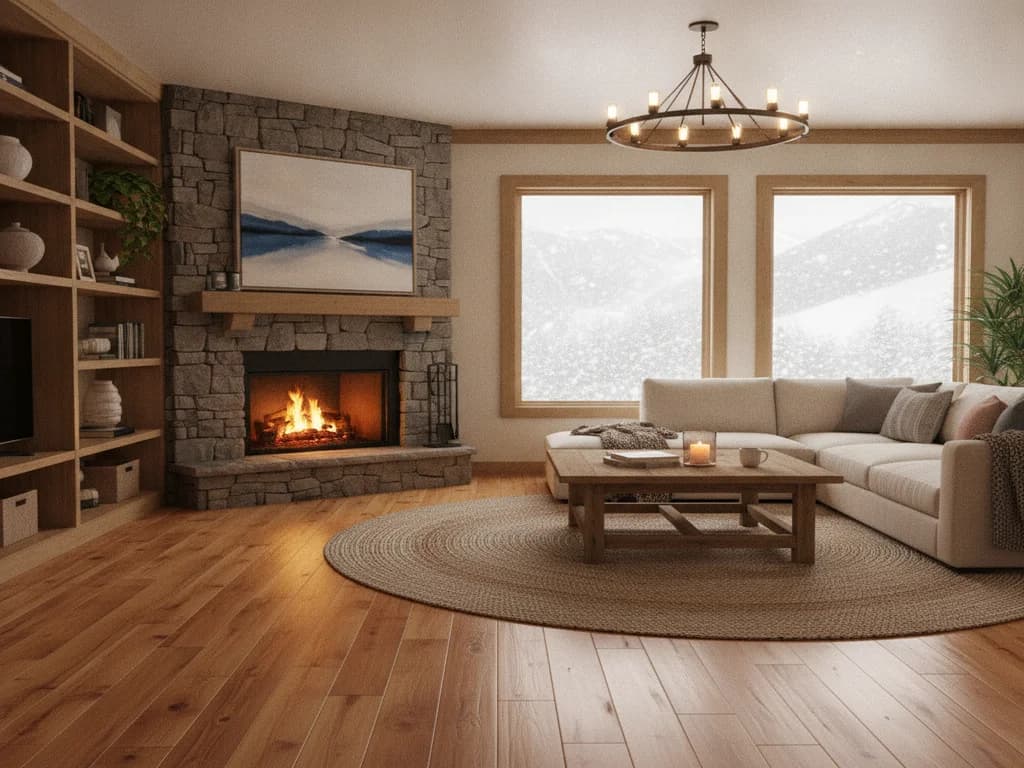
It's one of the most common questions we hear from mountain homeowners: can real hardwood actually survive Tahoe and Sierra winters, or is it a mistake at 6,000 feet? The honest answer is yes — hardwood works beautifully in snow country — but only when it's built and installed for the climate.
This article is the verdict rather than the manual. What "working" actually means, what failure looks like when it happens, what the alternatives cost you, and the specific situations where we'd tell you not to do it.
What "Works" Actually Means Here
It's worth defining success before arguing about it, because the expectation people bring from a valley home is subtly wrong. A mountain wood floor that works is not one that never moves. Wood moves. A floor that works is one whose movement stays small enough and even enough that you never think about it, that doesn't need intervention beyond normal maintenance, and that still looks right in fifteen years.
That's a real standard and it's routinely met. What it rules out is the fantasy version — a floor that behaves identically in February and August with no attention paid to how the house is run. Nobody sells that, at any elevation. Someone promising it is either not measuring or not telling you.
The Real Challenge Isn't Snow — It's Dry Air
People assume the enemy is the snow outside, but the bigger factor is the air inside. Mountain homes run dry all winter: cold outdoor air holds little moisture, and wood stoves and forced-air heat dry things out further, so indoor humidity can drop into single digits. Then summer arrives warm and comparatively humid.
Wood is hygroscopic — it gives up moisture and shrinks in that dry winter air, then takes it back and swells in summer. This reframes the whole question. The snow is a housekeeping problem, solved with an entry that works and a mat that holds water. The dry air is a building-science problem, and it's the one that decides whether the floor succeeds. Manage the swing and hardwood is a wonderful mountain floor; ignore it and you get gaps, cupping, or worse.
What Failure Actually Looks Like
When mountain wood floors fail, it's almost always one of four things, and they're worth being able to name.
Gapping is the common one — thin dark lines opening between boards as they shrink in dry winter air. Cupping is the reverse, board edges rising above their centers when the underside is wetter than the top, which usually means moisture from below rather than a humidity problem in the room. Crowning is centers higher than edges, and it most often appears after someone sanded a cupped floor flat before it had dried out. Buckling, where boards lift entirely off the subfloor, is rare and dramatic and nearly always means either a flood or a floor installed with no expansion room at the walls.
Notice what these have in common: none of them is caused by cold, and none of them is caused by snow. Every one is a moisture-management outcome, which means every one is preventable by decisions made before installation.
The Seasonal Movement You Should Expect
Here's the part nobody tells homeowners, and it causes a lot of unnecessary alarm. A solid wood floor in a mountain climate will show some seasonal gapping in late winter, and those gaps will close again by mid-summer. That is normal behavior, not a defect, and it happens on well-installed floors.
The distinction that matters is between uniform and localized. Fine gaps appearing evenly across a whole room and closing on schedule are the floor doing what wood does. Gaps concentrated in one area, gaps that don't close when the season turns, or gaps that are wider this year than last are a different signal — those point to a moisture source or an installation problem worth investigating. Knowing which you're looking at saves an unnecessary service call, or catches a real problem a year earlier.
The Four Decisions That Decide the Outcome
The outcome is settled by four choices, and they're made before the first board goes down.
Construction — engineered or solid, and at what width. This is the biggest single lever, and it depends on your subfloor, your heat source, and whether the house is conditioned when nobody's home; our engineered versus solid comparison works through it properly.
Acclimation and moisture testing — the wood and the subfloor both reaching a measured, documented equilibrium with the home's real conditions before installation.
Humidity control while you own it — keeping the interior inside a reasonable band year-round rather than letting it free-fall in winter, which is more about how the house is run than about the floor.
Installation detail — real expansion space at every wall and fixed object, a proper vapor strategy under the floor, and fastening appropriate to the substrate.
Get all four right and hardwood is a low-drama floor up here. Get three right and the fourth will find you.
What the Alternatives Actually Give Up
The materials people consider instead are legitimate, and it's worth being precise about the trade.
Luxury vinyl plank is genuinely waterproof, essentially indifferent to humidity swings, and repairable one plank at a time. It's the correct answer in entries, bathrooms, and hard-used rentals. What you give up is the ownership model: LVP wears out and gets replaced, where hardwood wears out and gets refinished. You also give up the underfoot feel and the resale weight that real wood carries in a mountain great room. Products in the COREtec and Shaw Floorté class are good at what they do; they aren't wood.
Tile is the most durable surface available and unmatched over radiant heat. It's also cold, hard, unforgiving of dropped things, and difficult to warm up in a room people occupy barefoot. Laminate is cheaper and scratch-resistant but tolerates standing water poorly at the seams and cannot be repaired invisibly. Carpet is warm and quiet and belongs in bedrooms, and nowhere near an entry.
The fair summary is that hardwood is not the most durable option in a mountain house. It's the one that ages rather than degrades — and for the main living spaces, that's usually what people actually want. LVP versus hardwood covers the comparison in more depth.
Where We'd Steer You Away From Hardwood
There are situations where we'd tell you not to, and it's worth saying them plainly.
A house that will genuinely be left unheated all winter, with no baseline temperature and no intention of changing that, is asking a wood floor to survive conditions nobody can engineer around. A room below grade with a slab that hasn't passed moisture testing — fix the moisture or choose a different material, because no wood product wins that fight. An entry, mudroom, or ski-boot room that takes standing snowmelt daily. A full bathroom or laundry room, at any elevation.
And one that's less obvious: a hard-used property where nobody will manage the interior climate, and where the owner's real priority is never thinking about the floor again. Hardwood rewards a little attention. If there's no one to give it, a waterproof product is the more honest recommendation, and we'd rather say so than sell a floor that disappoints.
Refinishing Is the Argument That Wins Over Time
The reason hardwood keeps winning in mountain living spaces despite being the more demanding material is what happens at year fifteen. A worn wood floor gets sanded and refinished and comes back looking new, and it can do that several times. Every other material in this article gets torn out and thrown away instead.
That matters more in a mountain house than a valley one, because the wear is harder here — grit, boots, gear, and periods of heavy occupancy. A floor that can be restored absorbs that history. Modern two-component waterborne finishes of the Bona Traffic HD generation are also substantially tougher than what came before, which means longer between refinishes and less disruption when the time comes. Floor refinishing is what turns a twenty-year floor into a fifty-year one.
What Ownership Actually Looks Like Up Here
Practically speaking, living with a wood floor in snow country means three habits. Keep the house within a reasonable humidity band year-round, including when you're away. Stop grit and snowmelt at the door, because abrasion is what actually kills finishes. And recoat the finish before it wears through to bare wood, rather than after.
That's it. It isn't a burden, and it's close to what a wood floor asks anywhere — the mountain version just has less margin for ignoring it. Most of the failures we're called to look at aren't the result of demanding maintenance being neglected; they're the result of an installation that skipped the moisture work and left the owner no margin at all.
The Honest Bottom Line
Real hardwood is not too delicate for the mountains — plenty of the most beautiful floors in Tahoe and Truckee are exactly that. What it asks for is the right construction for your home, real acclimation and moisture testing, sensible humidity control, and an installer who treats the climate seriously instead of as an afterthought. Meet those and hardwood will look stunning and last for decades up here. Cut corners and any floor, in any climate, will let you down.
The one thing we'd add: the question isn't really whether hardwood works in snow country. It's whether the specific floor in your specific house has been set up to. Our mountain home flooring page covers how we approach that.
If you're weighing hardwood for a mountain home and want a straight, no-pressure assessment of what will hold up in your space, Renaissance Floors is a licensed C-15 flooring contractor that acclimates and moisture-tests every install. Call (916) 749-0272 for a free estimate.
This article is part of our guide to how to choose a floor, which covers the order the decisions actually come in, and which constraints are real rather than preference.
Good to Know
Frequently Asked Questions
Do hardwood floors work in snow country?
Yes, and they are common in mountain homes. The complication is not snow but the dry interior air that heating produces, which pulls moisture out of wood and opens seasonal gaps. Managing interior humidity and choosing construction that tolerates the swing is what makes it work.
Why is dry winter air a problem for wood floors?
Wood is hygroscopic — it gives up moisture to dry air and shrinks. NWFA guidance puts the target interior range at roughly 30–50% relative humidity, and homes that sit well below it through the heating season will show seasonal gapping however carefully the floor was laid.
Is it normal for gaps to appear in winter and close in summer?
On a solid wood floor in a mountain climate, yes. Fine gaps that open evenly across a room in late winter and close again by mid-summer are the wood behaving as wood does. Gaps concentrated in one area, or that fail to close when the season turns, are worth investigating.
Is engineered always better than solid at altitude?
Not always, but usually. Engineered handles the wider mountain swing with less movement, which matters most in homes that sit unconditioned between visits. Where a home is occupied year-round with managed humidity, solid hardwood remains a reasonable choice with a longer refinishing life.
Should I choose luxury vinyl instead of hardwood in a mountain home?
In entries, bathrooms, and hard-used rental spaces, often yes — it is waterproof and indifferent to humidity swings. What you trade away is the ownership model, since vinyl wears out and gets replaced while hardwood wears out and gets refinished, along with the underfoot feel of real wood.
When should I not put hardwood in a mountain home?
When the house will genuinely be left unheated all winter, when a below-grade slab has not passed moisture testing, in an entry that takes standing snowmelt daily, or in full bathrooms and laundry rooms. Those are situations no installation quality can compensate for.
Do I need a humidifier for wood floors in the mountains?
Often it helps, particularly in a tightly heated home that runs dry all winter. It is worth discussing before installation rather than after the first winter, because the alternative — accepting a wider seasonal gap — is easier to plan for at the design stage than to fix later.
What about snowmelt at the entries?
That is a design problem more than a material one. A mudroom or entry zone with mats that genuinely capture water, and somewhere for wet boots to sit, keeps standing water off the wood. Where that is not practical, tile or luxury vinyl in the entry is the honest answer.
How long do hardwood floors last in a mountain climate?
Decades, and potentially generations, because the floor can be sanded and refinished several times rather than replaced when it wears. Lifespan is governed by how much wood sits above the tongue and by whether the finish gets recoated before traffic reaches bare wood.
What causes cupping in a mountain home?
Cupping means the underside of the boards is wetter than the top, so the edges rise above the centers. In mountain homes that usually points to moisture arriving from below — an untested slab, a damp crawlspace, or a missing vapor barrier — rather than to humidity in the room itself.
Written by
Owner & Lead Installer, Renaissance Floors
15+ years of hands-on flooring experience across Greater Sacramento & Northern California. Works on hardwood and engineered installation, refinishing, subfloor preparation, and moisture testing — and writes these guides from what the jobs actually teach.
CSLB C-15 licence #1060673

Related
Keep Reading
Related pages: Refinishing vs. Replacement, Screen-and-Recoat vs. Full Sand-and-Finish, European White Oak, and French Oak.
Ready for Floors You'll Love?
Ready to talk through your project? Free estimates throughout Greater Sacramento & Northern California.