Homeowner Tips
Choosing Flooring for a Tahoe Vacation Rental
Guest traffic, ski boots, and constant turnover are hard on floors. Here's how to choose durable, low-maintenance flooring for a Tahoe short-term rental.
Homeowner Tips · 7 min read
Published July 16, 2026 · Updated July 28, 2026
A vacation rental in the Tahoe region takes a kind of beating a family home never does. Different guests every few days, wet ski boots by the door, kids and dogs you never met, and rolling luggage across the floor at check-in and checkout — all of it in a mountain climate that swings from dry winters to humid summers. The floor you choose has to survive that traffic and still photograph beautifully for the next listing.
A Rental Floor Lives on the Ski-Season Calendar
The thing that separates a Tahoe rental from a rental anywhere else is how the year is shaped. Damage does not arrive evenly. It clusters into the storm weeks and holiday stretches when the house is at full occupancy, every guest is coming in wet, and there is no gap in the calendar to fix anything. Then it goes quiet, and the house sits cold. Then summer brings a completely different kind of traffic — sandy feet, paddleboards through the door, and a house running warm with the windows open.
Two consequences follow. First, the floor has to be specified for the peak, not the average, because the average never happens. Second, any real flooring work needs to land in the shoulder season — roughly the gaps after the snow leaves and before the summer bookings fill, or the quiet stretch in late fall. A floor replacement is a multi-day job with acclimation time in front of it, and there is no version of it that fits between a checkout and a check-in. Owners who plan a floor project a season ahead get a better job at a better price than owners who call in January because something failed.
Specify for Maximum Occupancy, Not for How You Use It
Owners naturally picture the house as they experience it — a family of four, boots off at the door. The floor needs to survive the version where the house is at its permitted occupancy, half of them are teenagers, and nobody has read the house rules. That means the load on the entry is not one wet pair of boots but eight, arriving at once, in the dark, after a drive over the pass.
Practically, that pushes every specification decision toward the tough end of the range. Harder species rather than softer ones in wood areas. Factory finishes rather than delicate site-applied ones in the highest-traffic rooms. Matte or low-sheen surfaces everywhere, because gloss under entry lighting turns every scuff into a photograph. And genuinely waterproof material anywhere water is not an accident but a routine — which in a Tahoe rental means the entry, the mudroom, the path from the garage, the laundry, and every bathroom.
The Entry Is an Operations Problem
Most rental floor failures start within ten feet of a door, and the fix is less about product than about how the space works under pressure. A turnover crew has a few hours, not a day, and they will clean what is easy to clean. If your entry funnels eight people and their gear straight onto a finished floor with a small decorative mat as the only defense, the crew inherits a problem they cannot solve, and the floor absorbs the difference.
What works is making the protective behavior the convenient one. A bench people can actually sit on to pull off ski boots, placed where boots come off before the floor begins rather than after. A designated boot and gear zone with a tray that holds meltwater instead of letting it run. Walk-off matting long enough that a guest takes several steps on it, at both the front door and the garage door. Hooks and a drying rack so wet outerwear is not draped over furniture, dripping. Every one of those is cheaper than a floor repair, and each of them shortens the turnover rather than lengthening it.
Wear Layers and Cores That Survive Guest Traffic
If you are putting resilient plank in the working zones, the specification details matter more here than in an owner-occupied home. The wear layer is the top clear coat that stands between guest traffic and the printed film, and rental-grade product sits at the thicker end of what residential lines offer rather than the thin end that shows up in promotional pricing. Thickness is the single most predictive number on the spec sheet for how the floor will look after three seasons.
Core construction is the other decision, and Tahoe adds a wrinkle to it. Rigid cores come in denser, more stable versions and softer, more forgiving ones, and they behave differently in a house that is allowed to go cold between bookings — which is exactly what happens here. The tradeoffs are laid out in our comparison of SPC and WPC cores, and the short version for a rental that sits unheated is that dimensional stability across a temperature swing is worth more than a slightly softer feel underfoot. Whatever you choose, install it the way the manufacturer specifies for the temperature range the house will actually see, including expansion space at every perimeter and under every threshold.
Where Real Wood Still Earns Its Place
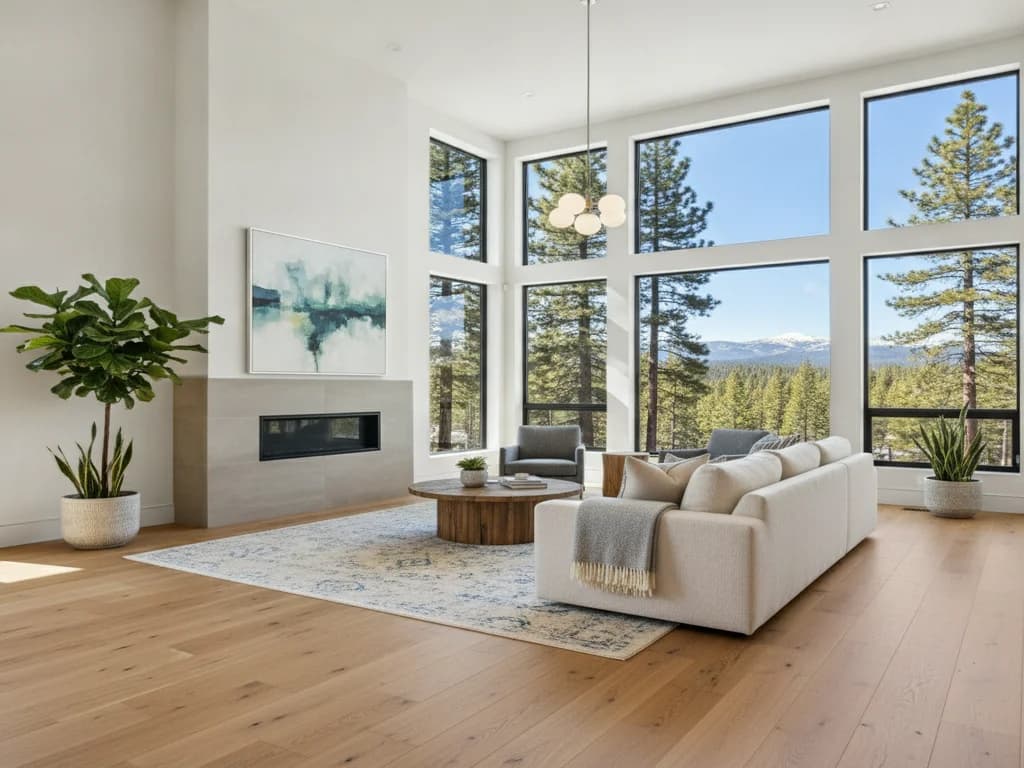
Guests notice wood. A rental with warm, wide-plank engineered oak in the living space photographs differently and reads differently on arrival than one finished entirely in plank vinyl, and in a competitive market that matters. Wood also has an ownership advantage vinyl cannot match: it can be screened and recoated, or fully refinished, when years of guest traffic finally show. You restore it instead of replacing it, which changes the math over a decade of ownership even though the upfront number is higher. Our side-by-side on luxury vinyl versus hardwood walks through where each one wins.
The layout that works in practice is a split: engineered wood through living rooms, dining areas, and bedrooms, and waterproof plank or tile in every zone where water is routine. Resist the urge to run wood right up to an exterior door because the transition looked awkward on the plan. The transition is the point.
The Weeks Nobody Is There
Between bookings the house goes quiet, and how you leave it determines what your floor does. Shutting the heat off entirely lets a mountain home swing hard, and a floor that is repeatedly dried out and then rewarmed will eventually show it at the seams. A modest heating setpoint held continuously through winter costs far less than a repair, and a smart thermostat lets you or your manager confirm from a phone that it is holding rather than trusting that it is.
Summer has the opposite failure mode: a closed-up house at altitude gets hot, and a house left open to a humid August afternoon takes on moisture. The goal is not a specific number so much as the absence of extremes. Write the setpoints into your management instructions so a cleaner who opens everything up to air the place out also closes it before leaving.
Write a Floor-Care Standard Your Cleaners Will Follow
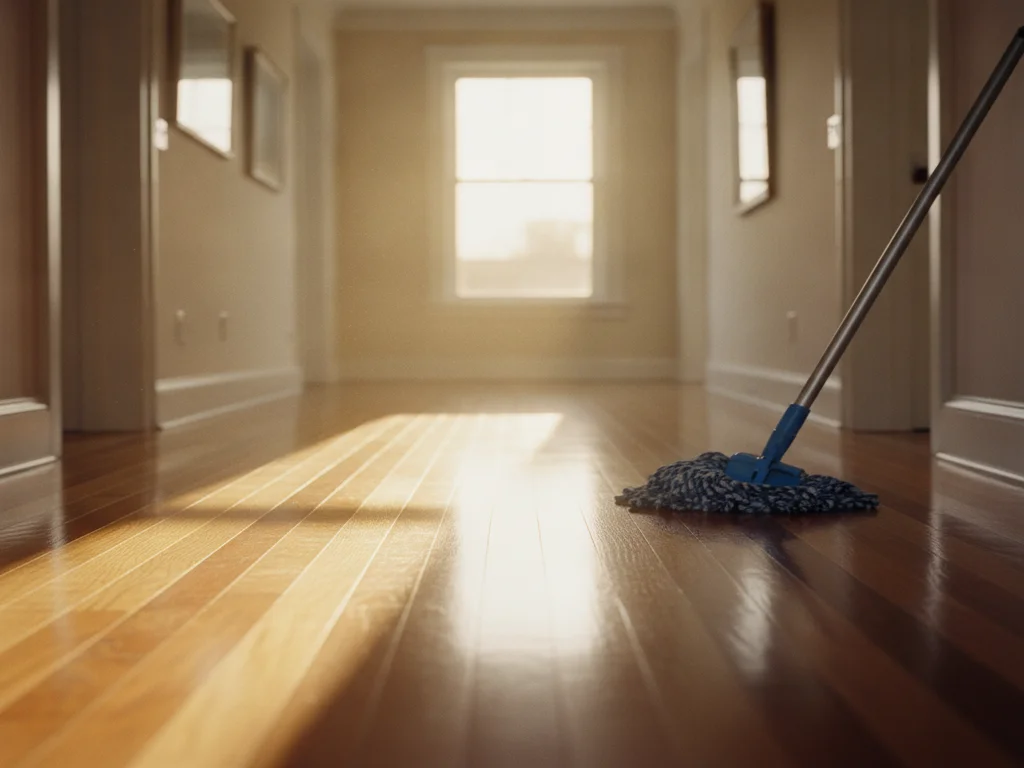
A surprising share of rental floor damage is caused by cleaning, not by guests. Steam mops, wet mopping, all-purpose sprays, and vinegar solutions all break down finishes and can drive water into seams, and every one of them will show up in a rotating crew unless you rule them out explicitly.
The fix is a one-page standard, posted in the utility closet, with the approved cleaner physically on site so nobody improvises. Dry-remove grit first, damp-mop with the right product, never flood, no steam, no beater-bar vacuum on hard surfaces. Our routines for caring for luxury vinyl plank are a reasonable template. Leaving the right bottle on the shelf prevents more damage than any premium product upgrade.
Keep Attic Stock and a Repair Path
Order extra material and store it in the house, in conditioned space, labeled. Flooring lines are discontinued constantly, color runs shift between production batches, and the plank you need in year six will not be sitting on a shelf in Sacramento. A box or two of the original run turns a damaged board from a room-scale problem into an hour of work between bookings.
That logic also argues for restraint in how many products you use. Two flooring materials across the property means two profiles to match, two cleaners to stock, and two boxes in the attic. Five means a repair conversation every time.
What Guest Damage Actually Looks Like
It is rarely dramatic. It is furniture dragged rather than lifted, suitcase wheels tracking grit in a line from the door, dented spots where ski boots were dropped rather than set down, and the slow dulling of the finish in the traffic path from entry to kitchen. Felt pads under every piece of furniture, chairs specified without sharp metal feet, and a rug in the main path handle most of it. Most of the rest falls into ordinary scratches and dents that a recoat addresses long before replacement is on the table — provided you catch it while the wear is still in the finish rather than in the wood.
If you own or manage a short-term rental on the California side of the Tahoe or Truckee region, Renaissance Floors can help you choose floors built for real guest traffic — and install them to last. Call Alex at (916) 749-0272 for a free estimate and a straight recommendation.
This article is part of our guide to how to choose a floor, which covers the order the decisions actually come in, and which constraints are real rather than preference.
Good to Know
Frequently Asked Questions
What is the best flooring for a Tahoe vacation rental?
Luxury vinyl in the entry and high-traffic zones, engineered wood in the living spaces, is the combination we recommend most. It gives guests the look they expect while putting a waterproof, individually repairable surface exactly where snowmelt and grit actually land.
How do I minimize floor damage between guests?
Design the entry so the low-effort path keeps water off the floor: a genuine mudroom zone, mats that hold water rather than spread it, and an obvious place for wet boots. You cannot control guest behavior, but you can make the convenient choice the one that protects the floor.
Is hardwood too risky for a short-term rental?
Solid hardwood is a hard sell in a property that sees heavy turnover and sits unconditioned between bookings. Engineered wood is the reasonable middle: it looks the part, tolerates the humidity swing far better, and damaged boards can be replaced without refinishing the whole floor.
What wear layer should I ask for in a rental?
The thicker end of what a residential line offers rather than the thin end used for promotional pricing. Wear layer thickness is the single most predictive number on a spec sheet for how a resilient floor will look after several seasons of guest traffic and wheeled luggage.
Should I turn the heat off between bookings in winter?
No. Holding a modest setpoint continuously costs far less than repairing a floor that has been repeatedly dried out and rewarmed. Write the setpoint into your management instructions and use a thermostat you can verify remotely rather than assuming it is holding.
What maintenance should a rental floor need between guests?
As little as possible, and it should be documented. Sweeping or vacuuming grit and damp-mopping with the correct cleaner is the whole routine — leaving the right product on site with a short note prevents the finish damage that improvised cleaning causes.
Can cleaning crews damage a floor?
Regularly — improvised cleaning is one of the most reliable ways a rental floor gets ruined. Steam mops, wet mopping, vinegar solutions, and all-purpose sprays break down finishes and drive water into seams. A rotating crew will improvise unless the approved product is physically on site and the rules are posted.
Should I keep spare flooring on hand at a Tahoe rental?
Yes — enough to make a future repair routine rather than a project, stored inside the cabin in conditioned space and labeled. Flooring lines are discontinued frequently and color runs shift between batches, so matching a plank years later is often impossible without attic stock.
When should I schedule a floor replacement in a rental?
In the shoulder season, after the snow leaves or in the quiet stretch of late fall. The work takes multiple days and needs acclimation time before it starts, so booking it against peak occupancy either compromises the install or costs you the reservations.
Does a rental need different installation standards?
The standards are the same; the consequences of skipping them are worse. A floor that fails in an owner-occupied home is an inconvenience. In a rental it fails during a booked season, so acclimation and slab or subfloor moisture testing are if anything more important, not less.
Written by
Owner & Lead Installer, Renaissance Floors
15+ years of hands-on flooring experience across Greater Sacramento & Northern California. Works on hardwood and engineered installation, refinishing, subfloor preparation, and moisture testing — and writes these guides from what the jobs actually teach.
CSLB C-15 licence #1060673

Related
Keep Reading
Related pages: SPC vs. WPC Rigid Core Vinyl, Water-Based vs. Oil-Based Polyurethane, European White Oak, and French Oak.
Ready for Floors You'll Love?
Ready to talk through your project? Free estimates throughout Greater Sacramento & Northern California.