Homeowner Tips
How to Care for Your Hardwood Floors
Keeping a hardwood floor beautiful for decades doesn't take much — just a handful of consistent habits. Here's what actually matters.
Homeowner Tips · 9 min read
Published July 14, 2026 · Updated September 12, 2026
A hardwood floor is one of the best investments you can make in a home, and the good news is that keeping it looking great doesn't require anything complicated — just a handful of consistent habits that protect the finish and the wood underneath it. Almost everything that ages a floor prematurely comes down to four things: grit, water, humidity swings, and using the wrong product on the surface. Get those right and the rest is detail.
Grit Is What Actually Wears a Finish
The thing wearing your floor is not feet, it is what feet carry. Sand, soil, and construction dust are mineral particles harder than any wood finish, and every step grinds them into the surface like fine sandpaper. That is why wear shows up as paths rather than as an even dulling across a room, and why the first six feet inside an exterior door age faster than anywhere else in the house.
This makes grit control the highest-return habit available, and it is mostly a doormat problem. A coarse mat outside to knock debris off, a second absorbent mat inside to catch what is left, and the discipline of taking shoes off in the entry will do more for a floor over ten years than any product you can buy. In the Sacramento region the dry season makes this more relevant than people expect: from late spring through autumn, yards and job sites shed fine dust continuously, and it comes in on shoes and paws all summer long.
The Weekly Routine and the Tools That Do It
Sweep or vacuum often enough that grit never accumulates, which in a busy household means a couple of times a week in traffic areas and the entry, and less elsewhere. A dust mop or microfiber pad works well because it lifts particles rather than pushing them around. If you vacuum, use a hard-floor head or turn the beater bar off, since rotating bristles at speed scuff a finish, and check that the wheels themselves are clean and not carrying embedded grit.
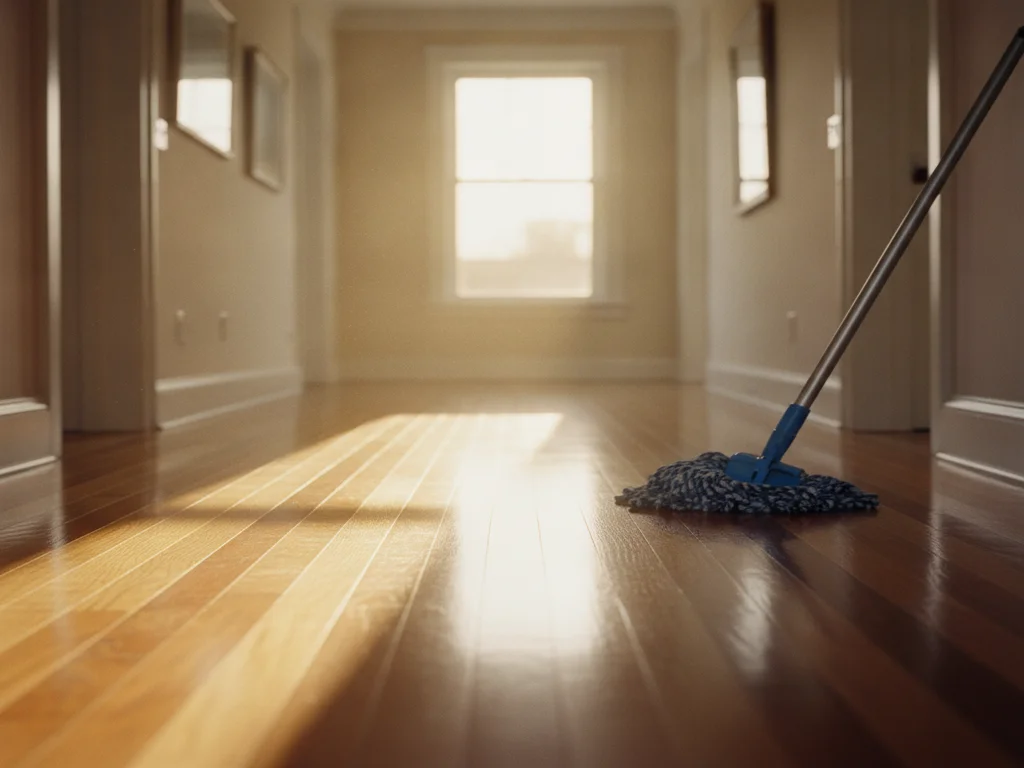
Damp mopping comes after, not instead. A microfiber flat mop with a spray bottle of a cleaner made for your finish is the right tool, because it puts down a controlled amount of liquid that evaporates in a minute or two. A string mop and a bucket puts down far more water than a wood floor should ever see. In most homes damp mopping the kitchen and entry weekly and the rest of the floor every few weeks is plenty.
Match the Cleaner to the Finish You Actually Have
Wood floor care advice usually assumes a polyurethane finish, which most floors have. For those, a pH-neutral cleaner formulated for wood floors is correct, and the list of things to avoid is well established. Vinegar is acidic and dulls a urethane finish over time. Oil soaps and wax-based polishes leave a residue that builds up, looks cloudy, and — the expensive part — prevents a new finish from bonding when the floor is eventually recoated, which turns a straightforward recoat into a full sand. Steam mops drive heat and moisture into seams and can cloud or lift a finish, and many finish manufacturers exclude steam damage from their warranties outright.
Hardwax oil finishes are the exception that matters. They are not a film on top of the wood, they are oil in the wood, and they take their own cleaners and a periodic refresher oil rather than a polyurethane maintenance product. Using a poly cleaner on an oiled floor, or an oil-based maintenance product on a poly floor, produces a surface that looks wrong and is difficult to correct. If you do not know which you have, ask whoever finished the floor, or check the hardwood care guide for how the two behave differently. When you inherit a floor with no history, test any new product in a closet before using it on the room.
How Much Water Is Too Much
Hardwood and standing liquid do not mix, and the damage is cumulative rather than dramatic. Water sitting in a seam wicks into the board edges, swells them, and over repeated cycles leaves the edges permanently raised. Wipe spills as they happen rather than at the end of the day, and pay particular attention to the places where small amounts of water land repeatedly: in front of the sink and dishwasher, under a refrigerator with an ice maker line, around pet water bowls, and under houseplants, where a saucer that overflows once a week will eventually leave a dark ring that no cleaning removes.
The other water risk is the slow one. A supply line, a dishwasher, or a refrigerator connection that weeps rather than bursts can run for months before anything shows on the surface, and by then the subfloor has been wet the whole time. Looking behind and under appliances a couple of times a year costs nothing and catches problems while they are still cheap.
Furniture, Pads, Casters, and Rug Backings
Felt pads under every furniture leg are cheap and prevent most of the scratching that happens in a dining room, but they only work if they are maintained: felt collects grit and turns into an abrasive, so pads need checking and replacing periodically. Chairs that get moved constantly benefit from larger pads that distribute load rather than concentrating it. Office chairs with hard plastic casters are one of the most reliable ways to wear a stripe into a finish, and swapping to soft rubber wheels or putting down a proper chair mat solves it.
Rug backings deserve more attention than they get. Rubber-backed or PVC-backed mats can react with a floor finish over months of contact, leaving discoloration in the exact shape of the mat, and some do not let the floor breathe. A separate rug pad in natural rubber or felt is the safer choice under any area rug. When something heavy has to move, lift or use furniture sliders rather than dragging: most deep gouges in wood floors come from moving day rather than from daily life.
Humidity: The 30 to 50 Percent Range, in a Valley Climate
Wood moves with moisture for as long as it exists. NWFA guidance puts the target interior range at roughly 30 to 50 percent relative humidity held year-round, and the reason for the range rather than a number is that consistency matters more than any particular value. Boards shrink slightly in dry conditions, producing hairline gaps in winter that close again in summer, and that is normal seasonal behavior rather than a defect.
What causes lasting damage is living far outside that band or swinging violently across it. Sacramento-area homes have a specific version of this problem: outdoor summer humidity is low, and running air conditioning hard pulls indoor humidity lower still, so a house can spend months well under 30 percent. The result is gapping that stops closing fully, and occasionally end splits in wide boards. A whole-house or portable humidifier in the driest months is the fix, and an inexpensive hygrometer in the main living space tells you whether you need one. Leaving the house closed and unconditioned for weeks at a stretch is the other common cause, since the interior conditions drift far from anything the floor was installed to live in.
Sunlight and Color Change
Direct sun changes the color of wood floors, and unlike most wear it happens whether anyone walks on the floor or not. Species behave differently — some lighten, some deepen — and oil-modified polyurethane ambers over time on its own, adding a golden cast that waterborne finishes largely avoid. None of this is damage in a structural sense, but it becomes a visible problem when it happens unevenly, which is what leaves a pale rectangle when a rug that has sat in the same spot for six years is finally moved.
The practical answers are all about evenness rather than prevention. Rotate rugs and reposition furniture periodically so no area stays masked for years, use blinds or sheers in the rooms that take direct afternoon sun, and consider UV-filtering window film in a room with large west-facing glass. Understanding how sun fading progresses is also useful before you replace a rug, since the floor underneath will not match immediately and usually evens out over months of exposure.
Living With Scratches and Dents
Every floor in a lived-in house collects marks, and the useful skill is telling the ones worth acting on from the ones worth ignoring. Fine surface scratching with no color in it is finish wear and is dealt with at recoat time rather than one scratch at a time. A single deeper scratch that has caught the wood can often be disguised with a blending pen or a wax filler stick in the right tone. A dent is compressed fiber rather than removed material, and on unfinished or oiled wood a damp cloth and a warm iron will sometimes raise much of it back — a trick that does not work through a urethane film. What is not worth doing is spot-applying polyurethane to a scratch in the middle of a room, which almost always shows more than the scratch did. Where marks are widespread rather than isolated, the honest answer is that the floor is telling you it is ready for a refresh, and scratches and dents at that density are a resurfacing conversation rather than a repair one.
Read the Finish Before It Reaches Bare Wood
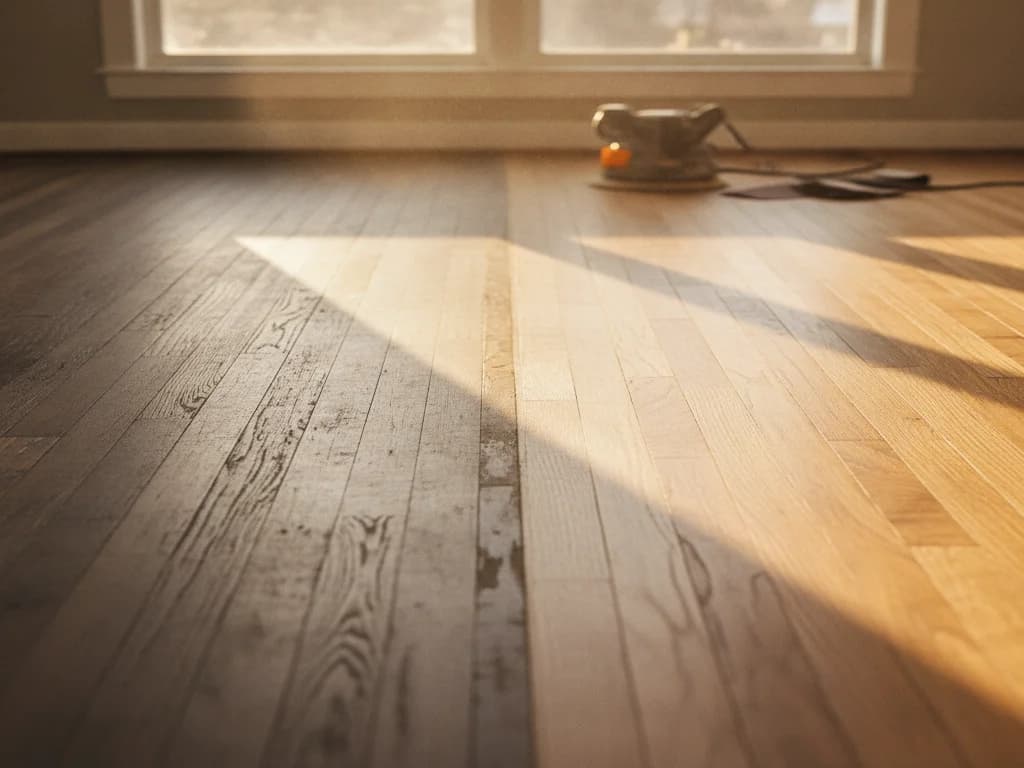
The single most expensive maintenance mistake is waiting too long. A finish that is thinning but intact can be renewed with a screen-and-recoat: the surface is abraded, cleaned, and given fresh coats, no wood is removed, and the cost and disruption are a fraction of a full refinish. The moment traffic lanes wear through to bare wood, that option is gone, because new finish will not blend over exposed wood and the bare areas have already begun taking on dirt and moisture.
Checking for it takes a minute. Look along a traffic lane in low, raking light and compare it to a protected area such as a closet or under a rug. Put a few drops of water on the worn area: if they bead and wipe away, there is finish left; if they darken the wood, there is not. Catching finish wear at the first stage is what keeps a floor on the cheap end of the maintenance curve, and the difference between a screen-and-recoat and a full refinish in cost and disruption is large enough that the check is worth making annually.
A Realistic Maintenance Schedule
In practice the routine looks like this. Daily, wipe spills as they happen and keep the entry mats clear. Weekly, dust mop or vacuum traffic areas and damp mop the kitchen and entry. Monthly, damp mop the rest of the floor, check felt pads for embedded grit, and empty and clean the mats themselves. Seasonally, check humidity as the weather turns, look behind appliances for slow leaks, and rotate rugs and furniture a little. Annually, inspect traffic lanes for finish wear in raking light. Then every several years, depending entirely on traffic rather than on any fixed interval, have the floor recoated before the wear reaches wood.
Small Habits, Long Payoff
None of this needs special tools or much time, only consistency. A floor that is swept regularly, cleaned with the right product for its finish, kept in a stable humidity range, and recoated before the wear reaches wood will look good for decades. A floor that is mopped wet with the wrong cleaner in a house that runs at 20 percent humidity all summer will not, no matter how good the wood was.
If your hardwood floor needs more than routine care, or you're not sure whether it's due for a recoat or a full refinish, Renaissance Floors offers free estimates for homeowners in Roseville and the Greater Sacramento & Northern California area. Call (916) 749-0272 for an honest assessment.
This article is part of our guide to caring for a floor, which covers what actually shortens a floor's life, and the maintenance that measurably extends it.
Explore related
Good to Know
Frequently Asked Questions
What is the best way to clean hardwood floors?
Sweep or vacuum often enough that grit never accumulates, then damp mop with a cleaner formulated for your floor's finish. The key word is damp: standing water is what damages wood, so a well-wrung microfiber mop or a spray-and-pad system is the right tool rather than a string mop and bucket.
How often should I clean hardwood floors?
Dust mop or vacuum traffic areas and entries a couple of times a week, since grit does the damage and removing it is the whole point. Damp mopping the kitchen and entry weekly and the rest of the floor every few weeks suits most households, with more frequency where pets and children are involved.
Can I use a steam mop on hardwood?
We would not. Steam drives heat and moisture into seams and can cloud or lift a finish over time, and many finish manufacturers exclude steam-cleaning damage from their warranties. A microfiber mop with the correct cleaner achieves the same result without the risk to the finish or the board edges.
Is vinegar safe for wood floors?
No. Vinegar is acidic and dulls a polyurethane finish over time, and oil soaps and wax polishes leave a residue that interferes with recoating later. Both are common advice and both cause avoidable problems, so a pH-neutral cleaner made for wood floors is the correct product.
What humidity should I keep my house at for wood floors?
NWFA guidance puts the target interior range at roughly 30 to 50 percent relative humidity, held year-round. Wood moves with moisture for its whole service life, so hairline gapping in the dry months and tightening later is normal; what causes permanent damage is living far outside that band or swinging across it.
Why are there gaps between my floorboards in summer?
Because the air is dry and the boards have given up moisture and shrunk slightly. In the Sacramento valley, air conditioning running through a dry summer can hold indoor humidity well below 30 percent for months, and gaps that appear then normally close as conditions moderate. Gaps that stop closing indicate the house is running too dry.
Do I need felt pads under furniture on hardwood?
Yes, and they need maintaining. Felt pads prevent most dining-room scratching, but they collect grit over time and turn abrasive, so they should be checked and replaced periodically. Hard plastic casters on office chairs are best swapped for soft rubber wheels or given a proper chair mat.
Are rubber-backed rugs bad for hardwood floors?
They can be. Rubber and PVC backings can react with a floor finish over months of continuous contact and leave discoloration in the exact shape of the mat. A separate rug pad in felt or natural rubber avoids the problem and lets the floor breathe underneath the rug.
How do I fix scratches in a hardwood floor?
An isolated deeper scratch can usually be disguised with a blending pen or wax filler stick in a matching tone. Spot-coating a scratch with polyurethane generally looks worse than the scratch did. Widespread fine scratching is finish wear rather than individual damage and is resolved by recoating the floor.
How often should hardwood floors be recoated?
There is no fixed interval, since it depends entirely on traffic. The right trigger is visual: when traffic lanes look dull in raking light but before wear reaches bare wood, a screen-and-recoat renews the surface cheaply. Waiting until the wood itself is exposed means a full sand-and-finish instead.
Written by
Owner & Lead Installer, Renaissance Floors
15+ years of hands-on flooring experience across Greater Sacramento & Northern California. Works on hardwood and engineered installation, refinishing, subfloor preparation, and moisture testing — and writes these guides from what the jobs actually teach.
CSLB C-15 licence #1060673

Related
Keep Reading
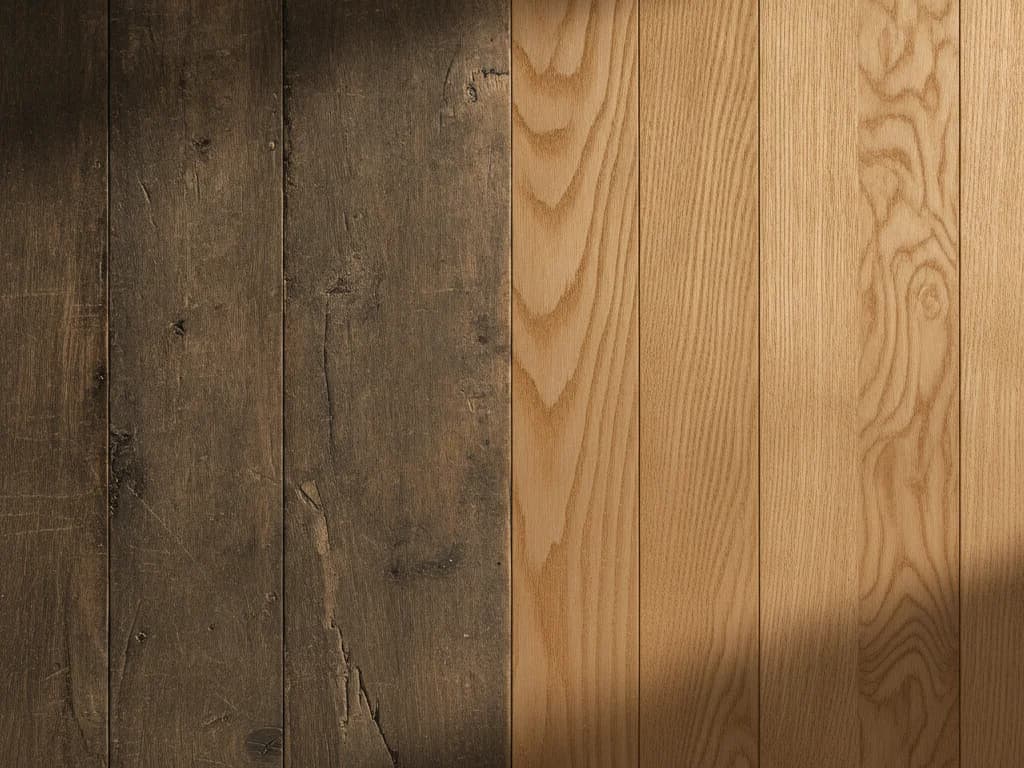
Related pages: Reclaimed Oak, Rift & Quarter-Sawn Oak, European White Oak, and French Oak.

Ready for Floors You'll Love?
Ready to talk through your project? Free estimates throughout Greater Sacramento & Northern California.