Homeowner Tips
Protecting Wood Floors From Snow, Grit, and Ski Boots
Snowmelt, sand, and ski boots are hard on mountain floors. Here's how smart entries, finishes, and mats keep hardwood looking good all winter.
Homeowner Tips · 8 min read
Published July 16, 2026 · Updated July 28, 2026
A mountain home earns its floors. Between snowmelt at the door, road sand tracked in on boots, and stiff ski boots clomping through the entry, winter is genuinely tough on hardwood. The good news is that a floor built and cared for with snow country in mind holds up beautifully — the trick is planning for the season instead of fighting it.
Water and Grit Do Different Damage
The two winter enemies work by completely different mechanisms, and understanding that is what makes the countermeasures obvious.
Water damages a floor at its edges. A finish is a continuous film across the face of a board, but the seams between boards are the film's weakest point, and standing meltwater has time to find them. Water that sits long enough works into the joint, swells the wood fibers at the board edges, and lifts them slightly relative to the center — the early stage of cupping. On the surface, prolonged moisture contact can also leave a whitish blush in the finish itself, the beginning of the cloudy finish homeowners notice as a dull patch by the door in March. Speed matters more than volume here. A cup of water wiped up in two minutes is nothing; the same cup left overnight under a boot tray is a repair.
Grit damages a floor across its face, and it does it mechanically. The sand and crushed cinder spread on mountain roads is mineral, angular, and considerably harder than any floor finish ever made. Underfoot it works like loose sandpaper, and every step across a gritty floor removes a little finish in the traffic path. Nobody notices it happening. What people notice, two or three winters later, is that the hallway has gone dull while the guest room still looks new. That is not the finish failing. That is abrasion, in exactly the shape of where people walk.
Road Cinder and Deicer Leave More Than Water Behind
Snowmelt in the mountains is not clean water. Boots come in carrying whatever the road and the parking lot were treated with, which around here means sand and cinder plus chloride-based deicers. When that slush evaporates off your floor, the water leaves and the solids stay.
The visible result is a chalky white film, most obvious on darker floors, that ordinary sweeping smears rather than removes. It is not just cosmetic: chloride residue is hygroscopic, meaning it holds moisture against the surface rather than letting it dry, and it keeps the abrasive fraction of that slush right in the traffic path. The fix is prompt, correct removal — a damp mop with a wood-appropriate cleaner rather than a dry pass, done while it is still fresh — not a stronger chemical later. Do not reach for vinegar or an all-purpose spray to cut the haze, because acid and ammonia products degrade the finish you are trying to protect and turn a cleaning problem into a refinishing one.
Build an Entry That Actually Captures Water
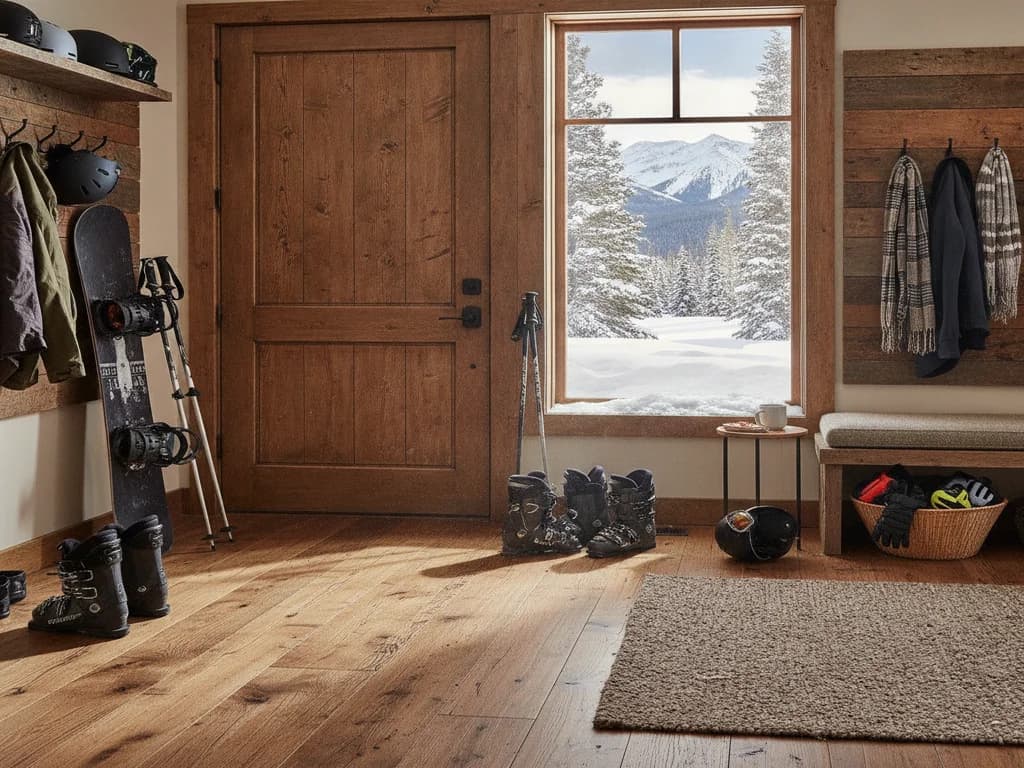
The best defense is stopping snow and sand before they reach the main floor, and that is a design problem more than a product problem. A generous entry or mudroom — somewhere people can stop, stomp off, and drop wet gear — does more to protect a floor than any finish on the market.
Length is the single most underrated variable. A mat only works on the steps a person actually takes on it, and most people take two or three strides before they are past a typical entry rug and onto your floor. A run long enough for several steps at each door captures dramatically more than a decorative square. Where the construction allows, a recessed mat well set flush with the finished floor is better still, because it holds a thick, absorbent mat without creating a trip edge.
Then give boots a destination. A bench positioned so people sit down before crossing the floor, not after, changes behavior more effectively than any house rule. A boot tray with a raised lip contains melt instead of letting it run to the nearest seam, and it needs emptying, because a tray of standing water sitting on wood for a weekend is worse than no tray at all. Hooks and a drying rack keep saturated outerwear from dripping in a line across the room. And in that first zone, use a floor that does not care: tile or a quality waterproof plank in the mudroom, transitioning to hardwood beyond it, keeps the wettest traffic off the wood entirely.
Apply the same thinking to the garage door and the back door. In most mountain houses those get more winter traffic than the front entrance, and they are usually the ones with a token mat and no bench.
Mats and Rug Pads That Do Not Backfire
A poorly chosen mat causes the damage it was bought to prevent. Solid rubber and vinyl backings can trap moisture against the finish and, on some floors, react with it over time and leave a permanent discolored footprint in the exact shape of the mat. Breathable backings and rug pads made of felt with natural rubber grip are the safer class for hardwood, and the manufacturer of your finish or flooring will usually say what they accept.
A mat also has a service cycle. Once it is saturated it stops absorbing and starts holding water against the floor, and once it is loaded with sand it is a grit reservoir being pressed into the finish by every footstep. Shake mats out regularly, wash them through the season, and hang the entry mat to dry after a big storm week rather than leaving it flat and wet. Lift rugs occasionally to check what is underneath — a dull, hazy patch under a mat is the floor telling you the mat is the problem.
Sheen, Texture, and Grade Stack the Deck
If you are building or replacing floors in a mountain home, you can make winter wear far less visible before anyone walks on it.
Sheen is the biggest lever. Gloss reflects light in a coherent way, so every fine scratch shows up as a line and every water spot as a ring, while a low-sheen surface scatters light and hides both. The practical differences are laid out in our comparison of matte and satin finishes, and in snow country the low-sheen end of that range is nearly always the right call.
Texture compounds the effect. A wire-brushed surface, where the softer early wood has been brushed out to leave the harder grain slightly raised, disguises the scratching of ski season remarkably well because the eye reads the texture rather than the marks. Character grades with natural knots and color variation do the same work visually.
Finish chemistry matters too. Commercial-grade waterborne systems — Bona Traffic HD and Loba 2K Supra are the two names that come up — are formulated for abrasion resistance well beyond typical residential wear, which is what a mountain entry demands. Hardwax oil systems such as Rubio Monocoat take a different approach — the surface is less film-like and marks more readily, but worn areas can be cleaned and re-oiled in place without sanding, which suits a house where the entry is going to take punishment regardless. Neither is universally right; they fail and recover differently, and it is worth choosing deliberately.
Species and hardness help at the margins, mostly against denting rather than scratching. It is a smaller lever than sheen and texture, and it is worth weighing alongside the oak, hickory, and maple tradeoffs rather than treating a Janka number as the whole answer.
Ski Boots Are a Special Case
Ski and snowboard boots deserve their own paragraph because they damage floors in a way ordinary winter boots do not. They are heavy, the soles are rigid plastic with hard edges, the buckles and metal hardware sit low, and in walk mode the sole strikes the floor at an angle that concentrates the load. A dropped boot dents. A buckle dragged across a board gouges. And because the boots are stiff, people tend to walk further in them rather than stopping to take them off.
Give them a dedicated landing spot on a surface that does not care, ideally in the garage or mudroom before the wood begins. Carry them rather than walking in them where you can, and keep boot dryers off the finished floor — they run warm, they sit for hours, and any melt draining out of the liner pools right underneath. If ski boots are going to cross a wood floor regularly, that stretch of floor should be planned as a wear zone from the beginning.
Dogs Come In Wet Too
A dog that has been out in fresh snow arrives with ice balls packed into the fur between its pads, and those melt into puddles wherever the dog settles — often in the same three spots every time. A towel kept at the door and a habit of drying paws before the dog gets past the entry handles most of it. Keeping nails trimmed handles the rest, since long nails concentrate the whole animal's weight on hard points as it turns and stops.
The Winter Cleaning Routine
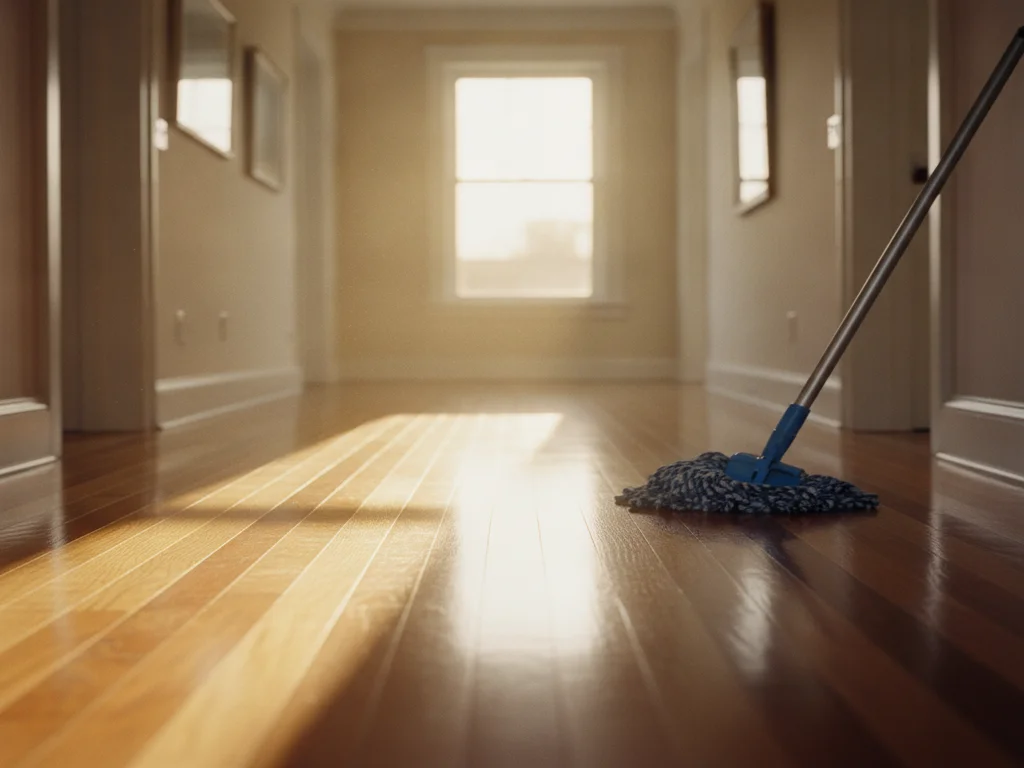
Because the damage mechanism is abrasion, frequency beats intensity. Dust-mopping or vacuuming the traffic paths often through the season removes grit before it gets ground in, and that single habit extends a finish's life more than any product upgrade. Use a vacuum with a hard-floor head and the beater bar switched off, since a rotating brush drives grit sideways across the surface. Damp-mop with a cleaner made for your floor, never a wet mop, and never a steam mop — steam pushes heat and moisture straight into the seams, which is the one place the finish cannot protect. Our full hardwood care routine covers the rest of the year, but winter mainly asks you to do the sweeping part more often.
Read the Wear and Act Before It Reaches Wood
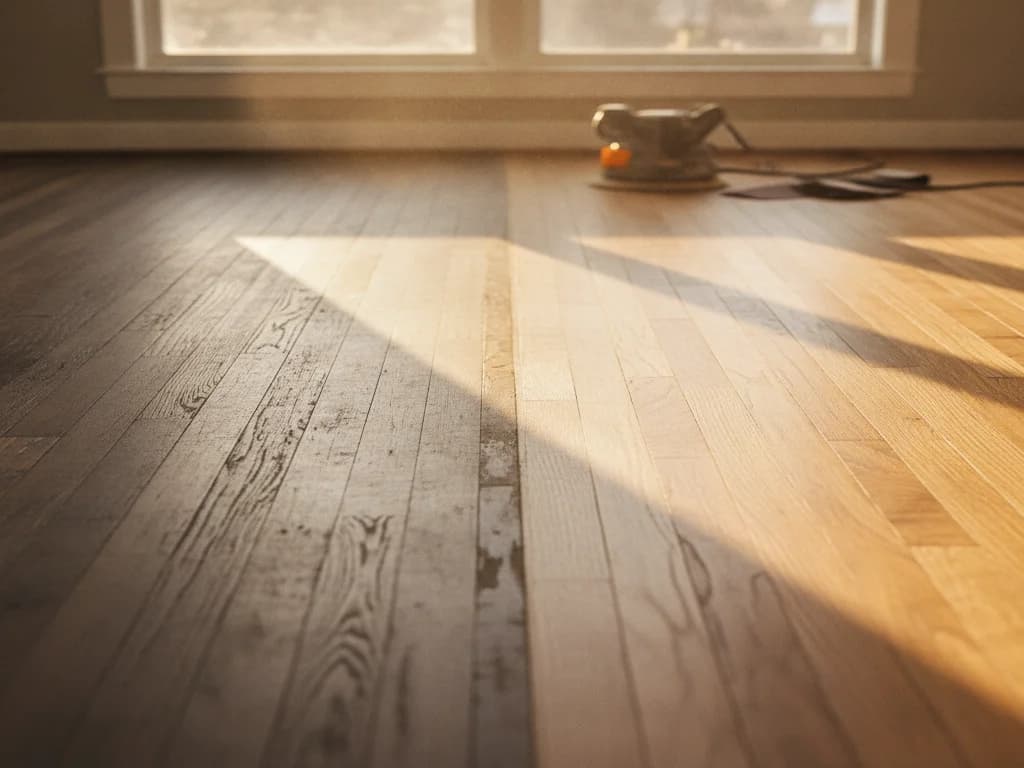
Even with good habits, entries, hallways, and the paths to the kitchen and the wood stove wear faster than the rest of the house. That is normal, and it is fixable — as long as you catch it while the wear is still in the finish. A floor showing dullness and fine scratching in the traffic path is a candidate for a screen and recoat, a light abrasion of the existing finish followed by a fresh coat, which is faster, cheaper, and less disruptive than a full sand. Once the finish wear has gone through to bare wood, that option closes and the affected area needs full sanding and refinishing instead. The distinction, and how to tell which side of it your floor is on, is covered in our comparison of screen and recoat versus a full refinish.
Planning a recoat every few seasons for the zones that take the hit is one of the quiet advantages of real hardwood in a mountain house. You maintain the surface rather than replacing the floor.
If you are planning a mountain home, or your current floors are showing the wear of a few hard winters, Renaissance Floors can help you set up entries, finishes, and a refinishing plan built for snow country. Call (916) 749-0272 for a free, no-pressure estimate.
This article is part of our guide to caring for a floor, which covers what actually shortens a floor's life, and the maintenance that measurably extends it.
Good to Know
Frequently Asked Questions
How do I protect wood floors from ski boots?
Stop them at the door. A real entry zone with somewhere obvious to sit and remove boots, plus mats that capture water rather than spread it, prevents nearly all of the damage. Ski boot soles carry both grit and salt, and both are far more damaging than the weight of the boot.
What flooring should go in a mountain-home entry?
Tile or luxury vinyl, in most cases. The entry is the one place where standing snowmelt is routine rather than accidental, and both tolerate it indefinitely. Running wood right up to an exterior door in snow country is asking a material to do something it is not suited to.
Why is there a white haze on my floor near the door?
It is most likely deicer residue left behind when tracked-in slush evaporated, or a moisture blush in the finish itself from water sitting too long. Damp-mop it promptly with a wood-appropriate cleaner. Avoid vinegar and all-purpose sprays, which degrade the finish further.
Do mats really make a difference?
Substantially, provided they are the right kind. A mat that holds water and traps grit is doing real work; a decorative mat that spreads a thin film across the floor is not. Length matters too — several steps' worth is what actually captures what comes off a boot.
Can a rug or mat damage a hardwood floor?
It can. Solid rubber and vinyl backings trap moisture against the finish and on some floors leave a permanent discolored outline. Choose breathable pads made of felt with natural rubber grip, and lift mats periodically to check that the floor underneath still matches.
Which finish hides winter wear best?
A matte or wire-brushed finish in a character grade. Gloss highlights every scratch and every water spot, while texture and natural variation disguise them. This is why the mountain-modern look is also, incidentally, the practical one.
How often should I sweep in winter?
More often than you would the rest of the year, because the damage is abrasive rather than dramatic. Road cinder tracked in on boots grinds finish away with every step, so clearing the traffic paths frequently protects a floor more than any single product choice.
Are steam mops safe on wood floors?
No. Steam drives heat and moisture directly into the seams between boards, which is the one place a surface finish cannot protect, and repeated use can swell board edges and cloud the finish. A barely damp mop with a wood-specific cleaner is the correct tool.
Can I refinish just the entry area?
Often, yes. Where the wear is concentrated in defined zones, those areas can be screened and recoated separately, provided the finish is compatible and the color still matches. Once wear has reached bare wood the repair becomes a full sand-and-finish of the affected area.
Written by
Owner & Lead Installer, Renaissance Floors
15+ years of hands-on flooring experience across Greater Sacramento & Northern California. Works on hardwood and engineered installation, refinishing, subfloor preparation, and moisture testing — and writes these guides from what the jobs actually teach.
CSLB C-15 licence #1060673

Related
Keep Reading
Related pages: American Walnut, Wide-Plank Flooring, European White Oak, and French Oak.

Ready for Floors You'll Love?
Ready to talk through your project? Free estimates throughout Greater Sacramento & Northern California.