Service Area
Flooring in Granite Bay
Renaissance Floors installs and refinishes hardwood, luxury vinyl, tile, and more for homeowners throughout Granite Bay and the surrounding Placer County area.
CSLB #1060673
Licensed & Insured
Est. 2019
Family-Owned
15+ Years
Hands-On Experience
5.0★ Rated
22 Reviews on Thumbtack
Local, Licensed, Accountable
Flooring Contractor Serving Granite Bay
Granite Bay is part of Placer County, and it's one of the communities Renaissance Floors regularly works in. We're based in Roseville, CA and serve homeowners across Greater Sacramento & Northern California— from small refinishing jobs to full home installs. Every project starts with an honest look at your subfloor and your goals, followed by a clear, no-pressure estimate. There's no dispatched sales team and no guesswork: you work directly with the crew doing the installation, backed by our CSLB C-15 license and a workmanship warranty on every job.
Placer County mixes newer master-planned communities in Roseville and Rocklin with established and foothill homes toward Auburn. We work over both slab and raised foundations, matching the right product and prep to each home.
Granite Bay is an unincorporated community of about 21,700 people on the west shore of Folsom Lake, in the corner of Placer County where suburban Roseville gives way to oak woodland and acreage. There is no city hall: permits and inspections run through Placer County's Building Services Division, and the community's character is governed instead by a document most residents know by name — the Granite Bay Community Plan. The terrain tells you where you are: the plan area rolls from about 180 feet near the Sacramento County line up to 800 feet near the lake, over hills of decomposed granite with outcrops of harder rock showing through at the high points.
The name is younger than the place. The Board of Supervisors officially recognized "Granite Bay" on July 28, 1987, but the land under it has been worked for a very long time — this is Nisenan territory, ringed by the mid-1850s mining camps that became Loomis, Penryn, and Rocklin, and crossed by the Pioneer Express Trail, the state-landmarked Gold Rush mail route to the river camps now under Folsom Lake. When the mining boom faded, the area turned agricultural: the Stallman brothers pioneered Placer County's plum industry from farmhouses still standing on Cavitt-Stallman Road — the crossroads was known as Stallman Corners for three-quarters of a century — and the county's survey records one ranch on that road farmed continuously since 1863. Granite quarrying is regional heritage too: Griffith Quarry in nearby Penryn, opened in 1864, supplied granite for what the state landmark plaque calls "important buildings in San Francisco and Sacramento, including portions of the state capitol."
Modern Granite Bay is what the Community Plan deliberately preserved. The plan — adopted in 2012, superseding the original 1989 plan — states the community's prevailing goal plainly: protect "the unique rural character of the community" as "a scenic, tranquil, family-oriented rural/residential community." The zoning does the enforcing: Rural Estate districts carry 4.6-to-20-acre minimum lots, Rural Residential 2.3 to 4.6 acres, and roughly 9,300 of the plan's 15,795 acres sit in districts with minimums around an acre or more. Animal-raising is an explicit community priority, equestrian trails are required in development plans, native tree removal needs county approval, and gated subdivisions exist but are, in the county's own words, "a limited number." The result is a community of large custom homes on large lots — median household income around $184,600 and a median home value around $1.14 million in current Census figures — with working hobby farms and Williamson Act ranchland still inside the plan boundary.
For flooring, the most useful fact in the county's files is the year-built table. Granite Bay's population nearly doubled between 1986 and 2010 and then flattened — the plan says why: the community is approaching the build-out its zoning allows, and new construction ran at just six to twenty-seven homes a year through the late 2000s. Per County Assessor data, the 1990s built the largest share of the housing stock at 31.8%, the 1970s are second at 23.6%, and nearly three-quarters of all homes date from 1970 to 1999. That makes Granite Bay a remodeling market, not a new-build market: the typical home is twenty-five to fifty-five years old, its original floors are at or past the end of their service life, and the substrate underneath is a 1970s-to-1990s slab or subfloor with its own history.
What is under those substrates is the community's namesake. The county's Natural Resources chapter maps most of the plan area over granitic bedrock, typically reached about 29 inches down through the San Andreas series' sandy loam; higher ground runs to shallow soils and rock outcrops, and the decomposed granite has very low permeability, so winter water moves across lots rather than through them. But the same chapter warns that soils with structural limitations — including claypan and expansive series that shrink when dry and swell when wet — are "scattered throughout" the plan area and "can vary substantially over short distances." In practice that means the granite hills are mostly stable ground for a floor, the low pockets are not always, and the difference is decided at your lot, not your zip code.
Renaissance Floors is a licensed CSLB C-15 flooring contractor (license #1060673) based ten minutes away in Roseville, and Granite Bay is home territory: hardwood, engineered wood, luxury vinyl plank, tile, and carpet across the community's estate lots, gated enclaves, and lake-side neighborhoods — installation, refinishing, and repair, with free in-home estimates and a workmanship warranty.
Local Coverage
Neighborhoods We Serve in Granite Bay
From Los Lagos to Douglas Ranch, Renaissance Floors installs and refinishes floors across Granite Bay.
Recent Work
A Sample of Our Craftsmanship
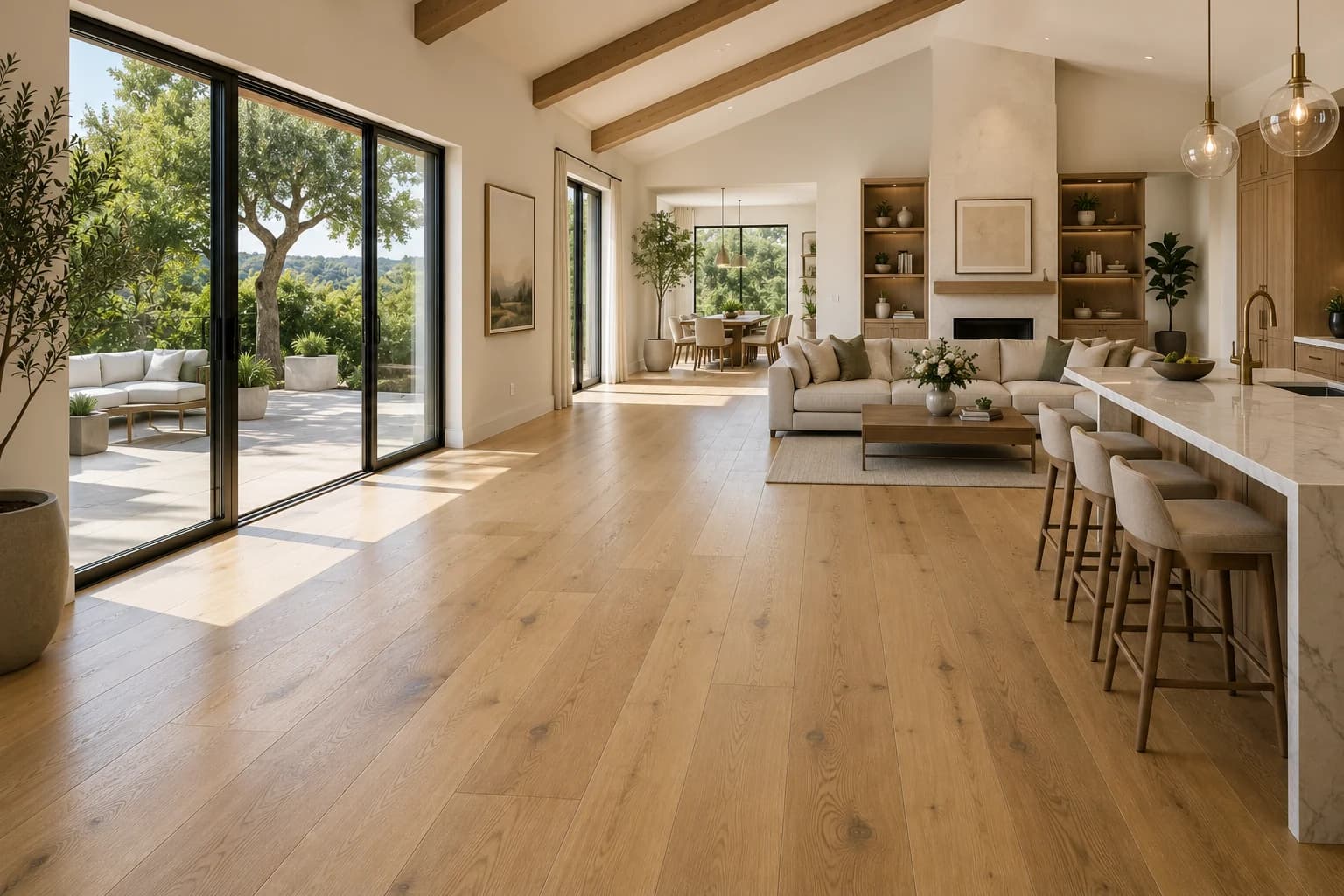
White Oak Hardwood
Great Room & Landing
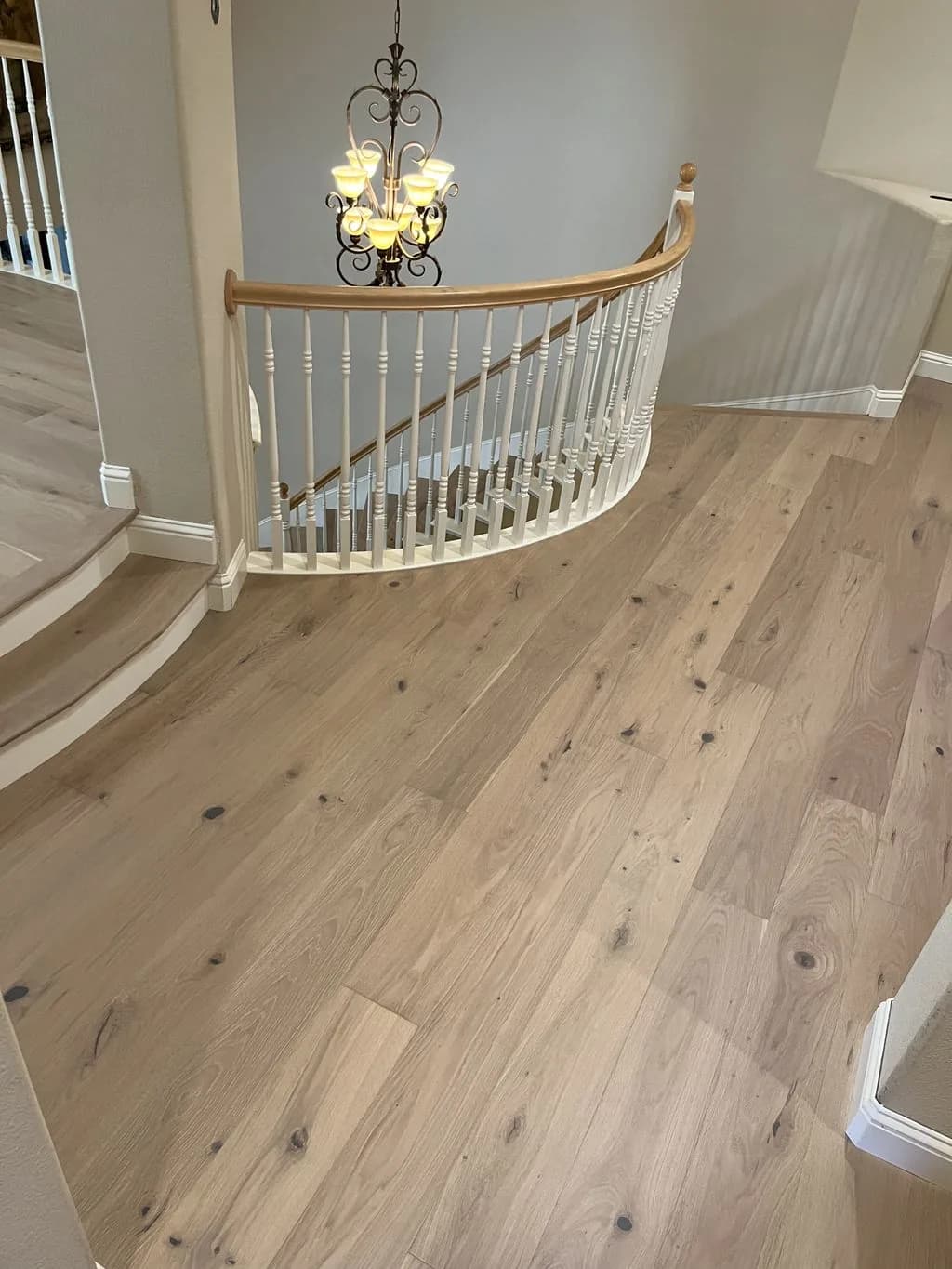
White Oak Hardwood
Staircase & Landing
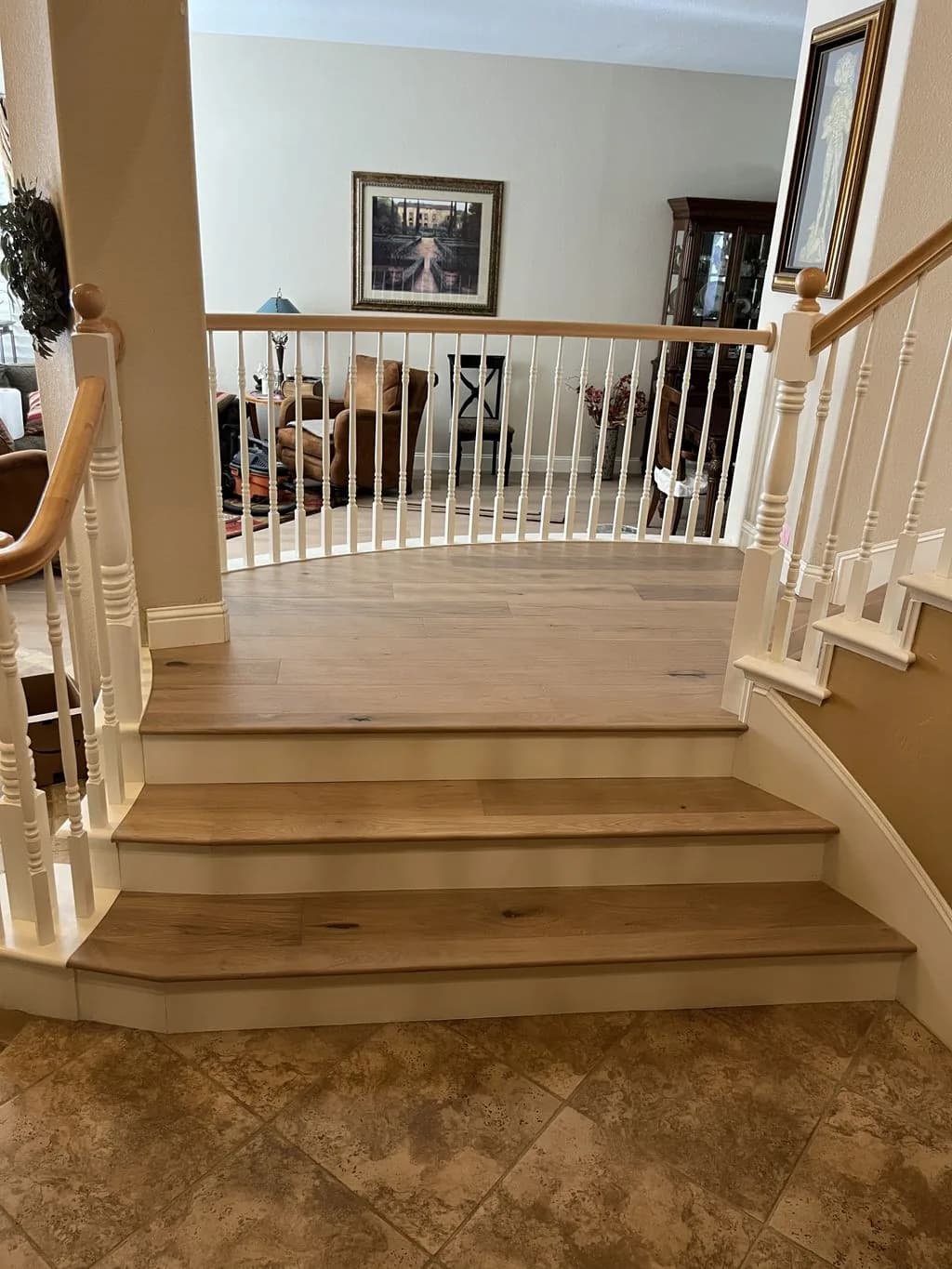
White Oak Hardwood
Curved Staircase
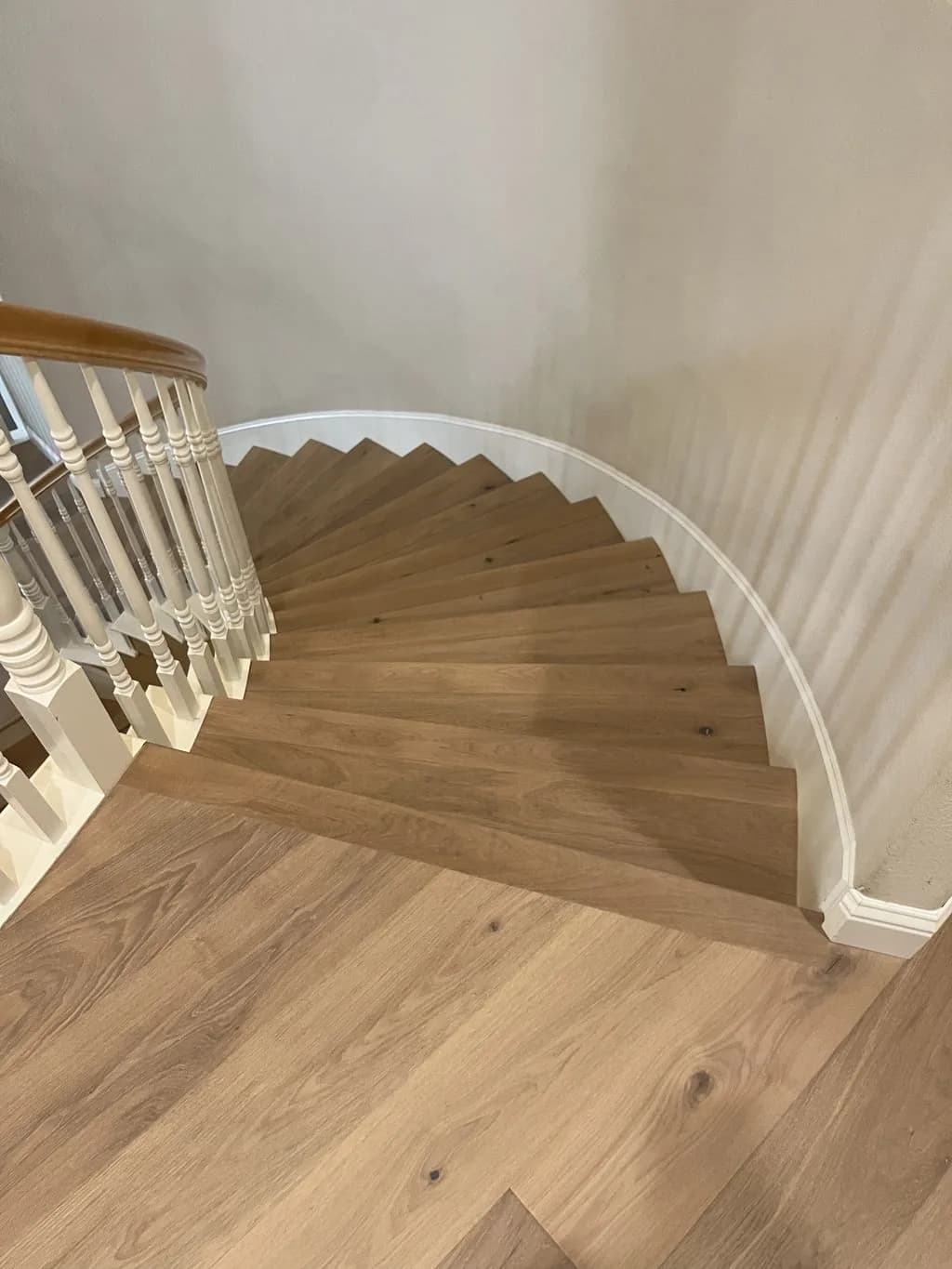
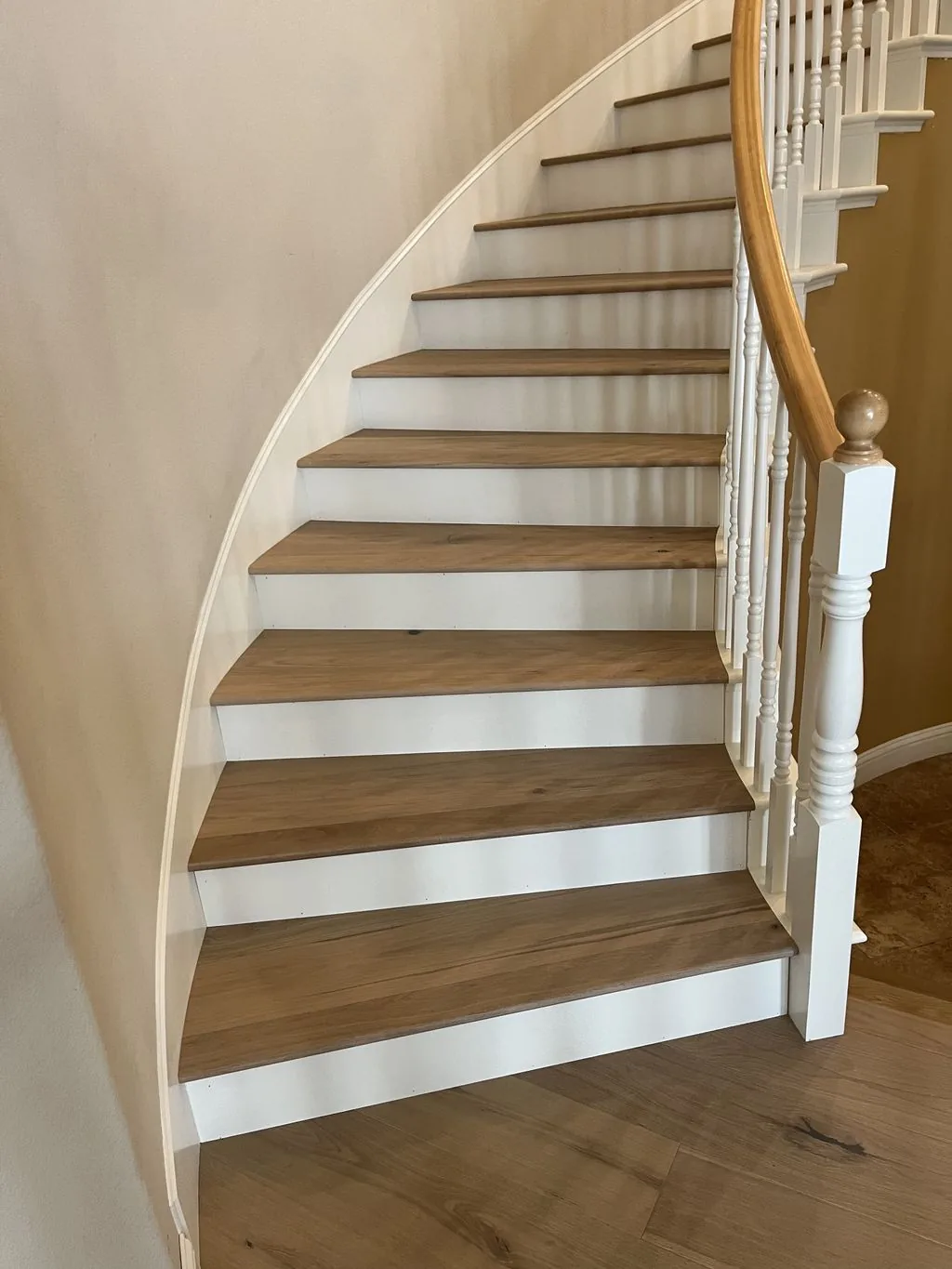
White Oak Hardwood
Stair Treads
Our Services
Flooring Services in Granite Bay
From hardwood to luxury vinyl, here's how we help Granite Bay homeowners upgrade their floors.
Hardwood Flooring
Solid oak, maple, and walkable heirloom-grade hardwood, precisely installed.
Hardwood Flooring in Granite BayEngineered Hardwood
Real-wood wear layers built for California's climate swings.
Engineered Hardwood in Granite BayLuxury Vinyl Plank
Waterproof, wood-look LVP for kitchens, baths, and busy households.
Luxury Vinyl Plank in Granite BayLaminate Flooring
Durable, high-style laminate at a friendly price point.
Laminate Flooring in Granite BayTile Flooring
Porcelain and ceramic tile set dead-level with crisp grout lines.
Tile Flooring in Granite BayFloor Installation
Full-service installation from subfloor prep to final baseboard.
Floor Installation in Granite BayFloor Refinishing
Sand, stain, and reseal tired hardwood back to new.
Floor Refinishing in Granite BayFloor Repair
Board swaps, water damage, squeaks, and seamless patch-ins.
Floor Repair in Granite BayLocal Considerations
What Granite Bay Homes Need From a Floor
Climate, home age, and foundation type all shape the right flooring choice in Granite Bay — here's what we account for.
Granite under the house, clay in the low spots
The Community Plan's soils chapter is unusually specific: most of Granite Bay sits over granitic bedrock under a sandy loam profile, with rock outcrops on the high ground — generally stable, well-drained conditions a floor likes. The caution is in the same chapter: claypan and expansive soils that swell wet and shrink dry are scattered through the plan area and "vary substantially over short distances." So slab behavior here is lot-specific — which is why we test concrete moisture with in-situ RH probes (ASTM F2170) and read what your slab is actually doing rather than assuming the neighborhood.
A housing stock arriving at flooring age together
Assessor data in the county plan puts 73.5% of Granite Bay's homes between 1970 and 1999 — the 1990s first, the 1970s second — with new construction at build-out levels of a couple dozen homes a year since. Floors age on the same clock: original hardwood from the 1990s is due for refinishing, 1970s substrates carry decades of settlement and previous flooring layers, and most of our Granite Bay work is replacement and restoration on lived-in homes rather than new-build installation. The assessment starts with what is there, not with a sample board.
Estate lots, animals, and the working entry
With minimum lot sizes running from just under an acre to twenty acres across most of the plan area, and animal-raising named as a community priority, Granite Bay properties generate more grit, mud, and wet-dog traffic than a suburban lot ever will. Decomposed-granite driveways and paddocks send abrasive fines in on every boot and paw, and the mudroom, garage entry, and dog-wash zone deserve waterproof, washable flooring with genuine walk-off matting — because they are what protect the wide-plank floors in the rest of the house.
Lake days end on your floors
The Granite Bay unit of Folsom Lake State Recreation Area — Main Beach, four boat ramps, and 920 trailer spaces at the end of Douglas Boulevard — is effectively the community's back yard. The lake itself does nothing to your floors; the lifestyle does. Summer means wet swimsuits, sandy feet, coolers, and gear coming through the same door all season, and the practical answer is a waterproof entry zone and washable surfaces on the lake-day path, with the wood elsewhere.
Remodel rules worth knowing before a big project
The Community Plan gives residential intensification real scrutiny: replacement homes and renovations that add significant livable space are flagged for design review to protect neighborhood character, native tree removal needs prior county approval, and grading beyond 250 cubic yards or four vertical feet triggers county review. Flooring alone rarely touches any of that — but a floor replacement inside a major remodel or addition inherits the project's approvals, and sequencing the floor around them is part of planning, not a day-of discovery.
Custom homes, long spans, premium expectations
Granite Bay's custom and semi-custom stock runs to great rooms, long sightlines, and connected open plans — exactly where wide-plank hardwood is least forgiving of shortcuts. Long uninterrupted runs magnify subfloor flatness, acclimation, and expansion detailing, and at this finish level the difference between adequate and excellent is in the prep. Wide-plank engineered oak leads our specifications here, with solid hardwood a real option where the substrate and conditioning support it.
A Mediterranean swing measured locally
The county plan puts Granite Bay's rainfall at roughly 20 to 25 inches a year with about 90% of it falling November through April — meaningfully wetter than the valley floor's figure — against long, rainless, hot summers; the nearest station with current temperature normals, Sacramento 5 ESE, runs July highs near 94°F. That wet-winter/dry-summer cycle drives a wide indoor humidity swing, which is why wood acclimates in the house at its real conditions and expansion detailing is set for the swing this climate actually produces.
Local Resources & References
Helpful Granite Bay Resources
Authoritative local and industry references for permits, planning, and flooring standards.
- Granite Bay Community Plan (adopted Feb 28, 2012) — plan indexPlacer County
- Granite Bay Community Plan — Natural Resources chapter (soils, granite, expansive clay)Placer County
- Granite Bay Community Plan — Cultural Resources chapter (name recognition 1987, Stallman Corners, Pioneer Express Trail)Placer County
- Granite Bay Community Plan — Population & Housing chapter (Assessor year-built table)Placer County
- Building Services Division — permit authority for unincorporated Granite BayPlacer County
- California Historical Landmarks, Placer County — Griffith Quarry (No. 885), Pioneer Express Trail (No. 585)CA Office of Historic Preservation
- Folsom Lake SRA, Granite Bay unit — boating facility record (4 ramps, 920 trailer spaces)CA State Parks / DBW
- Granite Bay CDP — ACS profile (population, income, home values)US Census
- About GBHS — opened 1996; National Blue Ribbon 2002; Distinguished School 2002, 2007, 2021Granite Bay High School
External links are provided for reference. Always confirm current requirements with the issuing agency.
Explore Flooring Services in Granite Bay
Nearby
Nearby Cities We Serve in Placer County
Serving the Region
Flooring Across Our Core Service Areas
We install and refinish floors across our core Northern California service areas — from the Sacramento region and the foothills to the Bay Area and wine country.
Good to Know
Frequently Asked Questions
Does Renaissance Floors serve Granite Bay?
Yes. We install and refinish flooring throughout Granite Bay and the surrounding Placer County area. Call (916) 749-0272 for a free estimate.
What flooring services do you offer in Granite Bay?
We install hardwood, engineered wood, luxury vinyl plank, laminate, tile, and more in Granite Bay, plus floor refinishing, repair, and full-service installation. See the full list below.
Are you licensed to work in Granite Bay?
Yes. We hold CSLB C-15 license #1060673 (C-15 Flooring & Floor Covering) and carry insurance. We're based in Roseville, CA and serve Granite Bay and all of Greater Sacramento & Northern California.
How do I get a free flooring estimate in Granite Bay?
Call (916) 749-0272 or request an estimate online. We'll schedule a convenient in-home visit in Granite Bay, measure your space, and give you an honest, no-pressure quote.
Do I need a permit to install new flooring in Granite Bay?
Granite Bay is unincorporated, so permitting runs through Placer County's Building Services Division rather than a city office. Straightforward floor replacement — carpet, LVP, refinishing existing hardwood — is typically finish-level work that doesn't need a permit on its own; work that touches structure or rides inside a larger permitted remodel is a different conversation. We confirm scope questions with the county as part of planning rather than guessing.
Is the granite under Granite Bay a problem for floors?
Mostly the opposite. The county maps most of the community over granitic bedrock under sandy loam — stable, well-drained ground a floor likes. The caution is the plan's own: expansive claypan soils sit scattered in the low areas and can change within a single street, and those do move seasonally. That's why slab prep here is decided by a moisture test on your slab, not by the neighborhood's reputation.
My home was built in the 1990s and has its original floors. Replace or refinish?
That's the classic Granite Bay project — the 1990s built more of this community than any other decade, and those original floors are reaching the end of their first life together. If the original hardwood is solid or thick-veneer engineered with material left above the tongue, refinishing usually wins on both cost and quality. Worn builder-grade carpet and early laminate get replaced. We assess what's actually there at an exposed edge before quoting either path.
We have horses and acreage — what actually holds up?
Plan the working zones first: the mudroom, garage entry, and any boot-and-tack path need waterproof, washable flooring with real walk-off matting, because decomposed-granite driveways and paddocks produce exactly the abrasive grit that dulls a finish. Protect those routes and the rest of the house can carry the wide-plank hardwood you actually want. On acreage properties the entries are equipment, not decor.
Do you work in the gated communities — Los Lagos, Treelake, Granite Bay Hills?
Yes, regularly. We handle gate access and association scheduling as part of the job, and the county's design rules mean most gated-community flooring work needs nothing beyond ordinary courtesy about work hours. Call (916) 749-0272 and we'll set up a free in-home estimate.
Does being next to Folsom Lake affect what flooring I should choose?
Not through the air — the lake doesn't meaningfully change your home's interior conditions. It matters through the back door: a Granite Bay summer means sand, wet towels, and gear coming in from Main Beach and the ramps all season. A waterproof entry zone on the lake-day path is the honest answer; the lake is no reason to give up wood in the living spaces.
What flooring suits Granite Bay's climate?
The county's own numbers frame it: 20 to 25 inches of rain concentrated November through April, then a long rainless summer with July highs in the low 90s. That's a real seasonal humidity swing, so engineered wide-plank handles the large open plans with the least drama, and properly acclimated solid hardwood remains a strong choice in stable, conditioned homes. The prep — acclimation, expansion detailing, slab testing — matters more than the brand.
Are you licensed, and do you offer financing?
Yes on both. Renaissance Floors holds California CSLB license #1060673 (C-15 flooring), verifiable through the CSLB license lookup, and we offer financing options along with free estimates — useful when a whole-home flooring project on a larger Granite Bay floor plan is easier to plan in stages.
Related
Keep Reading
Related pages: Floor Repair in Auburn, Laminate Flooring in Auburn, Hardwood Flooring in Granite Bay, and Engineered Hardwood in Granite Bay.
Ready for Floors You'll Love?
Free, no-pressure flooring estimates throughout Granite Bay and Placer County.