Materials
How Long Does Hardwood Flooring Really Last?
With the right species, finish, and care, quality hardwood can last generations — and be refinished instead of replaced.
Materials · 8 min read
Published July 14, 2026 · Updated September 12, 2026
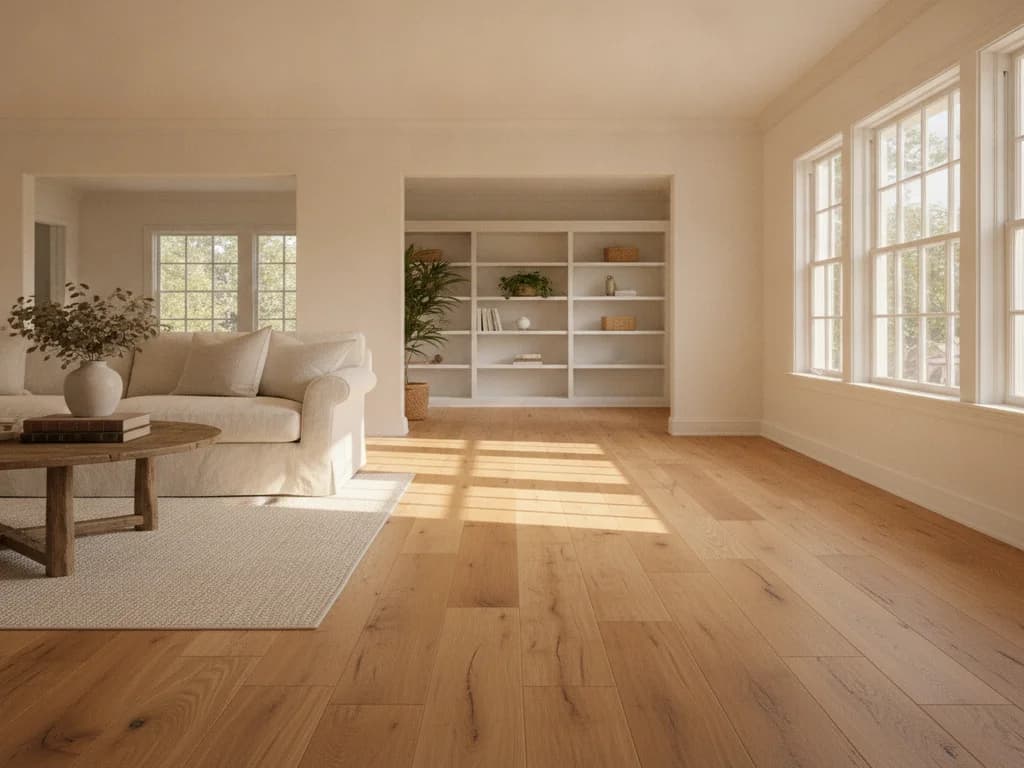
One of the most common questions we get is simple: how long will a hardwood floor actually last? The honest answer is that quality hardwood, properly installed and cared for, is one of the longest-lasting flooring investments you can make in a home — often outliving the people who install it, when it's maintained and refinished along the way rather than replaced.
But "lasts a lifetime" is a slogan, not an answer. What follows is the real arithmetic: what wears out, in what order, how many times a floor can be renewed, and what actually kills wood floors long before their material life is up.
Three Different Clocks Are Ticking
A wood floor is not one product with one lifespan. It is three layers with three separate schedules, and confusing them is why homeowners either panic early or wait too long.
The finish is the fastest clock. It is a coating a few mils thick standing between shoe grit and the wood, and in traffic lanes it is consumed continuously. The wear layer — the sandable wood above the tongue on a solid board, or the veneer on an engineered one — is the middle clock, and it only advances when someone sands. The structure is the slowest clock: the boards themselves, their fasteners, and the subfloor holding them. Structure typically outlives everything, which is why floors from the 1920s are still in service in older Sacramento and Roseville neighborhoods.
Most people asking about lifespan are actually asking about the first clock while worrying about the third one. The finish wearing through is a maintenance event, not a failure.
How Many Sandings a Floor Really Has In It
Each full sand removes a thin, deliberate amount of wood — enough to cut past the damage and reach fresh material, not more. On a solid 3/4 inch board with a full wear layer above the tongue, that arithmetic supports several full sandings across the life of the floor, spaced far enough apart that most homeowners will only ever commission one or two of them.
Two things shorten that count faster than time does. The first is aggressive sanding: a heavy-handed job takes off wood that a lighter cut would have preserved, and there is no putting it back. The second is repeated deep sanding when a lighter approach would have worked — a floor whose finish is worn but whose wood is untouched often only needs abrasion and a fresh coat, and understanding screen-and-recoat versus a full refinish is the single most useful thing an owner of an aging floor can learn.
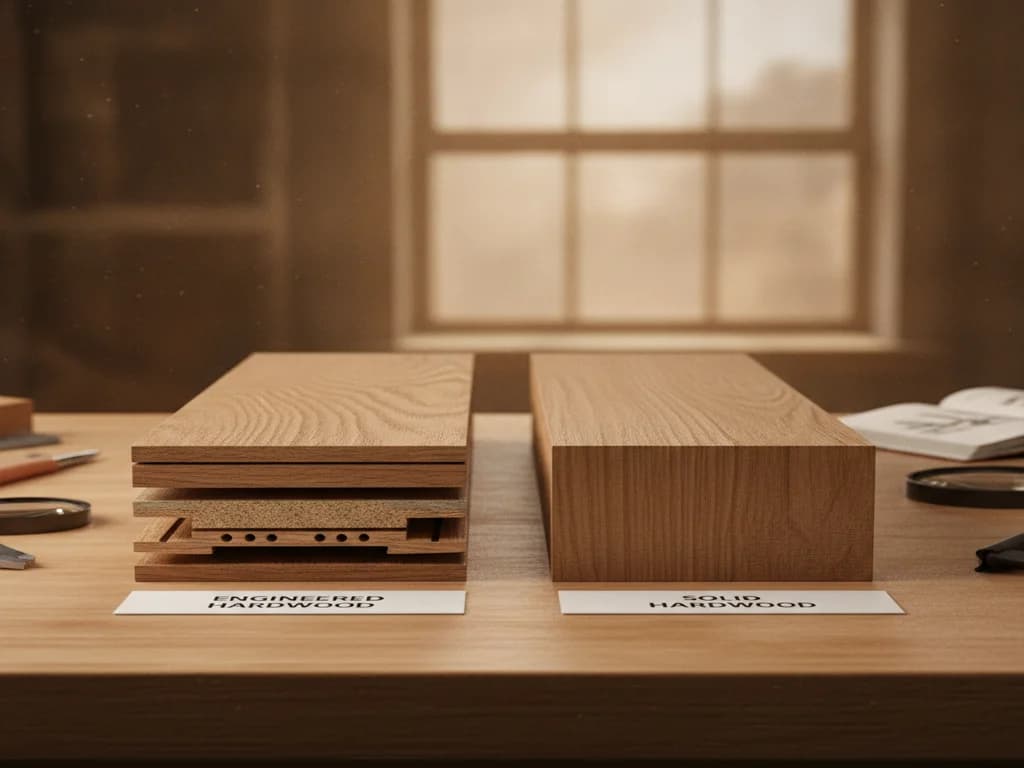
On engineered floors the count is set at the factory. A thick sawn veneer supports a full sand, sometimes more than once. A thin rotary-peeled veneer supports none — sand it and you go through to the core, which is unrecoverable. The category name tells you nothing here; the wear-layer measurement tells you everything. Ask for it in millimeters and write it down somewhere you will find it in fifteen years.
The Finish Almost Always Goes First
The finish protects the wood, and it is the part designed to be sacrificed. In an entry, a hallway, or the run between a kitchen island and a refrigerator, the coating dulls, loses sheen, and eventually opens up — and once bare wood is exposed, every spill and every shoe reaches the wood itself rather than the coating.
Finish chemistry sets the pace. A modern two-component waterborne system like Bona Traffic HD is markedly harder-wearing than an older single-component coating such as Bona Mega, and both behave differently again from a penetrating hardwax oil — Rubio Monocoat is the common example — which sits in the wood rather than on it and is renewed in sections rather than resanded. None of these is universally correct — the oil finishes spot-repair beautifully and need attention more often, the two-component waterbornes go longer between service and are harder to touch up locally.
Catching this at the right moment is what preserves wood. A floor recoated while the finish is merely thin never loses wood at all; a floor left until traffic lanes are gray and open needs a full sand, and that costs a sanding from the budget. Our page on finish wear covers how to tell which stage you are at, and if it has gone past recoating, our floor refinishing service explains what the full process involves.
What Actually Ends a Wood Floor Early
Wood floors are almost never replaced because the wood wore out. They are replaced because of moisture, and usually moisture nobody knew about.
The list is short and repetitive: a dishwasher or refrigerator line that seeped for months behind a cabinet, a slab that was never tested before the floor went over it, a crawlspace with no vapor barrier breathing damp air into the underside of the boards, a planter or pet bowl in the same spot for years. Wood absorbs and swells, boards cup or crown, adhesive or fasteners let go, and the damage is in the structure clock rather than the finish clock. That is the difference between a maintenance job and a tear-out.
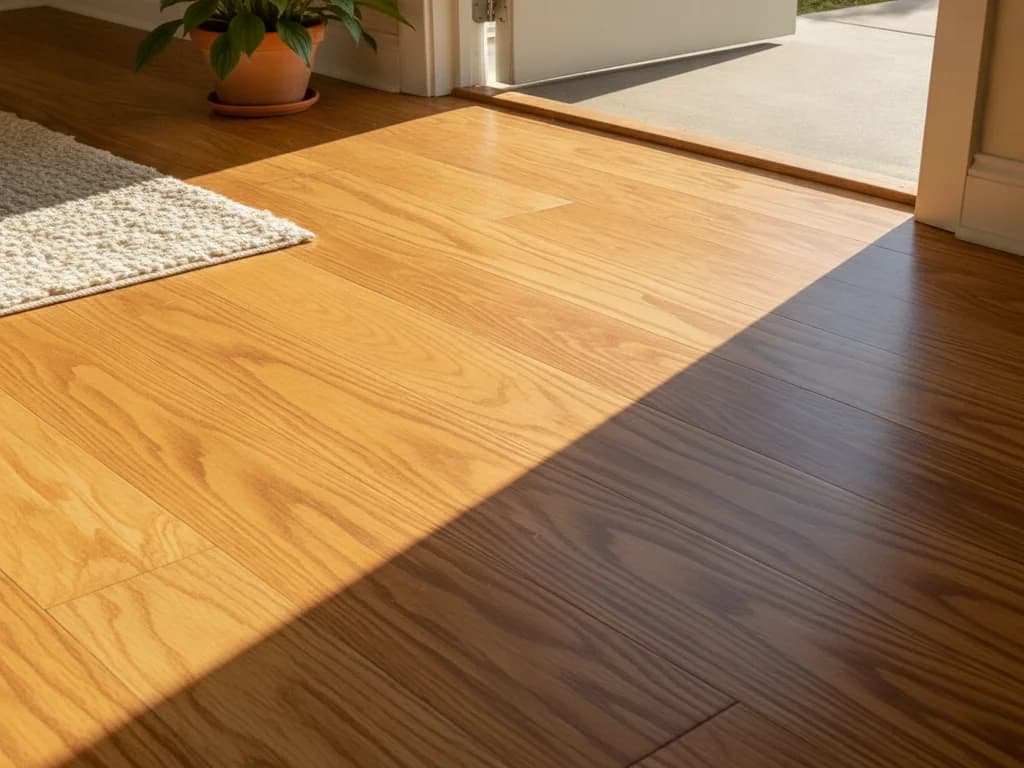
Second on the list is abrasive grit. Sand and fine dust tracked in from a Sacramento summer is functionally sandpaper underfoot, and it wears traffic lanes far faster than foot traffic alone ever would. Walk-off mats at exterior doors are the cheapest life-extension measure in this entire article.
Third, and much rarer, is structural movement: joist deflection, a subfloor that was never fastened adequately, or a slab crack that keeps moving. Those show up as squeaks, hollow spots, and ridges that a refinish will not resolve because sanding treats the surface of a problem that lives underneath it.
Species Hardness: What It Buys and What It Doesn't
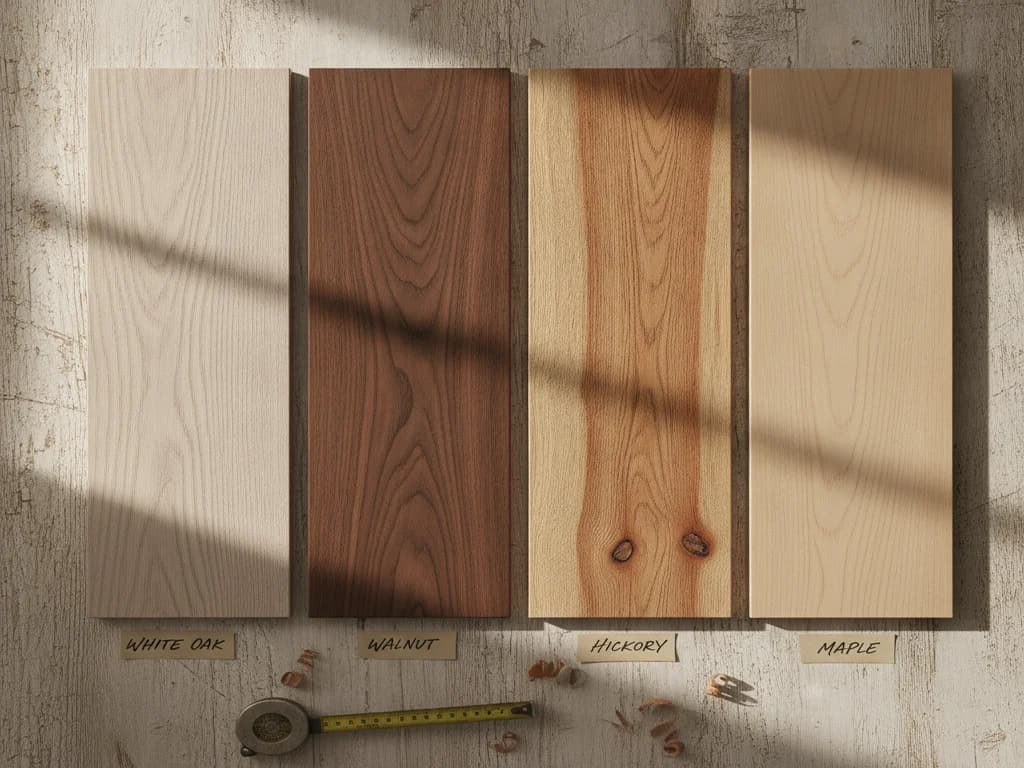
Janka hardness measures resistance to denting, and the numbers for common species are well established: walnut near 1010, red oak near 1290, white oak near 1360, hard maple near 1450, and hickory near 1820. A harder species genuinely resists dents from dropped pans, chair legs, and dog claws better than a softer one.
What hardness does not do is extend the life of the floor. Hardness has no effect on how long the finish lasts, how many times the floor can be sanded, or how it handles a leak. A hickory floor and a walnut floor in the same house with the same finish will need recoating on roughly the same schedule. Species affects how the floor looks after ten years of use, not how many years it has.
Grain and color do more for perceived longevity than hardness does. Busier grain and mid-tones hide the small dents and scratches every floor collects, which is a large part of why American white oak has been the default in this region for decades — it is hard enough, it hides wear well, and it takes almost any color.
Twenty Years of Valley Humidity Cycles
A floor in the Sacramento region lives through the same cycle every year: a long dry summer with air conditioning pulling indoor humidity down, then a cooler, damper winter with the furnace running. Wood follows that cycle, tightening and relaxing across its width, and it does so for as long as the floor exists.
That annual movement is normal and harmless in itself. Floors get hurt by the extremes, not the cycle: a house shut up and unconditioned through a July heat wave, or a home that swings far outside the 30 to 50 percent relative humidity band the NWFA points to as the working range for wood floors. Held roughly inside that band, a floor may show a hairline seasonal seam in February that closes by August and never does anything worse. Left to swing hard for years, the same floor develops permanent gaps, and gaps collect grit, and grit accelerates every other clock.
Keeping a house in its normal comfort range year-round is not a flooring chore. It is simply not leaving the house unconditioned for long stretches — the most common cause of a floor aging fast in this climate.
Patina, Fading, and the Cosmetic Clock
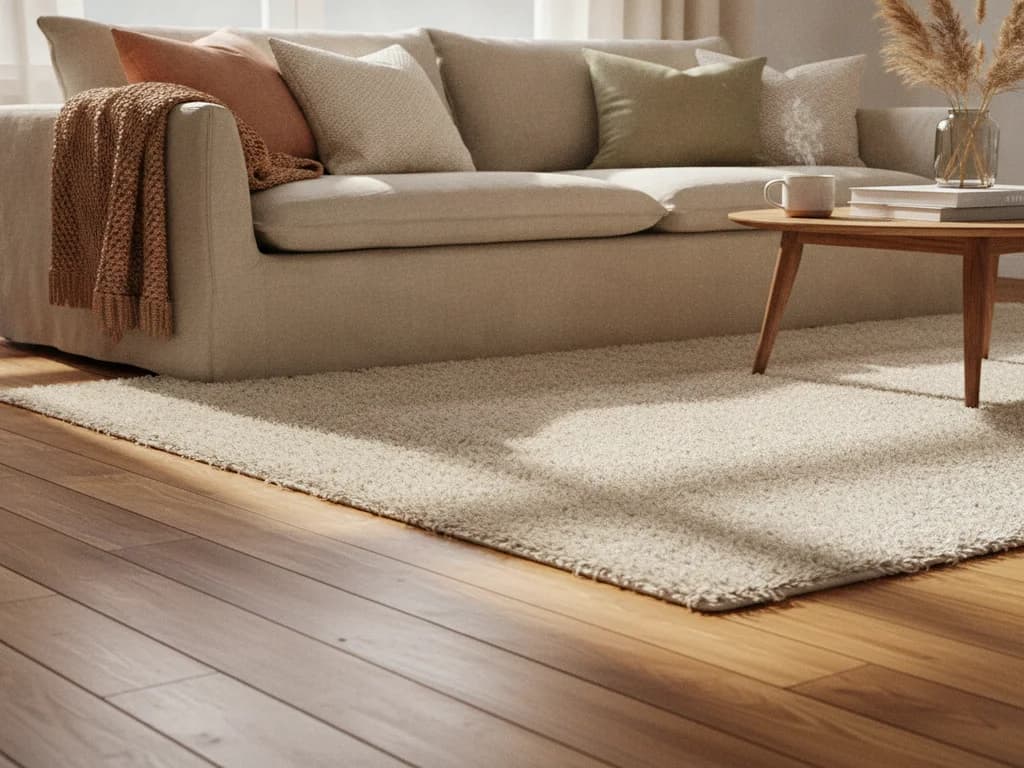
There is a fourth clock nobody mentions: taste, plus ultraviolet light. Wood changes color with sun exposure, and it does so unevenly — under an area rug or a sofa that never moves, the wood stays as it was, while the exposed field shifts. Move the rug after eight years and the outline is visible. Some species change dramatically; American cherry darkens sharply, and most oaks amber gently.
This is not damage and it does not shorten the floor's material life, but it is a real reason people replace floors that had decades left. It is also almost entirely correctable: a full sand removes the color-changed surface and returns the floor to fresh wood, which is why a dated or two-toned floor is a refinishing conversation, not a replacement one. If yours is showing tone differences, our sun fading page covers what causes it and what can be done.
A Maintenance Calendar Measured in Years, Not Weeks
Day-to-day care is its own subject. What matters for lifespan is the long-interval schedule most people never establish.
Once a year, look at the floor rather than walking on it: check the entries and the main traffic lane for dulling, check under rugs for tone difference, and check the perimeter for seasonal gapping that is not closing. Every few years, depending on traffic, expect a recoat in the busiest zones before the finish opens up — that single habit is what lets a floor go through decades on a small number of sandings. And when a floor does need to come back to bare wood, do the whole connected area at once rather than a room at a time, because color continuity across an open floor plan is hard to recover later.
Add the ordinary protections: felt pads under everything with legs, trimmed pet nails, mats at every exterior door, spills wiped rather than left. None of it is complicated. Consistency matters far more than any particular product.
When Replacement Is the Honest Answer
Replacement is the right call in a short list of situations: the wear layer is genuinely spent and there is no wood left to sand, water has reached the subfloor and the damage is structural, the floor is moving because of what is beneath it, or an engineered veneer has already been sanded to its limit. Everything short of that generally favors renewal, because refinishing keeps the existing floor, generates less waste, and takes less time out of the house.
The judgment call in the middle — a floor that is tired but not finished — is worth an actual opinion from someone standing on it, and our refinishing versus replacement comparison lays out how we weigh it.
Cared for well, a quality hardwood floor isn't a purchase you make once every decade — it's closer to a lifetime investment in your home. If your existing hardwood is showing its age, or you're considering a new install and want honest guidance on species, finish, and how long what you're buying will really last, Renaissance Floors offers free estimates. Call (916) 749-0272.
This article is part of our guide to how flooring materials differ, which covers what separates the materials structurally, and the vocabulary the trade uses to describe them.
Explore related
Good to Know
Frequently Asked Questions
How many times can hardwood be refinished?
A solid hardwood floor can typically be sanded and refinished several times over its life, because the wear layer runs the full thickness of the board above the tongue. The practical number depends on how much material previous sandings removed and how aggressive each cut was, which is why lighter sanding is always preferable when the wood allows it.
How long does engineered hardwood last?
It depends on the wear layer rather than on the category. A thick-veneer engineered floor can be sanded and last comparably to solid wood; a thin-veneer product is designed to be replaced when worn rather than refinished. Asking for the wear-layer thickness in millimeters before buying is the single most useful question you can ask.
How often should hardwood floors be refinished?
Full sanding is an event measured in decades for most homes, not years. What should happen more often is a recoat in high-traffic zones before the finish wears through to bare wood, since a recoat removes no wood and preserves the sandings you have left. Traffic, pets, and grit control set the interval more than time does.
What actually shortens a wood floor's life?
Moisture, in almost every case — a slab that was never tested, a wet crawlspace, an appliance line that seeped for months, or a house allowed to swing far outside its normal humidity range. After that comes abrasive grit walked across the finish daily, which wears traffic lanes long before the wood itself is in trouble.
Do harder wood species last longer?
They resist denting better, which is a real advantage with pets and heavy furniture, but they do not last longer in any meaningful sense. Hardness does not slow finish wear, add sandings, or improve moisture tolerance. Grain pattern and color do more to keep a floor looking good over time than hardness does.
Is it cheaper to refinish or replace a hardwood floor?
Refinishing is almost always less expensive and less disruptive than replacing, provided the wear is still in the finish and there is enough wood left to sand. Replacement becomes the better answer when there is water damage that reached the subfloor, structural movement, or a floor already sanded to its limit.
Why do old floors look lighter under the rugs?
Ultraviolet light changes the color of wood over years, and anything sitting on the floor shields the wood beneath it. The result is a visible outline when a rug or sofa finally moves. It is a surface change rather than damage, and a full sand removes the color-shifted layer and returns the floor to uniform fresh wood.
Do hardwood floors last in a hot, dry climate?
Yes, provided the house stays conditioned. Wood in the Sacramento Valley tightens through dry summers and relaxes in damp winters, which is normal seasonal movement. Problems come from extremes — a home left unconditioned through a heat wave, or humidity swinging far outside the 30 to 50 percent range wood floors are happiest in.
Does hardwood add value to a home?
Buyers in this market generally view hardwood favorably in living rooms, dining rooms, and bedrooms, and the fact that a worn floor can be restored rather than torn out is part of the appeal. We would not put a number on it — that depends on the home, the neighborhood, and the buyer.
Written by
Owner & Lead Installer, Renaissance Floors
15+ years of hands-on flooring experience across Greater Sacramento & Northern California. Works on hardwood and engineered installation, refinishing, subfloor preparation, and moisture testing — and writes these guides from what the jobs actually teach.
CSLB C-15 licence #1060673
Related
Keep Reading
Related pages: Herringbone, Hickory, European White Oak, and French Oak.
Ready for Floors You'll Love?
Ready to talk through your project? Free estimates throughout Greater Sacramento & Northern California.