Service Area
Flooring in Grass Valley
Renaissance Floors installs and refinishes hardwood, luxury vinyl, tile, and more for homeowners throughout Grass Valley and the surrounding Nevada County area.
CSLB #1060673
Licensed & Insured
Est. 2019
Family-Owned
15+ Years
Hands-On Experience
5.0★ Rated
22 Reviews on Thumbtack
Local, Licensed, Accountable
Flooring Contractor Serving Grass Valley
Grass Valley is part of Nevada County, and it's one of the communities Renaissance Floors regularly works in. We're based in Roseville, CA and serve homeowners across Greater Sacramento & Northern California— from small refinishing jobs to full home installs. Every project starts with an honest look at your subfloor and your goals, followed by a clear, no-pressure estimate. There's no dispatched sales team and no guesswork: you work directly with the crew doing the installation, backed by our CSLB C-15 license and a workmanship warranty on every job.
From historic character homes in Grass Valley and Nevada City to mountain cabins in Truckee, Nevada County homes reward durable, dimensionally-stable flooring. Engineered hardwood and quality LVP handle the swings in mountain temperature and humidity better than solid wood.
Grass Valley is the larger of the two Gold Rush towns that anchor western Nevada County — about 14,100 people at roughly 2,400 feet — and the City's own adopted design guidelines draw the local distinction better than any brochure could: the town's architecture 'was, in part, a consequence of its working-class community, as compared to Nevada City, and its workforce, many employed as laborers in the area's quartz mining industry.' Nevada City, three miles up the road, is the Victorian county seat; Grass Valley is the town the miners actually lived in — miner's cottages, homes converted to boarding houses for mining families, and a brick downtown built by hard-rock industry. It has governed itself as a charter city since March 13, 1893, with a council-manager government and, usefully for any remodel, its own Building Department.
The industry behind all of it was immense. Empire Mine, now an 856-acre state historic park on the town's southeast edge, is in California State Parks' words 'one of the oldest, deepest, and richest gold mines in California' — 5.8 million ounces of gold across more than a century of operation, and today 'the entrance to 367 miles of abandoned and flooded mine shafts.' At the North Star mine, the state landmark registry records that A.D. Foote's 1895 powerhouse ran the entire operation on compressed air generated by Pelton water wheels, its 30-foot wheel 'the largest in the world.' The workforce was famously Cornish — 'Our mining is for the most part carried on by Cornishmen,' a Grass Valley newspaper reported in 1861 — and the inheritance is still on the calendar: Cornish Christmas on Mill and Main each December, a pasty shop on Mill Street run by the same family since 1968, and a sister-city bond with Bodmin, Cornwall. The combined Empire and North Star closed for good on July 5, 1956.
What makes Grass Valley unlike anywhere else we work is what sits underfoot. The City's own General Plan background report states it flatly: 'A substantial portion of the Study Area is underlain by an extensive labyrinth of abandoned mine shafts. The Empire Mine tunnels alone extend some 365 miles beneath the City of Grass Valley.' The same 1998 report supplies the honest counterweight — in hard-rock ground like this, the solidity of the bedrock makes shaft collapse unlikely, and liquefaction 'is not a significant problem' — so the takeaway is context, not alarm: the bedrock that made mile-deep mining possible is the same thing that keeps the town stable. The report also maps the belt of serpentine rock passing through the region, which can carry naturally occurring asbestos and is why California restricts serpentine as a surfacing material — a real consideration for grading and site work, and the parent rock of the shallow, stony Dubakella soils that behave nothing like valley clay.
Downtown's history is administered locally, and precisely. The historic district is not a National Register district — only four Grass Valley properties are federally listed — but a City creation with a date in its name: the 1872 Historic Townsite, covering 370 acres, 1,164 parcels, and roughly 1,928 buildings across three character areas, with a period of significance of circa 1852–1950. The masonry downtown is itself a fire story: after several devastating early-1850s fires — the worst, on September 13, 1855, destroyed more than three hundred buildings across thirty acres and left only two downtown structures standing — the town rebuilt in brick and stone, iron shutters and all. The West Residential character area steps homes built from 1855 to 1930 into genuinely hilly ground, on 'full or partial basements' with 'fieldstone and later concrete retaining walls, and cuts and fills into the natural side of hills'; the South Residential area runs from 1880s Conaway Street houses to the 'modest, but trendy, working class' Depression-era homes of Clark Street — the City's own phrasing.
The working-class identity survives in the modern numbers. The incorporated city is the dense, renting core of an affluent rural county: 59.8% of Grass Valley households rent, against 24.6% countywide, and the city's median household income of $51,764 runs about 42% below both the county's and California's. Less than half the housing — 47.9% — is single-family detached, below the state average, with real numbers of duplexes, small apartment buildings, and mobile homes; the median structure dates to 1978. Unlike the wood-heated unincorporated foothills around it, the city proper runs largely on utility gas mains. And since May 2025 it is a city operating under the state's new fire-severity maps, which the council's own staff report says 'significantly expands the areas designated as high and very high fire hazard severity zones within the City' — local-responsibility ground ringed by Very High state-responsibility wildland.
Renaissance Floors is a licensed CSLB C-15 flooring contractor (license #1060673), family-owned and based in Roseville, and Grass Valley's mix — original softwood in miner's cottages, hillside homes over stone-walled basements, 1970s and 80s subdivisions, and a large working rental stock — is exactly the range we're built for. One piece of local knowledge worth repeating: the City Building Department covers properties with 3-to-4-digit Grass Valley street addresses, while the many homes carrying five-digit addresses and Grass Valley mail (95945, 95949) — Alta Sierra among them — sit in unincorporated Nevada County and permit through the County in Nevada City instead. Homeowners get that line wrong constantly; we don't.
Local Coverage
Neighborhoods We Serve in Grass Valley
From Historic Downtown Grass Valley to Cypress Hill, Renaissance Floors installs and refinishes floors across Grass Valley.
Recent Work
A Sample of Our Craftsmanship
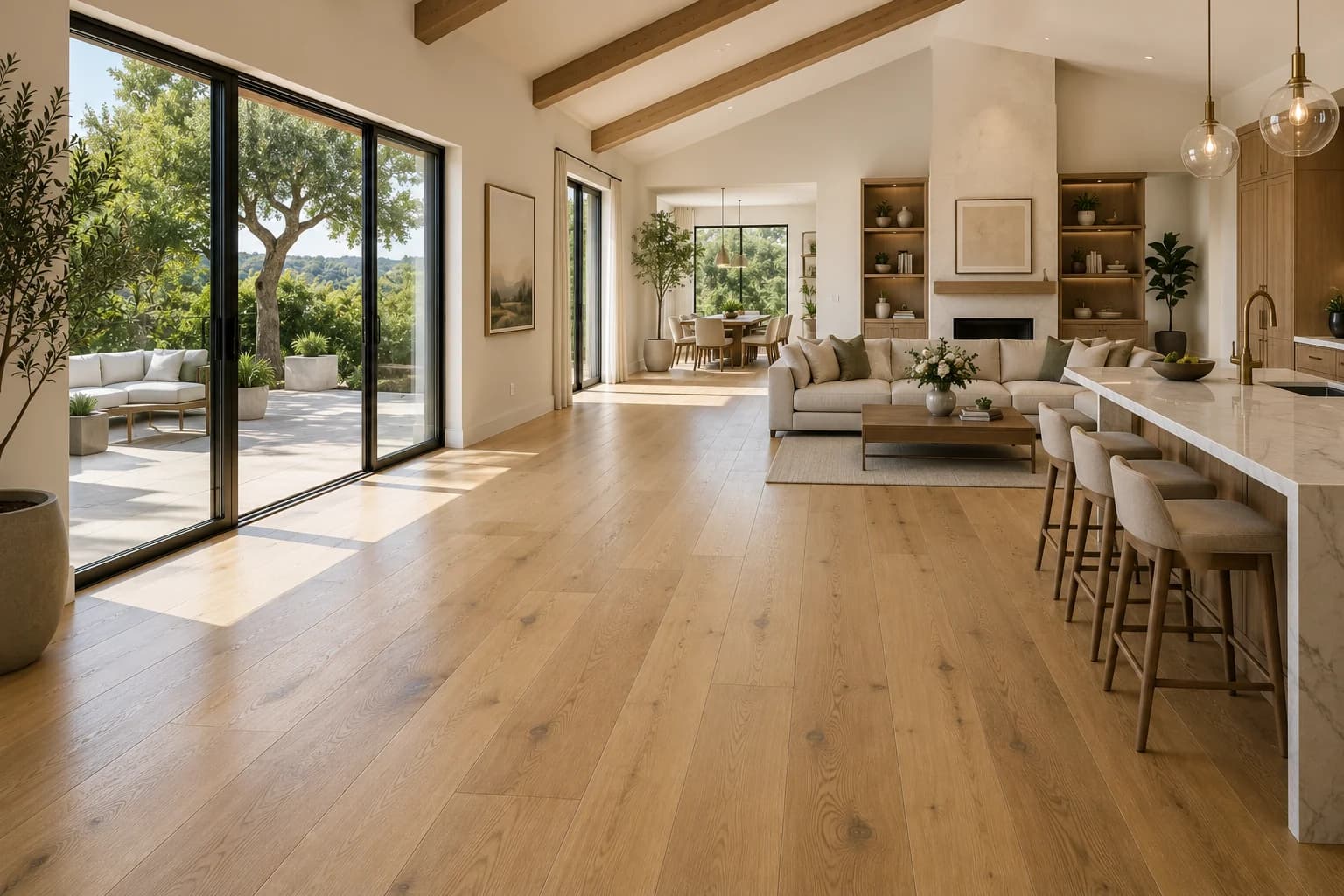
White Oak Hardwood
Great Room & Landing
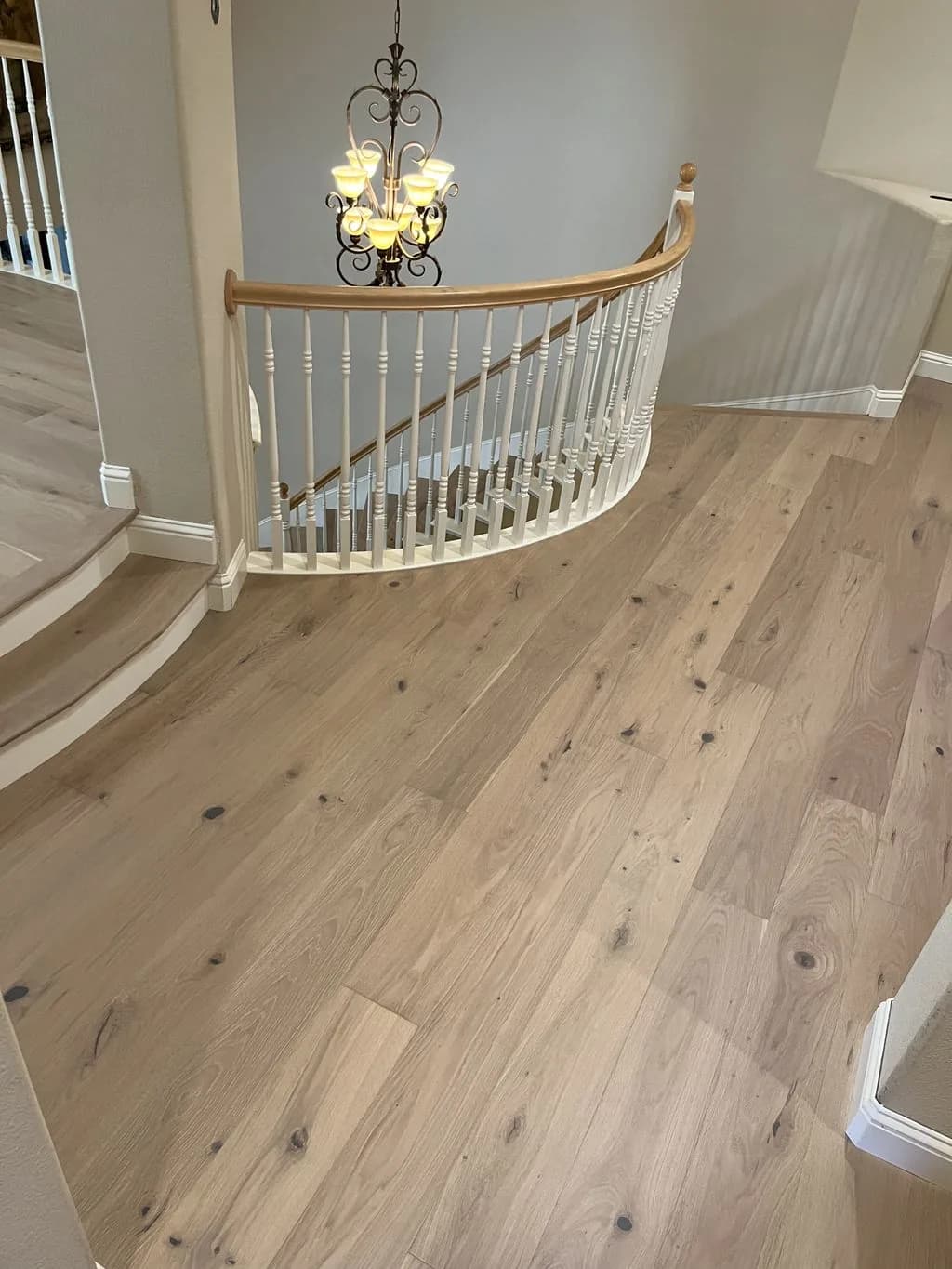
White Oak Hardwood
Staircase & Landing
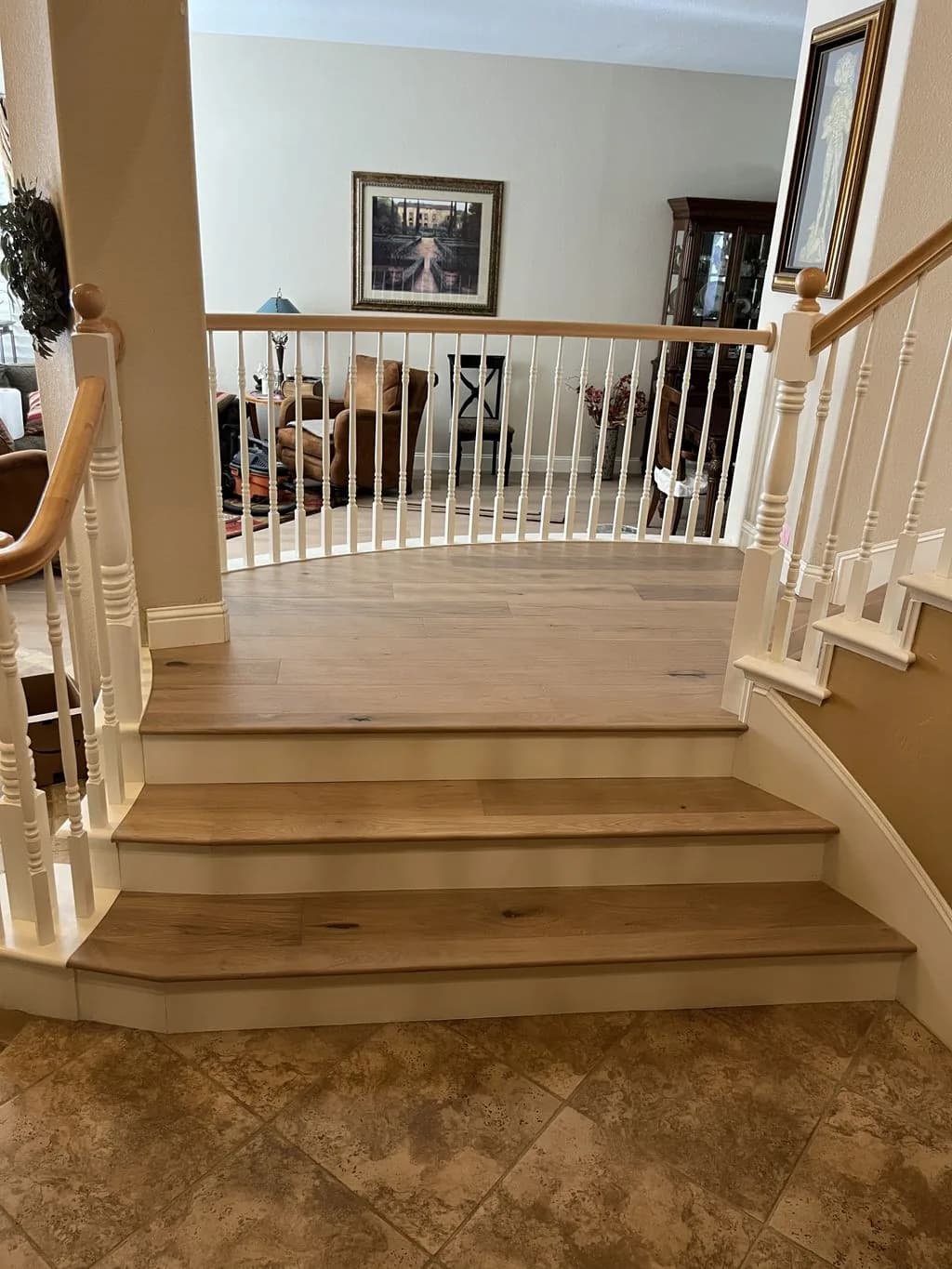
White Oak Hardwood
Curved Staircase
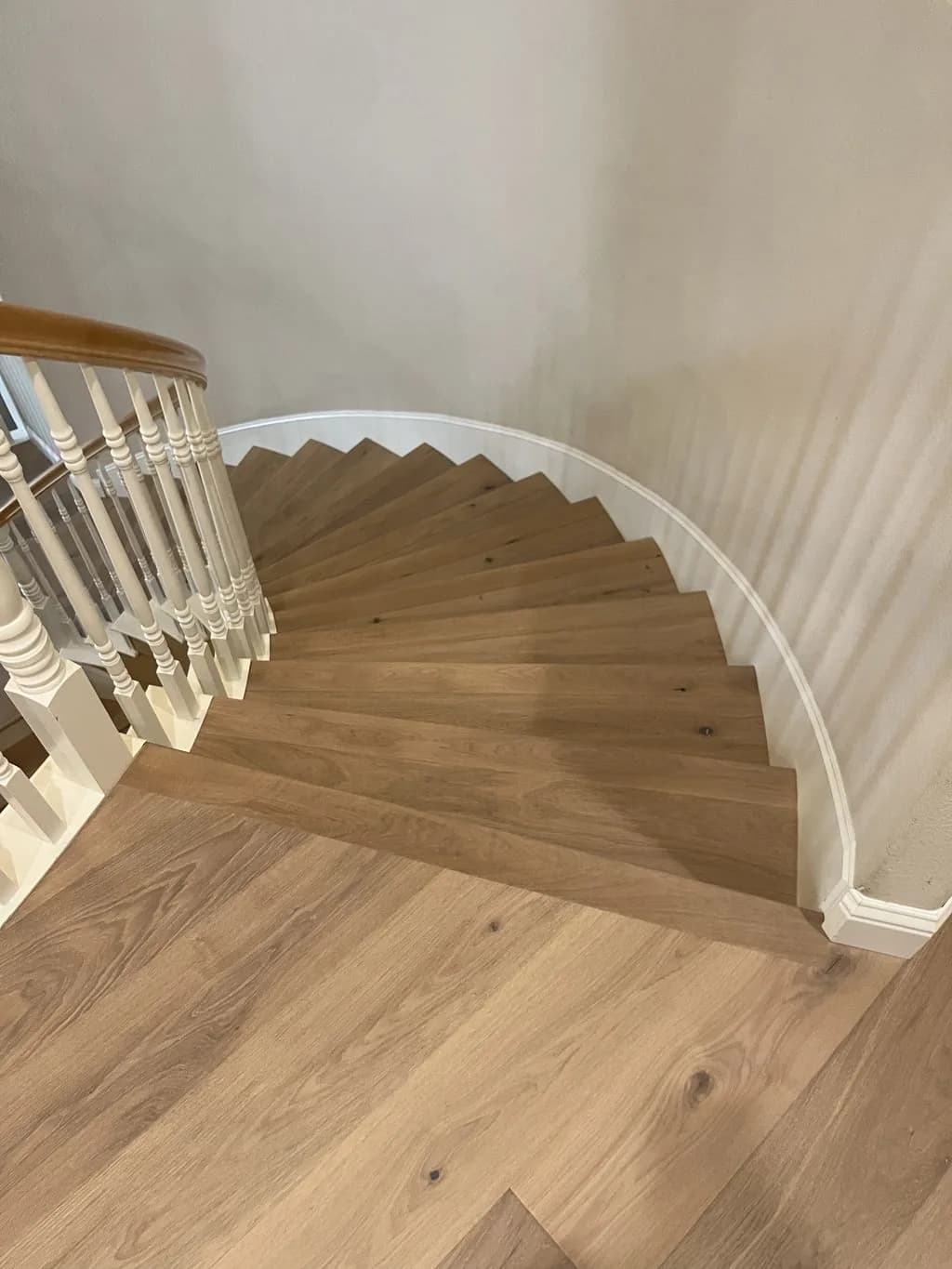
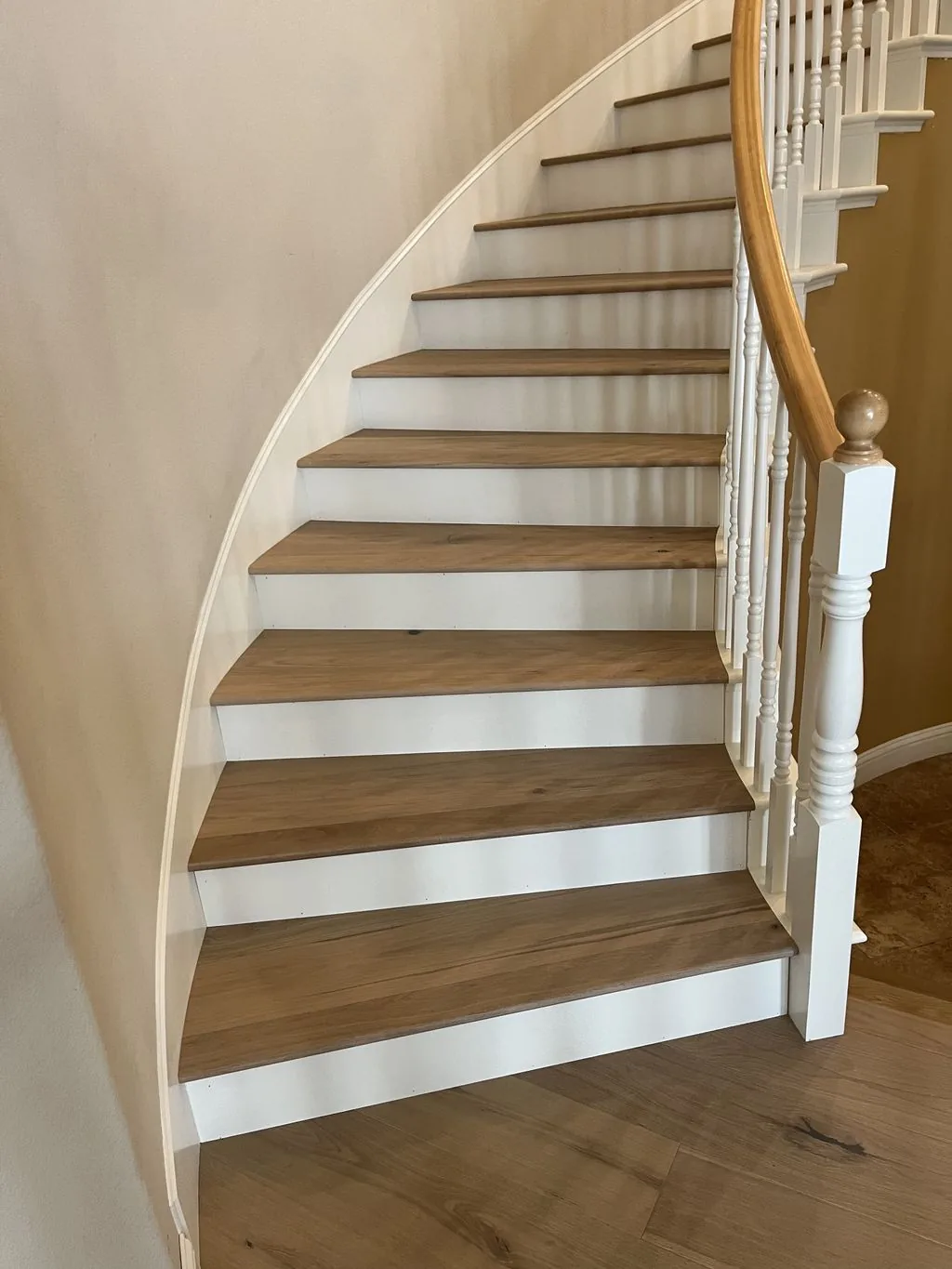
White Oak Hardwood
Stair Treads
Our Services
Flooring Services in Grass Valley
From hardwood to luxury vinyl, here's how we help Grass Valley homeowners upgrade their floors.
Hardwood Flooring
Solid oak, maple, and walkable heirloom-grade hardwood, precisely installed.
Hardwood Flooring in Grass ValleyEngineered Hardwood
Real-wood wear layers built for California's climate swings.
Engineered Hardwood in Grass ValleyLuxury Vinyl Plank
Waterproof, wood-look LVP for kitchens, baths, and busy households.
Luxury Vinyl Plank in Grass ValleyLaminate Flooring
Durable, high-style laminate at a friendly price point.
Laminate Flooring in Grass ValleyTile Flooring
Porcelain and ceramic tile set dead-level with crisp grout lines.
Tile Flooring in Grass ValleyFloor Installation
Full-service installation from subfloor prep to final baseboard.
Floor Installation in Grass ValleyFloor Refinishing
Sand, stain, and reseal tired hardwood back to new.
Floor Refinishing in Grass ValleyFloor Repair
Board swaps, water damage, squeaks, and seamless patch-ins.
Floor Repair in Grass ValleyLocal Considerations
What Grass Valley Homes Need From a Floor
Climate, home age, and foundation type all shape the right flooring choice in Grass Valley — here's what we account for.
A housing stock the City itself calls working-class
Grass Valley's design guidelines trace the town's architecture to 'its working-class community, as compared to Nevada City' — and the stock shows it: miner's cottages, houses once converted to boarding houses for mining families, and the modest Depression-era homes of Clark Street. These are smaller, simpler buildings than showcase Victorians, often floored in softwood laid to tight budgets. That changes the flooring calculus in a good way: original fir and pine can frequently be saved and refinished at reasonable cost, and where replacement wins, mid-range engineered wood or LVP suits the scale and history of the house better than trophy-grade material.
Hillside homes with basements and fieldstone retaining walls
The City's survey of the West Residential character area — homes from 1855 to 1930 on some of the town's hilliest ground — records exactly how they were built: 'full or partial basements, the construction of fieldstone and later concrete retaining walls, and cuts and fills into the natural side of hills.' A century on, those cut-and-fill lots and stone-walled basements are where we find out-of-level framing, settled floors, and wet-season moisture moving through crawlspaces and basement walls. On these houses the subfloor evaluation is the job — flatness, moisture readings, and framing condition come before any conversation about finish flooring.
Sixty-two inches of rain, real snow, rainless summers
Grass Valley shares the wettest weather in our service area: the long-running co-op station four miles northeast records 62.26 inches of annual precipitation and 14.50 inches of snow under current 1991–2020 NOAA normals, nearly all of it falling November through March, followed by summers with essentially no rain at all. That is the widest seasonal moisture cycle we install into anywhere. Solid wood gets acclimated on site to the conditioned interior, expansion detailing is sized for foothill conditions, and entries get honestly water-tolerant materials — because for half the year, boots come in wet.
A renter's city — and flooring for the people who own it
Grass Valley's most surprising statistic: 59.8% of city households rent, against 24.6% across Nevada County, and less than half the housing stock is single-family detached. The incorporated city holds much of the county's duplex, small-apartment, and mobile-home stock. For the owners of those units we do steady work in durable, fast-turnaround flooring — rigid-core LVP and resilient goods that shrug off tenant turnover, installed between leases so vacancy stays short.
Historic review in the 1872 Townsite is exterior-only
The downtown historic district is a City designation — the 1872 Historic Townsite — and the City's preservation ordinance defines its reach precisely: review applies when owners 'remodel, add to, or change the exterior of a historically important building.' Every project type the design guidelines list for review is exterior or site work. Interior finish work, flooring included, sits outside the historic design-review process — so refinishing the original floors of a Townsite home needs no design review, just workmanship worthy of the building.
Two permit authorities share the Grass Valley address
The City Building Department states its territory plainly: 'all properties in the City of Grass Valley (3-4 digit Grass Valley addresses),' with permits issued through the City's online portal. But a large share of homes with Grass Valley mailing addresses — the five-digit addresses of 95945 and 95949, including Alta Sierra — are in unincorporated Nevada County, and permit-triggering work there runs through the Nevada County Building Department in Nevada City instead. It is one of the most commonly confused jurisdiction lines in our service area, and worth settling before any project that needs a permit.
Serpentine ground outside, legacy materials inside
Two unrelated asbestos stories get conflated in Grass Valley, and they deserve separating. Outside: the region's belt of serpentine rock — parent of the local Dubakella soils — can carry naturally occurring asbestos, which is why the state restricts serpentine as surfacing material; that is a grading and driveway consideration, not a flooring one. Inside: like any town with substantial pre-1980 stock, older homes can hold vintage resilient flooring and black mastic adhesives that may contain asbestos. We treat suspect materials as a test-first situation and bring in licensed abatement rather than disturbing them.
Local Resources & References
Helpful Grass Valley Resources
Authoritative local and industry references for permits, planning, and flooring standards.
- Empire Mine State Historic Park — 'one of the oldest, deepest, and richest gold mines in California'; 5.8 million ounces; closed 1956California State Parks
- California Historical Landmark #843 — North Star Mine Powerhouse, built 1895 by A. D. Foote; 30-foot Pelton wheel 'the largest in the world'California Office of Historic Preservation
- General Plan Background Report, Ch. 11 Safety/Hazards (1998) — abandoned mine workings beneath the city; serpentine rock and naturally occurring asbestosCity of Grass Valley
- Design Review Guidelines for the 1872 Historic Townsite (2010) — 370 acres, 1,164 parcels, ~1,928 buildings; character areas; working-class architectural historyCity of Grass Valley
- Ordinance 742 / Development Code Ch. 17.52 (2012) — historic-preservation review scope: exterior alterations within the 1872 TownsiteCity of Grass Valley
- Town History — incorporated as a charter city March 13, 1893; Cornish heritage; sister city Bodmin, CornwallCity of Grass Valley
- Building Department — plan review, permits and inspections for 3-4 digit Grass Valley addresses; online permit portalCity of Grass Valley
- ACS 2020–2024 5-year estimates, Grass Valley city — renter share, household income, structure types, median year built (via Census Reporter)US Census Bureau
- Gary Noy, 'The Grass Valley Fire of 1855,' Journal of the Sierra Nevada History & Biography (2008) — the September 13, 1855 fire and the rebuilding of downtownSierra College Press
External links are provided for reference. Always confirm current requirements with the issuing agency.
Explore Flooring Services in Grass Valley
Nearby
Nearby Cities We Serve in Nevada County
Serving the Region
Flooring Across Our Core Service Areas
We install and refinish floors across our core Northern California service areas — from the Sacramento region and the foothills to the Bay Area and wine country.
Good to Know
Frequently Asked Questions
Does Renaissance Floors serve Grass Valley?
Yes. We install and refinish flooring throughout Grass Valley and the surrounding Nevada County area. Call (916) 749-0272 for a free estimate.
What flooring services do you offer in Grass Valley?
We install hardwood, engineered wood, luxury vinyl plank, laminate, tile, and more in Grass Valley, plus floor refinishing, repair, and full-service installation. See the full list below.
Are you licensed to work in Grass Valley?
Yes. We hold CSLB C-15 license #1060673 (C-15 Flooring & Floor Covering) and carry insurance. We're based in Roseville, CA and serve Grass Valley and all of Greater Sacramento & Northern California.
How do I get a free flooring estimate in Grass Valley?
Call (916) 749-0272 or request an estimate online. We'll schedule a convenient in-home visit in Grass Valley, measure your space, and give you an honest, no-pressure quote.
Do I need a permit to replace flooring in Grass Valley?
Like-for-like flooring replacement is generally finish work rather than a permit matter, but structural subfloor repairs or flooring done as part of a larger remodel can trigger one. Which office handles it depends on your address: 3-to-4-digit Grass Valley street addresses are inside city limits and go through the City Building Department's online portal, while five-digit addresses with Grass Valley mail (95945/95949) are typically unincorporated Nevada County and go through the County Building Department. We confirm the jurisdiction as part of any project that needs a permit.
My home is in the 1872 Historic Townsite — does historic review apply to new floors?
No. The City's preservation ordinance applies when owners 'remodel, add to, or change the exterior' of a historically important building, and every project type the design guidelines list for review is exterior or site work. Interior finish work such as flooring sits outside the historic design-review process — though in a contributing home we'll usually make the case for keeping and refinishing original floors, because they carry a real share of the house's value.
Can the original floors in an older Grass Valley home be refinished?
Often, yes. Homes in the West and South Residential character areas date from the 1850s through the 1940s, and many still carry original old-growth fir, pine, or oak. Whether refinishing makes sense comes down to the wear layer left above the tongue and the condition of the board subfloor and framing underneath — hillside homes built on cuts and fills can be well out of level — so we evaluate structure and moisture before quoting finish work.
What flooring holds up best in Grass Valley's climate?
The area records over 62 inches of precipitation and about 14 inches of snow in a normal year, then almost nothing all summer — the widest wet-dry swing in our service area. Engineered hardwood and quality LVP handle that movement most predictably; solid hardwood performs well when it's acclimated on site and detailed with proper expansion space. For entries and mudrooms we recommend genuinely water-tolerant surfaces, because wet-season tracking is a daily reality for months at a stretch.
Do you install flooring for rental properties in Grass Valley?
Yes, and it's a meaningful part of our Grass Valley work — nearly 60% of households in the city rent, and much of the county's duplex and small-apartment stock sits inside city limits. For property owners we spec durable, tenant-proof materials, usually rigid-core LVP, and schedule installs between leases to keep vacancy short.
Is asbestos a concern with older flooring in Grass Valley homes?
It can be, in two unrelated ways. Pre-1980 homes anywhere may hold vintage sheet vinyl, older resilient tile, or black mastic adhesive that contain asbestos — we treat those as test-first materials and involve licensed abatement rather than disturbing them. Separately, the region's serpentine rock can carry naturally occurring asbestos, which matters for grading and driveway material, not interior floors. Neither is a reason to avoid a project; both are reasons to work with a contractor who knows the protocols.
Do you also serve Alta Sierra, Lake Wildwood, and Lake of the Pines?
Yes. Those communities carry Grass Valley mailing addresses but sit in unincorporated Nevada County, with their own site conditions — and any permits there run through the County rather than the City. We serve all of them and the surrounding foothills from our Roseville base.
Does Renaissance Floors offer free estimates in Grass Valley?
Yes — free, no-obligation in-home estimates, financing options, and a workmanship warranty. We're a licensed CSLB C-15 flooring contractor (license #1060673). Call (916) 749-0272 to schedule.
Ready for Floors You'll Love?
Free, no-pressure flooring estimates throughout Grass Valley and Nevada County.