Service Area
Flooring in Auburn
Renaissance Floors installs and refinishes hardwood, luxury vinyl, tile, and more for homeowners throughout Auburn and the surrounding Placer County area.
CSLB #1060673
Licensed & Insured
Est. 2019
Family-Owned
15+ Years
Hands-On Experience
5.0★ Rated
22 Reviews on Thumbtack
Local, Licensed, Accountable
Flooring Contractor Serving Auburn
Auburn is part of Placer County, and it's one of the communities Renaissance Floors regularly works in. We're based in Roseville, CA and serve homeowners across Greater Sacramento & Northern California— from small refinishing jobs to full home installs. Every project starts with an honest look at your subfloor and your goals, followed by a clear, no-pressure estimate. There's no dispatched sales team and no guesswork: you work directly with the crew doing the installation, backed by our CSLB C-15 license and a workmanship warranty on every job.
Placer County mixes newer master-planned communities in Roseville and Rocklin with established and foothill homes toward Auburn. We work over both slab and raised foundations, matching the right product and prep to each home.
Auburn is the seat of Placer County and the foothill corridor's true city — incorporated, with its own city hall, its own building division, and a courthouse dome you can see from Interstate 80 — perched at 1,227 feet on the lip of the American River canyon where Highway 49 drops to the Confluence. But the first thing worth knowing about Auburn is that half of it isn't Auburn: the incorporated city holds about 13,776 people, while North Auburn — a separate, unincorporated census-designated place immediately north — holds 13,452 more, and Bowman, Ophir, and Christian Valley add their own unincorporated 'Auburn, CA' addresses beyond that. Same mailing address, different governments — a distinction with real consequences for anyone pulling a permit.
The town is the county's origin point. Claude Chana struck gold in Auburn Ravine on May 16, 1848 — five months after Coloma, the first strike in what became Placer County — and the camp called North Fork, then Wood's Dry Diggins, took the name Auburn in the fall of 1849. The state landmark in Old Town records a detail almost nobody knows: Auburn served as county seat of Sutter County in 1850, a year before Placer County existed to be seated. Fires leveled the business district in 1855, 1859, and 1863, which is why the surviving Old Town — the city's one National Register historic district, listed in 1970 and described in its nomination as 'little changed since the Gold Rush' — is largely the brick-and-stone town rebuilt after the flames. Above it stands the Classic Revival courthouse completed in 1898, its dome one of only four of its era still intact in northern and central California, with the Placer County Museum inside.
Auburn's civic history has a chapter no neighboring town can match: it incorporated twice. The first incorporation, in 1860, existed mostly to buy $50,000 in bonds for the Sacramento, Placer and Nevada Railroad — which failed in 1862 without ever reaching town. When the bonds came due in 1868, the citizens petitioned the state to dissolve their own city rather than pay, and Auburn spent twenty years unincorporated before voting itself back into existence in May 1888. The transcontinental railroad, for its part, arrived from Newcastle in 1865 and simply kept going — that story belongs to the towns below.
Modern Auburn's identity was chosen in 1955, when local businessman Wendell Robie rode from Tahoe to Auburn in under twenty-four hours and founded the Tevis Cup, the world's oldest 100-mile equestrian endurance ride. The Western States Endurance Run followed in 1974 — Gordon Ainsleigh running the same hundred miles on foot — and it still finishes at Placer High School every June. In 2003 the City Council made it official, proclaiming Auburn the 'Endurance Capital of the World,' and the landscape explains why: the Auburn State Recreation Area wraps more than 42,000 acres along forty miles of the American River's North and Middle Forks, under the 730-foot Foresthill Bridge — California's tallest, built in 1973 for a reservoir that was never filled — and across the 1912 No Hands Bridge that both hundred-milers cross on their way home.
For floors, Auburn is two markets wearing one name. The historic core and its surrounding neighborhoods hold real pre-war stock — 13.6% of the city's housing predates 1940, quadruple the share in the county's newer suburbs — with original wood floors, board subfloors, and settled framing that reward restoration over replacement. Around it sits the barbell's other weight: the 1980s were Auburn's biggest building decade at 20.5% of the stock, and more than half of all housing predates 1980, while barely 4% has been built since 2010 — a replacement-age market on ground that is the literal type location of the USDA's Auburn soil series: shallow loam over bedrock at ten to twenty inches, low shrink-swell, the opposite of valley clay. Median home value runs about $672,500 in the incorporated city per current Census figures.
Renaissance Floors is a licensed CSLB C-15 flooring contractor (license #1060673) based down the hill in Roseville, and Auburn's whole range is our regular work: assessing and restoring original floors in Old Town-era homes, replacing 1980s-generation flooring across the city and North Auburn, and building entries that survive a household of trail runners, riders, and canyon dogs. Free in-home estimates, honest recommendations, and a workmanship warranty.
Local Coverage
Neighborhoods We Serve in Auburn
From Old Town Auburn to Christian Valley, Renaissance Floors installs and refinishes floors across Auburn.
Recent Work
A Sample of Our Craftsmanship
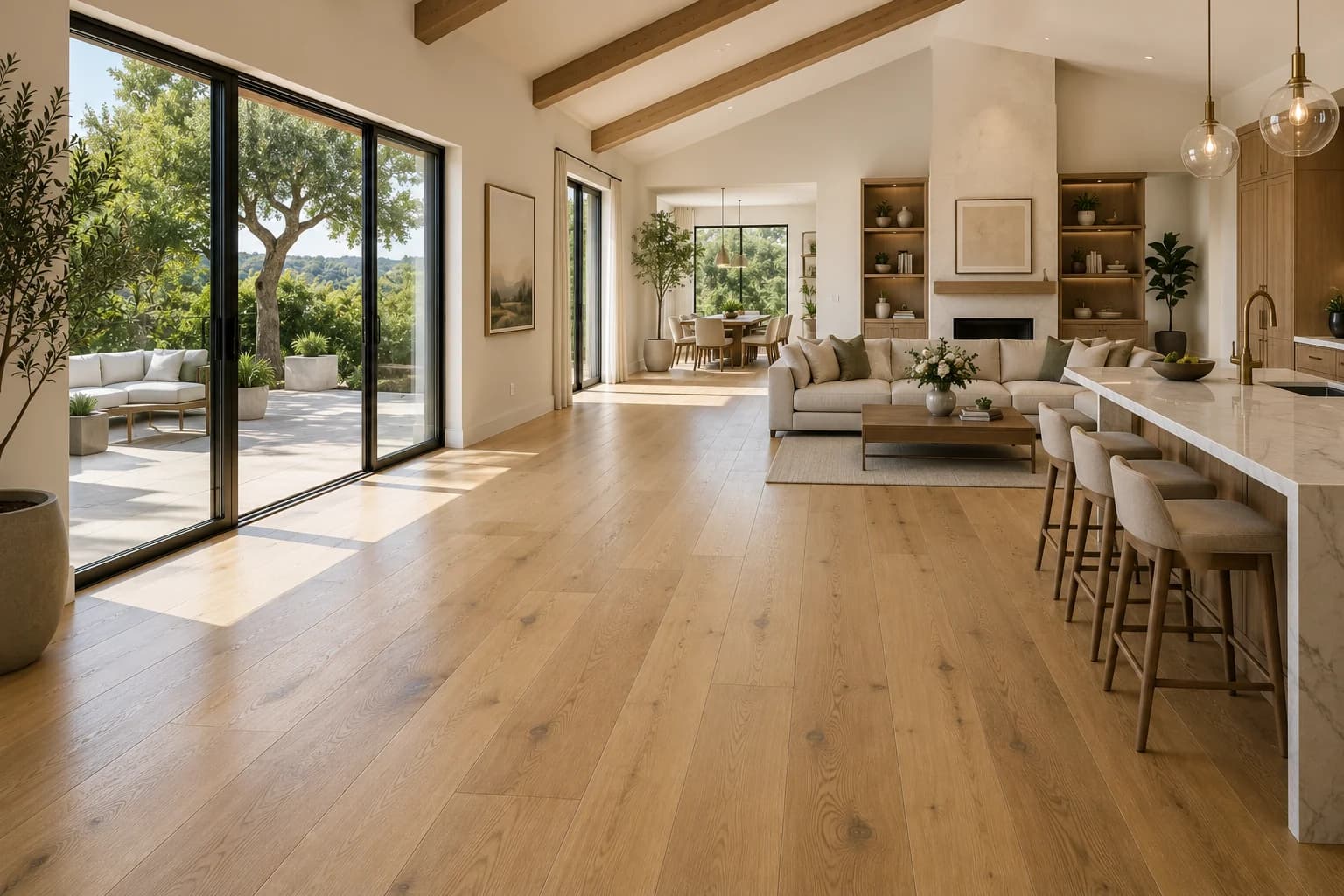
White Oak Hardwood
Great Room & Landing
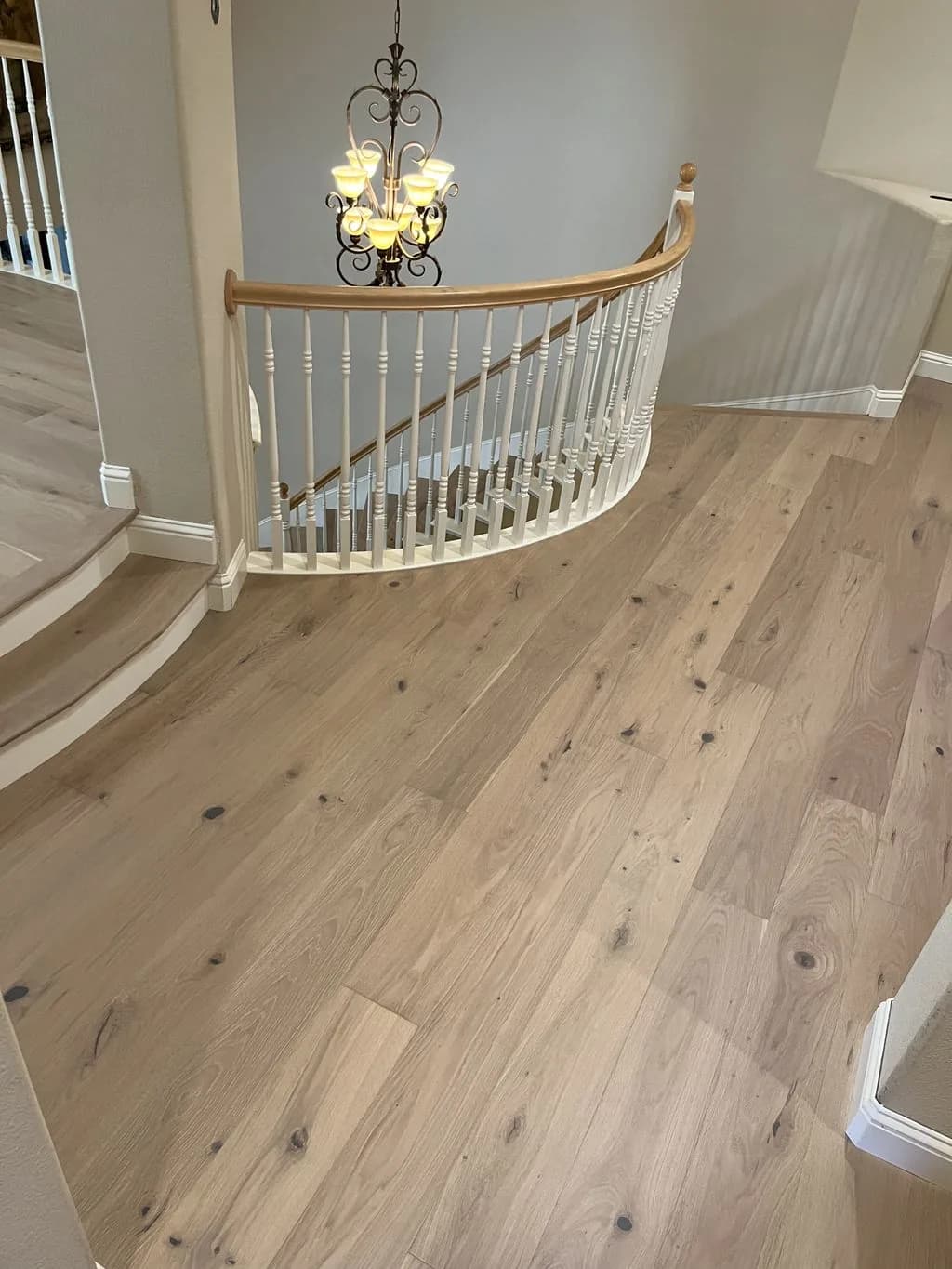
White Oak Hardwood
Staircase & Landing
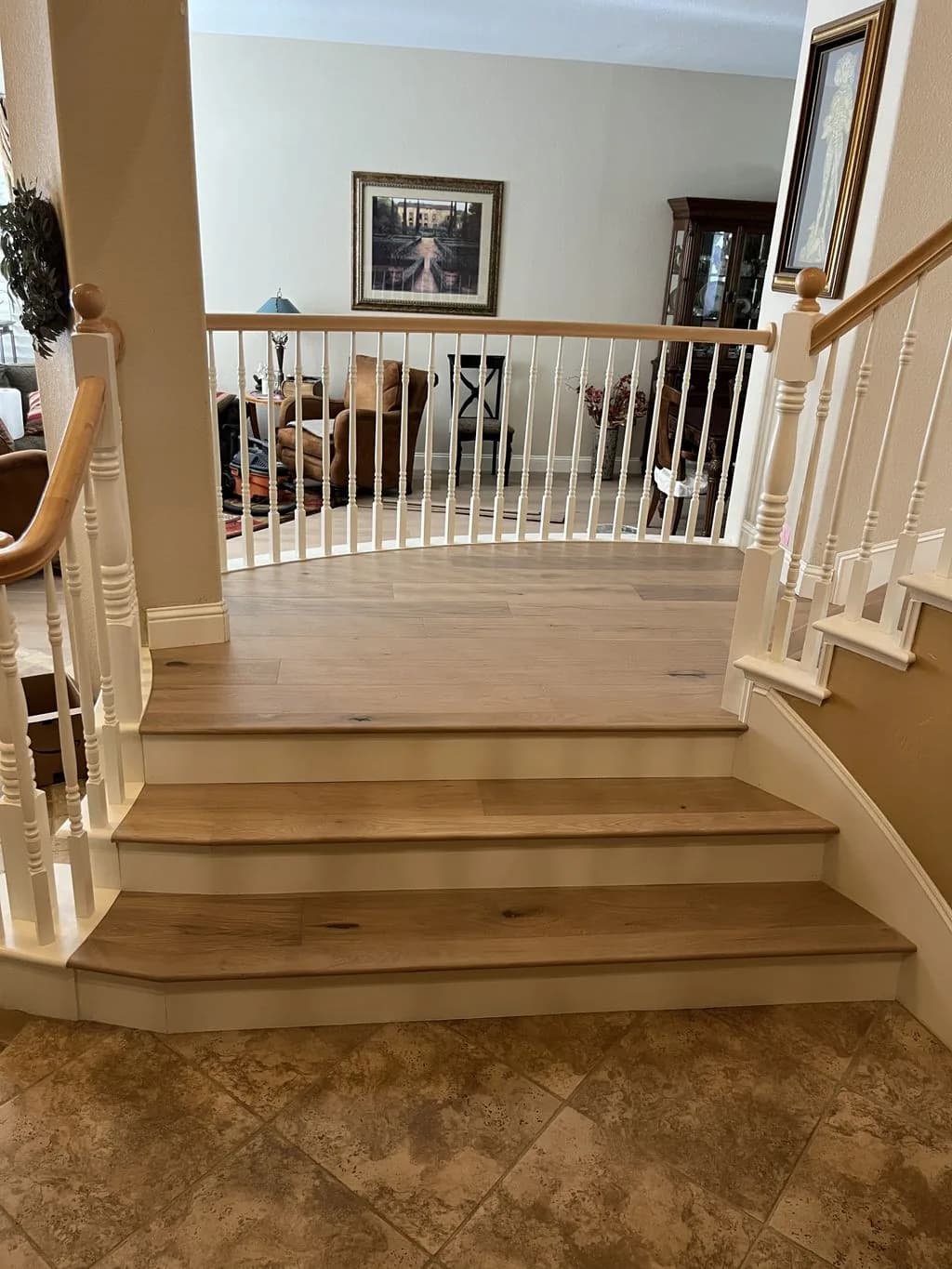
White Oak Hardwood
Curved Staircase
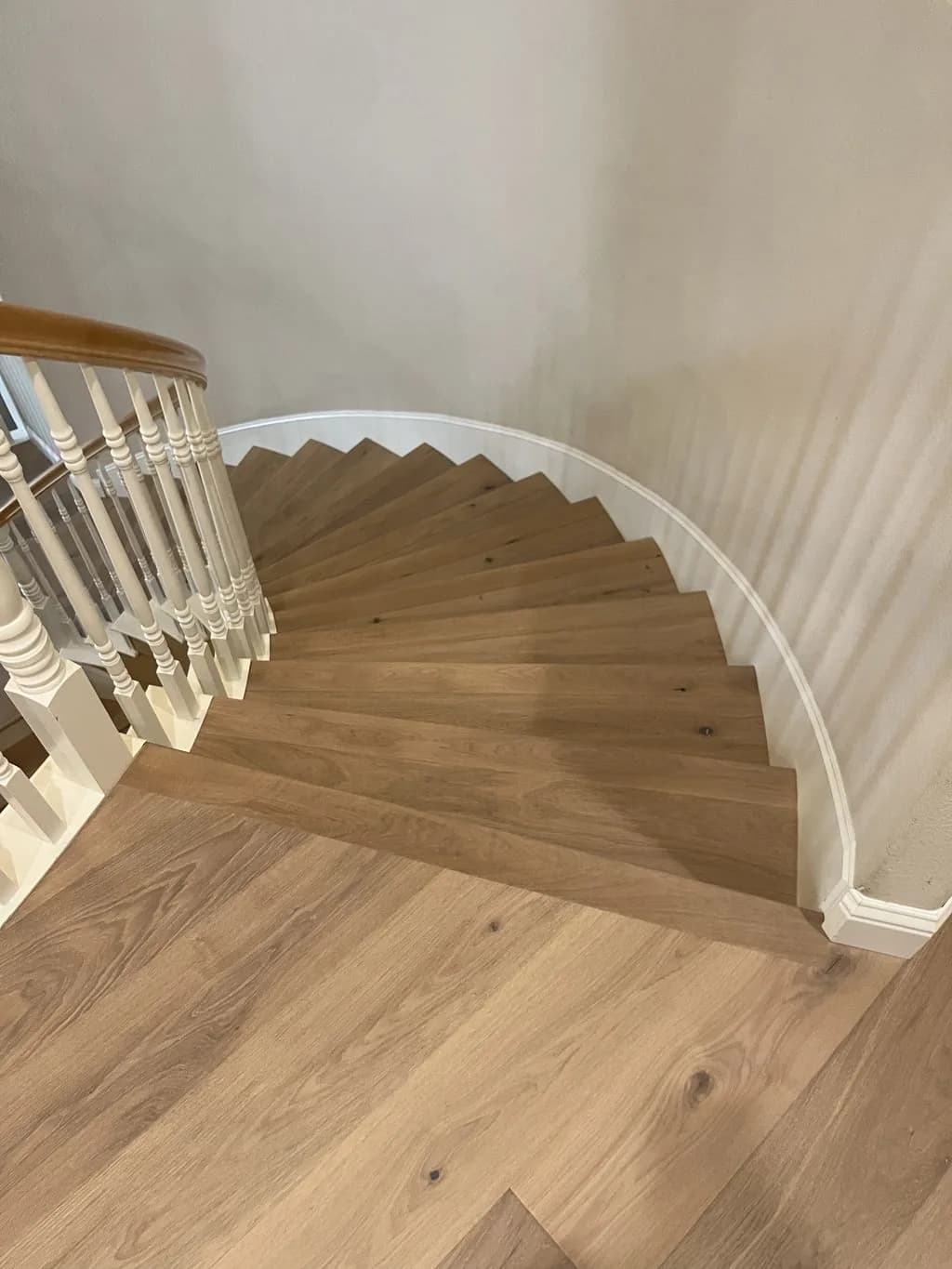
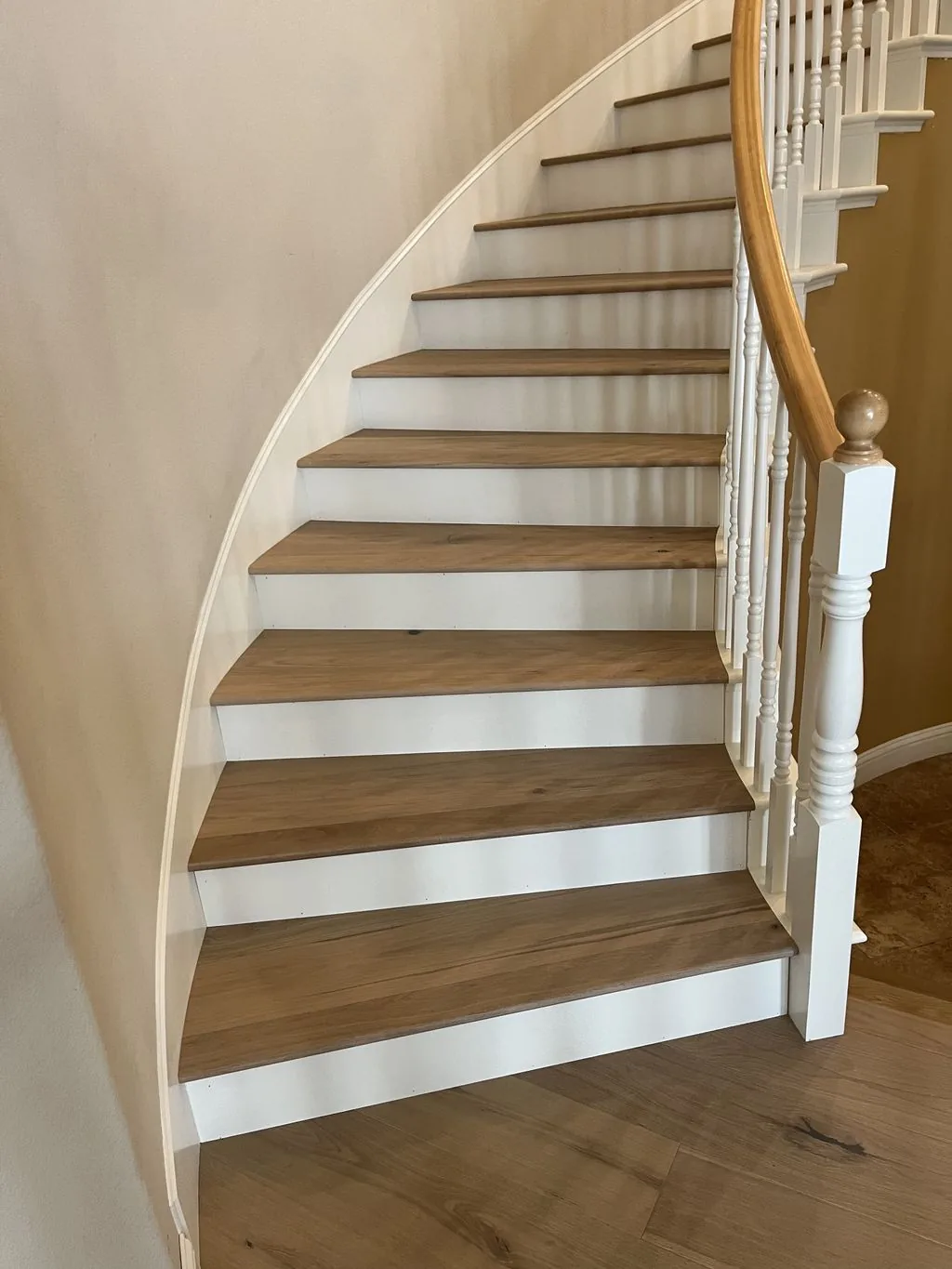
White Oak Hardwood
Stair Treads
Our Services
Flooring Services in Auburn
From hardwood to luxury vinyl, here's how we help Auburn homeowners upgrade their floors.
Hardwood Flooring
Solid oak, maple, and walkable heirloom-grade hardwood, precisely installed.
Hardwood Flooring in AuburnEngineered Hardwood
Real-wood wear layers built for California's climate swings.
Engineered Hardwood in AuburnLuxury Vinyl Plank
Waterproof, wood-look LVP for kitchens, baths, and busy households.
Luxury Vinyl Plank in AuburnLaminate Flooring
Durable, high-style laminate at a friendly price point.
Laminate Flooring in AuburnTile Flooring
Porcelain and ceramic tile set dead-level with crisp grout lines.
Tile Flooring in AuburnFloor Installation
Full-service installation from subfloor prep to final baseboard.
Floor Installation in AuburnFloor Refinishing
Sand, stain, and reseal tired hardwood back to new.
Floor Refinishing in AuburnFloor Repair
Board swaps, water damage, squeaks, and seamless patch-ins.
Floor Repair in AuburnLocal Considerations
What Auburn Homes Need From a Floor
Climate, home age, and foundation type all shape the right flooring choice in Auburn — here's what we account for.
Which Auburn are you in? It decides your permit desk
An 'Auburn, CA 95603' address tells you nothing about jurisdiction. Inside city limits, permits run through the City of Auburn Building Division at City Hall on Lincoln Way; in North Auburn, Bowman, Ophir, and Christian Valley, they run through Placer County — whose own building counter at 3091 County Center Drive sits, fittingly, in unincorporated North Auburn on the old DeWitt hospital campus, itself a converted WWII Army hospital. Flooring alone rarely needs a permit, but remodels do, and we confirm which desk a project crosses before scheduling rather than after.
Historic-district review does not reach your floors
Auburn is the only city in the corridor with a Historic Design Review Commission, and its scope is precise: certificates of appropriateness apply to exterior work visible from the public right-of-way in the local Old Town and Downtown districts. Interior floor replacement is not what it regulates — a genuinely useful reassurance for owners of historic homes who assumed otherwise. The separate building-permit question still applies to structural work, and we handle that distinction as part of planning.
Pre-war floors worth saving, at four times the usual rate
With 13.6% of the city's housing built before 1940, Auburn has the corridor's densest concentration of homes where the right first question is restore, not replace. Original fir and oak from the era was milled thick, and even floors long buried under carpet often hold real material above the tongue. We judge it at an exposed edge, read the board subfloor and framing underneath, and give a straight answer — restoring a sound original floor usually costs less than replacement and keeps material that cannot be bought new.
The 1980s built the other Auburn — and it's due
The city's peak building decade put up over 1,300 homes in the 1980s, and more than half of Auburn's stock predates 1980, while almost nothing has been added since 2010. Those floors are at the end of their first life: original oak due for refinishing, first-generation laminate and sheet goods due for replacement, forty-year-old subfloors due for an honest reading before anything new goes down. Replacement-age housing, not new construction, is Auburn's flooring market.
Bedrock at twenty inches, not clay at the surface
Auburn is the type location of the USDA's Auburn soil series — the reference point where the series was defined — a shallow, well-drained loam reaching weathered bedrock at ten to twenty inches, with low shrink-swell. The valley's expansive-clay slab problems are largely not Auburn's; what replaces them is slope: canyon-edge and hillside lots, stepped foundations, and drainage moving across grade. So slab flatness and site drainage are what we verify here, alongside the standard in-situ moisture test.
A near-rainless summer against a 36-inch winter, measured in town
Auburn is the rare foothill city whose weather is measured locally: the in-town co-op station, recording since 1905, carries current NOAA normals — 36.12 inches of annual precipitation with 81.6% falling November through March, against a July normal of 0.01 inches and July highs near 93°F. That is a genuinely extreme wet-dry swing, and it is the sourced argument for acclimating wood in the house at its real conditions, setting expansion detail for the actual seasonal range, and checking crawlspaces under the older stock before floors go over them.
Endurance-town living arrives at the door
A city whose official tagline celebrates hundred-mile runs and rides produces households that live on the canyon trails — and canyon trails produce decomposed-granite dust, mud, and wet dogs at the entry, all season. The practical answer is the same one the trailheads use: a hard-working transition zone. Waterproof, washable flooring at the real entries, long walk-off matting, and matte textured finishes in the traffic lanes keep the wood in the living spaces looking right between refinishes.
Local Resources & References
Helpful Auburn Resources
Authoritative local and industry references for permits, planning, and flooring standards.
- Building Division — permit authority inside city limitsCity of Auburn
- Auburn's Incorporation, 1860 and 1888 — the city's own history of incorporating twiceCity of Auburn
- Historic Design Review Commission — exterior-scope review in the local districtsCity of Auburn
- Endurance Capital of the World — the official 2003 proclamation FAQCity of Auburn
- CHL No. 404 — Chana's 1848 strike; county seat of Sutter 1850, Placer 1851; the three firesCA Office of Historic Preservation
- Old Auburn Historic District — NRHP #70000138 (1970), the city's one National Register districtNational Register
- Auburn soil series — official description; type location Auburn (10-20 in to bedrock, low shrink-swell)USDA-NRCS
- Auburn co-op station USC00040383 — 1991-2020 monthly normals (in-town record since 1905)NOAA NCEI
- City of Auburn — ACS profile (place FIPS 0603204; population, income, home values, year built)US Census
External links are provided for reference. Always confirm current requirements with the issuing agency.
Explore Flooring Services in Auburn
Serving the Region
Flooring Across Our Core Service Areas
We install and refinish floors across our core Northern California service areas — from the Sacramento region and the foothills to the Bay Area and wine country.
Good to Know
Frequently Asked Questions
Does Renaissance Floors serve Auburn?
Yes. We install and refinish flooring throughout Auburn and the surrounding Placer County area. Call (916) 749-0272 for a free estimate.
What flooring services do you offer in Auburn?
We install hardwood, engineered wood, luxury vinyl plank, laminate, tile, and more in Auburn, plus floor refinishing, repair, and full-service installation. See the full list below.
Are you licensed to work in Auburn?
Yes. We hold CSLB C-15 license #1060673 (C-15 Flooring & Floor Covering) and carry insurance. We're based in Roseville, CA and serve Auburn and all of Greater Sacramento & Northern California.
How do I get a free flooring estimate in Auburn?
Call (916) 749-0272 or request an estimate online. We'll schedule a convenient in-home visit in Auburn, measure your space, and give you an honest, no-pressure quote.
Do I need a permit to install flooring in Auburn?
Ordinary floor replacement and refinishing is typically finish-level work that doesn't need a permit on its own. When a permit is needed — structural subfloor work, or flooring inside a larger remodel — the desk depends on your address: inside city limits it's the City of Auburn Building Division at City Hall, while North Auburn, Bowman, Ophir, and Christian Valley go through Placer County. We confirm the jurisdiction as part of planning, because an 'Auburn' address alone doesn't answer it.
My home is in the Old Town historic district — can I even change my floors?
Yes. Auburn's historic design review covers exterior work visible from the public right-of-way; interior floor replacement isn't what it regulates, so no certificate of appropriateness is involved in a flooring project. The separate building-permit question applies only if the work turns structural. What we'd actually urge in a historic-district home is an assessment first — the original floor under your carpet may be worth restoring rather than replacing.
How do I know if my pre-war Auburn home's floors can be restored?
From an exposed edge, not from the surface. A floor vent, threshold, or closet corner shows how much wood remains above the tongue after a century of wear and any past sandings. Auburn's pre-1940 homes — nearly one in seven citywide — frequently hold thick-milled fir and oak with real life left, and where the thickness is there, refinishing costs less than replacement and keeps material that can't be bought today. We assess before we quote, and we're comfortable recommending restoration when that's the honest answer.
What does a typical Auburn flooring project look like?
One of two shapes. In the older neighborhoods: restoration work — original floors, board subfloors, out-of-level framing, and honest restore-or-replace decisions. Everywhere else: the 1980s replacement cycle, since that decade built more of Auburn than any other and its original floors are done. Either way the substrate assessment carries the project, because almost nothing here is new construction.
Does Auburn's soil or terrain cause floor problems?
Not the valley kind. Auburn's namesake soil series — defined right here — is shallow loam over bedrock at ten to twenty inches with low shrink-swell, so expansive-clay slab heave is largely someone else's problem. Auburn's version is slope: hillside and canyon-edge lots with stepped foundations and cross-grade drainage. We verify slab flatness and site drainage, run the standard moisture test, and read raised foundations from the crawlspace before floors go down.
How does Auburn's climate affect wood flooring?
More than most people expect, and it's measured in town: the local NOAA station records about 36 inches of rain a year with roughly 82% of it November through March — and a July normal of 0.01 inches, essentially a rainless month. Indoor humidity rides that swing, so wood is acclimated in the house at its normal living conditions, expansion detailing is set for the real range, and crawlspaces under older homes get moisture attention before installation.
We're a trail household — runners, horses, canyon dogs. What holds up?
Build the entry like a trailhead. Canyon trail life delivers decomposed-granite dust, mud, and wet dogs to the same door daily, and that grit is what actually wears floor finishes. Waterproof, washable flooring in the mudroom and garage entry, long walk-off mats, and matte textured finishes in the traffic lanes do more for your floors than any hardness rating — and they let the rest of the house carry the wood you actually want.
Are you licensed, and do you serve North Auburn too?
Yes to both. Renaissance Floors holds California CSLB license #1060673 (C-15 flooring), verifiable through the CSLB license lookup, and we serve the whole Auburn area — the incorporated city, North Auburn, Bowman, Ophir, and Christian Valley — with free in-home estimates and financing options.
Related
Keep Reading
Related pages: Placer County, Floor Installation in Auburn, Hardwood Flooring in Auburn, and Engineered Hardwood in Auburn.
Ready for Floors You'll Love?
Free, no-pressure flooring estimates throughout Auburn and Placer County.