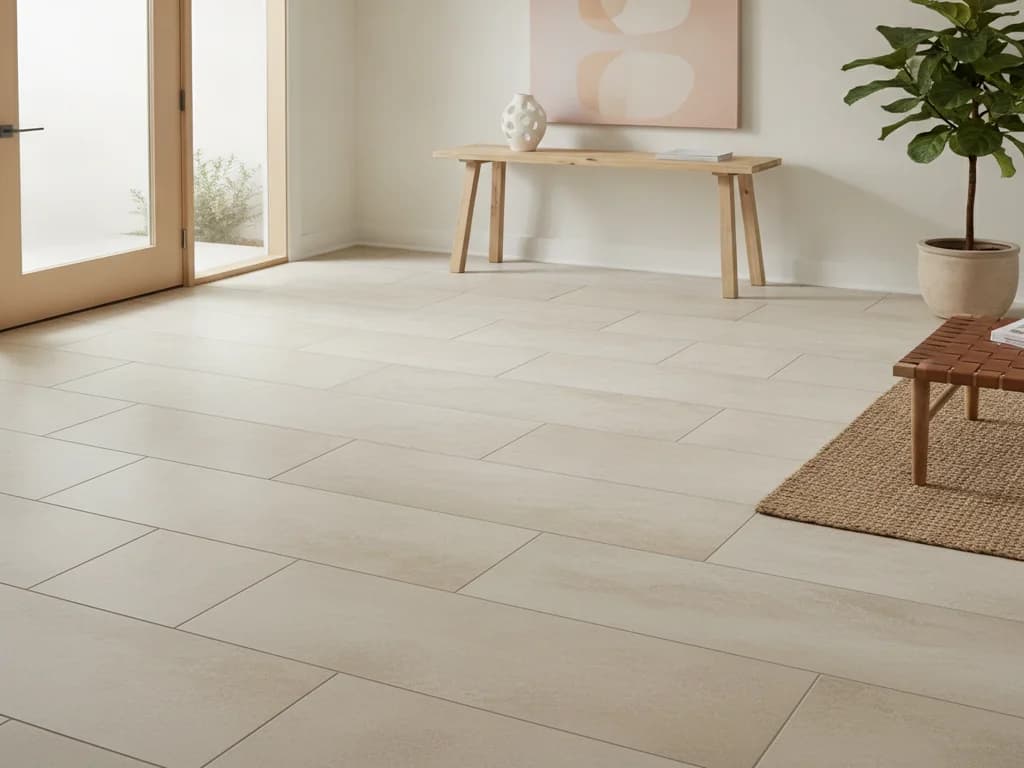
Commercial & Multifamily
Commercial, Retail & Office Flooring
Commercial flooring installation for offices, retail spaces, and tenant improvements — durable products and scheduling that works around your business.
Commercial spaces need flooring that handles foot traffic, rolling loads, and daily wear while still looking professional. We install commercial-grade luxury vinyl, tile, and carpet for offices, retail, and tenant-improvement projects, and help you balance durability, appearance, and budget.
We understand that downtime costs money, so we coordinate around your hours — including after-hours and phased installs — to keep your space usable. Proper subfloor prep and moisture testing come standard, so the floor performs for years, not months.
Licensed CSLB C-15 (#1060673) and insured, with documentation for your project file. Serving commercial properties across Northern California.
How We Work
Serving Commercial, Retail & Office
- Commercial-grade LVP, tile, and carpet built for traffic and rolling loads
- After-hours and phased installation to minimize business downtime
- Subfloor moisture testing and prep for long-term performance
- Coordination with GCs, property managers, and tenant-improvement schedules
- Licensed, insured, and documented for your job file
What Governs the Floor
Requirements That Apply to Commercial, Retail & Office
The standards, statutes and constraints that shape a flooring specification for this property type — with the source of each.
Floor surfaces: stable, firm, slip resistant
Section 302.1 of the 2010 ADA Standards states the requirement in four words — floor and ground surfaces shall be stable, firm, and slip resistant. It is a performance requirement rather than a product list, which means the specification has to name a product that meets it and a maintenance regime that keeps it meeting it. A polished surface that passes on day one and is then maintained with the wrong finish is a different surface.
2010 ADA Standards §302.1
Carpet has explicit limits
Section 302.2 is unusually prescriptive: carpet or carpet tile shall be securely attached with a firm cushion, pad or backing or none at all; it shall have a level loop, textured loop, level cut pile or level cut/uncut pile texture; pile height is ½ inch maximum; and exposed edges shall be fastened with trim along the entire exposed length, with that trim complying with §303. A plush broadloom that reads well in a lobby rendering can fail on pile height alone.
2010 ADA Standards §302.2
Every material change is a change in level
Where carpet meets tile, or tile meets wood, §303 governs: up to ¼ inch may be vertical, ¼ to ½ inch must be beveled at no steeper than 1:2, and anything over ½ inch has to be ramped under §405 or §406. In a tenant improvement with mixed existing build-ups this is the detail most likely to require a reducer nobody budgeted for, and it is far cheaper to reconcile the thicknesses on the drawing.
2010 ADA Standards §303
Openings and the accessible route
Section 302.3 limits openings in a floor surface so they will not pass a ½-inch sphere, with elongated openings placed so the long dimension runs perpendicular to the dominant direction of travel — which governs grates and expansion-joint covers in an entry sequence. Along an accessible route, §403.3 holds running slope to no steeper than 1:20 and cross slope to no steeper than 1:48.
2010 ADA Standards §302.3, §403.3
This describes what the standards and statutes require. It is not a legal opinion about your property and not a guarantee of outcome — which rules apply to which space is a question for your code consultant or counsel. We are the flooring contractor, not the project's code authority.
Materials
Products We Install
Also see our full commercial & multifamily overview and our trade program for builders, GCs, and property managers.
Commercial & Multifamily
Frequently Asked Questions
What does the ADA actually require of a floor surface?
Section 302.1 of the 2010 ADA Standards requires floor and ground surfaces to be stable, firm, and slip resistant. That is a performance requirement rather than a list of approved products, so compliance depends on both the product specified and how it is maintained afterwards — a surface treated with the wrong finish or polish is not the surface that was specified. Carpet carries additional explicit rules under §302.2, including a ½-inch maximum pile height.
Is there a limit on carpet pile height?
Yes — ½ inch maximum under §302.2 of the 2010 ADA Standards. The same section requires carpet or carpet tile to be securely attached with a firm cushion, pad or backing (or none), restricts the texture to level loop, textured loop, level cut pile or level cut/uncut pile, and requires exposed edges to be fastened with trim running the entire exposed length. That trim itself has to comply with the change-in-level rules in §303.
How do we handle transitions between different flooring materials?
Under §303 of the 2010 ADA Standards, a change in level up to ¼ inch may be left vertical, between ¼ and ½ inch must be beveled at a slope no steeper than 1:2, and anything greater than ½ inch must be ramped. In a tenant improvement the practical problem is usually mismatched existing build-ups, so the cheapest time to solve it is while thicknesses are still adjustable on paper rather than after both materials are ordered.
Can you work after hours to avoid disrupting operations?
Yes — phased and after-hours installation is normal for occupied retail and office space, and we plan the sequence so areas come back into service as quickly as possible. The constraint worth flagging early is that adhesives and finishes have cure times that do not compress to fit a schedule, so the realistic return-to-service window is a product question as much as a labour one.
Sources
- 2010 ADA Standards for Accessible Design, §302 & §303
Floor-surface requirements, the 1/2 in carpet pile limit, and the change-in-level thresholds for transitions.
- NWFA — Wood Flooring Installation Guidelines & Technical Publications
Moisture-testing protocol, service humidity range, and maintenance limits such as the prohibition on steam cleaning.
- California Contractors State License Board — license lookup
Verify any California contractor's licence, classification and standing, including ours (#1060673).
External links are provided for reference and were verified live on 29 August 2026. Codes and standards are revised — confirm both the current edition and the edition that applied when your building was constructed with the issuing body.
Related
Keep Reading
Related pages: Commercial Flooring, Hardwood Flooring, Engineered Hardwood, and Luxury Vinyl Plank.
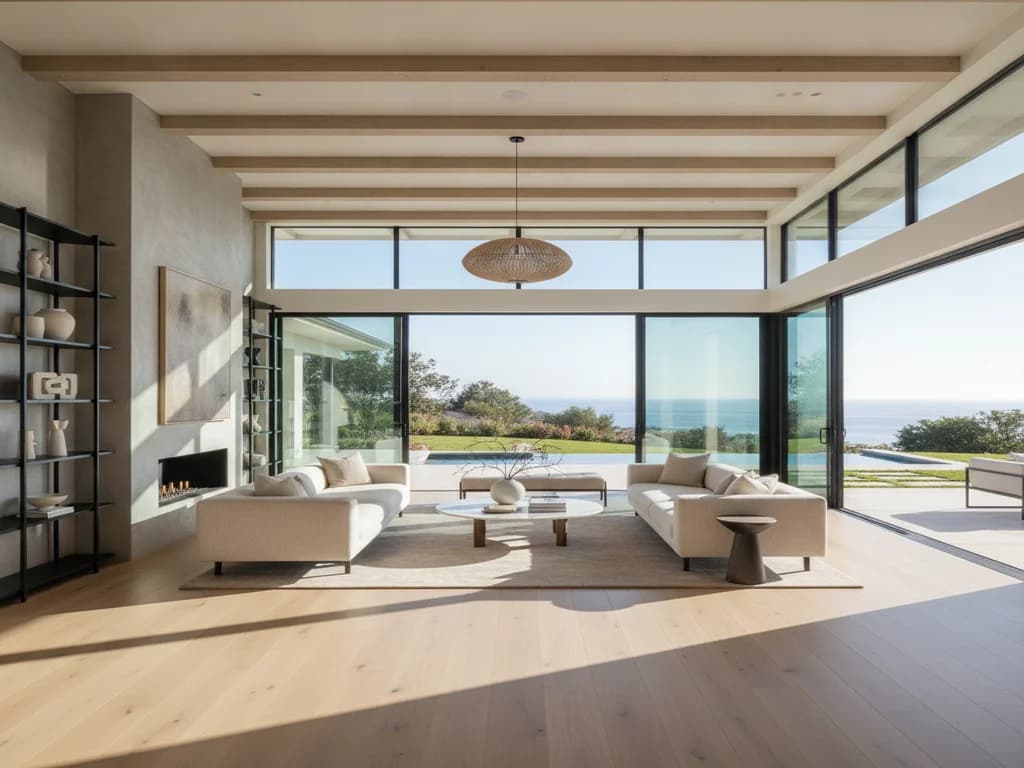
Flooring for Commercial, Retail & Office
Call (916) 749-0272 to scope your project and get an honest, itemized estimate.