Species
French Oak Flooring
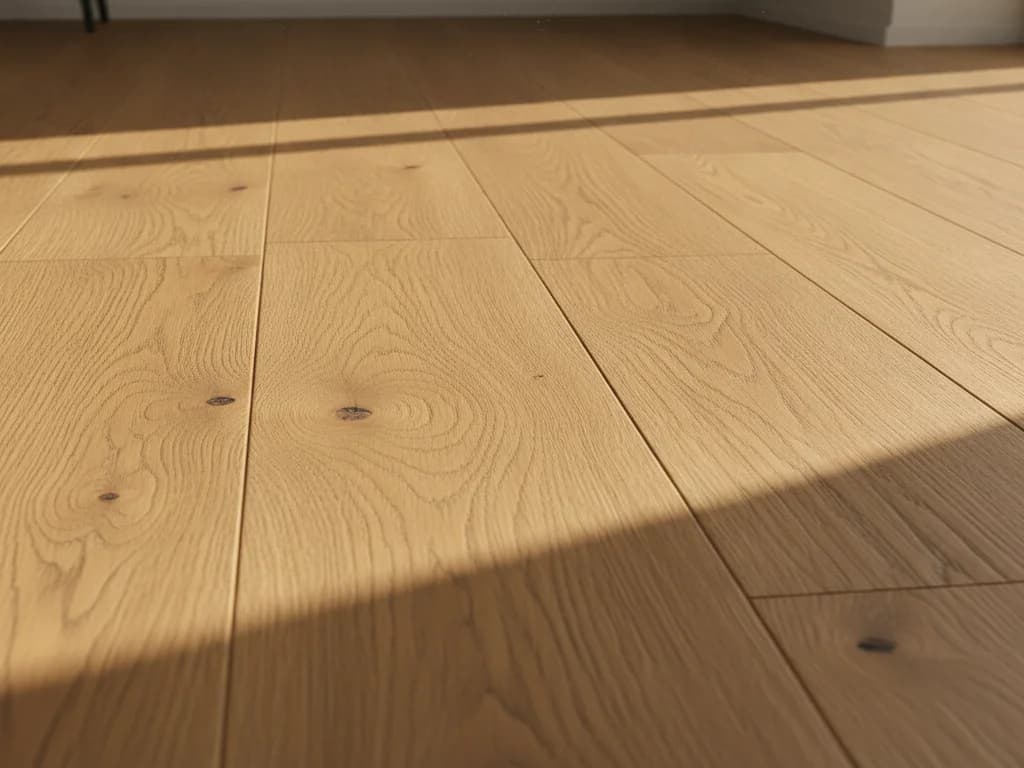
A European white oak prized for tight, elegant grain and its ability to carry rich custom colors, wire-brushing, and reactive finishes on wide, long planks.
Character
Why French Oak
Look
Refined, tighter grain with beautiful character — a favorite for bespoke stains and wire-brushed textures.
Durability
Dense oak hardwood suited to high-traffic luxury homes; refinishable over time.
Formats
Most often engineered wide-plank, and the classic choice for chevron and herringbone.
French Oak at a Glance
- Type
- Species
- Seasonal Movement
- French oak is European oak (Quercus robur/petraea), for which FPL publishes no dimensional-change coefficient, so none is quoted. Cut and construction - rift/quartersawn versus plainsawn, engineered versus solid - drive far more of how a French oak floor behaves than a species figure would anyway.
What It Needs
Installing French Oak
The requirements that apply specifically to this product — with the standard each one comes from.
French oak is European oak
It is the same species group, Quercus robur/petraea, named for its origin rather than for a botanical difference from other European oak. That matters for one practical reason: FPL publishes no dimensional-change coefficient for it, so any specific movement figure quoted for French oak is either borrowed from American white oak or invented. The honest guidance is that it behaves broadly like other white oaks, and that cut and construction do far more to determine its behaviour than provenance does.
USDA FPL Wood Handbook, Table 13-5
Buy the specification, not the name
Because the name describes origin rather than a measurable property, the specification is what tells you what you are getting: the cut (rift, quartersawn, plainsawn or live-sawn, with NWFA's growth-ring angles behind each), the construction (solid or engineered, and the wear-layer thickness if engineered), the width class, and the finish. Two floors both sold as French oak can differ on every one of those.
NWFA Installation Guidelines
These are what the standards require, not a guarantee of outcome. The flooring manufacturer's written instructions govern wherever they are stricter.
Best For
High-end custom homes wanting a distinctive, designer wide-plank or parquet look.
How We Install It
Typically engineered for wide-plank stability, glue-down or floating over prepared subfloors, including radiant-compatible assemblies.
Explore related
See it in a mountain home, explore Lake Tahoe flooring, or view all wood species.
Sources
- USDA Forest Products Laboratory - Wood Handbook (FPL-GTR-282), Ch. 13 — Dimensional change coefficients (Table 13-5) and Equation 13-3, behind the seasonal-movement figures.
- National Wood Flooring Association (NWFA) — Industry authority on wood-flooring species characteristics, grading, and installation.
Species characteristics reflect published industry and government references; individual boards vary by grade, cut, and finish. Figures are general to the species and are not a grading or performance guarantee for a specific product.
Good to Know
Frequently Asked Questions
Why is French oak more expensive?
French oak is milled and finished for the luxury market — wide, long, engineered planks with premium wire-brushed and custom-stained finishes. The material and finishing cost more than standard oak. We'll give you an honest estimate for your project.
Related
Keep Reading
Related pages: Hardwood Flooring, Engineered Hardwood, Luxury Vinyl Plank, and Reviews.
Install French Oak in Your Home
Call (916) 749-0272 — we'll bring french oak samples and give you an honest estimate.