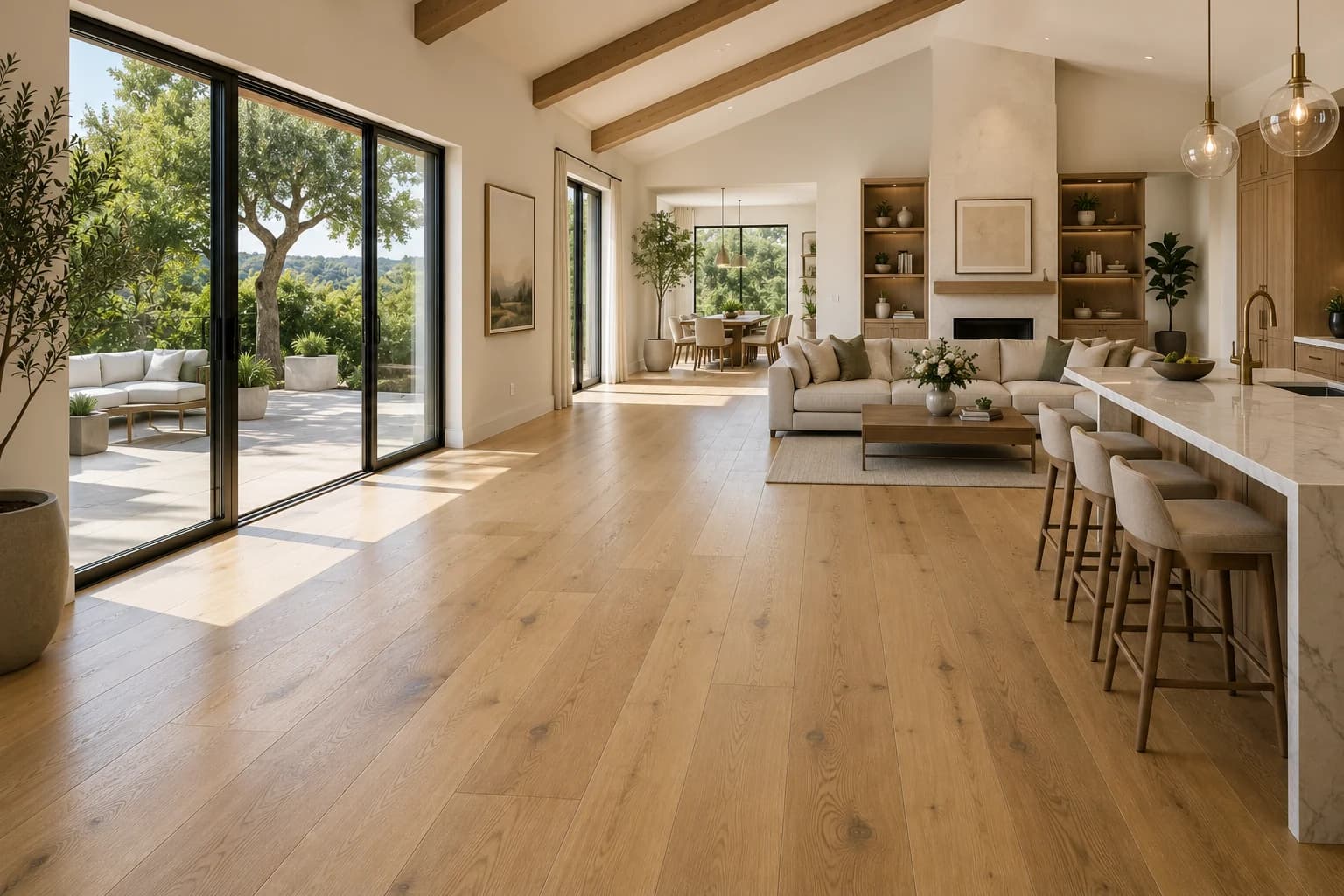
Service Area
Flooring in Loomis
Renaissance Floors installs and refinishes hardwood, luxury vinyl, tile, and more for homeowners throughout Loomis and the surrounding Placer County area.
CSLB #1060673
Licensed & Insured
Est. 2019
Family-Owned
15+ Years
Hands-On Experience
5.0★ Rated
22 Reviews on Thumbtack
Local, Licensed, Accountable
Flooring Contractor Serving Loomis
Loomis is part of Placer County, and it's one of the communities Renaissance Floors regularly works in. We're based in Roseville, CA and serve homeowners across Greater Sacramento & Northern California— from small refinishing jobs to full home installs. Every project starts with an honest look at your subfloor and your goals, followed by a clear, no-pressure estimate. There's no dispatched sales team and no guesswork: you work directly with the crew doing the installation, backed by our CSLB C-15 license and a workmanship warranty on every job.
Placer County mixes newer master-planned communities in Roseville and Rocklin with established and foothill homes toward Auburn. We work over both slab and raised foundations, matching the right product and prep to each home.
Loomis is the incorporated small town of the south Placer foothills — about 6,800 people on 7.3 square miles at 404 feet, seated in the western portion of the Loomis Basin, the 80-square-mile stretch of foothill country the town gives its name to. Interstate 80 runs straight through the middle and splits the town into its two characters: north of the freeway, the compact downtown along Taylor Road with the shops, offices, and the town's denser housing; south of it, in the General Plan's own words, an area 'almost exclusively rural and residential in character.'
The town exists on purpose. In December 1984, with subdivision growth rolling up out of the valley, Loomis residents voted to incorporate rather than be absorbed — the General Plan states the motive without decoration: 'To gain more political control over the growth and development of their semi-rural community, the Town incorporated in 1984.' Forty years later the intent is still written into the zoning: Residential Agricultural, at one home per 4.6 acres, is the largest residential land-use designation in town — more than 2,100 acres of it — and the plan codifies a property owner's right to farm and a policy that 'equestrian and farming activities shall be protected.' The town's own adopted branding line says the rest: 'Welcome to Loomis, a Friendly Old-Fashioned Rural Community.'
Incorporation has a practical consequence every remodeling project inherits: Loomis runs its own Building Division. Unlike the unincorporated communities around it — Penryn, Newcastle, Granite Bay — a Loomis address does not permit through Placer County; submittals go to the Town by email, permits and inspection cards are required to be posted on site, and projects submitted after January 1, 2026 fall under the 2025 Building Code. It is small-town permitting in the literal sense — a named permit technician, a named inspector — and knowing which desk your project crosses is the kind of detail that keeps a schedule honest.
The ground under Loomis is granite, and not abstractly. In 1906 the State Mining Bureau's Bulletin 38 recorded the Loomis Station quarry — biotite granite, a hundred-foot working face, stone shipped to San Francisco for the Hibernia Bank building — sitting midway along the quarry belt that ran from Rocklin to Penryn. The quarries are long closed, but the same rock still breaks the surface across town, and the modern General Plan treats it as a live construction fact: rock outcroppings 'either need to be avoided or in some limited cases removed, which can be an additional expense,' and four separate land-use policies require development to design around outcrops rather than grade them flat. The visible result is a housing stock full of stepped pads, split-levels, and slabs poured to follow the contour — floors that were never flat-tract floors to begin with.
The fruit era touched Loomis too — in the early twentieth century this was Placer County's second-largest fruit-shipping station, and its two surviving packing sheds anchor the town today: the Blue Goose, built in 1945, worked until 2001, and restored by the South Placer Heritage Foundation into the community's event center, and the High-Hand shed complex, now a nursery, café, and conservatory. Each October the Loomis Basin Chamber stages the Fruit Shed Fest along that same stretch of Taylor Road. But the deeper story next door belongs to Newcastle; what Loomis owns is what came after — a town that chose its shape and has held it.
Held it measurably: the Town's General Plan reports that 76.2% of Loomis housing predates 1990, with the 1980s alone contributing 960 homes — roughly a third of everything — and the entire 2010-to-2020 decade adding just 92 units. The region's biggest new subdivision, Bickford Ranch and its 1,890 approved homes, sits deliberately outside town, on unincorporated county land miles north. So Loomis flooring work is remodel work: floors from the town's big building decade reaching the end of their first life, on acreage properties with working entries, over ground that granite made interesting. Renaissance Floors — licensed CSLB C-15 #1060673, based down I-80 in Roseville — does exactly that work, with free in-home estimates and a workmanship warranty.
Local Coverage
Neighborhoods We Serve in Loomis
From Penryn to Ophir, Renaissance Floors installs and refinishes floors across Loomis.
Recent Work
A Sample of Our Craftsmanship
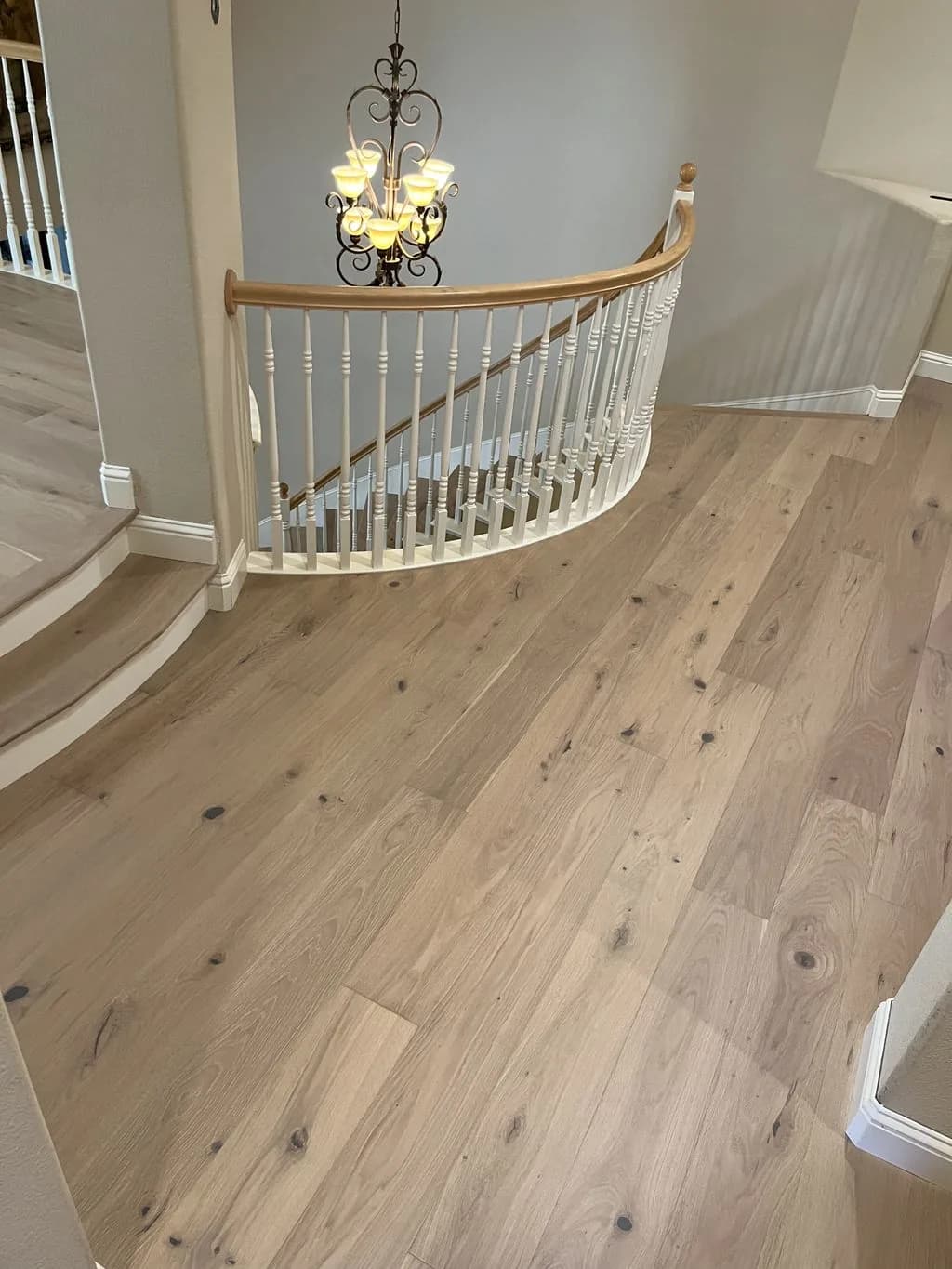
White Oak Hardwood
Great Room & Landing
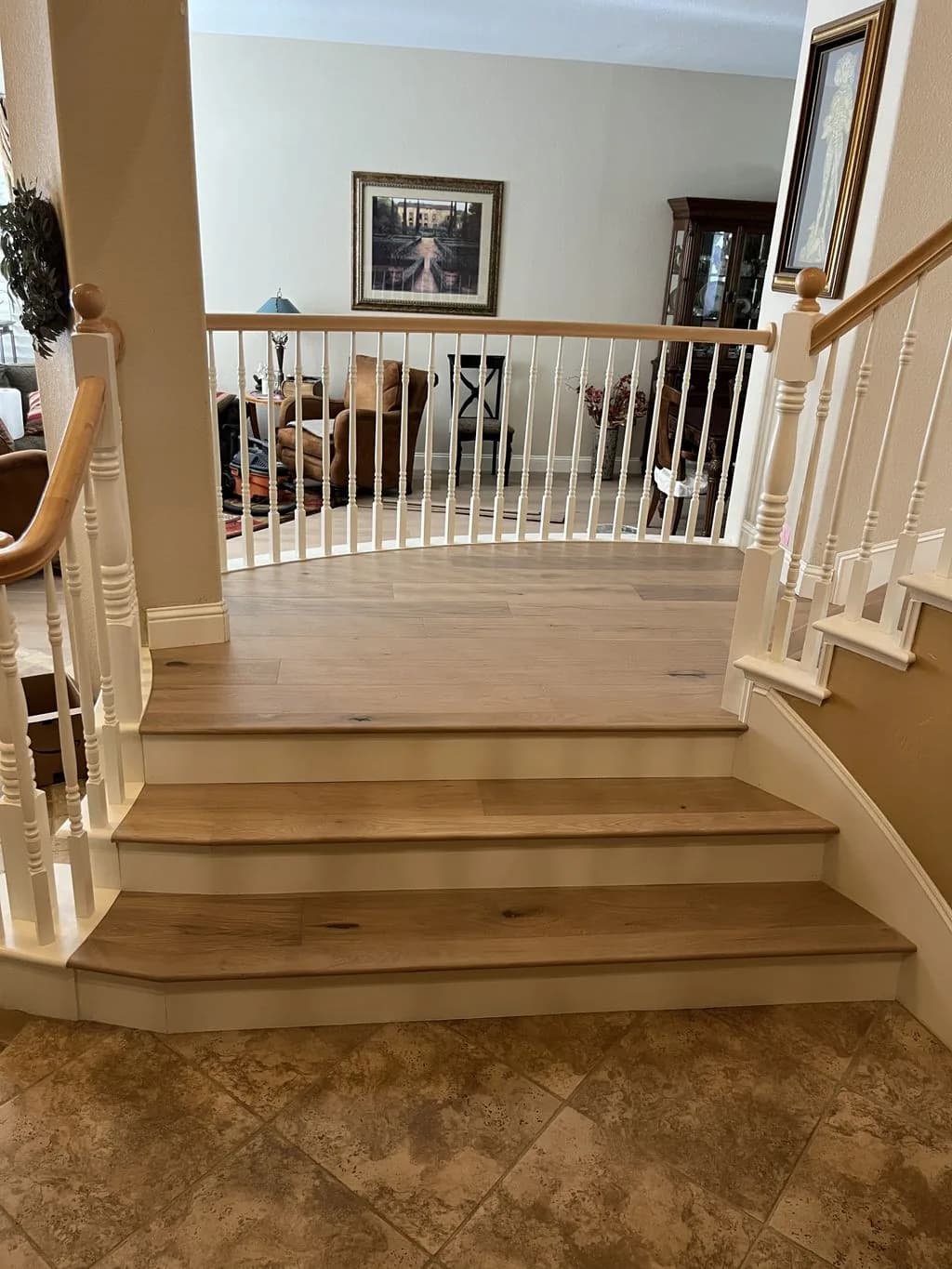
White Oak Hardwood
Staircase & Landing
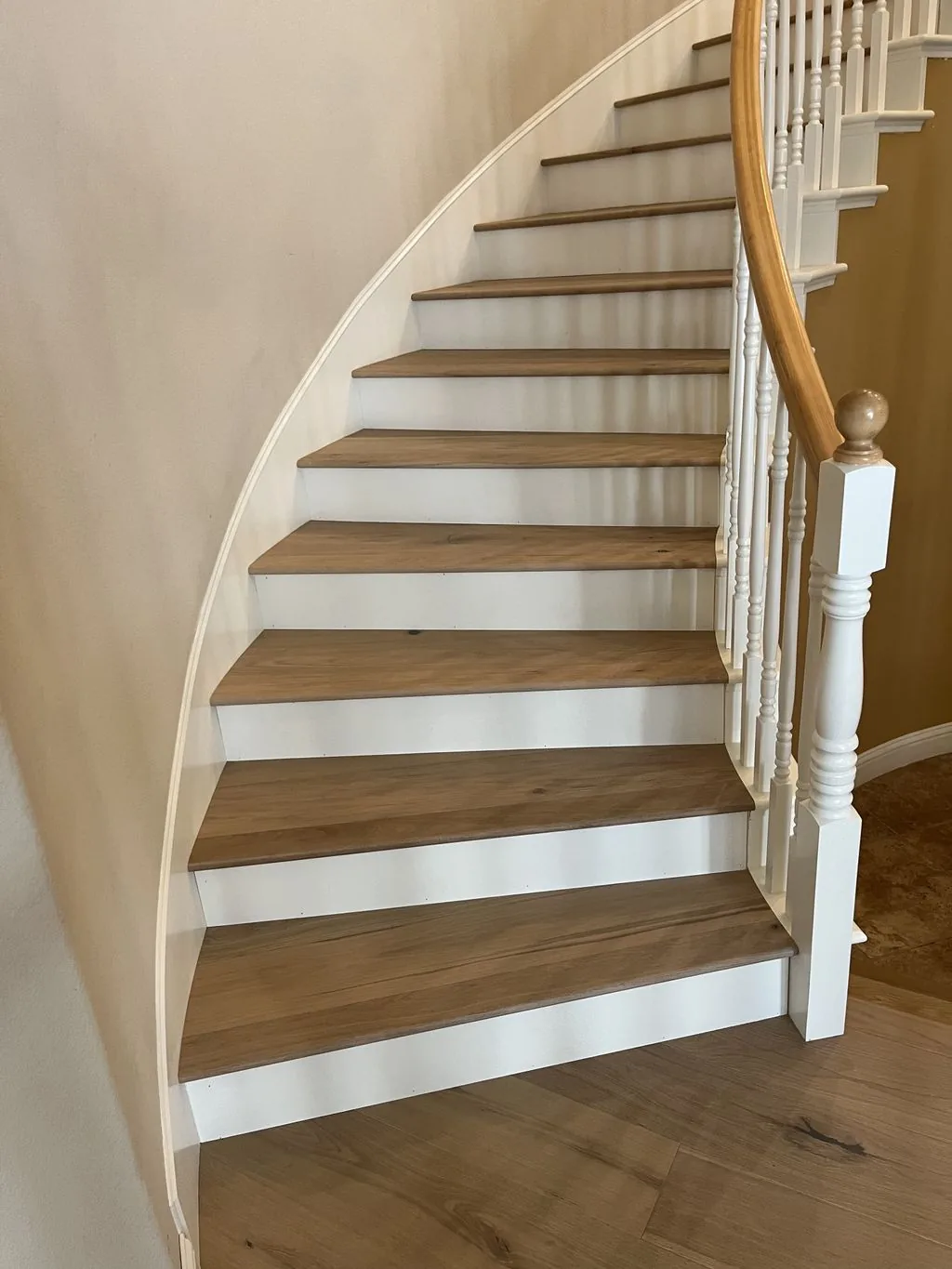
White Oak Hardwood
Curved Staircase
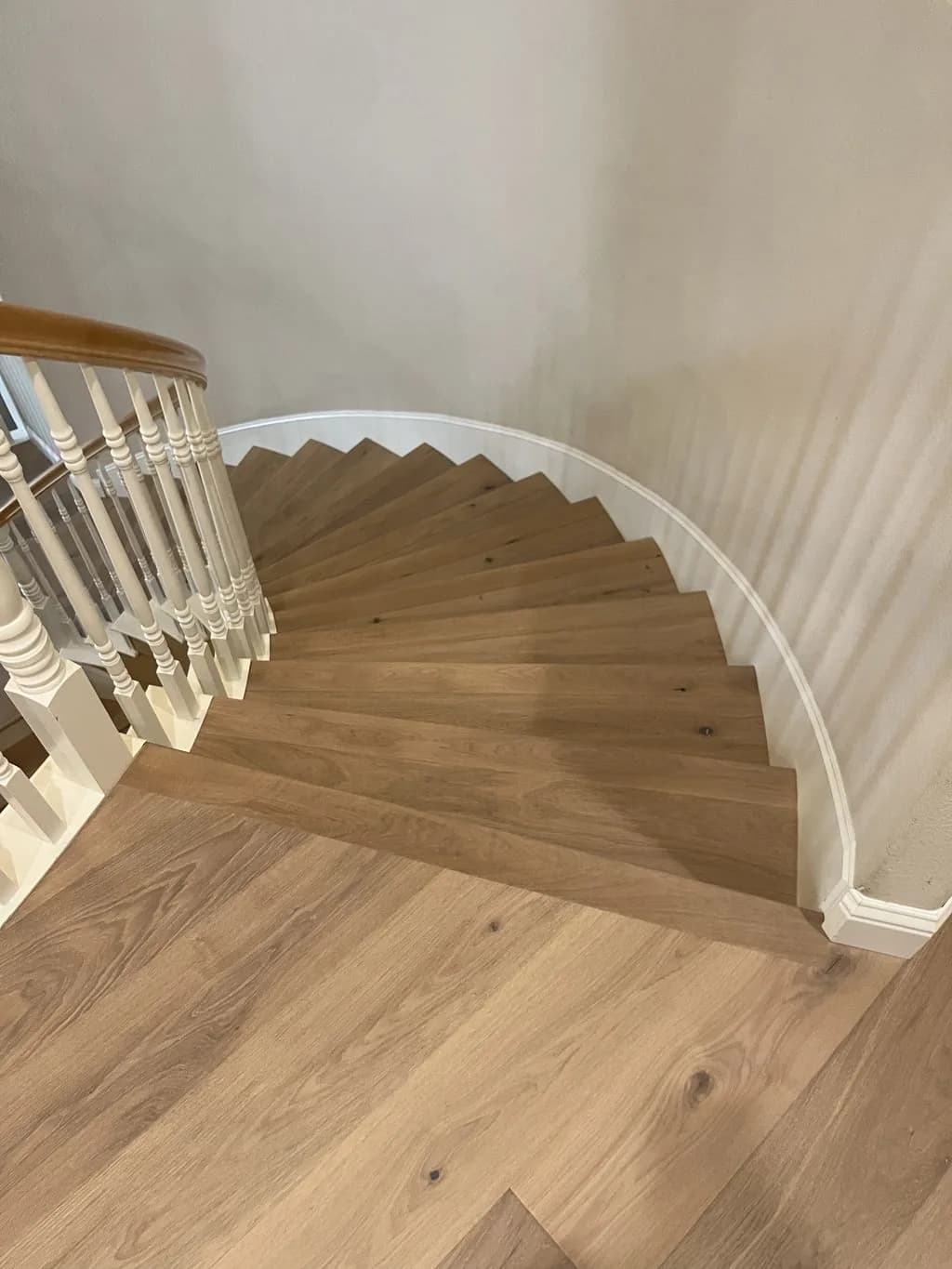
White Oak Hardwood
Stair Treads
Our Services
Flooring Services in Loomis
From hardwood to luxury vinyl, here's how we help Loomis homeowners upgrade their floors.
Hardwood Flooring
Solid oak, maple, and walkable heirloom-grade hardwood, precisely installed.
Hardwood Flooring in LoomisEngineered Hardwood
Real-wood wear layers built for California's climate swings.
Engineered Hardwood in LoomisLuxury Vinyl Plank
Waterproof, wood-look LVP for kitchens, baths, and busy households.
Luxury Vinyl Plank in LoomisLaminate Flooring
Durable, high-style laminate at a friendly price point.
Laminate Flooring in LoomisTile Flooring
Porcelain and ceramic tile set dead-level with crisp grout lines.
Tile Flooring in LoomisFloor Installation
Full-service installation from subfloor prep to final baseboard.
Floor Installation in LoomisFloor Refinishing
Sand, stain, and reseal tired hardwood back to new.
Floor Refinishing in LoomisFloor Repair
Board swaps, water damage, squeaks, and seamless patch-ins.
Floor Repair in LoomisLocal Considerations
What Loomis Homes Need From a Floor
Climate, home age, and foundation type all shape the right flooring choice in Loomis — here's what we account for.
Your permit comes from the Town, not the county
Loomis is one of the few incorporated jurisdictions in the foothill corridor, and it runs its own Building Division — submittals go to the Town by email, permits and inspection cards are required to be posted on site, and the 2025 Building Code applies to projects submitted after January 1, 2026. Ordinary floor replacement is typically finish-level work that doesn't need a permit on its own, but anything structural, and any flooring inside a larger remodel, crosses the Town's desk rather than Placer County's — a distinction that surprises people who also own property in the unincorporated communities next door.
Granite outcrops shaped the houses
The Town's General Plan names rock outcroppings as a physical development constraint — avoid them or pay to remove them — and four separate policies require builders to design around the rock rather than grade it out. Decades of that produce Loomis's characteristic floor structures: stepped pads, split-levels, sunken rooms, and slabs that follow the contour. For flooring it means transitions, level changes, and flatness checks are part of nearly every whole-house project here, and the substrate assessment matters more than it would on a flat valley tract.
The 1980s built a third of Loomis — and those floors are due
Per the Town's own figures, 960 Loomis homes went up in the 1980s, more than any other decade by a wide margin, and 76.2% of the housing stock predates 1990. Floors installed then are past their design life: original oak strip and parquet are candidates for refinishing rather than replacement, first-generation laminate and sheet vinyl are simply done, and worn carpet over forty-year-old subfloors is the most common starting point we see. The right first step is reading what's there — including the subfloor's four decades of history — before choosing material.
Right-to-farm acreage means working entries
The General Plan protects agriculture and equestrian activity as a matter of policy, large-animal keeping scales with parcel size, and much of the town south of I-80 lives on acreage with barns, paddocks, and gravel drives. That life arrives at the house as grit, mud, and wet dogs — the exact abrasives that dull a floor finish. The mudroom, the garage entry, and the barn-to-kitchen path deserve waterproof, washable surfaces and real walk-off matting; that investment is what keeps hardwood in the living spaces looking right between refinishes.
A rain gradient you can see in the data
Two NOAA stations with current normals bracket the town: Rocklin 2.5 W, at 130 feet, averages 23.96 inches a year, while Penryn 0.4 SE, at 610 feet, averages 30.72 — and Loomis at 404 feet sits on the slope between them, catching roughly a quarter more rain than the valley floor a few miles west. About 80% of it falls November through March; July and August are effectively rainless at both stations. That saturated-winter, bone-dry-summer swing is the acclimation argument in numbers: wood equilibrates in the house at its real conditions, and expansion detailing is set for the actual swing.
Wells, septic, and the Barton Road area
The Town's General Plan is candid that parts of Loomis — the Barton Road area most notably — are not on the public water system and rely on private wells, with well yield and water quality 'variable depending on the source.' For floors, well-and-septic properties deserve extra respect for moisture: slab and subfloor readings before installation, attention to water-treatment equipment and its plumbing, and leak sensors at the usual failure points, because a slow leak on a rural parcel can run a long time before anyone notices.
Protected oaks and creek drainages frame the site work
Loomis runs a Tree Conservation Ordinance whose stated priority is maximizing preservation of protected oaks — the General Plan's own example is three replacement trees for a removed mid-size blue oak — and the town drains through Secret Ravine, Antelope Creek, and their tributaries, which the plan flags as constraint areas. Flooring rarely touches either directly, but additions and larger remodels that include flooring often do, and projects here get planned with the tree permit and drainage questions asked early rather than discovered late.
Local Resources & References
Helpful Loomis Resources
Authoritative local and industry references for permits, planning, and flooring standards.
- General Plan 2020-2040, Volume I (Final, March 2024) — character, land use, housing, constraintsTown of Loomis
- About the Town — incorporation December 17, 1984Town of Loomis
- Building Division — the Town's own permit authorityTown of Loomis
- Tree Preservation — the Tree Conservation OrdinanceTown of Loomis
- The Blue Goose fruit shed — built 1945, worked until 2001, restored by the South Placer Heritage FoundationBlue Goose Event Center
- Bulletin 38 — the Loomis Station granite quarry, Rocklin-to-Penryn belt (transcribed)CA State Mining Bureau (1906)
- 1991-2020 US Climate Normals — Rocklin 2.5 W (23.96 in) and Penryn 0.4 SE (30.72 in) bracket LoomisNOAA NCEI
- Town of Loomis — ACS profile (population, housing, home values)US Census
- Bickford Ranch Specific Plan — the 1,890-home project outside Loomis, in unincorporated Placer CountyPlacer County
External links are provided for reference. Always confirm current requirements with the issuing agency.
Explore Flooring Services in Loomis
Serving the Region
Flooring Across Our Core Service Areas
We install and refinish floors across our core Northern California service areas — from the Sacramento region and the foothills to the Bay Area and wine country.
Good to Know
Frequently Asked Questions
Does Renaissance Floors serve Loomis?
Yes. We install and refinish flooring throughout Loomis and the surrounding Placer County area. Call (916) 749-0272 for a free estimate.
What flooring services do you offer in Loomis?
We install hardwood, engineered wood, luxury vinyl plank, laminate, tile, and more in Loomis, plus floor refinishing, repair, and full-service installation. See the full list below.
Are you licensed to work in Loomis?
Yes. We hold CSLB C-15 license #1060673 (C-15 Flooring & Floor Covering) and carry insurance. We're based in Roseville, CA and serve Loomis and all of Greater Sacramento & Northern California.
How do I get a free flooring estimate in Loomis?
Call (916) 749-0272 or request an estimate online. We'll schedule a convenient in-home visit in Loomis, measure your space, and give you an honest, no-pressure quote.
Do I need a permit from the Town of Loomis for new flooring?
Straightforward floor replacement — carpet, plank, refinishing existing hardwood — is typically finish-level work that doesn't require a permit on its own. Structural subfloor repairs, and flooring inside a larger remodel, do go through the Town's own Building Division: Loomis is incorporated and permits through Town Hall, not Placer County, with submittals by email and permits posted on site. We confirm scope with the Town as part of planning.
What does a typical Loomis flooring project look like?
A 1980s house getting its second floor. That decade built about a third of the town, and those homes are now past the design life of their original finishes — so the common projects are refinishing original oak, replacing first-generation laminate and sheet goods, and putting waterproof plank into hard-working kitchens and entries. With three-quarters of the stock predating 1990, substrate assessment is half the job.
My lot has granite outcrops — does that affect flooring?
Indirectly but genuinely. The Town's General Plan treats outcrops as a real construction constraint, and houses here were often built around the rock — stepped pads, split-levels, slabs following contour. For flooring that means level changes and transitions are part of the design, flatness gets verified rather than assumed, and a whole-house 'one continuous floor' plan sometimes needs honest adaptation to the structure the granite dictated.
What flooring holds up on a Loomis horse property?
Plan the working path first. Right-to-farm acreage means barn boots, paddock mud, and gravel-drive grit arriving at the same door every day, so the mudroom and garage entry want waterproof, washable flooring and long walk-off mats — that's what protects the hardwood in the rest of the house. Matte, textured finishes hide the fine scratching that foothill grit produces, and durable plank in the utility zones beats asking wood to survive them.
We're near the Blue Goose in the older part of town — anything special about our floors?
The blocks around downtown hold most of Loomis's oldest homes, and some still carry original wood under later carpet. Those floors deserve an assessment before anyone quotes replacement: material from that era is often worth restoring, and the board subfloors and settled framing underneath need reading either way. We check thickness at an exposed edge and give you a straight restore-or-replace answer.
How does Loomis's climate affect wood flooring?
The measured picture: the NOAA stations bracketing town record 24 to 31 inches of rain a year, about 80% of it November through March, and essentially none in July and August. Indoor humidity follows that swing, so wood is acclimated in the house at its normal conditions before installation and expansion detailing is set for the real seasonal range — the discipline that keeps seasonal movement invisible.
We're on a well near Barton Road — does that change anything?
It changes the moisture conversation. The Town's own plan notes well yield and water quality vary across Loomis, and rural well-and-septic properties are where slow plumbing leaks and water-equipment drips can run longest unnoticed. Before flooring goes in we take slab or subfloor moisture readings, and we'd recommend inexpensive leak sensors at the water heater, softener, and under sinks — cheap insurance for any floor.
Are you licensed, and do you offer financing?
Yes on both. Renaissance Floors holds California CSLB license #1060673 (C-15 flooring), verifiable through the CSLB license lookup, and we offer financing options along with free in-home estimates throughout Loomis and the Loomis Basin.
Related
Keep Reading
Related pages: Luxury Vinyl Plank in Citrus Heights, Tile Flooring in Citrus Heights, Hardwood Flooring in Loomis, and Engineered Hardwood in Loomis.

Ready for Floors You'll Love?
Free, no-pressure flooring estimates throughout Loomis and Placer County.