Service Area
Flooring in Mill Valley
Renaissance Floors installs and refinishes hardwood, luxury vinyl, tile, and more for homeowners throughout Mill Valley and the surrounding Marin County area.
CSLB #1060673
Licensed & Insured
Est. 2019
Family-Owned
15+ Years
Hands-On Experience
5.0★ Rated
22 Reviews on Thumbtack
Local, Licensed, Accountable
Flooring Contractor Serving Mill Valley
Mill Valley is part of Marin County, and it's one of the communities Renaissance Floors regularly works in. We're based in Roseville, CA and serve homeowners across Greater Sacramento & Northern California— from small refinishing jobs to full home installs. Every project starts with an honest look at your subfloor and your goals, followed by a clear, no-pressure estimate. There's no dispatched sales team and no guesswork: you work directly with the crew doing the installation, backed by our CSLB C-15 license and a workmanship warranty on every job.
Marin's older homes and coastal-influenced humidity make moisture management and the right product choice especially important. Engineered wood and quality LVP are dependable picks, and original hardwood often refinishes beautifully.
Mill Valley is named for a sawmill. John Reed built it in the 1830s on Rancho Corte Madera del Presidio, and the state lists the site, now Old Mill Park at Throckmorton Avenue and Cascade Drive, as California Historical Landmark No. 207, the First Sawmill in Marin County; the mill standing there today is a 1991 reconstruction based on historic photographs and physical evidence. Buyers in the new town voted in 1890 to change its name from Eastland to Mill Valley, and in 1896 the Mill Valley & Mount Tamalpais Scenic Railway was completed, climbing 2,574 feet around 281 curves from present-day Lytton Square to the summit. Residents voted 99 to 63 to incorporate on August 25, 1900, and the town received its state charter on September 1. Today about 14,000 people live on roughly 4.8 square miles of land.
The early houses have their own history. The City's Historic Context Statement records that many early buyers planned summer cabins as a country retreat from San Francisco, that the town became a haven for people displaced by the 1906 earthquake, many of whom resettled permanently, and that its early buildings ranged from rustic lodges and vernacular houses to First Bay Tradition, Tudor Revival and Queen Anne designs. In the Census Bureau's 2020–2024 five-year estimates, that older layer is still large. Of about 6,400 housing units, about 28 percent were built before 1940 and roughly seven in ten before 1970, with a median year built of 1958. That pre-1940 share is well above San Rafael's or Larkspur's, about 10 percent each, though not the highest in Marin: Ross and Fairfax run higher. About seven in ten homes are detached single-family houses, and owners occupy about two-thirds of occupied homes.
Those homes sit on two very different kinds of ground. The City's Safety Element, adopted in January 2026, describes 'steep hills and ridges' on one side and flat marshlands, bay plains and mudflats on the other. It says most of Mill Valley is susceptible to landslides because of its steep terrain, while most of the downtown and commercial area between Miller Avenue and East Blithedale Avenue is relatively flat with little to no landslide susceptibility, and that large areas of former bay mud marshland have been filled over the years, with a high potential for damage from differential settlement. The City's Land Use Element draws the same contrast by neighborhood: Cascade and Blithedale canyons with narrow, circuitous roads among redwoods, and the Sycamore/Tamalpais Park area with relatively level topography and a more conventional lot pattern. Densities run, in the City's words, from one home per ten acres in remote hillside areas to seven homes per acre on flat topography.
A Mill Valley mailing address does not settle who issues the permit. ZIP code 94941 holds about 14,300 housing units, more than twice the city's count, and Census geography places Tamalpais Valley, Homestead Valley and Strawberry in unincorporated census-designated places; the City's Historic Context Statement describes some parts of Alto as primarily outside city limits, too. The City's permit page asks applicants to 'confirm the job site address is located in the City of Mill Valley and NOT in an Unincorporated area' and to contact Marin County for unincorporated properties. Inside the city, the Building Division's handout on work exempt from permits names 'Painting, papering and similar finish work' and does not mention flooring, and the City's permit FAQ says most exempt work 'is of a cosmetic nature only.' Whether a particular floor project needs a permit is a question for the Building Division, not an assumption.
Three more local facts bear on floors. Ordinance No. 1363, the City's 2025 building-code ordinance, brought to the City Council for second reading and adoption on December 8, 2025, adds a Mill Valley amendment to the California Building Code requiring the ground beneath a building's floor system to be graded to a low point that drains to the exterior if water gets in, with a drainage system or sump where the outside grade is higher. The lowlands flood: FEMA's map, effective March 16, 2016, puts sampled points at 85 Throckmorton Avenue and 500 Miller Avenue in Zone AE, where the City counts renovations made within a two-year period when deciding whether work is 'substantial.' And uphill, CAL FIRE maps about 804 acres of the city as Very High Fire Hazard Severity, with 865 of 5,892 parcels in that zone by the Safety Element's count, though the state's wildfire building rules address exterior exposure, not interior floors.
Renaissance Floors is a licensed California C-15 flooring contractor (CSLB #1060673) based in Roseville. For a Mill Valley home, the first questions are whether the address is inside city limits, what the Building Division says about the scope, whether the room sits in a mapped flood zone, and what the floor system rests on, all answered before a product is chosen. Free in-home estimates and a workmanship warranty.
Local Coverage
Neighborhoods We Serve in Mill Valley
From Downtown Mill Valley to the Sycamore Triangle, Renaissance Floors installs and refinishes floors across Mill Valley.
Recent Work
A Sample of Our Craftsmanship
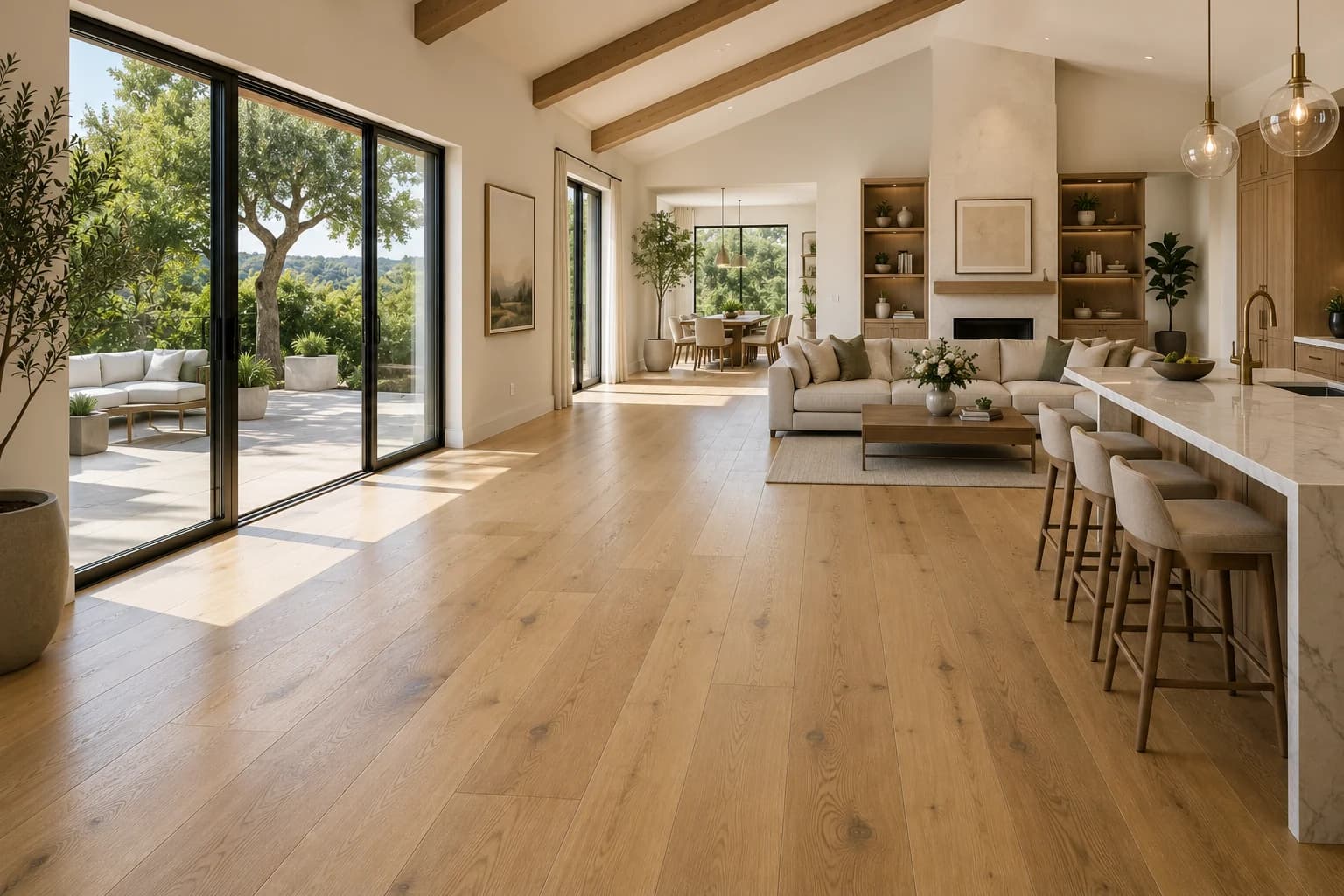
White Oak Hardwood
Great Room & Landing
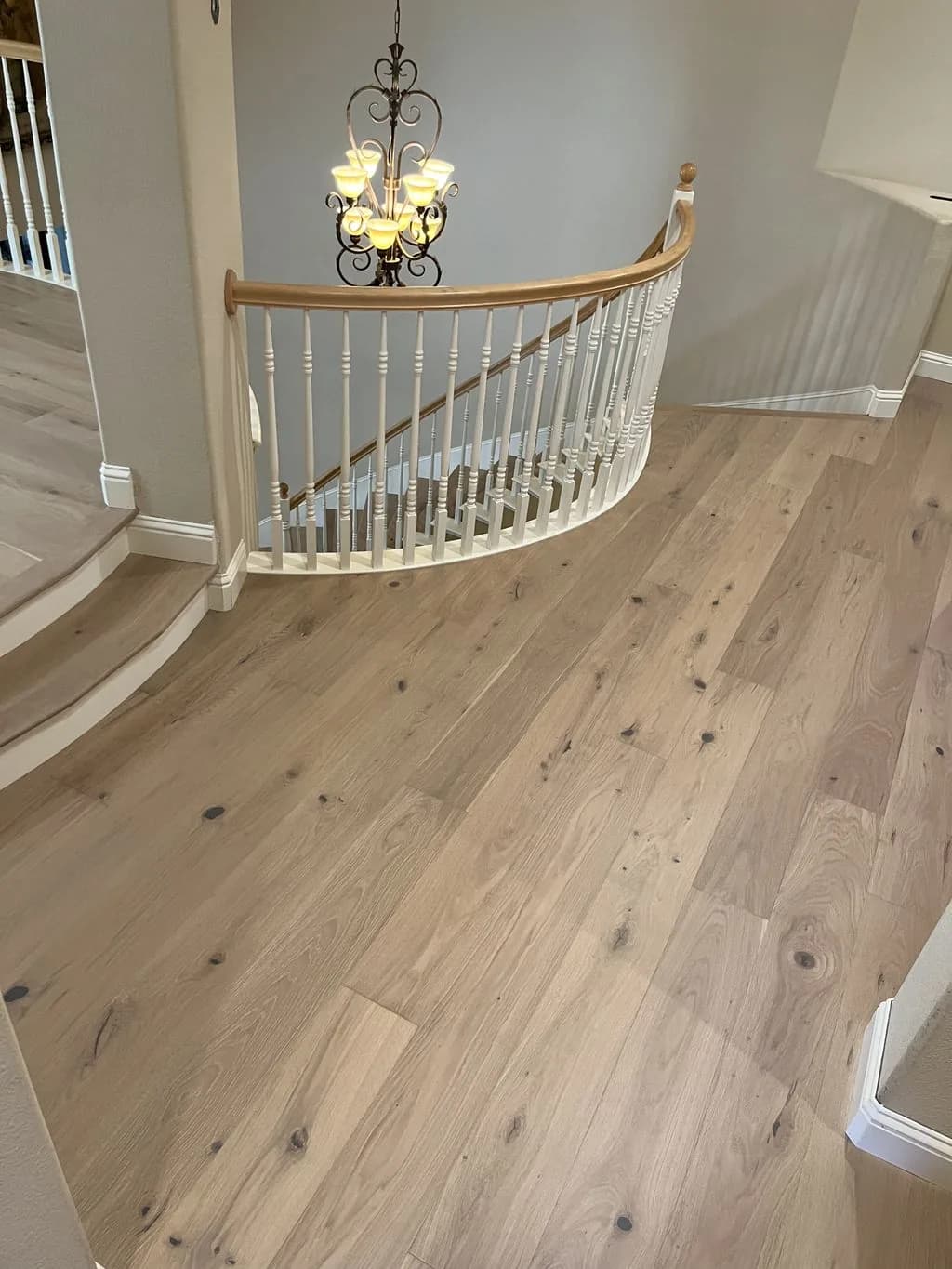
White Oak Hardwood
Staircase & Landing
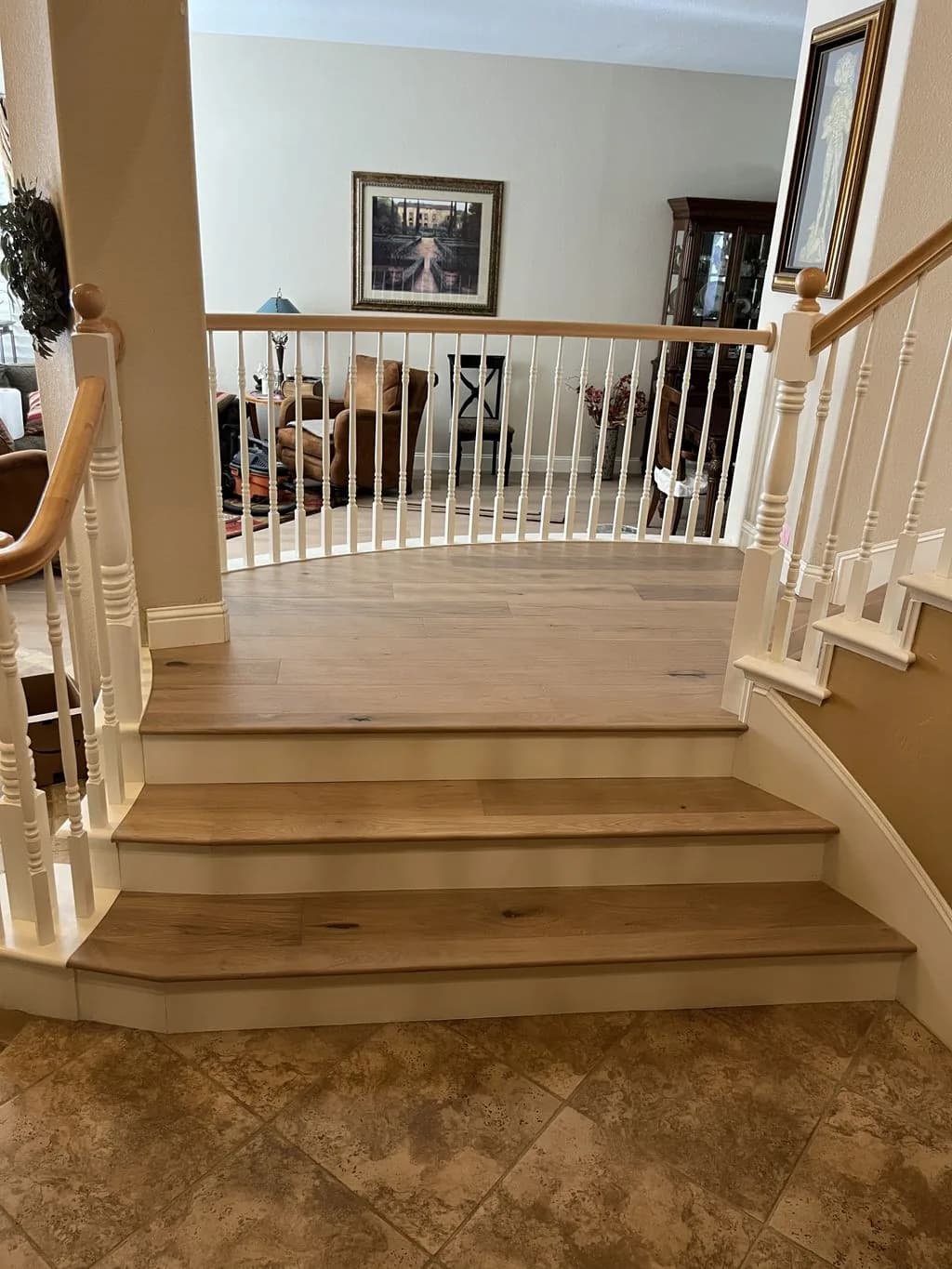
White Oak Hardwood
Curved Staircase
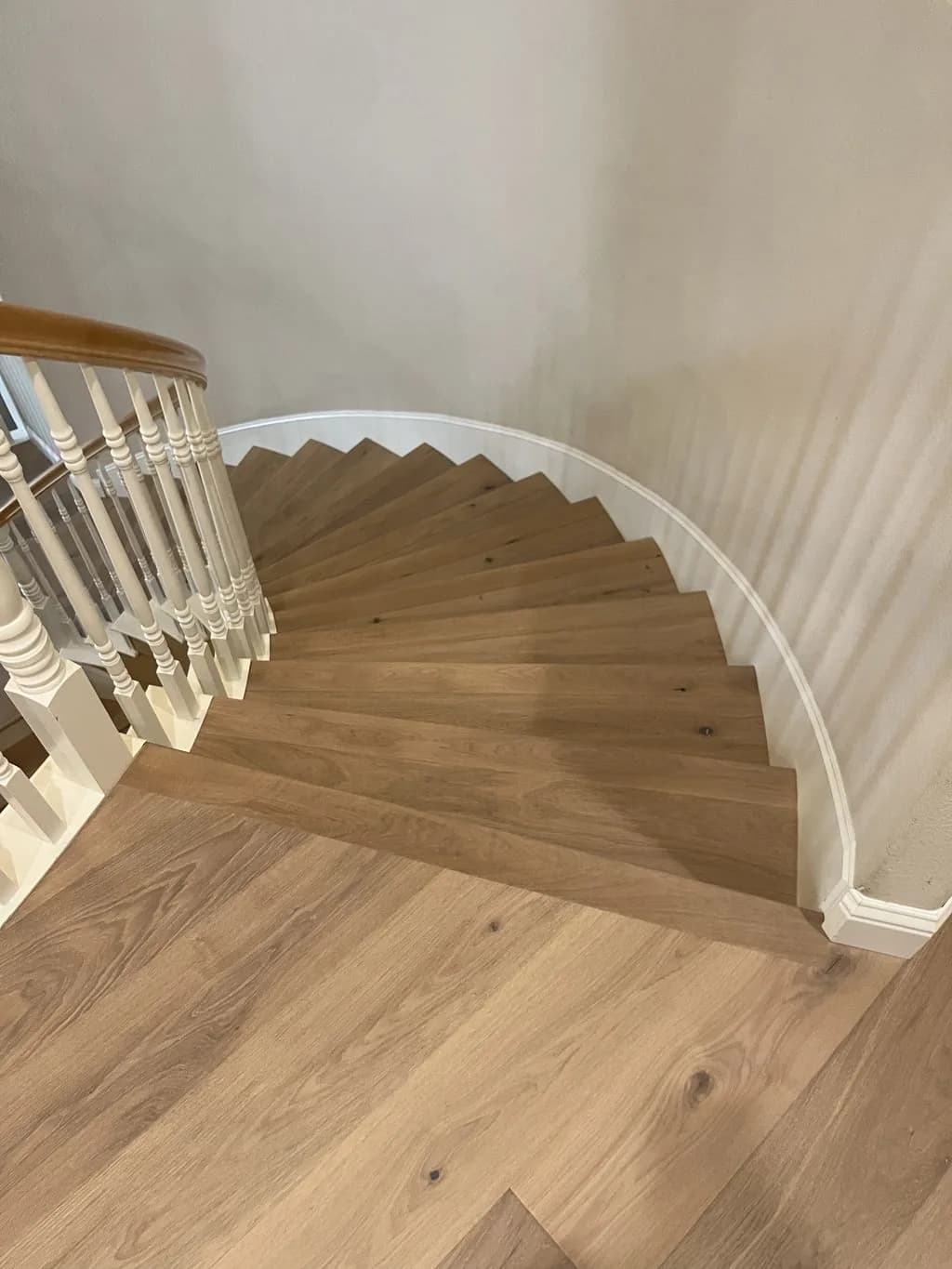
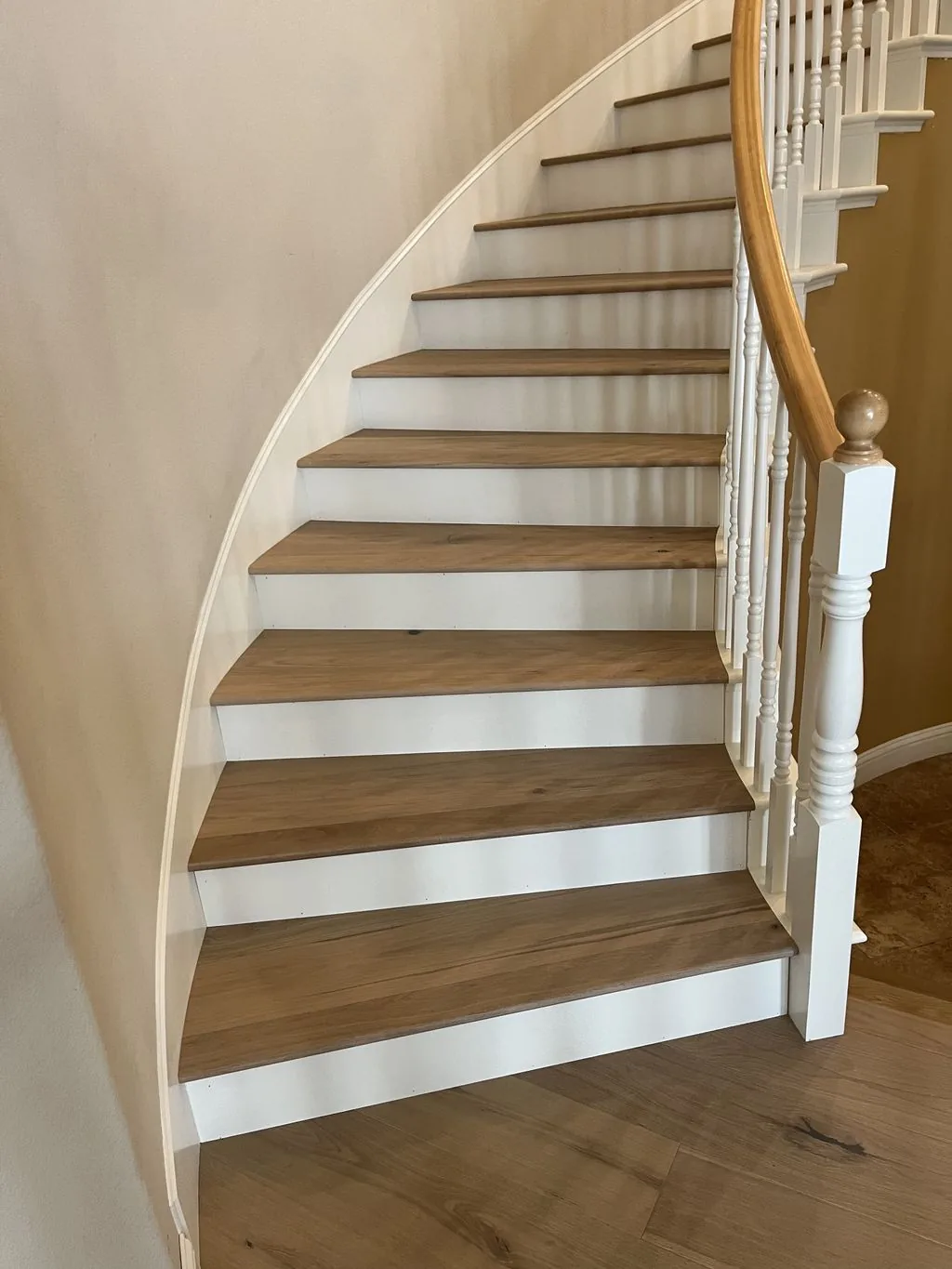
White Oak Hardwood
Stair Treads
Our Services
Flooring Services in Mill Valley
From hardwood to luxury vinyl, here's how we help Mill Valley homeowners upgrade their floors.
Hardwood Flooring
Solid oak, maple, and walkable heirloom-grade hardwood, precisely installed.
Hardwood Flooring in Mill ValleyEngineered Hardwood
Real-wood wear layers built for California's climate swings.
Engineered Hardwood in Mill ValleyLuxury Vinyl Plank
Waterproof, wood-look LVP for kitchens, baths, and busy households.
Luxury Vinyl Plank in Mill ValleyLaminate Flooring
Durable, high-style laminate at a friendly price point.
Laminate Flooring in Mill ValleyTile Flooring
Porcelain and ceramic tile set dead-level with crisp grout lines.
Tile Flooring in Mill ValleyFloor Installation
Full-service installation from subfloor prep to final baseboard.
Floor Installation in Mill ValleyFloor Refinishing
Sand, stain, and reseal tired hardwood back to new.
Floor Refinishing in Mill ValleyFloor Repair
Board swaps, water damage, squeaks, and seamless patch-ins.
Floor Repair in Mill ValleyLocal Considerations
What Mill Valley Homes Need From a Floor
Climate, home age, and foundation type all shape the right flooring choice in Mill Valley — here's what we account for.
A Mill Valley address is not always the City of Mill Valley
Homes in Tamalpais Valley, Homestead Valley and Strawberry carry Mill Valley mailing addresses, but Census geocoding places them in the unincorporated Tamalpais-Homestead Valley and Strawberry census-designated places, not in the city, and the City's Historic Context Statement describes some parts of Alto as primarily outside city limits as well. Sample addresses downtown, in Cascade and Blithedale canyons, around Miller and Molino avenues and in the Sycamore Triangle geocode inside the city. The City's permit page puts the check first, asking applicants to confirm the job site is 'in the City of Mill Valley and NOT in an Unincorporated area of Mill Valley' and to contact Marin County for unincorporated properties. The ZIP code misleads on statistics, too: ZIP 94941 holds about 14,300 housing units with a median year built of 1962 and about 17 percent built before 1940, while the city alone has about 6,400 units, a 1958 median and about 28 percent pre-1940.
The exempt list stops at 'similar finish work'
The City's handout on required permits and work exempt from permits lists, as item 8, 'Painting, papering and similar finish work.' Flooring is not named, unlike San Rafael's handout, which lists it, so whether replacing a floor covering counts as similar finish work is a question for the Building Division. The City's FAQ adds that most exempt work 'is of a cosmetic nature only,' and the handout notes that the Planning Department or Public Works may still place conditions on work that needs no building permit. The PDF was last modified in June 2023, before Ordinance No. 1363, which already changed one of its entries: the handout's 15-foot height limit for exempt one-story accessory buildings is 10 feet in the new ordinance. Where a permit is needed, the City's permit page says non-structural remodels require plans under the 'Nonstructural Kitchen and Baths' permit type, with a 7 to 10 business day review, and that all businesses operating in the city need a Mill Valley business license.
A Mill Valley rule for the ground beneath the floor
Among the local amendments in Ordinance No. 1363, brought to the City Council for second reading and adoption on December 8, 2025, is a new California Building Code Section 1805.1.2.2, Under-floor Drainage. It reads: 'The underfloor grade beneath the floor system of a building shall be graded to a low point so as to provide positive drainage to the exterior in the event of water intrusion. If the exterior grade is higher than the grade beneath the floor system, a positive drainage system or sump shall be installed subject to approval of the Building Official.' It is the only amendment in the ordinance found to deal specifically with floor assemblies. The same ordinance's grading findings describe Mill Valley's topography as 'densely wooded hillsides,' and the Safety Element says many hillsides in the city are unstable in their natural state. Which projects the drainage section reaches is for the Building Official to decide; when a floor is opened over a framed floor system, it is a reason to look at the ground below as well as the subfloor.
Zone AE at downtown and lower Miller Avenue points
FEMA's flood map, on panels effective March 16, 2016, places sampled points at 85 Throckmorton Avenue downtown and 500 Miller Avenue in Zone AE, a special flood hazard area. Those are points, not neighborhood boundaries: a point at 10 Sycamore Avenue maps as minimal-hazard Zone X, yet the City's Safety Element records that an October 21, 2021 storm flooded the Sycamore Triangle neighborhood and closed Miller Avenue at three locations. The Safety Element says the Arroyo Corte Madera del Presidio often overflows its banks in its lower reaches during heavy rainfall, and that the areas subject to frequent flooding in the past are predominantly former bay mud marshlands that were filled for urban expansion. In Zones AO, AE and Floodway, the City requires a permit before construction and a Substantial Improvement Worksheet, and the Building Official's review includes 'any renovations made to a property within a 2-year period.' Work in Zone X is not subject to those floodplain rules. For a ground-floor room in a mapped zone, a floor that tolerates water is the practical choice.
Very High fire zones, with rules written for the exterior
Unlike San Rafael, Mill Valley has Very High Fire Hazard Severity Zone land. CAL FIRE's jurisdiction table lists about 804 acres of the city's local responsibility area as Very High, about 1,064 as High and about 335 as Moderate. The City's Safety Element, adopted January 20, 2026, counts 865 of the city's 5,892 parcels as Very High, says the residential communities in the northern part of the city are mostly in Very High and High zones, and names Warner Canyon, Blithedale Canyon, Cascade Canyon, Fern Canyon and Summit Ridge among its wildland-urban interface areas. The building rules tied to those maps concern exteriors. The state's 2025 code changes replaced the residential code section on 'materials and construction methods for exterior wildfire exposure' with a note directing users to the new California Wildland-Urban Interface Code, and Ordinance No. 1363 requires a Class A fire-retardant roof covering when more than half of a roof is altered. The wildfire code text reviewed for this page contains no provision for interior floors.
Pre-1940 houses, and what historic review covers
About 28 percent of the city's housing units predate 1940 and about four in ten predate 1950, according to the Census Bureau's 2020–2024 estimates; in a city of about 6,400 units those shares carry margins of several points, and the counts for recent decades are too uncertain to cite one by one. The City's Historic Context Statement records that 117 homes were destroyed or heavily damaged in the fire that began July 2, 1929, many on Summit, Magee, Marguerite, Ralston and Tamalpais avenues. On historic status, the City's Historic Resources Inventory FAQ says major remodels, interior or exterior, of all buildings require a building permit, and that interior alterations of private residences are typically outside CEQA review. The Historic Overlay zone, applied to 27 designated properties in 1975, requires design review of additions or alterations to those structures. In the oldest houses, what matters for a new floor is found on site: whatever original flooring remains, what has been laid over it, and how level the framing still is.
Wet winters, dry summers, measured outside the city
No NOAA 1991–2020 normals station sits inside Mill Valley, so each figure here names a station outside city limits. Muir Woods, about 1.6 miles from the city's census center point, has precipitation normals only: 36.24 inches a year, about 83 percent of it from November through March, with 7.86 inches in December and 0.03 in July. Kentfield, about 3.4 miles away, has full normals: 44.39 inches a year, an August average high of 83.0°F and a December average low of 41.7°F. An eight-inch gap between two stations a few miles apart is why no single number stands for Mill Valley rainfall. The nearest hourly humidity record is at Gnoss Field in Novato, about 16 miles away: outdoor air there, warmed to 70°F with no moisture added, has a median of about 40 percent relative humidity through the heating season and about 56 percent in summer, the summer figure a little above the 30–50 percent band NWFA defines as normal living conditions. Wood is acclimated to the rooms it will live in, not to a regional average.
Local Resources & References
Helpful Mill Valley Resources
Authoritative local and industry references for permits, planning, and flooring standards.
- Permit Application Process — confirm the job site is not in an unincorporated area; Nonstructural Kitchen and Baths permits and review timesCity of Mill Valley
- Required Permits & Work Exempt from Permits handout — 'Painting, papering and similar finish work'; flooring not namedCity of Mill Valley
- Staff report and Ordinance No. 1363 text (December 8, 2025) — 2025 California codes and local amendments, including CBC 1805.1.2.2 under-floor drainageCity of Mill Valley
- MV2040 Hazards & Public Safety Element (adopted January 20, 2026) — terrain, filled bay mud, flood history, fire hazard severity zonesCity of Mill Valley
- Construction in a Floodplain — AO, AE and Floodway permits, Substantial Improvement Worksheet, two-year renovation reviewCity of Mill Valley
- Fire Hazard Severity Zones by jurisdiction — Local Responsibility Area Very High, High and Moderate acreageCAL FIRE
- Historic Context Statement (adopted June 7, 2021) — incorporation, summer cabins, 1906 refugees, the 1929 fireCity of Mill Valley
- City of Mill Valley — ACS 2020–2024 profile (place 0647710; year built, units in structure, tenure)US Census
- 1991–2020 monthly normals, Kentfield (USC00044500), about 3.4 miles from Mill ValleyNOAA NCEI
External links are provided for reference. Always confirm current requirements with the issuing agency.
Explore Flooring Services in Mill Valley
Nearby Areas We Serve
Nearby
Nearby Cities We Serve in Marin County
Good to Know
Frequently Asked Questions
Does Renaissance Floors serve Mill Valley?
Yes. We install and refinish flooring throughout Mill Valley and the surrounding Marin County area. Call (916) 749-0272 for a free estimate.
What flooring services do you offer in Mill Valley?
We install hardwood, engineered wood, luxury vinyl plank, laminate, tile, and more in Mill Valley, plus floor refinishing, repair, and full-service installation. See the full list below.
Are you licensed to work in Mill Valley?
Yes. We hold CSLB C-15 license #1060673 (C-15 Flooring & Floor Covering) and carry insurance. We're based in Roseville, CA and serve Mill Valley and all of Greater Sacramento & Northern California.
How do I get a free flooring estimate in Mill Valley?
Call (916) 749-0272 or request an estimate online. We'll schedule a convenient in-home visit in Mill Valley, measure your space, and give you an honest, no-pressure quote.
Do I need a building permit to replace flooring in Mill Valley?
The City has not published a flooring-specific answer. Its handout on work exempt from permits names 'Painting, papering and similar finish work' and does not mention flooring, and the City's FAQ says most exempt work 'is of a cosmetic nature only.' Confirm your scope with the Building Division at 415-388-4033 or building@cityofmillvalley.gov, especially if subfloor, structural or plumbing work is involved. Homes in unincorporated areas with Mill Valley addresses go to Marin County instead.
My address says Mill Valley. Is my home inside the city?
Not necessarily. Census geography places Tamalpais Valley, Homestead Valley and Strawberry in unincorporated census-designated places, and the City's Historic Context Statement describes some parts of Alto as primarily outside city limits, even though all carry Mill Valley addresses. The City's permit page asks applicants to 'confirm the job site address is located in the City of Mill Valley and NOT in an Unincorporated area' and to contact Marin County for unincorporated properties.
Is Mill Valley in a Very High Fire Hazard Severity Zone, and does that affect interior floors?
Parts of the city are, but the building rules concern exteriors. CAL FIRE lists about 804 acres of the city as Very High, and the City's 2026 Safety Element counts 865 of 5,892 parcels in that zone, noting that the northern residential areas are mostly Very High and High. The state's wildfire building standards address 'exterior wildfire exposure,' and the code text reviewed for this page contains no provision for interior floors.
Is downtown Mill Valley in a flood zone, and does that matter for a floor remodel?
At sampled points, yes. FEMA's flood map places 85 Throckmorton Avenue and 500 Miller Avenue in Zone AE. In AO, AE and Floodway zones, the City requires a permit before construction and a Substantial Improvement Worksheet, and the Building Official reviews 'any renovations made to a property within a 2-year period.' Work in Zone X is not subject to those floodplain rules. Check a specific address on FEMA's map rather than going by neighborhood.
How old are Mill Valley's homes?
Mostly built before 1970. The Census Bureau's 2020–2024 estimates put the median year built at 1958, with about 28 percent of roughly 6,400 housing units built before 1940 and roughly seven in ten before 1970. That pre-1940 share is well above San Rafael's, Larkspur's or Novato's, though Ross and Fairfax run higher. Figures for ZIP code 94941 differ, because the ZIP also covers unincorporated areas.
Does historic status restrict interior work like new floors?
Environmental review usually does not reach it, but permits still apply. The City's Historic Resources Inventory FAQ says 'interior alterations are typically not under CEQA purview, particularly in the case of private residences,' and that major remodels, interior or exterior, of all buildings require a building permit. The Historic Overlay zone, applied to 27 designated properties in 1975, requires design review of additions or alterations, so owners of those properties should confirm scope with the City first.
What is Mill Valley's underfloor drainage rule?
It is a local amendment to the California Building Code. Ordinance No. 1363, brought to the City Council for adoption in December 2025, adds Section 1805.1.2.2: the underfloor grade beneath a building's floor system 'shall be graded to a low point so as to provide positive drainage to the exterior in the event of water intrusion.' Where the exterior grade is higher, a positive drainage system or sump is required, subject to the Building Official's approval.
How wet is Mill Valley, and does it matter for wood floors?
Wet in winter and nearly rainless in July, at the nearest stations. NOAA normals at Muir Woods, about 1.6 miles away, record 36.24 inches a year, with 7.86 in December and 0.03 in July; Kentfield, about 3.4 miles away, records 44.39 inches. At Gnoss Field in Novato, outdoor air warmed to 70°F has a heating-season median near 40 percent relative humidity and about 56 percent in summer, so wood is acclimated to the rooms it will live in.
Related
Keep Reading
Related pages: Marin County, Hardwood Flooring in Clarksburg, Hardwood Flooring in Mill Valley, and Engineered Hardwood in Mill Valley.

Ready for Floors You'll Love?
Free, no-pressure flooring estimates throughout Mill Valley and Marin County.