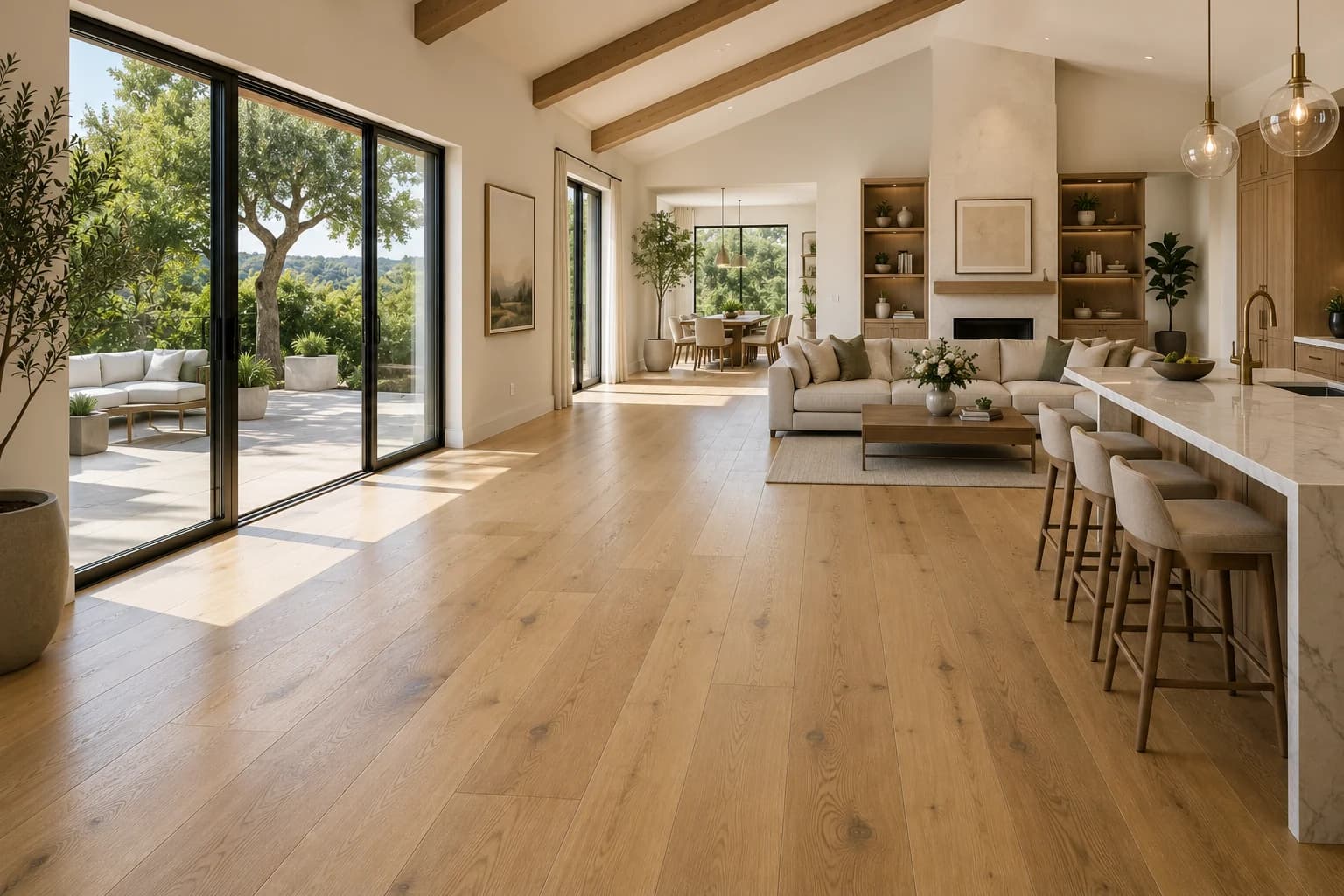
Service Area
Flooring in San Rafael
Renaissance Floors installs and refinishes hardwood, luxury vinyl, tile, and more for homeowners throughout San Rafael and the surrounding Marin County area.
CSLB #1060673
Licensed & Insured
Est. 2019
Family-Owned
15+ Years
Hands-On Experience
5.0★ Rated
22 Reviews on Thumbtack
Local, Licensed, Accountable
Flooring Contractor Serving San Rafael
San Rafael is part of Marin County, and it's one of the communities Renaissance Floors regularly works in. We're based in Roseville, CA and serve homeowners across Greater Sacramento & Northern California— from small refinishing jobs to full home installs. Every project starts with an honest look at your subfloor and your goals, followed by a clear, no-pressure estimate. There's no dispatched sales team and no guesswork: you work directly with the crew doing the installation, backed by our CSLB C-15 license and a workmanship warranty on every job.
Marin's older homes and coastal-influenced humidity make moisture management and the right product choice especially important. Engineered wood and quality LVP are dependable picks, and original hardwood often refinishes beautifully.
San Rafael is the seat of Marin County and, in the City's own description, the oldest city in the county. Its story begins with Mission San Rafael Arcángel, established in 1817 as the twentieth of California's twenty-one missions; the state's landmark record notes that the buildings fell into ruin after secularization and that the mission was reconstructed on the original site in 1949, where it stands today as California Historical Landmark No. 220 at Fifth Avenue and A Street. The city incorporated in 1874. Today about 60,400 people live on 16.6 square miles of land that run from the bay shoreline and the Canal up into the hills and north to Terra Linda. For flooring, though, what matters is less the history than when the houses were built, where they sit, and what is under them.
By the numbers, San Rafael is a mid-century city rather than a Victorian one. The Census Bureau's 2020–2024 five-year estimates put the median year built at 1968 and place about 71 percent of the city's roughly 23,900 housing units before 1980 — the 1960s, at about 22 percent, the largest single decade, and only about 2 percent built since 2010. The stock is also more shared than the hillsides suggest: just under half the units are single-family detached houses, nearly a third sit in buildings of five or more units, and about 47 percent of occupied homes are rented. The older layer is real, too. The City's General Plan describes Gerstle Park as one of San Rafael's first residential neighborhoods, developed in the late 1800s, with early-1900s craftsman bungalows 'many of which survive today.'
The most distinctive floors in the city are in Terra Linda. San Rafael's General Plan 2040 records that between 1955 and 1965 'about 900 homes were developed by Joseph Eichler' there — one-story, post-and-beam houses with glass walls, internal atriums 'and hydronic heat in concrete slab floors,' complemented by Alliance and Kenney homes the Plan describes as having similar features. That clause shapes a flooring project more than any other fact about San Rafael. A slab carrying heating tubing is not something to nail, screw or drill into blind, and the floor laid over it has to be a product its manufacturer approves for radiant heat, installed within that manufacturer's limits. Whether a particular house still has its original system, or a working one, is a question for the house itself. The City's Eichler-Alliance overlay district, as the Plan describes it, covers height limits and design review for most roof modifications, not interiors.
The mailing address can mislead. Terra Linda is inside city limits, but Lucas Valley, Marinwood and Santa Venetia — all with 'San Rafael, CA' addresses — are unincorporated Marin County, and the General Plan states that 'both Lucas Valley and Marinwood are outside the San Rafael sphere of influence as well as the city limits.' The line has moved before: most of North San Rafael was unincorporated when it was first built and was annexed in the 1960s and early 1970s. Inside the city, the Building Division is the permit authority, and its published handout on work exempt from a building permit lists 'painting, papering, flooring, carpeting, counter tops and similar finish work.' That handout is dated 2022, before the 2025 California codes took effect on January 1, 2026, and it warns that an exemption does not authorize work that violates the codes.
The ground and the weather have their own particulars. The City's Safety Element places all of the Canal neighborhood, much of southeast San Rafael and the north shore of San Rafael Bay in the flood plain, and notes that many such areas 'were initially tidal flats and marshes that were filled for development in the early and mid-20th Century'; FEMA's flood map puts an address point on Canal Street in Zone AE. The City's adopted code findings add that many areas sit on bay alluvial soils subject to liquefaction in an earthquake, although the state has mapped no regulatory liquefaction zones in the city. Uphill, the City's 2025 fire-map staff report says 'San Rafael has no areas identified as very high fire severity.' NOAA's 1991–2020 normals for the Civic Center station record 34.45 inches of precipitation a year, about 86 percent of it from November through March, with August the warmest month.
Renaissance Floors is a licensed California C-15 flooring contractor (CSLB #1060673) based in Roseville. For a San Rafael home, the first questions are which jurisdiction the address falls under, whether heat runs through the slab, and what the ground floor sits on — answered before a product is chosen. Free in-home estimates and a workmanship warranty.
Local Coverage
Neighborhoods We Serve in San Rafael
From Dominican to the Canal District, Renaissance Floors installs and refinishes floors across San Rafael.
Recent Work
A Sample of Our Craftsmanship
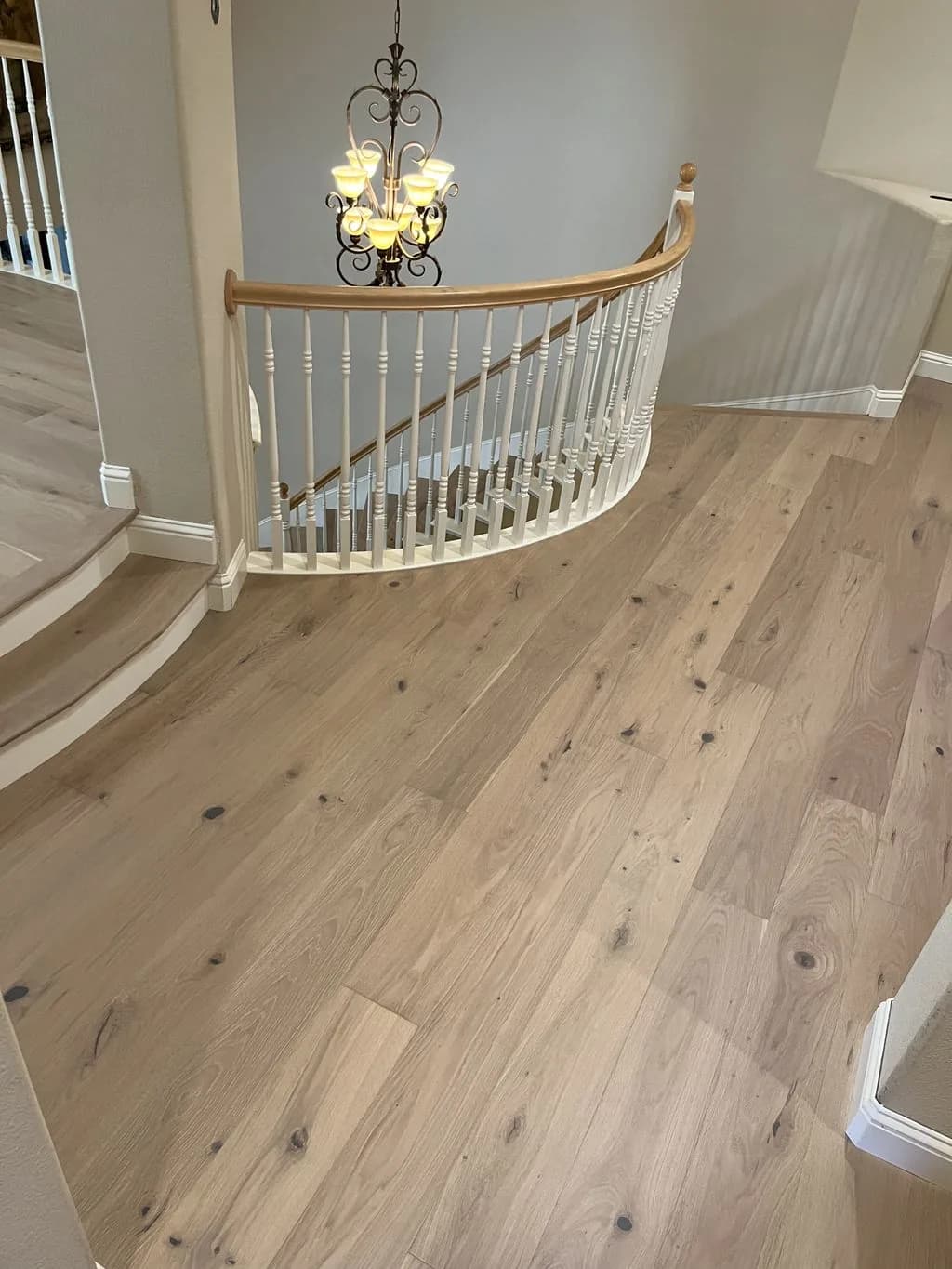
White Oak Hardwood
Great Room & Landing
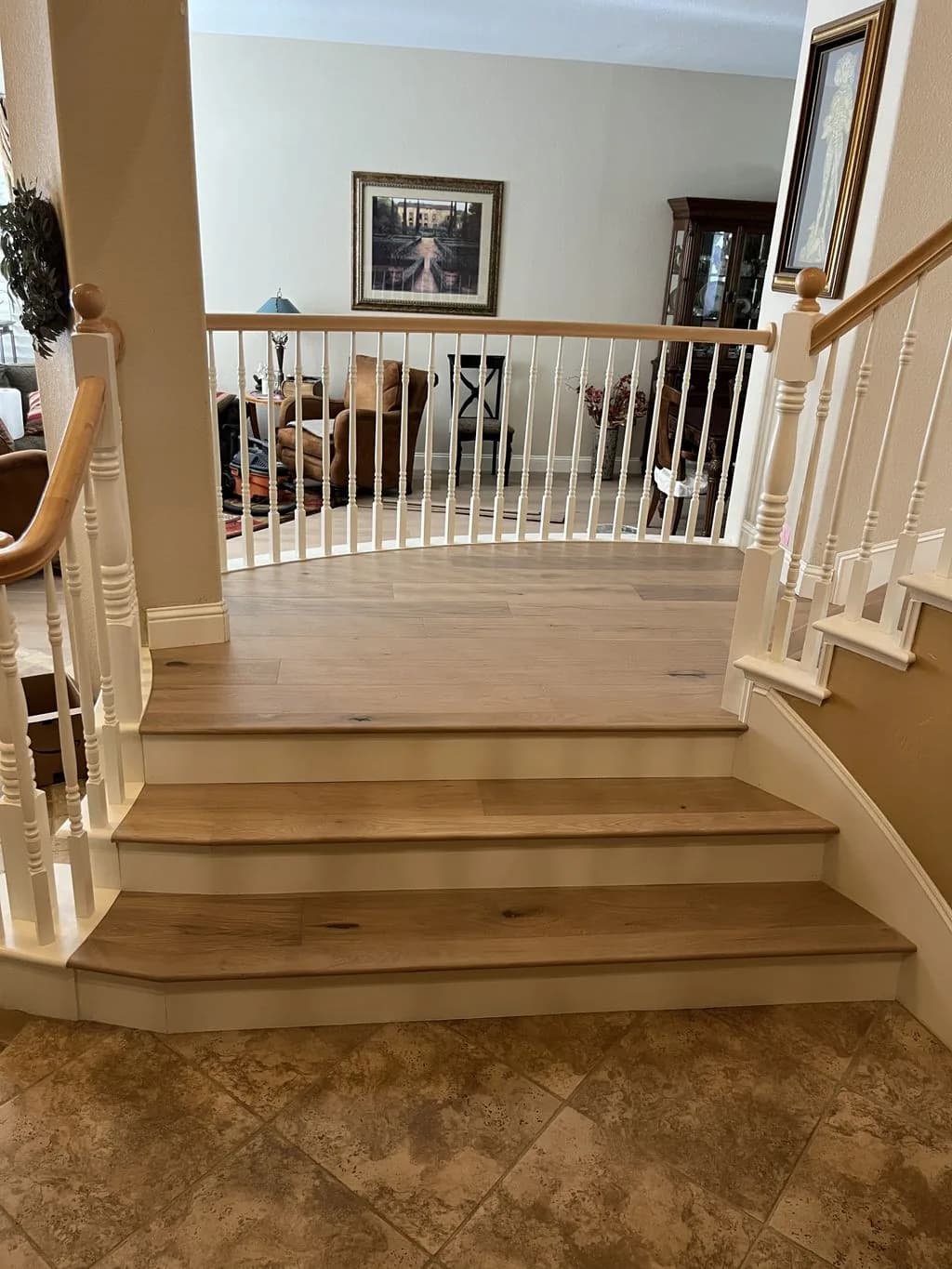
White Oak Hardwood
Staircase & Landing
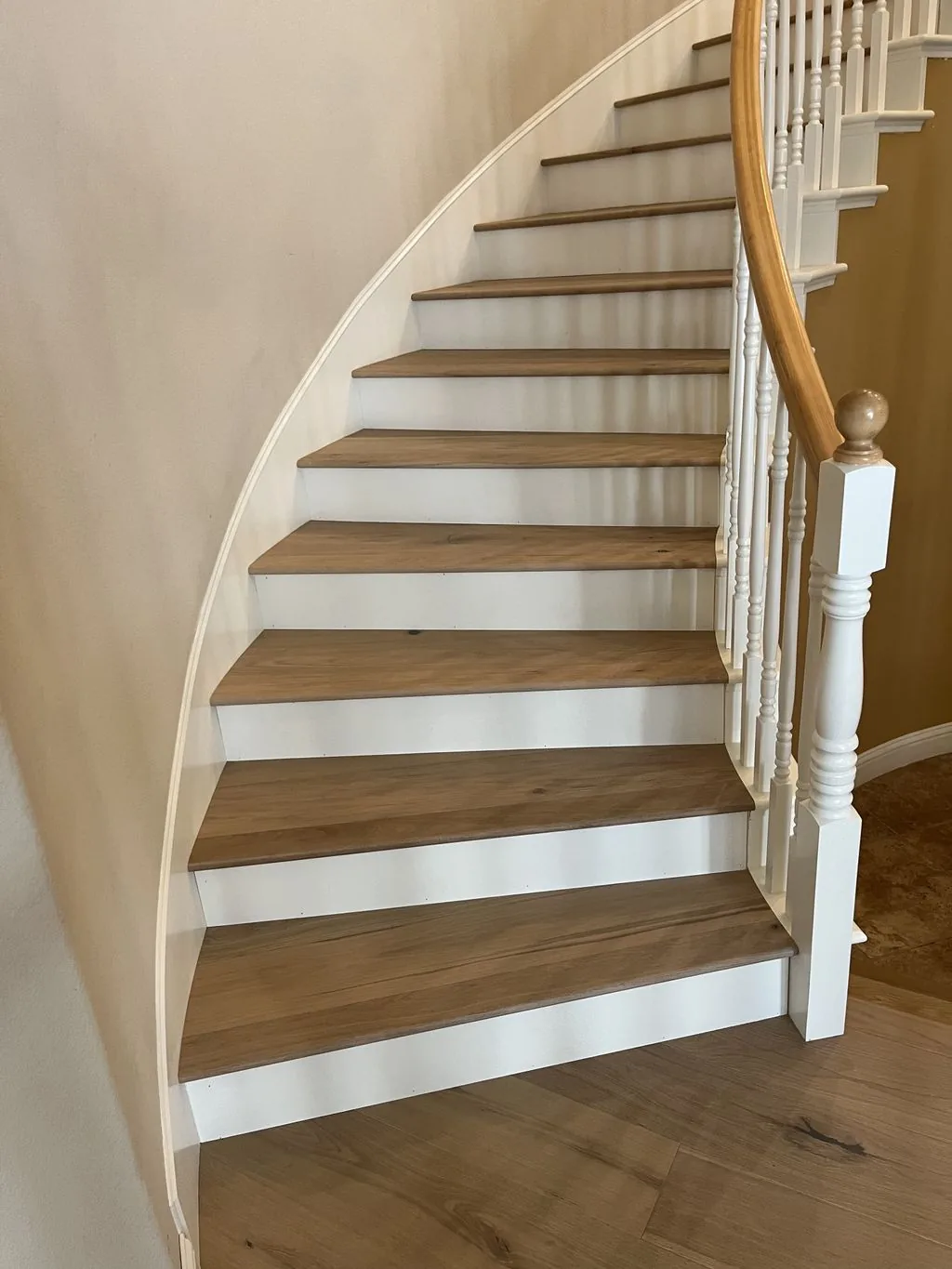
White Oak Hardwood
Curved Staircase
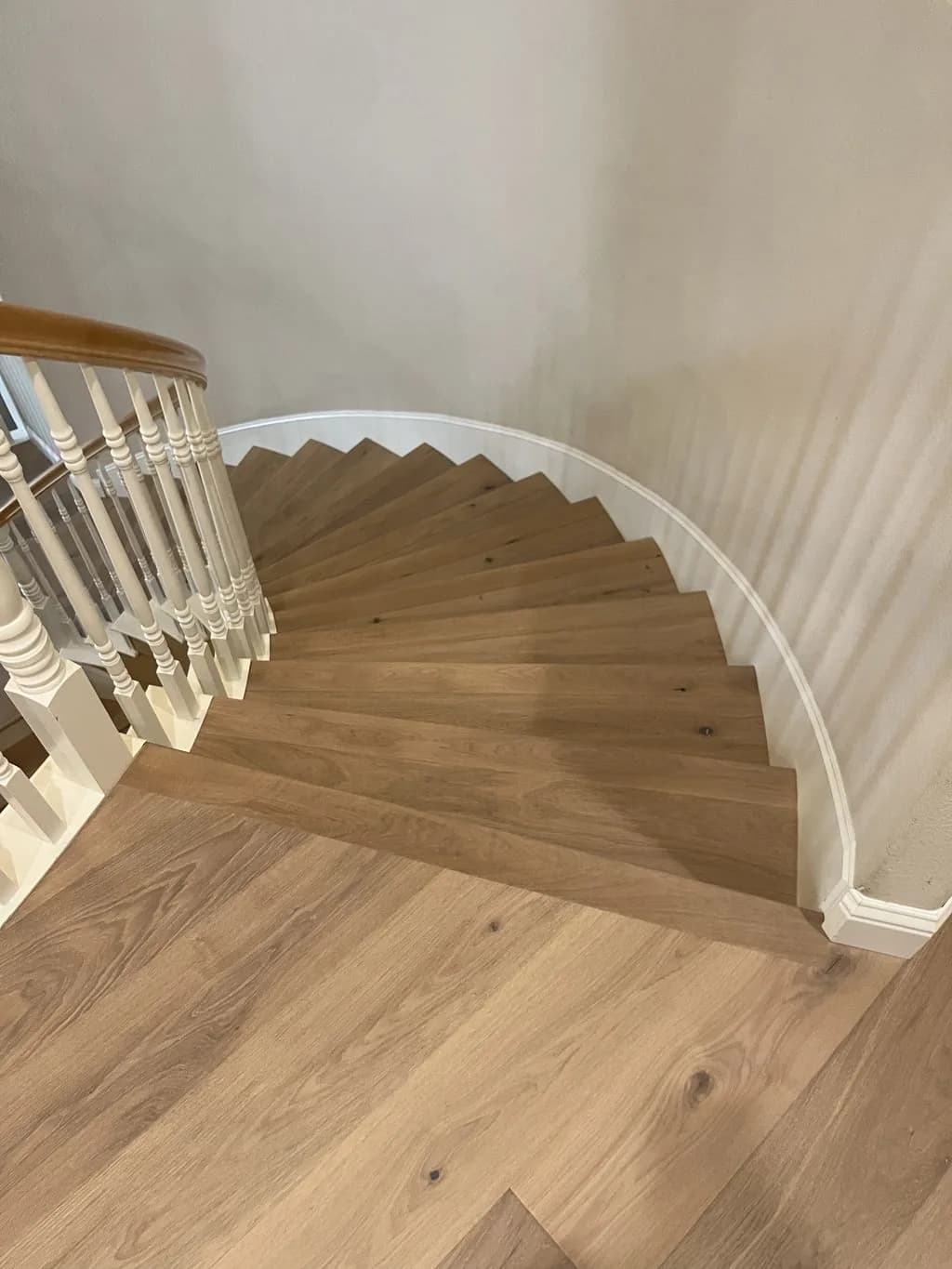
White Oak Hardwood
Stair Treads
Our Services
Flooring Services in San Rafael
From hardwood to luxury vinyl, here's how we help San Rafael homeowners upgrade their floors.
Hardwood Flooring
Solid oak, maple, and walkable heirloom-grade hardwood, precisely installed.
Hardwood Flooring in San RafaelEngineered Hardwood
Real-wood wear layers built for California's climate swings.
Engineered Hardwood in San RafaelLuxury Vinyl Plank
Waterproof, wood-look LVP for kitchens, baths, and busy households.
Luxury Vinyl Plank in San RafaelLaminate Flooring
Durable, high-style laminate at a friendly price point.
Laminate Flooring in San RafaelTile Flooring
Porcelain and ceramic tile set dead-level with crisp grout lines.
Tile Flooring in San RafaelFloor Installation
Full-service installation from subfloor prep to final baseboard.
Floor Installation in San RafaelFloor Refinishing
Sand, stain, and reseal tired hardwood back to new.
Floor Refinishing in San RafaelFloor Repair
Board swaps, water damage, squeaks, and seamless patch-ins.
Floor Repair in San RafaelLocal Considerations
What San Rafael Homes Need From a Floor
Climate, home age, and foundation type all shape the right flooring choice in San Rafael — here's what we account for.
Terra Linda's Eichlers carry heat in the slab
The City's General Plan describes about 900 Terra Linda Eichlers, built from 1955 to 1965, with 'hydronic heat in concrete slab floors.' Flooring over a heated slab works under rules set by the products rather than the house: the floor must be one its manufacturer approves for radiant heat, installed the way that manufacturer specifies, and operated within the manufacturer's limits on surface temperature and on how gradually the system is brought up to heat. Floating floors and engineered wood are the usual categories that meet those conditions. Nothing should be nailed, screwed or drilled into a slab that carries tubing — moisture-test holes included — until the tubing's location is known. Whether a given house still has its original system, a replacement, or a working one is established on site.
A San Rafael address is not always the City of San Rafael
Census address lookups place Terra Linda, Gerstle Park, Dominican, Glenwood, Loch Lomond, Peacock Gap, the Canal and Bret Harte inside city limits. Lucas Valley and Marinwood form the unincorporated Lucas Valley-Marinwood census-designated place, and Santa Venetia is its own unincorporated place, even though addresses there read 'San Rafael, CA 94903.' The General Plan also notes that a small portion of the Sun Valley area is unincorporated. For homes outside city limits, Marin County rather than the City is the building authority, and the fire-hazard picture differs as well: CAL FIRE's jurisdiction table shows Very High acreage in unincorporated Marin County and none in the city.
Flooring is on the City's exempt list — in a 2022 handout
The City's Building Permits page links to a handout on work exempt from a building permit, and item 7 of its building-code list reads 'Painting, papering, flooring, carpeting, counter tops and similar finish work.' Two cautions come with it. The handout dates from 2022, before the City adopted the 2025 California codes that took effect January 1, 2026, so the current wording is worth confirming with the Building Division. And the handout itself says an exemption does not authorize work that violates the codes. Replacing a finish floor is one thing; subfloor repair, structural changes, plumbing or electrical work, or anything touching a radiant system is a separate question. Since February 23, 2026, new permit applications have gone through the City's OpenGov system.
Filled tidal flats along the bay
The City's Safety Element says the flood plain includes all of the Canal neighborhood, much of southeast San Rafael and the north shore of San Rafael Bay, and that many of these areas 'were initially tidal flats and marshes that were filled for development in the early and mid-20th Century.' Its geotechnical policy addresses settlement from the consolidation of bay mud, and the City's building-code findings record bay alluvial soils subject to liquefaction in an earthquake; the state has not mapped regulatory liquefaction zones in the city. For floors on low-lying lots, that means two plain checks: whether a ground-floor room sits in a mapped flood zone, which argues for a floor that tolerates water, and whether a slab has settled out of flat, which is measured before a rigid floor goes down. FEMA's map, not a neighborhood name, answers the first.
A 1960s city with a large share of shared buildings
Census estimates put San Rafael's median year built at 1968 and roughly 71 percent of its approximately 23,900 housing units before 1980, with the 1960s the largest single decade and only about 2 percent built since 2010. Nearly a third of units are in buildings of five or more, and about 47 percent of occupied homes are rented, so a meaningful share of flooring decisions run through a landlord or an association's rules as well as an owner. In the house or unit itself, a subfloor or slab approaching sixty years old may carry decades of patches and earlier floors; its condition and flatness are established at an exposed edge, not assumed.
Victorian and craftsman blocks without a historic district
The General Plan describes Gerstle Park as one of San Rafael's first residential neighborhoods, developed in the late 1800s, and names Downtown, Forbes Addition, Gerstle Park, Montecito-Happy Valley and Dominican as places with high concentrations of older buildings. Gerstle Park is not a designated historic district, though: the City's Historic Preservation page lists three districts — Victorian Village on Fifth Avenue, the French Quarter on Irwin Street and 1811–1817 Grand Avenue — and its ordinance review covers exterior modifications or demolition of landmarks and district properties, not interior floors. In the oldest houses, the practical questions are the old-floor questions: how much wear layer an original floor has left, what has been laid over it, and how level the framing still is.
Wet winters, rainless summers, and the air indoors
NOAA's 1991–2020 normals for the San Rafael Civic Center station, at about 120 feet, record 34.45 inches of precipitation a year, 86.5 percent of it from November through March, a July normal of zero, and no normal snowfall. August is the warmest month at an 81.3°F average high, and December has the coldest average low, 42.1°F. The nearest hourly humidity record is at Gnoss Field in Novato, about 12 miles away: outdoor air there, warmed to 70°F with no moisture added, has a median of about 40 percent relative humidity through the heating season and about 56 percent in summer — the summer figure a ceiling that air conditioning brings down, and a little above the 30–50 percent band NWFA defines as normal living conditions. Wood acclimates to the rooms it is going into, not to a regional average.
Local Resources & References
Helpful San Rafael Resources
Authoritative local and industry references for permits, planning, and flooring standards.
- Building Division (Community & Economic Development) — 2025 codes effective January 1, 2026; OpenGov permit applications from February 23, 2026City of San Rafael
- Permits Required and Work Exempt from Permit handout (2022) — flooring listed among exempt finish workCity of San Rafael
- General Plan 2040 — Neighborhoods Element: about 900 Terra Linda Eichlers (1955–1965) with hydronic slab heat; Lucas Valley and Marinwood outside city limitsCity of San Rafael
- General Plan 2040 — Safety and Resilience Element: flood plain, filled tidal flats and bay mudCity of San Rafael
- Ordinance No. 2047 staff report (2025) — Local Responsibility Area Fire Hazard Severity Zone maps; no Very High areas in the cityCity of San Rafael
- Historic Preservation — landmarks, three historic districts, and exterior-only ordinance reviewCity of San Rafael
- California Historical Landmark No. 220 — Mission San Rafael Arcángel, established 1817, reconstructed 1949California Office of Historic Preservation
- 1991–2020 monthly normals, San Rafael Civic Ctr (USC00047880)NOAA NCEI
- City of San Rafael — ACS 2020–2024 profile (place 0668364; year built, tenure, units in structure)US Census
External links are provided for reference. Always confirm current requirements with the issuing agency.
Explore Flooring Services in San Rafael
Nearby Areas We Serve
Nearby
Nearby Cities We Serve in Marin County
Good to Know
Frequently Asked Questions
Does Renaissance Floors serve San Rafael?
Yes. We install and refinish flooring throughout San Rafael and the surrounding Marin County area. Call (916) 749-0272 for a free estimate.
What flooring services do you offer in San Rafael?
We install hardwood, engineered wood, luxury vinyl plank, laminate, tile, and more in San Rafael, plus floor refinishing, repair, and full-service installation. See the full list below.
Are you licensed to work in San Rafael?
Yes. We hold CSLB C-15 license #1060673 (C-15 Flooring & Floor Covering) and carry insurance. We're based in Roseville, CA and serve San Rafael and all of Greater Sacramento & Northern California.
How do I get a free flooring estimate in San Rafael?
Call (916) 749-0272 or request an estimate online. We'll schedule a convenient in-home visit in San Rafael, measure your space, and give you an honest, no-pressure quote.
Do I need a building permit to replace flooring in San Rafael?
Usually not for the finish floor itself, inside city limits. The City's published handout on work exempt from a building permit lists 'painting, papering, flooring, carpeting, counter tops and similar finish work.' That handout dates from 2022, before the 2025 California codes took effect on January 1, 2026, so confirm with the Building Division at (415) 485-3367. Subfloor, structural, plumbing, electrical or radiant-heat work is a separate question, and unincorporated addresses go to Marin County.
Is Terra Linda part of the City of San Rafael? What about Lucas Valley, Marinwood and Santa Venetia?
Terra Linda is in the city; the other three are not. Lucas Valley and Marinwood make up the unincorporated Lucas Valley-Marinwood census-designated place, and Santa Venetia is a separate unincorporated place, even though addresses there read 'San Rafael.' The City's General Plan states that Lucas Valley and Marinwood are 'outside the San Rafael sphere of influence as well as the city limits.' Building permits for those homes run through Marin County, not the City.
Do Terra Linda Eichlers have radiant floor heating?
They were built with it. San Rafael's General Plan describes the roughly 900 homes Joseph Eichler developed in Terra Linda between 1955 and 1965 as featuring 'hydronic heat in concrete slab floors.' Whether a given house still has its original system, a replacement, or a working one is confirmed on site. Where heat runs through the slab, the new floor must be approved by its manufacturer for radiant heat and installed within that manufacturer's limits, and nothing is nailed or drilled into the slab without knowing where the tubing runs.
Does the Eichler-Alliance overlay restrict new floors?
Not by its described scope. The General Plan adopted in 2021 describes the Eichler-Alliance Overlay District's provisions as 'height limits and design review requirements for most roof modifications,' and calls for considering design guidelines to preserve the homes' characteristic features. Neither description reaches interior finishes. An Eichler floor project is shaped instead by the radiant slab, the limits of the permit exemption, and — for Eichlers in Lucas Valley or Marinwood — by Marin County rather than the City.
Is the Canal neighborhood in a flood zone?
Yes, on both the City's and FEMA's maps. The City's Safety Element says the flood plain includes all of the Canal neighborhood, one of the shoreline areas the City describes as former tidal flats and marshes filled for development. FEMA's flood map, effective March 16, 2016, places an address point at 50 Canal Street in Zone AE with a base flood elevation of 10 feet. Check a specific property on FEMA's map; a ground-floor room in a mapped zone calls for flooring that tolerates water.
Is San Rafael in a Very High Fire Hazard Severity Zone?
No part of the city is. The City's 2025 staff report on adopting the state's local responsibility area fire maps states that 'San Rafael has no areas identified as very high fire severity,' and CAL FIRE's jurisdiction table shows zero Very High acres in the city, with about 1,640 acres rated High and about 3,460 Moderate. Unincorporated Marin County does include Very High acreage, so a 'San Rafael' address outside city limits can fall under a different map.
How old are San Rafael's homes?
Mostly mid-century. The Census Bureau's 2020–2024 estimates put the median year built at 1968, with roughly 71 percent of about 23,900 housing units built before 1980. The 1960s are the largest single decade at about 22 percent, about 10 percent predate 1940, and only about 2 percent were built since 2010. For flooring, that means subfloors and slabs with decades of history, whose condition and flatness are checked at an exposed edge rather than assumed.
Is Gerstle Park a historic district, and would that affect a floor project?
It is not a designated district, and the City's historic review covers exteriors. The City's Historic Preservation page lists three historic districts — Victorian Village, the French Quarter and 1811–1817 Grand Avenue — and says its ordinance requires Planning Commission review of 'exterior modifications or demolition' of landmarks and district properties. Gerstle Park is still one of San Rafael's first residential neighborhoods, with Victorian and craftsman houses whose original floors, and whatever was laid over them, are worth assessing before replacement.
Related
Keep Reading
Related pages: Floor Repair in Concord, Hardwood Flooring in Concord, Hardwood Flooring in San Rafael, and Engineered Hardwood in San Rafael.

Ready for Floors You'll Love?
Free, no-pressure flooring estimates throughout San Rafael and Marin County.