Service Area
Flooring in Dixon
Renaissance Floors installs and refinishes hardwood, luxury vinyl, tile, and more for homeowners throughout Dixon and the surrounding Solano County area.
CSLB #1060673
Licensed & Insured
Est. 2019
Family-Owned
15+ Years
Hands-On Experience
5.0★ Rated
22 Reviews on Thumbtack
Local, Licensed, Accountable
Flooring Contractor Serving Dixon
Dixon is part of Solano County, and it's one of the communities Renaissance Floors regularly works in. We're based in Roseville, CA and serve homeowners across Greater Sacramento & Northern California— from small refinishing jobs to full home installs. Every project starts with an honest look at your subfloor and your goals, followed by a clear, no-pressure estimate. There's no dispatched sales team and no guesswork: you work directly with the crew doing the installation, backed by our CSLB C-15 license and a workmanship warranty on every job.
Yolo County sits on the flat Sacramento Valley floor west of the river, with hot, dry summers and tule-fog winters. Soils vary sharply from town to town — shrink-swell clays that move with the seasons around Winters and the Capay Valley, and low-movement river alluvium through Dixon and El Macero — so how the ground behaves under a floor is an address-by-address question rather than a regional rule. That variation, together with the humidity swing, makes subfloor prep, moisture testing, and acclimation critical — we do all three, and we often recommend engineered wood or quality luxury vinyl plank for Davis, Woodland, and West Sacramento homes on slab foundations.
About Dixon
Dixon is a town that picked itself up and moved. The City's General Plan 2040 says it began as Silveyville, founded in 1852 by Elijah S. Silvey, who opened an inn and saloon on a stagecoach route. When the Vaca Valley Railroad's track was laid five miles away, residents moved the whole town to the line, onto 10 acres donated by Thomas Dickson. The plan says Dixon 'was incorporated by a special act of the Legislature during the 1877-1878 session' and was known by the early 1900s as 'The Dairy City.' A fire in 1883 that began in the Centennial Hotel destroyed most of downtown, and Dixon 'rebuilt with a new city ordinance in place mandating brick and tin building materials.' The plan says the buildings surviving from those early years are almost all in the downtown core, and it cites 105 historic buildings or structures identified by the California Historic Resources Information System. The Downtown Dixon Business Association's design guidelines, hosted by the City, apply to commercial, industrial and mixed-use development in the Downtown Historic Zone.
The houses are far younger than the storefronts. Census Bureau estimates for 2020–2024 count about 7,100 housing units inside city limits and put the median year built at 1988, give or take three years. Roughly two-thirds went up between 1970 and 2009, and about three in ten date from 2000 or later, while homes from before 1950 make up about 2 percent. The City's 2023–2031 Housing Element names two of the planned developments behind those numbers. Valley Glen, in southeast Dixon between West Cherry Street and the Porter Road Retention Pond, was about 95.8 percent built out after its development agreement was approved in November 2002. Homestead, south of West A Street and west of Interstate 80, is a 517-acre project planned for nearly 1,200 single-family homes in five phases. A Dixon mailing address can still be county land: no part of Silveyville Road lies inside the city, so the old town site is permitted by Solano County.
Inside the city, permits come from the Building Division at 600 East A Street, and two recent dates govern them. Since December 1, 2025, the City's online portal has been the way to apply, go through plan review, pay for and obtain permits, and schedule inspections. Under Ordinance No. 25-007, adopted December 2, 2025, a permit application received on or after January 1, 2026 falls under the 2025 California codes, and only a complete application packet counts as received. The City adopted those codes 'with local amendments' that its Building Codes page places in Title 16 of the Municipal Code, but the code host blocked retrieval for this page. The City's own handout on work exempt from permits, revised November 18, 2025, lists 'Painting, papering, tiling, carpeting, cabinets, counter tops and similar finish work.' Hardwood, laminate, vinyl plank and subfloor repair are not named on it.
The ground is mostly moderate, with its extremes at the edges. USDA soil survey data map Yolo silty clay loam, in the moderate shrink-swell class, under about 63 percent of the Census Bureau's city area, including sampled points at City Hall, downtown and along Valley Glen Drive. Brentwood clay loam, found at sampled points in Homestead and Valley Glen, has a subsoil layer in the high class. The only very-high soil, Capay clay, covers about 6.5 percent of the city area with a depth-weighted linear extensibility of 9.94, all of it on two detached parcels southeast of town near the City's wastewater treatment land, not under the main residential city. The General Plan puts it more broadly: Dixon's soils 'range from low to high shrink-swell potential, with the highest-potential soil in the northern tip of the city.' No Alquist-Priolo fault zone lies within about 18 miles, and the California Geological Survey has not evaluated the Dixon quadrangle, which covers the entire city, for liquefaction zones.
Flood and weather records need careful reading. FEMA's flood layer puts City Hall and downtown in Zone X, minimal flood hazard, and about 10.5 percent of the city area in Special Flood Hazard Areas, but about 433 of those 482 acres are the same detached southeast parcels; in the main body of the city the share is closer to 1 percent. It isn't zero: the east end of Valley Glen Road maps as Zone A, and the General Plan names residential areas at the south end of the city along SR-113, Porter Street and near Northwest Park as subject to flood hazards. Dixon has no NOAA normals station of its own. The nearest, Davis 2 WSW Experimental Farm, 6.6 miles north-northeast in Yolo County, records a 93.3°F July average high, a 37.9°F December average low and 19.16 inches of precipitation a year in its 1991–2020 normals. At University Airport in Davis, about 6 miles away, July humidity averaged about 80 percent at 4 AM and 27 percent at 4 PM over 2015–2024.
Renaissance Floors is a licensed California C-15 flooring contractor (CSLB #1060673) based in Roseville. On a Dixon job the records above set the first questions: whether the parcel is inside city limits, whether the work is finish flooring alone or also involves subfloor, walls or plumbing, what a slab reads for moisture and flatness, and whether a mapped flood zone touches the address. Free in-home estimates and a workmanship warranty.
Free Estimate
Get a free flooring estimate in Dixon
Tell Alex about the flooring you have in mind for your Dixon home and he comes out to measure the rooms, check the subfloor, and write a quote for the exact product — no planning ranges for Dixon, no sales visit.
- 5.0 on Thumbtack from Dixon-area and Northern California clients
- Flooring in Dixon by a licensed California contractor, CSLB #1060673(verify ↗)
- Workmanship warranty on flooring in Dixon, or call (916) 749-0272
Local Coverage
Neighborhoods We Serve in Dixon
From Downtown Dixon to Homestead, Renaissance Floors installs and refinishes floors across Dixon.
Recent Work
A Sample of Our Craftsmanship
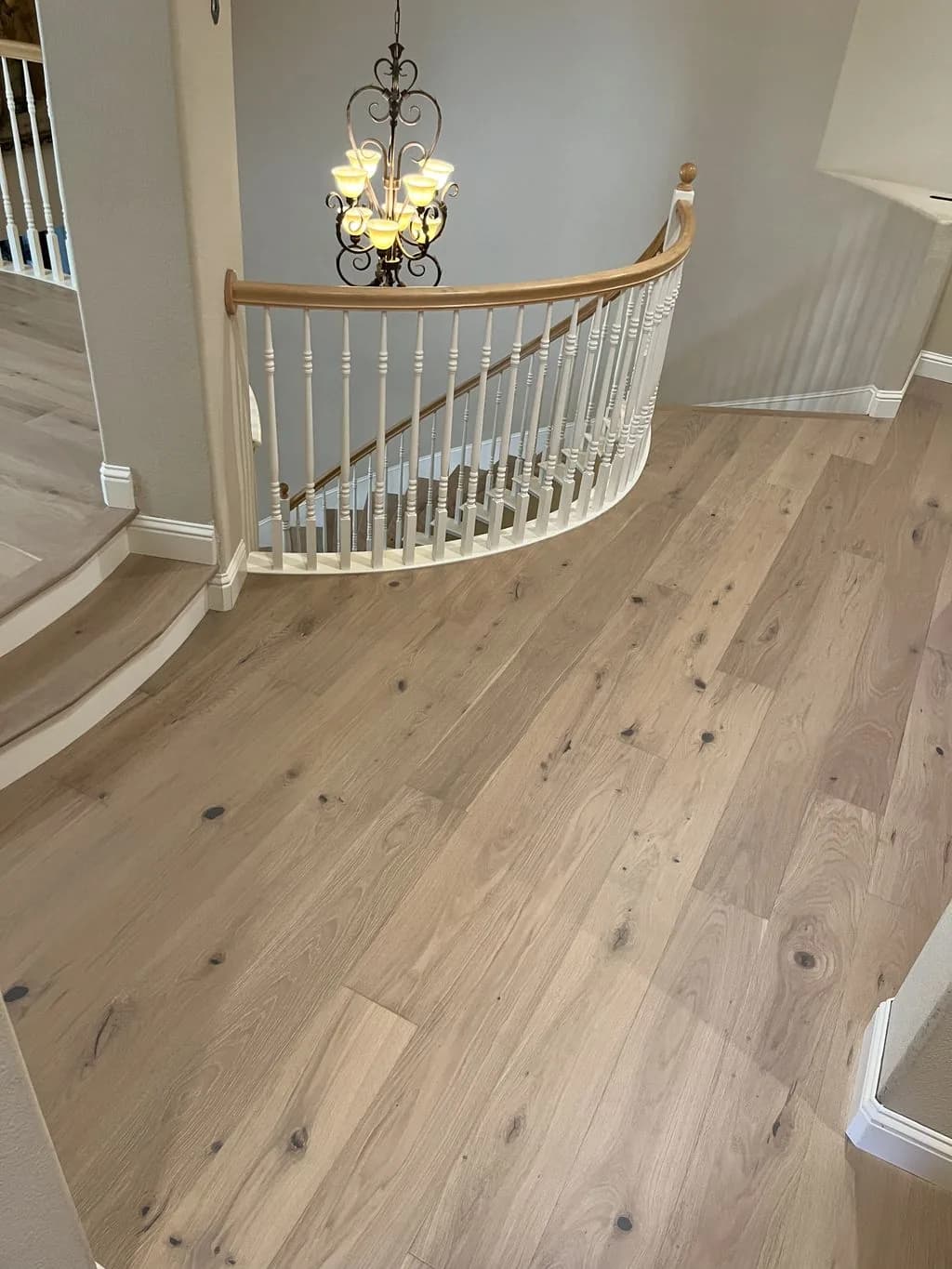
White Oak Hardwood
Great Room & Landing
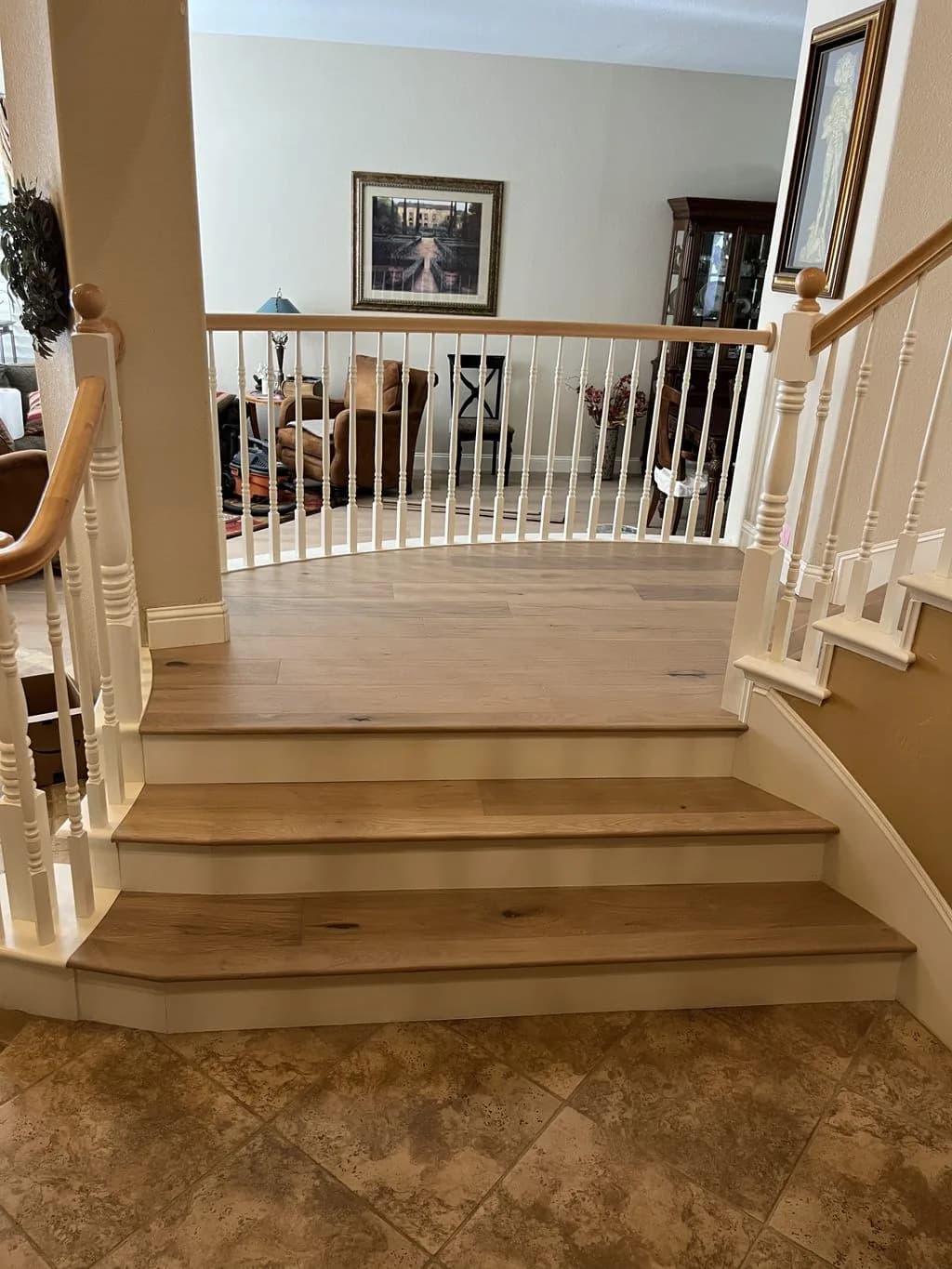
White Oak Hardwood
Staircase & Landing
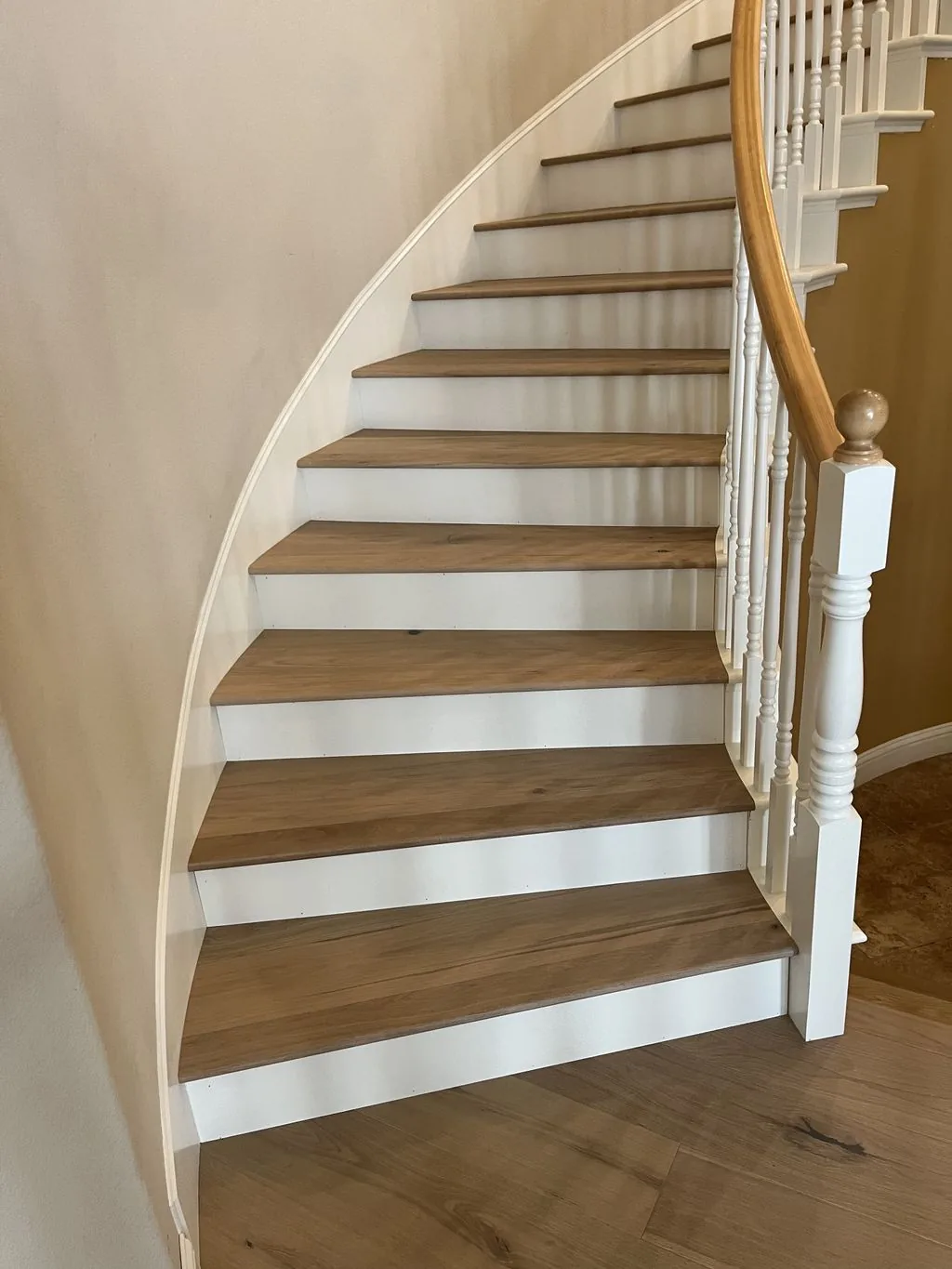
White Oak Hardwood
Curved Staircase
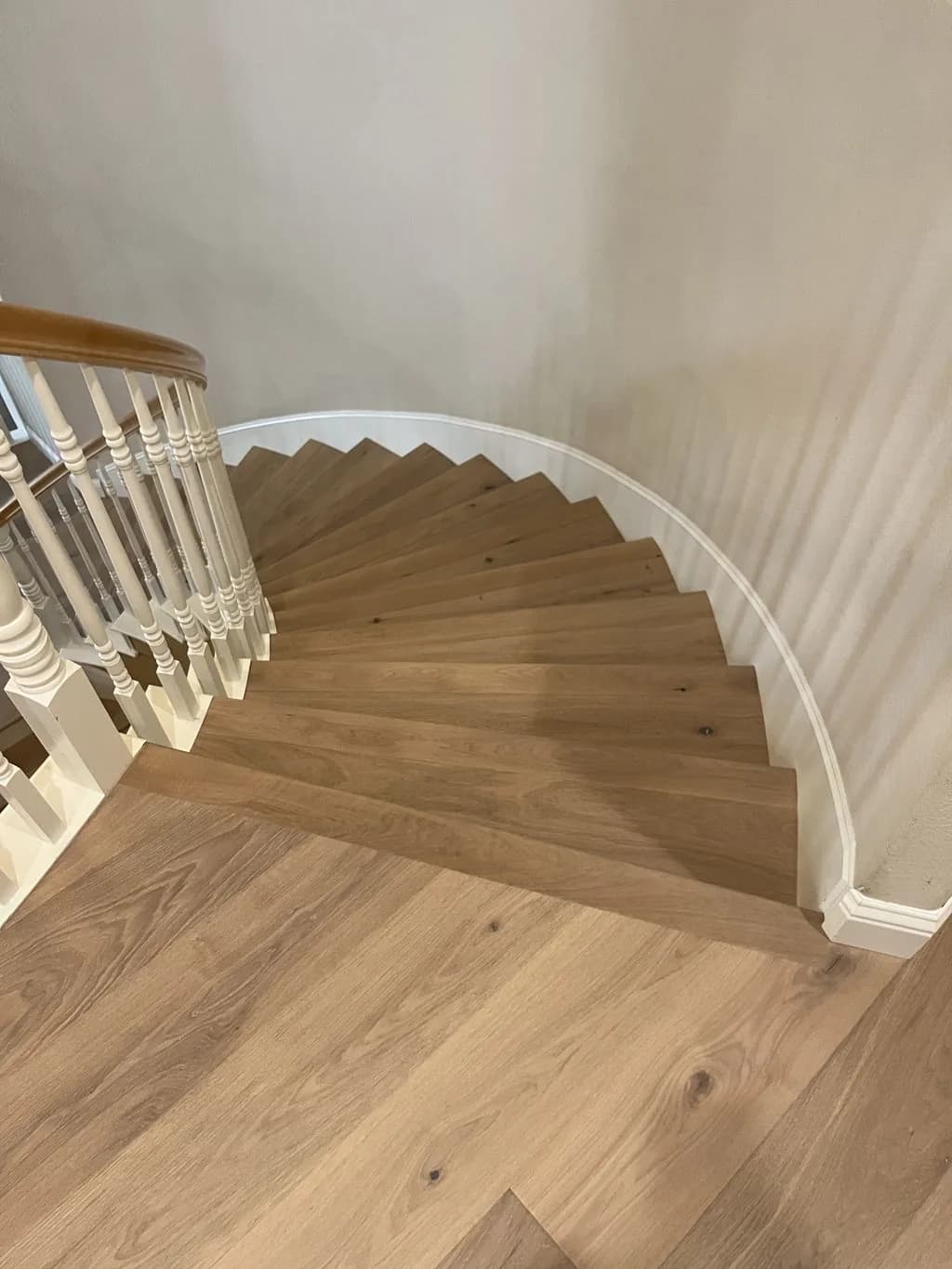
White Oak Hardwood
Stair Treads
Our Services
Flooring Services in Dixon
From hardwood to luxury vinyl, here's how we help Dixon homeowners upgrade their floors.
Hardwood Flooring
Solid oak, maple, and walkable heirloom-grade hardwood, precisely installed.
Hardwood Flooring in DixonEngineered Hardwood
Real-wood wear layers built for California's climate swings.
Engineered Hardwood in DixonLuxury Vinyl Plank
Waterproof, wood-look LVP for kitchens, baths, and busy households.
Luxury Vinyl Plank in DixonLaminate Flooring
Durable, high-style laminate at a friendly price point.
Laminate Flooring in DixonTile Flooring
Porcelain and ceramic tile set dead-level with crisp grout lines.
Tile Flooring in DixonFloor Installation
Full-service installation from subfloor prep to final baseboard.
Floor Installation in DixonHardwood Floor Refinishing
Sand, stain, and reseal tired hardwood back to new.
Hardwood Floor Refinishing in DixonFloor Repair
Board swaps, water damage, squeaks, and seamless patch-ins.
Floor Repair in DixonLocal Considerations
What Dixon Homes Need From a Floor
Climate, home age, and foundation type all shape the right flooring choice in Dixon — here's what we account for.
The City's exempt-work handout names tiling and carpeting; Title 16 stayed out of reach
The City of Dixon's 'Work Exempt from Permits' handout, revised November 18, 2025 and linked from the Building Division's forms and policies page, reproduces the building code's exempt-work section and lists as item 7 'Painting, papering, tiling, carpeting, cabinets, counter tops and similar finish work.' The handout cites the California Building Code's section 105.2 rather than the Residential Code's matching R105.2, though the finish-work item reads the same in both. It names tiling and carpeting; it does not name hardwood, engineered wood, laminate, vinyl plank, underlayment or subfloor replacement, and the handout doesn't say whether they fall under 'similar finish work,' so that is for the Building Division to answer. The City adopted the 2025 codes with local amendments that its Building Codes page says 'can be viewed in Title 16 of the Dixon Municipal Code,' but the code host refused retrieval and no archived copy turned up; whether Dixon edited the exempt list therefore remains unknown here. The ordinance adopting the codes contains no exempt-work text of its own. The forms page offers instant permits for items such as a reroof, a water heater changeout and a service panel, none for flooring, and publishes residential bathroom remodel, kitchen remodel and demolition handouts. Its required forms include an 'Asbestos Survey (Air District Questionnaire).' Before work that reaches subfloor structure, plumbing or walls, call (707) 678-7005, option 2.
A code cutover that depends on a complete application
Ordinance No. 25-007, introduced November 18, 2025 and adopted by the City Council on December 2, 2025, adopts the 2025 California Building Standards Code by reference, including the 2025 California Residential Code, and adds a Wildland-Urban Interface Code chapter. The City's Building Codes page notes that the state published the 2025 code on July 1, 2025 with an effective date of January 1, 2026. The ordinance applies the 2025 code to any building permit application received on or after January 1, 2026, and defines that application as the submittal of a complete permit application packet; an incomplete application is not deemed submitted. Timing therefore turns on when the packet is whole, not when a first form goes in. The process has also moved online. The Building Division says the City implemented Tyler Enterprise Permitting and Licensing software in September 2024, and that from December 1, 2025 the online portal is how applicants apply, participate in plan review, pay for and obtain permits, schedule inspections and review inspection results. The same page moved inspections to Monday through Thursday, 8:00 am to 3:30 pm, as of that date. The building counter at 600 East A Street is open 8:30 am to 4:30 pm, and questions go to buildingdivision@cityofdixonca.gov or (707) 678-7005, option 2.
Valley Glen and Homestead are in the city; Silveyville Road is not
The City's 2023–2031 Housing Element describes Valley Glen as a planned development in southeast Dixon, bounded by West Cherry Street to the north, the Porter Road Retention Pond to the south, the Union Pacific Railroad to the west and South First Street, State Route 113, to the east, and says about 95.8 percent of the subdivision had been built out since its development agreement was approved in November 2002. It describes Homestead as part of the Southwest Dixon Specific Plan, approved in 2005: a 517-acre project south of West A Street and west of Interstate 80 planned for nearly 1,200 single-family homes across five phases. Census road and address checks agree, placing Valley Glen Drive, Valley Glen Road and Homestead Way wholly inside city limits, along with downtown addresses on North and South First Street. Silveyville is another matter. The General Plan describes it as the town Dixon left for the railroad, the state Office of Historic Preservation lists the Village of Silveyville among Solano County's historical resources, and none of the 4.2 miles of Silveyville Road falls inside the city. The same holds for other rural 95620 addresses: the City says the Jackson Fay Brown House at 6751 Maine Prairie Road, listed on the National Register, is 'just outside of the City limits.' Parcels beyond the line are permitted by Solano County, whose rules this page doesn't cover.
A median home from around 1988, and no ranking of the decades
Dixon holds about 7,100 housing units, give or take roughly 400, in the Census Bureau's American Community Survey for 2020–2024, and the survey's median year built is 1988, plus or minus three years. The 1970s, 1980s and 1990s each account for about 16 to 19 percent of units and the 2000s about 15 percent; the margins on those decades overlap, so which is largest isn't established. Together, 1970 through 2009 make up about two-thirds of the stock. About three in ten units were built in 2000 or later, including a few hundred since 2020, while units from before 1950 are estimated at about 2 percent, with a wide margin. A little under three-quarters of units are detached single-family houses, and most of the rest sit in buildings of three or more units. About 60 percent of occupied homes are owner-occupied. The City's General Plan records that Dixon adopted Measure B in 1986, limiting residential growth to three percent a year; nothing in the sources behind this page ties that measure to the age mix. No source reviewed here counts Dixon houses on slabs versus raised floors, and a construction date doesn't answer that question. The subfloor is judged once the old floor is up.
Moderate loam under most of town, very-high clay on the detached southeast parcels
USDA soil survey data clipped to the Census Bureau's Dixon boundary, which includes two detached parcels southeast of town, show nine map units. Yolo silty clay loam covers about 63 percent, rated by linear extensibility, the index behind shrink-swell classes, at 3.69 when weighted by depth, in the moderate class that UC Davis's soil resource lab, citing the national soil survey handbook, sets at 3 to 6. It maps at sampled points at City Hall, at 230 North First Street and along Valley Glen Drive. Brentwood clay loam, about 14 percent and sampled on Homestead Way and Valley Glen Road, averages 5.81 but has a subsoil layer at 6.4, in the high class. Capay silty clay loam, about 10 percent, averages 5.82 with a layer at 6.1, and it is the soil at a sampled point in the city's northern tip. Capay clay is different: about 6.5 percent of the city area, with a depth-weighted value of 9.94 in the very high class, and all of it lies on the detached southeast parcels, in the area the City associates with its wastewater treatment facility, not under the main residential city. The City's General Plan says Dixon's soils 'range from low to high shrink-swell potential, with the highest-potential soil in the northern tip of the city,' and its Background Report adds that 'Areas of high expansiveness are scattered across the city.' The UC Davis lab notes that moderate to very high shrink-swell can damage buildings. These are map units and sample points, not a test of any lot, so a slab is checked for cracks, flatness and moisture before a rigid floor goes down.
Flood zones at particular addresses, and liquefaction zones the state hasn't drawn
FEMA's National Flood Hazard Layer, on countywide panel 06095C0200F effective August 2, 2012, puts about 89 percent of the Census city area in minimal-hazard Zone X and about 10.5 percent, some 482 acres, in Special Flood Hazard Areas, mostly Zone A. About 433 of those acres are the two detached southeast parcels, which map entirely as Zone A; in the main body of the city the special flood hazard share is about 1.2 percent. Addresses differ within that. City Hall at 600 East A Street, downtown at 230 North First Street, Homestead Way and most sampled points in Valley Glen are Zone X, but the east end of Valley Glen Road maps as Zone A. The City's General Plan says flood hazard areas lie 'predominantly along the eastern boundary of the city,' that 'some residential areas, primarily those at the south end of the city along SR-113, Porter Street, and near Northwest Park, are also subject to flood hazards,' and that 'Historically, major floods have been infrequent in Dixon.' Seismic mapping is thinner. No Alquist-Priolo Earthquake Fault Zone intersects the city; the closest mapped zone, on the Mount George quadrangle, is about 18.6 miles away. Every part of the city falls on the Dixon quadrangle, which the California Geological Survey has not evaluated for liquefaction or earthquake-induced landslide zones, so a blank on that map means the assessment hasn't been done, not that the ground was found safe. The City's own Background Report map, which is not a state zone, classifies most of Dixon as moderate liquefaction risk, with higher-risk areas along the eastern border. Where an address falls in Zone A or AE, moisture readings on the slab and a floor that tolerates water deserve a place in the plan.
Weather borrowed from Davis stations, and the Yolo-Solano air district
NOAA's daily station list has no Dixon, California station, so the numbers here come from neighbors in Yolo County. The Davis 2 WSW Experimental Farm station, 6.6 miles north-northeast of Dixon City Hall, gives 1991–2020 normals of 93.3°F for the July average high and 37.9°F for December's average low, colder than any other month's, with 19.16 inches of precipitation a year and January the wettest month at 4.02 inches. NOAA's flags mark most of those values as standard, meaning built from at least 24 years of data, so they aren't all complete thirty-year records. For humidity, hourly readings at University Airport in Davis, about 6 miles from Dixon, averaged about 80 percent relative humidity at 4 AM and 27 percent at 4 PM across the Julys of 2015 to 2024, a daily swing of roughly 53 points. Indoor air is a separate calculation. Taking University Airport's hourly observations for 2015–2025 and heating that air to 70°F without adding water gives a median of about 37 percent relative humidity over November through April, with roughly 24 percent of those hours under 30 percent; for June through September the median is about 56 percent, the most an air-conditioned house would see. Because every one of those numbers starts outdoors, wood flooring is acclimated in the rooms where it will be installed. Finishes applied on site answer to the Yolo-Solano Air Quality Management District rather than the Bay Area district, since the Yolo-Solano district lists Dixon in its jurisdiction; Rule 2.14, in its May 8, 2024 revision, limits wood coatings, the category covering clear floor finishes, to 275 grams of VOC per liter.
Local Resources & References
Helpful Dixon Resources
Authoritative local and industry references for permits, planning, and flooring standards.
- Building Codes — the 2025 California codes, effective January 1, 2026, adopted under Ordinance No. 25-007 with local amendments in Title 16City of Dixon
- Building Division handout, Work Exempt from Permits (Rev. 11/18/2025) — item 7 names 'tiling, carpeting' among finish workCity of Dixon
- Ordinance No. 25-007, adopted December 2, 2025 — 2025 codes apply to complete permit applications received on or after January 1, 2026City of Dixon
- General Plan 2040 (final compiled, April 2024) — Silveyville, incorporation, the 1883 fire, soils and flood hazard areasCity of Dixon
- Natural Environment Element Background Report (September 2022) — soils, the City's liquefaction map and wastewater treatment landCity of Dixon
- 2023–2031 Housing Element (certified May 24, 2023) — Valley Glen and the Southwest Dixon Specific Plan's Homestead projectCity of Dixon
- American Community Survey 2020–2024 estimates for Dixon city (place 0619402) — housing units, year built, structure type and tenureUS Census
- Monthly normals for 1991–2020 at Davis 2 WSW Experimental Farm (USC00042294), Yolo County, 6.6 miles from DixonNOAA NCEI
- NFHL ArcGIS REST service — the flood zone polygons behind FIRM panel 06095C0200FFEMA
External links are provided for reference. Always confirm current requirements with the issuing agency.
Explore Flooring Services in Dixon
Nearby
Nearby Cities We Serve in Yolo County & Davis
Good to Know
Frequently Asked Questions
Does Renaissance Floors serve Dixon?
Yes. We install and refinish flooring throughout Dixon and the surrounding Solano County area. Call (916) 749-0272 for a free estimate.
What flooring services do you offer in Dixon?
We install hardwood, engineered wood, luxury vinyl plank, laminate, tile, and more in Dixon, plus hardwood floor refinishing, repair, and full-service installation. See the full list below.
Are you licensed to work in Dixon?
Yes. We hold CSLB C-15 license #1060673 (C-15 Flooring & Floor Covering) and carry insurance. We're based in Roseville, CA and serve Dixon and all of Greater Sacramento & Northern California.
How do I get a free flooring estimate in Dixon?
Call (916) 749-0272 or request an estimate online. We'll schedule a convenient in-home visit in Dixon, measure your space, and give you an honest, no-pressure quote.
Does replacing a floor in Dixon require a building permit?
It depends on the floor and the scope, so ask first. The City's handout on work exempt from permits, revised November 18, 2025, lists 'Painting, papering, tiling, carpeting, cabinets, counter tops and similar finish work.' Hardwood, laminate, vinyl plank and subfloor work are not named, and Dixon's local code amendments couldn't be retrieved for this page. Call the Building Division at (707) 678-7005, option 2, especially if the job touches subfloor structure, plumbing or walls.
Which building code applies to a Dixon project, and how do I apply?
The 2025 California codes, for a complete application received on or after January 1, 2026. Ordinance No. 25-007, adopted December 2, 2025, sets that rule and says an incomplete application isn't deemed submitted. Since December 1, 2025, the City's online portal handles applications, plan review, fees and inspection scheduling, and inspections run Monday through Thursday, 8:00 am to 3:30 pm. The Building Division's counter at 600 East A Street is open 8:30 am to 4:30 pm.
Is my Dixon address inside city limits?
Downtown, Valley Glen and Homestead are; Silveyville Road is not. Census road checks place Valley Glen Drive, Valley Glen Road and Homestead Way wholly inside the city, and none of Silveyville Road, named for the town Dixon moved away from. Other rural 95620 addresses can fall outside too; the City says the Jackson Fay Brown House on Maine Prairie Road is 'just outside of the City limits.' Parcels outside the city are permitted by Solano County rather than Dixon's Building Division.
How old are most Dixon homes?
Most date from 1970 onward. Census Bureau estimates for 2020–2024 put Dixon's median year built at 1988, give or take three years, across about 7,100 housing units. Roughly two-thirds were built from 1970 through 2009, and about three in ten in 2000 or later. Homes older than 1950 are only a few percent. The City's Housing Element names Valley Glen, approved in 2002, and Homestead, planned for nearly 1,200 single-family homes, among the newer developments.
Is the soil under Dixon homes expansive?
Mostly moderate, with higher readings in places. USDA soil survey data map Yolo silty clay loam, in the moderate shrink-swell class, under about 63 percent of the city area, including downtown and Valley Glen Drive. The very-high Capay clay, about 6.5 percent of the area, lies on detached parcels southeast of town, not in the main residential city. The General Plan says Dixon's soils 'range from low to high shrink-swell potential,' highest in the northern tip. None of that replaces a slab check.
Is my Dixon home in a FEMA flood zone?
Most addresses aren't, but some residential streets are. FEMA maps City Hall, downtown and Homestead Way in minimal-hazard Zone X. About 10.5 percent of the city area is Special Flood Hazard Area, yet most of that acreage is detached southeast land, leaving about 1 percent of the main city. The east end of Valley Glen Road maps as Zone A, and the General Plan names the south end along SR-113, Porter Street and near Northwest Park. Check your address on panel 06095C0200F.
Has the state mapped earthquake or liquefaction zones in Dixon?
No. The closest state-mapped Alquist-Priolo fault zone lies about 18.6 miles away, on the Mount George quadrangle. The California Geological Survey hasn't evaluated the Dixon quadrangle, which covers the entire city, for liquefaction or landslide zones; unmapped means unassessed, not low risk. A separate map in the City's Background Report, which is not a state zone, rates most of Dixon at moderate liquefaction risk, with higher-risk areas along the eastern border.
What does the weather around Dixon mean for wood floors?
Mainly that acclimation happens inside the house. With no Dixon normals station, NOAA's nearest, Davis 2 WSW Experimental Farm, 6.6 miles away in Yolo County, gives a 93.3°F July average high and 19.16 inches of precipitation a year. University Airport in Davis, about 6 miles away, averaged about 80 percent humidity at 4 AM and 27 percent at 4 PM in July. Heated to 70°F, its winter air has a median near 37 percent, so wood is checked in conditioned rooms.
Related
Keep Reading
Related pages: Tile Flooring in Cameron Park, Tile Flooring in Carmichael, Hardwood Flooring in Dixon, and Engineered Hardwood in Dixon.
Ready for Floors You'll Love?
Free, no-pressure flooring estimates throughout Dixon and Solano County.