Service Area
Flooring in Lake Wildwood
Renaissance Floors installs and refinishes hardwood, luxury vinyl, tile, and more for homeowners throughout Lake Wildwood and the surrounding Nevada County area.
CSLB #1060673
Licensed & Insured
Est. 2019
Family-Owned
15+ Years
Hands-On Experience
5.0★ Rated
22 Reviews on Thumbtack
Local, Licensed, Accountable
Flooring Contractor Serving Lake Wildwood
Lake Wildwood is part of Nevada County, and it's one of the communities Renaissance Floors regularly works in. We're based in Roseville, CA and serve homeowners across Greater Sacramento & Northern California— from small refinishing jobs to full home installs. Every project starts with an honest look at your subfloor and your goals, followed by a clear, no-pressure estimate. There's no dispatched sales team and no guesswork: you work directly with the crew doing the installation, backed by our CSLB C-15 license and a workmanship warranty on every job.
From historic character homes in Grass Valley and Nevada City to mountain cabins in Truckee, Nevada County homes reward durable, dimensionally-stable flooring. Engineered hardwood and quality LVP handle the swings in mountain temperature and humidity better than solid wood.
Lake Wildwood is less a town than an institution: a private, gated community of roughly 4,800 people in western Nevada County whose homeowners association owns the 300-acre lake at its center, the dam that holds it back, the roads, the parks, the golf course, and the gate you pass through to reach any of them. The origin story is written into the recorded covenants themselves: Boise Cascade's recreation-communities arm platted the development beginning in 1969 — seven subdivision unit maps recorded between September 1969 and July 1973, roughly 2,800 lots in all — as what the Declaration calls a 'second-home' recreational development 'characterized by rustic informality.' The same recorded document then describes what happened next: 'With the passage of time, Lake Wildwood has become a more sophisticated, common interest community comprised primarily of permanent residents.' That sentence, in the community's own legal instrument, is the whole arc of the place.
The dam deserves a paragraph, because almost nobody knows its name. In California's Division of Safety of Dams records it is 'Anthony House,' State ID No. 1300-2 — an earth-and-rockfill structure built in 1970, 75 feet high and 460 feet long, impounding Deer Creek, rated a high-downstream-hazard dam in Satisfactory condition, and owned not by a utility or a government but by the Lake Wildwood Association itself. The Association inspects it monthly, reports to state dam-safety engineers annually with diver surveys, holds the recorded right to draw the lake down or dredge it, and manages water quality under a state water-board order. Lakefront owners, by the covenants, hold no riparian rights at all — the water, the lakebed, and the normal 1,200-foot lake elevation belong to the corporation.
The covenants also wrote the housing stock's rules before most of the houses existed — and they still bind. Minimum fully enclosed floor area is 1,800 square feet on lakefront lots and 1,250 elsewhere; utility lines run underground; no mobile, used, or moved-in structures may serve as homes; and lakefront construction carries a pair of recorded elevations that matter to anyone thinking about floors: a flowage and flooding easement runs across lakefront lots up to 1,205 feet above sea level, and no first floor may sit lower than 1,208.5 feet — three and a half vertical feet of recorded margin between the flood easement and the lowest finished floor, eight and a half above the normal water line. Steep ground does the rest: the community drapes across roughly 390 feet of relief, from about 1,135 feet below the dam to 1,525 at its eastern edge, on Musick sandy loams mapped at 15-to-50-percent slopes and a Trabuco–rock outcrop complex where bedrock breaks the surface.
The census numbers describe a very particular kind of housing market. The median Lake Wildwood home dates to 1983 — 67.8% of the 2,356 units went up in the 1970s and 80s, 0.4% predate 1940, and nothing at all has been added since 2020. It is 94.5% detached single-family, 84.9% owner-occupied, median value $551,800, median resident age 57.3. And two findings invert the surrounding county's story: the community heats overwhelmingly with propane — 63.5% of occupied homes, with wood heat statistically zero — and 12.4% of the housing stock sits vacant, every unit of it classified as seasonal, recreational, or occasional use. The rustic-informality-to-retirement arc left behind a real population of part-time houses that sit closed up with the conditioning set back through hot, rainless summers and 36-inch winters.
The infrastructure is the quiet differentiator. While the unincorporated county around it runs on septic tanks and wells, Lake Wildwood is fully sewered — Nevada County Sanitation District No. 1 operates 42 miles of collection main, 14 lift stations, and a dedicated treatment plant with UV disinfection as its Zone 1, on infrastructure now about fifty years old — and takes treated Nevada Irrigation District water from a storage facility built on a converted lot. A fire station occupies another converted lot inside the gates (the covenants record Lot 1053's conversion to Fire Station 44, served by the Penn Valley Fire Protection District), and the Association runs a certified Firewise program with a fuel-reduction crew working daily. CAL FIRE's hazard mapping inside the community is a genuine mosaic — Moderate in parts of the maintained core, High across much of it, Very High toward the wildland edges, all of it State Responsibility Area. The 1988 49er Fire, the region's defining burn at more than 33,000 acres, reached the community's northern edge; no mapped fire perimeter since has crossed inside.
Renaissance Floors is a licensed CSLB C-15 flooring contractor (license #1060673), family-owned and based in Roseville, and we work Lake Wildwood on its own terms. That starts at the gate — contractors enter on annual, in-person, photographed passes backed by a contractor's license, and visitors get called in — and continues through the county's own permitting rules, which exempt 'carpeting, tiling… and similar finish work' from a building permit while structural subfloor, plumbing, and electrical work still require one. The Association's recorded covenants scope its approvals to exterior and site work. What's left is the actual craft: era-consistent 1970s-80s houses, part-time homes that need floors chosen and acclimated for unattended humidity swings, and lakefront rooms taking hard sun off open water.
Local Coverage
Neighborhoods We Serve in Lake Wildwood
From Commodore Park to Vista Park, Renaissance Floors installs and refinishes floors across Lake Wildwood.
Recent Work
A Sample of Our Craftsmanship
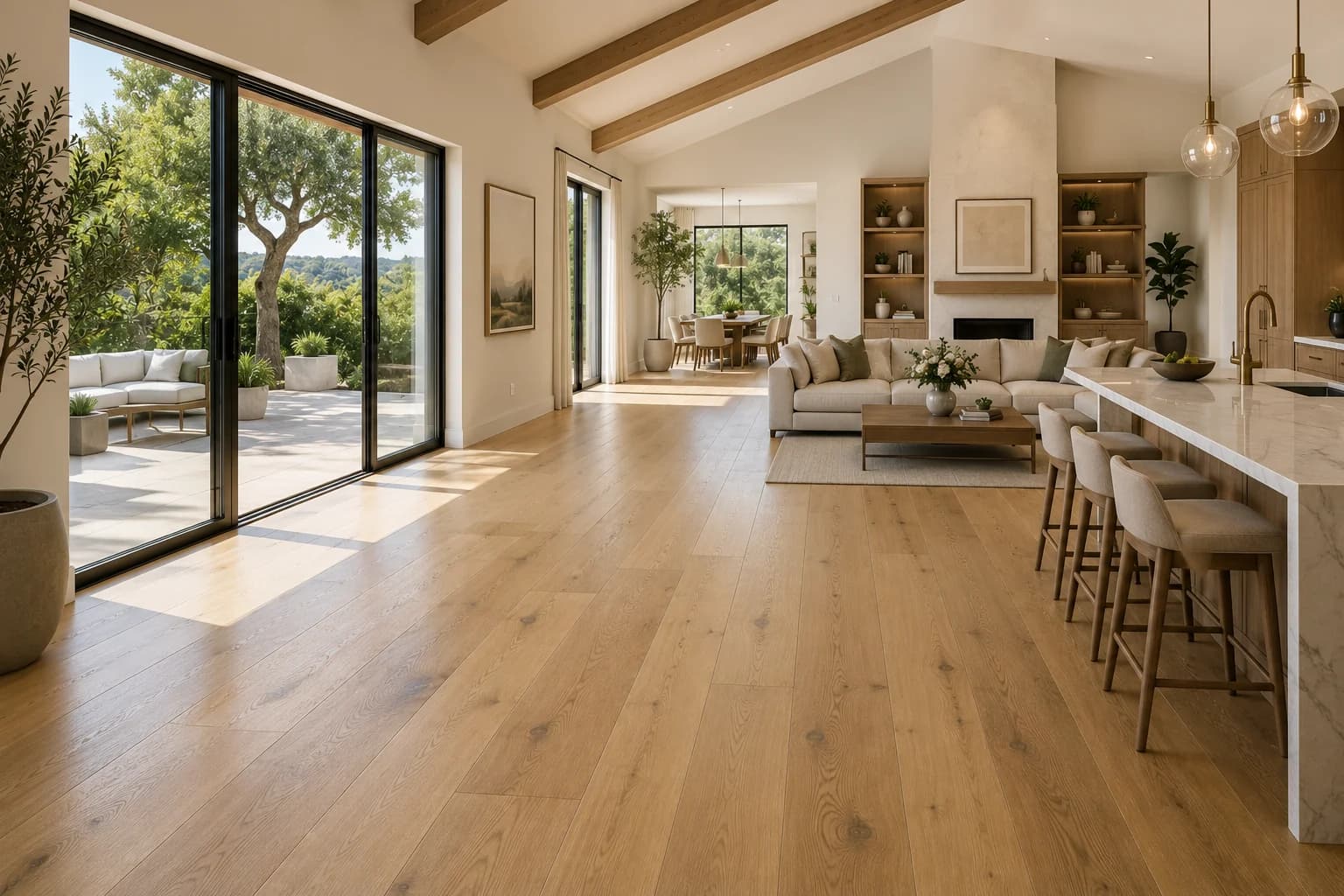
White Oak Hardwood
Great Room & Landing
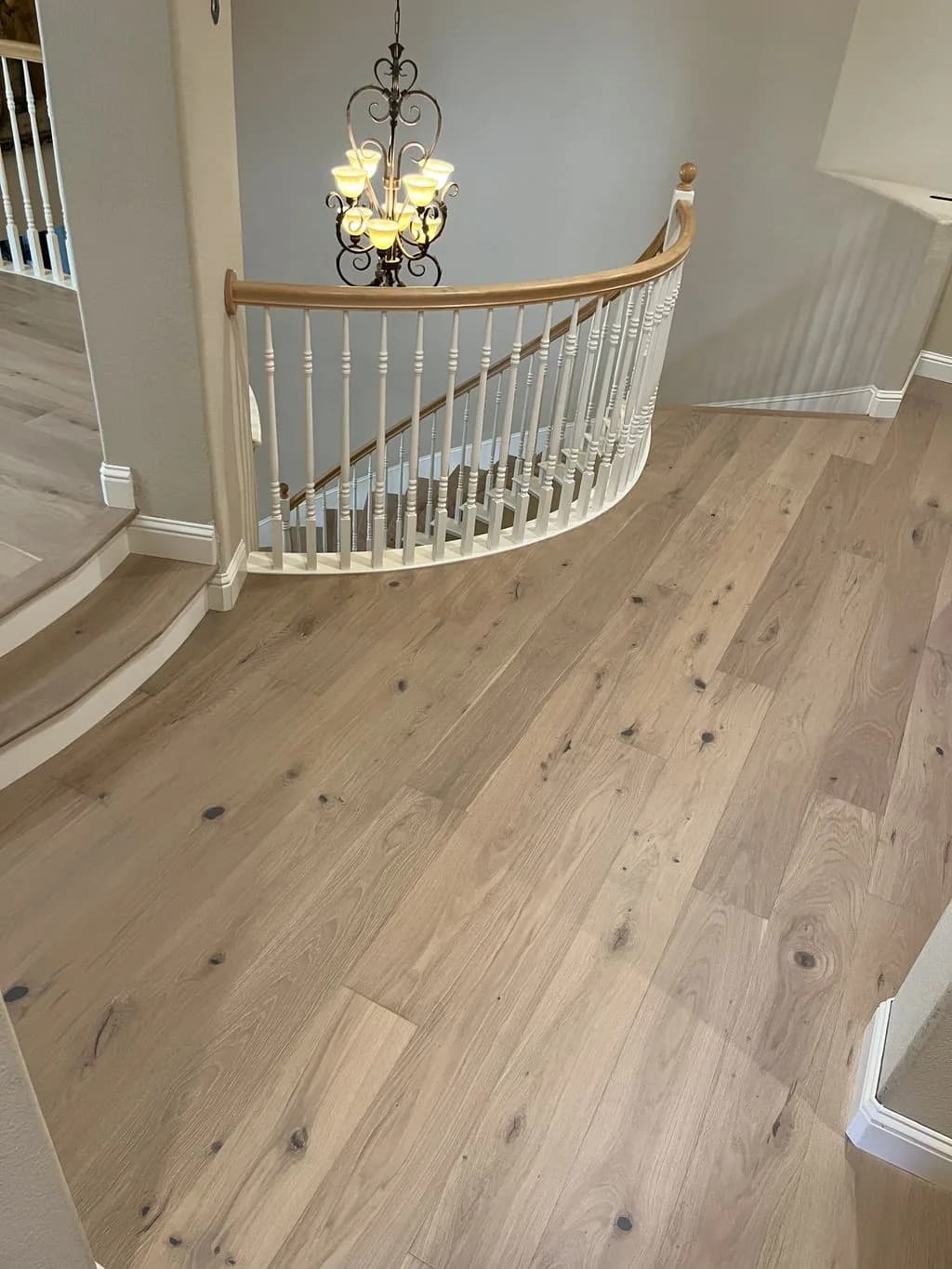
White Oak Hardwood
Staircase & Landing
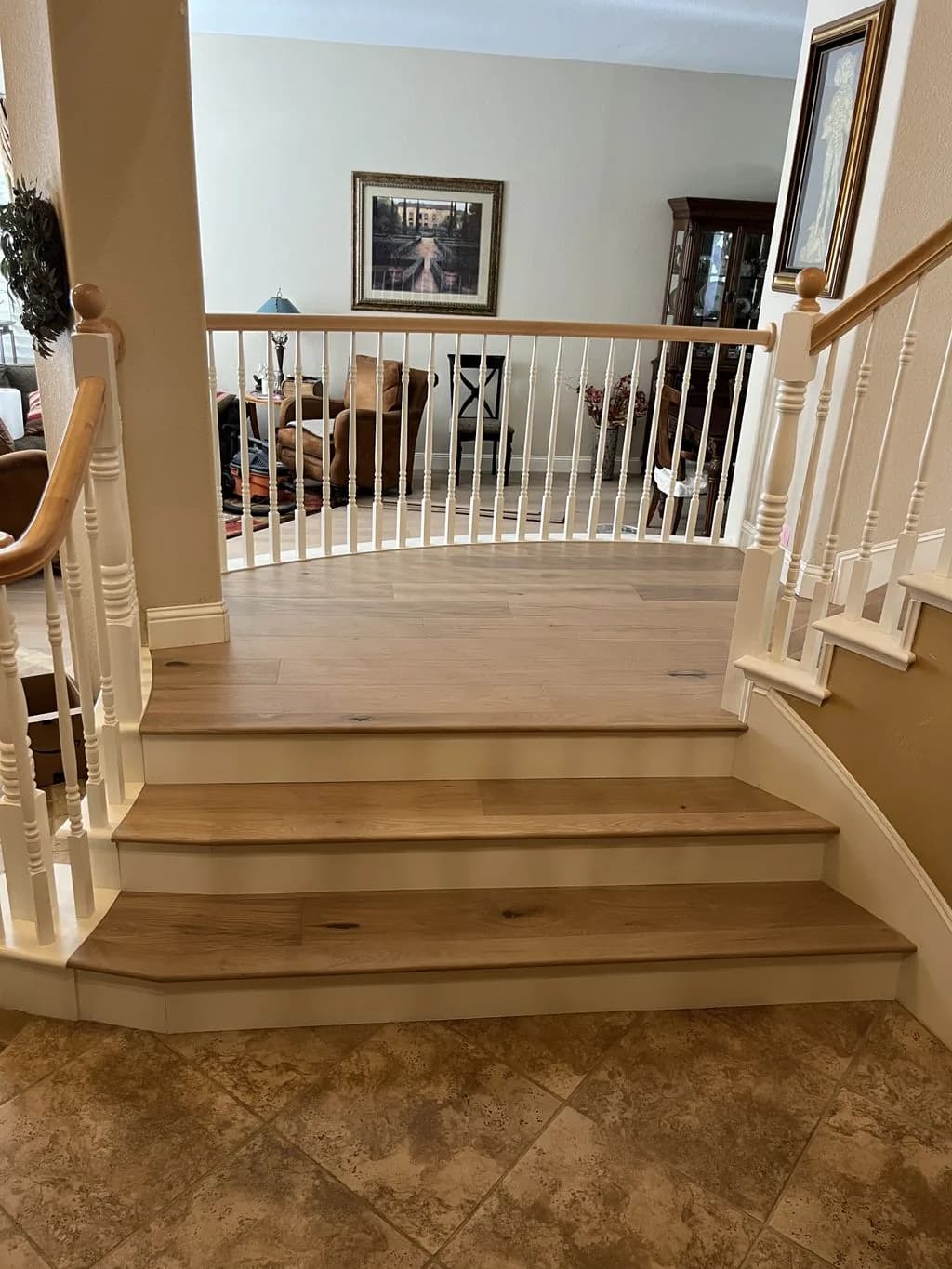
White Oak Hardwood
Curved Staircase
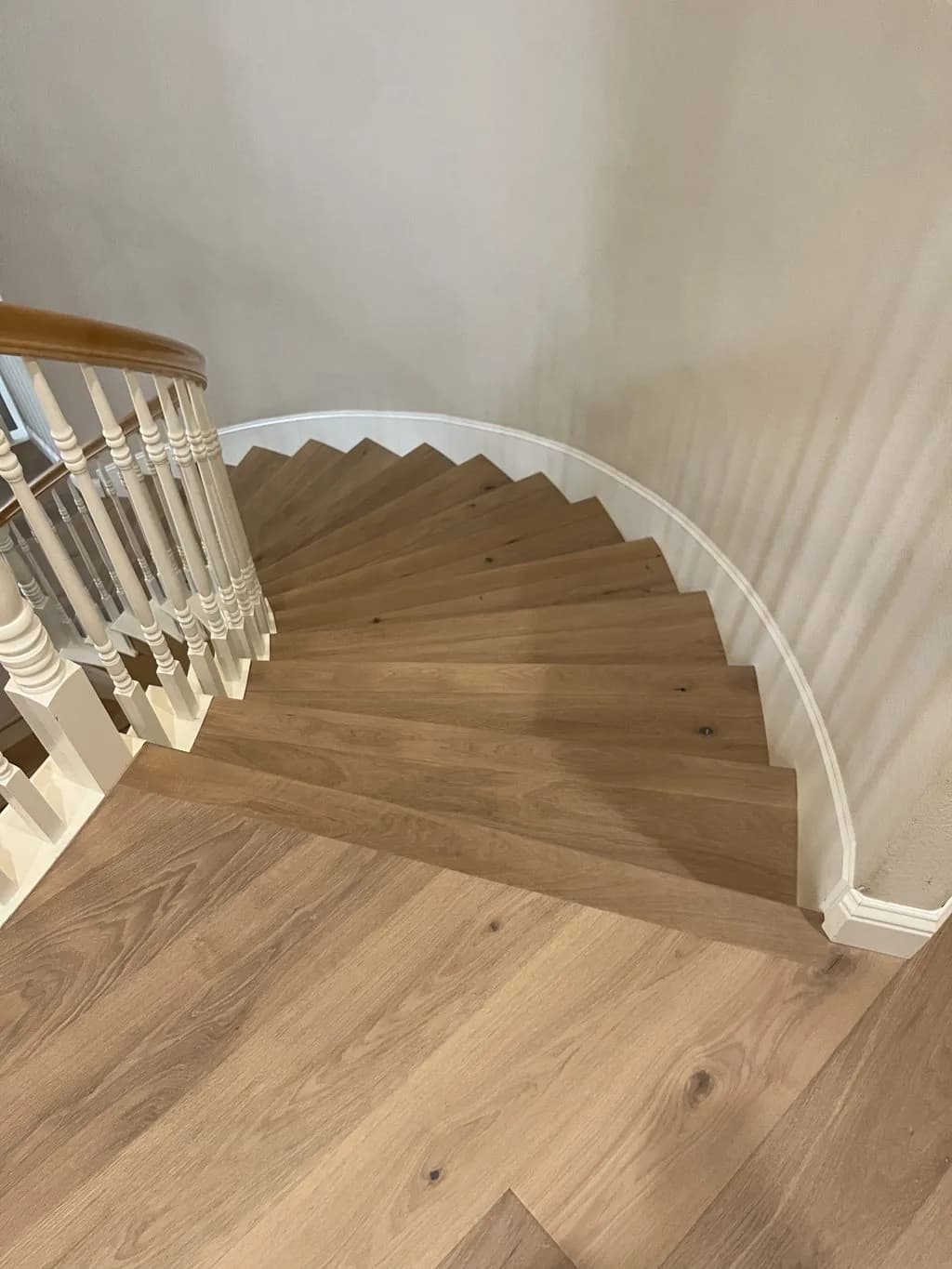
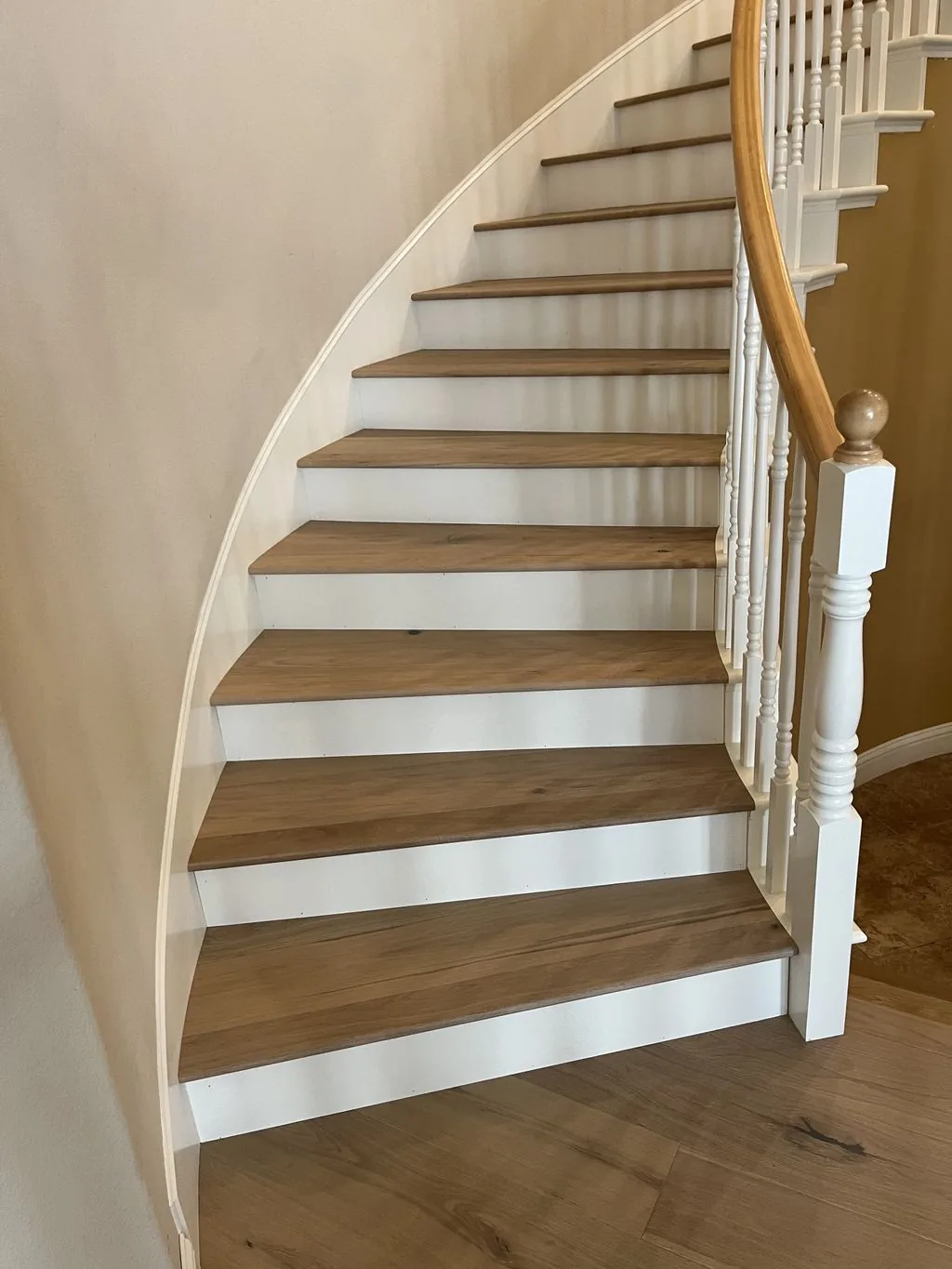
White Oak Hardwood
Stair Treads
Our Services
Flooring Services in Lake Wildwood
From hardwood to luxury vinyl, here's how we help Lake Wildwood homeowners upgrade their floors.
Hardwood Flooring
Solid oak, maple, and walkable heirloom-grade hardwood, precisely installed.
Hardwood Flooring in Lake WildwoodEngineered Hardwood
Real-wood wear layers built for California's climate swings.
Engineered Hardwood in Lake WildwoodLuxury Vinyl Plank
Waterproof, wood-look LVP for kitchens, baths, and busy households.
Luxury Vinyl Plank in Lake WildwoodLaminate Flooring
Durable, high-style laminate at a friendly price point.
Laminate Flooring in Lake WildwoodTile Flooring
Porcelain and ceramic tile set dead-level with crisp grout lines.
Tile Flooring in Lake WildwoodFloor Installation
Full-service installation from subfloor prep to final baseboard.
Floor Installation in Lake WildwoodFloor Refinishing
Sand, stain, and reseal tired hardwood back to new.
Floor Refinishing in Lake WildwoodFloor Repair
Board swaps, water damage, squeaks, and seamless patch-ins.
Floor Repair in Lake WildwoodLocal Considerations
What Lake Wildwood Homes Need From a Floor
Climate, home age, and foundation type all shape the right flooring choice in Lake Wildwood — here's what we account for.
A stock built in two decades, median year 1983
Two-thirds of Lake Wildwood's homes went up in the 1970s and 1980s, with essentially no historic stock and nothing added since 2020, so the work here is remarkably consistent: original-era plywood subfloors, first-generation oak and parquet under later carpet, and 1970s resilient flooring and sheet-vinyl backings that we treat as test-first materials before any tear-out. The upside of that uniformity is predictability — we know the construction before we open the door — and the honest question on most jobs is whether forty-to-fifty-year-old original material still has a refinish left in it or has reached replacement.
Part-time houses and unattended humidity
One housing unit in eight here is held for seasonal or occasional use — the ACS classifies every vacant unit in the community that way — and those homes sit through rainless 90-degree summers and 36-inch wet winters with the conditioning set back or off. Interior humidity then swings much wider than in a continuously conditioned house, which is exactly what wood floors hate. For part-time owners we spec accordingly: engineered wood or rigid-core LVP over wide-plank solid, acclimation to realistic (not ideal) interior conditions, expansion detailing sized for the swing, and honest advice about leaving minimal conditioning on through the extremes.
A propane community — the inverse of the county's wood-heat story
Nearly two-thirds of Lake Wildwood's occupied homes — 63.5% — heat with bottled or tank gas, and wood heat is statistically zero, the lowest in our service area and the opposite of the surrounding unincorporated county. Propane forced-air heat runs dry, pulling indoor humidity down through the winter months even as the ground outside saturates. That inversion — dry interior, wet exterior — is the specific condition we detail for: on-site acclimation, correct expansion gaps, and attention to crawlspace and slab moisture underneath floors that are drying from above.
Lakefront elevations, recorded in the covenants
Lakefront lots carry a recorded flooding easement up to 1,205 feet above sea level, and the covenants prohibit any first floor lower than 1,208.5 feet — 8.5 feet above the lake's normal 1,200-foot line. Those numbers exist because water belongs near these houses, and they set the flooring conversation: lakefront slabs and crawlspaces get moisture-tested rather than assumed dry, grade drainage gets a look during the estimate, and rooms with big water-facing glass take long, unobstructed sun off open water — real UV load that makes fade resistance a genuine selection factor for wood and some resilient products.
Steep, rocky ground under stepped foundations
The soil survey maps Musick sandy loam on 15-to-50-percent slopes and a Trabuco–rock outcrop complex across the community — steep ground with bedrock at or near the surface, falling nearly 400 vertical feet from the eastern edge down past the dam. Houses of this era on this terrain mix slab-on-grade, stepped slabs, split-levels, and daylight basements, sometimes within one footprint, and one mapped component (Shenandoah) seasonally saturates over a clay pan on the flatter benches. We check flatness and moisture per foundation zone, because a single reading doesn't describe these houses.
Getting through the gate is part of the job
Lake Wildwood is staffed-gate private: visitors are called in, and contractors work on annual passes issued in person — photographed, backed by a contractor's license, renewed each year. We maintain our credentials and handle the logistics ourselves: pass renewals, gate call-ins for deliveries, and scheduling that respects the community's rhythms. For homeowners comparing bids, it's worth asking any contractor whether they already hold current Lake Wildwood access — it's a real difference between a job that starts Monday and one that starts with paperwork.
The county's own permit exemption for finish flooring
Nevada County's Building Department publishes the answer most homeowners want: 'painting, papering, tiling, carpeting, cabinets, counter tops and similar finish work' is exempt from a building permit. The honest two-step: the finish floor itself needs no county permit, but structural subfloor or framing repair and any plumbing or electrical rearrangement fall outside the exemption and do. Inside the gates, the Association's recorded covenants require approval for exterior and site improvements — the 74-page Declaration enumerates buildings, walls, fences, landscaping, and exterior color, and never mentions interior finishes — though we'd always have owners confirm current Association rules before a large remodel.
Local Resources & References
Helpful Lake Wildwood Resources
Authoritative local and industry references for permits, planning, and flooring standards.
- Third Restated and Amended Declaration of CC&Rs (recorded, 74 pp.) — Boise Cascade as original declarant, development commencing 1969; the 300-acre lake; construction standards, lakefront elevations, and flooding easementLake Wildwood Association
- Division of Safety of Dams, Dams Within Jurisdiction of the State of California (September 2025) — 'Anthony House' (State ID 1300-2, NID CA00964): built 1970, 75 ft high, high downstream hazard, Satisfactory condition, owned by the Lake Wildwood AssociationCA Department of Water Resources
- Lake Wildwood Frequently Asked Questions (2022) — the community's public sewer system: 42 miles of gravity main, 14 lift stations, dedicated treatment plant with UV disinfection, operated as NCSD Zone 1Nevada County Sanitation District No. 1
- Building Department — Work Exempt from Permits: 'painting, papering, tiling, carpeting, cabinets, counter tops and similar finish work' (per the California Residential Code)Nevada County
- ACS 2020–2024 5-year estimates, Lake Wildwood CDP — median year built 1983, tenure, seasonal vacancy (all 291 vacant units seasonal/recreational/occasional), heating fuel 63.5% propane (via Census Reporter)US Census Bureau
- Fire Hazard Severity Zones in State Responsibility Area — sampled points inside the community return a Moderate/High/Very High mosaic, all SRACAL FIRE
- California Historic Fire Perimeters — the 1988 49er Fire perimeter reaches the community's northern edge; no mapped perimeter since crosses inside the CDPCAL FIRE
- Soil Data Access / SSURGO — Musick sandy loam (15–50% slopes) and Trabuco–Rock outcrop complex (15–30% slopes) mapped inside the communityUSDA NRCS
- Security & Gate Access FAQs — staffed gate; contractor passes issued annually and in person, photographed, backed by a contractor's licenseLake Wildwood Association
External links are provided for reference. Always confirm current requirements with the issuing agency.
Explore Flooring Services in Lake Wildwood
Nearby
Nearby Cities We Serve in Nevada County
Good to Know
Frequently Asked Questions
Does Renaissance Floors serve Lake Wildwood?
Yes. We install and refinish flooring throughout Lake Wildwood and the surrounding Nevada County area. Call (916) 749-0272 for a free estimate.
What flooring services do you offer in Lake Wildwood?
We install hardwood, engineered wood, luxury vinyl plank, laminate, tile, and more in Lake Wildwood, plus floor refinishing, repair, and full-service installation. See the full list below.
Are you licensed to work in Lake Wildwood?
Yes. We hold CSLB C-15 license #1060673 (C-15 Flooring & Floor Covering) and carry insurance. We're based in Roseville, CA and serve Lake Wildwood and all of Greater Sacramento & Northern California.
How do I get a free flooring estimate in Lake Wildwood?
Call (916) 749-0272 or request an estimate online. We'll schedule a convenient in-home visit in Lake Wildwood, measure your space, and give you an honest, no-pressure quote.
Do I need a permit to replace flooring in Lake Wildwood?
For the finish floor itself, no — Nevada County's Building Department explicitly lists 'painting, papering, tiling, carpeting, cabinets, counter tops and similar finish work' as exempt from a building permit. The exemption ends where structure begins: subfloor or joist repair, and any plumbing or electrical rearrangement (including work beyond simply pulling and resetting a toilet), require a county permit through the Building Department in Nevada City. Lake Wildwood is unincorporated, so the county — not any city — is the authority.
Does the Lake Wildwood Association have to approve new flooring?
The Association's recorded covenants require prior written approval for improvements they define as construction, alteration, and exterior work — buildings, walls, fences, landscaping, retaining walls, exterior color, HVAC equipment, pools. Interior finishes aren't among the enumerated items, and the word 'interior' doesn't appear in the 74-page Declaration. That said, association rules can change and separate policy documents exist, so for a larger remodel we'd have you confirm current requirements with the Association office before work begins.
How does a contractor get through the Lake Wildwood gate?
On credentials, not charm. The Association issues contractor gate passes annually and in person — the applicant is photographed, must show a contractor's license or equivalent business proof, and pays an annual fee; passes lapse if not renewed by year-end, and homeowners call in any visitor without one. We maintain current access and handle gate logistics for our jobs, including deliveries. It's a fair question to ask anyone bidding your project.
We're only at Lake Wildwood part of the year — does that change the flooring?
It's the single biggest factor. About one home in eight here is a seasonal or occasional-use house, and a closed-up home with the conditioning set back swings far wider in humidity than an occupied one — through 90-degree rainless summers and 36-inch winters. For part-time homes we favor engineered wood or rigid-core LVP over wide solid planks, acclimate to the home's realistic unattended conditions, size expansion gaps for the swing, and recommend leaving modest conditioning on through the extremes.
What should lakefront homeowners know before choosing floors?
Two recorded numbers and one about the sun. The covenants run a flooding easement across lakefront lots to 1,205 feet above sea level and require first floors no lower than 1,208.5 — your floor sits a designed 3.5 feet above the recorded easement — so we always moisture-test lakefront slabs and crawlspaces rather than assume them dry. And water-facing rooms take long, reflected sun off 300 acres of open lake, so UV fade resistance genuinely matters when picking wood species, stains, and resilient products.
Can the original floors in a 1970s or 80s Lake Wildwood home be refinished?
Often. Two-thirds of the community's homes date to those decades, and first-generation oak — strip and parquet — regularly survives under later carpet with enough wear layer left to refinish. We judge it at an exposed edge before quoting. The same era means 1970s sheet goods and adhesives can be present underneath; we treat those as test-first materials and bring in licensed abatement when a test comes back positive rather than disturbing them.
Does it snow at Lake Wildwood, and what does the climate mean for floors?
The community sits at roughly 1,150 to 1,525 feet — well below Grass Valley — and snow is not a documented recurring condition here; the reference climate record shows about 36 inches of annual rain, nearly all of it November through March, against essentially rainless summers with July highs in the low 90s. That wide wet-dry swing, not snow, is what governs wood movement: real acclimation, correct expansion space, and moisture control under the floor are the local fundamentals.
Does Renaissance Floors offer free estimates in Lake Wildwood?
Yes — free, no-obligation in-home estimates, financing options, and a workmanship warranty, with current gate access already in hand. We're a licensed CSLB C-15 flooring contractor (license #1060673) based in Roseville. Call (916) 749-0272 to schedule.
Related
Keep Reading
Related pages: Nevada County, Hardwood Flooring in Citrus Heights, Luxury Vinyl Plank in Lake Wildwood, and Laminate Flooring in Lake Wildwood.
Ready for Floors You'll Love?
Free, no-pressure flooring estimates throughout Lake Wildwood and Nevada County.