Service Area
Flooring in Nevada City
Renaissance Floors installs and refinishes hardwood, luxury vinyl, tile, and more for homeowners throughout Nevada City and the surrounding Nevada County area.
CSLB #1060673
Licensed & Insured
Est. 2019
Family-Owned
15+ Years
Hands-On Experience
5.0★ Rated
22 Reviews on Thumbtack
Local, Licensed, Accountable
Flooring Contractor Serving Nevada City
Nevada City is part of Nevada County, and it's one of the communities Renaissance Floors regularly works in. We're based in Roseville, CA and serve homeowners across Greater Sacramento & Northern California— from small refinishing jobs to full home installs. Every project starts with an honest look at your subfloor and your goals, followed by a clear, no-pressure estimate. There's no dispatched sales team and no guesswork: you work directly with the crew doing the installation, backed by our CSLB C-15 license and a workmanship warranty on every job.
From historic character homes in Grass Valley and Nevada City to mountain cabins in Truckee, Nevada County homes reward durable, dimensionally-stable flooring. Engineered hardwood and quality LVP handle the swings in mountain temperature and humidity better than solid wood.
Nevada City is the county seat of Nevada County and, in the words of its own National Register nomination — certified by the State Historic Preservation Officer in 1985 — 'the most complete gold town in California.' About 3,170 people live here at 2,477 feet, in a town whose downtown froze, architecturally, in 1917: the nomination records that after the Alpha Hardware building went up that year, 'the business district has remained practically static, architecturally speaking.' Ninety-six buildings stand in the 16-acre National Register district along Broad, Main, and Commercial Streets, and the numbers behind the postcard are real: 43% of the city's housing predates 1940, more than half predates 1950, the median home was built in 1947 — and the Census records exactly zero units built since 2020.
The town exists in its present form because it kept burning down. Founded on Deer Creek's placers in 1849 — first Deer Creek Dry Diggings, then Caldwell's Upper Store, named Nevada in 1850 — it became, per the nomination, 'a tinderbox town of wood buildings' that burned in 1853, then catastrophically on July 19, 1856, when fire took 400 buildings, the new courthouse, all the county records, and ten lives. It burned again in 1858 — and sixty-five new frame buildings rose within a month — and a last time on November 8, 1863. The nomination itself draws the conclusion that matters for anyone who works on these buildings: the fires, arriving just as mining industrialized, produced 'wide use of brick with heavy iron doors and shutters for permanent business buildings, and well-constructed frame dwellings for more or less permanent residents.' The Victorians on Aristocracy Hill and the brick blocks downtown are the fires' direct descendants — and the brick blocks are shells: the National Hotel's 18-inch English-bond walls carry wood-framed floors and roofs, a construction the nomination documents building by building.
This was briefly one of California's most important places. At the 1856 general election Nevada City polled 2,082 votes — 'exceeded in California only by Sacramento and San Francisco,' the nomination records. Hydraulic mining was invented here: Edward Matteson first turned pressurized water on gravel in 1853, and one of the giant monitors that technique produced stands in Calanan Park downtown — the technique's monstrous endpoint, Malakoff Diggins, lies 26 miles northeast at North Bloomfield, where a federal court effectively ended it in 1884. That Sawyer Decision closed the hydraulic era, quartz mining shifted the county's weight to Grass Valley by 1900, and Nevada City settled into the role it has played ever since: the preserved seat. The courthouse tells the whole story in one building — burned 1856, burned 1863, rebuilt 1864, third story added 1900, and the sweeping Art Moderne facade applied in 1937.
The preservation is deliberate and legally specific. Ordinance 338, adopted August 12, 1968, created the city's Historical District — older and larger than the National Register one — defining 'Mother Lode type of architecture' as a legal term and governing exterior appearance 'within public view.' In 1972 the restoration went physical: utilities undergrounded, the gas lamps installed — a preservation-era decision, not a Victorian survival — and neon removed. The details that matter to a flooring project: the City's own design guidelines state that staff can sign off interior remodels, so interior floors are not design-reviewed; but the municipal code extends historic exterior standards to every pre-1942 building citywide, classifies replacing 25% of a foundation as a 'major renovation' that can carry a bond of up to 125% of the work, and — remarkably — pre-qualifies the entire district for the California Historical Building Code's alternative standards by ordinance, so nobody has to argue a downtown building is historic before using the code written for historic buildings.
The climate is the service area's most demanding, measured on a station that has recorded since 1893: 62.26 inches of annual precipitation under current NOAA normals — the wettest market we serve — with 79.7% of it falling November through March, 14.5 inches of snow, and a July normal of 0.03 inches. That saturated winter runs under raised Victorian foundations on rocky, sloping lots, which is why crawlspace moisture is the town's recurring technical issue. And the fire history has a modern epilogue: on CAL FIRE's 2025 maps, the entire historic core sits in a Very High fire hazard severity zone — a fact the city meets with a wildfire protection plan, fuel-reduction projects along Deer Creek, and defensible-space inspections.
Renaissance Floors is a licensed CSLB C-15 flooring contractor (license #1060673) based in Roseville, and Nevada City is the anchor of our historic-home work: refinishing original old-growth floors judged at an exposed edge, weaving replacement boards into century-old fields, reading board subfloors and settled framing before decisions, and handling the two-step approval reality — City sign-off first, then the Nevada County Building Department, which handles the city's permits under contract. Free in-home estimates, honest restore-or-replace answers, and a workmanship warranty.
Local Coverage
Neighborhoods We Serve in Nevada City
From Piety Hill to Historic Downtown Nevada City, Renaissance Floors installs and refinishes floors across Nevada City.
Recent Work
A Sample of Our Craftsmanship
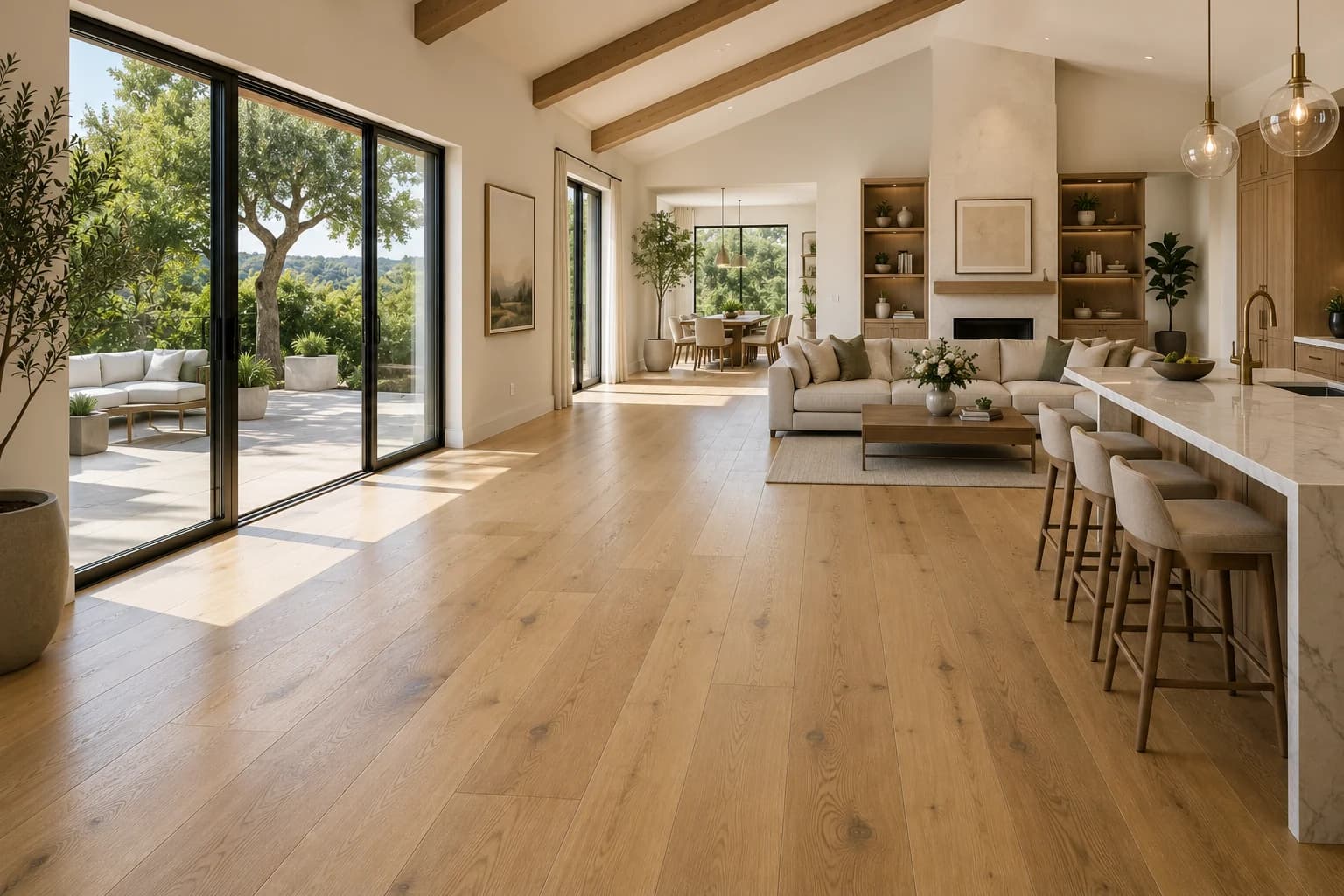
White Oak Hardwood
Great Room & Landing
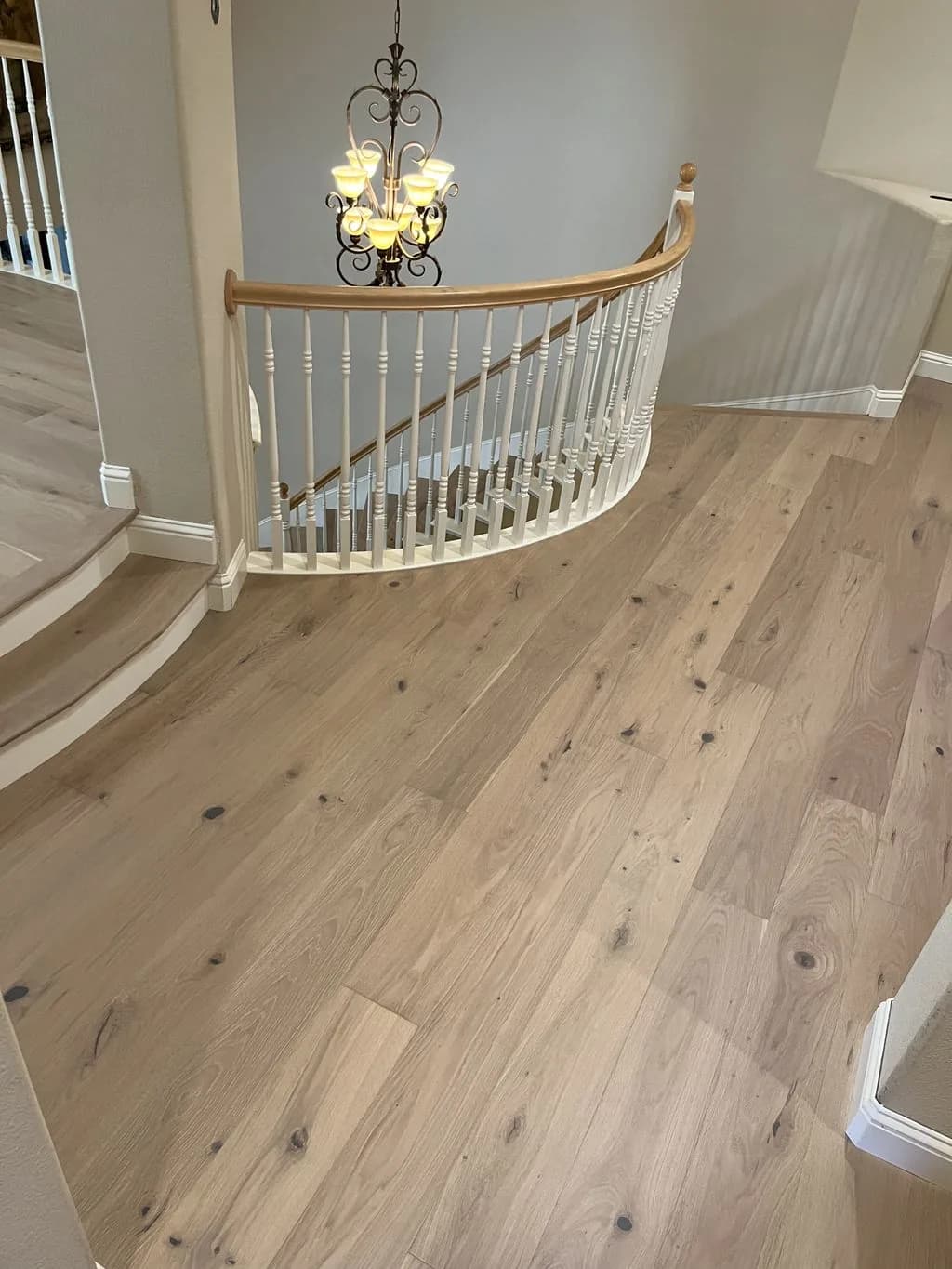
White Oak Hardwood
Staircase & Landing

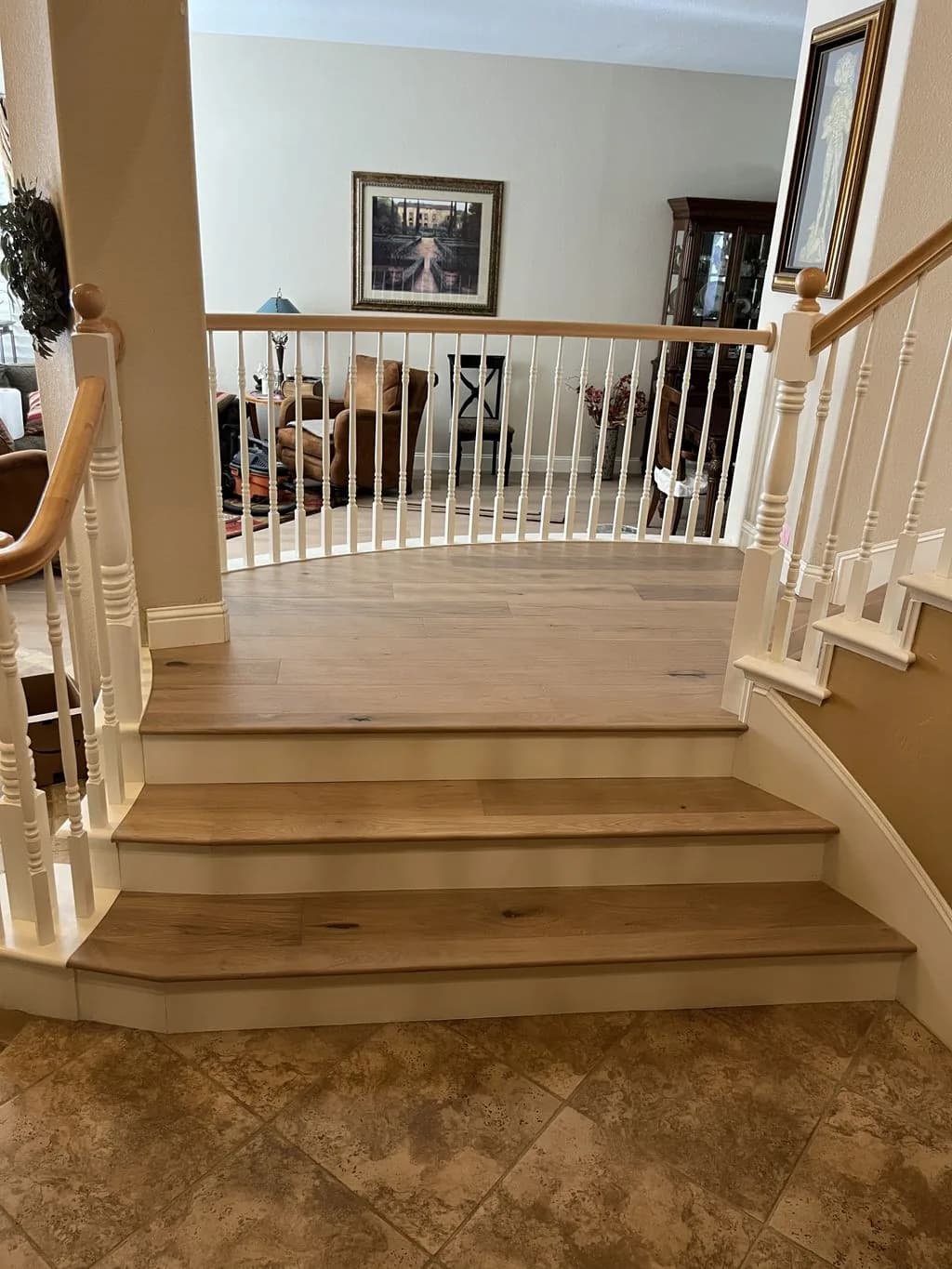
White Oak Hardwood
Curved Staircase
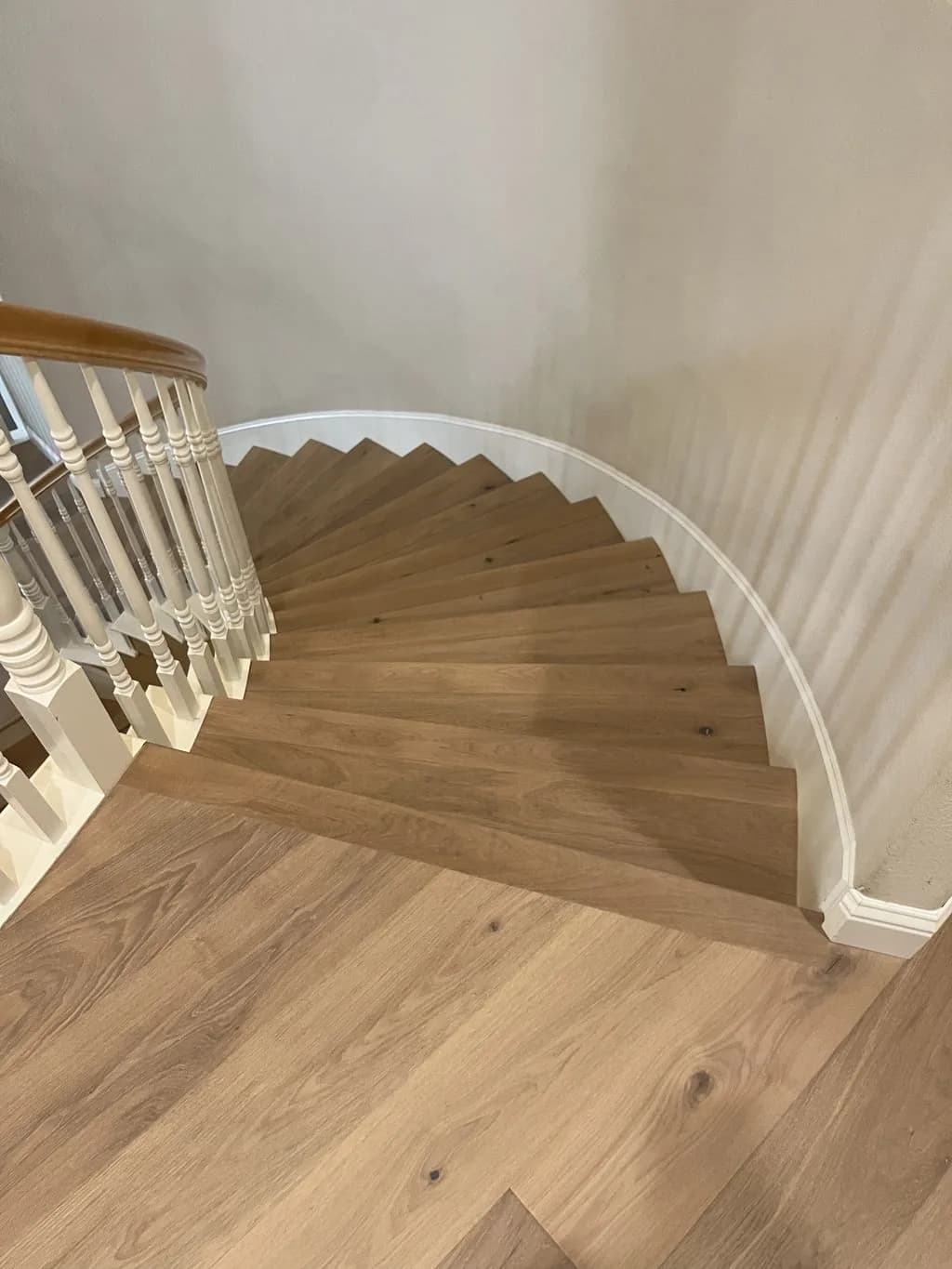
White Oak Hardwood
Stair Treads
Our Services
Flooring Services in Nevada City
From hardwood to luxury vinyl, here's how we help Nevada City homeowners upgrade their floors.
Hardwood Flooring
Solid oak, maple, and walkable heirloom-grade hardwood, precisely installed.
Hardwood Flooring in Nevada CityEngineered Hardwood
Real-wood wear layers built for California's climate swings.
Engineered Hardwood in Nevada CityLuxury Vinyl Plank
Waterproof, wood-look LVP for kitchens, baths, and busy households.
Luxury Vinyl Plank in Nevada CityLaminate Flooring
Durable, high-style laminate at a friendly price point.
Laminate Flooring in Nevada CityTile Flooring
Porcelain and ceramic tile set dead-level with crisp grout lines.
Tile Flooring in Nevada CityFloor Installation
Full-service installation from subfloor prep to final baseboard.
Floor Installation in Nevada CityFloor Refinishing
Sand, stain, and reseal tired hardwood back to new.
Floor Refinishing in Nevada CityFloor Repair
Board swaps, water damage, squeaks, and seamless patch-ins.
Floor Repair in Nevada CityLocal Considerations
What Nevada City Homes Need From a Floor
Climate, home age, and foundation type all shape the right flooring choice in Nevada City — here's what we account for.
A restoration market by arithmetic
Nevada City's housing numbers leave no ambiguity: 43% built before 1940, more than half before 1950, a median year of 1947, essentially no 1950s layer at all, and zero units added since 2020. There is no replacement wave here because there is nothing newer to replace — the work is restoration: original old-growth fir and pine assessed for remaining thickness, board subfloors and hand-framed structure read before decisions, and matching a century-old board profile treated as the craft problem it is. We'd rather certify a floor worth saving than sell new material over it, and in this town that's most floors.
Where the famous preservation rules actually stop
Nevada City's design review is strict and exterior: Ordinance 338 governs appearance within public view, and the City's own guidelines state staff can sign off interior remodels — so replacing or refinishing interior floors triggers no design review. The rules that can touch floor-adjacent work are different ones: historic exterior standards reach every pre-1942 building citywide, and replacing a quarter of a foundation is legally a 'major renovation' that can require an architect's plan and a bond. We plan subfloor and foundation-adjacent work around those thresholds, knowingly.
The Historical Building Code is pre-approved here
By its own ordinance, Nevada City deems every building in the Historical District qualified for the California Historical Building Code — the alternative standards written for historic structures — 'to encourage and promote' restoration work. Practically, that means a downtown project can use period-appropriate solutions where the modern code would force anachronisms, without first litigating the building's historic status. For wood floors in 1860s brick shells with wood-framed structure, that flexibility is frequently the difference between preserving a floor system and gutting it.
Permits are two-step: City first, then the County
Nevada City issues no building permits of its own — the City states plainly that it contracts with Nevada County for building department services. The verified order: City land-use or architectural approval first, then the city-approved plans go to the Nevada County Building Department for the permit. Interior flooring alone typically needs neither; structural subfloor work and larger remodels ride the two-step path, and knowing it in advance is worth weeks of schedule. We handle the sequencing as part of planning.
The wettest market we serve, over crawlspaces
The station above town — recording since 1893 — puts current normals at 62.26 inches of rain a year, nearly 80% of it November through March, plus 14.5 inches of snow, against a July of 0.03 inches. That extreme wet-dry swing runs beneath raised Victorian foundations on rocky, sloped lots, which makes crawlspace humidity the town's defining floor issue: ground vapor barriers, functioning ventilation or encapsulation, and subfloor moisture readings come before any finish floor, and cupped floors here almost always trace to the crawlspace, not the room.
Subdivided Victorians are a real rental market
One in six Nevada City housing units sits in a two-to-four-unit building — subdivided Victorians and Gold Rush-era rooming stock — and nearly 46% of households rent, with not a single 20-unit apartment building in town. Multi-tenant work in century-old wood-framed buildings is its own discipline: durable, honest materials that respect the building, floor assemblies that manage sound between historic units, and repairs planned around occupied floors. It's a rental market inside a museum, and we work it as both.
A fire town, then and now
The town that burned four times in a decade now sits, in its entirety, in a Very High fire hazard severity zone on CAL FIRE's current maps — the historic core included. The city answers with fuel treatment along Deer Creek, defensible-space inspections, and a wildfire protection plan; for floors the practical translation is modest but real: smoke-season ash and grit call for more frequent dry cleaning of matte finishes, and any post-fire rebuild in the district inherits both the Historical Building Code's flexibility and the design rules' exterior scope.
Local Resources & References
Helpful Nevada City Resources
Authoritative local and industry references for permits, planning, and flooring standards.
- Nevada City Downtown Historic District — NRHP nomination 85002520 (1985): 'the most complete gold town in California'National Park Service
- Historical District Design Guidelines — Ordinance 338 scope; interior remodels are staff sign-offCity of Nevada City
- Planning Department — 'We contract with Nevada County for our building department services'City of Nevada City
- Nevada City Municipal Code — Ch. 15.04 (Historical Building Code pre-qualification), 15.12 (pre-1942 standards; 25% foundation trigger), 17.68 (Historical District)Municode
- Nevada Theatre (CHL No. 863) — 'California's oldest existing structure erected as a theater'; National Exchange Hotel (CHL No. 899)CA Office of Historic Preservation
- Nevada City co-op station USC00046136 — 1991-2020 normals (62.26 in precip, 14.50 in snow; record since 1893)NOAA NCEI
- City of Nevada City — ACS profile (43.0% pre-1940 stock; median year built 1947; tenure and units-in-structure)US Census
- Fire Hazard Severity Zones 2025 — the current CAL FIRE map for the cityCity of Nevada City
- The 1855 foundry — birthplace of the commercially manufactured Pelton wheel (1879)Miners Foundry
External links are provided for reference. Always confirm current requirements with the issuing agency.
Explore Flooring Services in Nevada City
Nearby
Nearby Cities We Serve in Nevada County
Serving the Region
Flooring Across Our Core Service Areas
We install and refinish floors across our core Northern California service areas — from the Sacramento region and the foothills to the Bay Area and wine country.
Good to Know
Frequently Asked Questions
Does Renaissance Floors serve Nevada City?
Yes. We install and refinish flooring throughout Nevada City and the surrounding Nevada County area. Call (916) 749-0272 for a free estimate.
What flooring services do you offer in Nevada City?
We install hardwood, engineered wood, luxury vinyl plank, laminate, tile, and more in Nevada City, plus floor refinishing, repair, and full-service installation. See the full list below.
Are you licensed to work in Nevada City?
Yes. We hold CSLB C-15 license #1060673 (C-15 Flooring & Floor Covering) and carry insurance. We're based in Roseville, CA and serve Nevada City and all of Greater Sacramento & Northern California.
How do I get a free flooring estimate in Nevada City?
Call (916) 749-0272 or request an estimate online. We'll schedule a convenient in-home visit in Nevada City, measure your space, and give you an honest, no-pressure quote.
Do I need a permit to replace flooring in Nevada City?
Interior floor replacement and refinishing typically needs neither design review nor a permit on its own — the City's own guidelines make interior remodels a staff sign-off. When a permit is required — structural subfloor work, or flooring inside a larger remodel — Nevada City's process is two-step: City approval first, then the plans go to the Nevada County Building Department, which handles the city's building permits under contract. We sequence that path as part of planning.
Our Victorian's floors are original. Are they worth saving?
In Nevada City, usually yes — and the odds are better here than almost anywhere: 43% of the town predates 1940, and its old-growth fir and pine was milled thick from timber you cannot buy today. We judge remaining material at an exposed edge, read the board subfloor and framing underneath, and give a straight restore-or-replace answer. Where thickness allows, restoration costs less than replacement and keeps the floor the house was built with.
Do the historic district rules limit what we can do with our floors?
Not your interiors. Nevada City's design review — strict as it famously is — governs exterior appearance within public view, and the City's guidelines state staff sign off interior remodels. Two adjacent rules are worth knowing: historic exterior standards apply to every pre-1942 building citywide, and replacing 25% or more of a foundation is classified as a major renovation with its own requirements. Floors themselves are yours to restore or replace as you see fit.
What is the Historical Building Code, and does our house qualify?
It's California's alternative code for historic buildings — allowing period-appropriate methods where modern standards would force anachronisms — and in Nevada City the district's qualification is already established by city ordinance, so downtown projects can invoke it without first proving the building's status. For old floor systems in brick shells and Victorian frames, that flexibility often means preserving structure the standard code would condemn.
Why do floors cup in Nevada City homes?
Almost always the crawlspace. This is the wettest market in our service area — over 62 inches of rain in a normal year, nearly 80% of it in five winter months — and that moisture sits under raised Victorian foundations on rocky, sloping lots. When the underside of a floor lives at winter crawlspace humidity while the top lives at woodstove-and-furnace dryness, cupping is physics. The fix starts below: vapor barrier, ventilation or encapsulation, and moisture readings before any sanding or new installation.
We own a subdivided Victorian with tenants. Can you work around occupancy?
Yes — one in six Nevada City units is in a 2-to-4-unit building, so multi-tenant work in century-old structures is standard here. We phase by unit, spec durable materials that respect the building's character, pay attention to sound between historic floors, and plan around the reality that the building stays lived-in. For owners, we'll also standardize materials across units so future repairs stay simple.
Does the fire-zone designation affect flooring choices?
Not directly — fire-hazard rules govern exterior construction, not interior floors. The practical touchpoints: smoke-season ash is abrasive, so matte finishes and more frequent dry cleaning protect the traffic lanes; and if a district building is ever rebuilt or heavily renovated after fire, the project inherits both the exterior design standards and the Historical Building Code's flexibility. We plan those projects with the City's two-step process from day one.
Are you licensed, and do you offer financing?
Yes on both. Renaissance Floors holds California CSLB license #1060673 (C-15 flooring), verifiable through the CSLB license lookup, and we offer financing options along with free in-home estimates throughout Nevada City — from the brick blocks of the National Register district to the Victorians on the hills above Deer Creek.
Related
Keep Reading
Related pages: Tile Flooring in Clarksburg, Floor Repair in Colfax, Hardwood Flooring in Nevada City, and Engineered Hardwood in Nevada City.

Ready for Floors You'll Love?
Free, no-pressure flooring estimates throughout Nevada City and Nevada County.