Service Area
Flooring in Sunnyvale
Renaissance Floors installs and refinishes hardwood, luxury vinyl, tile, and more for homeowners throughout Sunnyvale and the surrounding Santa Clara County area.
CSLB #1060673
Licensed & Insured
Est. 2019
Family-Owned
15+ Years
Hands-On Experience
5.0★ Rated
22 Reviews on Thumbtack
Local, Licensed, Accountable
Flooring Contractor Serving Sunnyvale
Sunnyvale is part of Santa Clara County, and it's one of the communities Renaissance Floors regularly works in. We're based in Roseville, CA and serve homeowners across Greater Sacramento & Northern California— from small refinishing jobs to full home installs. Every project starts with an honest look at your subfloor and your goals, followed by a clear, no-pressure estimate. There's no dispatched sales team and no guesswork: you work directly with the crew doing the installation, backed by our CSLB C-15 license and a workmanship warranty on every job.
The South Bay blends mid-century ranch and Eichler homes with newer construction. Original oak floors often just need refinishing, while remodels are a great time to upgrade to wide-plank engineered wood or luxury vinyl.
Sunnyvale's building rules name floors in plain words. The City's handout 'Work Not Requiring a Building Permit,' revised January 2026 and applicable as of January 1, 2026, begins its list with 'Cosmetic work such as painting, papering, cosmetic tiling, replacing floor coverings, trim work, cabinets mounted less than 5' 9" in residential installations, countertops, etc.' It cites '2025 California Building Code section 105.2 and the Sunnyvale Municipal Code' for that list, and the ordinance the City Council introduced in September 2025 to adopt the 2025 codes was written to take effect the same day. The wording has edges, and the handout states them. The list 'is NOT all-inclusive,' an exception 'does not grant authorization for any work to be done in violation of the provisions of the building codes or other laws and ordinances,' and nothing on it says whether a floor job that also opens up the subfloor, the structure, the plumbing or the wiring stays exempt. The item names floor coverings, not what they rest on.
Most of what that rule touches is postwar, and much of it is not a detached house. The Census Bureau's 2020–2024 five-year estimates count about 63,000 housing units on about 22 square miles, with a median year built of 1976. The 1950s, 1960s and 1970s supplied nearly equal shares, about 18, 18 and 17 percent, so no one decade clearly leads; about 57 percent of units predate 1980 and only about 1.5 percent predate 1940. Renters occupy about 56 percent of occupied homes, detached houses make up only about 36 percent of units, buildings of five or more units about 39 percent, and the survey counts about 3,600 mobile homes. Rankings depend on the comparison. Among the ten San Francisco, Peninsula and South Bay cities this site covers, Sunnyvale has the lowest estimated pre-1980 share, with Mountain View next at about 60 percent; across all 71 service-area places with Census figures it ranks 42nd-lowest on that measure and 47th-newest on median year built.
The City's records of Joseph Eichler's work here start in the late 1940s, and its own documents disagree on the year. The Historical Context Statement, in a section on Sunnyvale's early Eichler developments, records a 104-lot plat for Sunnyvale Manor (Tract 371) recorded by Joseph and Lillian Eichler on September 3, 1947, a 60-lot plat for Sunnymount Gardens (Tract 452) in January 1948, and a 51-lot addition (Tract 647) in November 1949 that marks 'the first collaboration on the design of a housing tract between Joseph Eichler and the architect, Robert Anshen.' It names 'the concrete floor slab with radiant heat' among the features 'that would become signatures of the Eichler home.' The Eichler Design Guidelines, adopted July 28, 2009, date the first homes of Eichler's Sunnyvale Building Company to 1949 instead, and say that of around 11,000 production homes he built in Northern and Southern California, 'over 1,000' were constructed in Sunnyvale between 1949 and 1972.
For anyone planning a floor, those guidelines supply both the construction and a caveat about it. They describe Eichlers as having 'flat roofs, slab-on-grade construction, and open beam ceilings,' and list 'Slab-on-grade construction' and 'Radiant floor heating' among 'some of the most common' features of the homes — common, not universal. A later section adds that 'radiant heated floors, when copper piping was not available, often deteriorated,' and names plastic tubing radiant heating among the alternatives. An Eichler slab in Sunnyvale may therefore hold an original system, a replacement, one that no longer runs, or none, and only the house can say which. The guidelines themselves stop at the walls: they 'focus on home exteriors visible from the street and adjacent neighbors, and do not apply to interior improvements.' The Taaffe-Frances Heritage Neighborhood Design Guidelines make the same point in a review table: 'Interior changes not altering exterior No Planning review is necessary.'
The ground changes from south to north. USDA soil data at two sampled north Sunnyvale addresses, on Lakechime Drive and San Miguel Avenue, list a poorly drained Hangerone soil whose record reads 'Shrink-swell potential is high'; sampled addresses near downtown and farther south are rated 'moderate.' All eight points checked north of Central Expressway or US-101 fall in California Geological Survey liquefaction zones and none of the twelve checked farther south do, while FEMA's map shows Zone AE at sampled points in Lakewood Village and farther north. The weather reference comes from beyond the city line. Moffett Federal Airfield, whose NOAA station sits about 2.4 miles from City Hall, is outside Sunnyvale's city limits, and the city itself extends about four miles farther north. The station's 1991–2020 normals give 13.45 inches of precipitation a year, with February the wettest month, September the highest average high at 77.7°F and December the coldest average low at 42.1°F.
Renaissance Floors is a licensed California C-15 flooring contractor (CSLB #1060673) based in Roseville. For a Sunnyvale floor, the useful first questions are whether the job stays within 'replacing floor coverings,' what the slab carries, and what the address's soil, flood and liquefaction lookups show. Free in-home estimates and a workmanship warranty.
Local Coverage
Neighborhoods We Serve in Sunnyvale
From Cherry Chase to Ortega Park, Renaissance Floors installs and refinishes floors across Sunnyvale.
Recent Work
A Sample of Our Craftsmanship
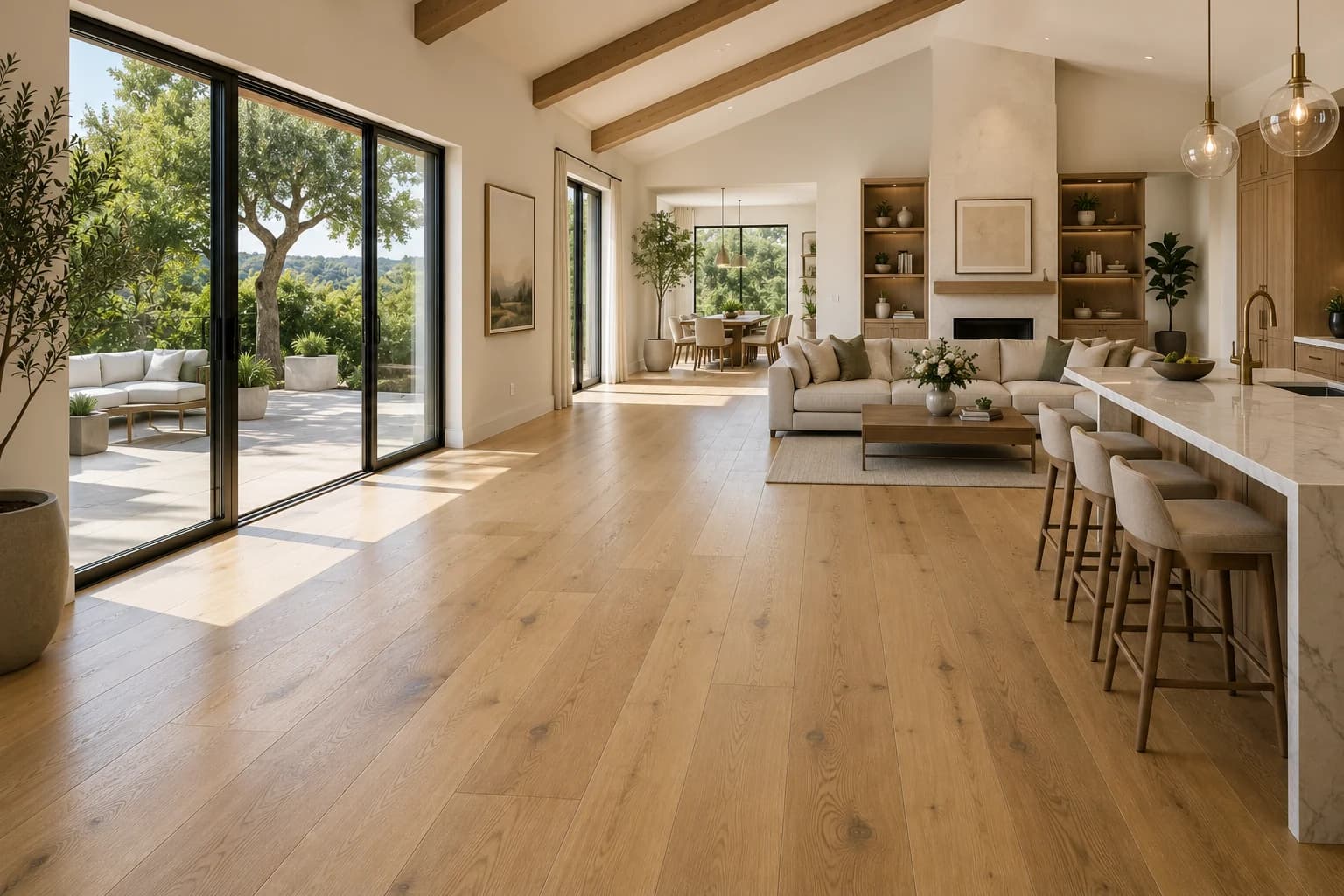
White Oak Hardwood
Great Room & Landing
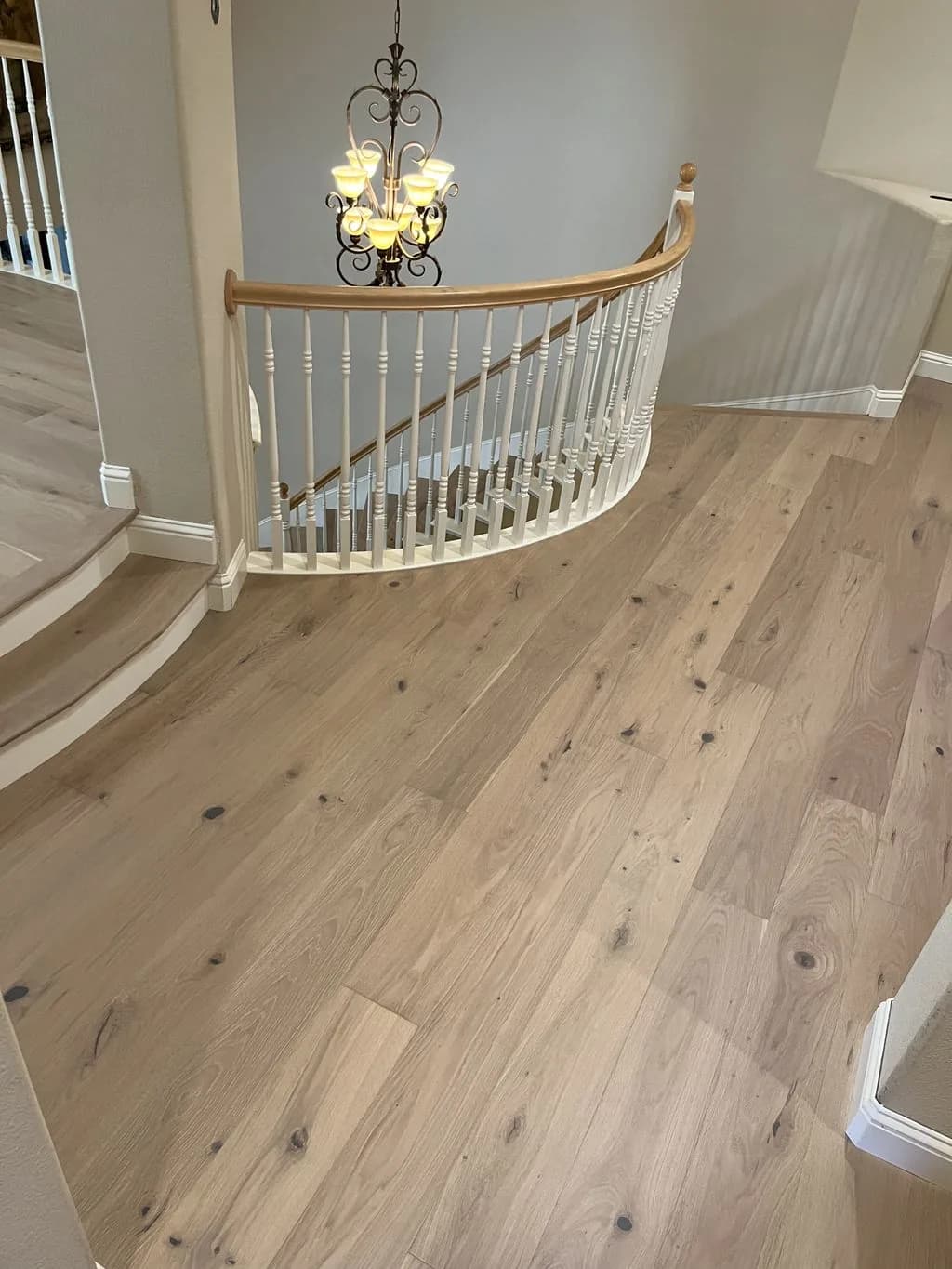
White Oak Hardwood
Staircase & Landing
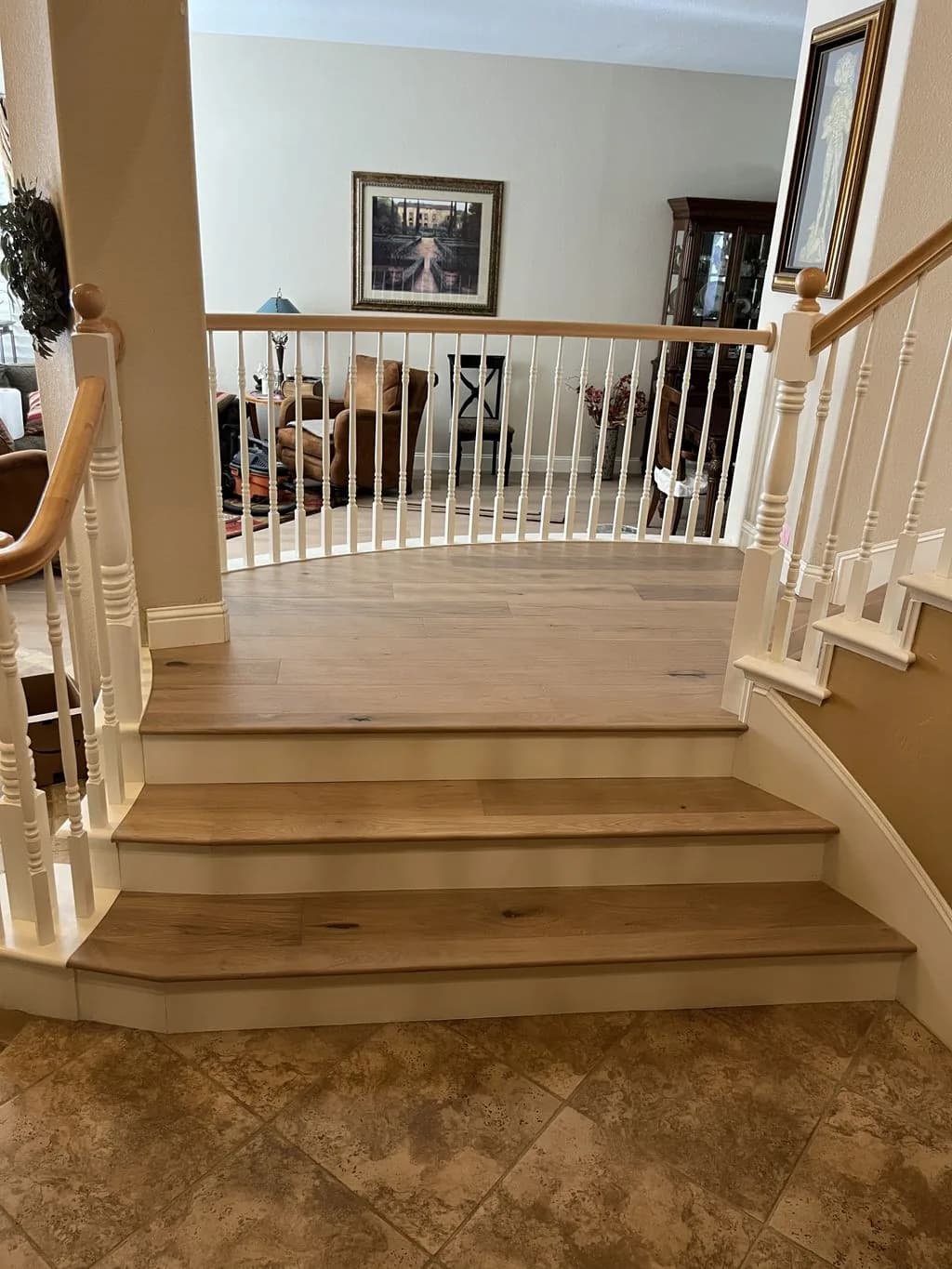
White Oak Hardwood
Curved Staircase
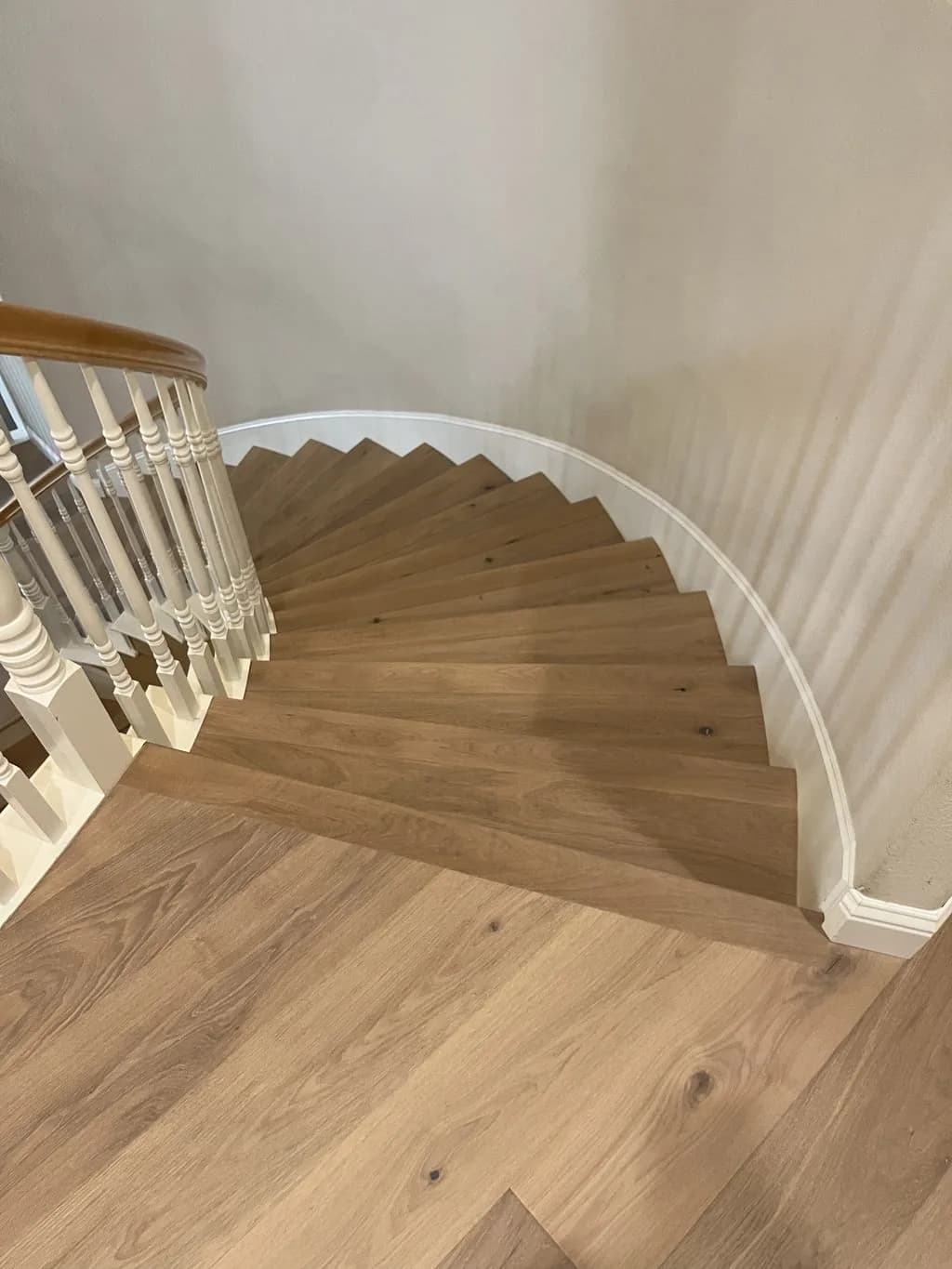
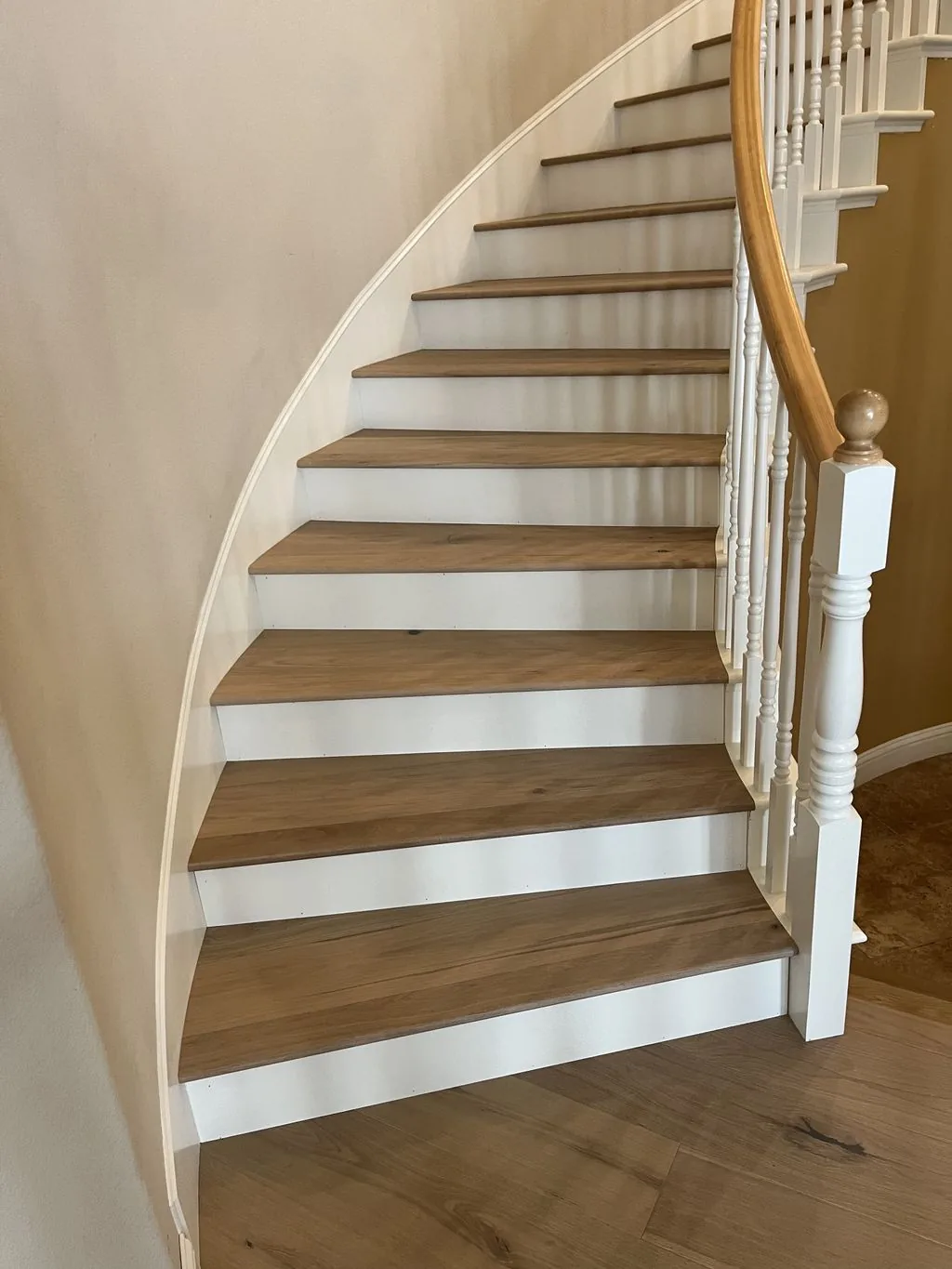
White Oak Hardwood
Stair Treads
Our Services
Flooring Services in Sunnyvale
From hardwood to luxury vinyl, here's how we help Sunnyvale homeowners upgrade their floors.
Hardwood Flooring
Solid oak, maple, and walkable heirloom-grade hardwood, precisely installed.
Hardwood Flooring in SunnyvaleEngineered Hardwood
Real-wood wear layers built for California's climate swings.
Engineered Hardwood in SunnyvaleLuxury Vinyl Plank
Waterproof, wood-look LVP for kitchens, baths, and busy households.
Luxury Vinyl Plank in SunnyvaleLaminate Flooring
Durable, high-style laminate at a friendly price point.
Laminate Flooring in SunnyvaleTile Flooring
Porcelain and ceramic tile set dead-level with crisp grout lines.
Tile Flooring in SunnyvaleFloor Installation
Full-service installation from subfloor prep to final baseboard.
Floor Installation in SunnyvaleFloor Refinishing
Sand, stain, and reseal tired hardwood back to new.
Floor Refinishing in SunnyvaleFloor Repair
Board swaps, water damage, squeaks, and seamless patch-ins.
Floor Repair in SunnyvaleLocal Considerations
What Sunnyvale Homes Need From a Floor
Climate, home age, and foundation type all shape the right flooring choice in Sunnyvale — here's what we account for.
'Replacing floor coverings,' read to the letter
Item 1 on the City's 'Work Not Requiring a Building Permit' handout reads: 'Cosmetic work such as painting, papering, cosmetic tiling, replacing floor coverings, trim work, cabinets mounted less than 5' 9" in residential installations, countertops, etc.' Item 24 separately exempts 'Repair or replacement of existing toilets, faucets, sinks in the same location.' The item names coverings. It does not name subfloor or structural repair, and the handout notes that 'additional exemptions for building, plumbing, mechanical, and electrical work apply per each relevant construction code,' so a floor that turns into structural or plumbing work is a question for the Building Safety Division (408-730-7444) at the One-Stop Permit Center, on the second floor of City Hall at 456 W. Olive Ave. The handout cites the Building Code and does not mention the California Residential Code, which the City's 2025 ordinance adopts as Sunnyvale's residential code. That ordinance's draft text, set to take effect January 1, 2026, contains no local amendment to the permit-exemption list, and City staff noted that AB 130 restricts local amendments to state codes for residential development from October 1, 2025.
Radiant floors that, in the City's words, 'often deteriorated'
Sunnyvale's Eichler Design Guidelines present slab and radiant heat as a pattern rather than a promise. Their 'Eichler Home Characteristics' page says the subdivisions 'contained many standardized design and construction features' and that the list describes 'some of the most common' of them, among them 'Slab-on-grade construction' and 'Radiant floor heating.' The section on heating and insulation is blunter about age. The homes, it says, were built when HVAC standards and expectations were different and 'some materials were in short supply,' and 'radiant heated floors, when copper piping was not available, often deteriorated.' Among the alternatives it lists is 'Plastic tubing radiant heating.' None of the City's documents says what any particular slab holds today — an original system, a replacement, an abandoned one or none — or where its tubing runs. Over an Eichler slab, those are facts to establish in the house before a product is picked, because the City's own account shows the answer was never uniform.
Design review ends at the exterior, one-story districts included
The Eichler guidelines replaced the City's Single Family Design Guidelines for homes in Eichler neighborhoods and apply to design review for 'Exterior changes to homes originally built by the developer Joseph Eichler' and to exterior changes to other homes inside the mapped neighborhoods. They 'do not apply to interior improvements.' Zoning adds a second layer. The guidelines allow second floors in all Eichler neighborhoods 'except those zoned with the Single-Story (S) Combining District.' A staff report to the Planning Commission dated August 28, 2017, quotes the Municipal Code's intent for that district, to 'preserve and maintain single-family neighborhoods of predominantly single-story character,' refers to 'the SSCD 17-foot height standards,' and records that the City Council applied the designation to 59 properties in the Fairbrae neighborhood in December 2016. As of that report the City had received 11 such rezoning applications in 2015 and 2016, approving nine with two pending, and two other areas had been rezoned before 2010. The report sets out rules for height and stories and none for interiors.
Heritage districts: interior changes, and terrazzo at the door
The Taaffe-Frances Heritage Neighborhood Design Guidelines cover homes zoned R-0/HH, 'Low-Density Residential/Heritage Housing Combining District.' Their review table says, 'Interior changes not altering exterior No Planning review is necessary,' and 'Interior changes' appear again on their list of improvements not requiring design review. Demolishing all or part of a house there takes a Resource Alteration Permit heard by the Heritage Preservation Commission, and the City's Heritage Resources Inventory, first adopted in 1979, says 'Major exterior changes or demolitions must be approved' through that permit. Downtown, the Murphy Station Heritage Landmark District guidelines, updated in 2019, note that storefront entries 'sometimes had special flooring, such as terrazzo or colorful tile,' and for one building's recessed entry, with its 'elaborate terrazzo flooring pattern that extends into the sidewalk,' direct 'Retain terrazzo flooring.' That guidance concerns storefront entries; the Murphy Station guidelines say nothing either way about interior review. One naming trap: the 'Heritage District' neighborhood association is a different City map area from the Taaffe-Frances Heritage Housing district.
High shrink-swell clay at sampled north-side addresses
USDA Soil Data Access for the Santa Clara Area, Western Part, returns the same map unit at 834 Lakechime Drive and 777 San Miguel Avenue: 70 percent urban land with a poorly drained Hangerone component that reaches about 51 percent clay in one layer, a linear extensibility of 10.5 percent in another, and the note 'Shrink-swell potential is high.' At 550 S. Taaffe Street, 1138 Heatherstone Way and 636 Harrow Way, the named soils are well drained and rated 'moderate.' Five addresses are a sample, not a boundary. Findings the City posted with the 2025 code ordinance's introduction describe 'local expansive soils, which shrink and swell during seasonal drying and wetting conditions,' and near the bay a layer of 'Bay Mud' that 'varies in thickness from a few feet to as much as 30 feet.' Valley Water adds a longer history: 'The largest subsidence occurred near the center of the valley in Sunnyvale, Santa Clara and San José,' and permanent subsidence was essentially halted by about 1970. No source reviewed gives a Sunnyvale-specific total. What a new floor has to meet is the slab's flatness today.
Liquefaction and flood zones north of Central Expressway
The California Geological Survey maps liquefaction zones on quadrangle sheets, and two cover the sampled Sunnyvale points that fall in zones: Mountain View, released October 8, 2006, and Milpitas, released October 19, 2004. Every one of eight points checked north of Central Expressway or US-101, from 777 San Miguel Avenue and a point near Mathilda Avenue to Lakewood Village and the Baylands area, lies inside a zone. None of twelve checked in central and south Sunnyvale does, City Hall, 100 S. Murphy Avenue and 550 S. Taaffe Street among them. FEMA's county flood maps, effective May 18, 2009, draw a similar line: Zone AE, a special flood hazard area, at 834 Lakechime Drive and a second Lakewood Village point and at points in the Moffett Park and Baylands areas inside city limits; Zone X marked 'area with reduced flood risk due to levee' at 777 San Miguel Avenue; and Zone X for the 0.2 percent annual chance flood at the central and southern points. City GIS lists the Sunnyvale East and West Channels as floodways. Results for points aren't results for a house, and in a Zone AE ground-floor room, how a material handles standing water belongs in the choice.
Weather from Moffett Federal Airfield, outside the city
The climate reference for Sunnyvale is a station beyond its borders: Moffett Federal Airfield (USW00023244), at 39 feet and about 2.4 miles from City Hall, outside Sunnyvale's city limits. Its 1991–2020 normals put the highest average high in September at 77.7°F, the warmest mean in August at 68.0°F, and the coldest average low in December at 42.1°F; precipitation totals 13.45 inches a year, February is wettest at 2.90 inches, and May through September together average about six-tenths of an inch. July's 76.9°F average high falls between San Francisco Downtown's 66.3°F and 80.8°F at NOAA's San Jose station USW00023293. NCEI hourly observations at Moffett for the Julys of 2015 to 2024, nine months because July 2022 returned no data, average 84.4 percent relative humidity at 04:00 and 60.2 percent at 16:00 Local Standard Time, a 24-point gap between those two hours; the hourly means span about 29 points, from 84.5 percent at 03:00 to 55.2 percent at 13:00. Those readings are outdoor air. As a calculation, not a measurement in any home, Moffett's 2015–2025 hourly observations warmed to 70°F with no moisture added give a heating-season median near 40 percent, with about 16 percent of hours below 30 percent.
Local Resources & References
Helpful Sunnyvale Resources
Authoritative local and industry references for permits, planning, and flooring standards.
- Work Not Requiring a Building Permit (Building Safety Division handout, Rev. 1/2026) — 'replacing floor coverings' on the exempt list; Wayback Machine capture, May 10, 2026; the live City site blocks automated retrievalCity of Sunnyvale
- Eichler Design Guidelines, adopted July 28, 2009 — exteriors only; slab-on-grade and radiant floor heating among 'some of the most common' features; Wayback Machine capture, August 3, 2025City of Sunnyvale
- Taaffe-Frances Heritage Neighborhood Design Guidelines, adopted March 24, 2009 — interior changes need no Planning review; Wayback Machine capture, November 17, 2025City of Sunnyvale
- Historical Context Statement — Sunnyvale's early Eichler developments, Tracts 371, 452 and 647; Wayback Machine capture, November 17, 2025City of Sunnyvale
- Legistar File 25-0610 — adoption of the 2025 California Building Standards Code, effective January 1, 2026, with draft ordinance and Exhibit A findingsCity of Sunnyvale City Council
- Sunnyvale city — ACS 2020–2024 profile (place 0677000; year built, median year built, units in structure, tenure)US Census
- 1991–2020 monthly normals, Moffett Federal Airfield (USW00023244) — outside Sunnyvale city limitsNOAA NCEI
- Official Series Description, Hangerone series — very deep, poorly drained basin soilsUSDA Natural Resources Conservation Service
- Subsidence — the largest subsidence near the center of the valley in Sunnyvale, Santa Clara and San José; essentially halted by about 1970Santa Clara Valley Water District
External links are provided for reference. Always confirm current requirements with the issuing agency.
Explore Flooring Services in Sunnyvale
Nearby Areas We Serve
Nearby
Nearby Cities We Serve in South Bay
Good to Know
Frequently Asked Questions
Does Renaissance Floors serve Sunnyvale?
Yes. We install and refinish flooring throughout Sunnyvale and the surrounding Santa Clara County area. Call (916) 749-0272 for a free estimate.
What flooring services do you offer in Sunnyvale?
We install hardwood, engineered wood, luxury vinyl plank, laminate, tile, and more in Sunnyvale, plus floor refinishing, repair, and full-service installation. See the full list below.
Are you licensed to work in Sunnyvale?
Yes. We hold CSLB C-15 license #1060673 (C-15 Flooring & Floor Covering) and carry insurance. We're based in Roseville, CA and serve Sunnyvale and all of Greater Sacramento & Northern California.
How do I get a free flooring estimate in Sunnyvale?
Call (916) 749-0272 or request an estimate online. We'll schedule a convenient in-home visit in Sunnyvale, measure your space, and give you an honest, no-pressure quote.
Do I need a building permit to replace flooring in Sunnyvale?
Not for replacing floor coverings, according to the City's own handout. 'Work Not Requiring a Building Permit,' applicable as of January 1, 2026, lists 'Cosmetic work such as painting, papering, cosmetic tiling, replacing floor coverings, trim work' among exempt items. The same handout says the list 'is NOT all-inclusive' and that an exception doesn't authorize code violations. Subfloor or structural repair isn't what that item names, and plumbing and electrical exemptions follow their own codes, so confirm a larger scope with Building Safety at 408-730-7444.
Do Sunnyvale's Eichler Design Guidelines apply to a new floor inside an Eichler?
No, by their own terms. The Eichler Design Guidelines, adopted July 28, 2009, 'focus on home exteriors visible from the street and adjacent neighbors, and do not apply to interior improvements.' They guide design review of exterior changes to homes Joseph Eichler built and to other homes inside the mapped Eichler neighborhoods. A floor inside the house is outside that scope, though the permit handout's limits still apply to any work beyond replacing floor coverings.
Are Sunnyvale Eichlers built on slabs with radiant heat?
Commonly, by the City's description, but not universally. The Eichler Design Guidelines list 'Slab-on-grade construction' and 'Radiant floor heating' among 'some of the most common' Eichler features, and warn that 'radiant heated floors, when copper piping was not available, often deteriorated.' The City's Historical Context Statement names 'the concrete floor slab with radiant heat' among signature Eichler features. Whether a particular slab holds an original system, a replacement or nothing that works is established in that house.
Does a new floor in the Taaffe-Frances heritage neighborhood need Heritage Preservation Commission review?
No, not for interior work that leaves the exterior unchanged. The Taaffe-Frances Heritage Neighborhood Design Guidelines, adopted March 24, 2009, state: 'Interior changes not altering exterior No Planning review is necessary.' The City requires a Resource Alteration Permit from the Heritage Preservation Commission for major exterior changes or demolitions. This Heritage Housing district is a different City map area from the 'Heritage District' neighborhood association, so check which one an address is in.
What does a Single-Story (S) Combining District change for an Eichler owner?
Height and stories, not interiors. Sunnyvale's Eichler guidelines allow second floors in all Eichler neighborhoods 'except those zoned with the Single-Story (S) Combining District.' A 2017 City staff report quotes the Municipal Code's aim to 'preserve and maintain single-family neighborhoods of predominantly single-story character,' refers to 17-foot height standards, and notes that the City Council applied the district to 59 Fairbrae properties in December 2016. The report sets out no rules for interior finishes.
Is my north Sunnyvale home in a flood or liquefaction zone?
Check the specific address; sampled points split north and south. All eight points checked north of Central Expressway or US-101 fall in California Geological Survey liquefaction zones, and none of twelve checked farther south do. FEMA's map shows Zone AE at sampled Lakewood Village points and farther north, levee-reduced-risk Zone X at 777 San Miguel Avenue, and 0.2 percent annual chance Zone X at central and southern points. Those results describe the points checked, not whole neighborhoods.
How old are Sunnyvale's homes?
Mostly postwar, with a 1976 median year built. The Census Bureau's 2020–2024 estimates count about 63,000 housing units, about 57 percent built before 1980 and about 1.5 percent before 1940. That pre-1980 share is the lowest of the ten San Francisco, Peninsula and South Bay cities on this site, yet only 42nd-lowest among 71 service-area places. About 56 percent of occupied homes are rented and about 36 percent of units are detached houses.
Is Moffett Field part of Sunnyvale, and what do its weather records show?
No. Moffett Federal Airfield and the NASA Ames area are outside Sunnyvale's city limits, though the airfield's NOAA station, about 2.4 miles from City Hall, is the reference used here. Its 1991–2020 normals give 13.45 inches of precipitation a year, February wettest, September's 77.7°F the highest average high and December's 42.1°F the coldest low. Across nine Julys with data from 2015 to 2024, relative humidity averaged 84.4 percent at 04:00 and 60.2 percent at 16:00.
Related
Keep Reading
Related pages: Tile Flooring in Concord, Engineered Hardwood in Cool, Hardwood Flooring in Sunnyvale, and Engineered Hardwood in Sunnyvale.

Ready for Floors You'll Love?
Free, no-pressure flooring estimates throughout Sunnyvale and Santa Clara County.