Antelope
Tile Flooring in Antelope
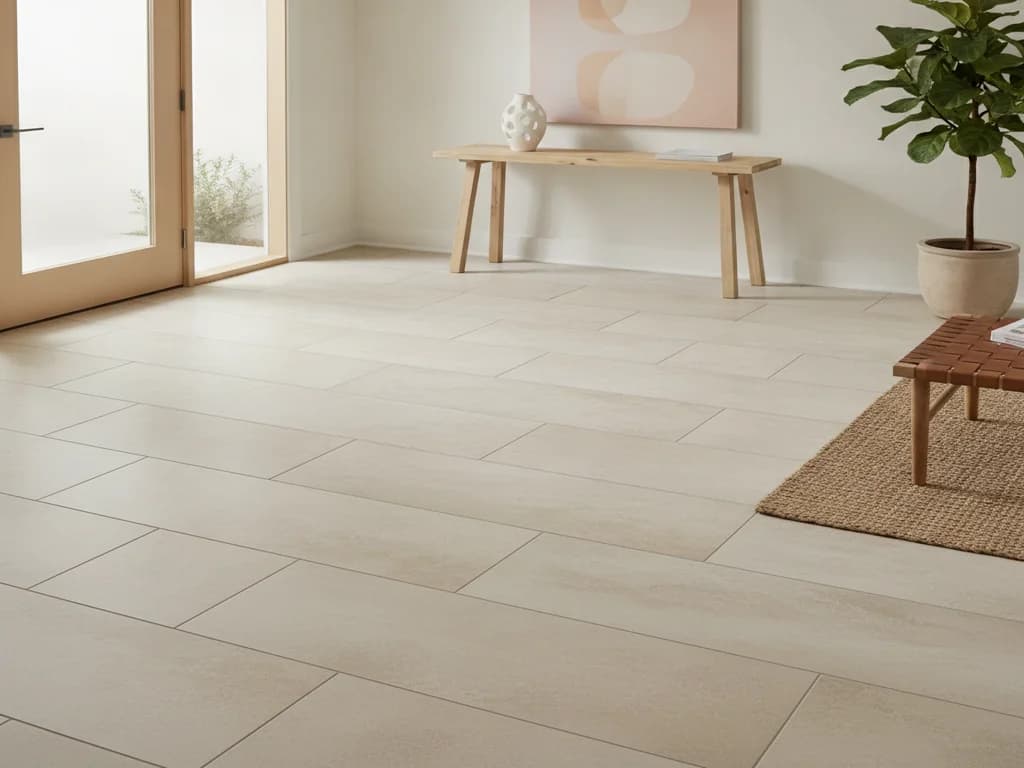
Porcelain and ceramic tile for entries, kitchens, and baths — set on a properly prepared substrate with laser-level layout and clean grout work.
Local Conditions
What Tile Flooring Has to Contend With in Antelope
Antelope Conditions That Affect Tile
Antelope sits at about 121 feet in Sacramento County. Summer afternoons in the Sacramento Valley are very dry. In the NWS Sacramento climate record for Sacramento, average relative humidity at 4 PM is 31% in June and 30% in July and August, while average humidity at 4 AM in the same months is 78–79%.
Winters are wet and mild, but not frost-free. Sacramento Metro Airport, 12 miles west, averages a 55°F January high and 38°F low, about 18 inches of rain a year (83% November–March) and about 23 nights a year at 32°F or below. NWS Sacramento reports snow is so rare it 'may be disregarded as a climatic feature.' Cold slows cure times at the other end of the year, and grout and mortar both need to be held above their minimum cure temperature to reach full strength. On a winter job that means heat in the space, not just a tarp over the door.
Antelope has no direct coastal exposure. NWS Sacramento reports that the Carquinez Strait is the only break in the Coast Ranges admitting significant marine air, and that summer heat waves are usually followed within two or three days by cool delta breezes, especially at night. Local weather in Antelope mostly shows up in tile work as cure time: cool, damp stretches run longer than a spec sheet's stated minimum.
Substrate Preparation
ACS 2020–2024 5-year estimates put 87.7% of Antelope's housing units in construction years 1980 or later, with a median year built of 1993 and 4.6% predating 1960. NAHB's analysis of the Census Bureau's Survey of Construction found 89.9% of new single-family homes in the Pacific division were built on slab in 2024, against 73% nationally. That is a regional figure for recent new construction, not a measurement of Antelope's existing stock. USDA maps most of Antelope as Fiddyment soils, with a cemented hardpan 20 to 40 inches down. No public record found states foundation type here, so it is confirmed on site.
A slab is the friendliest substrate tile can have — provided its cracks are respected rather than tiled over. A crack that is still moving will come through the tile above it, so it gets treated with a crack-isolation membrane or honored with a movement joint. Slab flatness is what governs large-format tile in particular: the bigger the tile, the less the substrate can deviate before lippage shows at every edge.
Over a wood-framed floor, tile is a deflection question before it is a tile question. A floor system that flexes more than the assembly allows will crack grout first and tile second, regardless of how well it was set. We check joist span and subfloor thickness, add a second layer or a proper uncoupling membrane where the structure calls for it, and tell you if the answer is that the floor needs stiffening.
Source: NAHB analysis of the Census Bureau Survey of Construction, foundation type by region (2024)
Antelope Homes We Work In
Mainly single-family homes: ACS 2020–2024 5-year estimates put 79.2% of units in one-unit detached structures and the median year built at 1993, with 38.6% built 1990–1999 and 27.7% built 1980–1989; only 4.6% predate 1960 and 4.4% were built in 2010 or later. In Antelope's 1980s and 1990s homes, the framing was often designed to the code of its day rather than to today's large-format tile, so the deflection check matters more, not less. It is the reason we survey the floor structure in older homes before quoting tile.
Before We Quote
Planning Around Antelope
A few Antelope conditions shape how we approach a tile floor:
- Sacramento County's exempt-work handout (GI-21) lists 'painting, papering, tiling, carpeting, cabinets, counter tops and similar finish work'; confirm subfloor repairs with the County.
- USDA soil survey maps most of Antelope as Fiddyment soils, with a cemented hardpan 20 to 40 inches down on which water can perch after heavy December–April rain.
- NWS Sacramento's record puts 4 PM humidity near 30% in June–August and 4 AM humidity near 78%; acclimate solid wood to the home's conditioned air, not to an outdoor reading.
- Foundation type is not established from public records for this community and should be confirmed on site before selecting adhesives, underlayment or a moisture-mitigation approach.
Permits & Jurisdiction
Who Has Jurisdiction in Antelope
Building permits and inspections for Antelope properties go through Sacramento County Building Permits and Inspection Division. Antelope is an unincorporated census-designated place with no city government, so building permits and inspections for private development are issued by Sacramento County rather than by a city. The county accepts electronic plan submittal only.
Requirements change. Confirm current rules with the issuing agency before work begins.
Sources
Where These Antelope Details Come From
The local conditions above are drawn from these public sources.
- Which Foundation Type Is Most Common in Your Region? — NAHB analysis of US Census Bureau Survey of Construction, 2024 (Pacific division 89.9% slab, 73% nationally)
- Sacramento County, About Antelope (2012 archive) — boundaries
- US Census Bureau 2020 place codes for California — confirms Antelope CDP (06-02210) as an unincorporated census-designated place in Sacramento County
- Antelope, CA housing profile — ACS 2020–2024 5-year, tables B25034 and B25035 (Census Reporter)
- Climate of Sacramento, California — NWS Sacramento (relative humidity by time of day; delta breeze; snow)
- NOAA 1991–2020 U.S. Climate Normals — Sacramento Metro Airport (USW00093225), 12 miles west
- Sacramento County GI-21, Residential Work Exempt from Permit
More in This Area
Other Flooring Services in Antelope
Good to Know
Frequently Asked Questions
Do you install tile flooring in Antelope?
Yes. Renaissance Floors installs tile flooring throughout Antelope and the surrounding Sacramento County area. Call (916) 749-0272 for a free estimate.
Does a tiled bathroom need waterproofing behind the tile?
In a shower or on a tub deck, yes. Tile and grout are not waterproofing on their own — a real membrane system goes behind them. It is worth asking any contractor which membrane they are using and why.
Is grout maintenance-free?
No. Cementitious grout should be sealed and will need periodic resealing, especially in kitchens and bathrooms. Subfloor flatness and deflection also matter more with tile than almost anything else — an uneven or bouncy floor cracks tile, and correcting it is not optional work.
How do I get an estimate in Antelope?
Call (916) 749-0272 or request a free estimate online. We'll schedule a convenient in-home visit in Antelope, measure your space, and give you an honest written quote.
Related
Keep Reading
Related pages: Laminate Flooring in Danville, Engineered Hardwood in Davis, Tile Flooring, and Antelope.

Ready for Floors You'll Love?
Free estimates on tile flooring throughout Antelope and Sacramento County.