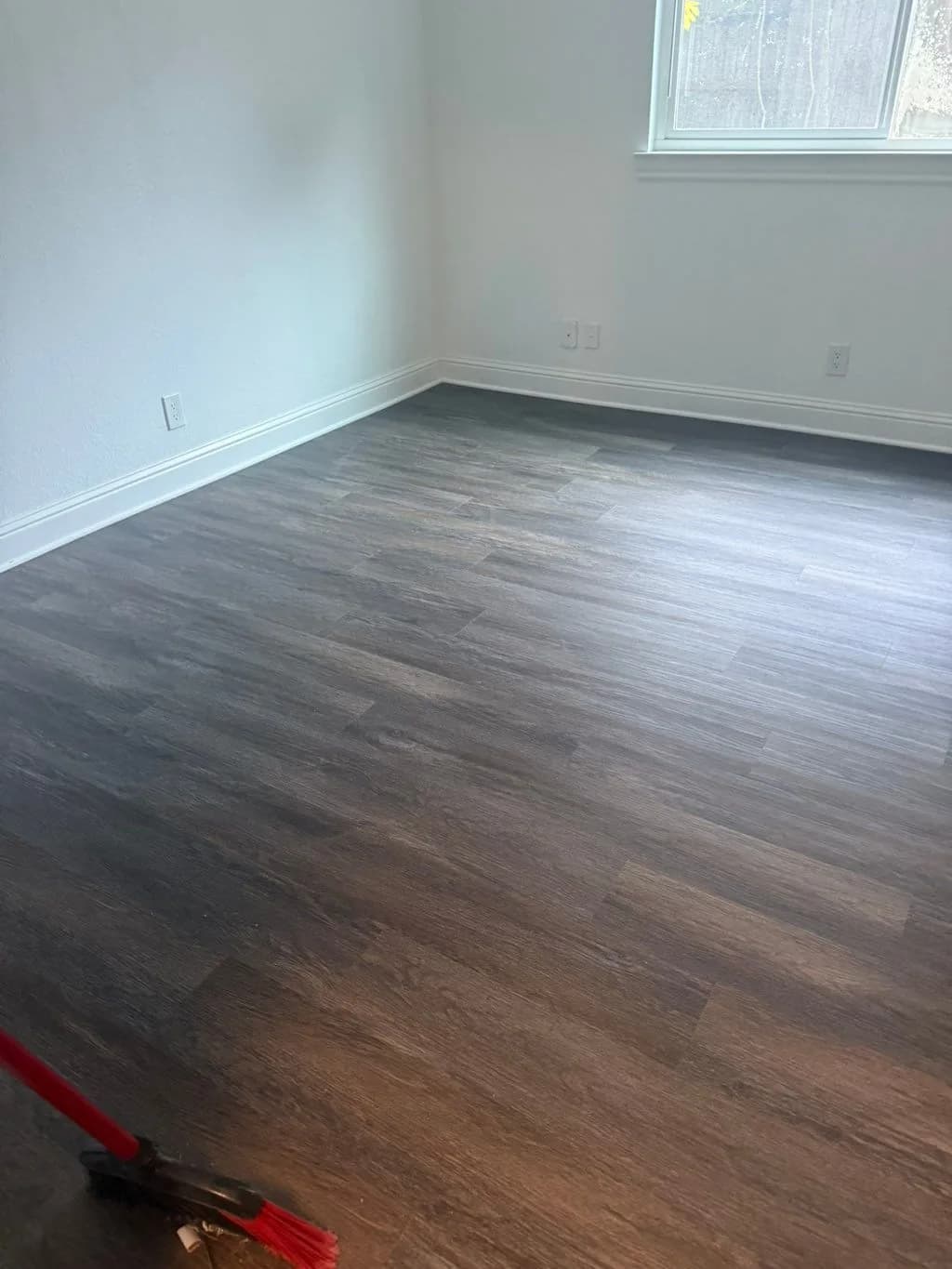
Comparison
Carpet vs. Hard Surface in Bedrooms
Should bedrooms have carpet or hard flooring?
Should bedrooms have carpet or hard flooring?
There is no technical winner here, which is why the debate never ends. Bedrooms are the one room where carpet's disadvantages barely apply — low traffic, no water, shoes usually off — and where its advantages are felt most directly, underfoot at the moment you get out of bed. If you like carpet in a bedroom, that preference is well supported.
The arguments against it are real but narrower than they are usually stated. Carpet has a replacement cycle: it wears, it mats in traffic lanes, it stains, and no amount of cleaning restores it, so it is a floor you buy again. Hard surface in the same room is renewable, or at minimum far longer-lived. Carpet also holds particulates, which cuts both ways — trapping allergens keeps them out of the air, but only until something disturbs the pile, and extraction cleaning rather than vacuuming is what actually removes them. The evidence on carpet and indoor air quality is genuinely mixed, and anyone who tells you it is settled in either direction is overstating.
The strongest practical case for carpet in bedrooms is acoustic, and it is specific: on a second floor, over occupied rooms, carpet with a good pad reduces impact noise — footsteps — far more effectively than any hard floor with an underlayment. If the bedroom is above a living room, that is the argument that carries.
Decision Framework
When Each One Wins
Conditions, not preferences. If one of these describes your project, it should carry more weight than anything else on this page.
Choose Carpet when…
- Second-floor bedrooms above living space, where footstep noise transmits.
- Children's rooms, where the floor is also the play surface.
- Cold-climate bedrooms without radiant heat, where the first step of the morning matters.
- Rooms where you want acoustic softness — carpet damps the room itself, not only the floor below.
- Budget-constrained projects covering a lot of area at once.
Choose Hard surface when…
- Allergy-conscious households that want a floor which can be wiped rather than extracted.
- Bedrooms with pets, where accidents in carpet become a permanent problem.
- Continuity — running one floor through the whole upstairs rather than changing at each door.
- Long ownership horizons, where a renewable floor beats a replacement cycle.
- Homes where the bedroom may not always be a bedroom — offices and guest rooms change use.
Side by Side
The Properties That Actually Differ
Where a figure is set by an individual product's instructions rather than by the material itself, the property is described as a relationship. An invented number would be worse than no number.
| Property | Carpet | Hard surface |
|---|---|---|
| Impact noise (footsteps to the room below) | Substantially reduced, especially over a quality pad. | Transmits readily; underlayment helps but does not match carpet. |
| Room acoustics | Absorbs; the room sounds softer and less live. | Reflective; rooms sound larger and harder. |
| Underfoot warmth | Warm immediately, no heating system required. | Cool unless heated; wood is warmer than tile. |
| Lifecycle | Wears and mats; replaced on a cycle. | Renewable (wood) or long-lived; not a routine replacement item. |
| Pet accidents | Penetrates to pad and subfloor; odor and staining can become permanent. | Wiped up; wood can stain if it sits, but the surface is accessible. |
| Allergens | Traps particulates out of the air; removing them requires extraction, not just vacuuming. | Nothing is trapped; dust is visible and removable by wiping. |
| Spot repair | Patching is possible but rarely invisible. | Board or plank replacement, or sanding and refinishing. |
| Change of use | A bedroom carpet reads as a bedroom carpet in an office or gym. | Neutral across uses. |
It Depends
The Variables That Decide It
No comparison answers this for every house. These are the specific things about your project that move the answer, and they are worth establishing before you shop.
What is under the bedroom
This is the variable most worth weighting. A bedroom over a garage, a basement, or an unoccupied space has no impact-noise problem and carpet's best argument disappears. A bedroom over a family room has the problem acutely.
Whether anyone in the house has allergies or asthma
Not because the science is settled — it is not — but because the maintenance regime differs. Hard surfaces make dust visible and removable with a damp cloth. Carpet requires a genuine cleaning routine to do the job it is credited with, and households that will not maintain it do not get the benefit.
Pets that sleep in the room
Carpet and repeated pet accidents is the combination that ends carpet. Urine reaches the pad and the subfloor and becomes a subfloor problem, not a carpet problem. If this is a realistic scenario, it dominates every other consideration.
Whether you want a rug anyway
Many people install hard surface and then put a large area rug under the bed, which delivers carpet's warmth exactly where feet land while keeping a renewable floor underneath. It also lets the rug be cleaned properly or replaced without touching the floor.
On this site: Carpet Installation, Luxury Vinyl Plank, Hardwood Flooring, and Stair Runners & Treads.
Next decision: LVP vs. Hardwood, and Hardwood vs. Tile.
See all 17 flooring comparisons, or look up a term in the glossary.
Common Questions
Frequently Asked Questions
Do hardwood bedrooms hurt resale?
Buyer preference varies by market and by price point, and it has shifted toward hard surface in most of the country over the last decade. What is more consistently true is that buyers react to condition. Worn carpet reads as deferred maintenance; a sound hard floor does not, and a rug can be added by whoever buys the house.
Is carpet warmer than hardwood?
Yes, and noticeably. Carpet and pad insulate, so the surface sits closer to room temperature and does not draw heat from your foot the way a hard, conductive surface does. Wood is warmer than tile or stone for the same reason but does not match carpet.
What is the quietest bedroom floor for an upstairs room?
Carpet over a quality pad, for impact noise specifically — the thud transmitted to the room below. Hard surfaces can be improved with acoustic underlayment, and floated assemblies with a good pad help, but the gap is real and no underlayment closes it entirely.
Is carpet bad for allergies?
The honest answer is that it depends on the cleaning regime and the research is mixed. Carpet holds particulates rather than letting them circulate, which can reduce what is airborne; it also accumulates them, and vacuuming alone does not remove what has worked down into the pile. A well-maintained carpet and a hard floor can both be reasonable; a neglected carpet is the poor outcome.
Can I put LVP in bedrooms?
Yes — bedrooms are undemanding for any hard surface, so LVP performs fine and gives continuity with the rest of the floor. Bedrooms are also where LVP's water advantage is least relevant, so if the whole upstairs is going hard-surface, this is the room where the choice is most open.
Related
Keep Reading
Related pages: The Best Flooring for a Lake Tahoe Cabin, The Best Flooring for California Homes, Contact, and Flooring Comparisons.

Get a Straight Answer for Your House
Free estimates across Greater Sacramento & Northern California. We'll look at your subfloor and your rooms and tell you which of these actually fits — call (916) 749-0272.