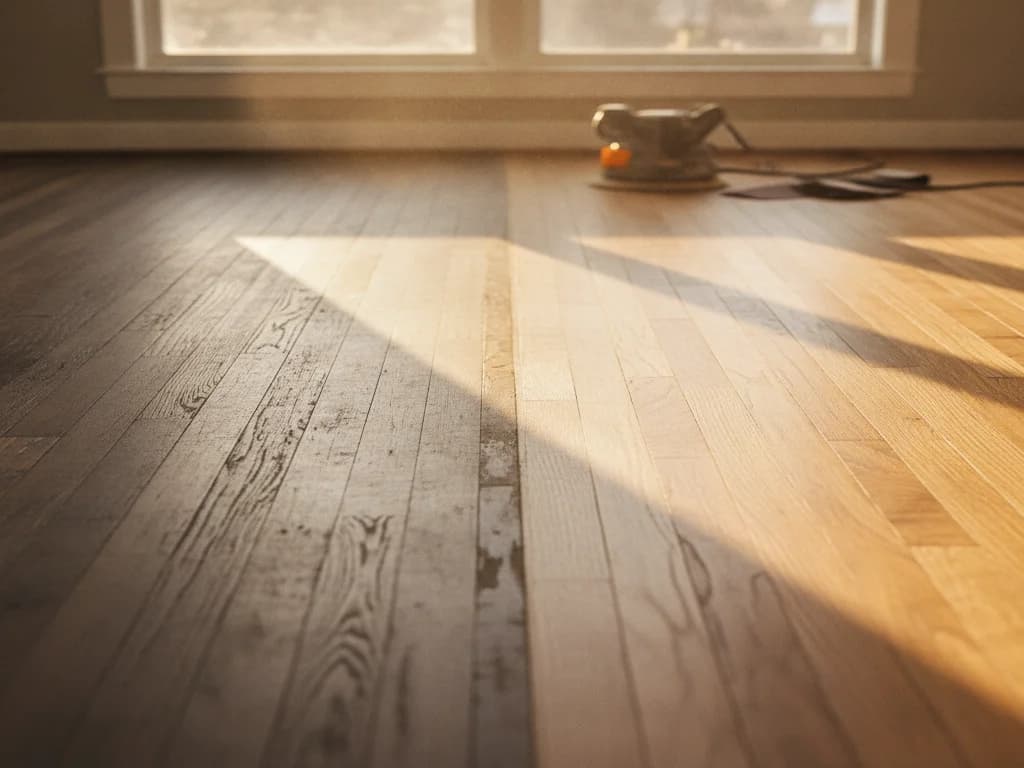
Flooring Problem
Cloudy Finish & White Haze (Blushing)
Why does my hardwood floor finish look cloudy or white and hazy, and is the wood ruined or just the finish?
The Short Answer
What Causes Cloudy Finish?
A cloudy or white-hazy finish is usually a problem in the coating or on top of it, not damage to the wood underneath. Most haze is either blushing — moisture trapped in the finish film while it dried or cured — or a residue of wax, cleaner, or hard water sitting on the surface. In both cases the wood itself is fine; light is simply scattering off something in or on the finish. That is why the fix is often far less invasive than the cloudiness makes it look.
The one distinction that matters most is telling haze in the finish from damage in the wood. Cloudiness you can wipe away, or that lives in the top film, can be cleaned, screened, and recoated; a white or gray patch shaped like a spill, a rug, or a pet accident is water that penetrated through the finish into the wood fibers, and screening will not touch it. That area has to be sanded to bare wood and refinished. Before assuming the worst, clean a test spot and give a fresh finish time to fully cure, because many floors that look ruined are just residue or a coat that has not finished curing.
How to Recognize Cloudy Finish
A milky-white haze, foggy patches, or streaks appear in the finish — either across the whole floor, along the lines the finisher worked, or in one specific spot where something sat or spilled.
Root Causes
Why Cloudy Finish Happens
Blushing during cure
When a solvent finish flashes off in humid or cool air, rapid evaporation cools the wet film below the dew point and atmospheric moisture condenses into it, leaving a milky cast. This is a finishing-conditions problem, not wood damage.
Waterborne coat applied over a damp coat or in high humidity
Recoating before the previous coat is fully dry, or coating when humidity is high, traps moisture between layers and shows up as cloudiness in the film.
Wax or acrylic mop-and-shine buildup
Layered wax or acrylic 'restorer' products dull and cloud the surface over time, and they also prevent a proper recoat from bonding, so they have to be removed rather than coated over.
Cleaner residue and hard water
Oil soaps, vinegar solutions, and mineral-heavy tap water leave a filmy haze on the finish. This kind of cloudiness usually wipes off with the correct hardwood cleaner, which is also the quickest way to identify it.
Water in the wood rather than the finish
Spills and pet accidents that penetrate through a worn or gapped finish gray or whiten the wood fibers themselves. This is the one cause that is genuine damage and will not clean or buff out.
What You Can Check
- Wipe test: clean a hazy area with the finish maker's recommended hardwood cleaner. If the cloudiness disappears, it is residue such as wax, soap, or hard water — not damage to the finish or wood.
- Read location and shape: uniform haze across a whole room or along the finisher's application lines points to blushing in the finish; haze shaped like a spill, a rug, or a pet accident points to water in the wood.
- Check the depth: haze that sits in the top film can often be reached by light screening. If a careful test shows the white is below the finish, in the wood fibers themselves, screening will not remove it.
- Consider the timeline: cloudiness that appeared right after finishing in humid or cool conditions is likely cure blushing and may clear on its own; haze that developed over months of cleaning and foot traffic is more likely residue or water intrusion.
Can It Be Saved? Repair vs. Replace
Clean first (least invasive): use the recommended hardwood cleaner to strip wax, soap film, and hard-water residue. A large share of hazes are nothing more than this and need no refinishing.
Wait out the cure: if the haze is blushing on a freshly finished floor, give it time. Finishes keep curing for days to weeks, and mild blushing often clears as the film fully cures — control temperature and humidity while it does.
Screen and recoat: if the haze lives in the finish film only, abrade (screen) the surface and apply a fresh maintenance coat. Use when the wood beneath is undamaged.
Sand to bare wood and refinish (most invasive): when the white or gray discoloration is in the wood from penetrated water, screening cannot reach it. Sand the affected area or room to bare wood and refinish.
Prevention
How to Prevent Cloudy Finish
- Apply finish within the product's temperature and humidity window; avoid coating in cold, damp, or very humid conditions that cause blushing.
- Let each coat dry fully and respect the stated cure times before recoating or heavy use.
- Clean only with the finish manufacturer's recommended cleaner; avoid wax, oil soap, vinegar, and steam mops, which cloud or damage the finish.
- Wipe spills promptly and maintain the finish with periodic screen-and-recoat before wear lets water reach the wood.
Good to Know
Frequently Asked Questions
Will the white haze on my newly finished floor go away on its own?
Sometimes, if it is blushing from cure conditions. A finish keeps curing for days to weeks after it feels dry, and mild moisture-related blushing often clears as it finishes curing, especially once temperature and humidity are back in a normal range. Give it time and keep the room conditions stable before doing anything drastic. If it is still cloudy after full cure, then you move on to cleaning or a screen-and-recoat.
How do I know if it's the finish or the wood that's damaged?
Look at the shape and try to clean it. Haze that is uniform across the room or follows the finisher's application lines, or that wipes away with the proper cleaner, is in the finish and is fixable without sanding. A white or gray mark shaped like a spill, a rug, or a pet accident is water that got into the wood fibers, and it will not buff or clean out — that spot has to be sanded to bare wood and refinished. When in doubt, a small test area tells you fast.
Can I just buff or recoat cloudiness away myself?
You can clean it yourself, and cleaning solves many hazes. Screening and recoating is doable but less forgiving: if there is wax or acrylic buildup on the floor, a new coat will not bond and you will make it worse, so the surface has to be truly clean first. And if the white is down in the wood, no amount of buffing helps. Clean first, and if that does not resolve it, that is the point to bring in someone to assess a recoat versus a sand.
Does Sacramento's dry climate cause cloudy finishes?
Not directly; blushing is usually caused by humidity and cold during finishing, which is less of a risk during a dry Sacramento summer than in a humid climate. The more common local culprit is residue: hard water is widespread in the region, and mineral-heavy water plus the wrong cleaners leaves a filmy haze that looks like finish failure but wipes off. Foothill and Tahoe homes that see damp, cold spells are the ones more likely to get true cure blushing.
Related
Keep Reading
Related pages: 7 Signs It's Time to Replace Your Floors, Our Installation Process, Flooring Problems, and Luxury Staircases.
Think You Have Cloudy Finish?
We'll inspect your floor, find the moisture or structural source, and tell you honestly whether it's a repair or a replacement. Call (916) 749-0272 for an assessment.