Flooring Problem
Hardwood Floor Finish Wear & Traffic Lanes
Why does my hardwood floor look dull and worn in the walkways, and do I need to refinish it?
The Short Answer
What Causes Finish Wear?
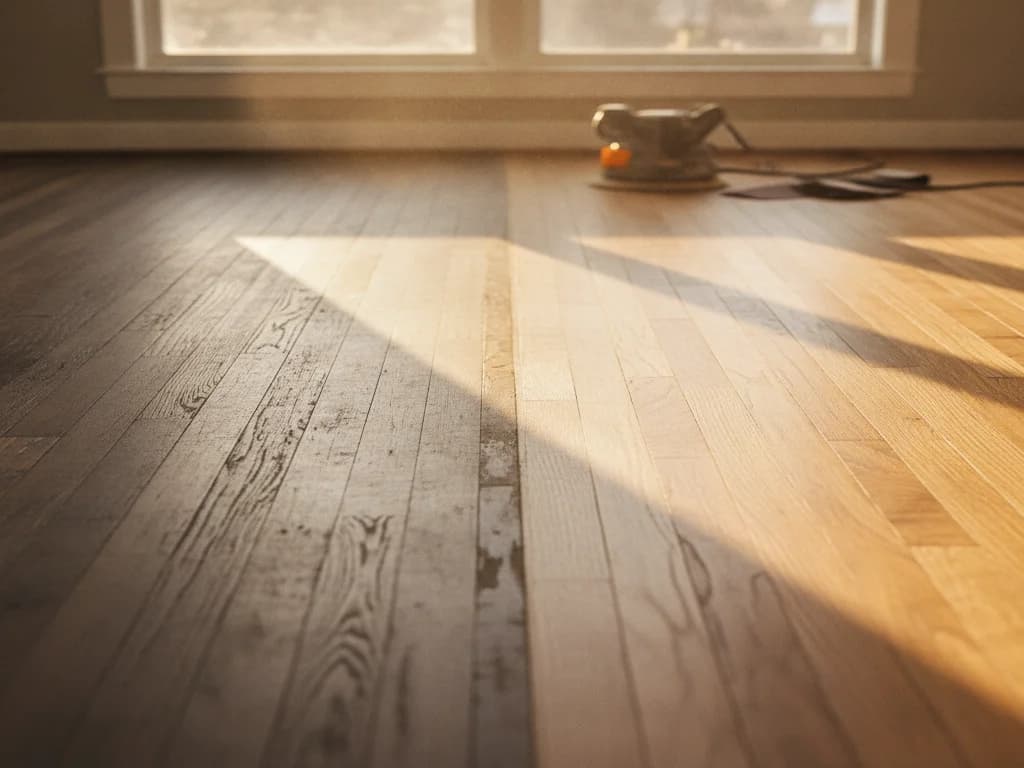
Finish wear is abrasion of the clear top coat, not damage to the wood. Foot traffic drags grit across the urethane, and over years the coat thins in the exact paths people walk, scattering light so the floor looks hazy, gray, or flat in lanes while the edges and under-furniture areas still shine. The finish is a sacrificial layer designed to be renewed, so this is a wear problem in the coating, not a defect in the boards.
The consequence is a threshold. As long as the finish is thin but still covering the wood, the fix is a light recoat. Once traffic wears through to bare wood, that wood starts absorbing dirt and moisture and turning gray, and now a simple recoat will not bond or hide it. The durable and cheapest fix is to recoat before you reach bare wood, not after.
How to Recognize Finish Wear
Dull, grayish traffic lanes down hallways and in front of the sink while the room's edges and areas under furniture still look glossy.
Root Causes
Why Finish Wear Happens
Abrasive traffic
Grit plus footsteps steadily abrades the top coat in high-use paths; this is normal sacrificial wear, which is why finishes are designed to be recoated (NWFA).
Missed maintenance coats
Finishes are meant to be recoated periodically, and skipping those maintenance coats lets wear progress all the way to the wood.
Harsh or wrong cleaners
Oil soaps, vinegar, wax, and steam mops dull and degrade urethane over time and can leave residue that blocks a future recoat from bonding (NWFA cleaning guidance).
Concentrated pivot points
Doorways, sink fronts, and turns take the most passes per square foot, so the finish there wears first and fastest.
UV and wear stacking
Sun-exposed lanes can look worse as fading and finish thinning combine, making the worn path appear both dull and off-color.
What You Can Check
- Water-drop test: place a few drops on a worn lane and on a protected edge. If it beads on the edge but soaks in and darkens the lane, the lane's finish is worn through and a recoat alone will not fix it (NWFA).
- Compare sheen between edge and lane in raking light to map how far the wear extends.
- Look for a gray or dirty tone in the lane; gray means dirt and moisture are reaching bare wood fiber past the finish.
- Check remaining wear layer on solid or engineered floors: if prior sandings have exposed nail heads or thinned a veneer, you may be at the resand limit — NWFA advises against sanding once the wear layer is under roughly 3/32 inch.
Can It Be Saved? Repair vs. Replace
Finish dull but intact (water beads everywhere): clean and buff, or apply a single maintenance coat while wear is only cosmetic — the cheapest step (NWFA).
Finish thin but not through (water soaks slowly in lanes): screen-and-recoat now — abrade the existing coat and add a fresh bonded layer; done every few years this can postpone a full sanding for decades (NWFA).
Worn through to bare or gray wood: a full sand-and-refinish is required to remove gray wood and re-seal, because a recoat will not adhere to bare, soiled wood.
At the wear-layer limit: if a solid floor is near its last sanding or an engineered veneer is under ~3/32 inch, stop sanding — board or floor replacement is the honest call (NWFA).
Prevention
How to Prevent Finish Wear
- Recoat on a schedule before wear reaches wood; a maintenance coat every few years in busy homes is far cheaper than a resand (NWFA).
- Use only the finish manufacturer's recommended cleaner and avoid vinegar, oil soaps, wax, and steam mops (NWFA).
- Trap grit with entry mats and dust-mop or soft-vacuum frequently, since grit is the abrasive doing the wearing.
- Rotate rugs and runners in the worst lanes to spread wear and slow lane formation.
Good to Know
Frequently Asked Questions
What's the difference between a recoat and a refinish?
A recoat, or screen-and-recoat, lightly abrades the existing finish and adds a new top layer with no bare wood exposed; it is fast and it is the routine way to keep a floor healthy. A refinish sands down to bare wood to remove damage or gray staining, then re-stains and re-seals. Recoat is maintenance, refinish is repair, and doing the recoat on time is how you avoid ever needing the refinish.
How do I know if it's too late to just recoat?
The water-drop test decides it. If water beads on the worn area, the finish still covers the wood and a recoat will bond. If water soaks in and darkens the wood, or the lane already looks gray, the finish is gone in that spot and a recoat will not adhere or hide it — you are into refinishing.
How many times can a floor be refinished?
It depends on how much wood sits above the tongue. Solid 3/4-inch floors can typically be sanded several times over their life; engineered floors are limited by veneer thickness and some cannot be sanded at all. NWFA guidance is to stop sanding once the remaining wear layer is under roughly 3/32 inch, because further sanding risks exposing fasteners and the tongue.
Does Sacramento heat and low humidity wear finishes faster?
Not directly, because abrasion rather than climate wears the finish. But our dry summers shrink boards enough to open slight edge gaps that collect grit, and strong afternoon sun on west-facing rooms can dull and fade a finish faster, so those rooms often show traffic lanes first. Keeping grit out and rugs rotated matters more here than the thermostat does.
Related
Keep Reading
Related pages: The Best Wood Species for Mountain Homes, Caring for Wood Floors in a Vacation Home, Flooring Problems, and When It Goes Wrong.

Think You Have Finish Wear?
We'll inspect your floor, find the moisture or structural source, and tell you honestly whether it's a repair or a replacement. Call (916) 749-0272 for an assessment.