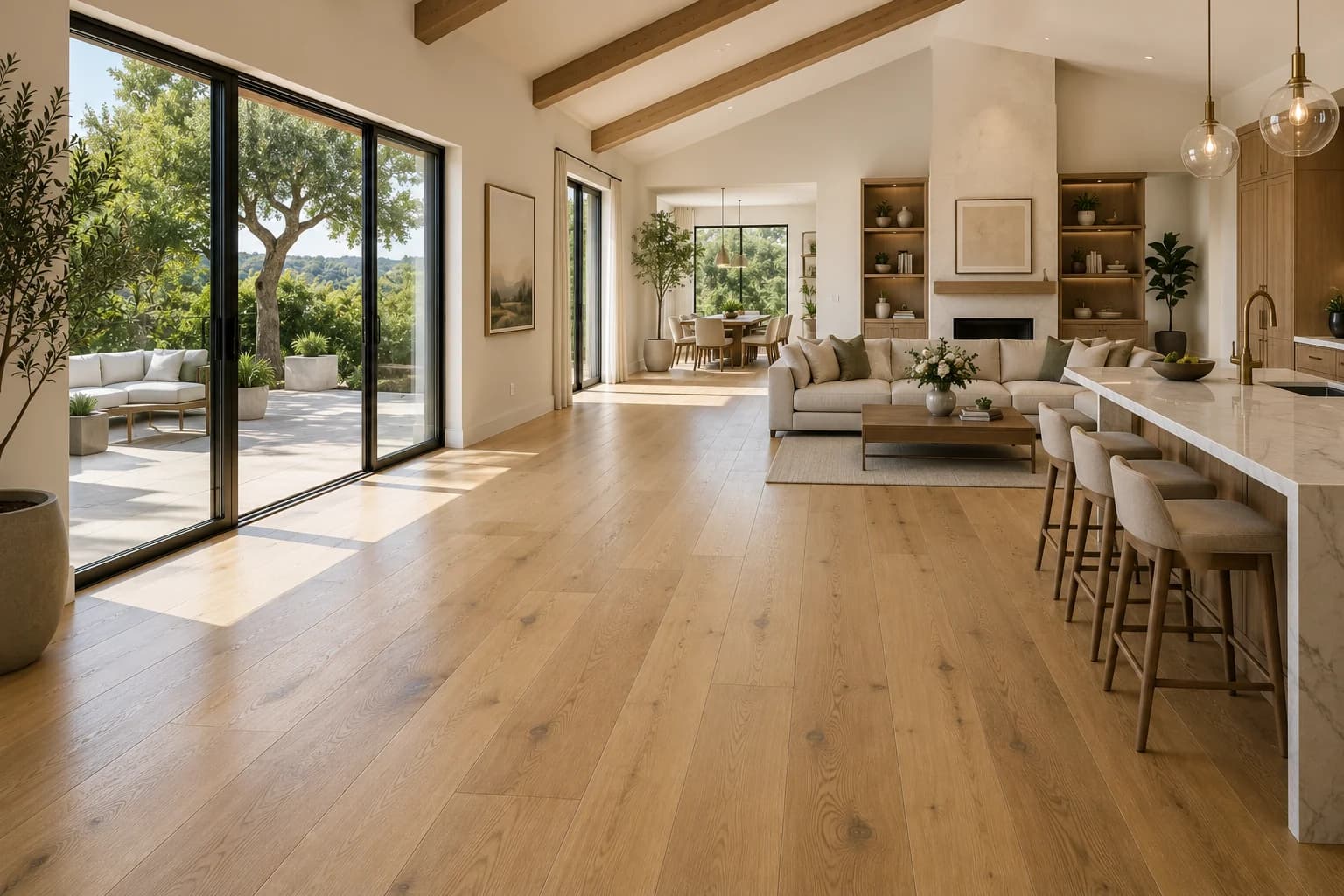
Service Area
Flooring in Concord
Renaissance Floors installs and refinishes hardwood, luxury vinyl, tile, and more for homeowners throughout Concord and the surrounding Contra Costa County area.
CSLB #1060673
Licensed & Insured
Est. 2019
Family-Owned
15+ Years
Hands-On Experience
5.0★ Rated
22 Reviews on Thumbtack
Local, Licensed, Accountable
Flooring Contractor Serving Concord
Concord is part of Contra Costa County, and it's one of the communities Renaissance Floors regularly works in. We're based in Roseville, CA and serve homeowners across Greater Sacramento & Northern California— from small refinishing jobs to full home installs. Every project starts with an honest look at your subfloor and your goals, followed by a clear, no-pressure estimate. There's no dispatched sales team and no guesswork: you work directly with the crew doing the installation, backed by our CSLB C-15 license and a workmanship warranty on every job.
From Oakland and Berkeley bungalows to Tri-Valley new builds, East Bay homes span a century of construction. We refinish beautiful original hardwood where it makes sense and install fresh floors where it doesn't.
Concord's history, as the state records it, begins with an adobe. California Historical Landmark No. 515 records that Don Salvio Pacheco, awarded a land grant called Monte del Diablo in 1834, completed his two-story adobe on June 24, 1835, 'the first building to be erected in this valley'; the landmark is at 1870 Adobe Street, at Salvio Street. The Concord Historical Society dates the town plan, first named Todos Santos, to 1868, and the approval of the incorporation of the 'Town of Concord' to February 1905. Today the city describes itself as the largest city in Contra Costa County, home to about 123,000 residents, and Census geography gives it about 30.6 square miles of land. The city is also planning the reuse of the former Concord Naval Weapons Station. In the city's most recent announcement on the project, dated May 27, 2026, the City Council unanimously approved a term sheet with the U.S. Navy covering about 2,422 acres; the city said the Navy was concurrently reviewing it, and that a Specific Plan comes next.
Most of the housing is postwar. The Census Bureau's 2020–2024 five-year estimates count about 48,000 housing units and put the median year built at 1970. About a quarter date from the 1970s, about 23 percent from the 1960s and about 19 percent from the 1950s; roughly four in five were built between 1950 and 1989, and only about 2 percent each predate 1940 or date from 2010 or later. Housing types are mixed. About 59 percent of units are detached houses, nearly a third are in buildings of two or more units, about 16 percent are in buildings of twenty or more, and about 1,100 are mobile homes. Renters occupy about 38 percent of occupied homes. A house's age points to the right questions, such as what earlier work left beneath the surface and whether the floor is still flat, and the building type decides who else has a say in the project.
The permit question starts with an unamended state list. Concord's Municipal Code adopts the 2025 California Residential Code through Ordinance No. 25-8, and its local amendments revise and delete several administrative sections without touching R105.2, the list of work exempt from permit. That list names 'painting, papering, tiling, carpeting, cabinets, counter tops and similar finish work.' Tile and carpet are named; hardwood, laminate and vinyl plank are not, so whether they count as similar finish work is a question for the Building Division, not an assumption either way. Scope matters too. The city's Information Bulletin IB-022, last revised May 18, 2023, marks kitchen remodels, bathroom remodels and shower or tub enclosures as work requiring permits and says it is not a complete list. Jurisdiction comes first, though: Census geography classifies nearby Clyde and Pacheco as unincorporated census-designated places, and Census ZIP code areas show unincorporated land inside 94521 and Walnut Creek city land inside 94518.
The ground under the city is mapped, and it varies. The California Geological Survey describes the Concord fault as Holocene and 'considered active and mapped under the Alquist-Priolo Earthquake Fault Zoning Act.' Its fault zone, on maps released July 1, 1993 that revised maps first issued in 1974, crosses the city: points sampled along the mapped trace fall inside Concord city limits from the Walnut Creek line north into north Concord. Those zones regulate where new buildings for human occupancy may be placed; they do not govern replacing a floor, and Todos Santos Plaza and City Hall were outside the zone at the points checked. The survey's liquefaction zones, which require investigation for new development, include sampled points at Todos Santos Plaza, on Monument Boulevard and on Ygnacio Valley Road at Oak Grove Road. USDA soil data shift from point to point as well, from shrink-swell clays in north Concord and near Monument Boulevard to a clay loam at the plaza and loamy sand at the edge of Lime Ridge.
The climate record comes from just outside the city. The National Weather Service places Concord in its East Bay Interior Valleys forecast zone, and NOAA's normals come from the Buchanan Field station, on unincorporated land about 1.8 miles from City Hall. Its 1991–2020 normals give July the highest average high, 88.0°F over a 58.7°F low, about 16°F above July at the Oakland Museum station and essentially level with Livermore's airport; August has the warmest mean, at 73.6°F, and December the coldest average low, at 40.7°F. Precipitation totals 16.05 inches a year, more than half of it from December through February, with a July normal of zero. Across the Julys of 2015 to 2024 the station averaged about 78 percent relative humidity at 4 AM and 31 percent at 4 PM, a gap of about 47 points, against about 20 at Oakland International Airport.
Renaissance Floors is a licensed California C-15 flooring contractor (CSLB #1060673) based in Roseville. For a Concord project we start with the questions the records raise: whether the address is inside city limits, whether the work stays within finish flooring or reaches into a kitchen or bath remodel, what the slab or subfloor underneath is doing, and whether a ground-floor room sits near a mapped creek. Free in-home estimates and a workmanship warranty.
Recent Work
A Sample of Our Craftsmanship
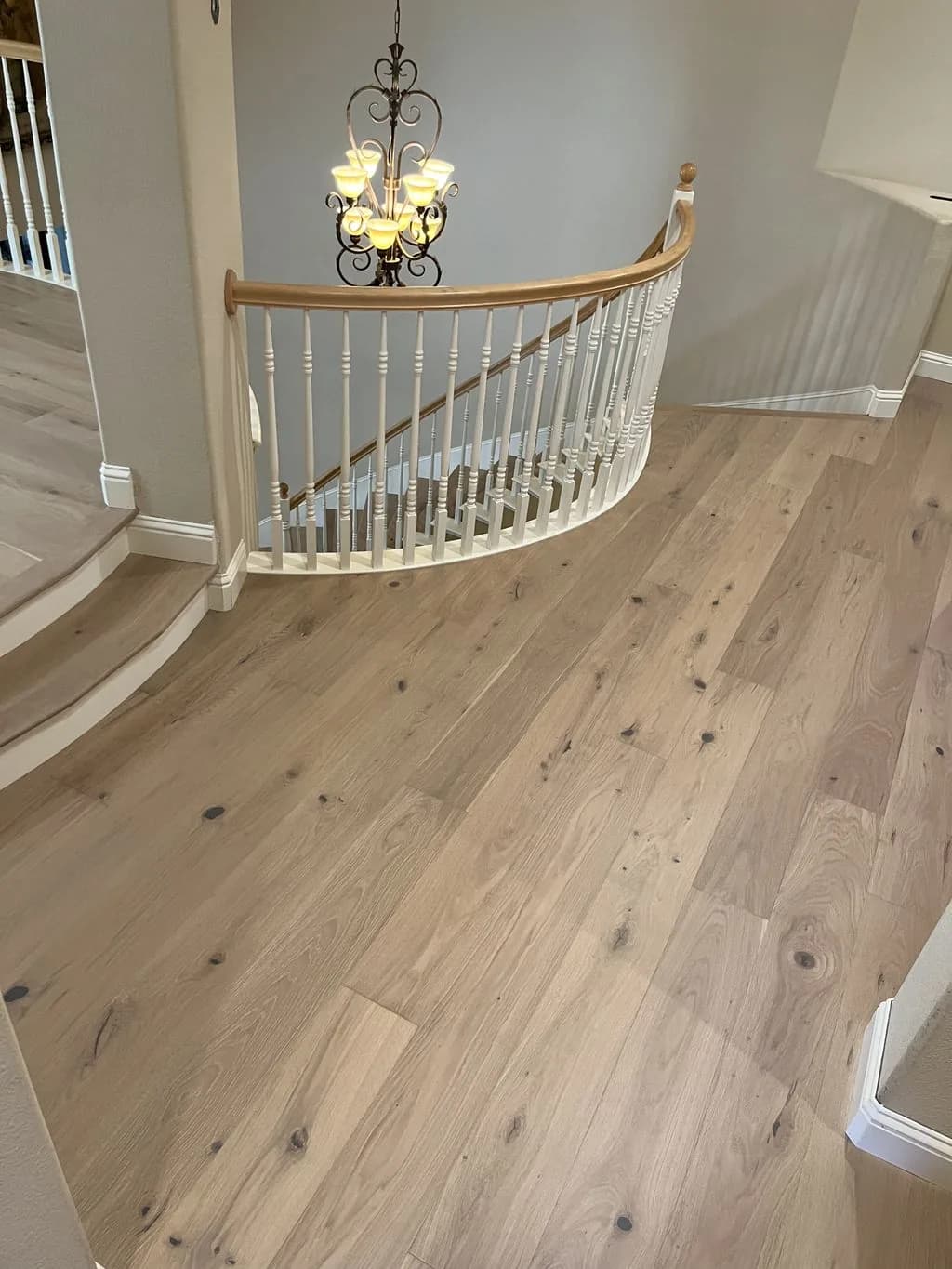
White Oak Hardwood
Great Room & Landing
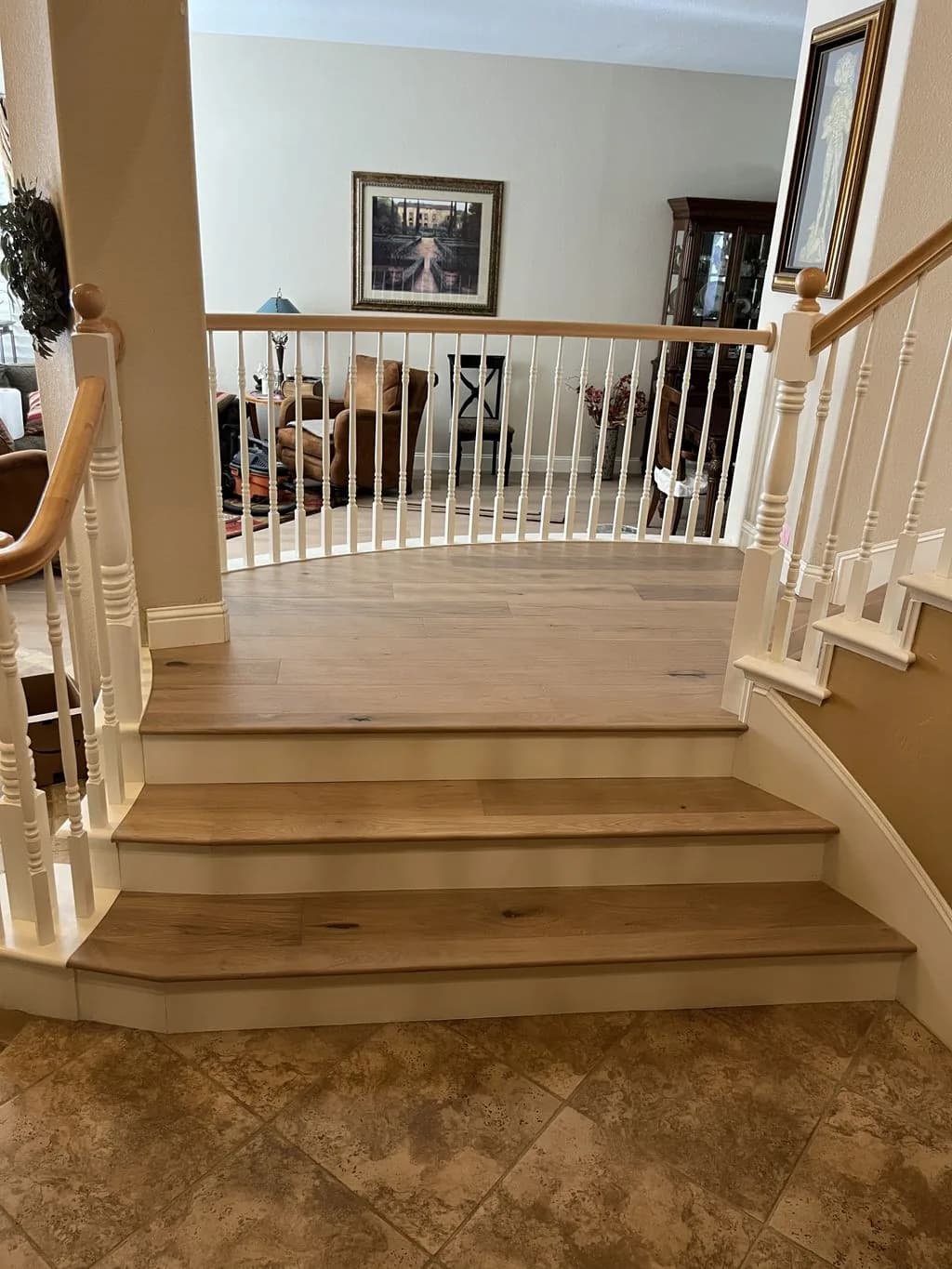
White Oak Hardwood
Staircase & Landing
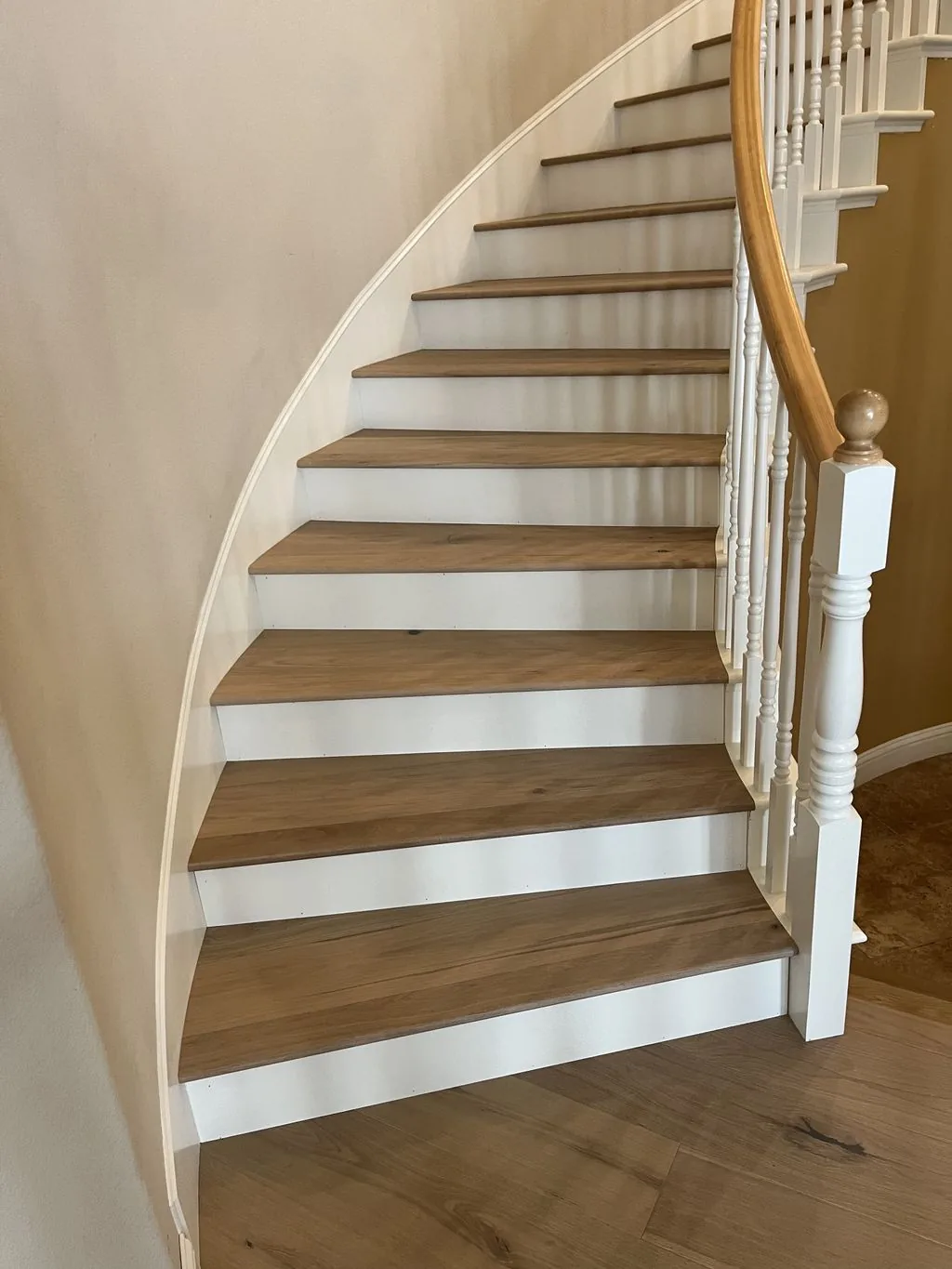
White Oak Hardwood
Curved Staircase
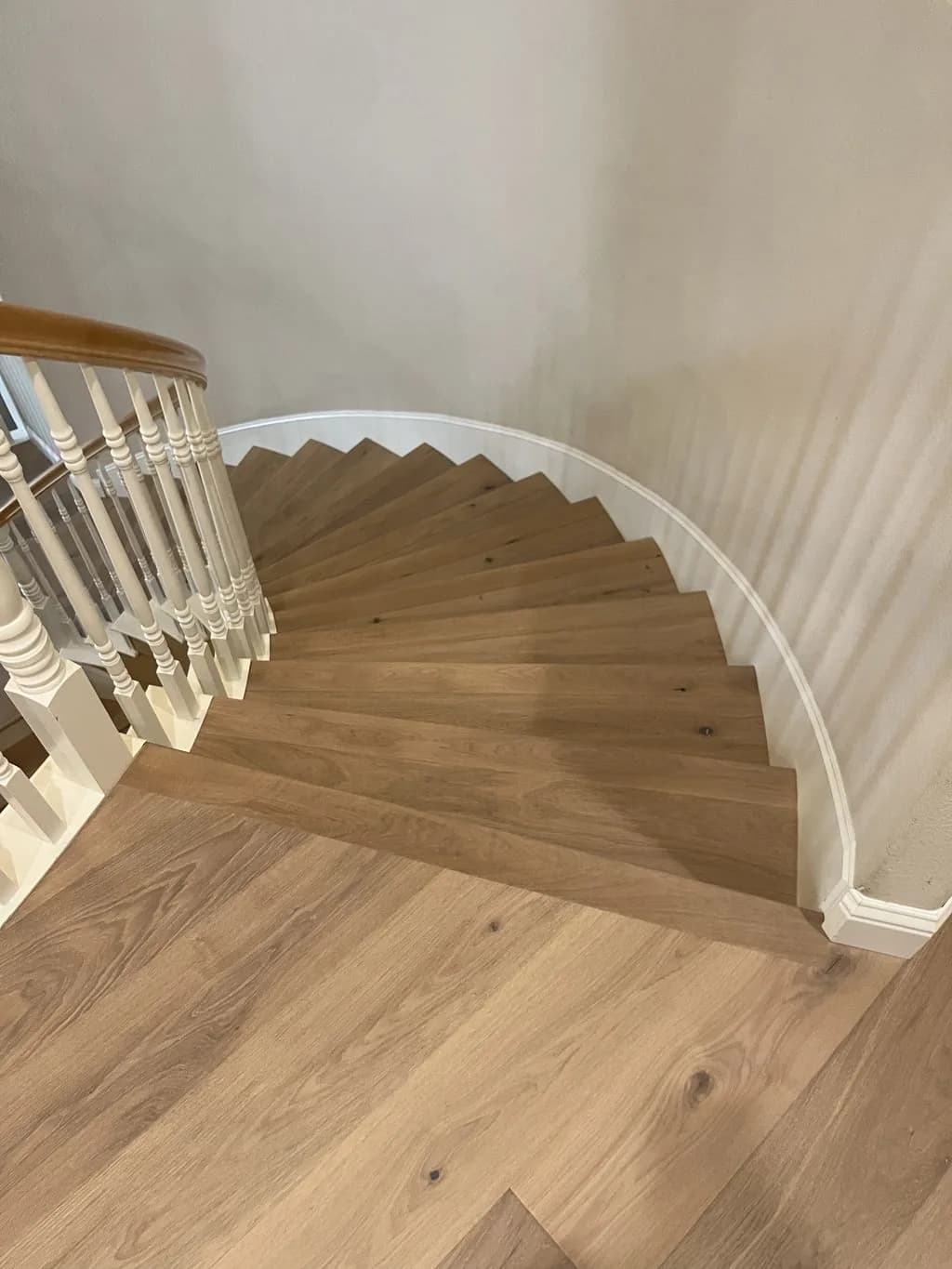
White Oak Hardwood
Stair Treads
Our Services
Flooring Services in Concord
From hardwood to luxury vinyl, here's how we help Concord homeowners upgrade their floors.
Hardwood Flooring
Solid oak, maple, and walkable heirloom-grade hardwood, precisely installed.
Hardwood Flooring in ConcordEngineered Hardwood
Real-wood wear layers built for California's climate swings.
Engineered Hardwood in ConcordLuxury Vinyl Plank
Waterproof, wood-look LVP for kitchens, baths, and busy households.
Luxury Vinyl Plank in ConcordLaminate Flooring
Durable, high-style laminate at a friendly price point.
Laminate Flooring in ConcordTile Flooring
Porcelain and ceramic tile set dead-level with crisp grout lines.
Tile Flooring in ConcordFloor Installation
Full-service installation from subfloor prep to final baseboard.
Floor Installation in ConcordFloor Refinishing
Sand, stain, and reseal tired hardwood back to new.
Floor Refinishing in ConcordFloor Repair
Board swaps, water damage, squeaks, and seamless patch-ins.
Floor Repair in ConcordLocal Considerations
What Concord Homes Need From a Floor
Climate, home age, and foundation type all shape the right flooring choice in Concord — here's what we account for.
Tiling and carpeting are on the exempt list; kitchen and bath remodels are not
Concord Municipal Code §15.40.010 adopts the 2025 California Residential Code, and the city's residential amendments in §15.40.030 revise R101.1, R102.6 and R103.1 and delete several other administrative sections without amending R105.2, the list of work exempt from permit. The state text of that list names 'painting, papering, tiling, carpeting, cabinets, counter tops and similar finish work.' Hardwood, laminate and vinyl plank are not named, so confirm them with the Building Division rather than assuming either way. The city's Information Bulletin IB-022, revised May 18, 2023 and so older than the 2025 code, marks 'Kitchen Remodel,' 'Bathroom Remodels' and 'Shower/Tub Enclosures' as requiring permits, says it is not a complete list, and adds that all work, 'regardless of whether or not a permit is required,' must comply with the city's construction codes. The Building Division page points to the city's Project Pal tool to 'determine which permits your project requires,' and the Permit Center is Building D at 1950 Parkside Drive, 925-671-3107.
The Concord fault's Alquist-Priolo zone crosses the city
The California Geological Survey's report for the Walnut Creek quadrangle says the mapped Concord fault 'trends north-northwest,' roughly parallel to the Walnut Creek and Pine Creek alignments, is Holocene, and is 'considered active and mapped under the Alquist-Priolo Earthquake Fault Zoning Act.' Its report for the Vine Hill quadrangle describes the fault 'extending from Suisun Bay, southeast along Pacheco Creek, to the mouth of Walnut Creek.' The zone maps covering Concord were released July 1, 1993, revising maps first issued in 1974, and points sampled along the mapped trace fall inside city limits from the Walnut Creek line north into north Concord. CGS describes these as regulatory zones around the surface traces of active faults, where a structure for human occupancy 'cannot be placed over the fault and must be a minimum distance from the fault (generally fifty feet).' That governs where new buildings go, not interior floor replacement. We found no city page describing a local Alquist-Priolo procedure, and Todos Santos Plaza and City Hall were outside the zone at the points checked.
Liquefaction zones at downtown, Monument Boulevard and Ygnacio Valley Road points
The state's liquefaction zones are a separate map from the fault zones. Points checked for this page at Todos Santos Plaza, on Monument Boulevard, on Ygnacio Valley Road at Oak Grove Road, on Clayton Road, beside the Walnut Creek channel and in north Concord fall inside mapped zones, while City Hall and a second north Concord point do not. The zones come from three California Geological Survey quadrangle maps: Walnut Creek and Vine Hill, both official February 22, 2024, and Clayton, official September 23, 2021. A liquefaction zone is a zone of required investigation for new development, not a prediction for any one house, and a point check is not a parcel check. On a slab, a rigid floor still starts with in-slab moisture testing and a flatness check.
Clay at some points, clay loam and sand at others
USDA soil survey data, checked at eight points inside city limits, show how much the ground changes. In north Concord the survey maps Capay clay, with representative linear extensibility, a measure of shrink-swell, of 9.3 to 10 percent in its upper layers; near Monument Boulevard, Clear Lake clay at 8.5 to 8.7; and in the hills near Newhall Park, Altamont clay at 9.1 to 10.4. At Todos Santos Plaza the map unit is Botella clay loam, at 3.4 to 4.7, and at the north edge of Lime Ridge it is Briones loamy sand at 1.5. On Ygnacio Valley Road at Oak Grove Road, Rincon clay loam reads 3.7 near the surface but 7.5 in a subsoil layer. The official Capay series description says those soils have cracks 1 to 2 cm wide 'that open and close at least once each year,' and the Altamont description says 'The cracks close in November or December and remain closed until April or May.' These are points and series descriptions, not tests of any parcel.
Creek floodplains inside city limits, and High fire classes near Kirker Pass
FEMA's flood map shows mapped flood zones along creeks inside city limits at points sampled for this page: Galindo Creek in Zone AE, with floodway at several of those points, and Zone A at another; Pine Creek and Walnut Creek in Zone A; Mt. Diablo Creek in Zone AE with floodway; and a Zone AO area near Galindo Creek at Clayton Road. Todos Santos Plaza and a Monument Boulevard point are in Zone X, an area of minimal flood hazard. Concord's floodplain chapter defines 'substantial improvement' as work whose cost 'equals or exceeds 50 percent of the market value of the structure,' a definition to keep in mind on a large remodel rather than a rule that any floor job triggers. On fire, CAL FIRE's 2025 local-responsibility-area map classes checked points near Kirker Pass and the Concord Pavilion as High fire hazard severity and most other in-city points checked as non-wildland; none was Very High. Check a specific parcel on FEMA's map, and in a mapped ground-floor room favor a floor that tolerates water.
A 1970 median year built, with apartments and mobile homes in the mix
The Census Bureau's 2020–2024 estimates put Concord's median year built at 1970 across about 48,000 housing units. The 1970s account for about a quarter of them, the 1960s about 23 percent, the 1950s about 19 percent and the 1980s about 13 percent; only about 2 percent predate 1940. About 59 percent of units are detached houses and about 7 percent attached; nearly a third sit in buildings of two or more units, about 16 percent in buildings of twenty or more, and about 1,100 are mobile homes. Renters occupy about 38 percent of occupied homes. None of that describes a particular house. Age suggests what to check, such as what earlier work left under the surface and whether a slab or framing is still flat, and building type decides who else approves the work, from a landlord to an association.
Hot days, cool nights and dry heated air, measured at Buchanan Field
Concord's climate figures come from the Buchanan Field station, on unincorporated land just outside city limits about 1.8 miles from City Hall. NOAA's 1991–2020 normals there give an 88.0°F July average high over a 58.7°F low, a daily swing of about 29°F against about 15°F at the Oakland Museum and Oakland International Airport stations; August has the warmest mean, at 73.6°F, and December the coldest average low, at 40.7°F. Across the Julys of 2015 to 2024 the station averaged 77.8 percent relative humidity at 4 AM and 31.0 percent at 4 PM. Those are outdoor airport readings. For indoor air, hourly observations at Buchanan Field from 2015 to 2025, warmed to 70°F with no moisture added, give a November-to-April median of about 38 percent relative humidity, with nearly a quarter of those hours below 30 percent, and a June-to-September median of about 53 percent, a ceiling that air conditioning brings down. Wood flooring is acclimated to the conditioned rooms where it will be installed.
Local Resources & References
Helpful Concord Resources
Authoritative local and industry references for permits, planning, and flooring standards.
- Information Bulletin IB-022, Work Requiring a Permit (revised May 18, 2023) — kitchen and bathroom remodels require permits; 'not a complete list'City of Concord
- Municipal Code Chapter 15.40, Residential Building Code — 2025 California Residential Code adoption (Ord. No. 25-8) and local administrative amendmentsCity of Concord
- City Council approves U.S. Navy term sheet for the Concord Community Reuse Project (May 27, 2026) — about 2,422 acres; Navy review concurrentCity of Concord
- ACS 2020–2024 5-year — year built, Concord city (place 0616000)US Census
- 1991–2020 monthly normals, Concord Buchanan Field (USW00023254) — station just outside city limitsNOAA NCEI
- Earthquake Zones of Required Investigation, Walnut Creek Quadrangle — Alquist-Priolo zones released July 1, 1993; seismic hazard zonesCalifornia Geological Survey
- Seismic Hazard Zone Report 136, Walnut Creek Quadrangle — the Concord fault; official map February 22, 2024California Geological Survey
- Official Series Description, Capay series — seasonal cracks that open and close each yearUSDA Natural Resources Conservation Service
- California Historical Landmark No. 515, Don Salvio Pacheco AdobeCalifornia Office of Historic Preservation
External links are provided for reference. Always confirm current requirements with the issuing agency.
Explore Flooring Services in Concord
Good to Know
Frequently Asked Questions
Does Renaissance Floors serve Concord?
Yes. We install and refinish flooring throughout Concord and the surrounding Contra Costa County area. Call (916) 749-0272 for a free estimate.
What flooring services do you offer in Concord?
We install hardwood, engineered wood, luxury vinyl plank, laminate, tile, and more in Concord, plus floor refinishing, repair, and full-service installation. See the full list below.
Are you licensed to work in Concord?
Yes. We hold CSLB C-15 license #1060673 (C-15 Flooring & Floor Covering) and carry insurance. We're based in Roseville, CA and serve Concord and all of Greater Sacramento & Northern California.
How do I get a free flooring estimate in Concord?
Call (916) 749-0272 or request an estimate online. We'll schedule a convenient in-home visit in Concord, measure your space, and give you an honest, no-pressure quote.
Do I need a building permit to replace flooring in Concord?
Tile and carpet are on the exempt list; other floor types aren't named. Concord adopts the 2025 California Residential Code without amending its list of work exempt from permit, which names 'painting, papering, tiling, carpeting, cabinets, counter tops and similar finish work.' Hardwood, laminate and vinyl plank aren't listed, so confirm them with the Building Division at 925-671-3107. The city's IB-022 bulletin lists kitchen and bathroom remodels as needing permits, and subfloor, plumbing or electrical work is a separate question.
I'm in Clyde or Pacheco. Does the City of Concord issue my permit?
No, not for property outside city limits. Census geography classifies Clyde and Pacheco as unincorporated census-designated places, not part of the City of Concord. ZIP codes don't settle it either: Census ZIP code areas show unincorporated land inside 94521 and Walnut Creek city land inside 94518. Unincorporated addresses fall under Contra Costa County permitting rather than the city's Building Division, so confirm which agency covers the parcel before work starts.
How old are most Concord homes?
Mostly postwar. The Census Bureau's 2020–2024 estimates put Concord's median year built at 1970, with about a quarter of roughly 48,000 housing units from the 1970s and about four in five built between 1950 and 1989. Only about 2 percent predate 1940. About 59 percent of units are detached houses, about 16 percent are in buildings of twenty or more units, and about 1,100 are mobile homes, so building type matters alongside age.
Is Concord on an earthquake fault?
Yes. The California Geological Survey maps the Concord fault as active and zoned under the Alquist-Priolo Earthquake Fault Zoning Act, and its fault zone crosses the city. Those zones regulate where new buildings for human occupancy can be placed; they don't govern replacing a floor. Separate CGS liquefaction zones, which require investigation for new development, include sampled points at Todos Santos Plaza and on Monument Boulevard. Neither map is a prediction for a particular house.
Are there expansive clay soils in Concord?
At some sampled points, not everywhere. USDA soil survey data map Capay clay in north Concord, Clear Lake clay near Monument Boulevard and Altamont clay in hills near Newhall Park, with linear extensibility, a shrink-swell measure, of 8.5 to 10.4 percent in their upper layers. Todos Santos Plaza maps as Botella clay loam at about 4, and the edge of Lime Ridge as Briones loamy sand at 1.5. Survey points aren't parcel tests, so a slab still gets moisture and flatness checks.
Is my Concord home in a FEMA flood zone?
It depends on the parcel. At points checked for this page, Todos Santos Plaza and a Monument Boulevard point are in Zone X, an area of minimal flood hazard, while sampled stretches of Galindo Creek are mapped Zone AE with floodway, Pine Creek and Walnut Creek Zone A, and an area near Galindo Creek at Clayton Road Zone AO. Concord's floodplain chapter defines 'substantial improvement' at 50 percent of a structure's market value. Check your property on FEMA's flood map.
Does Concord's historic preservation ordinance cover interior floors?
Its review triggers are exterior. Concord's Development Code requires a certificate of appropriateness for 'any exterior alteration, demolition, or removal' of a historically significant resource, city-designated landmark or historic district, and interior work isn't named among its triggers or review criteria. State landmarks in Concord include the Don Salvio Pacheco Adobe (No. 515) and the Don Fernando Pacheco Adobe (No. 455), and no Concord historic district appears on the state's county list. Confirm a property's status with the city.
How dry does the air get in Concord, and does it matter for wood floors?
Dry on summer afternoons and in heated winter rooms. At the Buchanan Field station, just outside city limits, July averaged 31 percent relative humidity at 4 PM over 2015–2024, against about 65 percent at Oakland International Airport. Outdoor air there heated to 70°F has a November-to-April median near 38 percent, with nearly a quarter of those hours below 30 percent. Those are station figures, so wood is acclimated to the conditioned rooms where it will be installed.
Related
Keep Reading
Related pages: East Bay, Engineered Hardwood in Berkeley, Hardwood Flooring in Concord, and Engineered Hardwood in Concord.

Ready for Floors You'll Love?
Free, no-pressure flooring estimates throughout Concord and Contra Costa County.