Service Area
Flooring in Danville
Renaissance Floors installs and refinishes hardwood, luxury vinyl, tile, and more for homeowners throughout Danville and the surrounding Contra Costa County area.
CSLB #1060673
Licensed & Insured
Est. 2019
Family-Owned
15+ Years
Hands-On Experience
5.0★ Rated
22 Reviews on Thumbtack
Local, Licensed, Accountable
Flooring Contractor Serving Danville
Danville is part of Contra Costa County, and it's one of the communities Renaissance Floors regularly works in. We're based in Roseville, CA and serve homeowners across Greater Sacramento & Northern California— from small refinishing jobs to full home installs. Every project starts with an honest look at your subfloor and your goals, followed by a clear, no-pressure estimate. There's no dispatched sales team and no guesswork: you work directly with the crew doing the installation, backed by our CSLB C-15 license and a workmanship warranty on every job.
From Oakland and Berkeley bungalows to Tri-Valley new builds, East Bay homes span a century of construction. We refinish beautiful original hardwood where it makes sense and install fresh floors where it doesn't.
A Danville mailing address and the Town of Danville are not the same thing. The Town's Historic Danville page records that in 1982 residents voted to incorporate, 'allowing themselves to shape future changes more directly,' and Census boundary files now give the Town about 18 square miles of land. The Census geocoder classes Blackhawk, Diablo and Alamo as unincorporated census-designated places, and ZIP code 94506 is used on both sides: 3900 Camino Tassajara geocodes inside the Town, while 4675 Camino Tassajara and 3496 Blackhawk Plaza Circle fall in Blackhawk. Tao House, where the Town's walking tour guide says Eugene O'Neill lived 'in the hills west of Danville,' is reached only by National Park Service shuttle, and the geocoder places the center of that historic site on unincorporated county land. The Town's permit FAQ asks applicants to verify that a job site is within its boundary, because an address outside it is under the County of Contra Costa's jurisdiction.
Much of the Town's mapped ground is expansive clay, and much of that clay is on hillsides. A derived estimate from USDA soil survey data rates 78.4 percent of the Town's land area high or very high for shrink-swell, but upland slope phases of 15 to 75 percent account for about 56 percent of the Town's area. The valley floor reads differently at the points sampled. At 400 Hartz Avenue in Old Town and at 1001 Diablo Road the map unit is Botella clay loam, with a linear extensibility near 4, in the moderate class. Diablo clay slope phases at Monte Vista High School on Stone Valley Road and on Holbrook Drive read above 10, very high, and Cropley clay at Magee Ranch Road reads 7.5, high. The Diablo series description records dry soils cracked 1/2 to 2 inches wide, closing as they wet from late October or November and staying closed until they dry in April to early June.
The Town's adoption of the 2025 California codes took effect January 1, 2026, and the Permit Center notes that December 23, 2025 was the last day to submit a complete package under the 2022 Building Code. What the Town has not published online is a list of work exempt from permit. Its permit FAQ says a permit is required for most construction and repair projects and names plumbing, electrical and mechanical work, structural changes, additions, and alterations such as bathroom and kitchen remodels. It does not mention flooring on either side. The Town's online municipal code returned an HTTP 403 error to our requests, so local amendments to the state exempt-work sections could not be read, and this page calls no floor covering exempt. Scope matters too: a separate Like-for-Like handout covers kitchen and bath remodels that replace existing cabinets in kind, and a Town policy treats a remodel as new construction once half or more of the walls and roof are replaced within a year.
Old Town grew up around a railroad. The Town's history page says Daniel and Andrew Inman bought 400 acres of what is now Old Town in 1854 with their mining earnings, rejected 'Inmanville,' and settled on Danville out of respect for Andrew's mother-in-law, born and raised near Danville, Kentucky. The post office opened in 1860. When the Southern Pacific came in 1891, John Hartz sold land for the station, and Danville's focus shifted from Front Street to Hartz Avenue; the depot at 205 Railroad Avenue is now the Museum of the San Ramon Valley. Interstate 680, the page adds, 'sliced through Danville in the mid-1960s.' The Town counts 21 designated heritage resources, 20 structures and one tree, in a voluntary program. Its design guidelines are written for exterior alterations and new construction, and an archived copy of the heritage ordinance defines alteration as exterior change, naming interior modifications only where they affect a structure's exterior appearance.
The housing stock centers on 1980. About 16,000 housing units stand in the Town by the Census Bureau's 2020–2024 five-year estimates, with a median year built of 1980, give or take two years; about 30 percent date from the 1970s and 27 percent from the 1990s, and fewer than 1 percent predate 1940. About 77 percent are detached houses, and owners occupy about 85 percent of occupied homes. Weather records come from outside the Town. Two precipitation gauges listed inside Town limits keep no temperature record, and the nearest station with 1991–2020 normals, Mt Diablo Junction, sits about 5 miles north-northeast at 2,170 feet, roughly 1,700 feet above the Town's Census reference point, where it averages 26.05 inches of precipitation a year. Livermore Municipal Airport, about 12 miles southeast, averages an 87.7°F July high and 15.18 inches a year. Across the Julys of 2015 to 2024 that airport's relative humidity fell from a 79 percent average at 4 AM to 34 percent at 4 PM.
Renaissance Floors is a licensed California C-15 flooring contractor (CSLB #1060673) based in Roseville. For a Danville floor, we look at the records before the samples: whether the parcel lies inside Town limits or on unincorporated county land, whether the scope stays with the floor covering or reaches the subfloor, the structure or a kitchen or bathroom remodel, what the mapped soil and the slab or framing suggest, and whether the home is a designated heritage resource. Free in-home estimates and a workmanship warranty.
Local Coverage
Neighborhoods We Serve in Danville
From Downtown Danville to Sycamore Valley, Renaissance Floors installs and refinishes floors across Danville.
Recent Work
A Sample of Our Craftsmanship
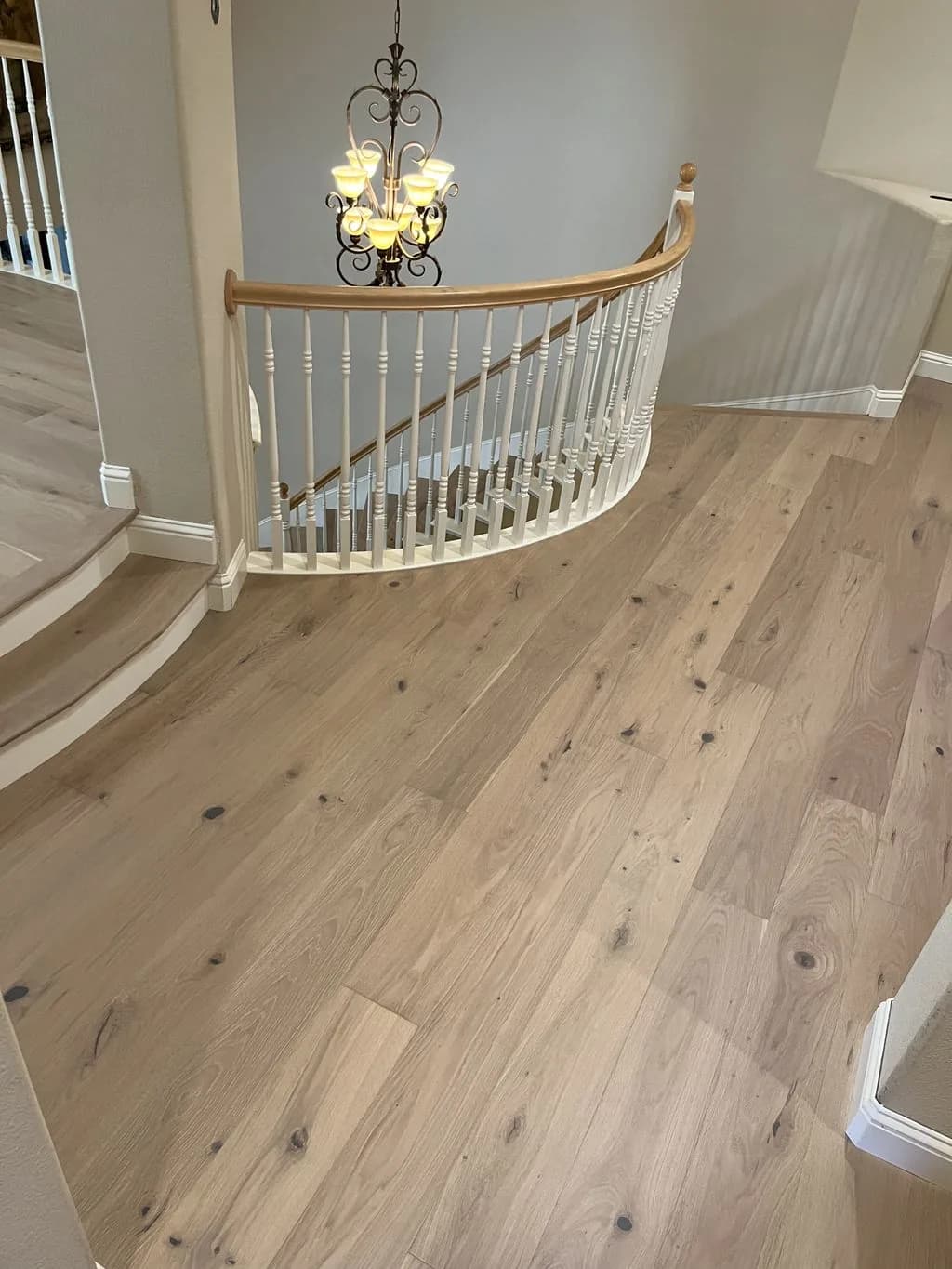
White Oak Hardwood
Great Room & Landing
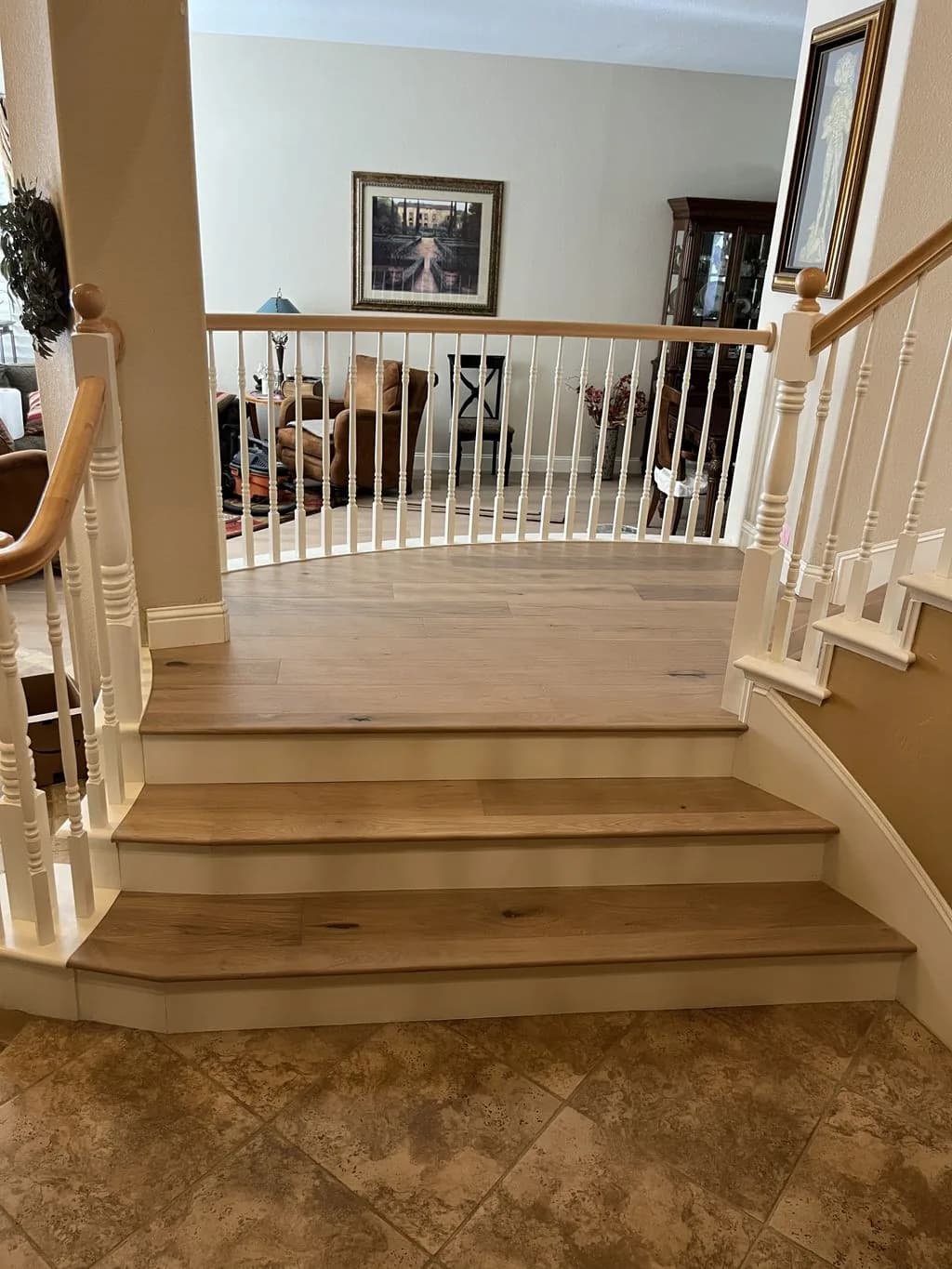
White Oak Hardwood
Staircase & Landing
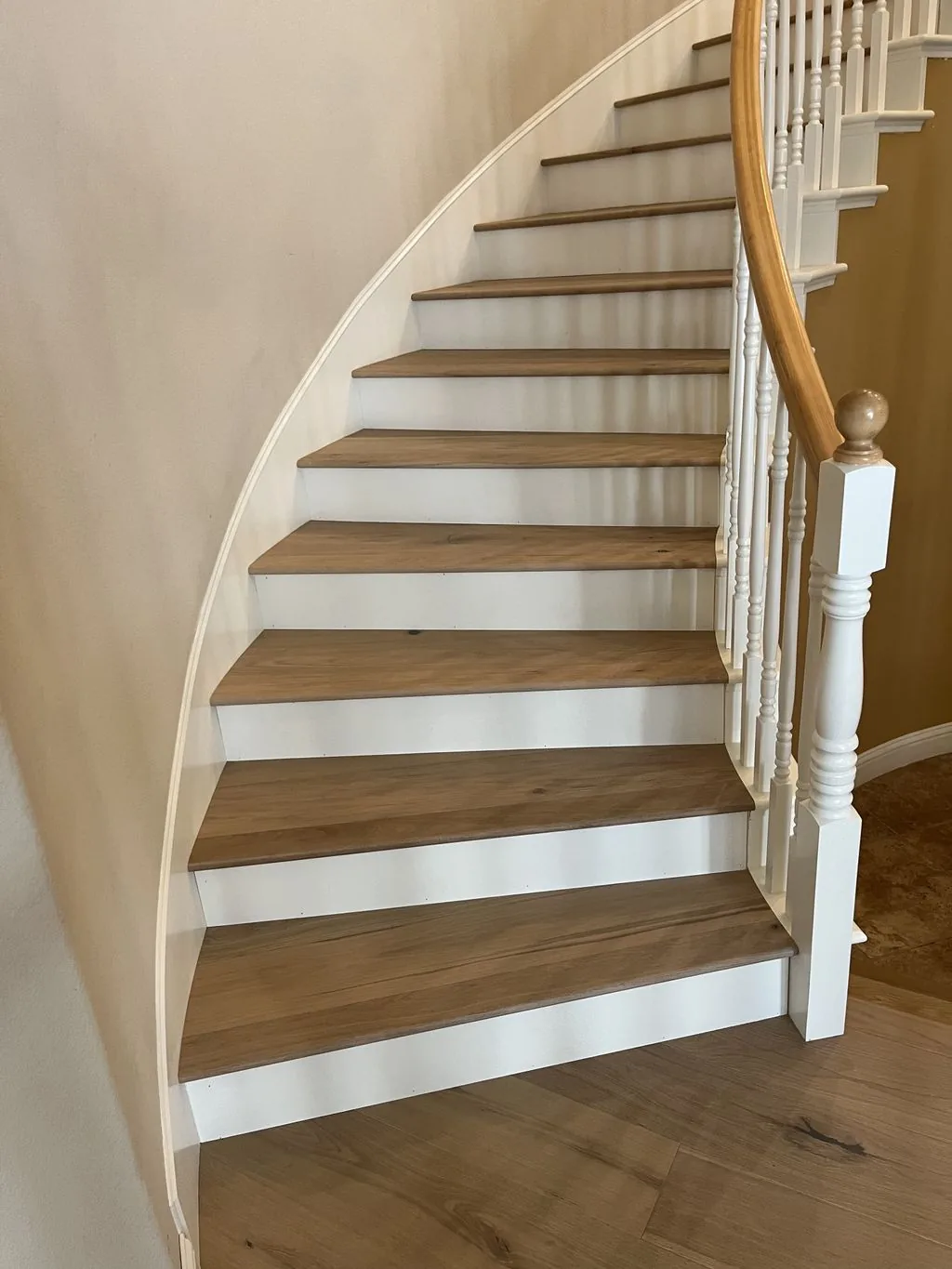
White Oak Hardwood
Curved Staircase
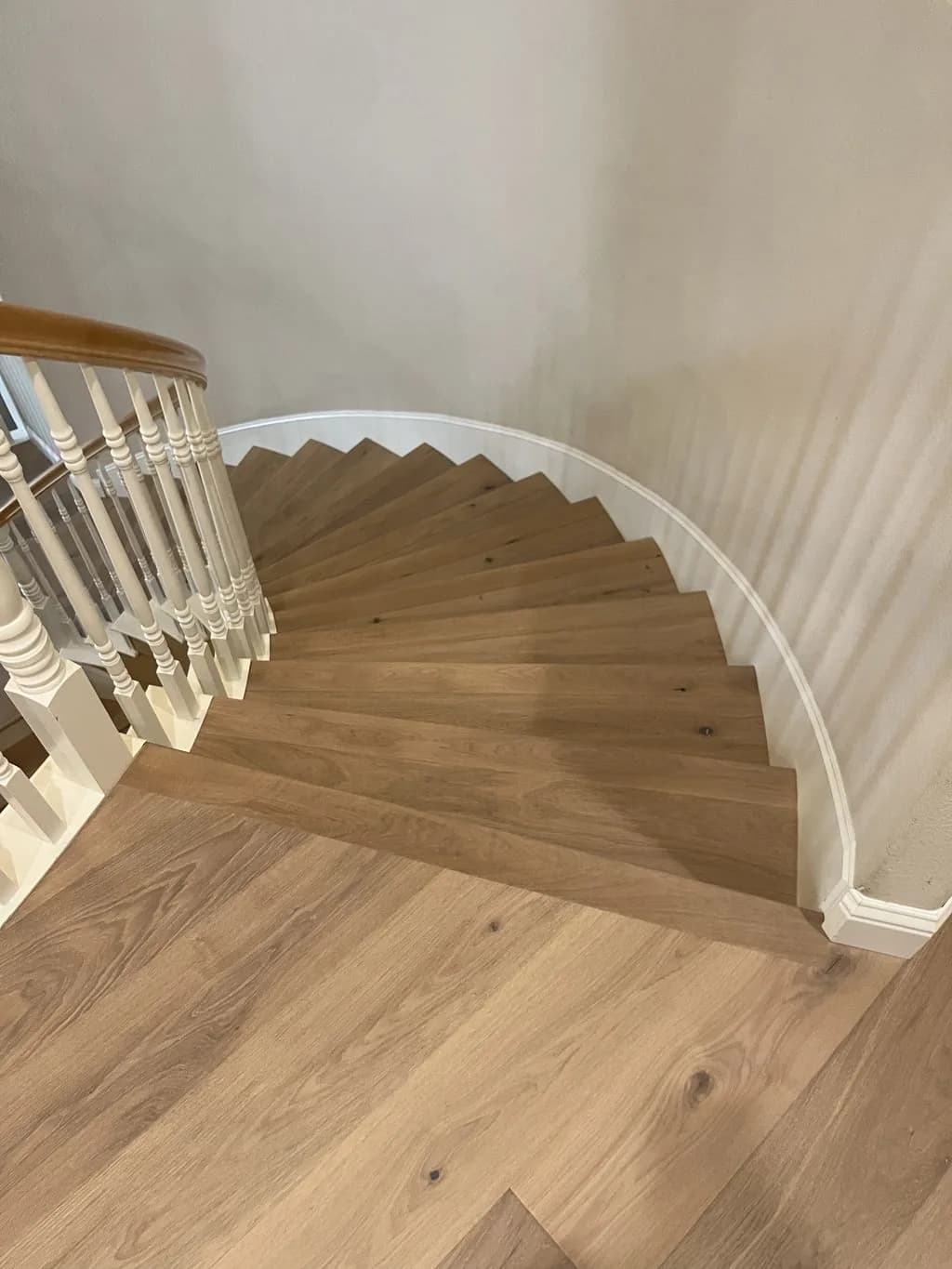
White Oak Hardwood
Stair Treads
Our Services
Flooring Services in Danville
From hardwood to luxury vinyl, here's how we help Danville homeowners upgrade their floors.
Hardwood Flooring
Solid oak, maple, and walkable heirloom-grade hardwood, precisely installed.
Hardwood Flooring in DanvilleEngineered Hardwood
Real-wood wear layers built for California's climate swings.
Engineered Hardwood in DanvilleLuxury Vinyl Plank
Waterproof, wood-look LVP for kitchens, baths, and busy households.
Luxury Vinyl Plank in DanvilleLaminate Flooring
Durable, high-style laminate at a friendly price point.
Laminate Flooring in DanvilleTile Flooring
Porcelain and ceramic tile set dead-level with crisp grout lines.
Tile Flooring in DanvilleFloor Installation
Full-service installation from subfloor prep to final baseboard.
Floor Installation in DanvilleFloor Refinishing
Sand, stain, and reseal tired hardwood back to new.
Floor Refinishing in DanvilleFloor Repair
Board swaps, water damage, squeaks, and seamless patch-ins.
Floor Repair in DanvilleLocal Considerations
What Danville Homes Need From a Floor
Climate, home age, and foundation type all shape the right flooring choice in Danville — here's what we account for.
Town limits, not a Danville ZIP code, decide who issues the permit
The Census Bureau's boundary files give the Town of Danville about 18 square miles of land, and points checked with the Census geocoder show how irregular its edges are. Addresses on Hartz Avenue, Railroad Avenue, Holbrook Drive, Magee Ranch Road and at Monte Vista High School on Stone Valley Road fall inside the Town. Points in Diablo, and addresses on Blackhawk Plaza Circle and Blackhawk Meadow Drive, fall in the Diablo and Blackhawk census-designated places, and Alamo addresses on Danville Boulevard and Stone Valley Road fall in Alamo; all three are unincorporated. Camino Tassajara changes along its length, with 3000, 3900 and 4000 inside the Town and 4675 in Blackhawk, and ZIP code 94506 is used on both sides of that line. Census ZIP code tabulation areas, which approximate ZIP codes, put Diablo in 94528 and Alamo in 94507, and the center of the Eugene O'Neill National Historic Site geocodes to area 94526 but to no incorporated place. The Town's FAQ is direct: verify that the job site is within the Town's boundary, and 'If you are not within the Town's boundaries your address is under the County of Contra Costa jurisdiction.' The Town's Development Services Department is at 500 La Gonda Way, and the Permit Center answers questions at 925-314-3330.
The 2025 codes took effect January 1, 2026, and no Town exempt-work list was found
The Town's Current Building Codes and Design Criteria sheet, revised December 19, 2025, gives an effective date of January 1, 2026 for the 2025 California Administrative, Building, Residential, Electrical, Mechanical, Plumbing, Energy, Fire and Green Building Standards codes and the 2025 Wildland-Urban Interface Code, and lists energy design criteria for Climate Zone 12. For residential projects, the same sheet says to contact the Building Department about soil properties. On what needs a permit, the Town's FAQ says 'A Permit is required for most construction and/or repair projects' and lists, among other items, plumbing, electrical or mechanical work, structural changes such as beams and load-bearing walls, additions, and 'Alterations/remodels/repairs (e.g. Bathroom and Kitchen Remodels).' Flooring, tile and carpet are not named on it, and neither the FAQ nor the Permit Center page publishes a list of exempt work. The Town's municipal code, hosted by American Legal Publishing, returned HTTP 403 when we tried to read it, so any local amendment to the state exempt-work sections went unread, and no floor covering is treated as exempt here. The residential submittal list asks plans to show 'Floor changes (i.e. wood to concrete),' a change to the floor structure rather than its covering. The Town's Alterations vs New Construction policy, effective January 1, 2023, counts a remodel as new construction when 50 percent or more of the linear length of the walls, exterior and interior, and 50 percent of the roof are removed or replaced within one year.
Very high shrink-swell clay on the hills, moderate clay loam at sampled valley points
Sampled inside Town limits, USDA soil survey data show two kinds of ground. At 400 Hartz Avenue in Old Town and at 1001 Diablo Road the map unit is Botella clay loam, which its series description places in valley bottoms and on alluvial fans, with representative linear extensibility of 3.6 to 4.7 percent by layer, the moderate class. Conejo clay loam near Hartz and Prospect avenues and at 3000 Camino Tassajara is moderate too. Other valley points run higher: Cropley clay at 100 Magee Ranch Road reads 7.5, and Pescadero clay loam at 3900 Camino Tassajara reaches 8.3 in its subsoil, both in the high class. On sloping ground, Diablo clay at 3131 Stone Valley Road and on Holbrook Drive reads 9.4 to 10.7, very high. Linear extensibility is a laboratory measure of the change between moist soil and oven dryness, so it rates a soil's potential rather than recording how far ground moves in the field; the UC Davis soil lab notes that moderate to very high ratings mean shrinking and swelling can damage buildings. A derived Town-wide estimate from the same data rates 78.4 percent of mapped land area high or very high, and 53.6 percent very high, across 27 map units, the largest covering 17.9 percent. Upland slope phases of 15 to 75 percent make up about 56 percent of the Town's area, so that share describes land, not homes, and the slab or crawlspace under a given floor is what gets checked.
A small Calaveras fault zone, and liquefaction and landslide zones mapped in 2024
On its Diablo quadrangle map, the California Geological Survey drew an Alquist-Priolo Earthquake Fault Zone, released in 1982 and revising a 1974 release, that reaches into the Town; a grid estimate puts about 1.7 percent of the Town's area inside it. The traces mapped within Town limits belong to the Calaveras fault zone and are shown as approximately located or inferred. The survey's report for the quadrangle says the Calaveras fault 'marks the western border of San Ramon Valley,' that its northern end is 'largely concealed by landsliding and inferred,' and that 'An active trace of the fault cannot be traced north of Fountain Spring Court in San Ramon.' That report's zone maps were officially released February 22, 2024, designating liquefaction zones across much of the San Ramon, Green, Sycamore and Dougherty alluvial valleys, and the Las Trampas Ridge quadrangle maps followed on November 21, 2024. By grid estimate, about 31 percent of the Town's area lies in a liquefaction zone and about 30 percent in a landslide zone. The survey calls these Earthquake Zones of Required Investigation. They are not forecasts for any house, and no address should be placed in one without checking the parcel on the survey's map.
Flood zones along creek channels, and Moderate and High fire classes
FEMA's National Flood Hazard Layer, checked at five points along each creek's centerline inside the Town, shows Zone A, a special flood hazard area, at four of the points on San Ramon Creek and four on Sycamore Creek, with Zone X, minimal flood hazard, at the fifth point on each. Green Valley Creek's sampled points fall in the Zone AE regulatory floodway at four points and Zone A at one. The effective map panels behind those readings date from June 16, 2009 and March 21, 2017. These are channel points, not homes, so a parcel lookup on FEMA's map is the way to check a particular address. The Town says it maintains approximately 4.6 miles of creeks and drainage channels, with others maintained by the Contra Costa County Flood Control District and private property owners. For wildfire, CAL FIRE's March 24, 2025 map of local responsibility areas classes an estimated 40 percent of the Town's area Moderate and 12 percent High, with nearly all the rest non-wildland, and the same grid finds no state responsibility area inside the Town. Whether the Town has adopted that 2025 map was not verified.
An 1891 railroad downtown in a Town whose median home dates to 1980
The Town's walking tour guide dates the first San Ramon Branch Line Southern Pacific train to June 7, 1891 and describes the Victorian Stick depot at 205 Railroad Avenue as now the Museum of the San Ramon Valley; the state Office of Historic Preservation lists the depot with an October 4, 1989 date and records its National Register listing of August 16, 1994. The Town's survey includes 21 Town-designated heritage resources, 20 structures and one tree, and the program is voluntary. Proposed alterations to designated resources go to the Historic Design Review Committee, and the Town's May 2001 design guidelines cover 'exterior alterations and new construction.' In a 2021 archived copy of the ordinance, which may predate later amendments, alteration means 'any demolition, exterior change or modification,' and interior building modifications appear only among minor alterations 'that affect the exterior appearance of a structure.' That is a definition, not a ruling on interior floors, so the owner of a designated property confirms with the Town. The heritage list is short beside the housing count. Median year built for the Town is 1980 in the Census Bureau's 2020–2024 estimates. Of roughly 16,000 units, about 30 percent date from the 1970s, 27 percent from the 1990s, 16 percent from the 1980s, 11 percent from the 1960s and about 6 percent from 2000 on. About 77 percent are detached houses and about 15 percent single-unit attached, fewer than one in ten are in structures with two or more units, and owners occupy about 85 percent of occupied homes. Those are Town-wide estimates that exclude Blackhawk, Diablo and Alamo; the conditions under one floor still come from that floor.
Weather from stations outside the Town, and dry July afternoons at Livermore's airport
No NOAA station inside the Town carries 1991–2020 normals. Two gauges listed inside Town limits, Danville 2.1 S and Danville 1.9 W, have precipitation records and no temperature. The nearest station with normals, Mt Diablo Junction, is about 5 miles north-northeast on unincorporated land at 2,170 feet, some 1,700 feet above the Town's Census reference point, so its figures do not describe the valley floor: an 82.8°F August average high, a 41.3°F December low and 26.05 inches of precipitation a year, with December the wettest month. Livermore Municipal Airport, about 12 miles southeast at 393 feet, gives July an 87.7°F average high and December a 37.5°F low, with 15.18 inches a year and February the wettest month. Concord's Buchanan Field, about 13 miles north-northwest, averages an 88.0°F July high and 16.05 inches. NCEI's hourly records for the Julys of 2015 to 2024 put the airport's mean relative humidity at 79.2 percent for the 4 AM hour and 34.0 percent for the 4 PM hour, a drop of roughly 45 points; Oakland International Airport's drop over the same hours is roughly 20. Indoor air is a separate calculation: the airport's 2015–2025 hourly observations, heated on paper to 70°F while holding their moisture constant, yield a median near 36 percent from November through April, with roughly 28 percent of those hours under 30 percent, and a June-to-September median near 53 percent. Every one of those stations is outside the Town, so wood is acclimated to readings taken in the house.
Local Resources & References
Helpful Danville Resources
Authoritative local and industry references for permits, planning, and flooring standards.
- Historic Danville — the Inman purchase of 1854, the 1891 railroad and Hartz Avenue, and incorporation in 1982Town of Danville
- Permit Center — the 2025 California Building Code in effect January 1, 2026; December 23, 2025 cutoff for the 2022 codeTown of Danville
- Current Building Codes & Design Criteria (PDF, rev. 12/19/2025) — 2025 codes effective January 1, 2026Town of Danville
- Permit Center FAQ — work that requires a permit, construction hours, and whether an address is under the Town or Contra Costa CountyTown of Danville
- Heritage Resources — 21 Town-designated heritage resources in a voluntary programTown of Danville
- ACS 2020–2024 5-year, Danville town (place 0617988) — housing units, year built, units in structure and tenureUS Census
- 1991–2020 monthly normals, Livermore Municipal Airport (USW00023285) — a station about 12 miles southeast of the TownNOAA NCEI
- Official Series Description, Diablo series — dry-season cracks and upland settingUSDA Natural Resources Conservation Service
- Seismic Hazard Zone Report 137, Diablo Quadrangle — the Calaveras fault and liquefaction zones; official map February 22, 2024California Geological Survey
External links are provided for reference. Always confirm current requirements with the issuing agency.
Explore Flooring Services in Danville
Good to Know
Frequently Asked Questions
Does Renaissance Floors serve Danville?
Yes. We install and refinish flooring throughout Danville and the surrounding Contra Costa County area. Call (916) 749-0272 for a free estimate.
What flooring services do you offer in Danville?
We install hardwood, engineered wood, luxury vinyl plank, laminate, tile, and more in Danville, plus floor refinishing, repair, and full-service installation. See the full list below.
Are you licensed to work in Danville?
Yes. We hold CSLB C-15 license #1060673 (C-15 Flooring & Floor Covering) and carry insurance. We're based in Roseville, CA and serve Danville and all of Greater Sacramento & Northern California.
How do I get a free flooring estimate in Danville?
Call (916) 749-0272 or request an estimate online. We'll schedule a convenient in-home visit in Danville, measure your space, and give you an honest, no-pressure quote.
Do I need a permit to replace flooring in the Town of Danville?
The Town's published permit materials don't say either way. Danville's permit FAQ says a permit is required for most construction and repair projects and names plumbing, electrical and mechanical work, structural changes and kitchen and bathroom remodels, but it doesn't mention flooring. No Town list of exempt work was found, and the Town's online municipal code returned an HTTP 403 error. Call the Permit Center at 925-314-3330 before treating any floor covering as exempt, especially if subfloor or structural work is involved.
Are Blackhawk, Diablo and Alamo part of the Town of Danville?
No. The Census Bureau classes Blackhawk, Diablo and Alamo as unincorporated census-designated places outside Town limits, even though a Blackhawk address can carry a Danville mailing address. The Town's permit FAQ says an address outside its boundary is under Contra Costa County's jurisdiction, so the Town doesn't handle permits for those parcels. Housing figures for the Town on this page also leave those places out. Confirm a parcel's jurisdiction before scheduling any work.
My address says Danville 94506. Does the Town issue my permit?
Not necessarily. ZIP code 94506 is used both inside the Town and in unincorporated Blackhawk. The Census geocoder places 3900 Camino Tassajara in the Town but 4675 Camino Tassajara and 3496 Blackhawk Plaza Circle in Blackhawk, so even one road changes jurisdiction along its length. The Town's FAQ asks applicants to verify that the job site is inside its boundary, and addresses outside it fall under Contra Costa County.
Is the Town of Danville built on expansive clay?
Much of its land area is mapped that way, largely on hillsides. A derived estimate from USDA soil survey data rates 78.4 percent of the Town's land area high or very high for shrink-swell, and upland slopes of 15 to 75 percent make up about 56 percent of the Town's area. Sampled valley-floor points, including 400 Hartz Avenue in Old Town, map as Botella clay loam in the moderate class. Soil maps don't describe one lot, so the slab or subfloor is checked on site.
How old are most homes in the Town of Danville?
Most were built between 1960 and 1999. The Census Bureau's 2020–2024 five-year estimates put the Town's median year built at 1980, and of roughly 16,000 housing units, about 30 percent date from the 1970s and about 27 percent from the 1990s; fewer than 1 percent predate 1940. About 77 percent are detached houses, and owners occupy about 85 percent of occupied homes. Those figures cover the Town only, not Blackhawk, Diablo or Alamo.
Are homes near Danville's creeks in a FEMA flood zone?
Some creek channels are mapped in flood zones; individual homes weren't checked. At points sampled along creek centerlines inside the Town, FEMA's flood map shows Zone A at most points on San Ramon and Sycamore creeks and the Zone AE regulatory floodway at most points on Green Valley Creek, with Zone X at one point on each of the first two. Channel points aren't houses, so look up your parcel on FEMA's flood map before choosing materials for a ground-floor room.
Does heritage designation in Old Town limit interior floor work?
Danville's heritage definitions are written around exteriors, but a designated property should still be confirmed. The Town's design guidelines address exterior alterations, and an archived 2021 copy of its ordinance defines alteration as exterior change, naming interior modifications only when they affect a structure's exterior appearance. The Town has 21 designated heritage resources in a voluntary program, and proposed alterations to them go to its Historic Design Review Committee. Ask the Town about a specific property first.
How dry does summer air get for hardwood floors in Danville?
At the nearest airport with hourly records, July afternoons average about 34 percent relative humidity. Livermore Municipal Airport, about 12 miles southeast and outside the Town, averaged 34 percent at 4 PM and 79 percent at 4 AM across the Julys of 2015 to 2024. Heated to 70°F without added moisture, that airport air's November-to-April median is near 36 percent. Station air is outdoor air, so the wood's moisture is checked against readings inside the house where it will be installed.
Related
Keep Reading
Related pages: Floor Installation in Berkeley, Floor Refinishing in Berkeley, Hardwood Flooring in Danville, and Engineered Hardwood in Danville.

Ready for Floors You'll Love?
Free, no-pressure flooring estimates throughout Danville and Contra Costa County.