Service Area
Flooring in Oakland
Renaissance Floors installs and refinishes hardwood, luxury vinyl, tile, and more for homeowners throughout Oakland and the surrounding Alameda County area.
CSLB #1060673
Licensed & Insured
Est. 2019
Family-Owned
15+ Years
Hands-On Experience
5.0★ Rated
22 Reviews on Thumbtack
Local, Licensed, Accountable
Flooring Contractor Serving Oakland
Oakland is part of Alameda County, and it's one of the communities Renaissance Floors regularly works in. We're based in Roseville, CA and serve homeowners across Greater Sacramento & Northern California— from small refinishing jobs to full home installs. Every project starts with an honest look at your subfloor and your goals, followed by a clear, no-pressure estimate. There's no dispatched sales team and no guesswork: you work directly with the crew doing the installation, backed by our CSLB C-15 license and a workmanship warranty on every job.
From Oakland and Berkeley bungalows to Tri-Valley new builds, East Bay homes span a century of construction. We refinish beautiful original hardwood where it makes sense and install fresh floors where it doesn't.
Oakland's flooring questions start with the age of its buildings. The Census Bureau's 2020–2024 five-year estimates count about 192,000 housing units and put the median year built at 1953. About 37 percent were built in 1939 or earlier, by a wide margin the largest single category, since no later decade accounts for more than about 10 percent. Nearly half of all units predate 1950, about three in four predate 1980, and only about 13 percent date from 2000 or later. The stock is mixed in type as well as age: about 42 percent of units are detached houses, about 53 percent are in buildings of two or more units, and renters occupy about 58 percent of occupied homes. Oakland is not the oldest city in this service area, since Berkeley and San Francisco both have higher pre-1940 shares, but early construction and a majority of units in multi-unit buildings together shape how a project here is scoped.
The City's rule for floors is worded in its own way. Oakland's published list of work exempt from a building permit, which we read in archived copies from 2025 because oaklandca.gov blocks automated retrieval, includes 'papering, tiling, carpeting, cabinets, countertops, and similar finish work.' The word flooring does not appear. Hardwood, engineered wood, vinyl plank and laminate are not named, so whether a particular product counts as similar finish work is a question for the City's Bureau of Building, not something to assume either way. The same page warns that 'Planning/Zoning Permits with fees and requiring plans may still be required.' Historic status is a separate question, and its reach indoors is narrow. The City lists nine designated preservation districts containing about 1,500 buildings, and its Planning Code requires design review in those zones when a building is 'altered in exterior appearance.' Interior features are written into that review only for publicly-owned landmarks.
The hills carry their own record: the October 1991 fire first labeled the Tunnel Fire. The U.S. Fire Administration's technical report, which covers Oakland and Berkeley, records that just 64 minutes after it broke out the fire was burning in the Rockridge district, more than a mile downwind from the point of origin, and gives the destruction as 3,354 single-family dwellings and 456 apartment units in its body, while its summary table calls the 3,354 structures. CAL FIRE's list of the most destructive wildfires in California, dated October 2025, counts 2,900 structures on 1,600 acres and ranks the fire fifth. The City of Oakland's Safety Element puts the burned area at 1,520 acres. All three sources record 25 deaths, and none publishes a destroyed count for Oakland alone, so we do not cite one. The same City document states that much of Oakland is designated a very high fire hazard severity zone and that the Oakland Hills are part of the wildland-urban interface, where buildings are close to undeveloped land.
The ground changes across the city, too. The U.S. Geological Survey finds the Bay Area's highest liquefaction hazard concentrated in man-made landfill, especially fill placed decades ago over former bay floor, and names Oakland among the places such areas are found. Its account of the Cypress structure, the freeway approach to the Bay Bridge from Oakland that collapsed in the 1989 Loma Prieta earthquake and killed 42 people, notes that the soft muds beneath it shook much more strongly than surrounding regions on stronger ground. The City's Safety Element identifies low-lying coastal areas and the area around Lake Merritt and its channel to the Estuary as most sensitive to liquefaction, concentrates the slopes at greatest landslide risk in the Oakland Hills and within two miles south of Highway 13, and places Oakland between the active Hayward and San Andreas fault zones. It also calls flooding the most frequent natural hazard in Oakland, often associated with excess stormwater runoff, and names the areas near Lake Merritt and Glen Echo, Arroyo Viejo, Lion, Sausal and Peralta creeks as most at risk.
For the city's own climate record, the reference is NOAA's Oakland Museum station. Its 1991–2020 normals make September the warmest month, with a normal high of 74.6°F against 71.6°F in July, and December the wettest, at 4.66 inches of a 22.61-inch year. January averages a 59.8°F high and a 45.1°F low. Oakland International Airport's normals show 18.68 inches of rain a year, nearly four inches less, so the airport is not a stand-in for the city's rainfall. Its hourly humidity record is still useful. Across the Julys of 2015 to 2024, the airport averaged about 65 percent relative humidity at 4 PM, against about 34 percent at Livermore's airport in the same county, and its readings from 2015 to 2025, brought to 70°F without added moisture, give a heating-season median of about 42 percent and a summer median of about 59 percent.
Renaissance Floors is a licensed California C-15 flooring contractor (CSLB #1060673) based in Roseville. For an Oakland project we start with the questions the records raise: when the building went up, whether the address is actually inside city limits, what the City's exempt list does and does not name for the material chosen, whether the floor sits over a crawl space or a slab, and whether a ground-floor room is near water. Free in-home estimates, straight answers about scope and permits, and a workmanship warranty.
Local Coverage
Neighborhoods We Serve in Oakland
From Rockridge to Lake Merritt, Renaissance Floors installs and refinishes floors across Oakland.
Recent Work
A Sample of Our Craftsmanship
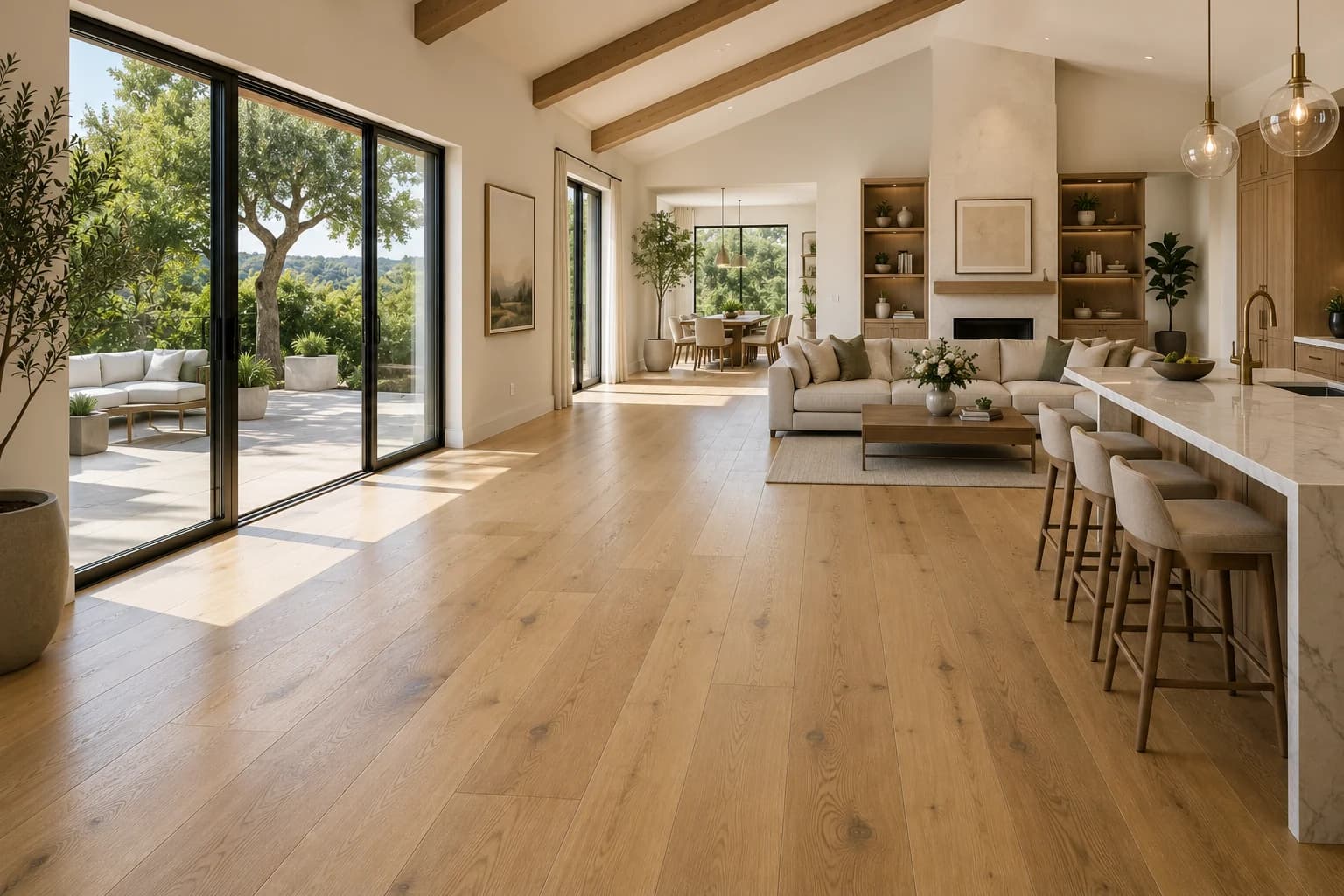
White Oak Hardwood
Great Room & Landing
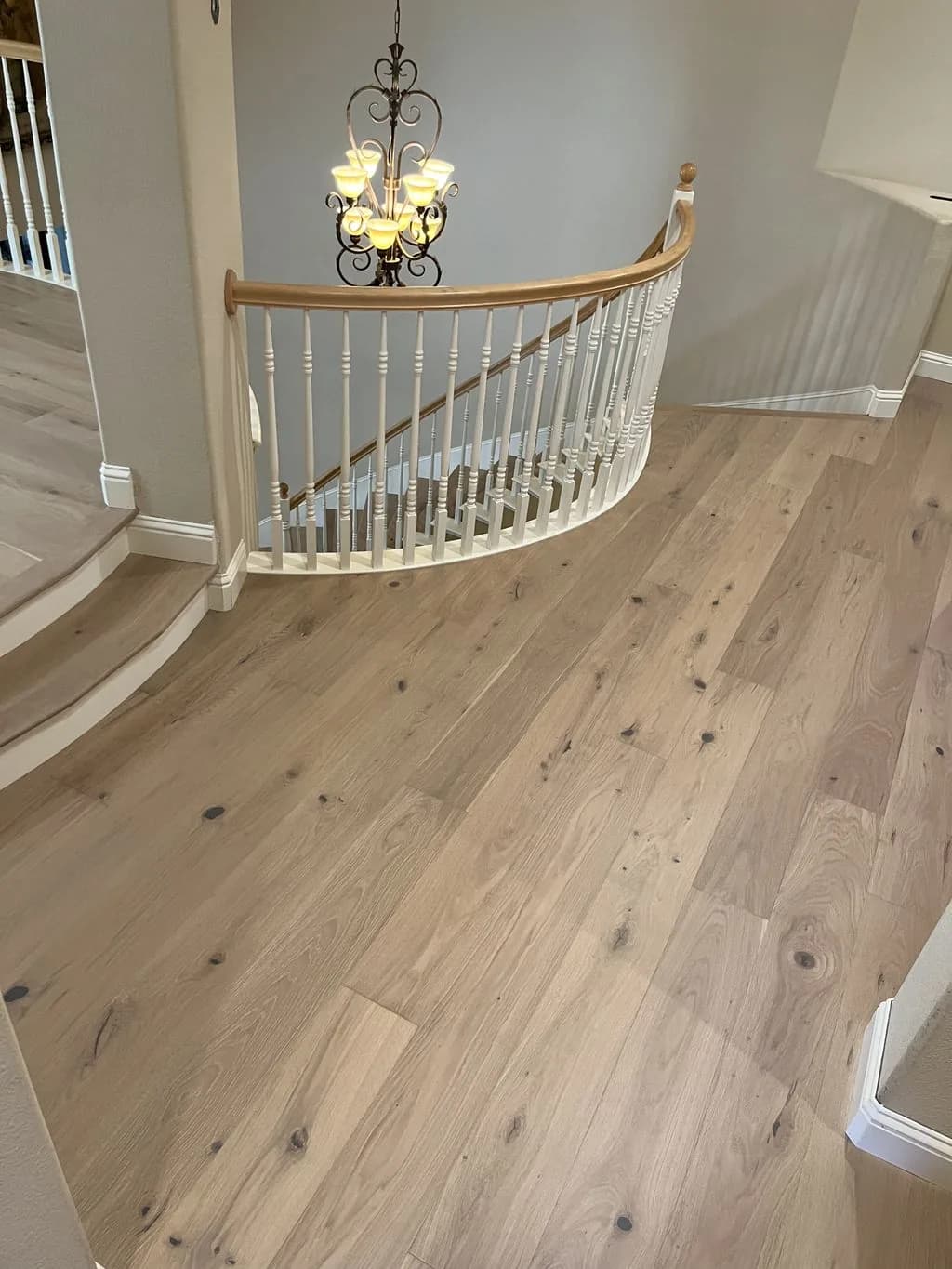
White Oak Hardwood
Staircase & Landing
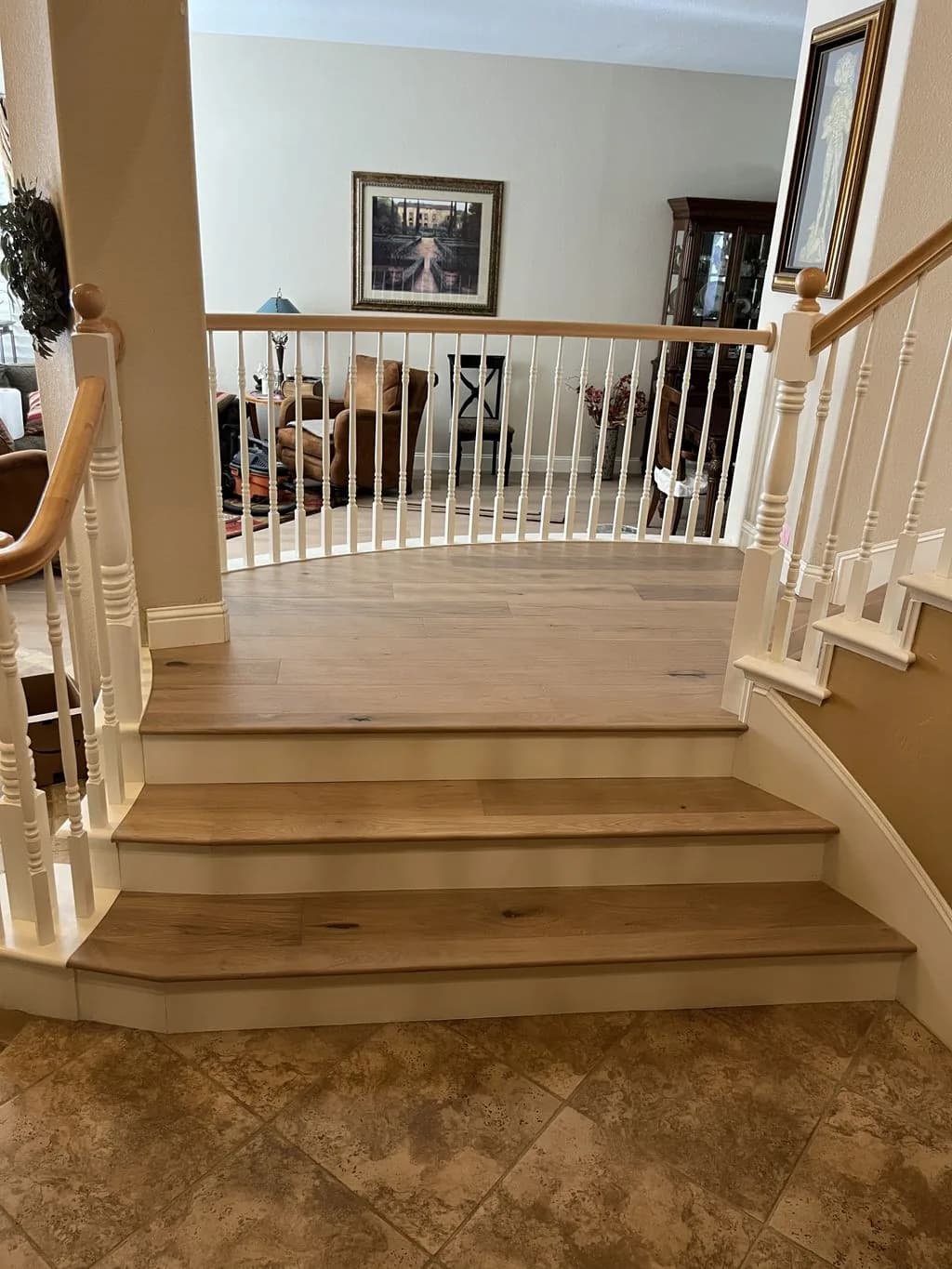
White Oak Hardwood
Curved Staircase
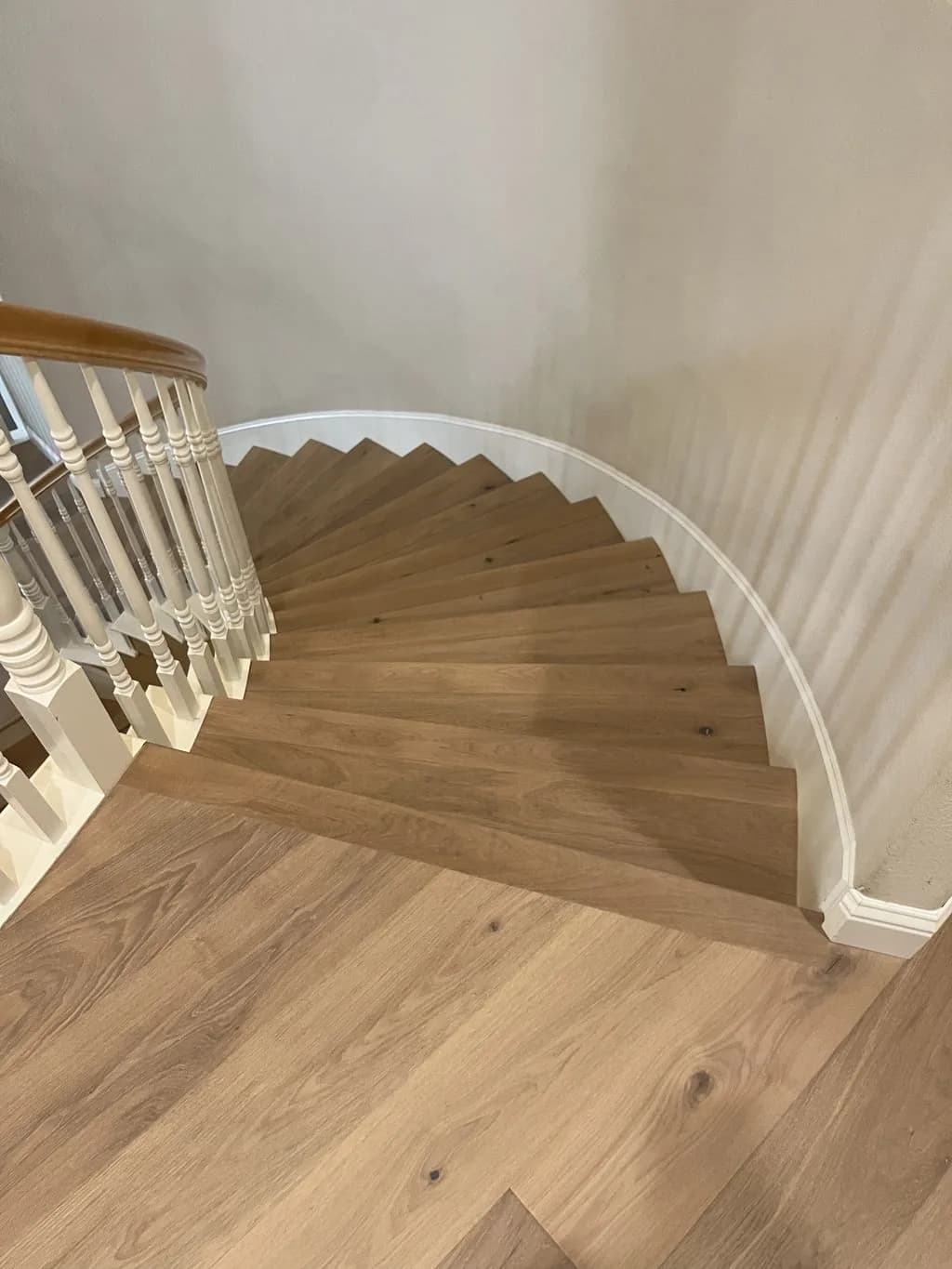
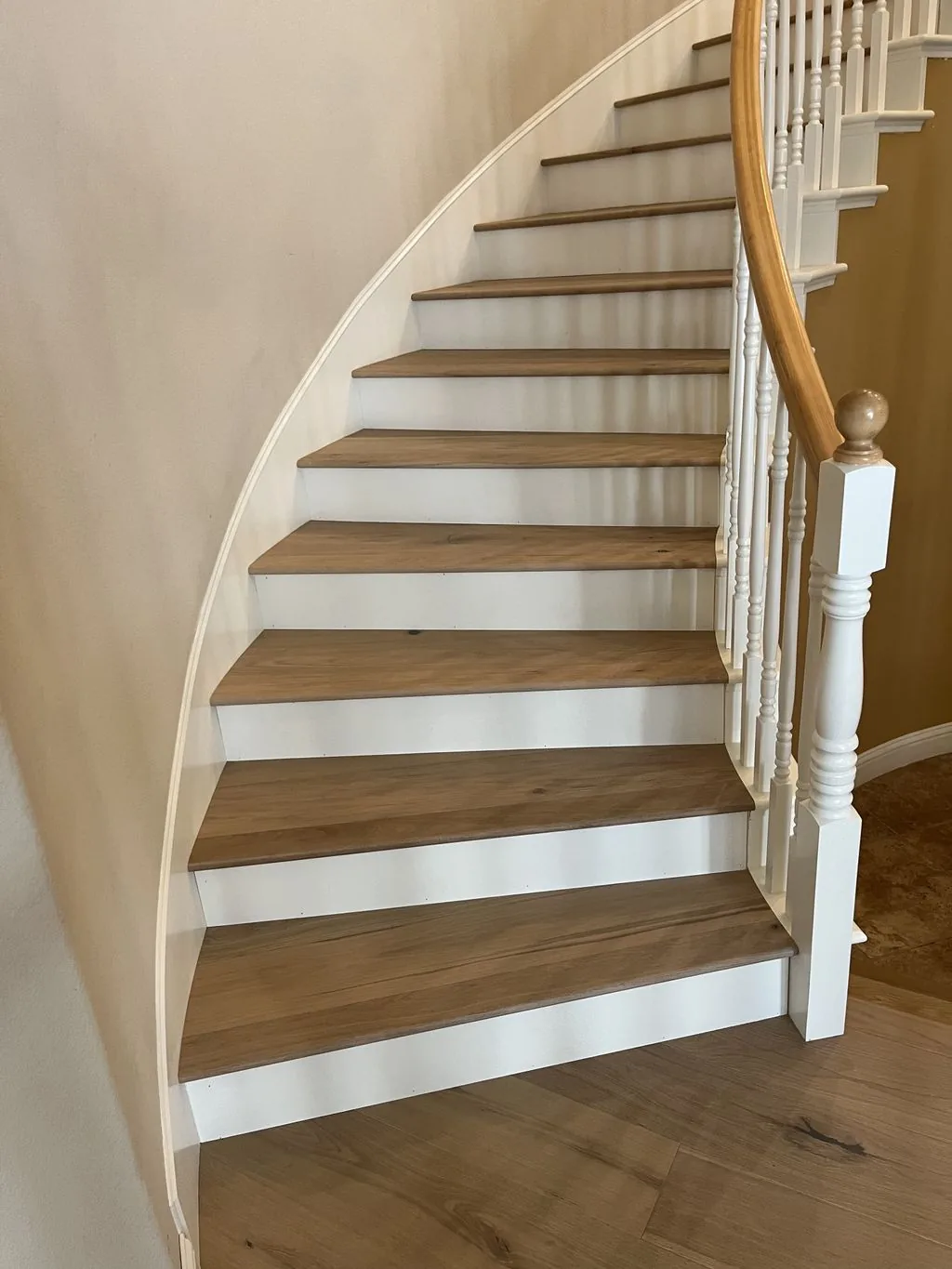
White Oak Hardwood
Stair Treads
Our Services
Flooring Services in Oakland
From hardwood to luxury vinyl, here's how we help Oakland homeowners upgrade their floors.
Hardwood Flooring
Solid oak, maple, and walkable heirloom-grade hardwood, precisely installed.
Hardwood Flooring in OaklandEngineered Hardwood
Real-wood wear layers built for California's climate swings.
Engineered Hardwood in OaklandLuxury Vinyl Plank
Waterproof, wood-look LVP for kitchens, baths, and busy households.
Luxury Vinyl Plank in OaklandLaminate Flooring
Durable, high-style laminate at a friendly price point.
Laminate Flooring in OaklandTile Flooring
Porcelain and ceramic tile set dead-level with crisp grout lines.
Tile Flooring in OaklandFloor Installation
Full-service installation from subfloor prep to final baseboard.
Floor Installation in OaklandFloor Refinishing
Sand, stain, and reseal tired hardwood back to new.
Floor Refinishing in OaklandFloor Repair
Board swaps, water damage, squeaks, and seamless patch-ins.
Floor Repair in OaklandLocal Considerations
What Oakland Homes Need From a Floor
Climate, home age, and foundation type all shape the right flooring choice in Oakland — here's what we account for.
Tile and carpet are on the exempt list; 'flooring' is not
The City of Oakland's list of work exempt from a building permit, published under its Planning & Building Department, names 'Painting (except if disturbing paint on pre-1978 structures), papering, tiling, carpeting, cabinets, countertops, and similar finish work.' It never uses the words flooring or floor coverings, has no bathroom clause either way, and says nothing about subfloor, underlayment or joist work. Hardwood, engineered wood, vinyl plank and laminate are not named, so confirm those with the Bureau of Building, which the City says 'oversees the regulatory process for construction performed in the City of Oakland.' The page adds that Planning/Zoning permits 'may still be required,' and that an exemption does not authorize work done in violation of the code. One more check comes first: a mailing address is not a boundary. Census geocoding places at least one address carrying a Berkeley 94705 mailing address inside Oakland city limits.
Historic districts review what changes on the outside
Oakland's Planning Code, in its January 16, 2024 supplement, requires design review in the S-7 and S-20 preservation zones when a building is 'constructed, established, or altered in exterior appearance,' and landmark review turns on alterations that 'affect exterior appearance.' The only interior control written in is for publicly-owned landmarks, whose designating ordinance 'may require such approval of proposed changes to major interior architectural features.' Interiors are not entirely outside the code: S-7 owners must keep in good repair interior portions whose maintenance is 'necessary to prevent deterioration and decay of any exterior portion.' The City lists nine designated districts with about 1,500 buildings, among them Preservation Park, Old Oakland's Victorian Row, the Bellevue-Staten Apartment District in Adams Point, Sheffield Village, Oak Center and the 7th Street Commercial District. In the code text we read, nothing requires preservation review of interior flooring in a private home.
More than a third of the housing predates 1940
The Census Bureau's 2020–2024 estimates put 37.2 percent of Oakland's roughly 192,000 housing units in buildings from 1939 or earlier. The 1940s, 1950s, 1960s and 1970s each account for close to 10 percent, the 1980s through the 2010s about 5 to 6 percent each, and the median year built is 1953. The type of housing is split as well: about 42 percent detached houses, about 53 percent in buildings of two or more units, about 13 to 14 percent in buildings of fifty or more, and renters in about 58 percent of occupied homes. A building's age tells you which questions to ask, not the answers: the condition of any original wood, what earlier work left beneath the surface, and whether the framing is still flat are checked in the room before a product is chosen. Tenure means some projects also run through a landlord.
Brace + Bolt ZIP codes, and what they don't measure
California's Earthquake Brace + Bolt program says its retrofit 'is only done on wood-framed, pre-1980 homes with a raised foundation,' bracing cripple walls in the crawl space with plywood, or bolting a house whose frame sits directly on a stem wall. Its 2025 Northern California list names 13 ZIP codes under Oakland: 94601, 94602, 94603, 94605, 94606, 94607, 94609, 94610, 94611, 94612, 94618, 94619 and 94621. Two of them, 94610 and 94611, are also listed under Piedmont, and the list states 'Eligibility based on ZIP Code only, city provided as reference.' The program selects ZIP codes by earthquake hazard and the percentage of pre-1940 houses, not by counting foundations, so the list is not a measure of how many Oakland homes are raised. No source we found counts them; the house itself answers that once the crawl space or slab is looked at.
The 1991 fire, counted three ways
The U.S. Fire Administration, CAL FIRE and the City of Oakland all record 25 deaths in the October 1991 Oakland Hills fire, but their destruction figures differ. The USFA report, which covers Oakland and Berkeley, gives '3,354 single family dwellings and 456 apartment units' in its body and 3,354 structures on 1,500 acres in its summary table. CAL FIRE's October 2025 list of the state's most destructive wildfires counts 2,900 structures, a term it defines to include outbuildings and commercial properties, on 1,600 acres, and ranks the fire fifth. The City's Safety Element cites 1,520 acres. No source we found gives a count for Oakland alone. The USFA report names Hiller Highlands 'in direct path of the fire.' In the Census tract that includes Oakland's Hiller Drive, current estimates put 862 of 1,488 housing units in the 1990s, a single-tract figure with a wide margin of error, against about 5 percent citywide. No source we found says how many of those homes replaced ones that burned.
Old bay fill, soft muds and creek-side flooding
The USGS says the highest liquefaction hazard on its Bay Area maps is concentrated in man-made landfill, especially fill placed many decades ago over former bay floor, and that such areas along the Bay margins are found in San Francisco, Oakland and Alameda Island. The City's Safety Element names low-lying coastal areas and the area around Lake Merritt and its channel as most sensitive to liquefaction; for a specific address, the reference is the California Geological Survey's regulatory liquefaction zones for the Oakland West and Oakland East quadrangles, released February 14, 2003, which are a different map. On water, the City names the Bay, the Oakland Estuary and San Leandro Bay as the main flooding threats, with areas near Lake Merritt and five creeks most at risk, and says most of the developed shoreline is outside the current 100-year flood zone except the north part of Oakland International Airport. Some FEMA map panels covering parts of Oakland took effect May 26, 2026, so check the current map, and in a ground-floor room near water favor a floor that tolerates it.
September is warm, December is wet, measured at the Museum
NOAA's 1991–2020 normals for the Oakland Museum station put the warmest month in September, at a 74.6°F normal high, with July at 71.6°F over a 56.6°F low, and the wettest in December, at 4.66 inches of 22.61 inches a year. The airport's normals show 18.68 inches a year, so its rainfall is not used for the city. Its humidity record fills a different gap: across the Julys of 2015 to 2024, Oakland International Airport averaged 85.2 percent relative humidity at 4 AM and 65.3 percent at 4 PM, against 79.2 and 34.0 percent at Livermore Municipal Airport. Those are outdoor readings. For indoor air, the airport's hourly observations from 2015 to 2025, brought to 70°F without added moisture, give a November-to-April median of about 42 percent relative humidity and a June-to-September median of about 59 percent. Wood still acclimates in the rooms where it will be installed.
Local Resources & References
Helpful Oakland Resources
Authoritative local and industry references for permits, planning, and flooring standards.
- Work Exempt from a Building Permit (Wayback Machine snapshot, October 30, 2025) — 'tiling, carpeting … and similar finish work'; Planning/Zoning permits 'may still be required'; the live page blocks automated retrievalCity of Oakland
- Planning Code, Title 17 (supplement effective January 16, 2024) — S-7 and S-20 design review for changes in 'exterior appearance'; publicly-owned landmark interiorsCity of Oakland
- General Plan 2045 Safety Element, Hazards Fact Sheet — 1991 fire acreage, fire hazard zones, liquefaction, landslide slopes and flood-prone creeks; the live site blocks automated retrievalCity of Oakland
- The East Bay Hills Fire, Oakland-Berkeley, California (USFA-TR-060, October 1991) — destruction counts, Rockridge spread and Hiller HighlandsU.S. Fire Administration (copy hosted by Cal OES)
- Top 20 Most Destructive California Wildfires (October 9, 2025) — Tunnel Fire: 2,900 structures, 1,600 acres, ranked fifthCAL FIRE
- ACS 2020–2024 5-year — year built, median year built, units in structure and tenure, Oakland city (place 0653000)US Census
- 1991–2020 monthly normals, Oakland Museum (USC00046336) — September warmest, December wettestNOAA NCEI
- San Francisco Bay Area Liquefaction Hazard Maps — old bay-margin fill in Oakland; the Cypress structure's soft mudsUS Geological Survey
- 2025 Earthquake Brace + Bolt ZIP Codes in Northern California — 13 listed under Oakland, 94610 and 94611 also under PiedmontCalifornia Residential Mitigation Program
External links are provided for reference. Always confirm current requirements with the issuing agency.
Explore Flooring Services in Oakland
Good to Know
Frequently Asked Questions
Does Renaissance Floors serve Oakland?
Yes. We install and refinish flooring throughout Oakland and the surrounding Alameda County area. Call (916) 749-0272 for a free estimate.
What flooring services do you offer in Oakland?
We install hardwood, engineered wood, luxury vinyl plank, laminate, tile, and more in Oakland, plus floor refinishing, repair, and full-service installation. See the full list below.
Are you licensed to work in Oakland?
Yes. We hold CSLB C-15 license #1060673 (C-15 Flooring & Floor Covering) and carry insurance. We're based in Roseville, CA and serve Oakland and all of Greater Sacramento & Northern California.
How do I get a free flooring estimate in Oakland?
Call (916) 749-0272 or request an estimate online. We'll schedule a convenient in-home visit in Oakland, measure your space, and give you an honest, no-pressure quote.
Do I need a building permit to replace flooring in Oakland?
Tile and carpet are on the City's exempt list; other floor types are not named. Oakland's published list of work exempt from a building permit includes 'tiling, carpeting, cabinets, countertops, and similar finish work' but never uses the word flooring, so confirm hardwood, engineered wood, vinyl plank or laminate with the Bureau of Building, along with any subfloor or joist work. The City also notes that Planning/Zoning permits 'may still be required.'
My Oakland home is in a historic district. Is interior flooring reviewed?
Not under the Planning Code text we reviewed. Oakland's S-7 and S-20 preservation zones require design review when a building is 'altered in exterior appearance,' and interior features are addressed only for publicly-owned landmarks, through their designating ordinance. S-7 owners must still keep interior portions in repair where that prevents decay of the exterior. We read the January 16, 2024 supplement, and building permit rules apply separately.
How old is Oakland's housing?
Old: about 37 percent of units predate 1940. The Census Bureau's 2020–2024 estimates count about 192,000 housing units, with nearly half built before 1950, about three in four before 1980, and a median year built of 1953. Berkeley and San Francisco have higher pre-1940 shares. About 53 percent of Oakland's units are in buildings of two or more units, and renters occupy about 58 percent of occupied homes.
What did the 1991 Oakland Hills fire destroy?
The official figures differ by source. The U.S. Fire Administration's report, covering Oakland and Berkeley, counts 3,354 single-family dwellings and 456 apartment units in its body. CAL FIRE's list of the most destructive California wildfires counts 2,900 structures on 1,600 acres, and the City of Oakland's Safety Element cites 1,520 acres. All three record 25 deaths. None gives a destroyed count for Oakland alone, so we don't quote one.
When is Oakland warmest and wettest?
September and December. NOAA's 1991–2020 normals for the Oakland Museum station put the highest average high in September, at 74.6°F, above July's 71.6°F, and the most rain in December, at 4.66 inches of a 22.61-inch year. Oakland International Airport's normals show 18.68 inches a year, so airport rainfall is not a substitute for the city's. January's average low at the Museum station is 45.1°F.
Is Oakland prone to liquefaction?
In parts of the city. The U.S. Geological Survey says the Bay Area's highest liquefaction hazard is concentrated in old man-made fill along the Bay margins and names Oakland among the places it is found. The City's Safety Element points to low-lying coastal areas and the area around Lake Merritt and its channel. For a particular address, check the California Geological Survey's official zone maps, which are a separate map from the City's.
Where does flooding happen in Oakland?
The City points to its shorelines and several creeks. Its Safety Element names the Bay, the Oakland Estuary and San Leandro Bay as the main threats, with areas near Lake Merritt and Glen Echo, Arroyo Viejo, Lion, Sausal and Peralta creeks most at risk. It says most of the developed shoreline is not in the current 100-year flood zone, except the north part of Oakland International Airport. FEMA's current maps, some panels revised in May 2026, show whether a specific parcel is mapped.
Is my Oakland home in an Earthquake Brace + Bolt ZIP code?
Possibly: 13 ZIP codes are listed under Oakland. The program's 2025 Northern California list names 94601, 94602, 94603, 94605, 94606, 94607, 94609, 94610, 94611, 94612, 94618, 94619 and 94621, and also lists 94610 and 94611 under Piedmont; it states that eligibility is based on ZIP code only. The retrofit is only done on wood-framed, pre-1980 homes with a raised foundation, and a listed ZIP says nothing about whether a particular house has one.
Related
Keep Reading
Related pages: Laminate Flooring in Berkeley, Tile Flooring in Berkeley, Hardwood Flooring in Oakland, and Engineered Hardwood in Oakland.

Ready for Floors You'll Love?
Free, no-pressure flooring estimates throughout Oakland and Alameda County.