Service Area
Flooring in Fremont
Renaissance Floors installs and refinishes hardwood, luxury vinyl, tile, and more for homeowners throughout Fremont and the surrounding Alameda County area.
CSLB #1060673
Licensed & Insured
Est. 2019
Family-Owned
15+ Years
Hands-On Experience
5.0★ Rated
22 Reviews on Thumbtack
Local, Licensed, Accountable
Flooring Contractor Serving Fremont
Fremont is part of Alameda County, and it's one of the communities Renaissance Floors regularly works in. We're based in Roseville, CA and serve homeowners across Greater Sacramento & Northern California— from small refinishing jobs to full home installs. Every project starts with an honest look at your subfloor and your goals, followed by a clear, no-pressure estimate. There's no dispatched sales team and no guesswork: you work directly with the crew doing the installation, backed by our CSLB C-15 license and a workmanship warranty on every job.
From Oakland and Berkeley bungalows to Tri-Valley new builds, East Bay homes span a century of construction. We refinish beautiful original hardwood where it makes sense and install fresh floors where it doesn't.
Fremont was put together from places that already had names. The City's history page, which we read in a 2022 archived copy because fremont.gov blocks automated retrieval, records that settlers grouped 'the communities of Mission San Jose, Centerville, Niles, Irvington, and Warm Springs' into Washington Township in 1853, and that in 1956 those 'five individual townships' came together to form the city. Two of the names carry state landmarks. California Historical Landmark No. 334 marks Mission San Jose, which the state Office of Historic Preservation says was completely destroyed, except part of the padre's quarters, in the earthquake of 1868. No. 46 marks the flour mill José de Jesús Vallejo built in 1856, and notes that Niles 'was once called' Vallejo Mills. The old names still guide addresses, but no City source we could read draws district boundaries, and the city line itself runs close by in places: sampled points near the bay edge geocode to Newark and San Jose.
Most of the housing went up between 1950 and 1989. In Census Bureau estimates for 2020 through 2024, Fremont has about 82,000 housing units, and the median year built is 1979, within a year either way. About 73 percent of units date from that span. The 1970s and 1980s hold about 22 to 23 percent each, a gap smaller than the survey's margins, the 1960s about 17 percent and the 1950s about 11, while only about 2 percent predate 1950. By building type, about 70 percent of units are single-unit homes, detached or attached, yet buildings of 50 or more units hold about 15 percent, roughly as many units as all buildings of two to 49 units combined. Owner households fill about 61 percent of occupied homes. A 1979 median describes the city, not a house; whether a given floor sits on a slab or over framing is found on site.
The permit question runs through Fremont's own amendments. Chapter 15.05 of the municipal code, enacted by Ordinance 13-2025 in November 2025, put the 2025 California Building Standards Code, as amended by the city, into effect on January 1, 2026 and makes 'the building and safety division' responsible for administering it; permits for complete plans filed before then may be issued under the previous codes. Fremont rewrote the state's exempt-work list in section 15.10.070, and its seventh building item reads 'Painting, papering, tiling, carpeting, cabinets (that do not have electrical, mechanical, or plumbing), countertop and similar finishes.' The only floor coverings that item names are tiling and carpeting. It is silent on wood, vinyl plank and laminate flooring, on sanding and refinishing, and on subfloor or joist repair, and the division, not this page, decides what else counts as a similar finish. Permits themselves go only to a state-licensed architect, engineer or contractor, within that license, or to an owner certifying an exemption under Business and Professions Code section 7044.
One fault name appears on the state's fault maps inside Fremont. Every Alquist-Priolo fault trace the California Geological Survey maps within city limits is labeled the Hayward Fault, in zones drawn on the Niles quadrangle, released in 1980, and the Milpitas quadrangle, released in 1982. A fault zone governs where new buildings go and makes no prediction about existing homes: among its soil-report requirements, Fremont's code calls for a 'Surface rupture evaluation by geologist licensed in California for all projects for human occupancy' in what it names a Geologic Hazards Special Studies Zone. The survey's liquefaction zones, released from 2003 to 2006 on four quadrangles, take in sampled points on Niles Boulevard and near Ardenwood but not the sampled main-street addresses in Centerville, Irvington, Mission San Jose and Warm Springs, and its earthquake-induced landslide zones reach sampled points in the eastern hills. Each of those is a point check, not a verdict on a parcel.
Fremont has a NOAA normals station of its own. Station USC00043244, listed as Fremont, geocodes inside city limits about 5 miles northwest of the point the Census Bureau uses to locate Fremont. In its 1991–2020 normals the top average high belongs to September, 78.3°F, 0.1°F above August and 0.4°F above July, and December the lowest average low, 42.5°F, 0.1°F below January's 42.6°F. February brings the most precipitation, 3.17 of 15.94 inches a year. Moffett Federal Airfield, at 76.9°F, and San Jose, at 80.8°F, sit on either side of Fremont's July high. No airport humidity station in this site's data sits in Fremont, and the two nearest read differently: at 4 PM on July days from 2015 through 2024, Moffett Federal Airfield, about 8.5 miles southwest, averaged 60.2 percent relative humidity, and San Jose International Airport, about 9.4 miles south, averaged 49.3 percent.
Renaissance Floors is a licensed California C-15 flooring contractor (CSLB #1060673) based in Roseville. A Fremont estimate starts with the address and the scope: which side of the city line the parcel sits on, whether the job ends at the finish layer or involves subfloor, plumbing or structural repair, whether the building is a register or potential register resource, and how the floor is supported below. Free in-home estimates and a workmanship warranty.
Local Coverage
Neighborhoods We Serve in Fremont
From Niles to Warm Springs, Renaissance Floors installs and refinishes floors across Fremont.
Recent Work
A Sample of Our Craftsmanship
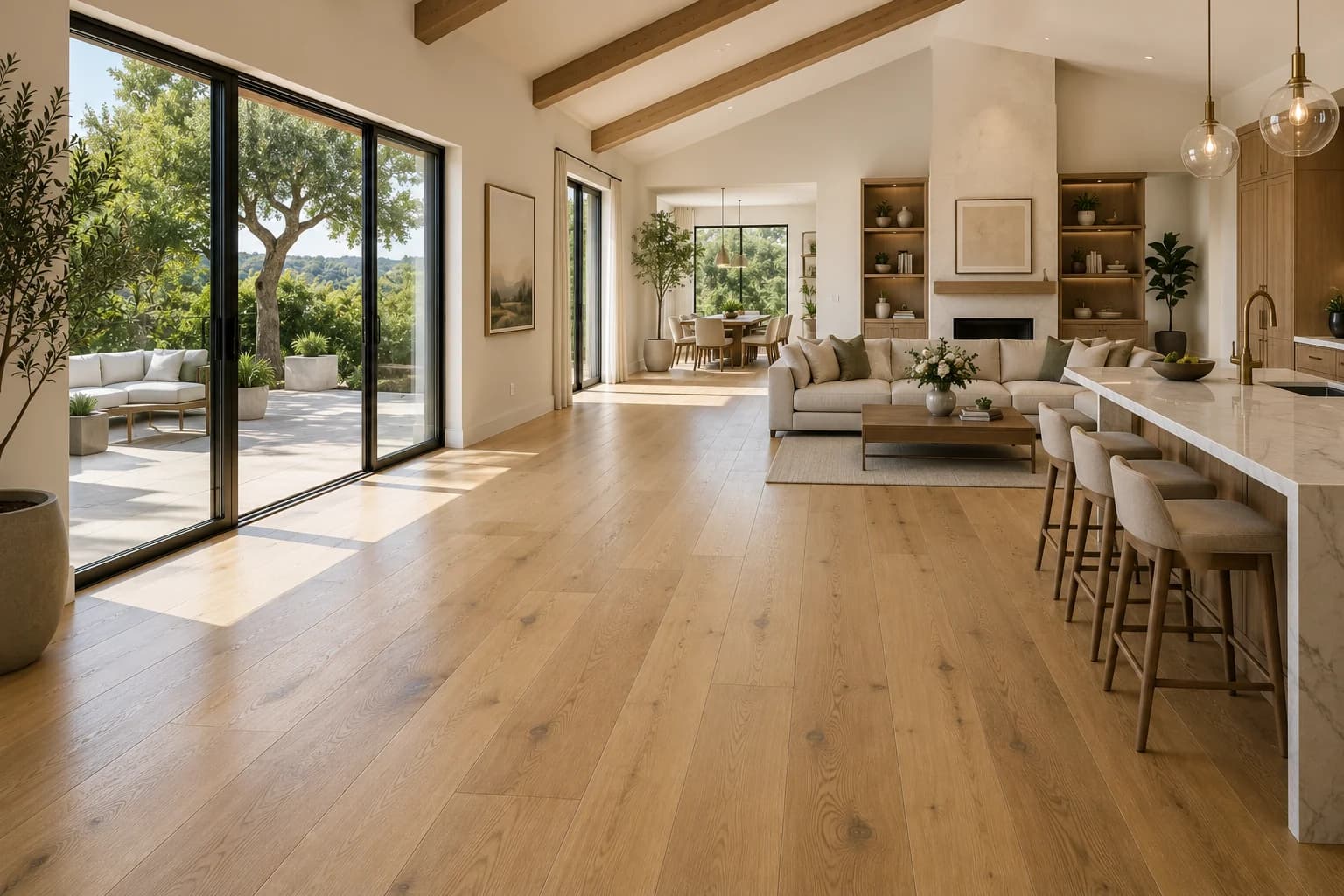
White Oak Hardwood
Great Room & Landing
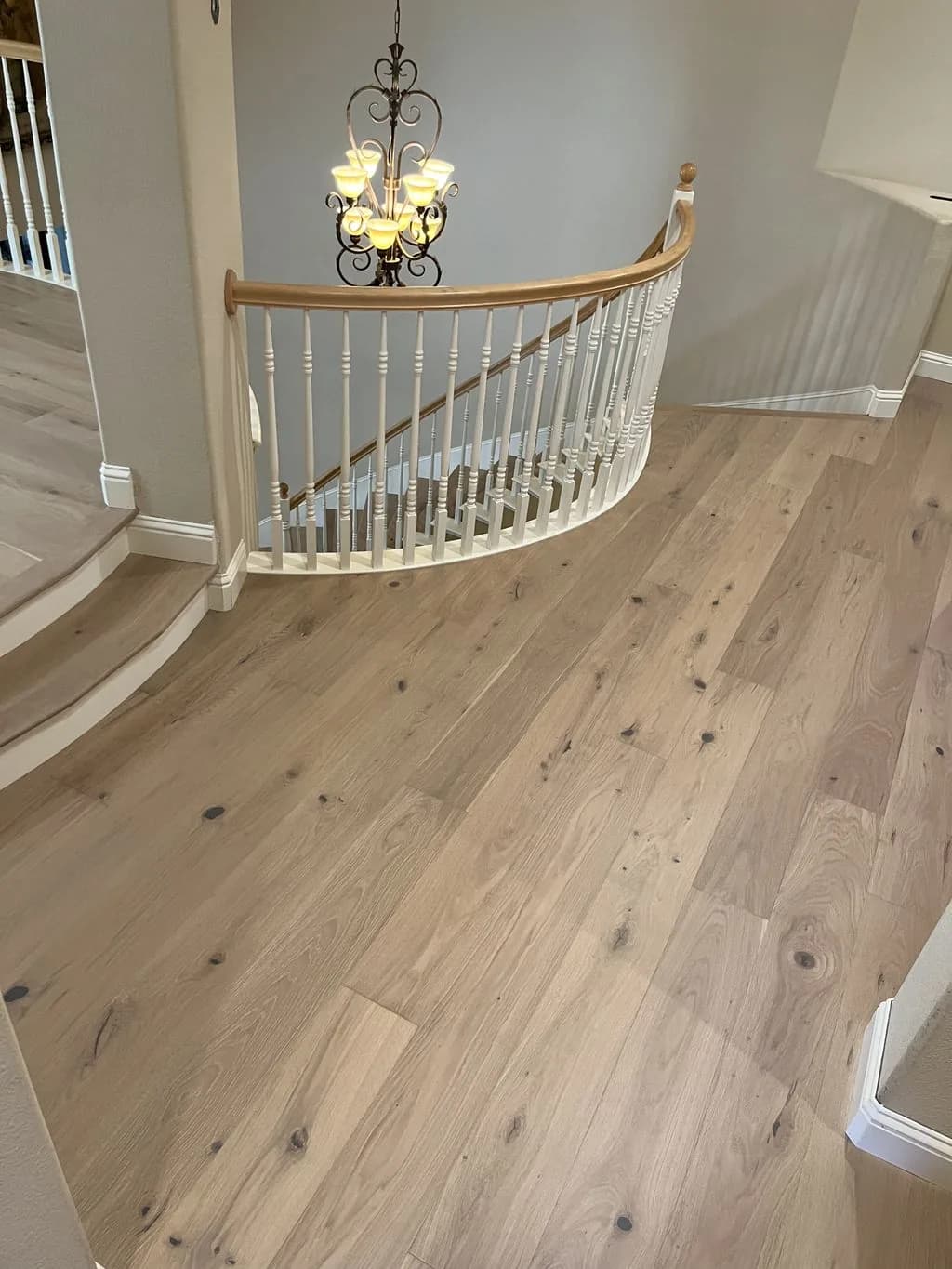
White Oak Hardwood
Staircase & Landing
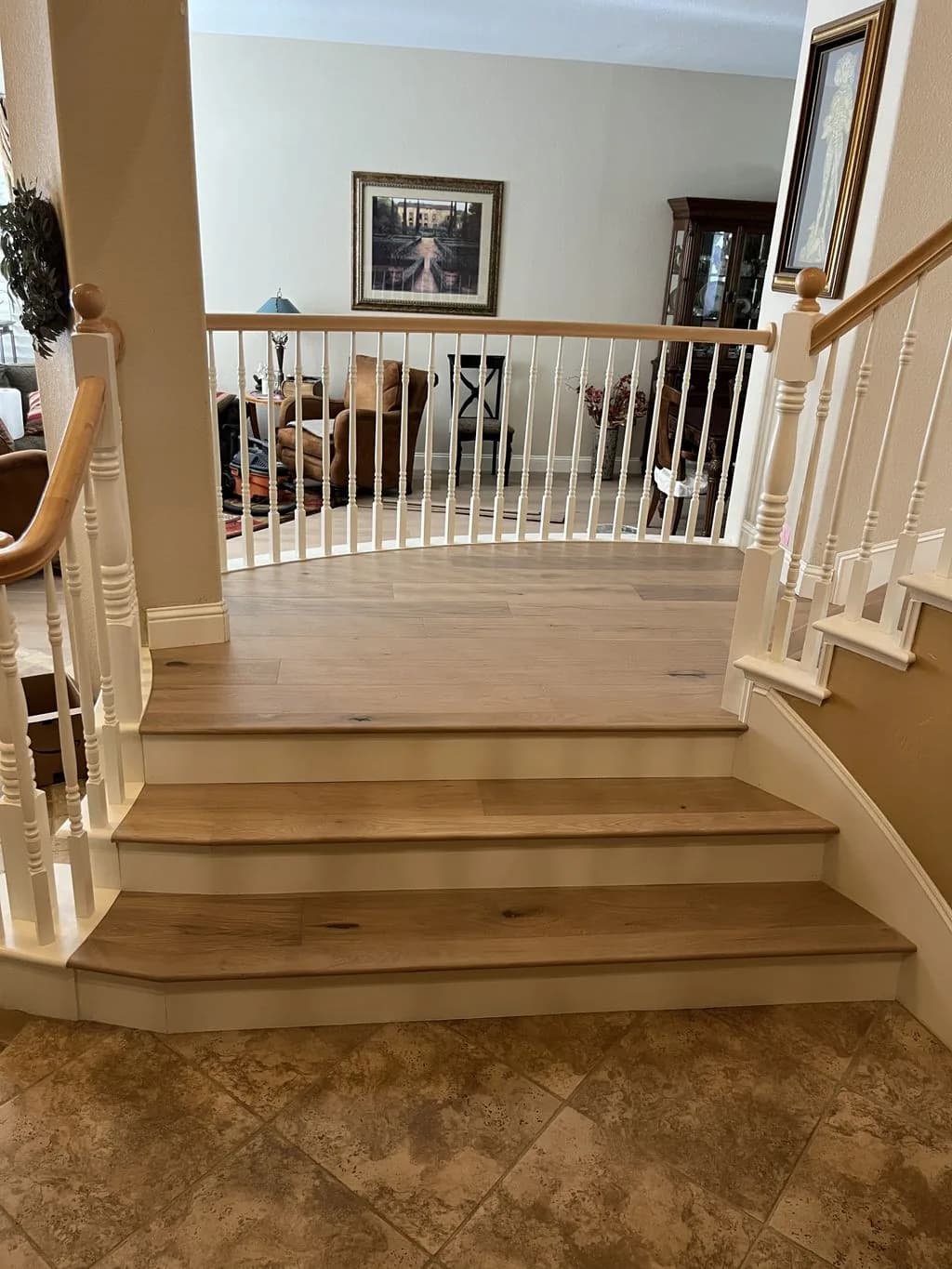
White Oak Hardwood
Curved Staircase
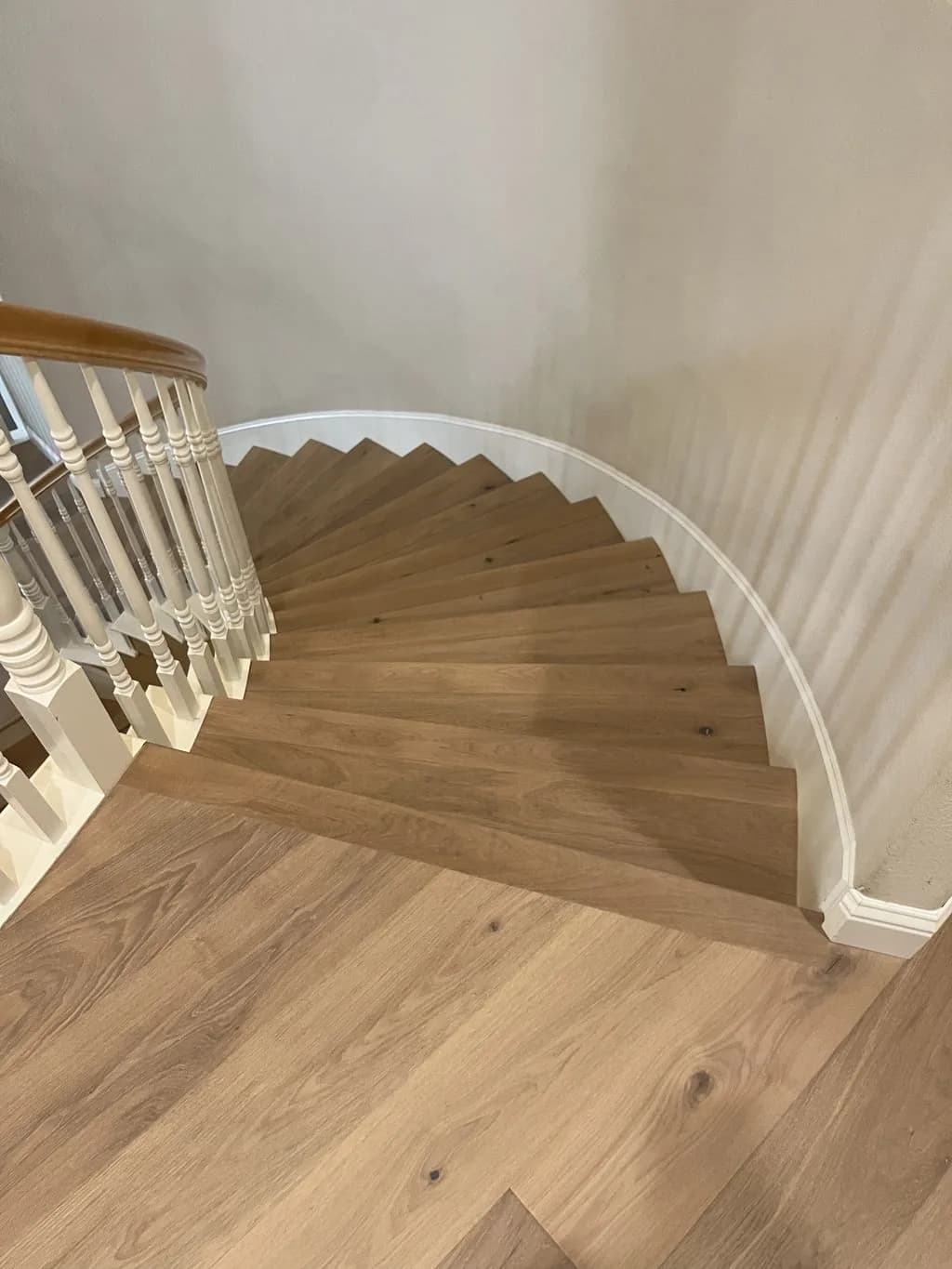
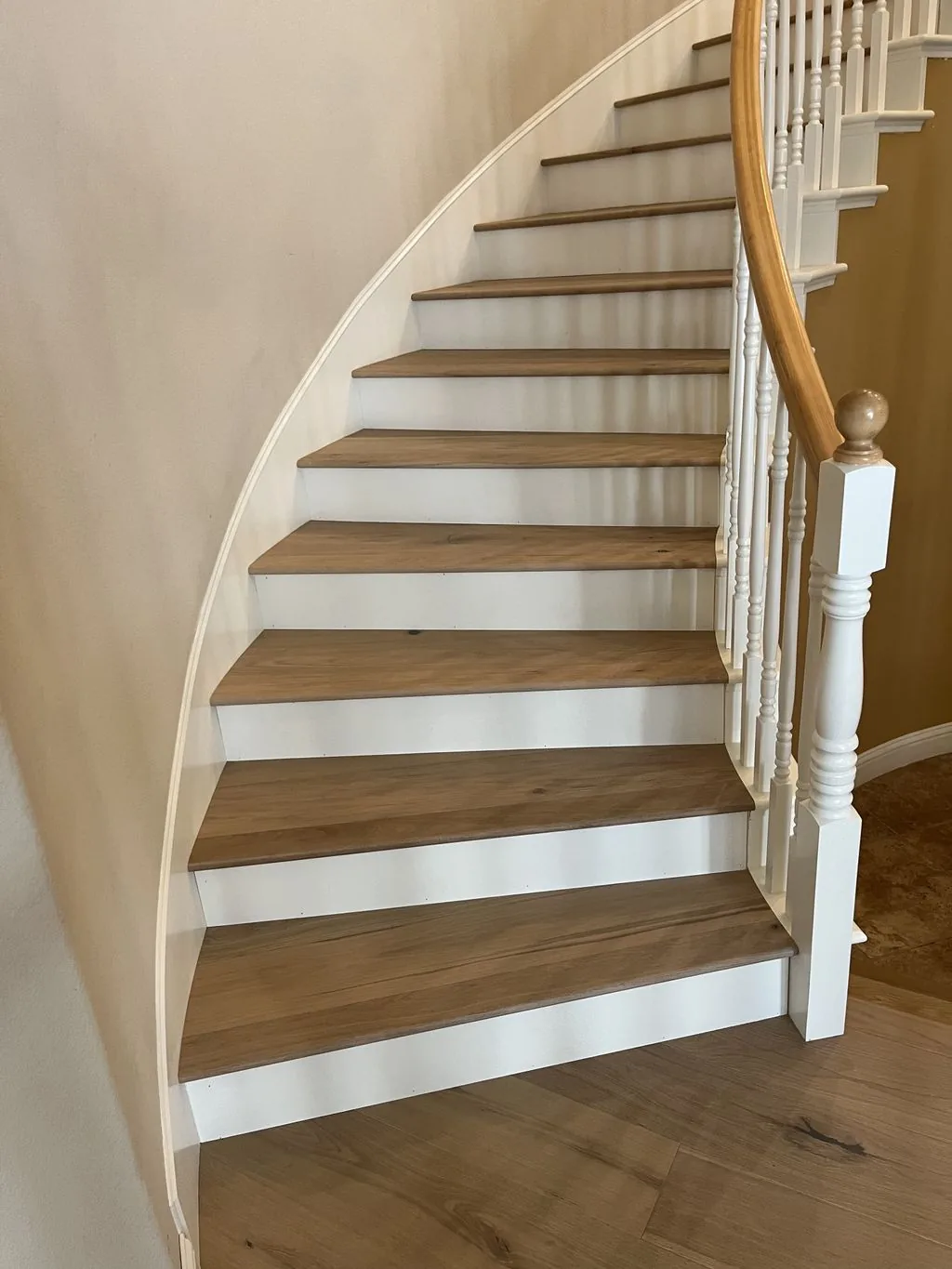
White Oak Hardwood
Stair Treads
Our Services
Flooring Services in Fremont
From hardwood to luxury vinyl, here's how we help Fremont homeowners upgrade their floors.
Hardwood Flooring
Solid oak, maple, and walkable heirloom-grade hardwood, precisely installed.
Hardwood Flooring in FremontEngineered Hardwood
Real-wood wear layers built for California's climate swings.
Engineered Hardwood in FremontLuxury Vinyl Plank
Waterproof, wood-look LVP for kitchens, baths, and busy households.
Luxury Vinyl Plank in FremontLaminate Flooring
Durable, high-style laminate at a friendly price point.
Laminate Flooring in FremontTile Flooring
Porcelain and ceramic tile set dead-level with crisp grout lines.
Tile Flooring in FremontFloor Installation
Full-service installation from subfloor prep to final baseboard.
Floor Installation in FremontFloor Refinishing
Sand, stain, and reseal tired hardwood back to new.
Floor Refinishing in FremontFloor Repair
Board swaps, water damage, squeaks, and seamless patch-ins.
Floor Repair in FremontLocal Considerations
What Fremont Homes Need From a Floor
Climate, home age, and foundation type all shape the right flooring choice in Fremont — here's what we account for.
Fremont wrote its own finish exemption into the 2025 code
Section 15.10.070 of the Fremont Municipal Code amends section 105.2 of the state building code, the list of exempt work, and its seventh building item reads 'Painting, papering, tiling, carpeting, cabinets (that do not have electrical, mechanical, or plumbing), countertop and similar finishes.' Cabinets qualify only when they have no electrical, mechanical or plumbing work. Tiling and carpeting are the only floor coverings in the item; its text has no word for wood, vinyl plank or laminate flooring, for sanding and refinishing, or for underlayment, subfloor and joist repair, and the city, not this page, decides whether any of those is a similar finish. The same section narrows who may hold a permit: 'Permits shall be issued only to State licensed Architect, Engineer, or contractor or their respective authorized representative but only to the extent and to the work the person is licensed by the State of California to do so,' with an exception for owners certifying an exemption under Business and Professions Code section 7044. The list took effect with the rest of the 2025 codes on January 1, 2026, under Chapter 15.05, which assigns administration to the building and safety division, and Fremont's residential code chapter points back to Chapters 15.05 and 15.10 for administration. The City's permit web pages were blocked to our requests, so no counter, portal, hours or fees appear here.
Five townships, two state landmarks, and no district lines
The City's history page, in a Wayback Machine copy from August 31, 2022, dates Washington Township to 1853 and says that in 1956 'five individual townships – Mission San Jose, Centerville, Niles, Irvington, and Warm Springs – came together' to form Fremont. It dates Mission San Jose, 'the 14th California Mission,' to 1797, and describes the Niles district as the earliest home of California's motion picture industry, a claim repeated here as the City's own. Mission San Jose is California Historical Landmark No. 334 in the Alameda County list kept by the state Office of Historic Preservation, at Mission Boulevard and Washington Boulevard and on the National Register as NPS-71000131, and records that the mission, 'except part of the padre's quarters, was completely destroyed in the earthquake of 1868.' Landmark No. 46, at the northeast corner of Niles Canyon Road and Mission Boulevard, marks the flour mill José de Jesús Vallejo built in 1856. Ardenwood is a later name: the Census geocoder places addresses there inside city limits, but it is not one of the five townships. Nor is the history page's Warm Springs District the same thing as the zoning code's Warm Springs Innovation District. Because no City source we read draws district boundaries, a district name is a street-level guide rather than a line, and the boundary deserves its own check: sampled points near the bay edge, a few miles from central Fremont, geocode to Newark and San Jose.
Fremont's historic rules define alteration as exterior change
Fremont's Historical Overlay District chapter says its standards 'are used to review exterior alterations on existing development as well as new construction and development,' and requires review for, among other items, 'Any alteration, addition or modification to the exterior of an existing structure or sign.' The Historic Resources chapter defines 'Alteration' as 'any exterior change or modification, through public or private action, to a building, structure, object or site,' and allows a protected feature to include 'interior areas of publicly accessible buildings or structures.' Most houses fall outside the overlay chapter by exemption: a single-family or two-family dwelling is not subject to it unless it is a register resource, a potential register resource, located in a part of an overlay district whose council-approved guidelines require review, or in a commercial district and being rebuilt. One duty does reach inside: the person in possession or control of a register resource, or of a property determined eligible for the California register, must keep in good repair the exterior and 'all interior portions thereof whose maintenance is necessary to prevent deterioration or decay of any exterior architectural feature.' The chapter's screening of buildings 50 years old or older applies to permits for demolition or relocation, not to remodels. The code text does not say which neighborhoods carry the overlay, and the City's historic districts page could not be read, so an owner confirms a property's status with the city.
A 1979 median year built, and a sizable share in large buildings
Fremont's roughly 82,000 housing units have a median year built of 1979, plus or minus one year, according to Census Bureau survey estimates covering 2020 through 2024. The 1970s and 1980s account for about 22 to 23 percent each, a difference smaller than the survey's margins; the 1960s about 17 percent; the 1950s about 11; the 1990s about 10; the 2000s and 2010s about 6 each; and 2020 or later under 3 percent. Together, 1950 through 1989 holds about 73 percent of units, and about 1 percent predate 1940. By building type, detached houses make up about 56 percent of units and attached single-unit homes about 14 percent, while buildings of 50 or more units hold about 15 percent, roughly the same share as all buildings of two to 49 units combined, and the estimates count several hundred mobile homes. Of occupied homes, about 61 percent are owner-occupied and about 39 percent rented, so some flooring projects involve a landlord as well as the occupant. The estimates count units; they describe the subfloor of none of them.
One fault name in the state zones, and a seismic ordinance aimed at apartments
Two California Geological Survey quadrangle maps carry Alquist-Priolo Earthquake Fault Zones into Fremont: Niles, released January 1, 1980, and Milpitas, released January 1, 1982, each with an earlier 1974 release. Every fault trace the survey maps inside city limits carries the name Hayward Fault, and sample points within those zones return Fremont from the Census geocoder, while the addresses sampled on the main streets of Niles, Centerville, Irvington, Mission San Jose and Warm Springs fall outside them. Their job is siting: they govern where new structures for human occupancy go, and they do not predict damage to an existing home. Fremont's amended building code lists among its soil-report requirements a 'Surface rupture evaluation by geologist licensed in California for all projects for human occupancy' in a Geologic Hazards Special Studies Zone, 'as mapped by the California Division of Mines and Geology,' and grants certain soil-report exemptions for additions to R-3 occupancies only where the 'Building site is not within seismic induced landslide hazard zone.' Nothing in that text ties either rule to interior flooring. The city's separate seismic chapter, 15.75, covers wood-frame multi-unit residential buildings constructed before January 1, 1978 whose ground floor holds parking or similar open space beneath at least one level, and sets 'voluntary retrofit requirements for existing condominiums and mandatory retrofit requirements for apartments.' It does not reach single-family houses, and it is not a measure of how Fremont homes are founded.
Soils, liquefaction, flood and fire maps differ at sampled points
Sampled in the USDA soil survey, six district points inside Fremont return five map units. At the Niles and Centerville points it is Yolo silt loam, with a shrink-swell index, representative linear extensibility, of 2.4 percent in every layer; at Irvington, Danville silty clay loam, 7.5 in a deeper layer; on the Mission San Jose slope, Azule clay loam, also 7.5 in one layer; at the Warm Springs point, 'Clear Lake clay, drained,' at 8.5 to 9.9; and near Ardenwood, Omni silty clay loam, drained. Those are representative values for mapped soil components, not tests of a lot. The state's liquefaction zones, released for the Newark quadrangle in 2003, the Niles and Milpitas quadrangles in 2004 and the Mountain View quadrangle in 2006, take in the sampled Niles Boulevard and Ardenwood points and not the Centerville, Irvington, Mission San Jose or Warm Springs addresses, and landslide zones reach two sampled points in the eastern hills. In such zones site investigation may be required for qualifying projects; the zones say nothing about how a particular house will fare. Fremont's code adopts FEMA's flood study with a revision dated December 21, 2018, as amended. On that map the sampled Niles address is mapped as a 0.2-percent annual chance flood hazard and the other four district addresses in Zone X, minimal hazard, while sampled bayfront points are Zone AE, a point on the Alameda Creek channel near Ardenwood is Zone A, and a point at Lake Elizabeth is Zone AH. The state's local responsibility area fire hazard layer, dated March 24, 2025, intersects Fremont with Very High, High and Moderate classes, and the city designates additional very high fire hazard severity zones, first approved by the council on December 4, 2007, on its own map dated June 26, 2025, so the state layer alone does not show every Very High area the city recognizes. Points are not maps; check the parcel.
September heat and February rain in town, humidity from two airports
NOAA's 1991–2020 normals for station USC00043244, listed as Fremont, at about 38 feet and inside city limits by Census geocoding, rank September first by average high, 78.3°F, then August at 78.2°F and July at 77.9°F over a 56.8°F low, while August has the warmest mean, 67.7°F. December has the lowest average low, 42.5°F, just under January's 42.6°F, and February the most precipitation, 3.17 inches, ahead of January's 3.00 and December's 2.97, in a 15.94-inch year. These are averages, not extremes. For comparison, Moffett Federal Airfield's normals give a 76.9°F July high and San Jose's 80.8°F. Humidity has no Fremont airport record, and the two nearest stations in this site's data read differently. NCEI's hourly July records for 2015 to 2024 put Moffett Federal Airfield, about 8.5 miles southwest, at 84.4 percent relative humidity for 4 AM readings and 60.2 percent for 4 PM, and San Jose International Airport, about 9.4 miles south, at 82.1 and 49.3 percent. For indoor reference this site uses Moffett: its 2015–2025 hourly observations, recomputed as air at 70°F holding their moisture fixed, put the heating-season median, November through April, near 40 percent relative humidity, with roughly 16 percent of those winter hours under 30 percent; the June-through-September median is near 61 percent, an upper bound for an air-conditioned house. None of these numbers is a measurement inside a Fremont house.
Local Resources & References
Helpful Fremont Resources
Authoritative local and industry references for permits, planning, and flooring standards.
- Fremont Municipal Code Ch. 15.10, Fremont Building Code — §15.10.070 amended CBC 105.2, item 7 'tiling, carpeting … and similar finishes,' and 105.3.3, who may be issued a permitCity of Fremont
- Fremont Municipal Code Ch. 15.05 — the building and safety division; 2025 codes in effect from January 1, 2026 (Ord. 13-2025)City of Fremont
- ACS 2020–2024 5-year, Fremont city (place 0626000) — tables B25001, B25034, B25035, B25024 and B25003: housing units, year built, building size and tenureUS Census
- 1991–2020 monthly normals, Fremont (USC00043244) — September highest average high, December lowest low, February wettestNOAA NCEI
- History (Wayback Machine snapshot, August 31, 2022; the live fremont.gov page returns 403 to automated requests) — Washington Township in 1853 and five townships forming Fremont in 1956City of Fremont
- Fremont Municipal Code Ch. 18.135, Historical Overlay District — review of exterior alterations; exemption for single-family and two-family dwellingsCity of Fremont
- California Historical Landmarks: Alameda County — No. 334 Mission San Jose and No. 46 Vallejo Flour MillCalifornia Office of Historic Preservation
- Alquist-Priolo Fault Traces (GIS layer) — Hayward Fault traces on the Niles and Milpitas quadranglesCalifornia Geological Survey
- Fremont Municipal Code Ch. 15.65 — CAL FIRE's 2025 fire hazard severity zones plus city-designated very high zones, map dated June 26, 2025City of Fremont
External links are provided for reference. Always confirm current requirements with the issuing agency.
Explore Flooring Services in Fremont
Good to Know
Frequently Asked Questions
Does Renaissance Floors serve Fremont?
Yes. We install and refinish flooring throughout Fremont and the surrounding Alameda County area. Call (916) 749-0272 for a free estimate.
What flooring services do you offer in Fremont?
We install hardwood, engineered wood, luxury vinyl plank, laminate, tile, and more in Fremont, plus floor refinishing, repair, and full-service installation. See the full list below.
Are you licensed to work in Fremont?
Yes. We hold CSLB C-15 license #1060673 (C-15 Flooring & Floor Covering) and carry insurance. We're based in Roseville, CA and serve Fremont and all of Greater Sacramento & Northern California.
How do I get a free flooring estimate in Fremont?
Call (916) 749-0272 or request an estimate online. We'll schedule a convenient in-home visit in Fremont, measure your space, and give you an honest, no-pressure quote.
Do I need a building permit to replace flooring in Fremont?
Fremont's code exempts tiling and carpeting by name and is silent on other floor coverings. Its amended exempt list reads 'Painting, papering, tiling, carpeting, cabinets (that do not have electrical, mechanical, or plumbing), countertop and similar finishes.' For hardwood, engineered wood, vinyl plank, laminate, refinishing or any subfloor or joist repair, ask the City's building and safety division before starting. The 2025 codes behind the list took effect January 1, 2026.
Which building code applies to a Fremont remodel now?
The 2025 California Building Standards Code as amended by Fremont, in effect since January 1, 2026. Chapter 15.05 of the municipal code sets that date and allows permits under the previous codes where complete working drawings, plans and specifications were filed before it, provided construction starts within 365 days of issuance. Title 15 likewise adopts the state's 2025 residential, existing-building and historical-building codes.
Who can be issued a building permit in Fremont?
A state-licensed architect, engineer or contractor, or an authorized representative, and only for work within that license. That limit is Fremont's own amendment to section 105.3.3 of the building code. The exception is an owner who certifies proof of exemption under California Business and Professions Code section 7044. A contractor's state license classification therefore bounds the permitted scope, so it's worth checking against the work planned.
When were most Fremont homes built?
Between 1950 and 1989, by Census estimates. American Community Survey estimates for 2020–2024 give a median year built of 1979, placing about 73 percent of Fremont's roughly 82,000 housing units in that 40-year span and about 1 percent from before 1940. The 1970s and 1980s shares, about 22 to 23 percent each, differ by less than the survey's margins. About 70 percent of units are single-unit homes, and about 15 percent are in buildings with 50 units or more.
Does Fremont's historic review cover the floors inside a house?
The code text we read is written around the exterior. Fremont's Historic Resources chapter defines 'Alteration' as 'any exterior change,' and a single-family or two-family dwelling is exempt from overlay-district review unless it is a register or potential register resource, or council-approved guidelines for that part of the district require review. One interior duty applies to register resources: keeping in good repair any interior portion needed to prevent decay of an exterior architectural feature.
Does the Hayward Fault cross Fremont?
Its state fault zones do. Every Alquist-Priolo fault trace the California Geological Survey maps inside Fremont is the Hayward Fault, in zones released in 1980 on the Niles quadrangle and 1982 on the Milpitas quadrangle. Those zones govern the siting of new construction and don't predict damage to any home; Fremont's code calls for a licensed geologist's surface rupture evaluation for projects for human occupancy in them. Sampled main-street addresses in the five districts fell outside the zones.
Is my Fremont home in a liquefaction or flood zone?
That turns on the exact parcel. State liquefaction zones take in sampled points on Niles Boulevard and near Ardenwood, but not the sampled main-street addresses in Centerville, Irvington, Mission San Jose or Warm Springs. On FEMA's map, sampled bayfront points are Zone AE, a point on the Alameda Creek channel near Ardenwood is Zone A and one at Lake Elizabeth is Zone AH, while the five district addresses are in Zone X. Points aren't maps, so check the address itself.
What climate and humidity figures apply to a Fremont home?
Fremont's own NOAA station, which geocodes inside the city, gives the 1991–2020 normals: September has the highest average high, 78.3°F, December the lowest average low, 42.5°F, and February the most rain, 3.17 of 15.94 inches a year. Humidity comes from airports: at 4 PM each July, 2015–2024, Moffett Federal Airfield, 8.5 miles away, averaged 60.2 percent and San Jose's airport, 9.4 miles away, 49.3 percent. Those are outdoor readings, not measurements inside a house.
Related
Keep Reading
Related pages: Floor Repair in Berkeley, Hardwood Flooring in Berkeley, Hardwood Flooring in Fremont, and Engineered Hardwood in Fremont.

Ready for Floors You'll Love?
Free, no-pressure flooring estimates throughout Fremont and Alameda County.