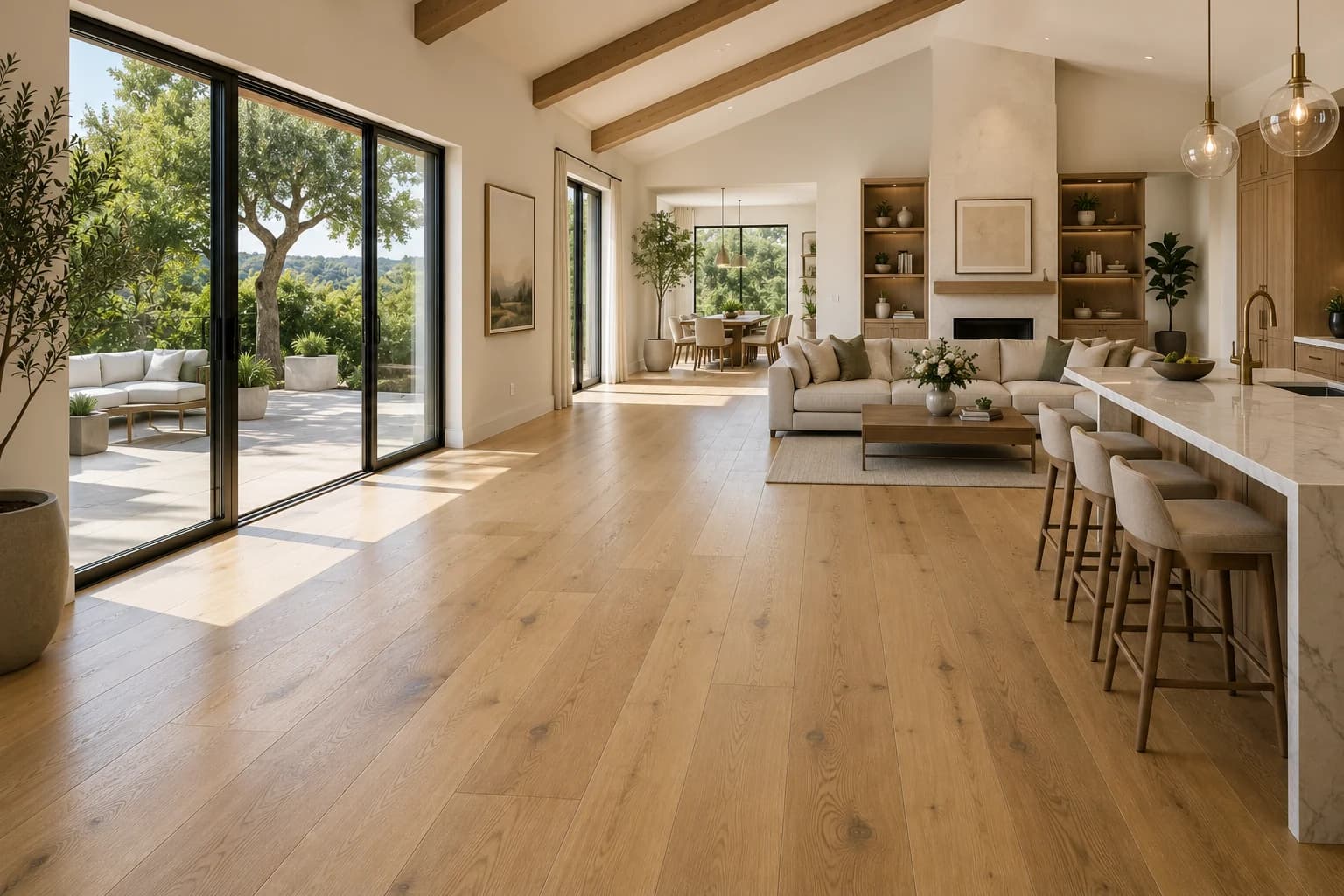
Service Area
Flooring in Berkeley
Renaissance Floors installs and refinishes hardwood, luxury vinyl, tile, and more for homeowners throughout Berkeley and the surrounding Alameda County area.
CSLB #1060673
Licensed & Insured
Est. 2019
Family-Owned
15+ Years
Hands-On Experience
5.0★ Rated
22 Reviews on Thumbtack
Local, Licensed, Accountable
Flooring Contractor Serving Berkeley
Berkeley is part of Alameda County, and it's one of the communities Renaissance Floors regularly works in. We're based in Roseville, CA and serve homeowners across Greater Sacramento & Northern California— from small refinishing jobs to full home installs. Every project starts with an honest look at your subfloor and your goals, followed by a clear, no-pressure estimate. There's no dispatched sales team and no guesswork: you work directly with the crew doing the installation, backed by our CSLB C-15 license and a workmanship warranty on every job.
From Oakland and Berkeley bungalows to Tri-Valley new builds, East Bay homes span a century of construction. We refinish beautiful original hardwood where it makes sense and install fresh floors where it doesn't.
Berkeley's code changed on January 1, 2026, and the line that covers most floor coverings came through intact. Ordinance No. 7,988-N.S., before the City Council for second reading on November 18, 2025, repeals and reenacts the city's building codes and adopts the 2025 California Building Code; permits submitted by December 31, 2025 stayed under the 2022 codes. The ordinance's list of work exempt from permit keeps a familiar item: 'Painting, papering, tiling, carpeting, cabinets, countertops and similar finish work.' The City's web page words it with 'counter tops' and adds a rule for everything else: 'If the work you are planning to do is not on the list below, you should assume that you will need a permit from the Permit Service Center.' Hardwood, engineered wood, vinyl plank, laminate and refinishing are not named on either list, and neither is subfloor work, so none of them should be assumed exempt. A zoning permit, the page adds, 'may be required, even if a building permit is not.'
Designation is the next thing to check, and Berkeley's preservation law is aimed mostly at the outside of a building. The City's Landmark Alterations page explains how 'to apply for a permit to make exterior alterations to a City Landmark, Structure of Merit, or Historic District,' a permit the Landmarks Preservation Commission must approve before a building permit is considered. In the municipal code, which we read in archived copies because its host blocked retrieval, review of 'major interior architectural features' is provided for a publicly owned landmark or structure of merit, and only 'if imposed by the designation.' The Elmwood is not a designated district. On June 4, 2026, a Commission motion to designate 28 buildings on College Avenue between Russell and Webster streets failed on a 4-5 vote, and the Commission's September 3, 2026 agenda lists an appeal of that denial to the City Council, with a hearing date expected in fall 2026.
The housing is old, and more than half of it is rented. By the Census Bureau's 2020–2024 five-year count, Berkeley has about 53,000 housing units, with a median year built of 1944, give or take three years. About 46 percent were built in 1939 or earlier, more than half before 1950 and about four in five before 1980, while only about 11 percent date from 2000 or later. That pre-1940 share is not a clear high among the places this site serves: San Francisco's estimate, 45.2 percent, falls within Berkeley's margin of error, and Clarksburg, with 111 housing units, has a higher point estimate. Detached houses make up about 40 percent of units and buildings with two or more units about 56 percent, and the same rounded share, 56 percent, of occupied homes are rented. Those are citywide estimates; they describe no single building.
Berkeley's NOAA station, at about 310 feet, puts the warmest month in September and the wettest in December. Its 1991–2020 normals give September the highest average high, 76.3°F, above July's 74.2°F, and December both the most precipitation, 5.32 inches of a 26.12-inch year, and the lowest average low, 43.2°F, a tenth of a degree below January. Livermore Municipal Airport, inland in the same county, averages an 87.7°F July high. One station cannot speak for both the hills and the shoreline. For humidity, the nearest airport station with an hourly record is Oakland International, about 11 miles away, where July readings from 2015 through 2024 average 85.2 percent relative humidity at 4 AM, falling to 65.3 percent by 4 PM, a 19.9-point drop against 45.2 points at Livermore. Heated to 70°F with its moisture unchanged, the airport's 2015–2025 observations put the November-to-April median near 42 percent.
The ground and the hills carry their own maps. The City's August 2025 hazard summary describes the Hayward Fault running along the Berkeley Hills on the city's northeastern edge, draws its surface fault rupture zone as a band about a quarter-mile wide along the base of the hills, and estimates that in a magnitude 6.9 earthquake on that fault over 600 buildings in Berkeley would be completely destroyed and over 20,000 more damaged. State Alquist-Priolo Earthquake Fault Zones, on California Geological Survey maps released in 1982, reach inside city limits. Toward the bay, sampled points on Fourth Street and at Aquatic Park fall inside the survey's liquefaction zone, while points downtown, in the Elmwood and in the North Berkeley flats do not. Uphill, the state's fire hazard severity zone layer dated March 24, 2025 puts Very High and High zones inside the city, and the flatland points checked are non-wildland.
Renaissance Floors is a licensed California C-15 flooring contractor (CSLB #1060673) based in Roseville. Before a Berkeley floor is priced, we work through what this page leaves open for one address: whether it falls inside Berkeley's boundary, whether the chosen material is one the exempt list actually names, whether the building carries a landmark or district designation, and what sits under the existing floor. Free in-home estimates and a workmanship warranty.
Local Coverage
Neighborhoods We Serve in Berkeley
From Elmwood to Southside, Renaissance Floors installs and refinishes floors across Berkeley.
Recent Work
A Sample of Our Craftsmanship
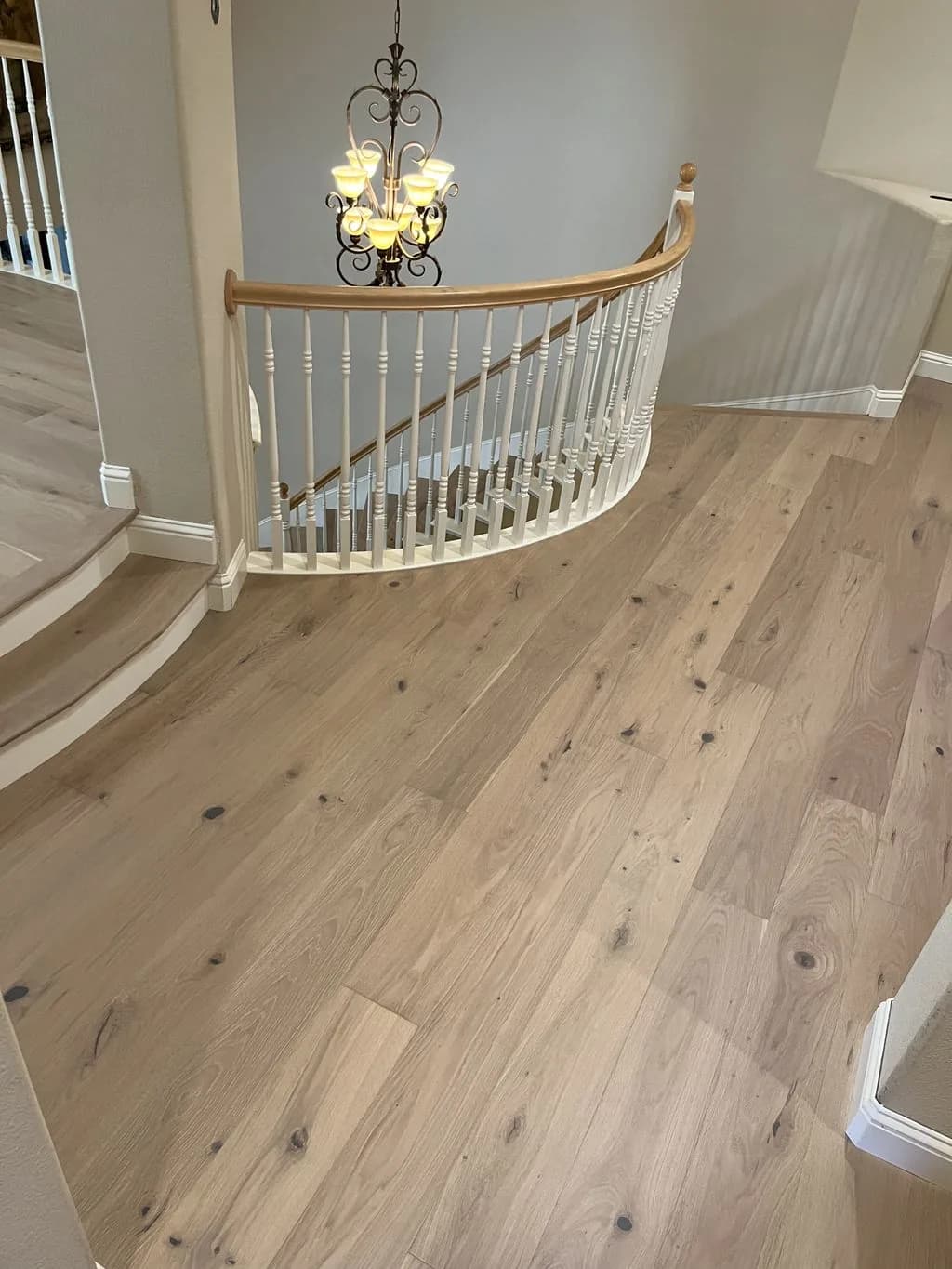
White Oak Hardwood
Great Room & Landing
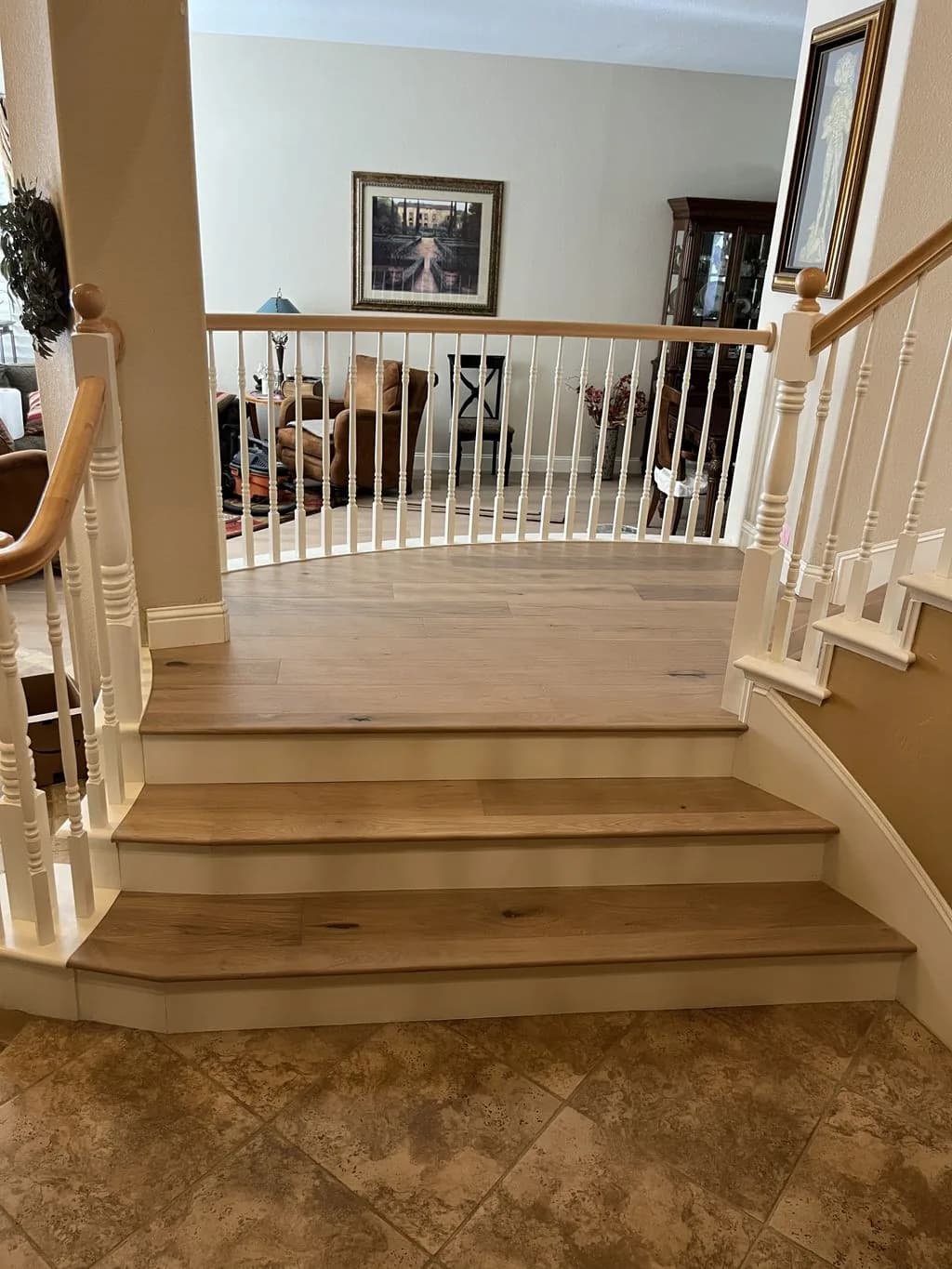
White Oak Hardwood
Staircase & Landing
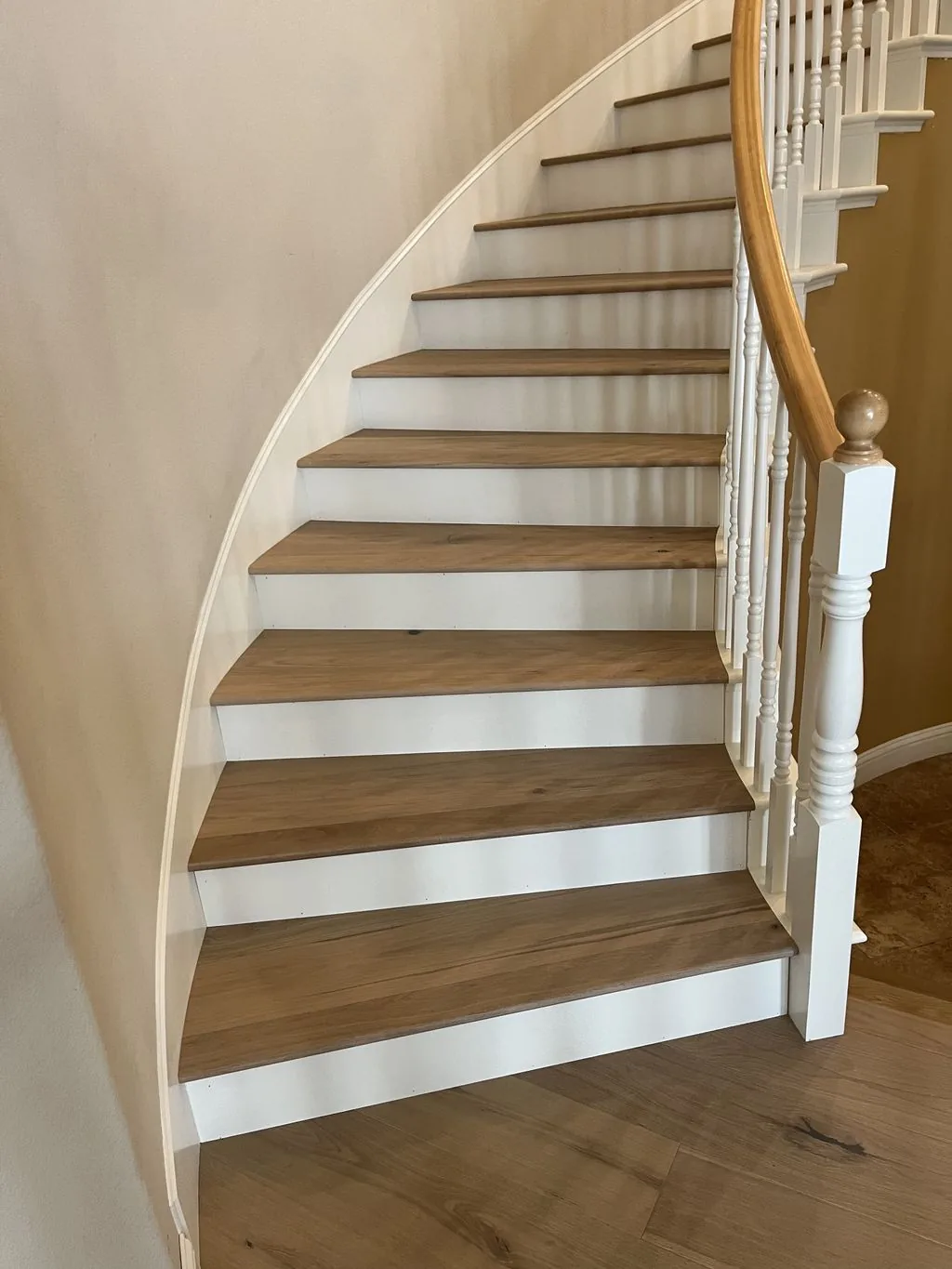
White Oak Hardwood
Curved Staircase
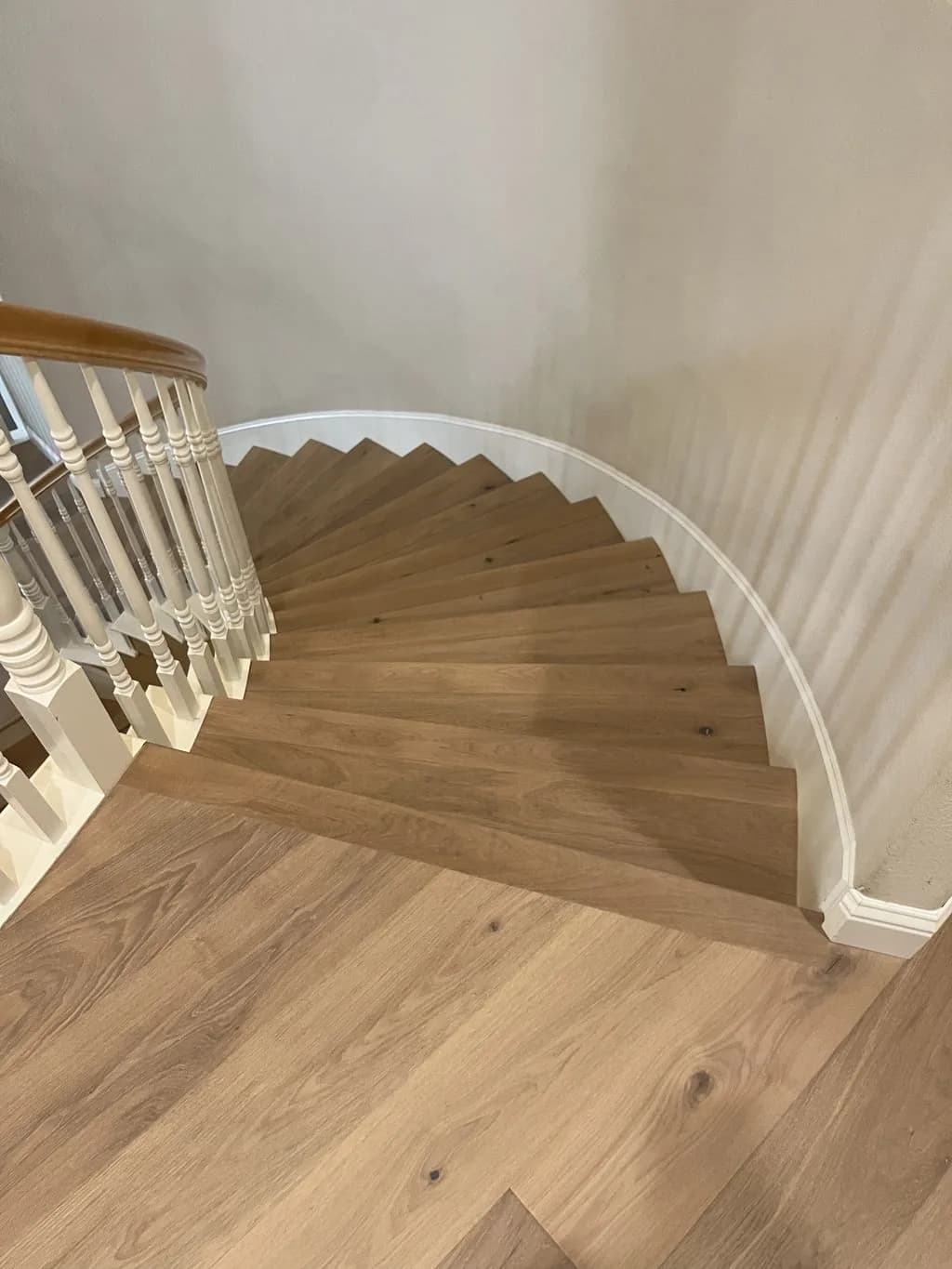
White Oak Hardwood
Stair Treads
Our Services
Flooring Services in Berkeley
From hardwood to luxury vinyl, here's how we help Berkeley homeowners upgrade their floors.
Hardwood Flooring
Solid oak, maple, and walkable heirloom-grade hardwood, precisely installed.
Hardwood Flooring in BerkeleyEngineered Hardwood
Real-wood wear layers built for California's climate swings.
Engineered Hardwood in BerkeleyLuxury Vinyl Plank
Waterproof, wood-look LVP for kitchens, baths, and busy households.
Luxury Vinyl Plank in BerkeleyLaminate Flooring
Durable, high-style laminate at a friendly price point.
Laminate Flooring in BerkeleyTile Flooring
Porcelain and ceramic tile set dead-level with crisp grout lines.
Tile Flooring in BerkeleyFloor Installation
Full-service installation from subfloor prep to final baseboard.
Floor Installation in BerkeleyFloor Refinishing
Sand, stain, and reseal tired hardwood back to new.
Floor Refinishing in BerkeleyFloor Repair
Board swaps, water damage, squeaks, and seamless patch-ins.
Floor Repair in BerkeleyLocal Considerations
What Berkeley Homes Need From a Floor
Climate, home age, and foundation type all shape the right flooring choice in Berkeley — here's what we account for.
The 2025 code ordinance kept tiling and carpeting on the exempt list
Ordinance No. 7,988-N.S. repeals and reenacts Berkeley's building, residential, electrical, mechanical, plumbing, energy and green building codes, adopting among them the 2025 California Building Code and California Existing Building Code. Its text says the chapter 'will become effective on January 1, 2026, and shall not apply to any building permit submitted by December 31, 2025,' and the minutes submitted for the Council's approval record the second reading passing with all ayes on November 18, 2025. The amended Section 105.2 lists as item 7 'Painting, papering, tiling, carpeting, cabinets, countertops and similar finish work.' The City's 'Work Exempt from Building Permits' page carries the same item and reminds owners that exempt work must still 'follow the California Building Standards Code and applicable Berkeley City laws and ordinances.' Unlike Oakland's list, Berkeley's also exempts some plumbing, including 'Removal and reinstallation of toilets, as long as the repairs do not involve or require the replacement or rearrangement of valves, pipes or fixtures,' which bears on a bathroom floor. Materials the list does not name, such as hardwood or vinyl plank, and work it does not mention, such as subfloor or joist repair, go to the Permit Service Center at 1947 Center Street, (510) 981-7500. When a permit is needed, the City's Building Permits page lists 'Installing smoke detectors (required for projects valued $1,000+).'
Landmark review is written around exteriors, and the Elmwood district failed
The City's Landmark Alterations page covers permits 'to make exterior alterations to a City Landmark, Structure of Merit, or Historic District,' approved by the Landmarks Preservation Commission before a building permit is considered and 'typically processed in 3 to 12 months' when complete. Its nomination page says 'Future exterior alterations to the resource will require prior approval.' In archived copies of Chapter 3.24, the review standards protect the 'exterior architectural features' of landmarks and of property in historic districts, and 'major interior architectural features' only for a publicly owned landmark where the designation specifies them. The standard for structures of merit says 'architectural features' without the word exterior, and the section setting out when approval is required was not available to us, so the owner of a designated building confirms scope with Commission staff. No Elmwood historic district has been designated. The Commission considered 28 properties on College Avenue between Russell and Webster streets, 'also known as the Elmwood'; on June 4, 2026 a motion to designate them as the College Avenue Historic Commercial District failed 4-5, and its September 3, 2026 agenda lists a Council appeal of that denial, with a hearing 'expected to be scheduled for fall 2026.' The proposal covered the commercial strip, not the surrounding residential streets. The City's list of designated resources, updated June 22, 2026, names four historic districts, among them Delaware Street, Civic Center and La Loma Park.
A 1944 median year built, and more renters than owners
The median year built for Berkeley's roughly 53,000 housing units is 1944, plus or minus three years, in the Census Bureau's 2020–2024 five-year estimates. The 1939-or-earlier category holds about 46 percent of them, far more than any later decade: the 1960s account for about 12 percent, the 1940s about 8, the 1950s and 1970s about 7 each, and everything built since 2000 about 11 percent combined. Other places this site serves come close. San Francisco's pre-1940 share, 45.2 percent, sits within Berkeley's margin of error, and Clarksburg's, 48.6 percent, is higher on a count of only 111 units with a margin of 49 on its 54 pre-1940 units. Detached single-family houses account for about 40 percent of units; buildings of two or more units hold about 56 percent, and buildings of twenty or more about a fifth. Of occupied homes, roughly 56 percent are rented. The numbers point to records worth pulling for a building, such as its permit history and whether it is designated; they don't show what lies under an old floor.
The Hayward fault at the foot of the hills, liquefaction zones toward the bay
Alquist-Priolo Earthquake Fault Zones drawn by the California Geological Survey on its Richmond, Oakland East and Oakland West quadrangle maps, released January 1, 1982, with earlier releases dated 1974, intersect Berkeley's city limits, and points sampled inside the zones geocode to the city. As the survey describes the state's rules, cities and counties require a geologic investigation 'to demonstrate that proposed buildings will not be constructed on active faults' before permitting a new project, and a zone that intersects a property being sold must be disclosed to the buyer. No City page we read describes how Berkeley administers that review. The City's own August 2025 hazard summary draws the surface fault rupture zone as a line 'approximately ¼-mile wide' along the base of the hills. The survey's liquefaction zones, released February 14, 2003, reach the bay side: sampled points on Fourth Street and at Aquatic Park are inside one, while points downtown, in the Elmwood and in the North Berkeley flats are not. Its earthquake-induced landslide zones from the same date reach the hills, and the City says landslide potential 'is high in the hill areas and along creek banks.' Both are zones that can require investigation for new development, not forecasts for a house. On FEMA's flood map, the named points sampled, from Fourth Street to the hills, are in Zone X, mapped as minimal flood hazard; Zones VE and AE sit mostly along the shoreline and marina, and one inland grid point falls in Zone AO with a mapped depth of 2 feet. A parcel check on FEMA's map settles a specific address.
Two fire-zone systems in the hills, and fire histories counted differently
Berkeley uses two maps. The state's fire hazard severity zone layer for local responsibility areas, dated March 24, 2025, shows Very High, High and Moderate zones intersecting the city, with Very High points in the hills and non-wildland classes at the flatland points checked. The City says that 'Following receipt of the State recommendation of very high fire hazard severity zones' it divided Berkeley into Fire Zones 1, 2 and 3, 'designated in order of ascending fire risk'; its wildfire protection plan identifies Zone 2 as the Hillside Overlay and Zone 3 as Panoramic Hill, and its hazard summary counts about 277 parcels, with 989 units in 261 buildings, in the Berkeley part of Panoramic Hill. The City requires buildings in fire zones 2 and 3 to use wildfire-resistant materials and construction methods under BMC 19.28.030 and 19.29.050, and its page on wildfire risk in the Berkeley Hills advises residents to 'Use fire-resistant building materials when building or completing major home improvement projects that require permits.' The fire history behind those rules depends on the source. The City's plan says 584 structures were destroyed in the 1923 Berkeley Fire, while a U.S. Fire Administration table lists 640. For the 1991 Tunnel Fire, the City's plan says the losses 'were predominately in Oakland,' and the federal report notes that many residents of the area used Berkeley as a mailing address although they were located within Oakland.
Seismic help comes from a City tax rebate and a state grant, and ZIP codes cross city lines
Berkeley's transfer tax rebate lets current or former owners of residential buildings, or of mixed-use buildings with at least two residential units, recover up to one-third of the City's base 1.5 percent transfer tax for voluntary seismic upgrades 'completed prior to or within a year of sale.' Eligible work includes 'Bolting of foundations to mudsills,' 'Bracing of cripple walls' and 'Work to repair or replace substandard foundations,' while work that 'facilitates future improvements or enlargement of existing spaces' does not qualify. Earthquake Brace + Bolt is not a City program: it was created by the California Residential Mitigation Program and is presently funded by the California Earthquake Authority's Loss Mitigation Fund and FEMA's Hazard Mitigation Grant Program, and the program's page says an EBB seismic retrofit 'is only done on wood-framed, pre-1980 homes with a raised foundation.' The City's own Retrofit Grants Program states that 'Single-family homes and duplexes are not eligible.' The 2025 Brace + Bolt list names nine ZIP codes under Berkeley, 94702 through 94705, 94707 through 94710 and 94720, and states that eligibility rests on ZIP code alone, with the city shown only for reference. A ZIP code is not a city limit. 94707 is also listed under Richmond and is used by unincorporated Kensington, Solano Avenue continues into Albany, and four of six points sampled near the hill ridge fell in Oakland or unincorporated Contra Costa County. Census geography places the UC Berkeley campus inside the city boundary, but whether City building permits apply on University land is not something we verified.
September warmth, December rain, and humidity measured 11 miles away
NOAA's 1991–2020 normals for station USC00040693, listed as Berkeley, at about 310 feet, give the highest average high to September, 76.3°F, then August at 74.7°F, ahead of July's 74.2°F over a 53.2°F low. December has the lowest average low, 43.2°F, and the most precipitation, 5.32 inches, followed by February at 5.12 and January at 4.84, out of 26.12 inches a year; July averages 0.01 inch. The station is about two miles from the Census Bureau's interior reference point for Berkeley, and a single station describes neither the hills nor the shore. For humidity, the nearest airport station with an hourly record is Oakland International, about 10.8 miles from that point. In NCEI's hourly data for July, 2015 through 2024, the 4 AM readings there average 85.2 percent relative humidity and the 4 PM readings 65.3 percent, 19.9 points apart; at Livermore Municipal Airport the same two hours are 45.2 points apart. That is outdoor air at the bay shore, not a Berkeley room. As an indoor reference, the Oakland airport's 2015–2025 observations, recalculated at 70°F with the moisture held constant, put the November-to-April median near 42 percent, with about one of those hours in seven under 30 percent, and the June-to-September median near 59 percent. For wood, the reading that counts is the one taken in the room that will receive the floor.
Local Resources & References
Helpful Berkeley Resources
Authoritative local and industry references for permits, planning, and flooring standards.
- Work Exempt from Building Permits — 'Painting, papering, tiling, carpeting, cabinets, counter tops, and similar finish work'; for unlisted work, 'assume that you will need a permit'City of Berkeley
- City Council, November 18, 2025, Item 28: Adoption of Berkeley Building Codes (Ordinance No. 7,988-N.S.) — 2025 codes effective January 1, 2026; Section 105.2 item 7City of Berkeley
- Landmark Alterations — Structural Alteration Permits for 'exterior alterations' to landmarks, structures of merit and historic districtsCity of Berkeley
- Landmarks Preservation Commission Action Minutes, June 4, 2026 — Elmwood/College Avenue historic district motion, vote 4-5City of Berkeley
- ACS 2020–2024 5-year, Berkeley city (place 0606000) — tables B25001, B25034, B25035, B25024 and B25003: housing units, age, building size and tenureUS Census
- 1991–2020 monthly normals, Berkeley (USC00040693) — September warmest, December wettestNOAA NCEI
- Berkeley's Hazards (text version of the Hazard StoryMap, August 2025) — Hayward Fault rupture zone, 6.9 scenario, liquefaction, landslide and fire zonesCity of Berkeley
- Alquist-Priolo Earthquake Fault Zones — siting, geologic investigation and disclosureCalifornia Geological Survey
- The Earthquake Brace + Bolt Retrofit — created by CRMP, funded by the CEA and FEMA; pre-1980 wood-framed homes with a raised foundationCalifornia Residential Mitigation Program
External links are provided for reference. Always confirm current requirements with the issuing agency.
Explore Flooring Services in Berkeley
Good to Know
Frequently Asked Questions
Does Renaissance Floors serve Berkeley?
Yes. We install and refinish flooring throughout Berkeley and the surrounding Alameda County area. Call (916) 749-0272 for a free estimate.
What flooring services do you offer in Berkeley?
We install hardwood, engineered wood, luxury vinyl plank, laminate, tile, and more in Berkeley, plus floor refinishing, repair, and full-service installation. See the full list below.
Are you licensed to work in Berkeley?
Yes. We hold CSLB C-15 license #1060673 (C-15 Flooring & Floor Covering) and carry insurance. We're based in Roseville, CA and serve Berkeley and all of Greater Sacramento & Northern California.
How do I get a free flooring estimate in Berkeley?
Call (916) 749-0272 or request an estimate online. We'll schedule a convenient in-home visit in Berkeley, measure your space, and give you an honest, no-pressure quote.
Does replacing a floor in Berkeley need a building permit?
It depends on the material and the scope. Berkeley's exempt list, carried into its 2025 code ordinance, names 'Painting, papering, tiling, carpeting, cabinets, counter tops, and similar finish work.' It doesn't name hardwood, engineered wood, vinyl plank, laminate or subfloor repair, and the City's page says that for unlisted work 'you should assume that you will need a permit.' A zoning permit may be required even when a building permit is not, so confirm with the Permit Service Center at (510) 981-7500.
Is the Elmwood a historic district now?
No. On June 4, 2026, Berkeley's Landmarks Preservation Commission voted 4-5 on a motion to designate 28 buildings on College Avenue between Russell and Webster streets, so the motion failed. The Commission's September 3, 2026 agenda lists an appeal of that denial to the City Council, with a hearing expected in fall 2026, so the status could change. The proposal covered the College Avenue commercial strip, not the residential streets of the Elmwood.
My Berkeley house is a landmark. Will the City review new interior floors?
The code text we read reserves interior review for publicly owned properties. The City's Landmark Alterations page describes permits for 'exterior alterations,' and archived copies of the ordinance provide review of 'major interior architectural features' only for publicly owned landmarks or structures of merit, where the designation imposes it. The standard for structures of merit doesn't use the word exterior, and we couldn't read the section defining when approval is required, so confirm your property's designation terms with Commission staff.
I'm in Kensington or on the Albany end of Solano Avenue. Does Berkeley issue my permit?
Not if the parcel is outside Berkeley city limits. The Census geocoder places a Kensington address with a 94707 ZIP code in unincorporated Kensington and an address at the Albany end of Solano Avenue in the City of Albany. ZIP 94707 is also listed under Richmond on the state's Brace + Bolt list, and most points sampled near the hill ridge fell in Oakland or unincorporated Contra Costa County. A 94707 or Berkeley mailing address is not proof of jurisdiction; check the parcel first.
Is Berkeley on the Hayward fault?
Yes. The City's hazard summary describes the Hayward Fault running along the Berkeley Hills on the city's northeastern edge, with a surface rupture zone about a quarter-mile wide at the base of the hills, and estimates that a magnitude 6.9 earthquake on it would completely destroy over 600 Berkeley buildings. State Alquist-Priolo fault zones reach inside city limits; there, new projects need a geologic investigation before cities permit them, and sellers must disclose the zone.
Is there help paying for seismic work on an older Berkeley home?
Yes, from two sources. Berkeley rebates up to one-third of its base 1.5 percent transfer tax for voluntary seismic work such as bolting foundations to mudsills or bracing cripple walls, completed before or within a year of sale. The state's Earthquake Brace + Bolt program, created by the California Residential Mitigation Program, lists nine ZIP codes under Berkeley and only retrofits wood-framed, pre-1980 homes with a raised foundation. The City's own retrofit grants exclude single-family homes and duplexes.
How old is Berkeley's housing, and how much of it is rented?
Old, and more than half rented. The Census Bureau's 2020–2024 estimates put the median year built at 1944, with about 46 percent of roughly 53,000 units from 1939 or earlier and only about 11 percent from 2000 on. About 56 percent of occupied homes are rented, and a similar share of units sit in buildings with two or more units. San Francisco's pre-1940 share falls within Berkeley's margin of error, so Berkeley's is not a clear high for the region this site serves.
What humidity figures apply to a Berkeley home?
The nearest hourly record is outdoor air at Oakland International Airport, about 11 miles away. There, July's 4 AM readings averaged 85.2 percent relative humidity and its 4 PM readings 65.3 percent over 2015–2024, a 19.9-point swing against 45.2 at Livermore Municipal Airport. Recalculated at 70°F with its moisture unchanged, the airport's air has a November-to-April median near 42 percent. Station figures aren't room readings, so a wood floor is judged by measurements in the room that receives it.
Related
Keep Reading
Related pages: East Bay, Floor Installation in Berkeley, Hardwood Flooring in Berkeley, and Engineered Hardwood in Berkeley.

Ready for Floors You'll Love?
Free, no-pressure flooring estimates throughout Berkeley and Alameda County.