Service Area
Flooring in Walnut Creek
Renaissance Floors installs and refinishes hardwood, luxury vinyl, tile, and more for homeowners throughout Walnut Creek and the surrounding Contra Costa County area.
CSLB #1060673
Licensed & Insured
Est. 2019
Family-Owned
15+ Years
Hands-On Experience
5.0★ Rated
22 Reviews on Thumbtack
Local, Licensed, Accountable
Flooring Contractor Serving Walnut Creek
Walnut Creek is part of Contra Costa County, and it's one of the communities Renaissance Floors regularly works in. We're based in Roseville, CA and serve homeowners across Greater Sacramento & Northern California— from small refinishing jobs to full home installs. Every project starts with an honest look at your subfloor and your goals, followed by a clear, no-pressure estimate. There's no dispatched sales team and no guesswork: you work directly with the crew doing the installation, backed by our CSLB C-15 license and a workmanship warranty on every job.
From Oakland and Berkeley bungalows to Tri-Valley new builds, East Bay homes span a century of construction. We refinish beautiful original hardwood where it makes sense and install fresh floors where it doesn't.
Walnut Creek grew up where two roads crossed. The Walnut Creek Historical Society records that by the late 1850s the settlement was known as 'The Corners,' for its place where the road from Pacheco to San Jose met the road from Oakland to Antioch, and on October 21, 1914, it was incorporated as the eighth city in Contra Costa County. The postwar decades remade it. The Broadway Shopping Center opened in 1951 as the county's first major retail center, the city's creeks were put underground in the late 1950s — including the namesake creek that ran just east of downtown, parallel to Main Street — and the freeway opened in 1960. Today the city covers about 19.8 square miles of land and about 70,000 people, and most of its housing dates from that long expansion.
The Census Bureau's current five-year estimates count roughly 34,000 housing units and put the median year built at 1974. The 1970s alone account for about 29 percent of them and the 1960s for about 23 percent; roughly three in four were built between 1950 and 1989, and only about 2 percent before 1940. Just as telling is the shape of that housing. Only about 37 percent of units are detached single-family houses, about 47 percent are in buildings of two or more units, and about one in four is in a building of twenty units or more, while renters occupy more than a third of occupied homes, so some projects also run through a landlord. A meaningful share of Walnut Creek flooring work happens in a unit above someone else's ceiling, where sound rules and association rules can matter as much as the material.
Much of that shared housing is in Rossmoor, and Rossmoor is inside the city, not beside it. U.S. Census geography places Rossmoor's main address, 1001 Golden Rain Road, within Walnut Creek city limits, and Rossmoor's own Alterations Guide tells residents that most alterations require a permit from the City of Walnut Creek. The community opened in the mid-1960s as Leisure World of Walnut Creek on the former Dollar family estate, and at least one designated occupant of each home must be 55 or older. It is organized into 23 homeowners associations called Mutuals: three co-operative Mutuals with 3,368 manors, nineteen condominium Mutuals with 3,245, and one single-family Mutual with 63 — 6,676 homes in all, a large share of the city's housing.
For flooring, the most important fact about Rossmoor is that there is no single Rossmoor rule. Each Mutual publishes its own, and the published hard-surface policies differ sharply. First Walnut Creek Mutual, a co-op of 1,878 manors, names kitchens, bathrooms, extended entryways and hallways as the upstairs areas where it will approve flooring rated above IIC 40 on manufacturer's or industry test results. Walnut Creek Mutual No. Seventy requires hard flooring on second and third floors to be a floating floor rated IIC 74 or higher, with IIC 50 on the first floor. Mutual No. Forty allows hard surfaces in upper units only in entries, kitchens, bathrooms, laundry rooms and lofts over the unit's own garage. We could not retrieve the current flooring rules for Second Mutual (1,387 manors) or Third Mutual (1,112), so we do not assume either one follows the others.
The city's own permit rule deserves a careful reading, too. The Walnut Creek Building Division's published list of work that does not require a building permit names 'Painting, papering and similar finish work' and does not mention flooring, so whether a particular floor project is exempt is a question for Building staff rather than something to assume. The climate is inland. None of Walnut Creek's own weather stations carries current NOAA normals; the nearest station that does, Concord Buchanan Field about six miles north, averages an 88.0°F July high and 16.05 inches of rain a year, against 71.6°F and 22.61 inches at the Oakland Museum station on the bay. And the ground varies from place to place: USDA soil survey data maps high shrink-swell clays under parts of downtown and at Rossmoor's entrance, and sandy loam around Northgate High School.
Renaissance Floors is a licensed California C-15 flooring contractor (CSLB #1060673) based in Roseville. For a Walnut Creek project we start with the building rather than the sample board: which Mutual or association governs the home and what its current policy requires, whether there is a neighbor below, what the city says about the scope, and what the slab or subfloor underneath is doing. Free in-home estimates, straight answers about what a building's rules allow, and a workmanship warranty.
Local Coverage
Neighborhoods We Serve in Walnut Creek
From Rossmoor to Northgate, Renaissance Floors installs and refinishes floors across Walnut Creek.
Recent Work
A Sample of Our Craftsmanship
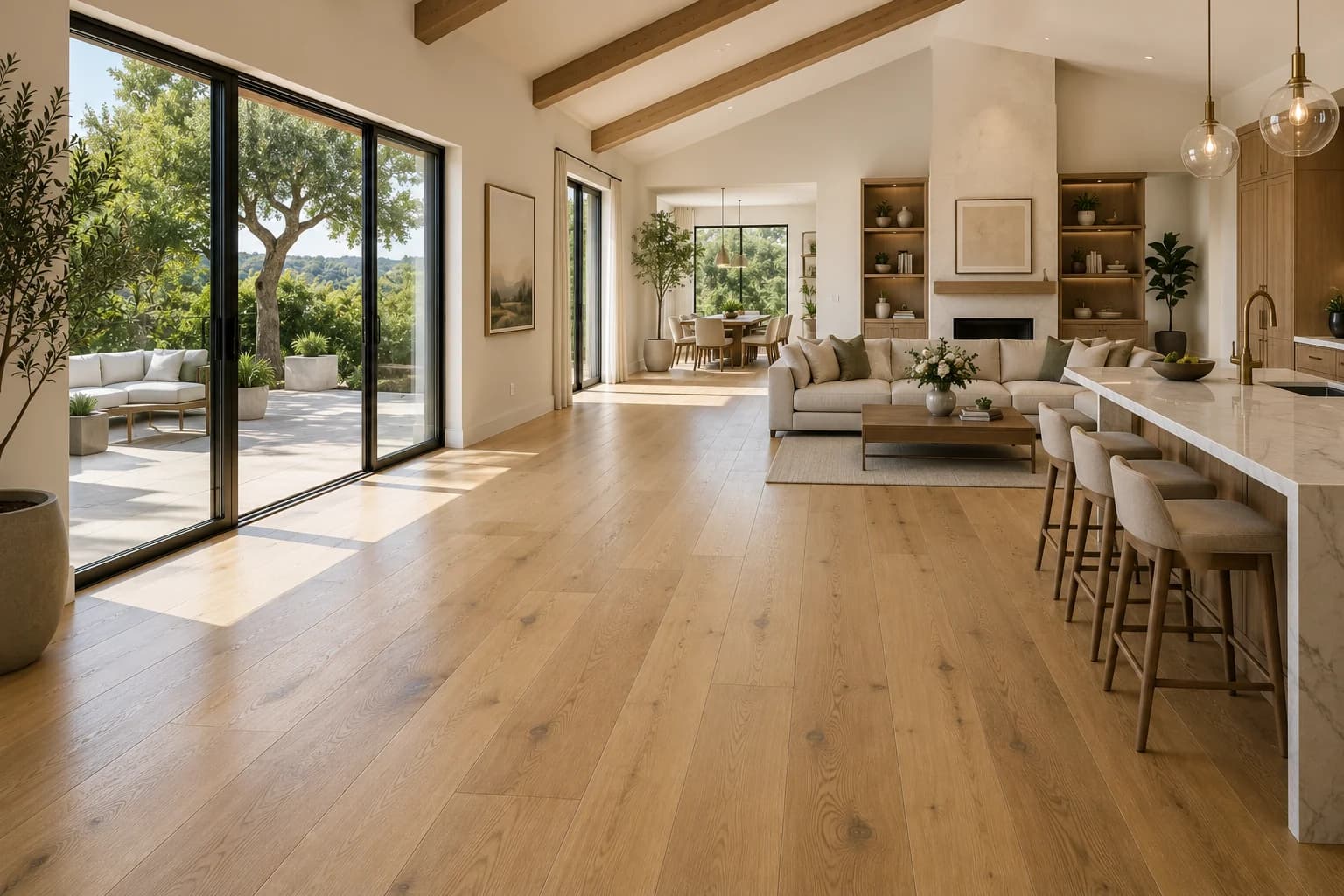
White Oak Hardwood
Great Room & Landing
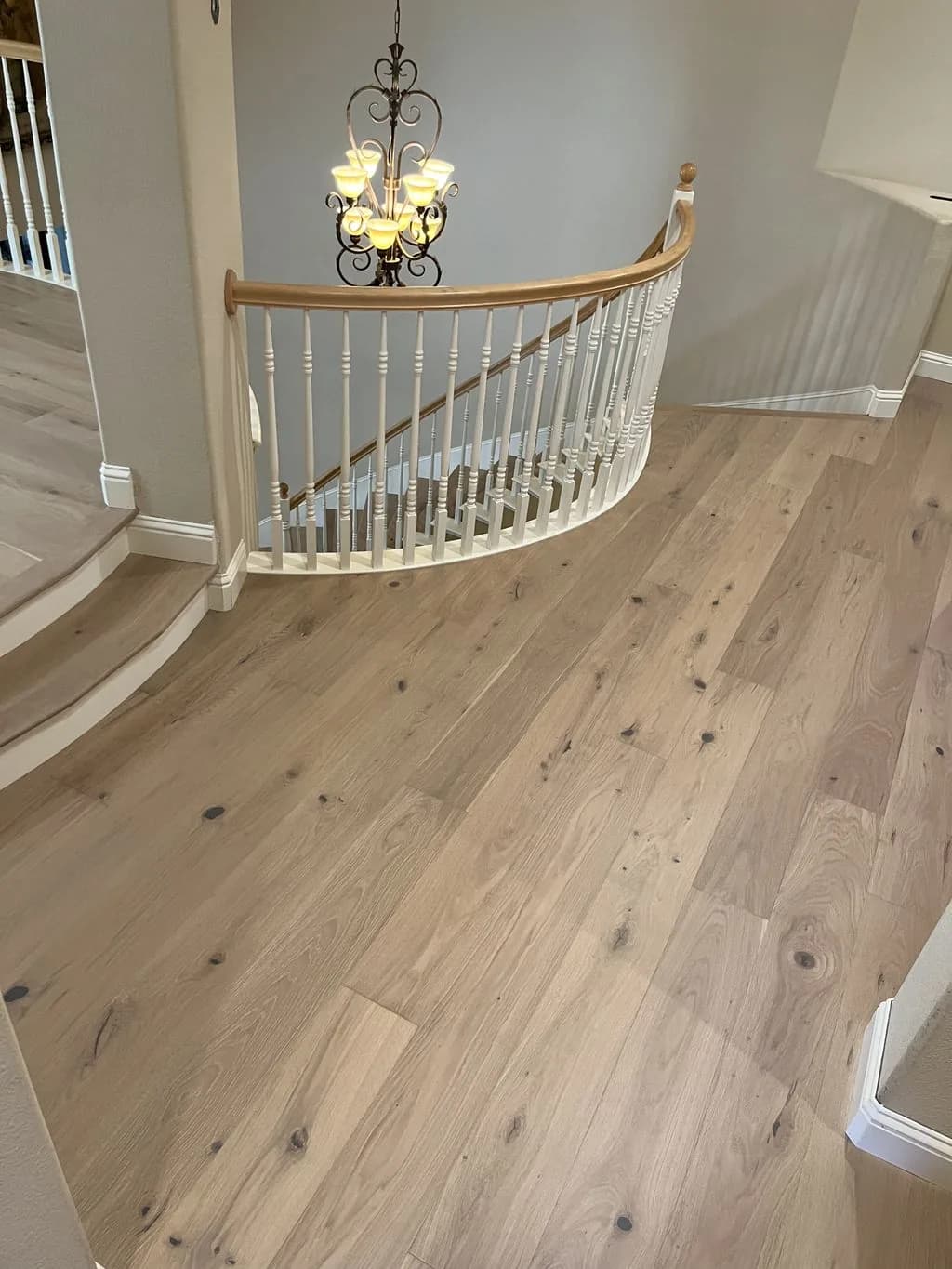
White Oak Hardwood
Staircase & Landing
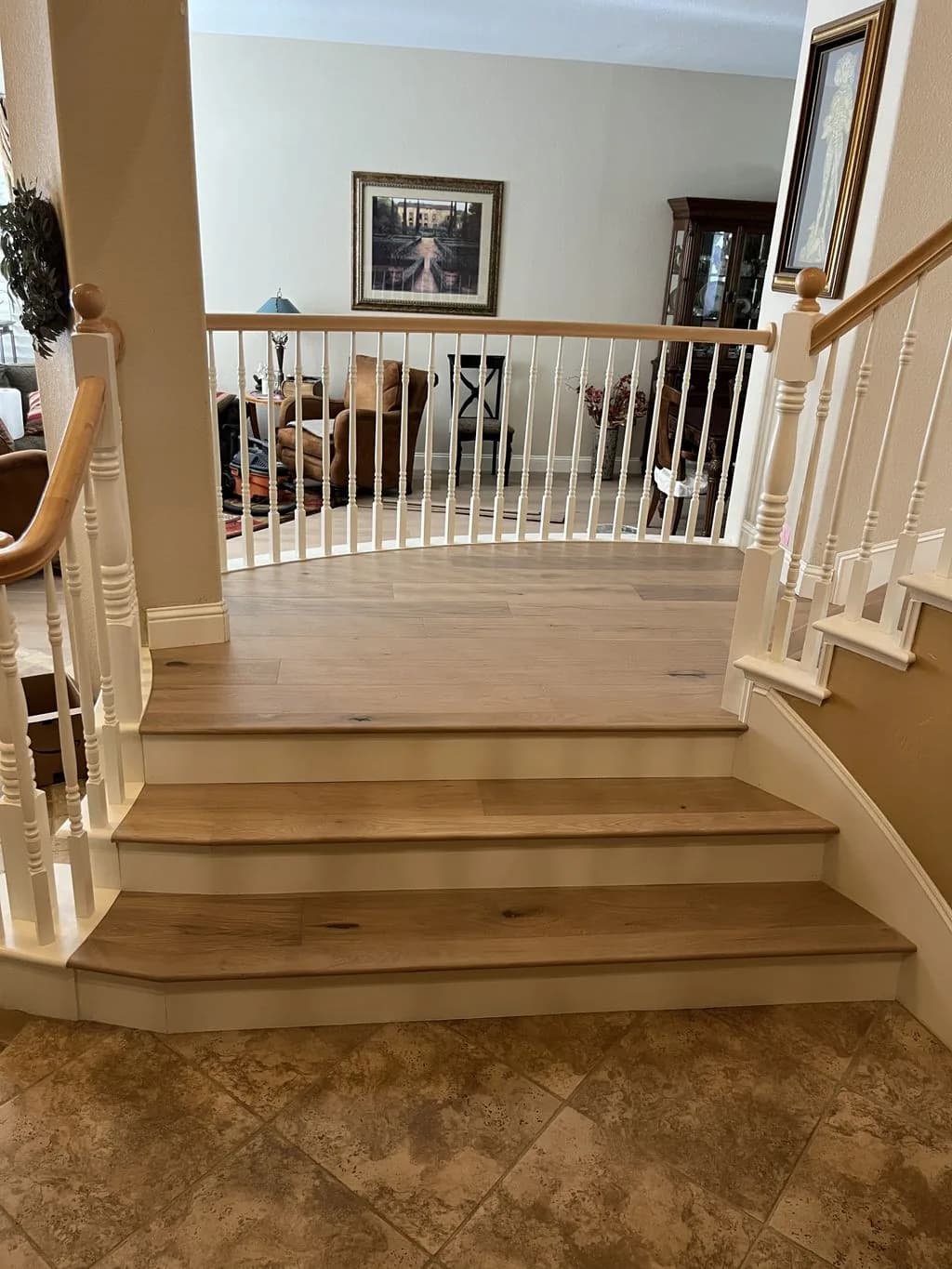
White Oak Hardwood
Curved Staircase
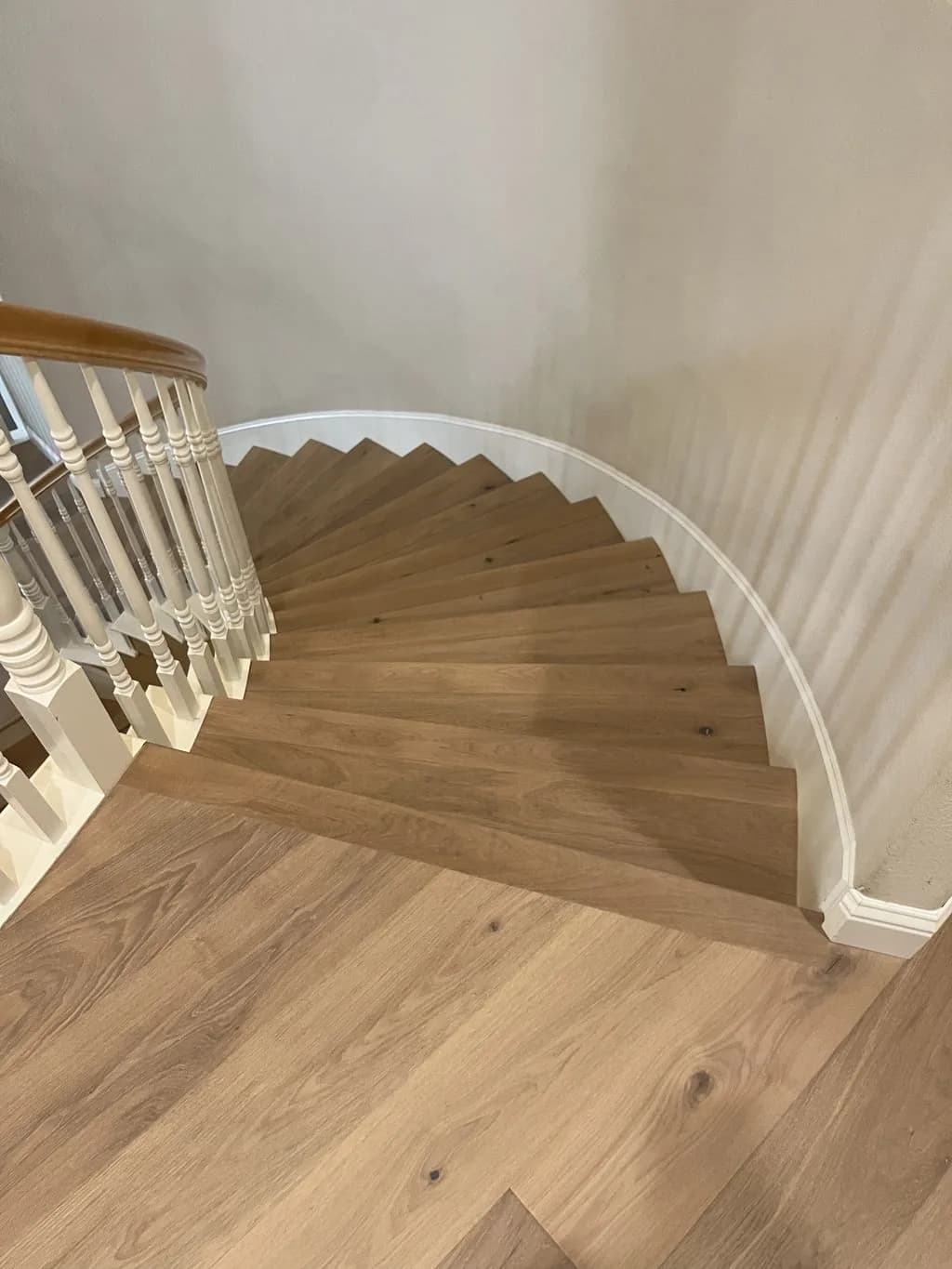
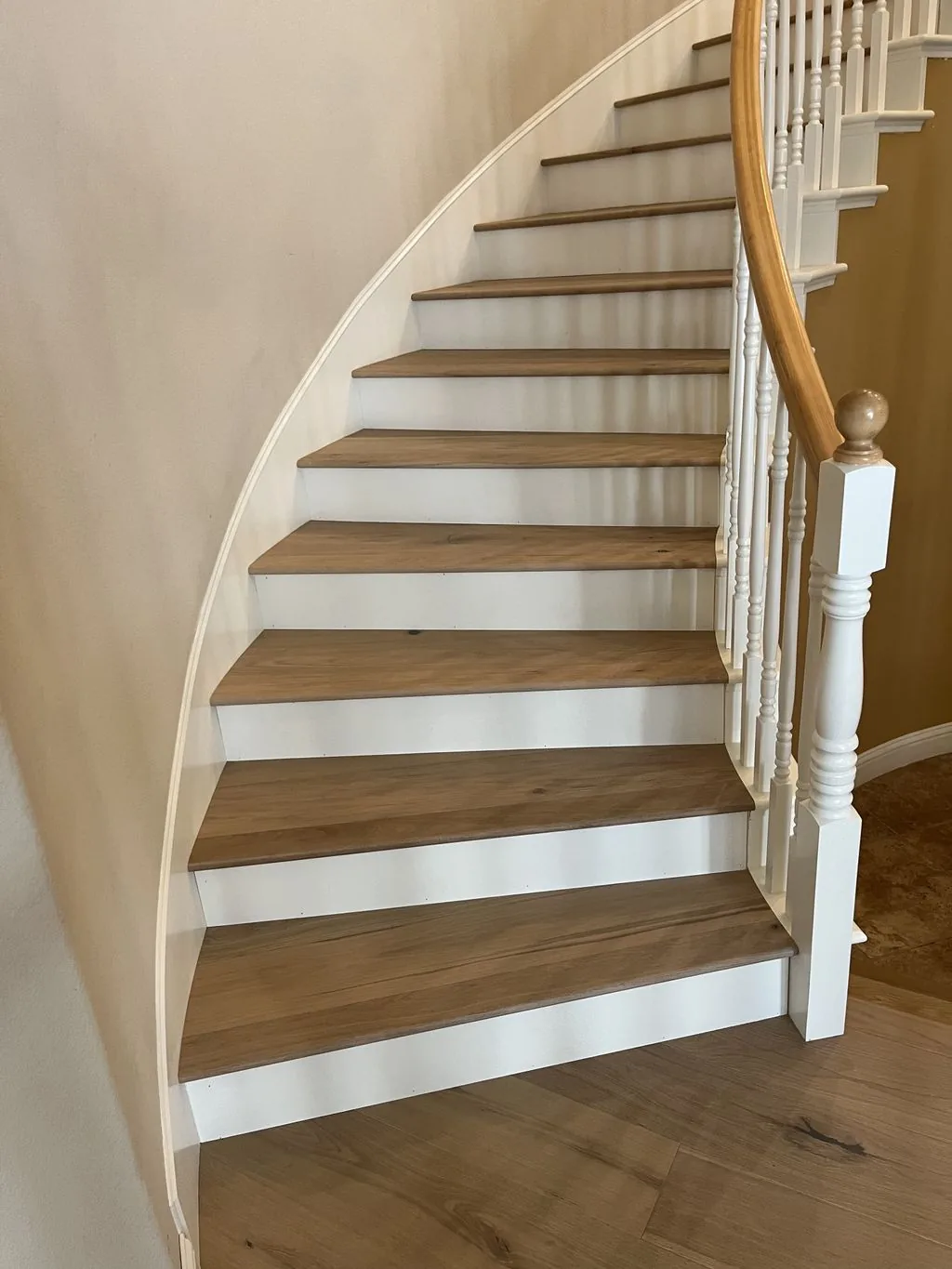
White Oak Hardwood
Stair Treads
Our Services
Flooring Services in Walnut Creek
From hardwood to luxury vinyl, here's how we help Walnut Creek homeowners upgrade their floors.
Hardwood Flooring
Solid oak, maple, and walkable heirloom-grade hardwood, precisely installed.
Hardwood Flooring in Walnut CreekEngineered Hardwood
Real-wood wear layers built for California's climate swings.
Engineered Hardwood in Walnut CreekLuxury Vinyl Plank
Waterproof, wood-look LVP for kitchens, baths, and busy households.
Luxury Vinyl Plank in Walnut CreekLaminate Flooring
Durable, high-style laminate at a friendly price point.
Laminate Flooring in Walnut CreekTile Flooring
Porcelain and ceramic tile set dead-level with crisp grout lines.
Tile Flooring in Walnut CreekFloor Installation
Full-service installation from subfloor prep to final baseboard.
Floor Installation in Walnut CreekFloor Refinishing
Sand, stain, and reseal tired hardwood back to new.
Floor Refinishing in Walnut CreekFloor Repair
Board swaps, water damage, squeaks, and seamless patch-ins.
Floor Repair in Walnut CreekLocal Considerations
What Walnut Creek Homes Need From a Floor
Climate, home age, and foundation type all shape the right flooring choice in Walnut Creek — here's what we account for.
In Rossmoor, the flooring rule depends on the Mutual
Rossmoor's 23 Mutuals each publish their own policies. First Walnut Creek Mutual, a co-op of 1,878 manors, requires an Alteration Permit for any hard surface floor — hard vinyl, tile, laminate or hardwood — in any area of a ground-floor manor. Above the ground floor, its policy manual names kitchens, bathrooms, extended entryways and hallways as the areas where flooring rated above IIC 40 will be approved on manufacturer's or industry-accepted test results, and every member who receives a hard-flooring permit signs a liability release; the copy we could retrieve is dated October 2022. Mutual No. Forty requires the Board's written approval for any new flooring except carpet replacing carpet, and limits hard surfaces in upper units to entries, kitchens, bathrooms, laundry rooms and lofts over the unit's own garage. Second and Third Mutual's rules could not be retrieved, so we do not generalize to them.
Mutual No. Seventy specifies a floating floor at IIC 74
Walnut Creek Mutual No. Seventy's operating rules, last revised in August 2025, treat carpet, paint and fixtures as cosmetic changes that generally need no approval, but hard-surfaced flooring — hardwood, laminate, plastic or vinyl, tile — requires an application with noise-reduction measures equivalent to carpet with padding. The base rule allows linoleum, vinyl or ceramic tile only in bathrooms, kitchens, laundry areas and inside front entries. In place of carpet on second and third floors, hard flooring must be a floating floor with no fasteners within 1/8 inch of a wall and an IIC rating of 74 or higher, verified on the application by the installer, vendor or architect. First-floor hard flooring needs IIC 50 and an alterations permit, and upstairs entries, kitchens, baths and laundry areas must also meet IIC 50. That is a documented specification, so the rating has to be in hand before anything is ordered.
Two approvals, in order, and a six-month window
Rossmoor's Alterations Guide defines an alteration permit as authorization from your Mutual to make architectural, structural, electrical, plumbing or aesthetic changes to a manor. Your Mutual Board authorizes it after Rossmoor Property Management staff review the request; processing takes anywhere from several days up to thirty days depending on the alteration, and the permit is good for six months. The city comes after that. The guide says most alterations require a City of Walnut Creek permit, determined at application review, and that the city will not issue one to an owner or the owner's contractor without an approval letter from Rossmoor Property Management. A Rossmoor floor is scheduled around that sequence.
Refinishing an existing hardwood floor needs approval, too
The rules reach past new installations. Walnut Creek Mutual Fifty's policies, adopted January 21, 2025, require Board approval through an Alteration Application to refinish a manor's hardwood floor, permit only water-based, non-flammable finishes with flash points at or above 100°F, and require a dust capture and/or ventilation system if sanding is needed. The same policies require an application before changing carpet to hard flooring, sanctionable at up to $1,000 a month until compliance. Mutual No. Forty requires the Board's advance written approval for any hardwood refinishing, citing 'potential health, safety and noise concerns.' In those Mutuals, finish chemistry and dust control are part of the application, not an afterthought.
The exempt list doesn't name flooring, and the city line isn't the ZIP code
The City of Walnut Creek's building permit FAQ lists work that doesn't require a building permit, beginning with 'Painting, papering and similar finish work'; flooring, tile and carpet are not named, and the page adds that exempt work must still follow local codes and may need a Use Permit. The city's permit pages list kitchen and bathroom remodels among over-the-counter permits, take applications online only, and apply the 2025 Building Code to applications from January 1, 2026. Jurisdiction is the other question. Saranap, Castle Hill and San Miguel are unincorporated census-designated places with Walnut Creek mailing addresses, and Census geography splits Tice Valley Boulevard among the city, Saranap and Castle Hill — so a Walnut Creek address alone doesn't make the city the permitting authority. Building staff can be reached at 925-943-5834.
Shrink-swell clay in places, and mapped liquefaction zones
USDA soil survey data maps Clear Lake clay at the civic center and along Walden Road, with representative linear extensibility of 8.5 to 8.7 percent in its upper layers, and Cropley clay at Rossmoor's Golden Rain Road entrance at 7.5 — both high shrink-swell clays. The official Clear Lake series description says its cracks extend as deep as 48 inches, opening by June or July and closing by October or November. Around Northgate High School, by contrast, the survey maps Briones fine sandy loam at 1.5. The California Geological Survey's Walnut Creek quadrangle map, official February 22, 2024, zones most of Ygnacio Valley and creek corridors such as San Ramon and Tice Creeks for liquefaction, and a point at Rossmoor's entrance falls in a zone on the adjoining Las Trampas Ridge map released in November 2024. A zone requires site investigation for new development and seller disclosure; it is not a prediction for any one home. For a rigid floor on a slab, in-slab moisture testing (ASTM F2170) and a flatness check come first.
Hot, dry inland summers, measured at the nearest station
None of Walnut Creek's own weather stations carries 1991–2020 NOAA normals — the longest record ended in 1974 — so the reference is Concord Buchanan Field, about six miles north: an 88.0°F normal July high, no measurable July rain in the normals, and 16.05 inches a year, more than half of it in December, January and February. Across the Julys of 2015 to 2024 it averaged about 78 percent relative humidity at 4 AM and 31 percent at 4 PM, against 85 and 65 percent at Oakland International Airport. Hourly observations there from 2015 to 2025, heated to 70°F without added moisture, give winter air a median of about 38 percent relative humidity, with nearly a quarter of heating-season hours below 30 percent, and summer air about 53 percent. Wood flooring is acclimated to the conditioned rooms it will live in, not to the weather outside.
Local Resources & References
Helpful Walnut Creek Resources
Authoritative local and industry references for permits, planning, and flooring standards.
- Building Permit FAQs (Wayback Machine snapshot, December 12, 2025) — 'Painting, papering and similar finish work' on the list of work not requiring a building permit; the live page blocks automated retrievalCity of Walnut Creek
- How Rossmoor Works — 23 Mutuals, and manor counts for the co-operative, condominium and single-family MutualsRossmoor Walnut Creek
- Alterations Guide (updated March 11, 2026) — Mutual Board authorization, six-month alteration permits, and the city permit that requires an approval letterRossmoor Walnut Creek
- Policy Manual (October 2022 copy) — hard surface floors: ground-floor Alteration Permits and upstairs approval above IIC 40First Walnut Creek Mutual
- Operating Rules — floor coverings: a floating floor at IIC 74 or higher on second and third floors, IIC 50 on the firstWalnut Creek Mutual No. Seventy
- ACS 2020–2024 5-year — year built, median year built and units in structure, Walnut Creek city (place 0683346)US Census
- 1991–2020 monthly normals, Concord Buchanan Field (USW00023254) — nearest station to Walnut Creek with normalsNOAA NCEI
- Official Series Description, Clear Lake series — seasonal cracks to 48 inches, open by June or JulyUSDA Natural Resources Conservation Service
- Seismic Hazard Zone Report 136, Walnut Creek Quadrangle — liquefaction and landslide zones, official map February 22, 2024California Geological Survey
External links are provided for reference. Always confirm current requirements with the issuing agency.
Explore Flooring Services in Walnut Creek
Good to Know
Frequently Asked Questions
Does Renaissance Floors serve Walnut Creek?
Yes. We install and refinish flooring throughout Walnut Creek and the surrounding Contra Costa County area. Call (916) 749-0272 for a free estimate.
What flooring services do you offer in Walnut Creek?
We install hardwood, engineered wood, luxury vinyl plank, laminate, tile, and more in Walnut Creek, plus floor refinishing, repair, and full-service installation. See the full list below.
Are you licensed to work in Walnut Creek?
Yes. We hold CSLB C-15 license #1060673 (C-15 Flooring & Floor Covering) and carry insurance. We're based in Roseville, CA and serve Walnut Creek and all of Greater Sacramento & Northern California.
How do I get a free flooring estimate in Walnut Creek?
Call (916) 749-0272 or request an estimate online. We'll schedule a convenient in-home visit in Walnut Creek, measure your space, and give you an honest, no-pressure quote.
Is Rossmoor part of the City of Walnut Creek?
Yes. U.S. Census geography places Rossmoor addresses, including 1001 Golden Rain Road, inside Walnut Creek city limits. Rossmoor's Alterations Guide tells residents that most alterations require a permit from the city, and that the city will not issue one without an approval letter from Rossmoor Property Management. Rossmoor is an age-restricted community in which at least one designated occupant of each home must be 55 or older.
Can I install hardwood, laminate or vinyl plank in an upstairs Rossmoor manor?
It depends on your Mutual, because each sets its own rule. Mutual No. Seventy requires second- and third-floor hard flooring to be a floating floor rated IIC 74 or higher. First Walnut Creek Mutual names kitchens, bathrooms, extended entryways and hallways as upstairs areas it will approve above IIC 40. Mutual No. Forty limits upper units to entries, kitchens, baths, laundry rooms and garage lofts. We could not retrieve Second or Third Mutual's rules, so ask Rossmoor Property Management for yours.
Who approves a flooring change in Rossmoor, and how long does it take?
Your Mutual Board, after Rossmoor Property Management staff review the request. Rossmoor's Alterations Guide says processing can take anywhere from several days up to thirty days depending on the alteration, and an approved permit is good for six months. If the city also requires a permit, it will not issue one without Rossmoor Property Management's approval letter, so the Mutual's approval comes first.
Does Walnut Creek require a building permit for new flooring?
The city has not published a flooring-specific answer. Its list of work that does not require a building permit names 'Painting, papering and similar finish work' and does not mention flooring, so confirm your scope with Building staff at 925-943-5834 or BuildingTech@walnut-creek.org — especially if subfloor, structural or plumbing work is involved. In Rossmoor, the Alterations Guide adds that most alterations require a city permit.
My address says Walnut Creek, but I live in Saranap or Castle Hill. Does the city issue my permit?
No — those areas are outside city limits. Saranap and Castle Hill, like San Miguel, are unincorporated census-designated places even though homes there carry Walnut Creek mailing addresses, and Census geography splits Tice Valley Boulevard among the city, Saranap and Castle Hill. The City of Walnut Creek's Building Division is not the permitting authority for unincorporated land, so check with Contra Costa County before work starts.
How old are most Walnut Creek homes?
Mostly postwar. The Census Bureau's 2020–2024 estimates put the median year built at 1974, with about 29 percent of units from the 1970s and roughly three in four built between 1950 and 1989. Only about 37 percent are detached houses, and about one unit in four sits in a building of twenty or more, so many projects involve a floor that is also a neighbor's ceiling.
How hot and dry does Walnut Creek get, and does it matter for wood floors?
Much hotter and drier in summer than the bay side. None of Walnut Creek's own stations carries current NOAA normals; Concord Buchanan Field, about six miles north, averages an 88.0°F July high and 16.05 inches of rain a year, and its July afternoons average about 31 percent relative humidity. Its winter air, heated to 70°F, has a median near 38 percent, so wood is acclimated to the conditioned rooms it will live in.
Are there expansive soils in Walnut Creek?
In places, not everywhere. USDA soil survey data maps Clear Lake clay near downtown and Cropley clay at Rossmoor's Golden Rain Road entrance, both high shrink-swell clays, and the official Clear Lake description says its cracks open by June or July and close by October or November. Around Northgate High School the survey shows sandy loam instead. Survey data isn't a parcel test, so a slab still gets moisture and flatness checks before a rigid floor.

Ready for Floors You'll Love?
Free, no-pressure flooring estimates throughout Walnut Creek and Contra Costa County.