Service Area
Flooring in San Francisco
Renaissance Floors installs and refinishes hardwood, luxury vinyl, tile, and more for homeowners throughout San Francisco and the surrounding San Francisco County area.
CSLB #1060673
Licensed & Insured
Est. 2019
Family-Owned
15+ Years
Hands-On Experience
5.0★ Rated
22 Reviews on Thumbtack
Local, Licensed, Accountable
Flooring Contractor Serving San Francisco
San Francisco is part of San Francisco County, and it's one of the communities Renaissance Floors regularly works in. We're based in Roseville, CA and serve homeowners across Greater Sacramento & Northern California— from small refinishing jobs to full home installs. Every project starts with an honest look at your subfloor and your goals, followed by a clear, no-pressure estimate. There's no dispatched sales team and no guesswork: you work directly with the crew doing the installation, backed by our CSLB C-15 license and a workmanship warranty on every job.
Many San Francisco and Peninsula homes have original hardwood well worth refinishing rather than replacing. We handle the tighter access of urban and older homes carefully, and match new work seamlessly to existing floors.
San Francisco is a consolidated city and county, and before it is anything else for flooring purposes it is a city of shared buildings. The Census Bureau's current five-year estimates count 414,602 housing units, and 69.4% of them are in buildings with two or more units — nearly half in buildings of five or more — while 61.8% of occupied homes are rented. In most of San Francisco, the floor you are replacing is also somebody's ceiling, and the decisions that follow from that matter as much as the material.
It is also old housing, and old in a particular way. 45.2% of the city's units were built in 1939 or earlier — about 187,000 homes, more pre-war housing than any other city in this service area — and 76.5% predate 1980. San Francisco Planning's architectural-styles bulletin records why so much of it dates to one period: an estimated seventy-five percent of the housing stock burned in the 1906 earthquake and fire and was rebuilt in the styles of the Progressive Era. The same bulletin notes what sets the city's Victorians apart from their counterparts elsewhere: 'the use of wood, false fronts, and raised basements.'
The permit rule for floors is unusually clear, and it has one exception people miss. The Department of Building Inspection's list of work that does not need a permit includes 'installations or replacement of floor coverings in areas other than bathrooms not requiring the removal of existing required flooring.' Replacing the floor in a living room or bedroom is on that list. A bathroom floor is not, and neither is work that removes flooring the building is required to have. For projects that do need review, DBI offers over-the-counter review for work needing less than an hour of plan review, and every filing since January 1, 2026 has used the 2025 California Codes with San Francisco's amendments.
Sound is the other rule shared buildings live under. The San Francisco Building Code sets floor-ceiling assemblies between dwelling units at an impact insulation class of at least 50, and a sound transmission class of at least 50, in its 2022 edition. DBI's own bulletin on enforcing those standards, in its 2007 edition, applied them to residential buildings permitted after August 22, 1974 — and allowed carpet and padding to count toward the impact rating, provided the approved plans marked the carpet as mandatory. No source we have found says what happens when a later owner replaces that carpet, and we will not guess. In a condominium, California Civil Code §4760 makes an owner's alterations 'subject to the governing documents,' which is why the association's documents come before the sample boards.
The weather runs on its own calendar. NOAA's 1991–2020 normals for the downtown station put the July high at 66.3°F and September's at 70.2°F, the warmest month of the year, with December the wettest at 4.76 inches of a 22.9-inch annual total; the National Weather Service's climate study of the city describes summer as 'cool marine air and persistent coastal stratus and fog.' The ground is its own story too. The USGS finds the Bay Area's highest liquefaction hazard concentrated in old fill placed over former bay floor, and its study of the 1989 earthquake documents liquefaction of sandy artificial fill beneath the Marina. And the city's stormwater flood map places about 2,100 parcels — roughly one percent — in 100-year storm flood zones, many along historical waterways that used to be creeks or wetlands.
Renaissance Floors is a licensed California C-15 flooring contractor (CSLB #1060673) based in Roseville. For a San Francisco project we start with the building before the floor: when it was built, whether the space is a house or a unit over a neighbor, what the association's documents require, and whether the room is a bathroom. Free in-home estimates, straight answers about what a building allows, and a workmanship warranty.
Local Coverage
Neighborhoods We Serve in San Francisco
From Pacific Heights to the Mission, Renaissance Floors installs and refinishes floors across San Francisco.
Recent Work
A Sample of Our Craftsmanship
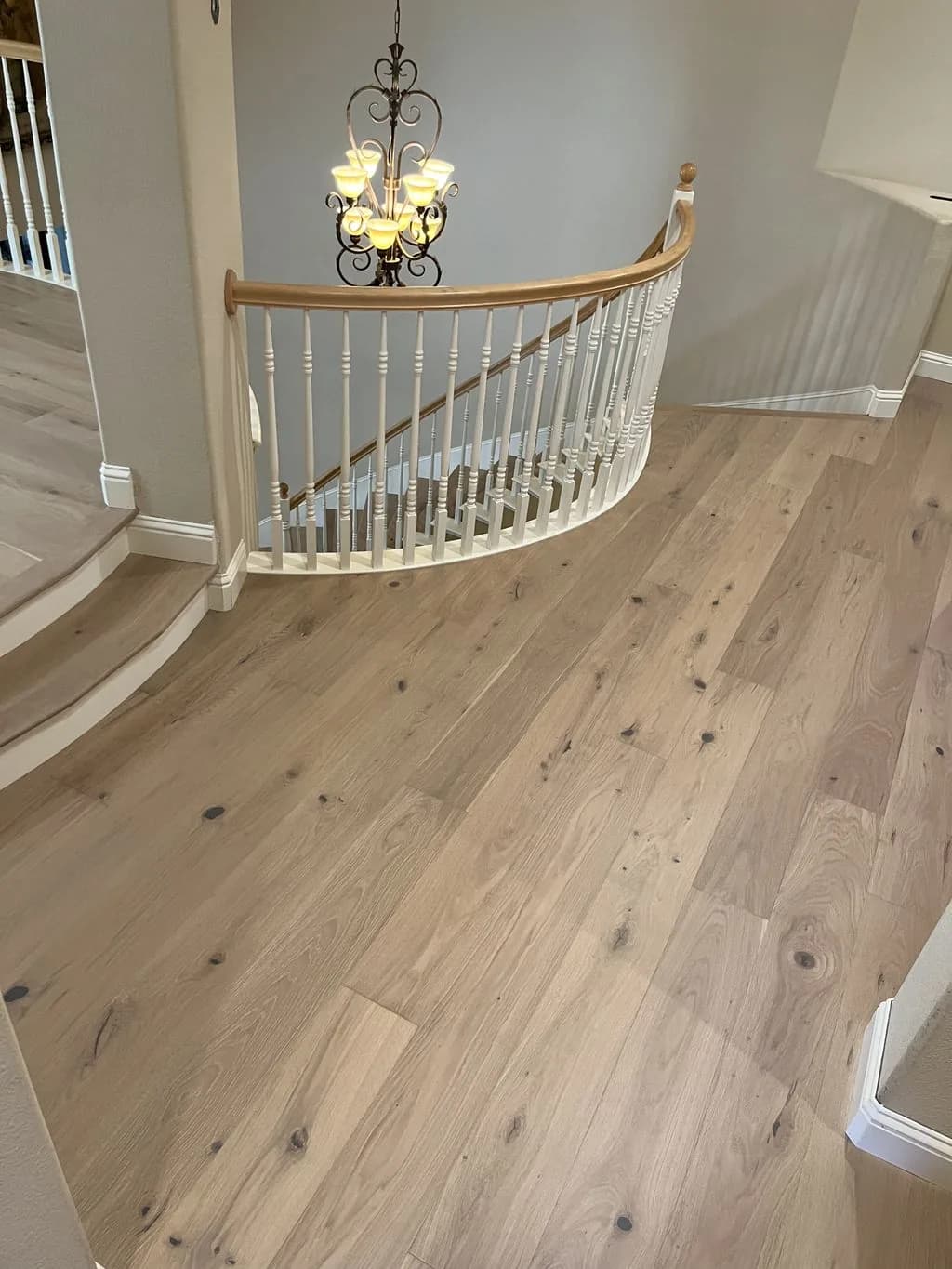
White Oak Hardwood
Great Room & Landing
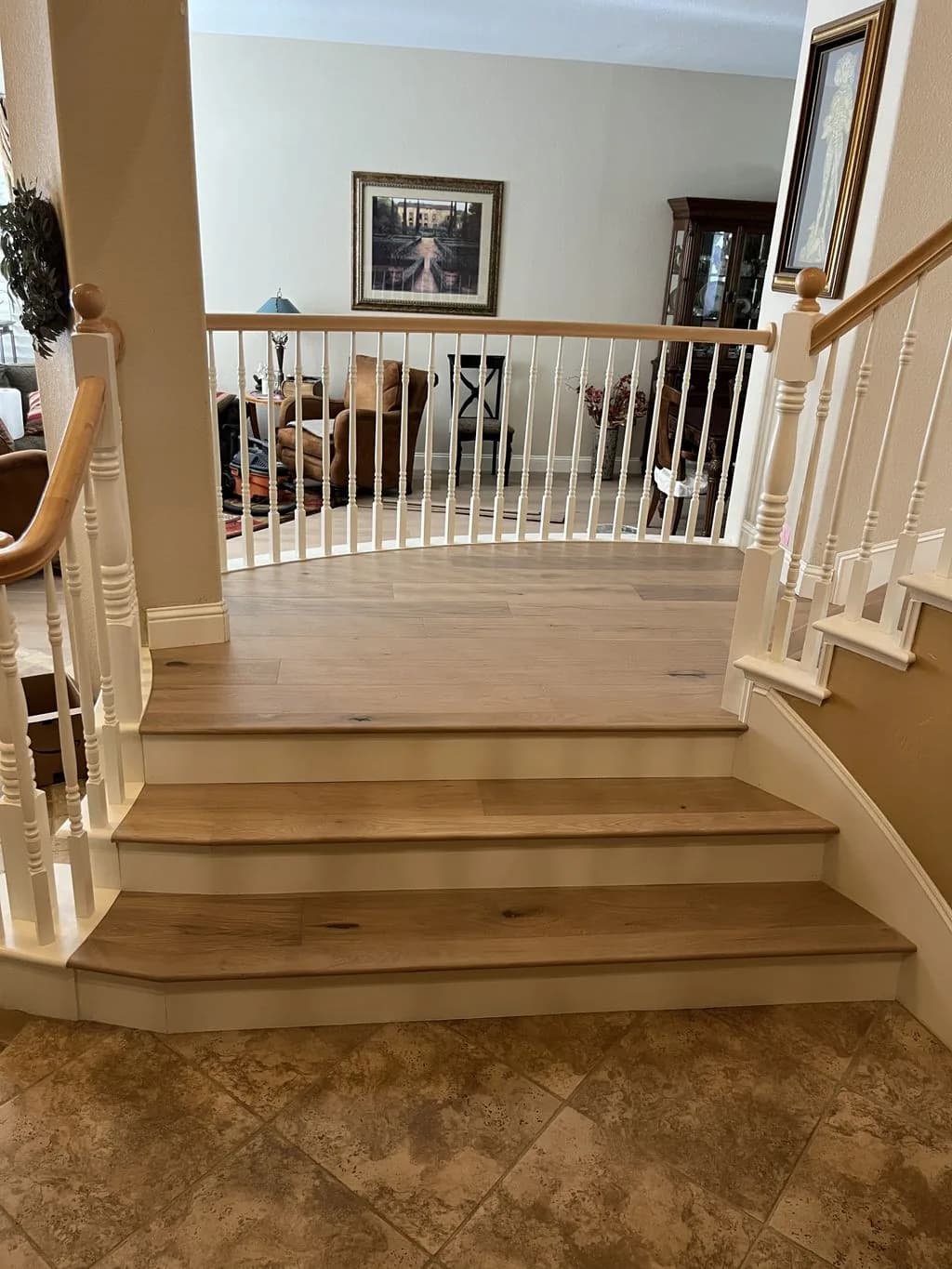
White Oak Hardwood
Staircase & Landing
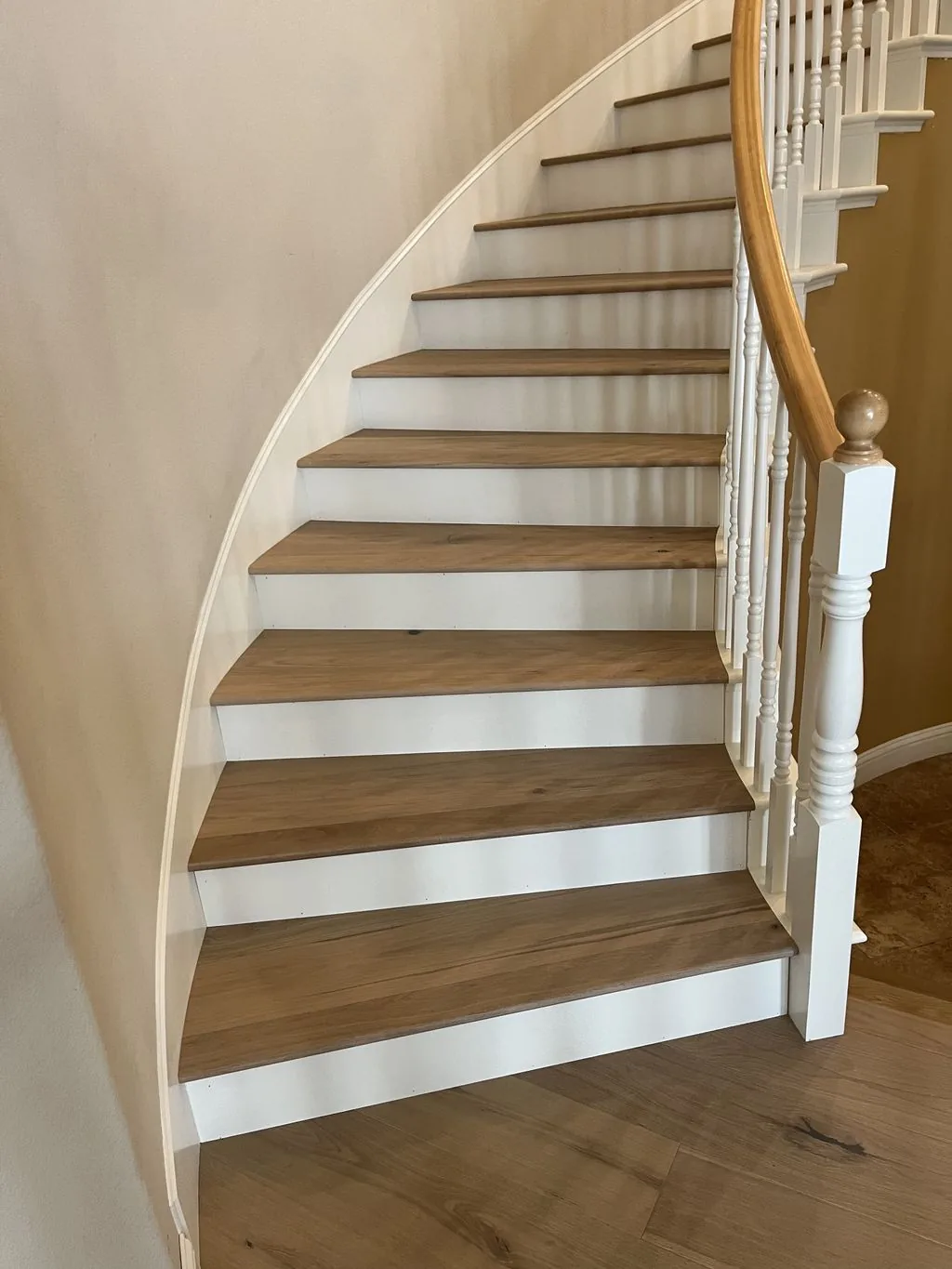
White Oak Hardwood
Curved Staircase
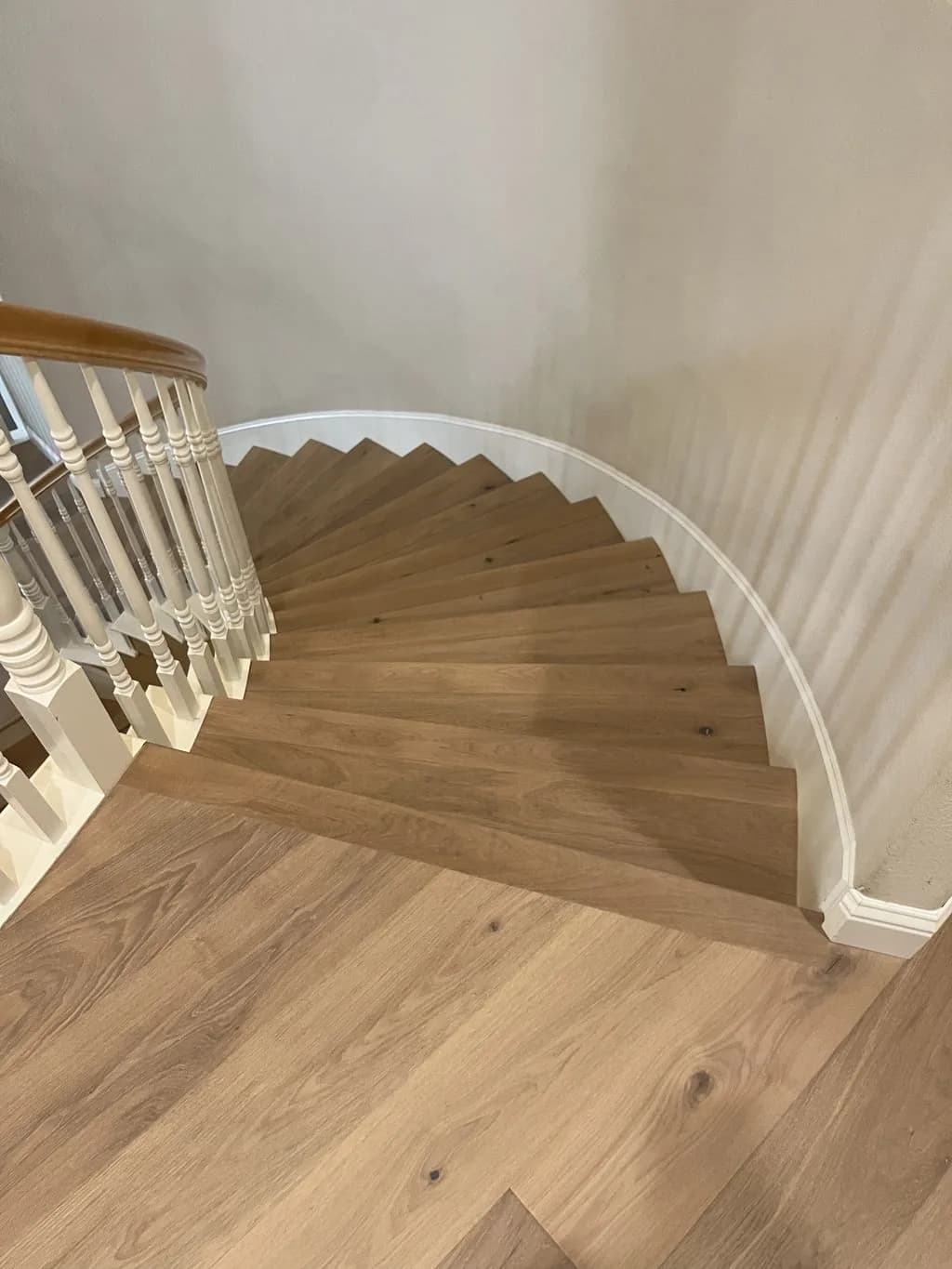
White Oak Hardwood
Stair Treads
Our Services
Flooring Services in San Francisco
From hardwood to luxury vinyl, here's how we help San Francisco homeowners upgrade their floors.
Hardwood Flooring
Solid oak, maple, and walkable heirloom-grade hardwood, precisely installed.
Hardwood Flooring in San FranciscoEngineered Hardwood
Real-wood wear layers built for California's climate swings.
Engineered Hardwood in San FranciscoLuxury Vinyl Plank
Waterproof, wood-look LVP for kitchens, baths, and busy households.
Luxury Vinyl Plank in San FranciscoLaminate Flooring
Durable, high-style laminate at a friendly price point.
Laminate Flooring in San FranciscoTile Flooring
Porcelain and ceramic tile set dead-level with crisp grout lines.
Tile Flooring in San FranciscoFloor Installation
Full-service installation from subfloor prep to final baseboard.
Floor Installation in San FranciscoFloor Refinishing
Sand, stain, and reseal tired hardwood back to new.
Floor Refinishing in San FranciscoFloor Repair
Board swaps, water damage, squeaks, and seamless patch-ins.
Floor Repair in San FranciscoLocal Considerations
What San Francisco Homes Need From a Floor
Climate, home age, and foundation type all shape the right flooring choice in San Francisco — here's what we account for.
The permit exemption stops at the bathroom door
DBI's no-permit list names 'installations or replacement of floor coverings in areas other than bathrooms not requiring the removal of existing required flooring.' Two limits sit inside that sentence. Bathrooms are excluded outright, and so is flooring work that removes flooring the building is required to have. A new floor in a bedroom, hallway or living room falls within the exemption; a bathroom floor, or a project that goes past the covering, is the point to confirm with DBI before work starts.
In a shared building, the floor is part of a sound assembly
San Francisco's Building Code (2022 edition) requires floor-ceiling assemblies between dwelling units to reach an impact insulation class of 50 and a sound transmission class of 50. DBI's enforcement bulletin, in its 2007 edition, applied these standards to residential buildings permitted after August 22, 1974 and accepted carpet and pad as part of meeting the impact rating, marked mandatory on the plans. Whether a later change from carpet to hard flooring is restricted is a question for the building's governing documents and approvals, not something to assume either way — so in condos and apartments we ask for those documents first and choose an underlayment and floor with the neighbor below in mind.
Nearly half the housing is pre-war
45.2% of San Francisco's housing units were built before 1940 and three in four before 1980, most of the pre-war stock rebuilt after the fires of 1906. Older buildings bring the practical questions an old floor always brings: how much wood is left above the tongue in an original floor, whether a subfloor has been patched, how level the framing still is, and what an older floor may be hiding under carpet or sheet goods. Those get answered at an exposed edge before anything is quoted.
Landmark districts don't designate residential interiors
San Francisco Planning's own preservation FAQ answers the question directly: 'Article 10 does not specifically designate the historic interiors of residential homes in landmark districts, nor does the California or National Registers.' Planning still encourages keeping historic interior features, and notes that Article 10 review occasionally reaches some interior alterations to governed buildings. Planning does not issue permits — DBI does — so design review and the permit question are separate conversations.
September is the warm month, and the air stays mild
At the downtown NOAA station, the normal high is 66.3°F in July, 67.9°F in August and 70.2°F in September, and winter lows sit well above freezing. That narrow temperature range is kind to floors, but the numbers are the city's own — the airport, eleven miles south, normals more than six degrees warmer in July and over three inches drier a year, so its figures are not a stand-in for San Francisco's. Wood still acclimates to the actual rooms it is going into, particularly in units heated and unheated on different schedules.
Stormwater flood zones follow the old creeks
The San Francisco Public Utilities Commission's 100-year storm flood map identifies about 2,100 parcels, roughly one percent of the city, where stormwater flooding at least six inches deep is likely in a major storm, many of them built along historical waterways. The SFPUC names garages at or below street level among the ways water gets in, notes that sellers and landlords must disclose the zone, and states plainly that the Building Code has no flood-resilient design requirement. For a ground-floor room or a garage conversion in one of those zones, a floor that tolerates water is the reasonable choice.
Old bay fill and the soft-story tier
The USGS finds the highest liquefaction hazard in the Bay Area where fill was placed decades ago over former bay floor, and its study of the 1989 earthquake documents liquefaction of sandy artificial fill under the Marina. The city's mandatory soft-story program covered wood-frame buildings of five or more units with two or more stories over a soft story, permitted before 1978, and made location in a mapped liquefaction zone one of the criteria for its fourth tier; its retrofits 'do not extend above the first floor,' and DBI's completion deadline was September 15, 2021.
Local Resources & References
Helpful San Francisco Resources
Authoritative local and industry references for permits, planning, and flooring standards.
- Check if your construction project needs a permit — floor coverings outside bathrooms on the no-permit listSF Department of Building Inspection
- Permit Services — over-the-counter review, and 2025 codes for filings from January 1, 2026SF Department of Building Inspection
- Historic Preservation FAQs — residential interiors in landmark districtsSF Planning
- Preservation Bulletin 18: Architectural Periods and Styles in San Francisco — 1906 rebuilding; wood, false fronts and raised basementsSF Planning
- 100-Year Storm Flood Risk Map — Info Sheet & FAQs (December 2024)San Francisco Public Utilities Commission
- 1991–2020 monthly normals, San Francisco Downtown (USW00023272)NOAA NCEI
- ACS 2020–2024 5-year — year built, units in structure and tenure, San FranciscoUS Census
- San Francisco Bay Area Liquefaction Hazard Maps — highest hazard in old fill over former bay floorUS Geological Survey
- Civil Code §4760 — alterations within a separate interest are 'subject to the governing documents'State of California
External links are provided for reference. Always confirm current requirements with the issuing agency.
Explore Flooring Services in San Francisco
Nearby
Nearby Cities We Serve in SF & the Peninsula
Good to Know
Frequently Asked Questions
Does Renaissance Floors serve San Francisco?
Yes. We install and refinish flooring throughout San Francisco and the surrounding San Francisco County area. Call (916) 749-0272 for a free estimate.
What flooring services do you offer in San Francisco?
We install hardwood, engineered wood, luxury vinyl plank, laminate, tile, and more in San Francisco, plus floor refinishing, repair, and full-service installation. See the full list below.
Are you licensed to work in San Francisco?
Yes. We hold CSLB C-15 license #1060673 (C-15 Flooring & Floor Covering) and carry insurance. We're based in Roseville, CA and serve San Francisco and all of Greater Sacramento & Northern California.
How do I get a free flooring estimate in San Francisco?
Call (916) 749-0272 or request an estimate online. We'll schedule a convenient in-home visit in San Francisco, measure your space, and give you an honest, no-pressure quote.
Do I need a permit to replace flooring in San Francisco?
Usually not outside the bathroom. DBI's list of work that does not need a permit includes installing or replacing floor coverings in areas other than bathrooms, where the work does not require removing existing required flooring. A bathroom floor is not covered by that exemption, and neither is work that goes past the covering, so those are the cases to confirm with DBI first.
Are there sound rules for floors in San Francisco condos and apartments?
Yes, for the floor-ceiling assembly between units. The Building Code's 2022 edition sets impact and airborne sound ratings of at least 50, and DBI's enforcement bulletin in its 2007 edition applied them to residential buildings permitted after August 22, 1974, accepting carpet and pad as part of the impact rating. For changes in an existing condo, state law makes an owner's alterations subject to the association's governing documents, so start with those documents before choosing a hard floor.
My home is in a historic district. Is changing the interior flooring regulated?
Not as a landmark matter, as a rule. San Francisco Planning states that Article 10 does not specifically designate the historic interiors of residential homes in landmark districts, though it encourages keeping historic features and notes that review occasionally reaches some interior alterations to Article 10 buildings. The permit question is separate and runs through DBI.
How old is San Francisco's housing, and why does it matter for floors?
Old. Current Census estimates put 45.2% of the city's 414,602 housing units in buildings from 1939 or earlier and 76.5% before 1980. Older construction means original floors that may be worth restoring, subfloors that have been altered over the decades, and framing that is rarely perfectly level — all things to check at an exposed edge before a new floor is specified.
When is San Francisco warmest and wettest?
Later and earlier than most people expect. NOAA's 1991–2020 normals for the downtown station put the highest average high in September, at 70.2°F, with July at 66.3°F, and the wettest month in December, at 4.76 inches of a 22.9-inch year. The airport's numbers differ enough that they should not be used for the city.
How do I know if my property is in a San Francisco flood zone?
Check the SFPUC's 100-year storm flood risk map, which covers stormwater flooding and places about 2,100 parcels, roughly one percent of the city, in its zones. It is a separate map from FEMA's coastal flood zones and the city's sea-level-rise vulnerability zone. The SFPUC lists garages at or below street level among the ways floodwater enters a building, which matters when choosing flooring for a ground-floor room.
What was the soft-story retrofit program?
A mandatory seismic program for wood-frame buildings with five or more residential units and two or more stories over a soft or weak story, permitted before January 1, 1978. Location in a mapped liquefaction zone was one of the criteria for its fourth tier, the retrofits did not extend above the first floor, and DBI's deadline to finish the work was September 15, 2021.
Is most of San Francisco rented, multi-unit housing?
Yes. The Census Bureau's current five-year estimates put 61.8% of occupied homes as renter-occupied and 69.4% of housing units in buildings with two or more units. That is why so many flooring decisions here run through a landlord, an association, or the neighbor downstairs.
Ready for Floors You'll Love?
Free, no-pressure flooring estimates throughout San Francisco and San Francisco County.