Service Area
Flooring in Orangevale
Renaissance Floors installs and refinishes hardwood, luxury vinyl, tile, and more for homeowners throughout Orangevale and the surrounding Sacramento County area.
CSLB #1060673
Licensed & Insured
Est. 2019
Family-Owned
15+ Years
Hands-On Experience
5.0★ Rated
22 Reviews on Thumbtack
Local, Licensed, Accountable
Flooring Contractor Serving Orangevale
Orangevale is part of Sacramento County, and it's one of the communities Renaissance Floors regularly works in. We're based in Roseville, CA and serve homeowners across Greater Sacramento & Northern California— from small refinishing jobs to full home installs. Every project starts with an honest look at your subfloor and your goals, followed by a clear, no-pressure estimate. There's no dispatched sales team and no guesswork: you work directly with the crew doing the installation, backed by our CSLB C-15 license and a workmanship warranty on every job.
Sacramento-area homes see hot, dry summers and mild winters, so solid wood can move seasonally if it isn't acclimated and sealed properly. We prep and acclimate every install for the local climate — and luxury vinyl plank is a popular, worry-free choice for busy valley households.
Orangevale is the oldest of Sacramento County's colony towns — organized in 1887, seven years before Fair Oaks' colonists arrived and twenty-two before Carmichael was platted. The sequence is preserved in the records of its own water company: J.T. Cardwell bought 4,400 acres of the old 1844 Mexican grant in 1881 at six dollars an acre; in 1887 he sold the southern portion to a group of about thirty-six Sacramento businessmen — names like Hall, Mott, Drescher, Weinstock, and McClatchy among the officers — who organized the Orangevale Company, with P.C. Drescher christening it 'Beautiful OrangeVale Colony'; and in 1888 the Orange Vale Colonization Company laid the land out in ten-acre tracts and planted 130 acres of citrus imported from Florida. Until pipe arrived the next year, water came by tank wagon behind four-horse teams — through ditches originally dug in the 1850s to serve the gold placers at Mississippi Bar.
The founding era's institution still sends a bill. The Orange Vale Water Company — incorporated May 29, 1896, and still spelling itself in the original two words while the town long ago fused into one — survives as a member-owned mutual: about 4,486 members holding 5,159 shares, a residue of the original one-share-per-acre issue, governed by a five-member elected board from its office on Central Avenue. In 1954 it joined Fair Oaks' and Citrus Heights' districts to form the San Juan Water District, which bought out the old ditch company and, from 1955, delivered Folsom Dam water instead; today San Juan wholesales to Orange Vale Water, which serves part of the community — the rest of Orangevale takes its water from the Citrus Heights Water District, depending on the address. Two water providers, one of them a living artifact of 1896: that is a deeply Orangevale arrangement.
The orchards themselves ended in a single winter — the 1932 freeze, which the Orangevale History Project's president describes as effectively wiping out the orange groves (mixed deciduous fruit — peaches, figs, grapes, olives, prunes — had grown alongside citrus from the start and carried on after). One living remnant survives, and it is the best thing in town: a ten-acre tract of the original 1888 plat, planted to fruit in 1911 by the Tomich family, operated as the community's last commercial orchard until it closed in 2017 — and then bought in 2018 by two neighbors who keep it farmed, forty-plus varieties of stone fruit on the literal unit of the colony's subdivision geometry. The 1888 street grid survives too: the tree-named avenues — Almond, Beech, Chestnut, Filbert, Hazel, Pecan, Walnut — still hang off the Central and Main Avenue spine, and the Orangevale Grange, one of only three still active in Sacramento County, still serves monthly breakfasts on Walnut Avenue.
Modern Orangevale is an unincorporated community that chose to stay one. It is bordered by two incorporated cities — Citrus Heights to the west, Folsom to the east — with fellow-unincorporated Fair Oaks to the south, governed through the county Board of Supervisors and an active community planning advisory council at a time when several neighboring CPACs have been dissolved. The housing reflects a long, steady build-out rather than one boom: about 60% predates 1980, the 1970s are the largest single decade, the median home dates to 1976, and the stock is overwhelmingly detached (80.9%) and owner-occupied (75.5%), with county agricultural-residential zoning still holding multi-acre horse parcels among the tracts. One census wrinkle worth knowing: 37.4% of Orangevale homes heat with electricity — the fingerprint of the all-electric 1970s–80s tract era — whose forced-air and heat-pump systems run their own dry-winter interior cycle.
Under it all sits a genuinely ironic piece of ground. Orangevale is the type location of the USDA's Orangevale soil series — the deep, free-draining granitic loam that made the orchards possible carries the town's name in the national soil survey. But a 164-point sampling of the actual community shows the namesake soil covers about 18% of it, concentrated in the center and east, while more than half of Orangevale is mapped over a cemented hardpan two to three feet down, in the poorest-draining hydrologic class — ground where winter rain perches above the pan instead of soaking away. And nearly half the community's mapped soil carries a 'graded fill' designation from decades of suburban earthwork. Every surface horizon tests low for shrink-swell, so expansive-clay heave genuinely isn't the local problem — drainage is, and the soil map is a starting point rather than an answer, which is exactly why we verify moisture conditions on the lot rather than reasoning from the town.
Renaissance Floors is a licensed CSLB C-15 flooring contractor (license #1060673), family-owned and based in Roseville, minutes down Greenback Lane. Orangevale is a refinishing-heavy market for us — original hardwood under carpet in the 60%-pre-1980 stock — alongside whole-house LVP and engineered replacements in the 1970s–80s tracts now cycling out their first floors. The practical file on the community: permits for structural work run through Sacramento County's Building Permits and Inspection Services (no city hall here); fire-hazard mapping is honestly unremarkable — the community is entirely local-responsibility ground with no High or Very High severity zones anywhere; and flood zones touch only the American River channel at the far southern edge, which is parkland. What needs attention is quieter: crawlspace moisture under the older raised homes, and slab testing over the hardpan half of town.
Local Coverage
Neighborhoods We Serve in Orangevale
From Casa Robles to Oak Avenue, Renaissance Floors installs and refinishes floors across Orangevale.
Recent Work
A Sample of Our Craftsmanship
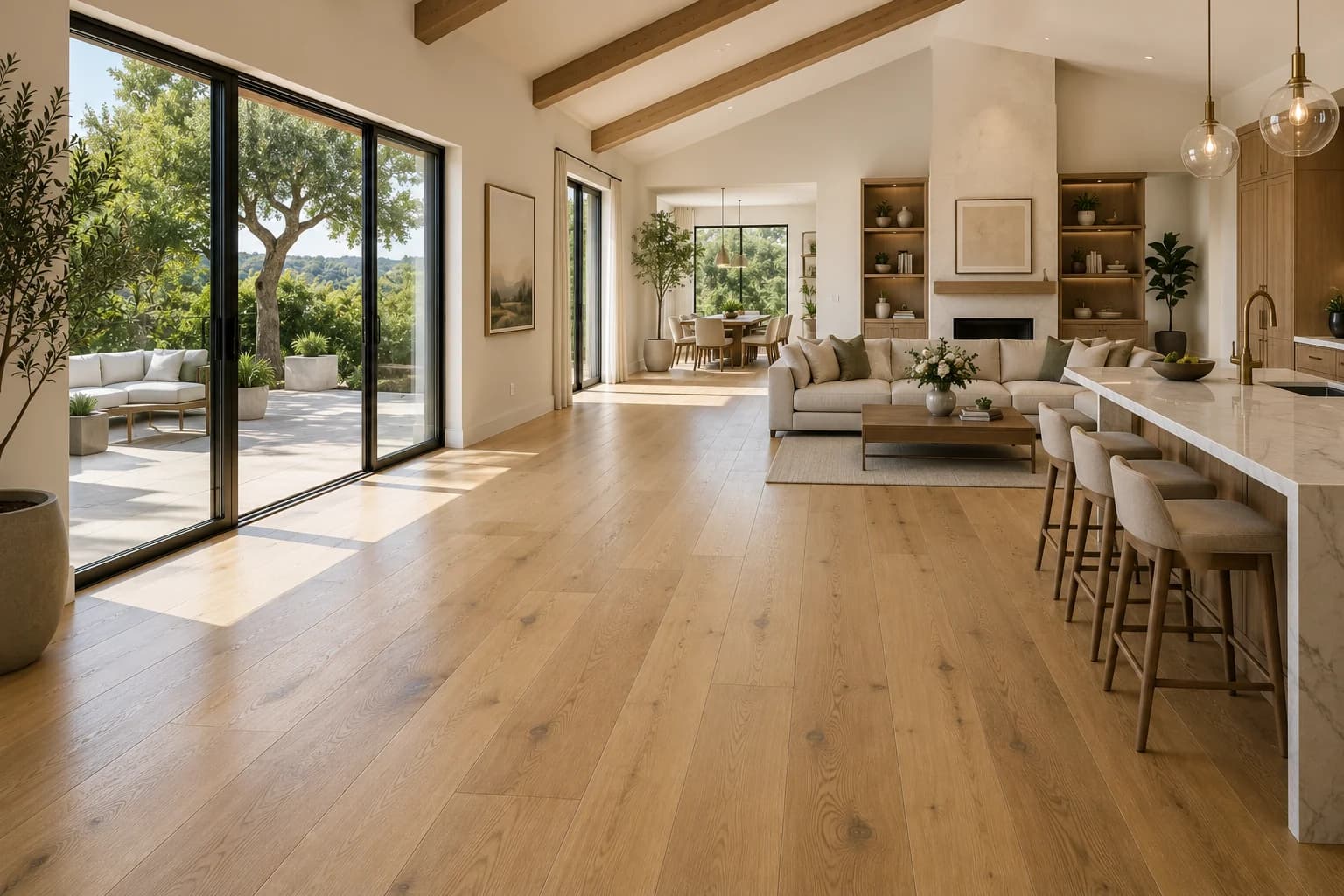
White Oak Hardwood
Great Room & Landing
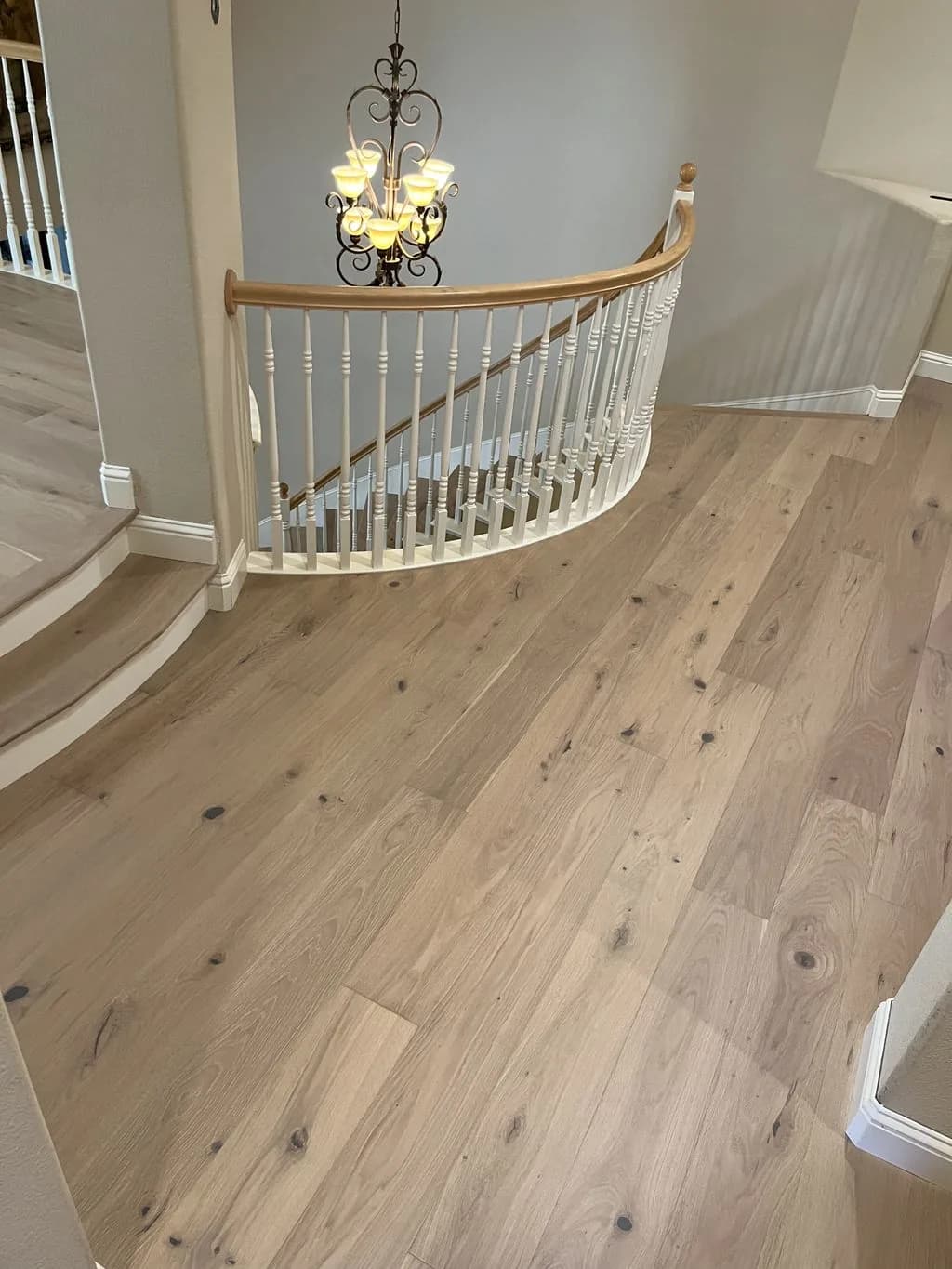
White Oak Hardwood
Staircase & Landing
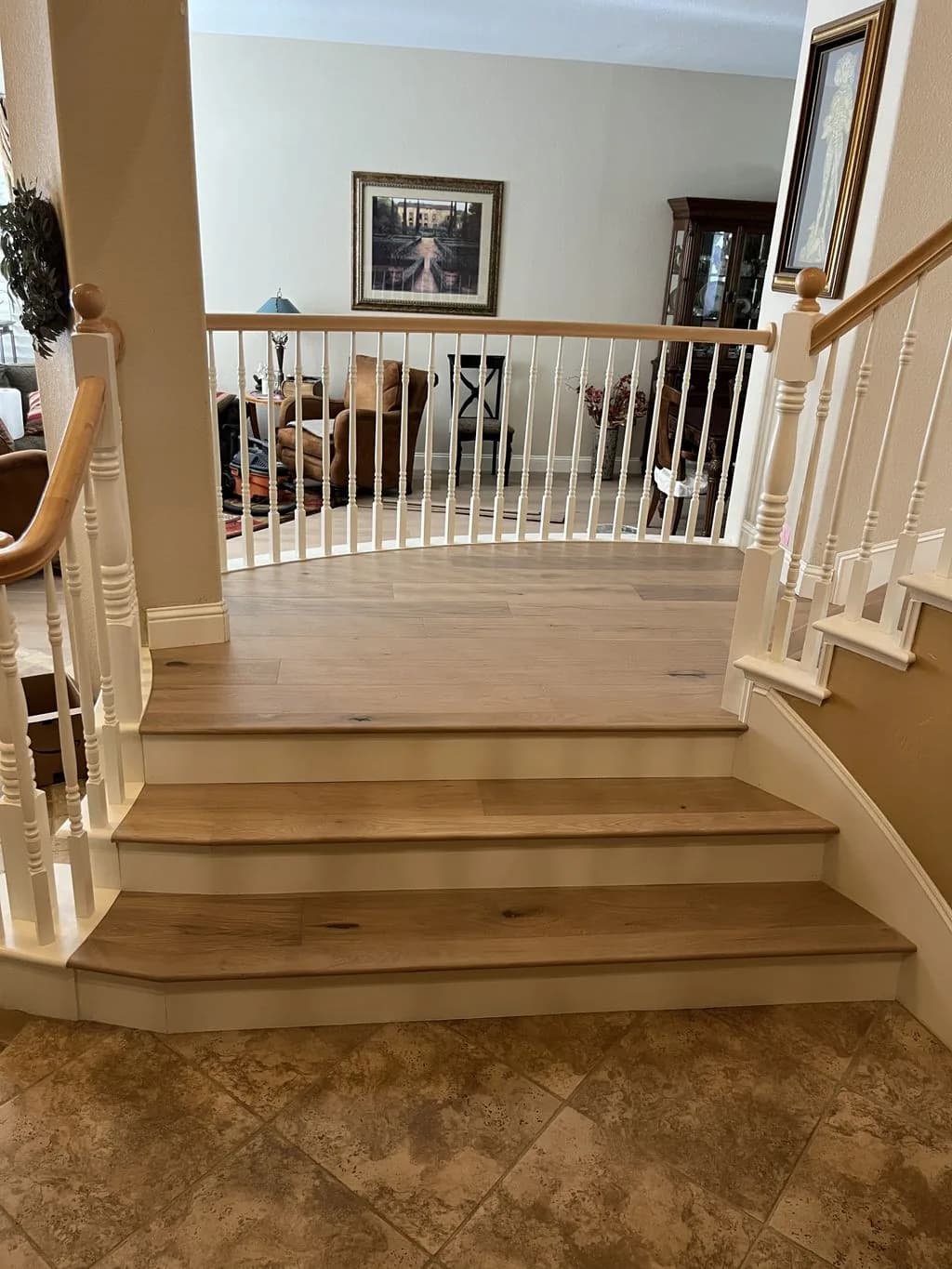
White Oak Hardwood
Curved Staircase
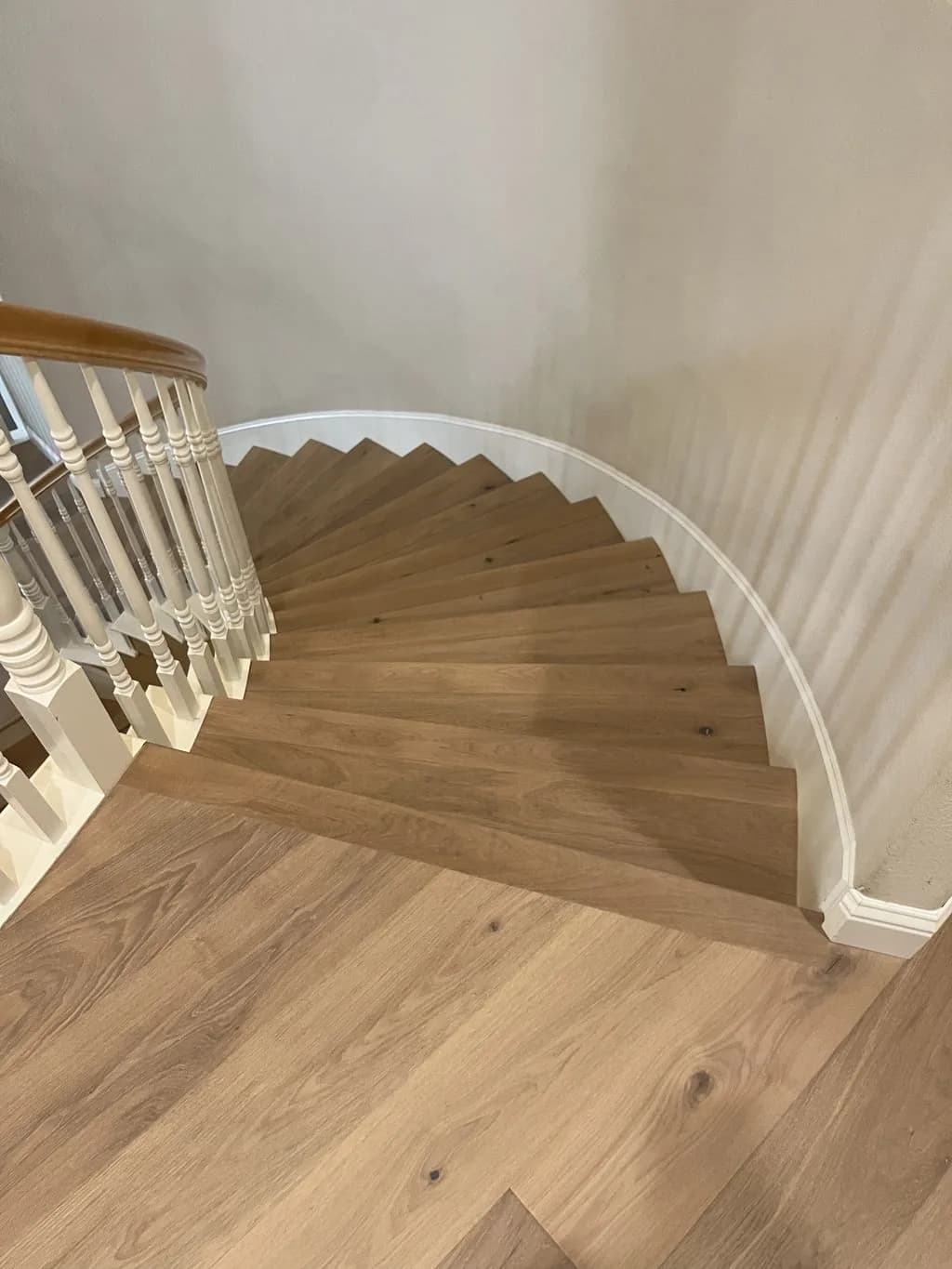
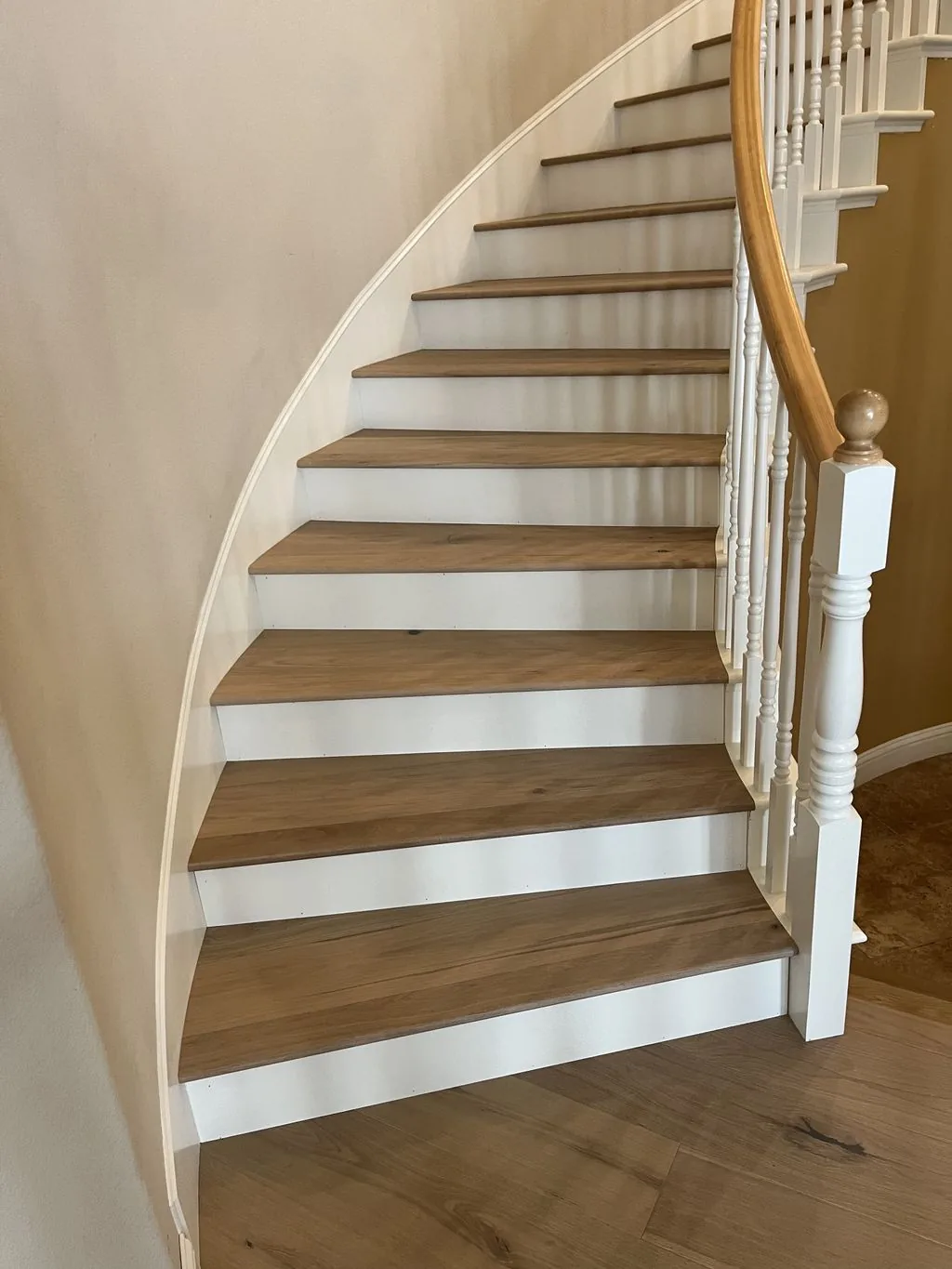
White Oak Hardwood
Stair Treads
Our Services
Flooring Services in Orangevale
From hardwood to luxury vinyl, here's how we help Orangevale homeowners upgrade their floors.
Hardwood Flooring
Solid oak, maple, and walkable heirloom-grade hardwood, precisely installed.
Hardwood Flooring in OrangevaleEngineered Hardwood
Real-wood wear layers built for California's climate swings.
Engineered Hardwood in OrangevaleLuxury Vinyl Plank
Waterproof, wood-look LVP for kitchens, baths, and busy households.
Luxury Vinyl Plank in OrangevaleLaminate Flooring
Durable, high-style laminate at a friendly price point.
Laminate Flooring in OrangevaleTile Flooring
Porcelain and ceramic tile set dead-level with crisp grout lines.
Tile Flooring in OrangevaleFloor Installation
Full-service installation from subfloor prep to final baseboard.
Floor Installation in OrangevaleFloor Refinishing
Sand, stain, and reseal tired hardwood back to new.
Floor Refinishing in OrangevaleFloor Repair
Board swaps, water damage, squeaks, and seamless patch-ins.
Floor Repair in OrangevaleLocal Considerations
What Orangevale Homes Need From a Floor
Climate, home age, and foundation type all shape the right flooring choice in Orangevale — here's what we account for.
A refinishing town: 60% of the stock predates 1980
Orangevale's long build-out — a median year of 1976, with real 1950s–60s ranch neighborhoods and the 1970s as the largest decade — means original oak turns up under carpet constantly, and it is usually worth saving. We evaluate wear layer at an exposed edge before quoting, and treat the era's sheet vinyl, resilient tile, and black adhesives as test-first materials. Where replacement wins, owners here tend to hold their homes long-term (75.5% owner-occupied), which tips choices toward durable engineered wood and quality rigid-core LVP over quick fixes.
The hardpan under the orange-grove soil
The town's namesake soil — deep, free-draining granitic loam — covers only about a fifth of the community; more than half of Orangevale sits over a cemented duripan two to three feet down that perches winter rainwater instead of letting it drain. Nothing here swells or heaves (surface shrink-swell is low everywhere), but perched water is patient: it finds crawlspaces and slabs through the wet season. Concrete moisture testing (ASTM F2170) and a crawlspace look are standard steps on our Orangevale estimates, not upsells.
Graded ground means on-site answers
Nearly half of Orangevale's mapped soil carries the USDA's designation for human-graded, cut-and-fill ground — the honest signature of seventy years of suburban earthwork over the old orchard tracts. A soil map that says 'disturbed' is telling you the lot-scale truth varies: one street drains like the granitic terraces, the next holds water over pan or fill. That is the real argument for how we work — moisture readings and subfloor checks on your actual lot, never assumptions imported from the town's reputation.
Raised 1950s–60s floors, slab 1970s–80s tracts
Orangevale's foundation mix follows its eras: the older ranch neighborhoods lean toward raised perimeter foundations with crawlspaces — where cupping almost always traces to crawlspace humidity and ventilation before anything about the wood itself — while the 1970s–80s tracts that make up half the stock are predominantly slab-on-grade. The prep path is decided lot by lot: crawlspace inspection and vapor management on one street, slab RH testing and moisture-appropriate underlayment on the next.
The all-electric era's dry interiors
More than a third of Orangevale homes — 37.4%, unusually high for a Sacramento suburb — heat with electricity, a fingerprint of the all-electric 1970s–80s tract boom, now often heat pumps. Electric forced-air runs dry and steady through the winter months while the ground outside saturates, widening the gap between the floor's two moisture environments. We acclimate wood on site to the home's real conditions and size expansion detailing for that swing rather than for a generic valley profile.
Horse property and acreage entries
County agricultural-residential zoning still holds multi-acre horse parcels among Orangevale's tracts — part of the community's identity since the colony days. Acreage living is hard on entries: boots, paddock grit, and dogs moving between barn and house all day. For these homes we spec genuinely durable, cleanable surfaces at the working entrances — rigid-core LVP, tile, honest walk-off zones — and save the hardwood for the rooms where it will be loved rather than punished.
County permits, and honestly boring hazard maps
Orangevale has no city hall: permits for structural work run through Sacramento County's Building Permits and Inspection Services, with the community's voice carried by an active planning advisory council. The hazard file is refreshingly dull — CAL FIRE maps no High or Very High fire severity zone anywhere in the community, and FEMA's flood maps put all of developed Orangevale in minimal-hazard Zone X, with the mapped floodway confined to the American River channel at the parkland southern edge. The moisture that matters here comes up from the ground seasonally, not over the riverbank.
Local Resources & References
Helpful Orangevale Resources
Authoritative local and industry references for permits, planning, and flooring standards.
- Our History — the 1844 grant, Cardwell's 1881 purchase, the 1887 Orangevale Company and 1888 ten-acre plat, incorporation May 29, 1896, and today's member-owned mutual structureOrange Vale Water Company
- 150-year history (Water Education Foundation, 2004) — the 1888 colony subdivision, one-share-per-acre water stock, the 1954 formation of the district by the Orangevale, Fair Oaks, and Citrus Heights systems, and the 1955 switch to Folsom Dam waterSan Juan Water District
- About — CHWD serves portions of Citrus Heights, Fair Oaks, Orangevale, Carmichael, and Roseville; Orangevale's water provider depends on the addressCitrus Heights Water District
- ACS 2020–2024 5-year estimates, Orangevale CDP — year built (median 1976, ~60% pre-1980), tenure (75.5% owner), structure types (80.9% detached), heating fuel (37.4% electric) via Census ReporterUS Census Bureau
- Orangevale series Official Series Description + SSURGO — the community is the series' type location; grid sampling shows the namesake unit at 18.3% of the CDP with 53% in duripan-dominated group-D map unitsUSDA NRCS
- Building Permits and Inspection Services — the permit authority for unincorporated OrangevaleSacramento County
- Fire Hazard Severity Zones, Local Responsibility Area (2025 map) — Orangevale is entirely LRA with no High or Very High zone anywhere in the CDP; the only mapped class is Moderate along the river corridorCAL FIRE
- National Flood Hazard Layer — developed Orangevale maps to Zone X, minimal flood hazard; the regulatory floodway is confined to the American River channel at the CDP's southern edgeFEMA
- 'Reviving a Legacy' — the Prosper Orchard: ten acres planted in 1911, Orangevale's last commercial fruit operation at its 2017 closing, bought by neighbors in 2018 and still farmedComstock's
External links are provided for reference. Always confirm current requirements with the issuing agency.
Explore Flooring Services in Orangevale
Nearby
Nearby Cities We Serve in Greater Sacramento
Serving the Region
Flooring Across Our Core Service Areas
We install and refinish floors across our core Northern California service areas — from the Sacramento region and the foothills to the Bay Area and wine country.
Good to Know
Frequently Asked Questions
Does Renaissance Floors serve Orangevale?
Yes. We install and refinish flooring throughout Orangevale and the surrounding Sacramento County area. Call (916) 749-0272 for a free estimate.
What flooring services do you offer in Orangevale?
We install hardwood, engineered wood, luxury vinyl plank, laminate, tile, and more in Orangevale, plus floor refinishing, repair, and full-service installation. See the full list below.
Are you licensed to work in Orangevale?
Yes. We hold CSLB C-15 license #1060673 (C-15 Flooring & Floor Covering) and carry insurance. We're based in Roseville, CA and serve Orangevale and all of Greater Sacramento & Northern California.
How do I get a free flooring estimate in Orangevale?
Call (916) 749-0272 or request an estimate online. We'll schedule a convenient in-home visit in Orangevale, measure your space, and give you an honest, no-pressure quote.
Do I need a permit to replace flooring in Orangevale?
Floor-covering replacement is generally finish work rather than permitted construction; structural subfloor repair, or flooring inside a larger remodel, can require a permit — and because Orangevale is unincorporated, that permit comes from Sacramento County's Building Permits and Inspection Services rather than any city department. We make the determination as part of any project that touches structure and handle the paperwork when it does.
Can original hardwood in an Orangevale home be refinished?
Very often — this is one of our best refinishing markets. With 60% of the community built before 1980, original oak under later carpet is a routine find, and where the wear layer above the tongue is sound it refinishes beautifully. The same era means pre-1980 sheet vinyl, resilient tile, and black adhesives can be present underneath; we treat those as test-first materials and bring in licensed abatement rather than disturbing a positive result.
Is my Orangevale home on a slab or a crawlspace?
It tracks your home's era: the 1950s–60s ranch neighborhoods lean toward raised foundations with crawlspaces, while the 1970s–80s tracts — half the community's stock — are mostly slab-on-grade. The distinction decides the prep: crawlspace moisture and ventilation checks on raised floors, in-slab relative-humidity testing (ASTM F2170) before rigid flooring on concrete. We confirm on site, because Orangevale's graded, patchwork ground makes lot-level verification worth more here than in most suburbs.
I heard Orangevale has famously good soil — does that make flooring easier?
Partly true, honestly told. The town really is the type location of the USDA's Orangevale series — deep, free-draining granitic loam — but that namesake soil covers only about a fifth of the community, and more than half of Orangevale sits over a cemented hardpan that perches winter rain two to three feet down. The good news holds on one axis: nothing here is expansive clay, so slab heave is genuinely rare. The caution holds on the other: seasonal moisture over hardpan means we test slabs and check crawlspaces rather than trusting the town's reputation.
Does electric heat change how wood floors behave?
It changes the winter indoor environment, and Orangevale has an unusually high electric-heat share (37.4%) from its all-electric tract era. Electric forced-air and heat-pump systems run dry, steady heat that pulls indoor humidity down through the wet season — widening the annual swing your floor crosses. The fix is craft, not product: genuine on-site acclimation, correct expansion gaps, and vapor protection matched to your foundation.
Do you work on horse properties and larger parcels?
Regularly — Orangevale's agricultural-residential parcels are part of its character, and acreage homes have their own flooring logic: working entries that take boots, grit, and dogs deserve genuinely tough, cleanable surfaces (rigid-core LVP, tile, real walk-off zones), while the home's living core gets the hardwood. We plan the transitions so the working half and the beautiful half of the house meet cleanly.
Is Orangevale in a fire or flood zone?
About as little as any community we serve. CAL FIRE's current maps show no High or Very High fire-hazard severity zone anywhere in Orangevale — the community is entirely local-responsibility ground, with only a Moderate strip along the river corridor. FEMA maps all of developed Orangevale as Zone X, minimal flood hazard; the floodway is confined to the American River channel at the far southern edge, which is parkland. Neither constrains your flooring choices.
Does Renaissance Floors offer free estimates in Orangevale?
Yes — free, no-obligation in-home estimates, financing options, and a workmanship warranty. We're a licensed CSLB C-15 flooring contractor (license #1060673) based in Roseville, minutes away down Greenback Lane. Call (916) 749-0272 to schedule.
Ready for Floors You'll Love?
Free, no-pressure flooring estimates throughout Orangevale and Sacramento County.