
Service Area
Flooring in Napa
Renaissance Floors installs and refinishes hardwood, luxury vinyl, tile, and more for homeowners throughout Napa and the surrounding Napa County area.
CSLB #1060673
Licensed & Insured
Est. 2019
Family-Owned
15+ Years
Hands-On Experience
5.0★ Rated
22 Reviews on Thumbtack
Local, Licensed, Accountable
Flooring Contractor Serving Napa
Napa is part of Napa County, and it's one of the communities Renaissance Floors regularly works in. We're based in Roseville, CA and serve homeowners across Greater Sacramento & Northern California— from small refinishing jobs to full home installs. Every project starts with an honest look at your subfloor and your goals, followed by a clear, no-pressure estimate. There's no dispatched sales team and no guesswork: you work directly with the crew doing the installation, backed by our CSLB C-15 license and a workmanship warranty on every job.
Wine Country homes lean into indoor-outdoor living, where warm wide-plank oak and durable luxury vinyl both shine. We help you choose flooring that looks at home in everything from a Sonoma ranch to a Napa estate.
Napa is the working town of the wine valley, and the numbers say so plainly: the city holds 58% of Napa County's population, its median home value sits slightly below the county's, and 41.3% of its households rent — a service-economy city, not a brochure. It exists because of the river. Nathan Coombs laid out the original town site in 1847 at the uppermost navigable point on the Napa River, steamboats began running to San Francisco in 1850, and the town was formally incorporated on March 23, 1872 (reincorporated as the City of Napa in 1874). Today it is a charter city and the county seat, about 19.5 square miles of planning area — with a wrinkle worth knowing before any permit: unincorporated county pockets sit inside the city limits, so a Napa address doesn't always mean a City of Napa permit.
The defining event in living memory happened at 3:20 in the morning. The M6.0 South Napa earthquake of August 24, 2014 ruptured the West Napa fault beneath the city's soft sedimentary basin, and the USGS account of the damage reads like a flooring inspection report: the commercial buildings that failed were pre-1950 masonry, the wood-frame houses that were damaged were the older ones, and the failures were 'broken or cracked chimneys and failure of cripple walls' — which USGS defines as 'short walls in the crawl space between the foundation and the floor.' A few homes shifted off their foundations outright; more than a hundred structures were red-tagged. The ground kept moving after the shaking stopped, with several inches of additional afterslip over the following days. The city's own General Plan names the neighborhoods the fault zone crosses: Linda Vista, Browns Valley, and Westwood among them.
That history has a practical consequence you can look up. Napa's ZIP codes, 94558 and 94559, sit on California's Earthquake Brace + Bolt eligibility list — and the state selects those ZIPs on two weighted criteria: seismic hazard and the share of houses built before 1940. In other words, the state has independently certified that Napa combines high shaking risk with genuinely old, raised-foundation housing. The census agrees: 61.4% of Napa's 32,141 homes predate 1980, which is precisely the cutoff that defines a cripple-wall retrofit candidate, and 8.8% predate 1940. (Napa runs no municipal retrofit program of its own — the brace-and-bolt framework is the state's, and its enrollment window opens and closes, so check the program directly rather than assuming a grant is available.)
The historic core is documented to a level most towns can't match. Napa Abajo/Fuller Park — listed on the National Register in February 1997, the city's only National Register district — covers 120 acres and 604 buildings across some thirty blocks directly south of downtown, with a period of significance running 1868 to 1918. Its nomination catalogs Stick/Eastlake, Italianate, and Queen Anne alongside Colonial Revival and Craftsman, mansions of twenty-plus rooms beside two-room shotgun and hall-and-parlor cottages, Fuller Park itself (established 1905), and a double row of 1890s redwoods on Franklin Street now a hundred feet tall. For our purposes one sentence in that nomination matters most: 'many single-story houses have raised basements,' with brick and stone foundations recorded building by building. Citywide, 2,538 properties sit on Napa's Historic Resources Inventory, the city has been a Certified Local Government since 1986, and the State Historical Building Code is written into its municipal code for rehabilitation work.
Napa's other civic epic is the river itself. Twenty-one serious floods since 1862 produced Measure A, which two-thirds of county voters passed in March 1998 — a half-cent sales tax funding a deliberately unconventional design the county calls a 'living river': geomorphic terracing that reconnects the channel to its historic floodplain, a dry bypass around the Oxbow so floodwater can shortcut the turns, bridge replacements, floodwalls, and more than 600 acres of restored tidal wetlands. Construction began in 2000 and it is still finishing; the General Plan puts remaining floodwall elements at an estimated 2027. The payoff is visible in FEMA's current maps: downtown, Old Town, and the entire Napa Abajo/Fuller Park district now map as Zone X, minimal flood hazard, while the regulatory floodplain is confined to the river corridor and the Oxbow — exactly where the engineering put it. Flood zones vary block by block here, so we point homeowners to FEMA's map service rather than guessing.
The ground and the air are the last two pieces. Under most residential neighborhoods the soil survey maps Cole silt loam — clay content climbing from about 25% near the surface past 40% at depth, linear extensibility reaching 7.2, somewhat poorly drained, rated 'very limited' for dwellings — grading to poorly drained Egbert silty clay loam along the river and well-drained Coombs gravelly loam on the northern fans. That is genuinely expansive ground, and combined with a documented seismic history it makes subfloor flatness and slab moisture the two things we check before anything rigid goes down. Overhead, Napa is the only market we serve with a real marine climate, and there's a single number that proves it: September, not July, is the warmest month here (84.4°F against July's 83.3°F), the classic fingerprint of San Pablo Bay air. Napa's July high runs about 11 degrees below Sacramento's, and it takes about 26.7 inches of rain a year against the valley's 19. Renaissance Floors is a licensed CSLB C-15 contractor (license #1060673) based in Roseville, and we bring that whole picture — expansive clay, quake-tested crawlspaces, a marine equilibrium, and a genuine historic core — to every Napa estimate.
Local Coverage
Neighborhoods We Serve in Napa
From Downtown Napa (Oxbow District) to Browns Valley, Renaissance Floors installs and refinishes floors across Napa.
Recent Work
A Sample of Our Craftsmanship
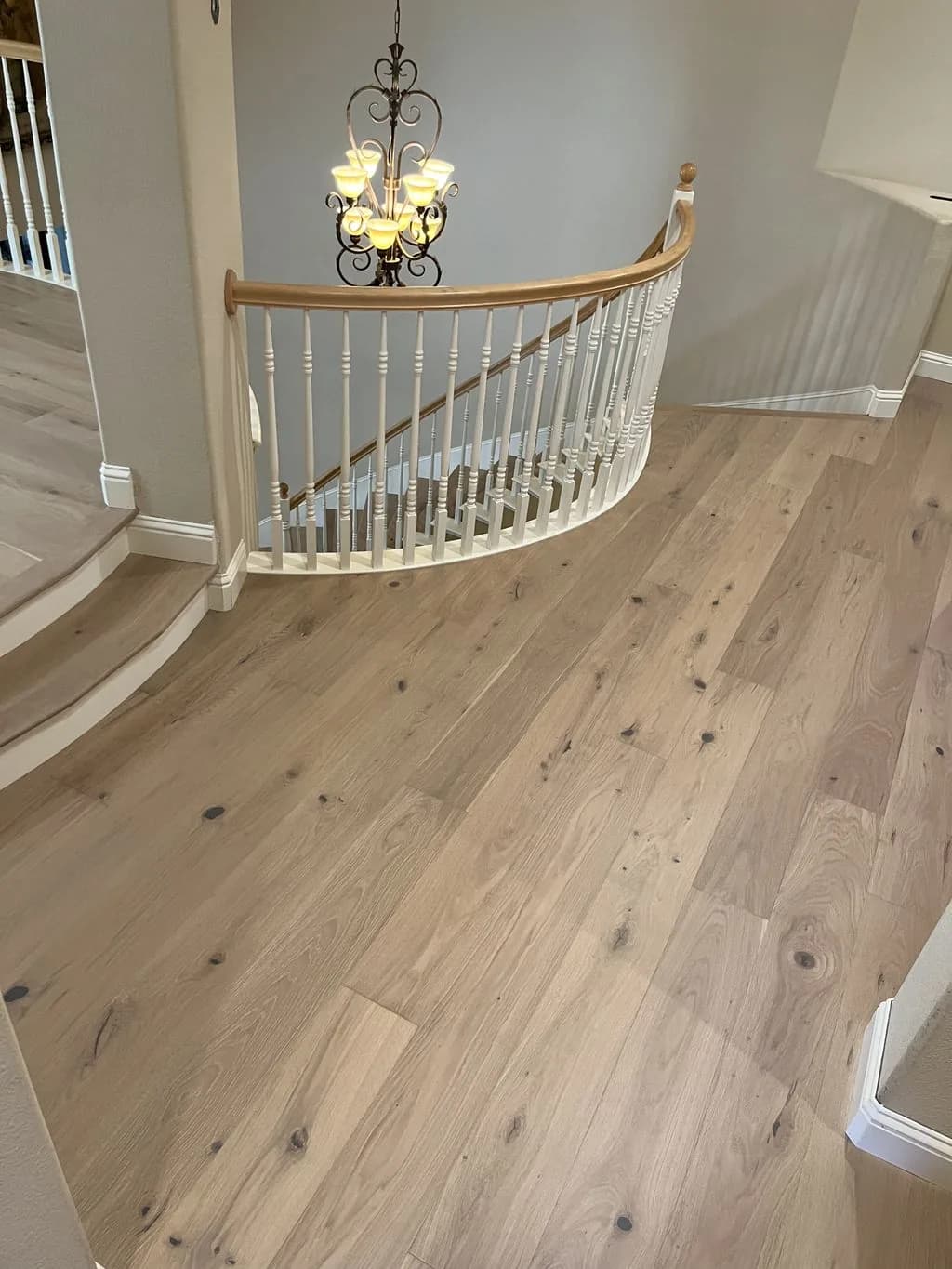
White Oak Hardwood
Great Room & Landing
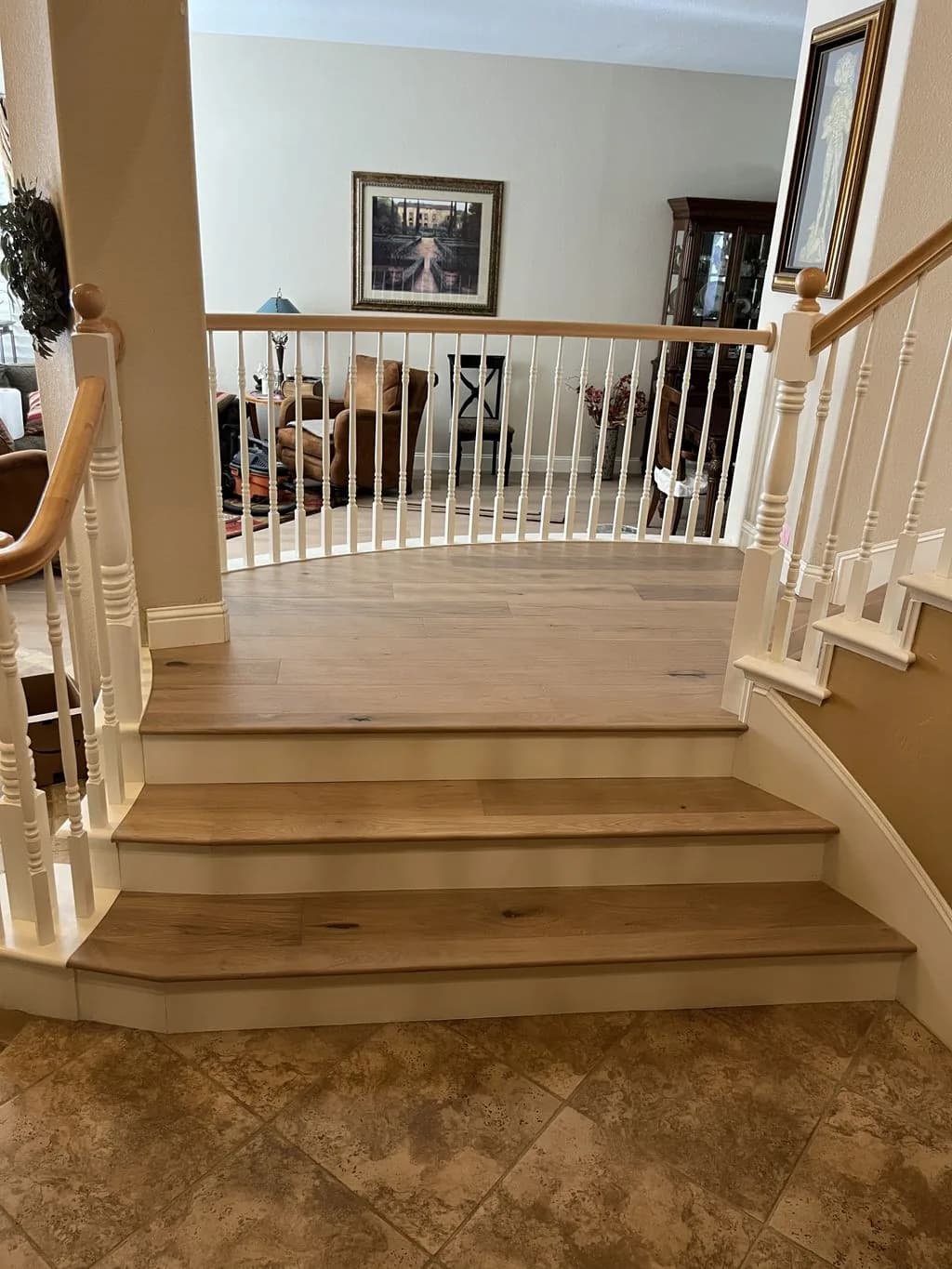
White Oak Hardwood
Staircase & Landing
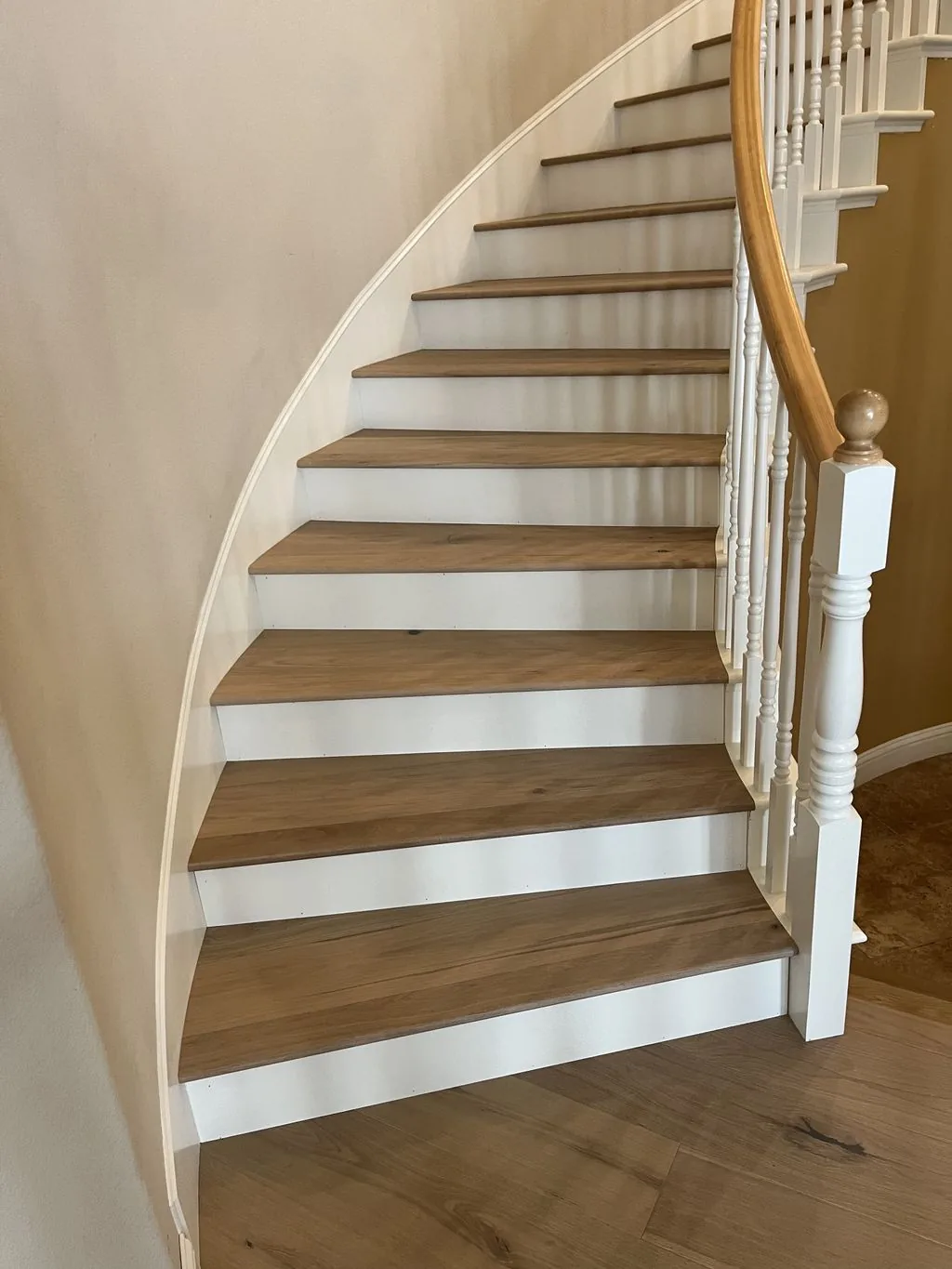
White Oak Hardwood
Curved Staircase
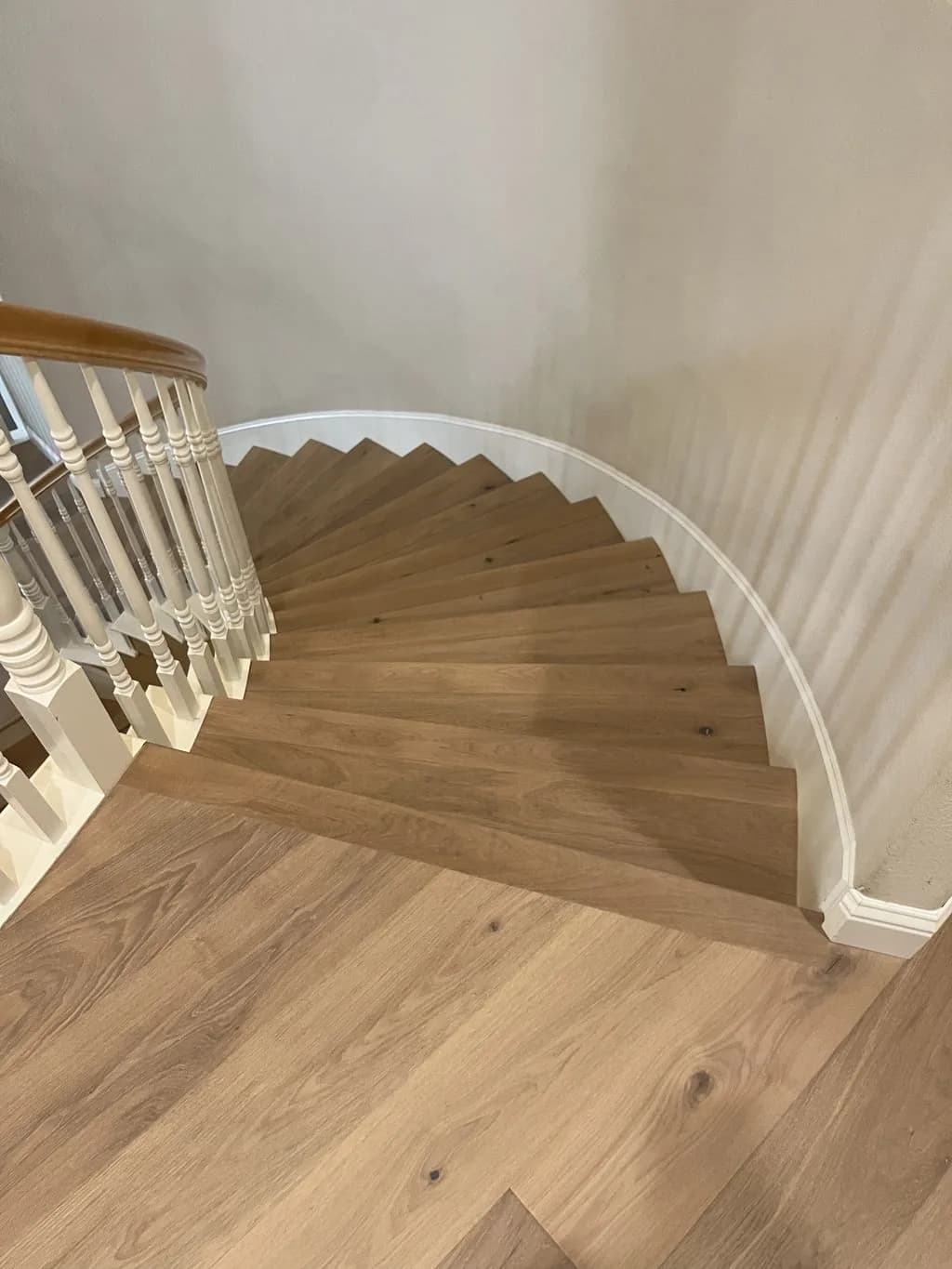
White Oak Hardwood
Stair Treads
Our Services
Flooring Services in Napa
From hardwood to luxury vinyl, here's how we help Napa homeowners upgrade their floors.
Hardwood Flooring
Solid oak, maple, and walkable heirloom-grade hardwood, precisely installed.
Hardwood Flooring in NapaEngineered Hardwood
Real-wood wear layers built for California's climate swings.
Engineered Hardwood in NapaLuxury Vinyl Plank
Waterproof, wood-look LVP for kitchens, baths, and busy households.
Luxury Vinyl Plank in NapaLaminate Flooring
Durable, high-style laminate at a friendly price point.
Laminate Flooring in NapaTile Flooring
Porcelain and ceramic tile set dead-level with crisp grout lines.
Tile Flooring in NapaFloor Installation
Full-service installation from subfloor prep to final baseboard.
Floor Installation in NapaFloor Refinishing
Sand, stain, and reseal tired hardwood back to new.
Floor Refinishing in NapaFloor Repair
Board swaps, water damage, squeaks, and seamless patch-ins.
Floor Repair in NapaLocal Considerations
What Napa Homes Need From a Floor
Climate, home age, and foundation type all shape the right flooring choice in Napa — here's what we account for.
Cripple walls, and why we look underneath first
USGS's account of the 2014 M6.0 quake names the exact failure mode that matters to a floor: cripple-wall collapse in the crawl space between foundation and framing, with a few Napa homes shifting off their foundations entirely and the older wood-frame houses taking the worst of it. Any pre-1980 Napa home with a raised foundation deserves a look below before new flooring goes above — for out-of-level framing, past repairs, and whether the cripple walls have been braced. A beautiful floor over an unbraced crawl space is a floor waiting for the next event.
Cole silt loam: expansive ground, measured
The soil under most of Napa's residential neighborhoods is Cole silt loam, whose clay content roughly doubles with depth and whose linear extensibility reaches 7.2 — high shrink-swell by the federal survey's own scale, on soil rated 'very limited' for dwellings. Along the river it grades into poorly drained Egbert silty clay loam. Practically: slabs move seasonally here, so in-slab relative-humidity testing (ASTM F2170) and flatness checks come before product selection, and floating assemblies that tolerate a little movement often outperform rigid glue-downs.
A marine equilibrium, not a valley one
September is Napa's warmest month — the marine signature that separates it from every inland market we serve — and its summers run about eleven degrees cooler than Sacramento's with roughly 26.7 inches of annual rain against the valley's 19. For wood flooring that changes the target, not just the vocabulary: indoor humidity here doesn't swing to the inland dry extreme, so acclimation aims at a higher, steadier equilibrium moisture content, and the ambient damp of a foggy Napa winter matters more than a heat wave does.
Raised basements in the historic district
The National Register nomination for Napa Abajo/Fuller Park records that many of the district's single-story houses have raised basements, with brick and stone foundations documented building by building across 604 buildings and a period of significance from 1868 to 1918. That is the classic refinishing environment: original wood over board subfloors, a century of settlement, and crawlspace or basement moisture that has to be read before the finish is judged. We treat pre-1980 resilient layers and adhesives in these homes as test-first materials rather than tear-out surprises.
Historic review is about the outside
Napa's Certificate of Appropriateness process is built around exterior appearance: the city's application asks for building elevations with materials and colors, photographs showing all facades, a materials board and color palette, site and landscape plans — and never asks about interior finishes. What triggers review depends on a property's specific historic designation, so we confirm with the Planning Division before a larger project starts. Worth knowing which designation you actually have: Napa Abajo/Fuller Park is the city's only National Register district, Calistoga Avenue is a local landmark district, and several other neighborhoods are identified only as potential districts.
Two permit authorities, one Napa address
The City of Napa's Building Division at 1600 First Street runs permits under the 2025 California Building Code — and notably has no online submittal portal, so plans go in person or by mail (Napa County has an online permit center; the city does not, and confusing the two costs a week). Because unincorporated county pockets sit inside and around the city limits, some Napa-addressed properties permit through Napa County instead. Finish flooring is generally not permit work; subfloor structure and other trades can be. We settle jurisdiction and permit status before scheduling.
A city that moved its historic core off the floodplain
After twenty-one serious floods since 1862, Napa voters funded the living-river project in 1998 and have been building it ever since — terracing, the Oxbow dry bypass, floodwalls estimated complete around 2027, and 600-plus acres of restored wetlands. FEMA's current mapping puts downtown, Old Town, and the whole Napa Abajo/Fuller Park district in Zone X, minimal hazard, with the regulatory floodplain confined to the river corridor. It's why century-old Napa houses are still standing and dry — though zones change block by block, so we point owners to FEMA's map service center rather than making promises about a parcel.
Local Resources & References
Helpful Napa Resources
Authoritative local and industry references for permits, planning, and flooring standards.
- M6.0 South Napa Earthquake, August 24, 2014 — pre-1950 masonry and older wood-frame damage, cracked chimneys and cripple-wall failure ('short walls in the crawl space between the foundation and the floor'), homes shifted off foundations, 100+ red-tagged, soft-sediment amplification and days of afterslipUS Geological Survey
- Earthquake Brace + Bolt — ZIP eligibility (94558 and 94559 both listed), the pre-1980 raised-foundation criteria, and what a brace-and-bolt retrofit does; ZIPs are selected on seismic hazard plus the share of pre-1940 housesCalifornia Residential Mitigation Program
- National Register nomination, Napa Abajo/Fuller Park Historic District (ref. 97000042, listed February 19, 1997) — 120 acres, 604 buildings, ~30 blocks, period of significance 1868–1918; 'many single-story houses have raised basements'; Fuller Park (1905) and the 1890s Franklin Street redwoodsNational Park Service
- Napa 2040 General Plan (adopted October 18, 2022) — incorporation March 23, 1872; the West Napa fault zone crossing Linda Vista, Browns Valley and Westwood; liquefaction along the river and creeks; flood-project elements estimated complete by 2027; 2,538 properties on the Historic Resources Inventory; Certified Local Government since 1986City of Napa
- Napa River/Creek Flood Protection Project — Measure A passed by two-thirds of voters in March 1998; the 'living river' geomorphic design, Oxbow dry bypass, and 600+ acres of restored tidal wetlands; 21 serious floods recorded since 1862Napa County
- SSURGO / Soil Data Access (survey CA055), 17 sampled points — Cole silt loam under most residential neighborhoods (clay 25→42%, linear extensibility to 7.2, 'very limited' for dwellings), Egbert silty clay loam along the river, well-drained Coombs gravelly loam on the fansUSDA NRCS
- 1991–2020 normals, Napa State Hospital station USC00046074 — July high 83.3°F, September 84.4°F (the warmest month, a marine signature no inland market shares), annual precipitation 26.66 inNOAA NCEI
- National Flood Hazard Layer and Map Service Center — downtown, Old Town and the Napa Abajo/Fuller Park district mapped Zone X (minimal hazard), with Zone AE confined to the river corridor and the Oxbow; look up any specific parcel hereFEMA
- Building Division, 1600 First Street — permits under the 2025 California Building Code as amended by Municipal Code 15.04.010; the City has no online submittal portalCity of Napa
External links are provided for reference. Always confirm current requirements with the issuing agency.
Explore Flooring Services in Napa
Nearby
Nearby Cities We Serve in Wine Country
Serving the Region
Flooring Across Our Core Service Areas
We install and refinish floors across our core Northern California service areas — from the Sacramento region and the foothills to the Bay Area and wine country.
Good to Know
Frequently Asked Questions
Does Renaissance Floors serve Napa?
Yes. We install and refinish flooring throughout Napa and the surrounding Napa County area. Call (916) 749-0272 for a free estimate.
What flooring services do you offer in Napa?
We install hardwood, engineered wood, luxury vinyl plank, laminate, tile, and more in Napa, plus floor refinishing, repair, and full-service installation. See the full list below.
Are you licensed to work in Napa?
Yes. We hold CSLB C-15 license #1060673 (C-15 Flooring & Floor Covering) and carry insurance. We're based in Roseville, CA and serve Napa and all of Greater Sacramento & Northern California.
How do I get a free flooring estimate in Napa?
Call (916) 749-0272 or request an estimate online. We'll schedule a convenient in-home visit in Napa, measure your space, and give you an honest, no-pressure quote.
Do I need a permit to replace flooring in Napa?
Floor-covering replacement is generally treated as finish work rather than permitted construction, while structural subfloor repair or flooring inside a larger remodel can require a permit — confirm with the City of Napa Building Division at 1600 First Street, which works under the 2025 California Building Code. Two Napa specifics: the City has no online submittal portal (Napa County does, which trips people up), and because unincorporated county pockets sit inside the city limits, some Napa-addressed properties permit through the County instead. We settle jurisdiction before scheduling.
Should I worry about my subfloor because of the 2014 earthquake?
It's worth a look, and that isn't marketing — USGS's own account of the M6.0 South Napa quake attributes the residential damage to cracked chimneys and failure of cripple walls, the short walls in the crawl space between foundation and floor, with a few homes shifting off their foundations and the older wood-frame houses hit hardest. Before we install over any pre-1980 raised foundation here, we look underneath for out-of-level framing, previous repairs, and whether cripple walls have been braced. If they haven't, that's a conversation to have before the floor, not after.
Is my Napa home eligible for earthquake retrofit help?
Napa's ZIP codes 94558 and 94559 are on California's Earthquake Brace + Bolt eligibility list, which covers pre-1980 wood-framed houses on raised foundations — and the state picks those ZIPs partly on the share of pre-1940 housing, which is a fair independent signal about Napa's stock. The program's registration window opens and closes, though, so check its current status directly rather than assuming funding is open. Napa itself doesn't run a municipal retrofit program; the framework is the state's. We're happy to coordinate flooring work around a retrofit so the sequence runs in the right order.
What does Napa's soil mean for a slab floor?
It means testing rather than assuming. Most residential neighborhoods sit on Cole silt loam, whose clay content roughly doubles with depth and whose shrink-swell rating is high — the soil survey calls it very limited for dwellings — and it grades into poorly drained Egbert silty clay loam nearer the river. Expansive ground moves slabs seasonally, so we run in-slab relative-humidity testing (ASTM F2170), check flatness across the run, and often favor assemblies that tolerate a little movement over fully rigid glue-downs. The northern alluvial fans (Coombs gravelly loam) are the best ground in the city.
Can original wood floors in an older Napa home be refinished?
Frequently, and Napa is a genuinely good market for it: 8.8% of the city's housing predates 1940, concentrated in the Napa Abajo/Fuller Park district whose National Register nomination documents 604 buildings from the 1868–1918 period, many with raised basements over brick and stone foundations. We evaluate wear layer at an exposed edge, read the crawlspace or basement for moisture first, and work with a century of settlement rather than fighting it. Pre-1980 resilient layers and black adhesives get tested before disturbance.
Does the historic district restrict what flooring I can install?
The city's Certificate of Appropriateness process is built around exterior appearance — the application asks for elevations with materials and colors, facade photographs, and a materials and color board, and never asks about interior finishes. So interior flooring isn't what that review is aimed at. Because what triggers review depends on your property's specific designation, we'd confirm with the Planning Division before a larger project. Also worth knowing: Napa Abajo/Fuller Park is the city's only National Register district; Calistoga Avenue is a local landmark district, and several other areas are identified only as potential districts.
How does Napa's climate change flooring choices?
Napa is the one market we serve with a real marine climate, and the proof is a single statistic: September, not July, is the warmest month here. Summers run about eleven degrees cooler than Sacramento's and the city takes roughly 26.7 inches of rain a year against the valley's nineteen. Indoor humidity therefore doesn't swing to the inland dry extreme — so acclimation targets a higher, steadier equilibrium, and a damp, foggy winter matters more to your floor than a heat wave does. Engineered wood is very much at home in that environment; solid wood does well when acclimated to Napa's actual conditions rather than a generic inland target.
Does Renaissance Floors offer free estimates in Napa?
Yes — free, no-obligation in-home estimates, financing options, and a workmanship warranty. We're a licensed CSLB C-15 flooring contractor (license #1060673) based in Roseville, and we serve the City of Napa and the surrounding valley. Call (916) 749-0272 to schedule.
Related
Keep Reading
Related pages: Laminate Flooring in Clarksburg, Luxury Vinyl Plank in Clarksburg, Hardwood Flooring in Napa, and Engineered Hardwood in Napa.

Ready for Floors You'll Love?
Free, no-pressure flooring estimates throughout Napa and Napa County.