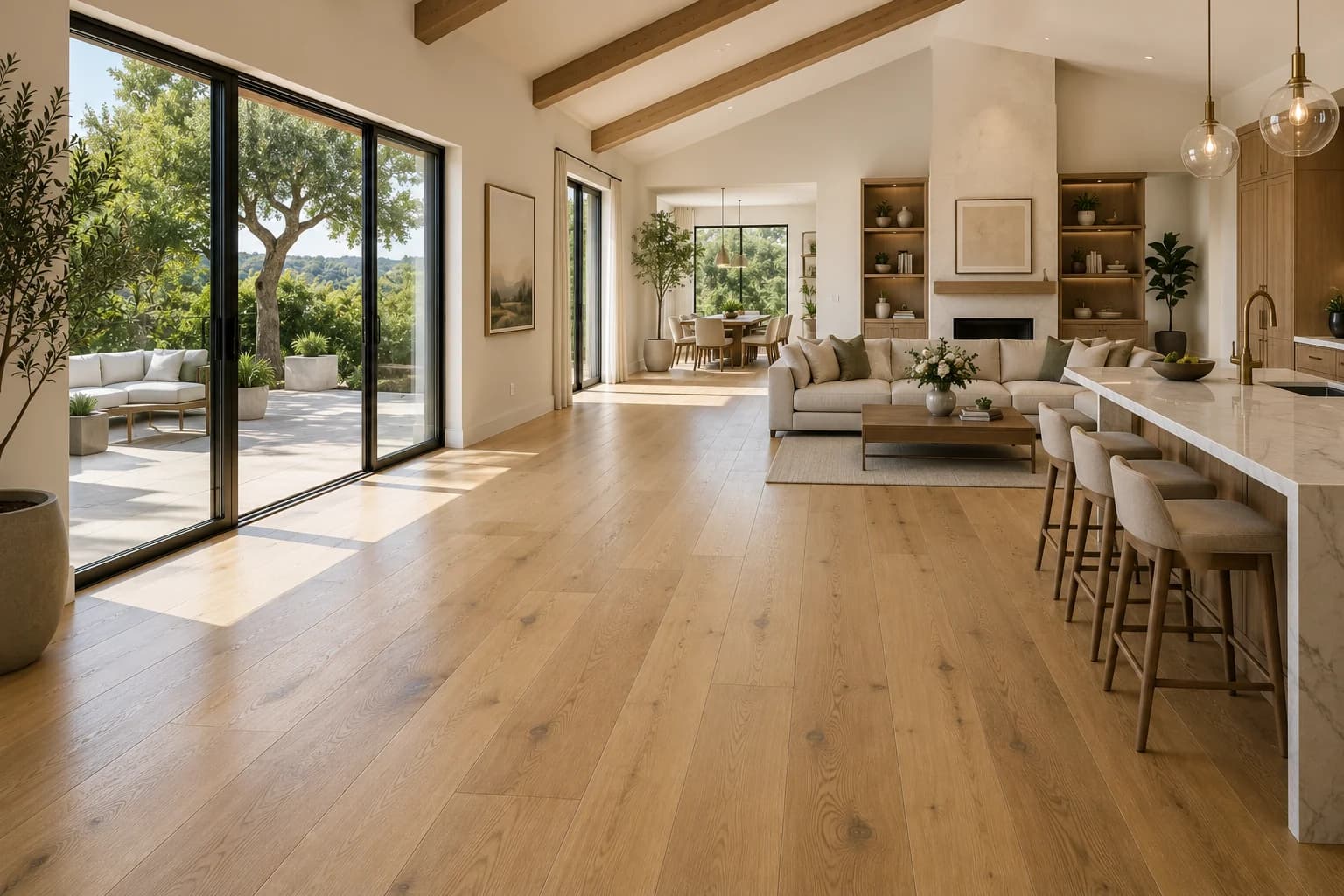
Service Area
Flooring in Cool
Renaissance Floors installs and refinishes hardwood, luxury vinyl, tile, and more for homeowners throughout Cool and the surrounding El Dorado County area.
CSLB #1060673
Licensed & Insured
Est. 2019
Family-Owned
15+ Years
Hands-On Experience
5.0★ Rated
22 Reviews on Thumbtack
Local, Licensed, Accountable
Flooring Contractor Serving Cool
Cool is part of El Dorado County, and it's one of the communities Renaissance Floors regularly works in. We're based in Roseville, CA and serve homeowners across Greater Sacramento & Northern California— from small refinishing jobs to full home installs. Every project starts with an honest look at your subfloor and your goals, followed by a clear, no-pressure estimate. There's no dispatched sales team and no guesswork: you work directly with the crew doing the installation, backed by our CSLB C-15 license and a workmanship warranty on every job.
El Dorado County ranges from newer El Dorado Hills neighborhoods to mountain properties around South Lake Tahoe. For cabins and higher elevations, we favor engineered wood and waterproof LVP that stand up to snow, moisture, and temperature swings.
Cool is a canyon-rim town. The crossroads of Highways 49 and 193 sits at 1,534 feet — roughly 960 vertical feet above the confluence of the American River's forks, about two miles away — and the wild canyon on its doorstep is there by historical accident: the Bureau of Reclamation bought those gorges for the Auburn Dam, authorized by Congress in 1966, halted in the early 1980s over earthquake and cost concerns, and never built. The federal project land became Auburn State Recreation Area instead, and Cool became something almost no town its size can claim: one of the park's four named major trailheads. State Parks' own brochure puts it exactly — 'the multi-use Olmstead Loop and connector at Cool (behind the fire station)' — a hundred-mile trail network opening from behind the fire station in the middle of town.
Before it was Cool it was Cave Valley — named, the county's history records, for the limestone caves nearby — a Gold Rush way-station country where the Penobscot Public House served miners from around 1849 and survives today as a working cattle and trail-riding ranch. How Cave Valley became 'Cool' is genuinely unsettled: the story usually told credits a nineteenth-century preacher named Aaron Cool, but no documented source carries it, and we won't pretend otherwise. The old name lives on in the town's north edge, where the Cool Cave Quarry — today an active, hundred-acre Teichert aggregate operation on Highway 49 — carries the limestone era's name into the present, producing sand and gravel where the historic Mountain Quarries workings once cut stone down in the canyon.
The trails are the identity, and the details reward precision. About twenty miles of the Western States Trail thread the canyons below town — the corridor ridden by the Tevis Cup and run by the Western States 100. The hundred-mile run's aid station at mile 85.2 is named Auburn Lake Trails, set inside the very community the Census Bureau uses to count Cool; the Tevis route itself passes below town, through checkpoints at Lower Quarry and at No Hands Bridge — the 1912 Mountain Quarries Railroad Bridge, a National Register concrete arch 830 feet beneath the town that was once, in the Tevis organization's words, 'the only direct link between Auburn and Cool.' Horse country here is not a marketing adjective; it is the built environment — which is why half our Cool conversations start at the mudroom.
The housing splits into two markets sharing one ZIP code, and the county's own parcel records quantify it. Inside the Auburn Lake Trails boundary: a platted community of one-to-two-acre lots (median exactly 2.00 acres), eighty percent built out, almost entirely single-family and owner-occupied, with a median build year of 1984. Outside it: genuine ranch country with a median parcel of 10 acres, nearly forty percent of parcels at twenty acres or more, and only about half ever built on. Both markets run largely off the gas grid — fifty-seven percent of homes heat with propane and fewer than one in ten has piped natural gas — and both sit on ground the soil survey describes with unusual drama: at the townsite, serpentinite-derived Delpiedra very rocky loam with weathered bedrock about twelve inches down, and greenstone slopes of thirty to fifty percent through Auburn Lake Trails.
That ground writes the flooring rules. Bedrock a foot down on steep slopes means cut-and-fill pads, stepped and stem-wall foundations, and winter drainage with nowhere to percolate — while the survey's low shrink-swell numbers across every component mean this is emphatically not expansive-clay country. Fire deserves the same precision: everything here is State Responsibility Area, with the crossroads mapped High severity and the Auburn Lake Trails side stepping up to Very High — and the honest record alongside it: no historic fire perimeter has ever covered either point, the 2022 Mosquito Fire never came within about ten miles despite the headlines, and the genuinely local event was 2008's Cool Fire, ninety-six acres held about nine hundred feet from the crossroads. The climate carries the widest kind of foothill swing: at the Auburn gauge four miles away, July's normal rainfall is one hundredth of an inch; January's is seven inches.
Renaissance Floors is a licensed CSLB C-15 flooring contractor (license #1060673), family-owned and based in Roseville, thirty minutes down Highway 49. Cool's work has a clear shape: 1970s-90s homes whose first-generation floors are cycling out, horse properties whose entries need honest engineering rather than pretty promises, rocky crawlspaces that get moisture-checked before any wood goes down, and propane-heated interiors that run dry all winter while the rain falls outside. Permits, when structural work needs one, run through El Dorado County's Building Division. Free in-home estimates, a workmanship warranty, and geography we won't fudge — we know exactly where No Hands Bridge is, and it isn't in town.
Local Coverage
Neighborhoods We Serve in Cool
From Auburn Lake Trails to Garden Valley, Renaissance Floors installs and refinishes floors across Cool.
Recent Work
A Sample of Our Craftsmanship
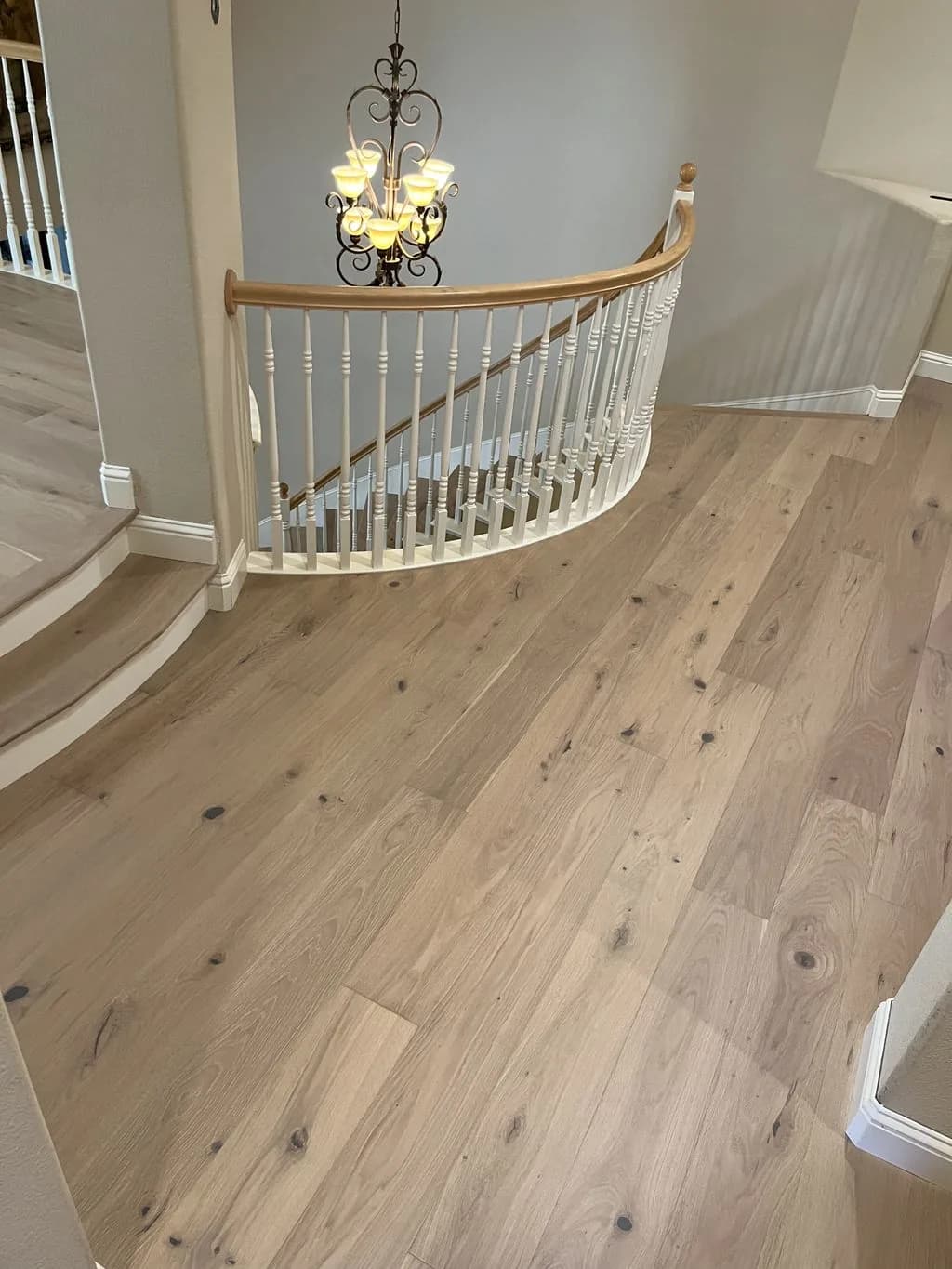
White Oak Hardwood
Great Room & Landing
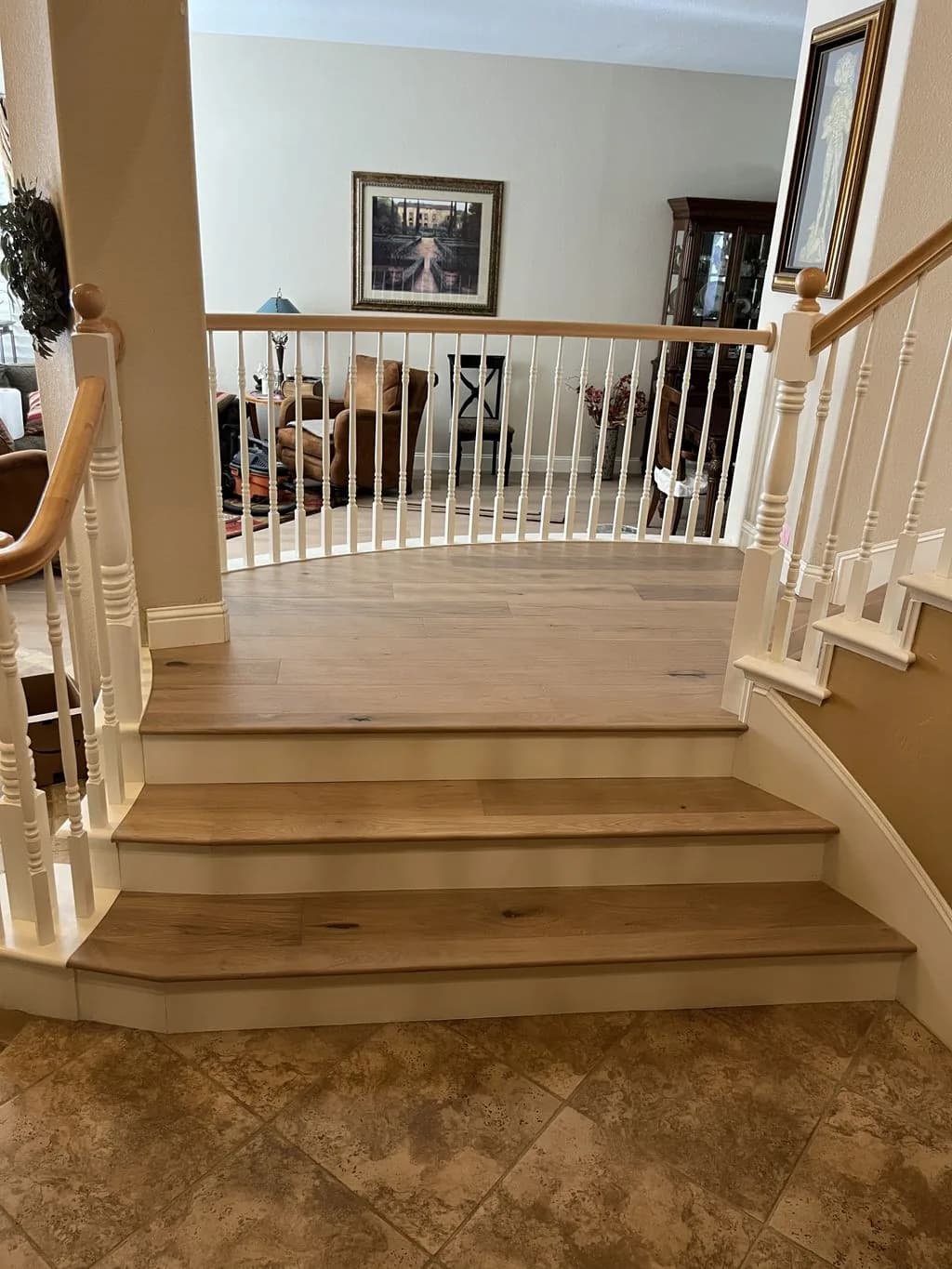
White Oak Hardwood
Staircase & Landing
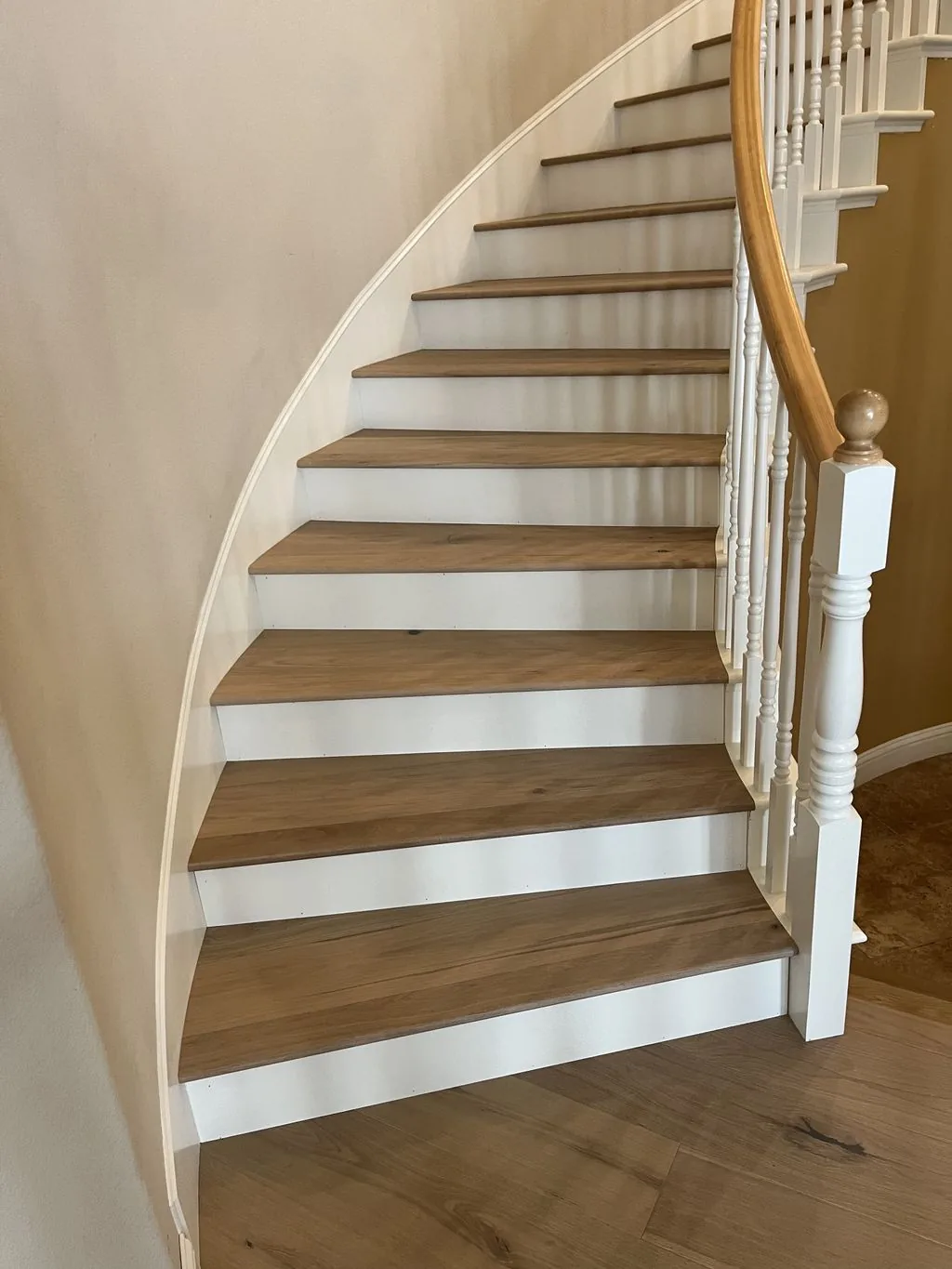
White Oak Hardwood
Curved Staircase
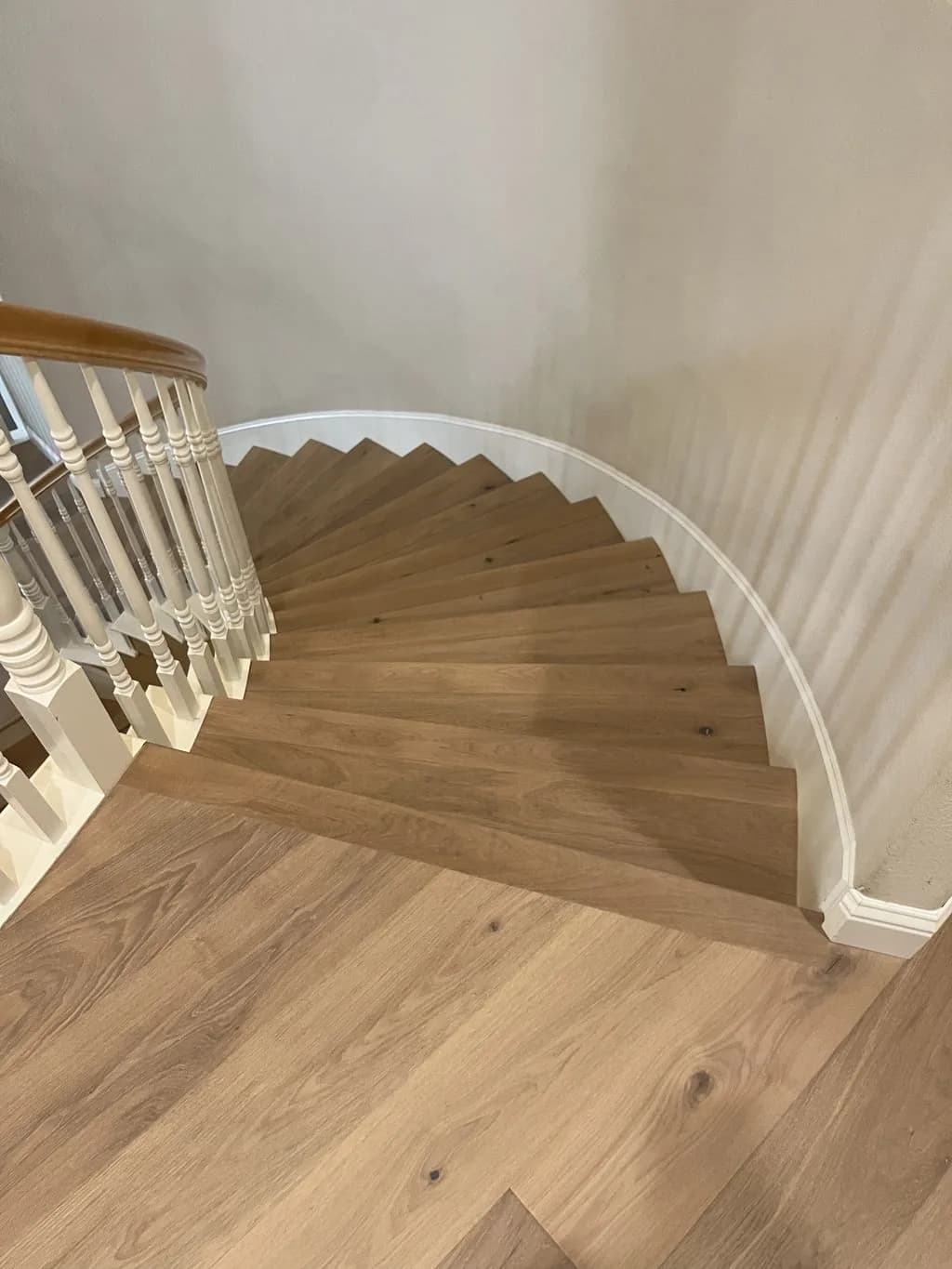
White Oak Hardwood
Stair Treads
Our Services
Flooring Services in Cool
From hardwood to luxury vinyl, here's how we help Cool homeowners upgrade their floors.
Hardwood Flooring
Solid oak, maple, and walkable heirloom-grade hardwood, precisely installed.
Hardwood Flooring in CoolEngineered Hardwood
Real-wood wear layers built for California's climate swings.
Engineered Hardwood in CoolLuxury Vinyl Plank
Waterproof, wood-look LVP for kitchens, baths, and busy households.
Luxury Vinyl Plank in CoolLaminate Flooring
Durable, high-style laminate at a friendly price point.
Laminate Flooring in CoolTile Flooring
Porcelain and ceramic tile set dead-level with crisp grout lines.
Tile Flooring in CoolFloor Installation
Full-service installation from subfloor prep to final baseboard.
Floor Installation in CoolFloor Refinishing
Sand, stain, and reseal tired hardwood back to new.
Floor Refinishing in CoolFloor Repair
Board swaps, water damage, squeaks, and seamless patch-ins.
Floor Repair in CoolLocal Considerations
What Cool Homes Need From a Floor
Climate, home age, and foundation type all shape the right flooring choice in Cool — here's what we account for.
Horse country by design, not by slogan
Cool is a named major trailhead of Auburn State Recreation Area, with the Olmstead Loop leaving from behind the fire station and the Western States Trail corridor in the canyon below. The daily reality for floors: boots, paddock grit, hay chaff, and dogs moving in and out all day. We engineer for it — genuinely durable entry surfaces (rigid-core LVP, tile), real walk-off zones, cleanable transitions at the mudroom line — and keep the hardwood for the rooms that live gentler lives.
Bedrock at twelve inches
The soil survey maps the townsite as serpentinite-derived very rocky loam with weathered bedrock about a foot down, rock outcrop at the surface, and representative slopes near 27% — rising to 30-50% greenstone slopes through Auburn Lake Trails. Homes here sit on cut-and-fill pads, stepped foundations, and stem walls, and winter water moves across the shallow profile rather than soaking in. Our estimates start with the site: crawlspace moisture, drainage paths, and slab readings where concrete exists, because the rock dictates the prep.
Not clay country — and we can prove it
Every soil component mapped around Cool carries low linear extensibility — the federal survey's measure of shrink-swell — so the slab-heave anxiety that governs valley flooring simply isn't the local problem. What replaces it is drainage and moisture management on rocky slopes: water shedding across shallow ground toward foundations, crawlspaces that hold wet-season humidity, and freeze exposure at vents and slab edges during real foothill winters. Different ground, different checklist — ours is built for this one.
Two markets, one crossroads
County parcel records split Cool cleanly: inside Auburn Lake Trails, two-acre lots eighty percent built out — established homes, first-generation floors now aging out, standard site access. Outside it, ranch parcels with a ten-acre median where only about half the land has ever been built on — custom homes, long gravel drives, barns between the truck and the front door. Two different jobs: we quote them differently, schedule them differently, and protect floors differently on move-in day.
Off the gas grid
Fifty-seven percent of homes here heat with propane and fewer than one in ten has piped natural gas — Cool simply isn't on the main. Propane furnaces and stoves run dry, intermittent heat that pulls indoor humidity down hard through the wet season, widening the annual swing a wood floor must cross. We acclimate to the home's true conditions, size expansion detailing for the swing, and talk honestly about humidification when a client wants wide solid planks in a stove-heated great room.
A 1984-median stock hitting its first replacement
The community that contains Cool carries a median build year of 1984 — almost entirely single-family, overwhelmingly owner-occupied, with essentially nothing added since 2010. That means first-generation floors reaching the end of service together: original oak worth evaluating for refinish, forty-year-old carpet and sheet goods ready for honest replacement, and subfloors still in their first life needing prep rather than reconstruction. It's satisfying work — good bones, ready for their second act.
Fire zones, stated precisely
All of Cool is State Responsibility Area, but the severity map splits it: the crossroads is zoned High while Auburn Lake Trails steps up to Very High — worth stating exactly because the designations shape exterior-material rules, insurance conversations, and defensible-space work. The record deserves equal precision: no historic fire perimeter has ever covered the town or the subdivision, and the closest real event was 2008's 96-acre Cool Fire, held short of the crossroads. Interior flooring is unrestricted either way; we detail exterior thresholds to suit.
Local Resources & References
Helpful Cool Resources
Authoritative local and industry references for permits, planning, and flooring standards.
- Auburn State Recreation Area brochure — Cool as one of four named major trailheads ('the multi-use Olmstead Loop and connector at Cool, behind the fire station'); 100+ miles of trails; the Auburn Dam history; USBR project landsCalifornia State Parks
- Checkpoint locations and history — the ride's final checkpoints at Lower Quarry (mile 94) and No Hands Bridge (mile 96) in the canyon below Cool; the bridge as 'the only direct link between Auburn and Cool'Tevis Cup
- Aid stations — the Auburn Lake Trails aid station at mile 85.2, inside the census community that contains CoolWestern States Endurance Run
- ACS 2020–2024 5-year estimates, Auburn Lake Trails CDP — the census place that contains the Cool townsite: median year built 1984, 96.8% single-family detached, 93.6% owner-occupied, 57% propane heat (via Census Reporter)US Census Bureau
- SSURGO, El Dorado Area survey — Delpiedra very rocky loam at the townsite (serpentinite residuum, bedrock ~12 in, low shrink-swell); Boomer very rocky loam on 30–50% greenstone slopes in Auburn Lake TrailsUSDA NRCS
- Mines Online — Cool Cave Quarry (Mine ID 91-09-0005): active, 100 acres disturbed, operated by Teichert Aggregates; primary product sand and gravelCalifornia Department of Conservation
- 1991–2020 normals, Auburn station USC00040383 (3.97 mi from Cool, the nearest current-normals gauge): 36.12 in annual precipitation; July 0.01 in vs January 7.01 inNOAA NCEI
- Fire Hazard Severity Zones (SRA) and historic fire perimeters — Cool's crossroads mapped High and Auburn Lake Trails Very High, all State Responsibility Area; no recorded perimeter covers either, with the 2008 Cool Fire (96 acres) the nearest eventCAL FIRE
- Station 72, 7200 St Florian Court, Cool — the fire station the Olmstead trailhead sits behind; the district serves ~95% of Cool-area parcelsEl Dorado County Fire Protection District
External links are provided for reference. Always confirm current requirements with the issuing agency.
Explore Flooring Services in Cool
Nearby
Nearby Cities We Serve in El Dorado & Tahoe
Serving the Region
Flooring Across Our Core Service Areas
We install and refinish floors across our core Northern California service areas — from the Sacramento region and the foothills to the Bay Area and wine country.
Good to Know
Frequently Asked Questions
Does Renaissance Floors serve Cool?
Yes. We install and refinish flooring throughout Cool and the surrounding El Dorado County area. Call (916) 749-0272 for a free estimate.
What flooring services do you offer in Cool?
We install hardwood, engineered wood, luxury vinyl plank, laminate, tile, and more in Cool, plus floor refinishing, repair, and full-service installation. See the full list below.
Are you licensed to work in Cool?
Yes. We hold CSLB C-15 license #1060673 (C-15 Flooring & Floor Covering) and carry insurance. We're based in Roseville, CA and serve Cool and all of Greater Sacramento & Northern California.
How do I get a free flooring estimate in Cool?
Call (916) 749-0272 or request an estimate online. We'll schedule a convenient in-home visit in Cool, measure your space, and give you an honest, no-pressure quote.
Do I need a permit to replace flooring in Cool?
Like-for-like floor covering is generally finish work; structural subfloor repair, or flooring inside a larger remodel, can require a permit — and because Cool is unincorporated, that permit comes from El Dorado County's Building Division in Placerville. We make the determination as part of any project touching structure. (Practical note: the county's website blocks automated lookups, so calling the Building Division directly is often the fastest way to confirm a requirement.)
What flooring works best for a horse property in Cool?
Split the house in two. The working entries — mudroom, garage door, the path from the barn — get genuinely tough, waterproof, cleanable surfaces: rigid-core LVP or tile with real walk-off zones, because paddock grit is an abrasive and it arrives daily. The living core gets whatever you love, hardwood included, protected by that first line of defense. We've detailed this split across Cool's horse country for years; the transition design is where the job is won.
My Cool home sits on rocky, sloped ground — what does that mean for floors?
It means the site inspection matters more than the product catalog. With bedrock as shallow as a foot at the townsite and slopes to fifty percent in Auburn Lake Trails, homes here sit on cut-and-fill pads, stepped foundations, and stem walls — where winter water crosses shallow ground toward crawlspaces instead of soaking away. We check crawlspace moisture, drainage paths, and slab readings before recommending anything, because the good news (no expansive clay anywhere in the survey) only holds if the water is managed.
How does Cool's climate affect wood flooring?
The gauge four miles away tells the whole story in two numbers: July's normal rainfall is 0.01 inches; January's is 7.01. That rainless-summer-to-drenched-winter cycle — plus real frosts and occasional light snow at 1,534 feet — is the widest kind of foothill swing, and most homes heat with dry propane warmth on top of it. Engineered wood and rigid-core LVP ride it most predictably; solid wood does well with true on-site acclimation and expansion detailing sized for this climate, not a valley one.
Does propane heat change anything about a wood floor?
It changes the winter indoor environment. Cool is largely off the natural-gas grid — 57% of homes heat with propane, many with stoves — and propane heat runs dry and often zonal, pulling indoor humidity down sharply while the ground outside saturates. We acclimate flooring to the home's real stove-season conditions, allow for the wider swing in the expansion detailing, and place extra care at hearth zones where the drying is most intense.
What is Auburn Lake Trails, exactly?
It's the platted community whose boundary the Census Bureau uses to count Cool itself — about 1,500 homes on one-to-two-acre lots, 80% built out per county parcel records, overwhelmingly owner-occupied, median build year 1984, governed by a private property owners' association (not a public district). We serve it daily. One honesty note: the association's own websites have been offline for some time, so claims about its amenities are hard to verify — we stick to what county and census records establish.
Is No Hands Bridge in Cool? Does the Tevis Cup come through town?
Both are below town, and we like being precise about it. No Hands Bridge — the 1912 Mountain Quarries Railroad Bridge, on the National Register — spans the North Fork about 830 vertical feet beneath the crossroads, and the Tevis Cup's final checkpoints (Lower Quarry, then the bridge itself) pass through that canyon rather than town. The event that touches Cool's own community is the Western States 100 run, whose mile-85 aid station sits inside Auburn Lake Trails. The trails all connect — from behind the fire station, you can walk to all of it.
Does Renaissance Floors offer free estimates in Cool?
Yes — free, no-obligation in-home estimates, financing options, and a workmanship warranty. We're a licensed CSLB C-15 flooring contractor (license #1060673) based in Roseville, about thirty minutes down Highway 49. Call (916) 749-0272 to schedule.
Related
Keep Reading
Related pages: El Dorado & Tahoe, Tile Flooring in Burlingame, Hardwood Flooring in Cool, and Engineered Hardwood in Cool.
Ready for Floors You'll Love?
Free, no-pressure flooring estimates throughout Cool and El Dorado County.