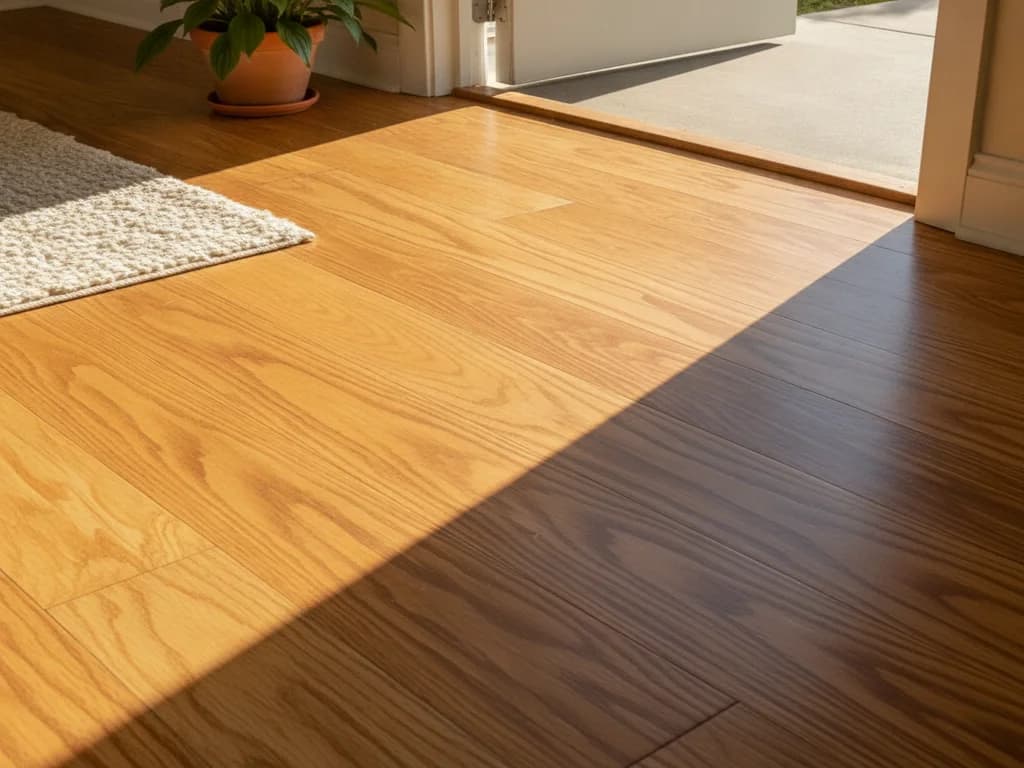
Floor Care
How to Care for Engineered Wood Floors
How do I clean and maintain engineered hardwood, and is it different from caring for solid wood?
Engineered wood is real wood: a hardwood veneer over a stable plywood or HDF core. That layered core makes it more dimensionally stable than solid wood, so it copes better with humidity swings — but the surface is still a wood veneer with a real wood finish. The principle that matters most is treat the top exactly like solid hardwood, because the veneer scratches, dulls, and water-stains the same way, and there is far less wood above the core to sand away.
Routine cleaning is quick and the payoff is a floor that keeps its factory finish for many years. The cost of neglect is steeper than with solid wood: a thin veneer can only be refinished once or twice, if at all, so once grit or moisture wears through it, plank replacement — not sanding — is often the only fix.
Every Day
Routine Care
Dust-mop or soft-vacuum regularly
As with all wood, NWFA recommends sweeping, dust mopping, or vacuuming on the bare-floor setting to lift the grit that scratches the veneer's finish. Do this often in entry and kitchen lanes.
Wipe spills the moment they happen
NWFA says clean spills immediately with a dry or slightly damp cloth. Standing liquid can seep into plank seams and reach the core, so speed matters even though the core is more stable than solid wood.
Damp-clean with a wood-floor cleaner
Use a pH-neutral cleaner made for wood finishes on a well-wrung microfiber; check the manufacturer's care sheet, as many engineered brands name approved cleaners. Never flood the floor.
Trap grit at the door
Interior and exterior walk-off mats catch the sand and salt that abrade a thin veneer faster than they wear solid wood. This is the highest-value habit for engineered floors.
Confirm your finish type before buying a cleaner
Most engineered floors carry a urethane/aluminum-oxide finish, but some are oil-finished (hardwax oil) and need a completely different oil-soap-based regimen. Match the cleaner to the finish, since the wrong one dulls or won't bond.
Don't
What to Avoid on Engineered Wood Floors
No steam mops or wet mops
Steam and standing water are as damaging here as on solid wood; NWFA warns against both. Heat and moisture can delaminate the veneer from the core, which is unrepairable.
No vinegar, ammonia, or bleach
Acids and harsh chemicals etch and dull the finish over repeated use, shortening the life of the one thin protective layer the veneer has.
No oil soaps or acrylic shine on urethane floors
They leave a dulling residue and block any future recoat from adhering. On an engineered floor that may only tolerate one recoat, that's a costly mistake.
No paste wax on a factory finish
Wax can't be recoated over and must be stripped, and a thin veneer has little tolerance for aggressive stripping or sanding. Keep wax off unless the floor is genuinely a wax finish.
No abrasive pads, stiff brooms, or beater bars
Scouring pads and hard bristles scratch the veneer's finish, and every scratch that reaches wood is harder to fix than on solid flooring. Use soft tools only.
Now & Then
Periodic Maintenance
Recoat while the veneer is intact
If your finish allows recoating, a maintenance coat every few years in busy areas refreshes the surface before wear reaches the wood. Recoating is only possible if the floor has never been waxed or coated with shine products.
Know your wear-layer limit before sanding
Full refinishing depends on veneer thickness: a thick wear layer (roughly 3 mm or more) may sand once or twice, while thin veneers (about 1–2 mm) generally cannot be sanded at all. Have a professional measure before assuming a refinish is possible.
Address worn planks by replacement
Because sanding depth is limited, badly worn or water-damaged planks are often replaced individually rather than refinished. Keeping a few spare planks from the original job makes this far easier.
Prevention
Protect the Floor
- Use felt pads under all furniture legs and refresh them before they wear through and start dragging grit.
- Hold indoor humidity in the range NWFA cites — about 30–50% relative humidity and 60–80°F; engineered is more stable than solid wood but still moves at the seams.
- Choose breathable, colorfast rugs and mats and avoid solid rubber or latex backings that can trap moisture or discolor the finish.
- Manage direct sun with blinds or UV film and rotate rugs and furniture, since UV fades a wood veneer just as it fades solid wood — especially on west- and south-facing exposures.
Thinking about new floors instead of maintaining the old ones? See our Engineered Hardwood installation, or browse all our floor-care guides.
Sources
Common Questions
Engineered Wood Floors Care Questions
Since engineered wood is more stable, can I mop it with water like tile?
No. The core is more stable than solid wood, but the surface is still a real wood veneer with a wood finish, and it water-stains and dulls just like solid hardwood. Wet mopping can also work moisture into the seams and, over time, delaminate the veneer from the core. Damp-clean only, with a wrung-out microfiber and a wood-safe cleaner.
What is the most common cleaner mistake on engineered floors?
Reaching for vinegar-and-water or an oil soap on a urethane-finished floor. Vinegar's acid slowly etches and dulls the finish, and oil soap leaves a residue that dulls the surface and blocks any future recoat. Use a pH-neutral cleaner made for wood finishes, and if your floor is oil-finished instead of urethane, follow that manufacturer's specific oil-care products.
Does Sacramento's dry climate cause gaps in engineered floors too?
It can, but usually less than in solid wood. Engineered's layered core resists the seasonal shrinking that opens gaps when indoor humidity drops below 30% during dry summers and heated winters. You may still see minor seasonal movement, so aiming for roughly 30–50% relative humidity keeps it minimal. It's a real advantage of engineered flooring in this climate, not immunity.
Can my engineered floor be refinished if it gets scratched up?
Sometimes, and it depends entirely on the veneer thickness. Floors with a thick wear layer (about 3 mm or more) can usually be sanded once or maybe twice, while thin veneers around 1–2 mm often can't be sanded at all. Before any refinish, have a professional measure the wear layer. If it's too thin, a recoat or replacing worn planks is the realistic path — which is why keeping spare planks matters.

Beyond Cleaning?
If your floor needs a recoat, a repair, or a fresh start, Alex offers free, no-pressure estimates throughout Greater Sacramento & Northern California.