Homeowner Tips
Restoring Original Wood Floors in Gold Country Homes
The Victorians and cottages of Nevada City, Grass Valley, Auburn, and Placerville often still have their original floors. Here's how to tell what you have — and what saving it involves.
Homeowner Tips · 7 min read
Published July 29, 2026 · Updated September 12, 2026
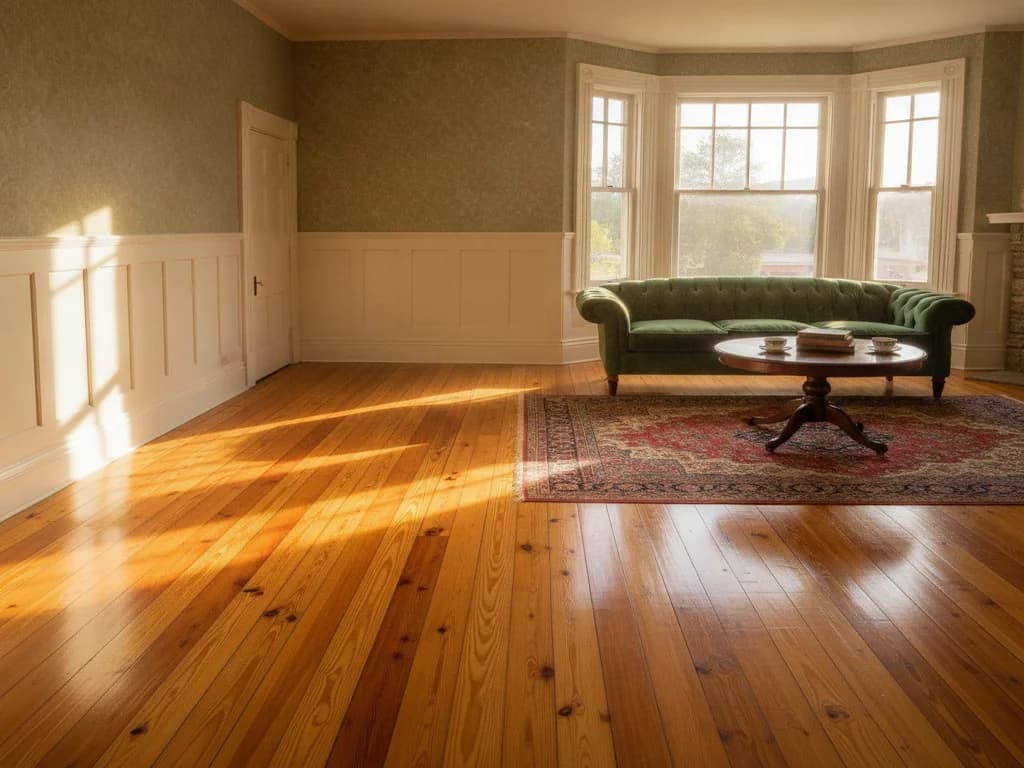
Pull up the carpet in a Gold Country home built before the 1940s and there is a fair chance you'll find the original floor still there — fir or oak laid when the house was built, painted or carpeted over somewhere along the way, and waiting. Whether that floor is a treasure or a tear-out is not something you can judge from the doorway, and the towns where this question comes up most — Nevada City, Grass Valley, Auburn, Placerville, and the older neighborhoods of the valley towns — hold some of the best original material in Northern California. This article is about how to read what you've found, and what restoring it actually involves.
What the Original Floor in an Old House Actually Is
Most pre-war homes in this region floored their main rooms in one of two things: oak, in the more formal houses and rooms, or Douglas fir, which was the everyday wood of California construction for decades. The fir is the one people underestimate. Vertical-grain fir from that era was cut from slow-grown timber, and its growth rings sit close together in a way modern plantation lumber simply does not reproduce — denser, finer-grained, and more stable than the fir you could buy today. It is genuinely irreplaceable material, which changes the economics of the whole decision: a restored original floor is not the budget option standing in for a new one, it is frequently the more valuable surface.
There is a third possibility worth knowing about. In many houses of the era the "floor" under the carpet is actually the subfloor — one-by boards laid diagonally or straight across the joists, never meant to be seen. Board subfloors can sometimes be finished and lived on as a deliberately rustic surface, gaps and all, but they are a different proposition from a true finish floor, and telling the two apart is the first thing to establish.
Reading the Floor Before Anyone Promises Anything
A century-old floor is judged at its edges, not its face. A floor vent cutout, a threshold, or a corner of a closet shows the board in cross-section, which answers the question that matters most: how much wood remains above the tongue. Original floors were milled thick, but a hundred years of wear and one or two past sandings spend real material, and a floor sanded aggressively in the 1980s may have far less left than its age suggests.
The face tells you the rest. Face-nailing scattered across the field usually means past repairs or a floor that has loosened and been fastened back down. Patched rectangles mark where wall furnaces, hearths, or partition walls used to be. Water staining at the perimeter or under old plant windows shows where moisture has been getting in. And a dark, almost black band running around the room's edge with a lighter field in the middle is the signature of an old shellac-and-wax border that was finished around a central carpet — a period detail, not damage, though it takes real sanding to remove.
None of this requires a professional to spot. What the assessment stage decides is which of three paths the floor is on: refinish, repair-then-refinish, or a conversation about whether refinishing or replacement is the more sensible spend.
The Structure Underneath Is Part of the Job
Houses of this era were framed to the standards of their day — smaller joists at wider spacing than modern code, sometimes over shallow crawlspaces with bare soil and minimal ventilation. That has two consequences for a floor restoration.
The first is movement. Long spans deflect, board subfloors shift individually, and both show up in the finish floor as squeaks, springiness, and gaps that open and close with the seasons. Sanding does nothing for any of it, because the cause is below the boards being sanded. A proper restoration deals with the structure first — refastening subfloor to joists, sistering a weak span, blocking where the framing needs it — so the beautiful surface isn't riding on a moving foundation.
The second is moisture. The foothill towns get roughly three times the valley's rainfall — Grass Valley's own page covers just how wet that market runs — and a damp, unvented crawlspace under an old house pushes moisture into the underside of the original floor all winter. Cupped boards in an old home are very often a crawlspace problem wearing the floor's clothes, and the crawlspace gets corrected before the sanding, or the cupping comes back. Our page on moisture under flooring explains the mechanics.
What Sanding Very Old Wood Involves
Refinishing a century-old floor uses the same fundamental process as any floor refinishing job — sand to clean wood, then build a finish — with several judgments that matter more on old material.
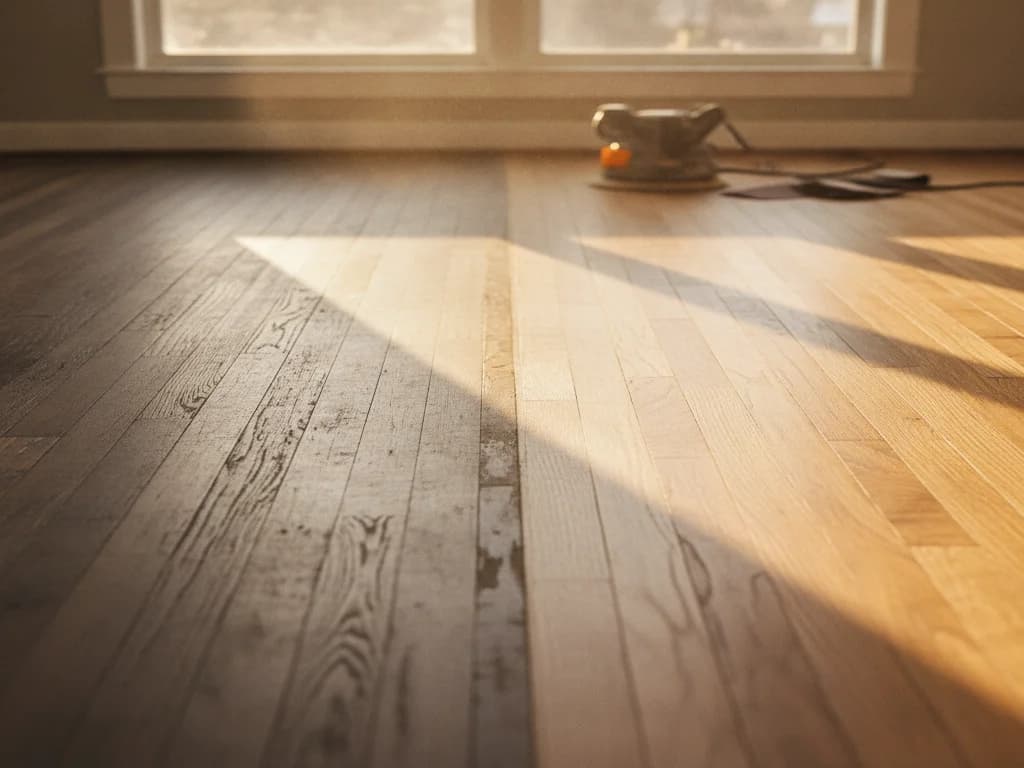
The sanding is more conservative. There is a finite amount of wood left, so the cut starts as fine as the condition allows, and a restorer's instinct is to remove the minimum that produces a clean, flat surface rather than chasing every last mark to perfection. Some character stays. On a floor this old, that is the point.
Old finishes behave differently under the machine. Shellac and wax, the standard finishes of the era, load sandpaper quickly and can gum rather than powder; old varnish can chip. The process adjusts — grit sequence, pace, and abrasive changes — rather than fighting through on the modern schedule. And fir specifically is softer and less forgiving than oak: it shows sanding errors readily, which is why edger technique and a final blending pass matter more on a fir floor than almost anywhere else.
Gaps deserve restraint. Boards that have moved seasonally for a century have gaps that open in summer and close in winter, and filling them all as though they were defects produces cracked filler by the following year. Genuine voids get addressed; living, seasonal gaps are generally left to be what they are.
Weaving In Replacement Boards
Almost every old floor has some boards past saving — deep water damage, pet staining that has penetrated beyond sanding depth, splits, or the holes left by a removed floor furnace. The craft answer is not a patch but a weave: damaged boards are cut out staggered rather than in a block, and replacement stock is slipped into the field so no straight seam announces the repair.
The replacement material is its own hunt. Matching species and width often means salvage suppliers, reclaimed material, or custom-milling new stock to an old dimension, because the sizes used a century ago are not today's standard sizes. Even then, new wood arrives without a hundred years of patina, and the honest expectation is a close match on day one that blends steadily as light exposure ages the new boards toward the old. A whole-floor sand after the weave is what unifies the surface, which is why board replacement and refinishing are planned as one project rather than two.
Choosing a Finish That Suits the House
A high-build, glassy modern finish can make an 1890s floor look like a photograph of itself. The finishes that tend to suit old wood are the quieter ones: penetrating oils and hardwax oils that leave the texture of the wood readable, or matte and satin waterborne systems where durability demands a film. The tradeoffs are the same ones covered in our comparison of water-based and oil-based polyurethane — with one addition specific to old material. Aged wood, particularly fir, takes color unpredictably: the same stain that behaves on a showroom sample can go blotchy or unexpectedly dark on hundred-year-old boards. Samples are tested on the actual floor, in the actual light, after sanding — never chosen from a fan deck.
Amber is the other expectation to set. Old fir and oak both carry warm tones that deepen with age and light. Fighting that toward a pale Scandinavian look means bleaching or heavy toning, which is possible but works against the material. Most restorations look best leaning into the warmth the wood already has.
The Hazards Worth Taking Seriously
Two era-specific cautions belong in any honest article on this subject. Homes built before 1978 may carry lead-based paint, and a painted floor or painted baseboards adjacent to sanding work should be tested before any abrasive touches them — sanding lead paint disperses it, and testing first is both the safe and the legally sound order of operations. Similarly, some older resilient flooring layers and their adhesives — the 9-by-9 tiles and black mastic found under later floor coverings — may contain asbestos and are a job for testing and licensed abatement, not a scraper and a shop vac. Neither hazard is a reason to abandon a restoration; both are reasons the demolition stage of an old-house floor project is planned rather than improvised.
When Restoration Is Not the Answer
Honesty requires the other list. A floor sanded to its limit, with nail heads proud and tongues exposed, has given what it has to give. Termite or rot damage that runs into the structure moves the project from flooring to framing. And occasionally the original floor is simply not good material — some houses were floored cheaply in their own day. In those cases the respectful move is a new floor chosen to suit the house's age and detailing, and our historic home flooring page covers how we approach that decision — including when a character-grade or reclaimed floor honors an old house better than restoration theater on boards not worth the effort.
If you've found original wood under the carpet in an older foothill or valley home and want a straight answer on whether it's worth saving, Renaissance Floors offers free assessments across the Gold Country and greater Sacramento area. Call (916) 749-0272 — we'd genuinely rather restore a good original floor than sell you a replacement over it.
This article is part of our guide to caring for a floor, which covers what actually shortens a floor's life, and the maintenance that measurably extends it.
Explore related
Good to Know
Frequently Asked Questions
How do I know if the wood under my carpet is a real floor or just subfloor?
Look at the board direction and width at a floor vent or a corner. A finish floor is typically narrow boards running parallel with tight seams; a board subfloor is wider one-by material, often laid diagonally to the walls, with visible gaps. Subfloor boards can occasionally be finished as a rustic surface, but they're a different project from restoring a true finish floor.
Can painted wood floors be stripped and refinished?
Usually, yes — paint comes off in the sanding process — but a painted floor in a pre-1978 home should be tested for lead first, since sanding lead paint disperses it. With testing done and appropriate handling, a painted-over original floor is often an excellent restoration candidate underneath.
What is the dark border running around the edges of my old floor?
Almost certainly a period finish detail rather than damage. Rooms of that era were often finished with a stained or shellacked border around a central area rug, and the border darkened further with decades of wax and age. It sands out with the rest of the old finish, though it takes real material to remove completely, which factors into the thickness assessment.
Is Douglas fir worth refinishing if it dents so easily?
Often, yes. Old-growth fir is softer than oak and will always dent more readily — that's inseparable from the material — but its tight grain, warmth, and the fact that it can't be bought new make it worth saving where thickness allows. The realistic framing is a floor that records its history rather than resisting it, in exchange for character no new product has.
How are missing boards in an old floor replaced?
Cut out staggered rather than in a rectangle, then replaced with material matched in species and milled to the old dimensions — often from salvage or reclaimed stock, since century-old board sizes aren't today's standards. The whole floor is then sanded and finished as one surface, which is what unifies old boards and new.
Will refinishing fix the gaps between the boards?
Sanding alone won't close gaps, and it shouldn't try to. Gaps that open and close with the seasons are the floor breathing and are generally left alone, because rigid filler in a moving joint cracks out within a year. Permanent voids and broken tongues are addressed individually during the repair stage instead.
Do old houses need a different finish than new floors?
Not by rule, but by fit. Penetrating and hardwax oils, and matte or satin waterborne films, tend to suit old wood because they keep its texture readable rather than encasing it in gloss. Aged wood also takes stain unpredictably, so color is always tested on the actual sanded floor before committing to the room.
What does it cost to restore an original wood floor?
It depends on what the assessment finds: how much structural correction the framing and subfloor need, how many boards need weaving in, and whether hazard testing changes the demolition plan. Restoration is usually well below the cost of a comparable new hardwood floor, and we quote it after seeing the actual floor — call (916) 749-0272 for a free assessment.
Written by
Owner & Lead Installer, Renaissance Floors
15+ years of hands-on flooring experience across Greater Sacramento & Northern California. Works on hardwood and engineered installation, refinishing, subfloor preparation, and moisture testing — and writes these guides from what the jobs actually teach.
CSLB C-15 licence #1060673
Related
Keep Reading
Related pages: Materials & Species, European White Oak, French Oak, and American White Oak.
Ready for Floors You'll Love?
Ready to talk through your project? Free estimates throughout Greater Sacramento & Northern California.