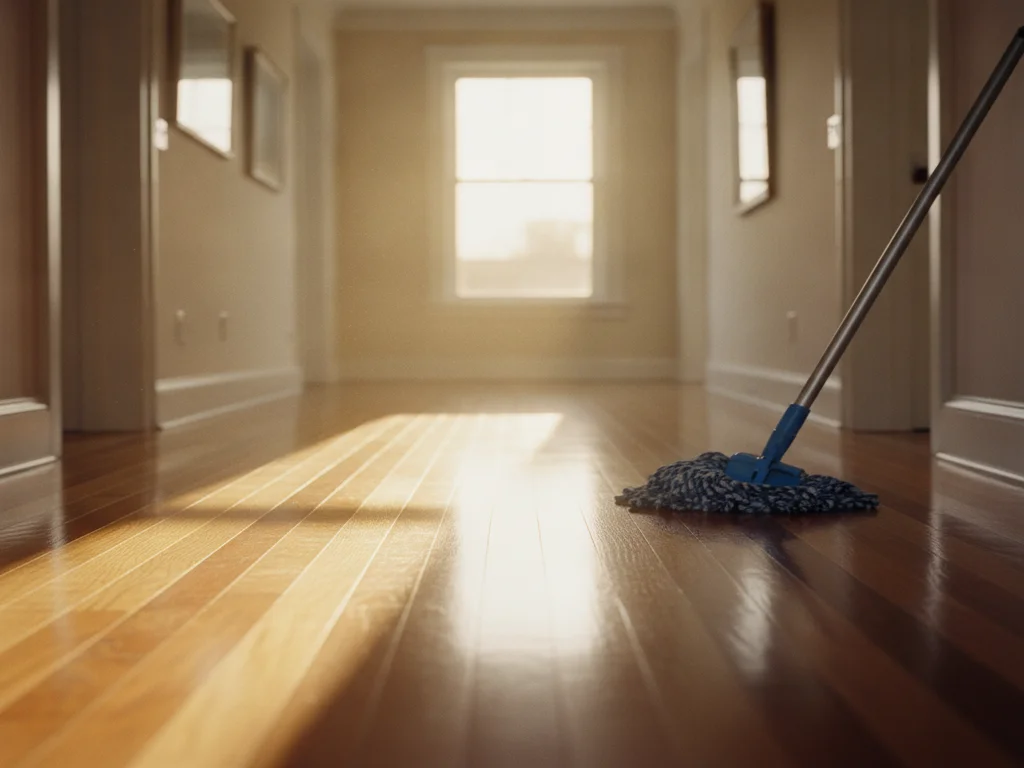
Floor Care
How to Care for Hardwood Floors
How do I clean and maintain solid and prefinished hardwood floors without damaging the finish?
The single most important principle for hardwood is keep water and grit off it. Wood is hygroscopic — it constantly gains and loses moisture with the air around it — so standing water raises the grain, dulls or whitens the finish, and can cook into permanent cupping, while tracked-in sand and grit act like sandpaper that scratches the finish every time you walk across it. Control those two things and a modern polyurethane finish will look good for years.
Routine care is genuinely cheap and quick: a dust mop, a vacuum, and the right pH-neutral cleaner. The cost of neglect is not cheap. Once grit wears through the finish or moisture damages the boards, you are no longer cleaning — you are paying to sand and refinish, and a solid floor only has so many refinishes before you reach the tongue.
Every Day
Routine Care
Dust-mop or soft-vacuum most days
NWFA recommends sweeping, dust mopping, or vacuuming on the bare-floor (no beater bar) setting to remove the dust and grit that scratch the finish. Grit is the number-one cause of premature wear.
Clean spills immediately
NWFA says to wipe spills right away with a dry or slightly damp cloth. Liquid left sitting on wood works into seams and the finish and is the fastest route to permanent damage.
Damp-clean, never wet, with the correct cleaner
Use a cleaner made for your floor's finish, applied to a well-wrung microfiber, not a sopping mop. The mop should feel barely damp and the floor should dry in seconds.
Use walk-off mats at every entry
Mats inside and outside exterior doors catch grit, road salt, and water before shoes reach the wood — the cheapest single thing you can do to extend a finish's life.
Concentrate cleaning where soil concentrates
Damp-clean kitchen and hallway lanes where dirt collects and dust-mop the rest. Over-wetting a whole floor 'to be thorough' does more harm than the dirt would.
Don't
What to Avoid on Hardwood Floors
No steam mops or wet mops
NWFA explicitly warns against wet mops and steam mops, which drive heat and moisture into the finish and the wood and degrade both. Steam is heat plus water — the two things wood tolerates least.
No vinegar or ammonia
Vinegar is acetic acid; used repeatedly it etches and dulls polyurethane, and ammonia does similar damage. They're cheap, but they slowly ruin the very finish you're trying to protect.
No oil soaps or mop-and-shine products
Oil-based soaps and acrylic shine products leave a residue that builds up, dulls the floor, and prevents a future maintenance recoat from bonding — forcing a full sanding instead.
No paste wax on a urethane finish
Wax belongs only on genuine wax-finished floors. On a polyurethane floor it can't be recoated over and must be chemically stripped, turning a simple recoat into an expensive refinish.
No hard-bristle or abrasive tools
Skip stiff brooms, scouring pads, and beater-bar vacuums on bare wood; they abrade the finish. Grit dragged under a shoe or a rolling caster does the same, so keep both off the floor.
Now & Then
Periodic Maintenance
Screen-and-recoat before you wear through
When traffic lanes lose luster but the wood isn't scratched, a maintenance recoat (screen and recoat) adds a fresh finish coat. Timing varies with traffic — often every 3–5 years in busy homes — and it's far cheaper than a full refinish.
Full sand-and-refinish only when needed
When scratches reach bare wood or you want a new color, a full sanding is warranted. Solid hardwood can typically be refinished several times over its life; a prefinished aluminum-oxide finish may need professional abrasion before recoating.
Re-check felt pads and mats each season
Grit embeds in felt pads and mats over months, turning protectors into abrasives. Replace worn felt pads and wash or swap entry mats a few times a year.
Prevention
Protect the Floor
- Put felt pads under every chair, table, and sofa leg, and replace them the moment they wear thin or collect grit.
- Keep indoor conditions in the wood-friendly range NWFA specifies — roughly 30–50% relative humidity and 60–80°F — to limit seasonal shrinking and swelling.
- Use colorfast, breathable rugs at entries and sinks; avoid solid rubber or latex backings, which can trap moisture and discolor the finish.
- Limit direct sun with blinds, sheers, or UV-filtering film and rotate rugs and furniture periodically, since UV ambers and fades wood unevenly — especially on west- and south-facing rooms.
Thinking about new floors instead of maintaining the old ones? See our Hardwood Flooring installation, or browse all our floor-care guides.
Sources
Common Questions
Hardwood Floors Care Questions
Can I clean my hardwood with vinegar and water like the internet says?
No, and this is the most common mistake we see. Vinegar is a mild acid that gradually etches and dulls polyurethane, so the floor looks worse over time, not cleaner. It also does nothing a proper pH-neutral hardwood cleaner doesn't do better. Use a cleaner formulated for your floor's finish on a barely damp microfiber, and save the vinegar for the salad.
Is a steam mop really that bad on sealed hardwood?
Yes. A sealed finish is not waterproof, and steam forces hot moisture through microscopic seams into the wood. Over time this dulls or whitens the finish, can loosen board edges, and voids many finish and manufacturer warranties. NWFA specifically warns against steam mops, so keep them off wood entirely.
How does Sacramento's dry summer and heated winter air affect my floors?
Wood shrinks as indoor air dries out, which is common here during hot AC-run summers and heated winters when indoor humidity can fall below 30%. That can open thin gaps between boards or cause slight cupping when it swings back. Running a humidifier in the dry months to hold roughly 30–50% relative humidity keeps movement minor and normal. Small seasonal gaps that close again are expected, not a defect.
How often should I refinish, and can prefinished floors be refinished too?
Most homes don't need a full refinish for a decade or more; instead, a screen-and-recoat every few years keeps the finish fresh before scratches reach bare wood. A full sand-and-refinish is for deep wear or a color change, and solid wood can take several over its life. Prefinished floors can also be refinished, though their tough factory finish usually requires professional abrasion first so the new coat bonds.

Beyond Cleaning?
If your floor needs a recoat, a repair, or a fresh start, Alex offers free, no-pressure estimates throughout Greater Sacramento & Northern California.