Comparison
Water-Based vs. Oil-Based Polyurethane
Should I use water-based or oil-based polyurethane on my floors?
Should I use water-based or oil-based polyurethane on my floors?
Water-based if you want the floor's color to stay where you put it. Oil-based if you want warmth, amber, and the way a traditional oak floor looks after a few years.
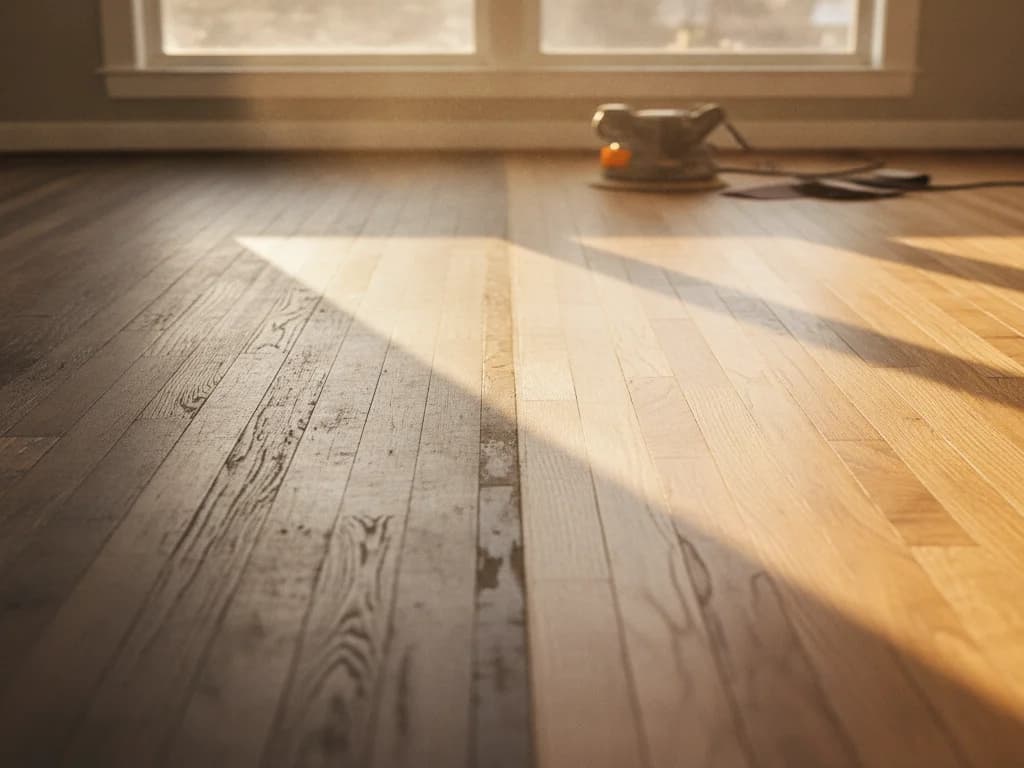
That is the real difference and it is permanent. Oil-modified polyurethane ambers as it cures and continues to yellow with age and light exposure — a white oak floor finished in oil will drift warmer over the years, and a white-washed or gray floor will be pulled off its color. Water-based finishes dry clear and stay close to the wood's natural tone, which is why the entire light-and-neutral finish palette depends on them.
The secondary differences are about the job rather than the result. Water-based finishes have lower odor and lower volatile emissions, and they recoat sooner, which compresses the schedule. Oil-based finishes have a strong odor during application and cure, take longer between coats, and typically need fewer coats to build. On durability, the old rule that oil is tougher no longer holds cleanly — modern two-component water-based finishes are formulated to be very hard-wearing. Both need full cure time before rugs go down and furniture comes back, and both cure considerably longer than they take to become walkable. The finish manufacturer's schedule governs, not a rule of thumb.
Decision Framework
When Each One Wins
Conditions, not preferences. If one of these describes your project, it should carry more weight than anything else on this page.
Choose Water-based when…
- Light, natural, white-washed, gray, and any cool-toned floor.
- White oak and maple, where ambering would defeat the point.
- Occupied homes and anyone sensitive to odor or emissions.
- Schedule-driven projects — faster recoat means fewer days off the floor.
- Floors you want to look the same in ten years as they do on day one.
Choose Oil-based when…
- Traditional warm floors, especially red oak, where amber flatters the wood.
- Matching an existing oil-finished floor, which is already ambered.
- Deep, rich, traditional stain colors where added warmth helps.
- Projects where the house can be vacated and the longer schedule is not a problem.
Side by Side
The Properties That Actually Differ
Where a figure is set by an individual product's instructions rather than by the material itself, the property is described as a relationship. An invented number would be worse than no number.
| Property | Water-based | Oil-based |
|---|---|---|
| Color at application | Clear; the wood's own tone shows through. | Adds a warm amber cast immediately. |
| Color over time | Stays close to where it started. | Continues to amber and yellow with age and light. |
| Odor and emissions | Low. | High during application and cure. |
| Recoat window | Short — coats can follow each other the same day in many systems. | Long — each coat needs extended dry time. |
| Coats typically required | More. | Fewer. |
| Durability | Modern two-component systems are very hard-wearing. | Long-proven and durable; no longer categorically superior. |
| Full cure | Walkable well before fully cured; follow the manufacturer's schedule. | Longer than water-based, and again, follow the schedule. |
| Best suited to | White oak, maple, and any light or cool color scheme. | Red oak and warm traditional palettes. |
| Touching up later | Recoats cleanly with the same system. | Recoating matches the existing amber more easily as the floor ages. |
It Depends
The Variables That Decide It
No comparison answers this for every house. These are the specific things about your project that move the answer, and they are worth establishing before you shop.
The color you are trying to hold
This is the whole decision for most floors. Ambering is not a defect and some people specifically want it, but it is not reversible and it will move a cool color somewhere you did not choose. If the target is gray, greige, or a true natural white oak, water-based is not a preference — it is a requirement.
Whether the house is occupied
Oil-based finishes fill a house with solvent odor for days. With children, pets, or anyone with respiratory sensitivity in residence, water-based is substantially easier to live through, and the shorter schedule compounds the advantage.
What is already on the floor
If you are recoating rather than fully refinishing, the new finish has to be compatible with the old one. Applying an incompatible system over an existing finish can produce adhesion failure — peeling — which is far worse than the original wear. This is a question to settle before buying anything.
The species
Amber over red oak deepens a warmth that is already in the wood and often looks right. Amber over maple or a white-washed white oak fights the material. The finish and the species have to be chosen together, not sequentially.
On this site: Floor Refinishing, Hardwood Flooring, and Flooring Glossary.
Next decision: Site-Finished vs. Prefinished, Screen-and-Recoat vs. Full Refinish, and White Oak vs. Red Oak.
See all 17 flooring comparisons, or look up a term in the glossary.
Common Questions
Frequently Asked Questions
Is oil-based polyurethane more durable than water-based?
It used to be the clear answer, and it is no longer. Modern two-component water-based systems are formulated for heavy wear and perform very well. Durability now depends more on the specific product and on how many coats were applied than on which category it belongs to.
How yellow does oil-based polyurethane get?
It ambers noticeably at application and continues to warm over the years, with light exposure accelerating it. How far it goes depends on the product, the species, and how much light the floor gets. The direction is certain even though the degree is not, which is why it is a design decision rather than a technical one.
How long before I can put furniture back?
Longer than you can walk on it. A floor becomes walkable well before the finish is fully cured, and putting rugs and heavy furniture down early can mar the surface or trap solvent. The finish manufacturer publishes a schedule for light traffic, furniture, and rugs — follow that specific document rather than a general figure.
Can I put water-based finish over an existing oil-based floor?
Sometimes, with the right preparation and a compatible product, and sometimes not at all. Adhesion between systems is the risk, and getting it wrong produces peeling. It needs to be assessed against what is actually on the floor before any product is purchased.
What about hardwax oil finishes?
Hardwax oil is a third category rather than a variant of either. It penetrates the wood instead of forming a film on top, giving a low-sheen, natural look and allowing localized spot repair without refinishing the whole floor. It requires periodic maintenance oiling that film finishes do not, so it trades a maintenance routine for repairability.
Related
Keep Reading
Related pages: Hardwood vs. Luxury Vinyl Plank: How to Choose, How to Choose Luxury Vinyl Plank: A Buyer's Guide, Contact, and Flooring Comparisons.
Get a Straight Answer for Your House
Free estimates across Greater Sacramento & Northern California. We'll look at your subfloor and your rooms and tell you which of these actually fits — call (916) 749-0272.