Comparison
White Oak vs. Red Oak
What is the difference between white oak and red oak flooring?
What is the difference between white oak and red oak flooring?
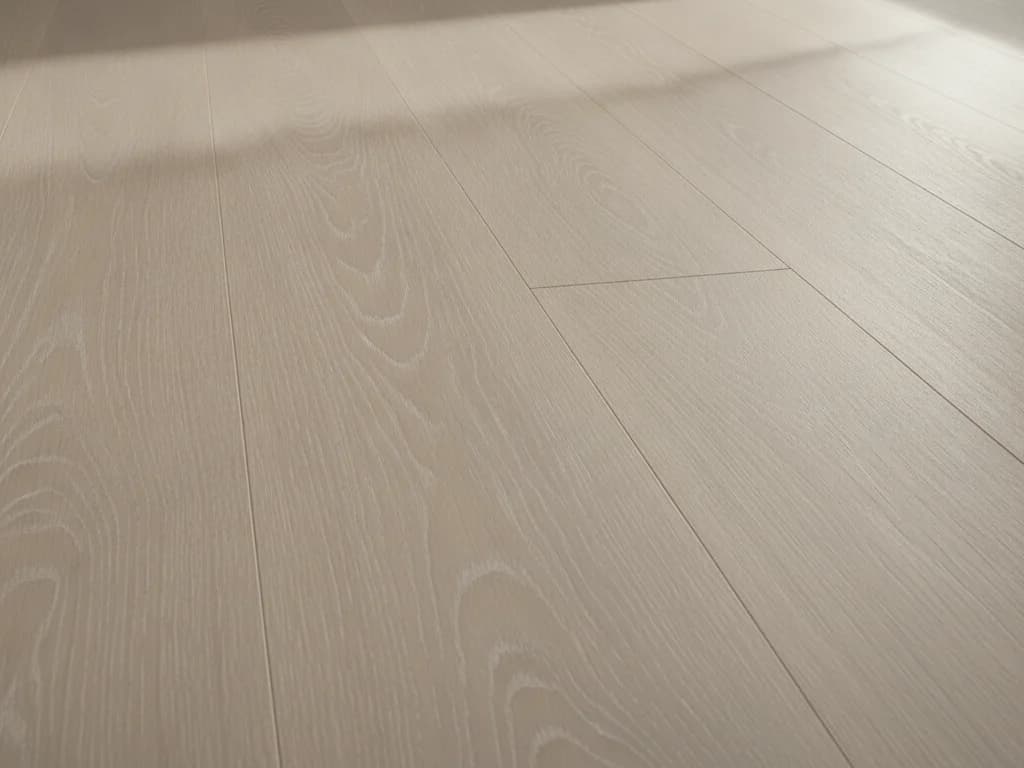
White oak is browner, straighter-grained, and takes cool and neutral colors without a pink cast. Red oak is warmer, more strongly figured, and pushes a pink-red undertone through most stains. If you want gray, greige, natural, or any modern neutral, white oak is the far easier species to get there with. If you want a classic American hardwood look, or you are matching floors already in the house, red oak is likely the correct answer and the cheaper one.
On hardness they are close enough that it should not drive the decision: white oak sits around 1,360 lbf on the Janka scale and red oak around 1,290, a difference you will never perceive underfoot. The property that genuinely separates them is invisible. White oak's pores are largely blocked by tyloses — cellular growths that plug the vessels — while red oak's remain open. That is why white oak was historically the barrel wood and red oak was not, and it is why white oak resists water penetration through the grain better.
Those open pores also change how red oak takes finish. It drinks stain readily and shows the grain strongly, which is flattering under a natural or medium finish and unhelpful when you are trying to reach a cool gray. White oak's tighter, calmer grain and neutral base are what make it the default for wire-brushed, reactive, and light modern finishes — and are most of the reason it has dominated for the last decade.
Decision Framework
When Each One Wins
Conditions, not preferences. If one of these describes your project, it should carry more weight than anything else on this page.
Choose White oak when…
- Gray, greige, white-washed, and any cool or neutral finish.
- Wire-brushed and reactive or fumed finishes, which respond to its tannin content.
- Contemporary and transitional interiors wanting calm, linear grain.
- Rift and quartersawn cuts, where white oak's straight grain and ray fleck are prized.
- Kitchens and entries, where the closed pore structure resists water penetration marginally better.
Choose Red oak when…
- Matching or extending existing red oak floors — most American homes built through the twentieth century have them.
- Warm, traditional, medium-to-dark stains where the reddish undertone helps.
- Budget-conscious projects; red oak is the more available and generally less expensive of the two.
- Busy households, where stronger cathedral grain camouflages everyday wear and scratches.
- Projects wanting a floor that accepts stain readily and evenly across large areas.
Side by Side
The Properties That Actually Differ
Where a figure is set by an individual product's instructions rather than by the material itself, the property is described as a relationship. An invented number would be worse than no number.
| Property | White oak | Red oak |
|---|---|---|
| Janka hardness | About 1,360 lbf. | About 1,290 lbf — the reference species for the scale. |
| Pore structure | Largely closed; vessels blocked by tyloses. | Open pores running through the vessels. |
| Color and undertone | Brown to olive-tan, neutral, no pink. | Pink-to-red undertone that persists through most stains. |
| Grain | Straighter, tighter, calmer, longer rays. | More pronounced cathedral figure and stronger contrast. |
| Stain behavior | Takes cool and neutral colors cleanly; excellent for reactive and fumed finishes. | Absorbs readily; warm colors are easy, cool grays are a fight. |
| Water resistance through the grain | Better — closed pores slow penetration. | Lower — open pores wick more readily. |
| Availability and cost | Widely available; generally the pricier of the two. | The most available domestic hardwood; generally less expensive. |
| Wear camouflage | Quieter grain shows scratches slightly more. | Busy grain hides everyday wear well. |
| Rift and quartersawn | The classic choice; straight grain and ray fleck are a feature. | Available, but less commonly specified. |
It Depends
The Variables That Decide It
No comparison answers this for every house. These are the specific things about your project that move the answer, and they are worth establishing before you shop.
What color you want
This is the decision, most of the time. Red oak's undertone is not a finishing problem you can solve with the right product — it is in the wood, and it comes through. If the target is a cool or light neutral, choosing red oak means fighting the material for the life of the floor.
What is already in the house
If you are adding to or blending with an existing floor, matching the species is not optional. Red oak and white oak next to each other under the same stain will not look like the same floor, because the undertone differs beneath the color.
Whether you are staining at all
Under a clear natural finish, both are attractive and genuinely different — white oak reads calm and contemporary, red oak reads warm and traditional. The gap between them narrows considerably under a dark stain, where the grain does more work than the undertone.
Solid or engineered
White oak dominates the premium engineered wide-plank market, so if that is the format you want, the species is largely chosen for you. Red oak is more strongly represented in solid strip flooring.
On this site: American White Oak, Wood Species, and Hardwood Flooring.
Next decision: American vs. European Oak, Oak vs. Hickory vs. Maple, and Site-Finished vs. Prefinished.
See all 17 flooring comparisons, or look up a term in the glossary.
Common Questions
Frequently Asked Questions
Is white oak harder than red oak?
Slightly — white oak measures a little higher on the Janka scale, around 1,360 lbf against roughly 1,290 for red oak. The difference is small enough to be irrelevant in practice. Anyone choosing between them on hardness alone is optimizing the wrong variable.
Can I stain red oak gray?
You can apply a gray stain to red oak, but the pink undertone tends to come through and produce a muddy or mauve result rather than a clean gray. Colorants and multi-step processes can suppress it with varying success. If a true gray is the goal, white oak is the species that gets there without a fight.
How do I tell which one I already have?
Look at the end grain or an unfinished edge under good light. Red oak's pores are open, visible as small tubes running through the grain; white oak's are plugged and read as solid. Color helps too — a pinkish cast points to red oak, a browner or olive one to white — but the pores are the reliable tell.
Which one is better for a kitchen?
White oak has a modest edge, because closed pores slow water penetration into the grain. The word to hold onto is modest: neither is a wet-area material, and the appliance-leak risk that actually damages kitchen wood floors is unaffected by which oak you chose.
Why is white oak so much more popular right now?
Because the prevailing finish palette is light and neutral, and white oak is the species that accommodates it. Wire-brushed, natural, and reactive finishes all rely on properties white oak has and red oak does not — tannin content and a neutral base. Taste shifted, and the species that suits it followed.

Get a Straight Answer for Your House
Free estimates across Greater Sacramento & Northern California. We'll look at your subfloor and your rooms and tell you which of these actually fits — call (916) 749-0272.